Philosophy didn’t begin with Socrates. Decades before he questioned Athenians in the Agora, thinkers across the Greek world were wrestling with existence, nature, and reality. These Pre-Socratic philosophers asked questions that still matter today. What is everything made of? Does anything truly change? Can we trust our senses?
1. Thales of Miletus
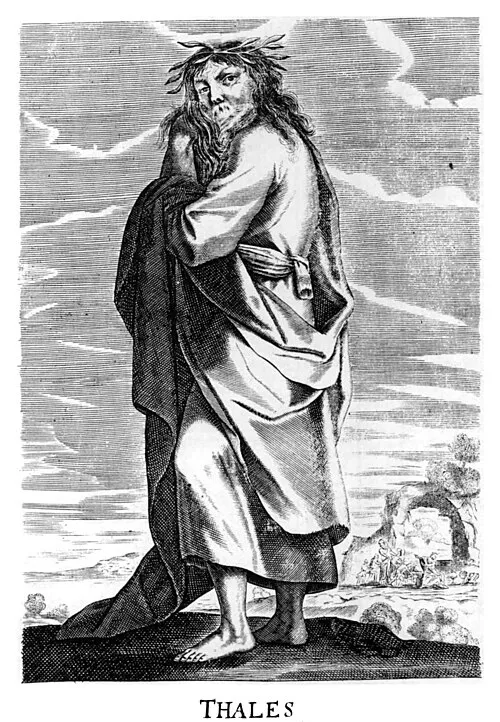
Thales declared that water formed the fundamental substance of all things around 585 BC. This sounds simple now, but Thales made a revolutionary leap by seeking natural explanations instead of mythological ones. He rejected stories about gods creating the world and looked for a single material principle underlying reality.
His water theory came from observation. Living in coastal Miletus, Thales saw water everywhere – in rain, rivers, the sea, even in living bodies. Things needed moisture to survive. Seeds sprouted with water. Heat and dryness killed. So water must be the essential element that everything condensed from and dissolved back into. Aristotle later credited Thales as the first philosopher precisely because he sought rational, material explanations for existence.
2. Anaximander of Miletus
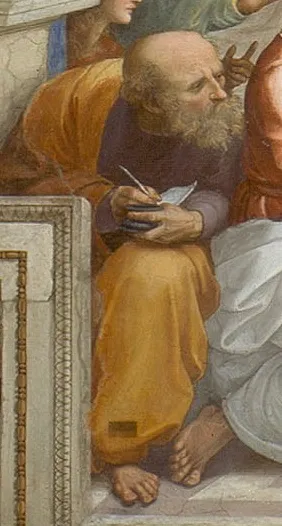
Anaximander improved on his teacher Thales by proposing the apeiron – the unlimited or indefinite – as reality’s source. He recognized that no specific material like water could generate its opposite. Fire and water oppose each other. Hot and cold conflict. So the origin of everything must be something boundless and undefined that contained all opposites within itself.
Writing around 547 BC, Anaximander also produced the first prose philosophy text in Greek. His ideas extended beyond metaphysics. He created one of the earliest world maps, proposed a cylindrical Earth floating in space, and suggested that humans evolved from fish-like ancestors. This evolutionary thinking appeared 2,400 years before Darwin.
The apeiron perpetually moved and separated into opposing forces – hot and cold, wet and dry. These opposites warred with each other, and justice required that neither dominate permanently. Anaximander’s cosmic balance where opposites give “penalty and retribution to each other for their injustice” introduced moral order into natural philosophy.
3. Pythagoras of Samos
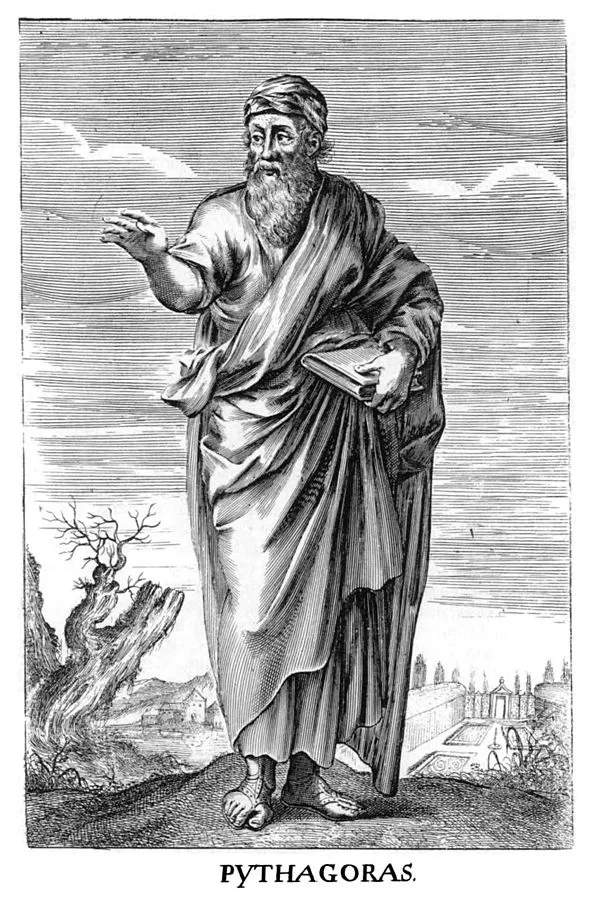
Numbers held the key to understanding reality, according to Pythagoras. He founded a philosophical and religious community in Croton around 530 BC that treated mathematics as sacred knowledge. Pythagoreans discovered that musical harmony followed mathematical ratios – a string half the length produced an octave, two-thirds produced a fifth. If music followed numbers, maybe everything did.
The famous Pythagorean theorem about right triangles represented just one discovery among many. The community studied geometry, astronomy, and number theory, believing that mathematical relationships revealed divine order. They saw numbers in everything – patterns in planetary motions, shapes in crystals, proportions in human bodies.
Pythagorean philosophy blended mathematics with mysticism. Members followed strict rules about diet, behavior, and secrecy. They believed in reincarnation and the soul’s transmigration through different bodies. Despite the mystical elements, their mathematical investigations laid groundwork for later Greek science and philosophy.
4. Heraclitus of Ephesus
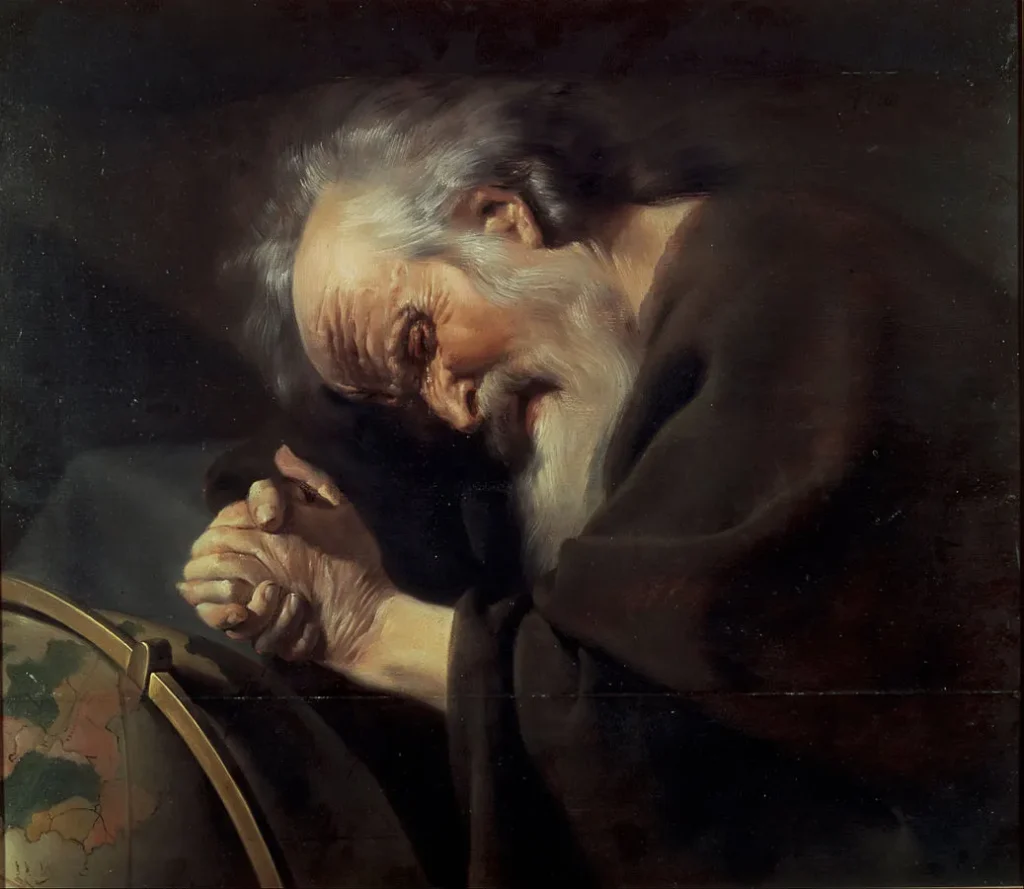
Everything flows, nothing stands still. Heraclitus wrote around 500 BC that constant change defined reality. You cannot step into the same river twice because new waters continuously flow. The river looks permanent, but the water molecules are always different. Permanence is illusion; flux is truth.
Fire symbolized Heraclitus’s changing cosmos. Fire constantly transforms, consuming fuel and producing smoke and ash. It never stays the same yet maintains its nature as fire. Similarly, the cosmos perpetually transforms while maintaining cosmic order through the logos – the rational principle governing change.
Heraclitus earned his nickname “the obscure” through deliberately cryptic statements. “The path up and down is one and the same.” “War is father of all, king of all.” His paradoxes forced readers to think deeply about apparent contradictions. Opposites connect and depend on each other. Hot and cold, day and night, life and death are inseparable aspects of unity.
Built out of a love for history, kept free from distractions.
Spoken Past is an independent project shaped by curiosity, care, and long hours of research. Reader support helps keep it maintained, carefully researched, and open to everyone.
5. Parmenides of Elea
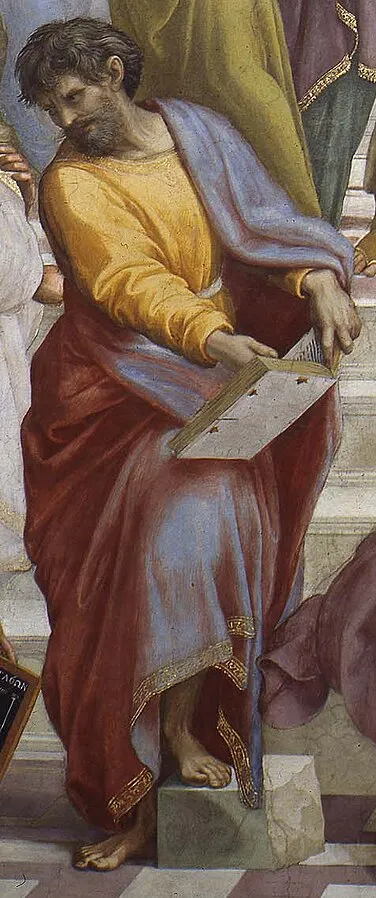
Parmenides stood against Heraclitus with radical claims around 475 BC. Change is impossible. Motion is illusion. What exists is eternal, unchanging, and indivisible. These statements sound absurd, but Parmenides backed them with rigorous logical argument that challenged Greek thinking for centuries.
His reasoning went like this: Something cannot come from nothing. Nothing cannot exist (because “nothing” means non-existence). Therefore only Being exists, eternal and unchanging. Change would require Being to become what it is not, which is impossible. Your senses show you motion and change, but logic proves these are illusions. Trust reason over perception.
Parmenides wrote philosophy in epic poetry, unusual for philosophical texts. His poem described two paths – the way of truth (reason) and the way of opinion (sense perception). This rationalist position influenced Plato enormously. The Forms that Plato described as eternal and unchanging behind the world of appearances owed much to Parmenides’ Being.
6. Empedocles of Acragas
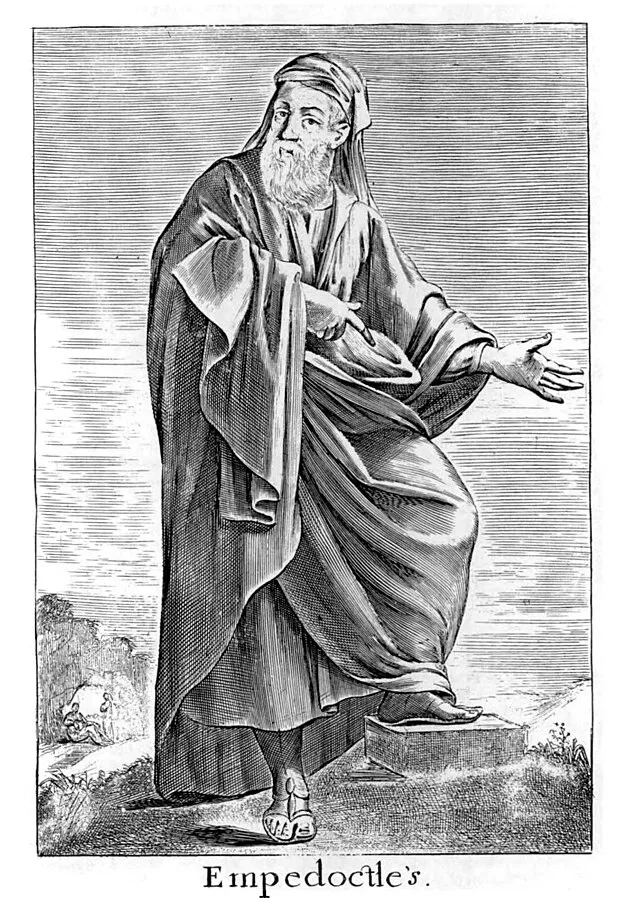
Four roots – earth, air, fire, and water – combine in different proportions to create everything, proposed Empedocles around 450 BC. This four-element theory dominated Western thought for two millennia. Empedocles added two forces driving change: Love brings elements together, Strife pulls them apart. These forces eternally compete, creating and destroying forms.
Empedocles was a showman. Stories claimed he performed miracles, controlled winds, and raised the dead. He allegedly jumped into Mount Etna’s crater to prove his divinity, leaving only a bronze sandal behind. True or not, these tales show how Pre-Socratic philosophers combined scientific thinking with shamanic elements.
His ideas included surprising scientific insights. He correctly understood that light travels at finite speed. He proposed that perception works through effluences – particles flowing from objects into sense organs. His evolutionary theory suggested that random combinations of body parts eventually produced viable organisms through natural selection of the fittest forms.
7. Anaxagoras of Clazomenae
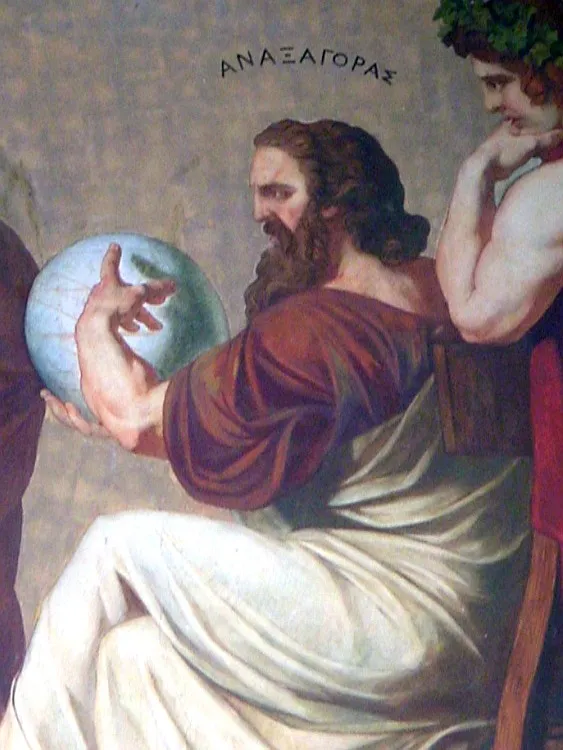
Mind ordered the cosmos, claimed Anaxagoras around 450 BC. Before mind (nous) intervened, an infinite mixture of seeds containing all qualities existed in chaos. Mind began a rotational motion that separated and organized these seeds into the cosmos we observe. This made Anaxagoras the first philosopher to posit intelligence as a cosmic organizing principle.
His materialist approach got him into trouble. Anaxagoras taught that the sun was not a god but a hot stone larger than the Peloponnese. The moon shone by reflected sunlight, not its own light. These views led to prosecution for impiety in Athens around 450 BC. He escaped punishment through Pericles’ intervention but left Athens permanently.
Anaxagoras claimed that everything contains portions of everything else. A piece of gold contains bits of water, fire, flesh, and all other things, but gold predominates. This explained change without requiring creation from nothing. Transformations simply rearranged proportions of elements already present in everything.
8. Leucippus and Democritus of Abdera
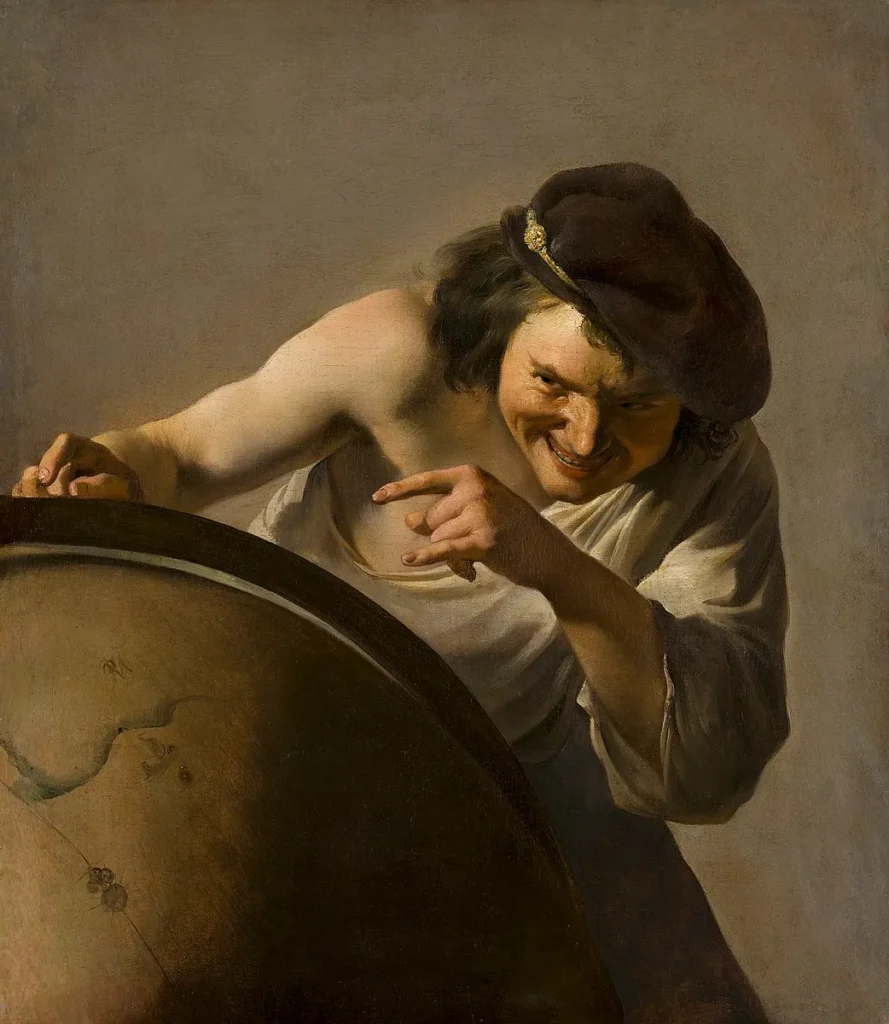
Atoms and void constitute all reality. Leucippus and his student Democritus developed atomism around 430 BC, proposing that indivisible particles (atoms) move through empty space (void), combining in various patterns to create everything we perceive. Different atomic shapes, arrangements, and positions produce different materials and qualities.
This mechanistic worldview eliminated purpose from nature. Atoms moved and collided not because gods directed them or because they sought goals, but through mechanical necessity. Sweet taste comes from smooth, round atoms. Bitter taste from jagged, sharp atoms. The soul itself consists of fine, spherical atoms distributed through the body.
Democritus wrote prolifically on ethics, physics, mathematics, and music – reportedly over 70 works, all lost except fragments. He emphasized cheerfulness and moderation. “Happiness does not reside in strength or money; it lies in rightness and many-sidedness.” Despite his materialist physics, Democritus valued the examined life and ethical conduct.
9. Protagoras of Abdera
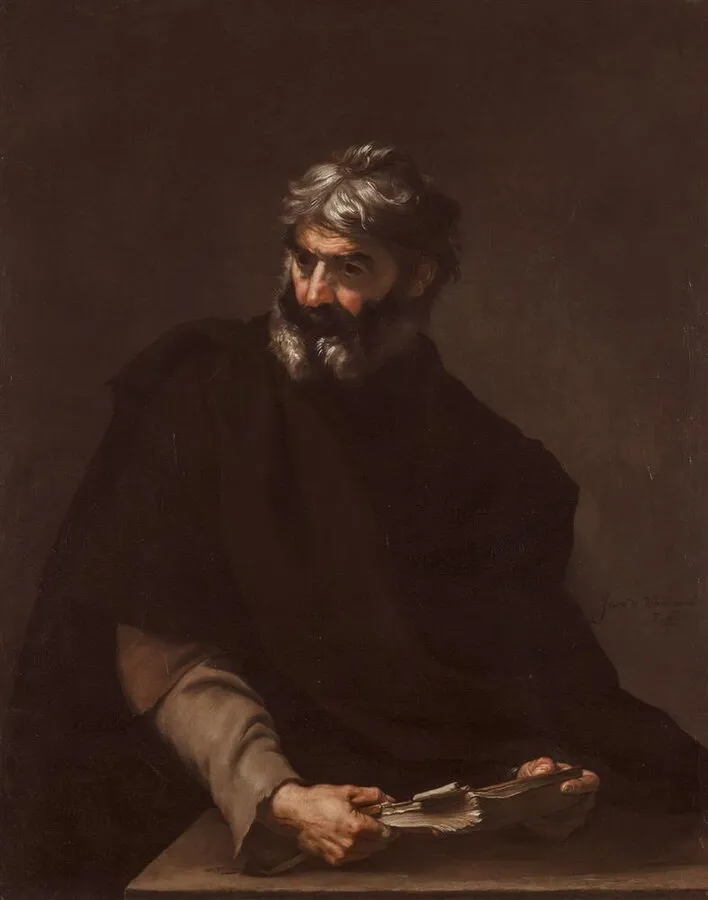
Man is the measure of all things, declared Protagoras around 445 BC. This relativist position claimed that no objective truth exists independent of human perception and judgment. What seems true to you is true for you. What seems true to me is true for me. Truth becomes subjective and situation-dependent.
Protagoras taught rhetoric and argumentation for fees, making him one of the Sophists – professional teachers who trained young men for public life. He claimed he could make the weaker argument appear stronger through skilled rhetoric. This practical focus on persuasion rather than absolute truth scandalized philosophers like Plato who sought objective knowledge.
His relativism extended to religion. “Concerning the gods, I have no means of knowing whether they exist or not, nor of what sort they may be.” This agnosticism led to charges of impiety. Athenians allegedly burned his books and exiled him around 415 BC. Despite controversies, Protagoras influenced Greek education by emphasizing debate, argument, and the power of language to shape beliefs.