Origins and Early Development
Long before democracy or philosophy, this land served the dead. The area functioned as a cemetery from the Mycenaean period through the Iron Age (roughly 1600-700 BC), with tholos tombs and graves marking the landscape. The living only claimed it permanently in the early 6th century BC, when Solon’s reforms began transforming Athens from an aristocratic society into something unprecedented: a state where citizens participated directly in governance.
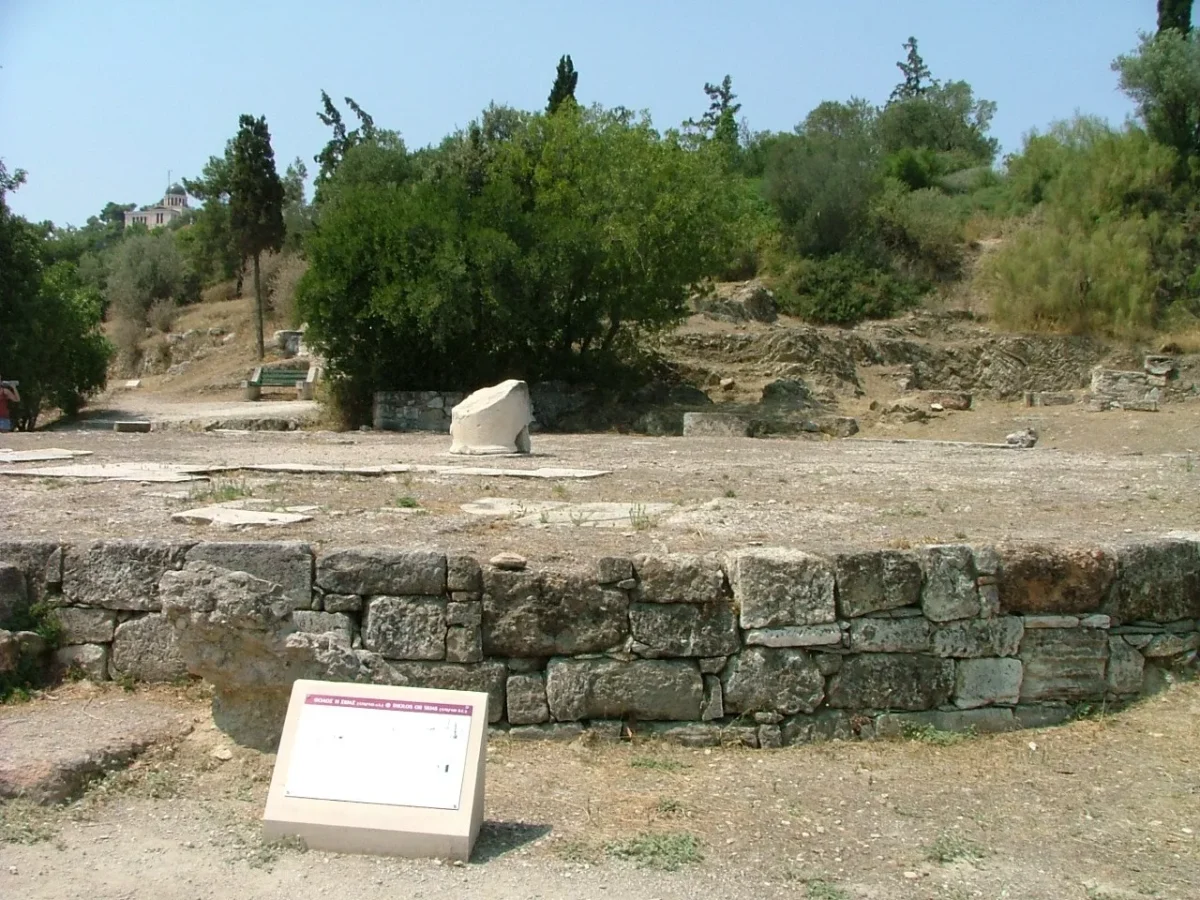
Around 520 BC, the Altar of the Twelve Gods was erected, establishing a sacred reference point from which all distances from Athens were measured (you could call it kilometer zero, except Greeks used stadia). By 508-507 BC, under Cleisthenes’ democratic reforms, the Old Bouleuterion was constructed and the Agora’s boundaries were formally established. This marked the space’s official designation as the civic center where the messy, magnificent experiment of demokratia (rule by the demos, the people) would unfold.
The Classical Agora (5th-4th Centuries BC)
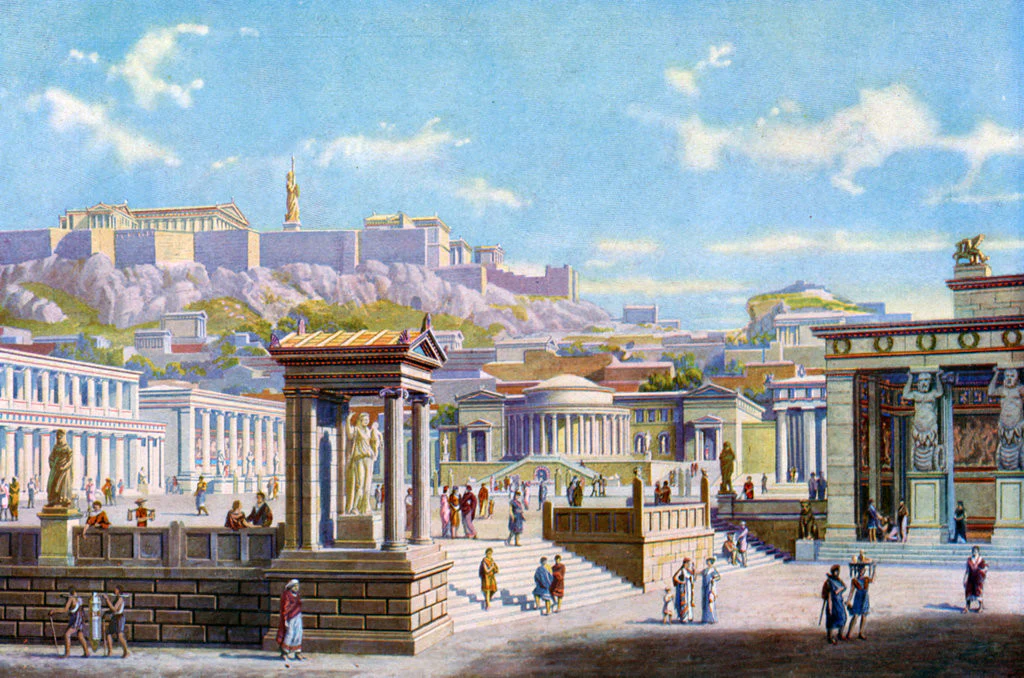
Then the Persians arrived. In 480 BC, during Xerxes’ invasion, Persian forces burned the Agora to the ground. Athens’ response to this destruction defined the city’s golden age. Under Pericles’ ambitious rebuilding program, the Agora was reconstructed not merely to match its former state but to surpass it, proclaiming Athenian power, culture, and democratic ideals through architecture.
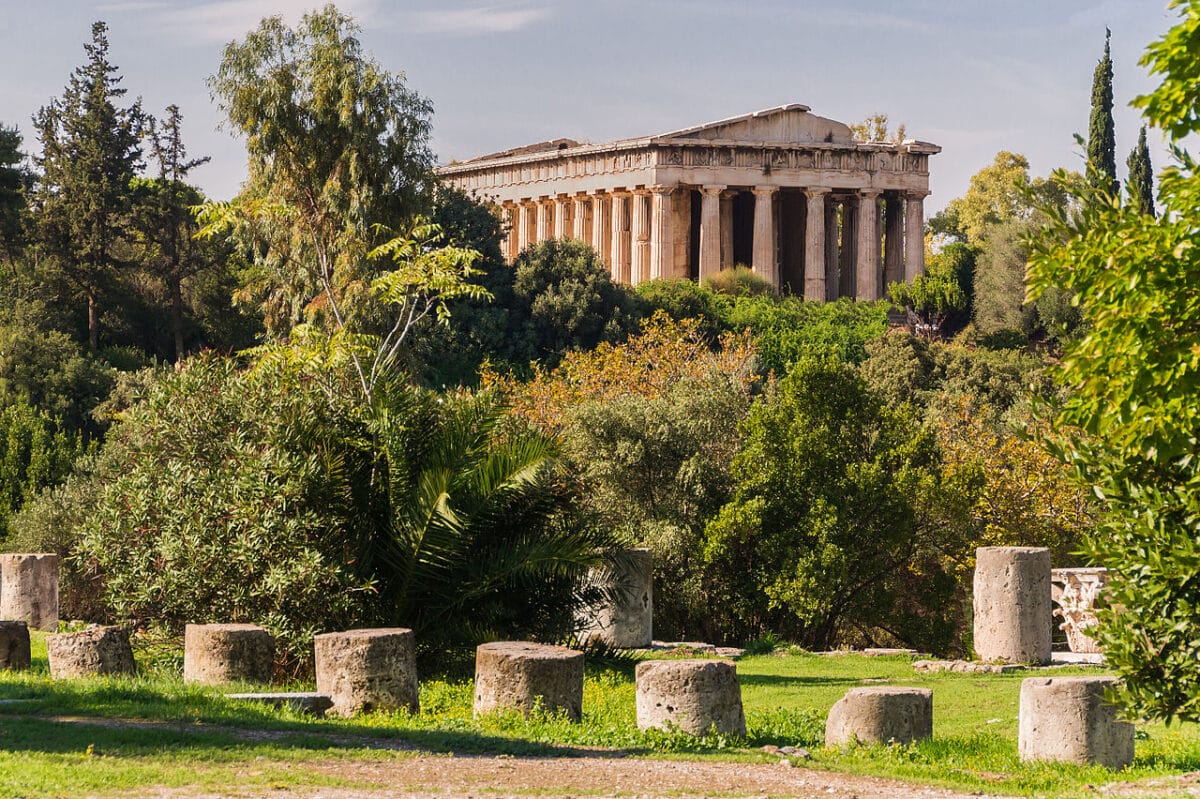
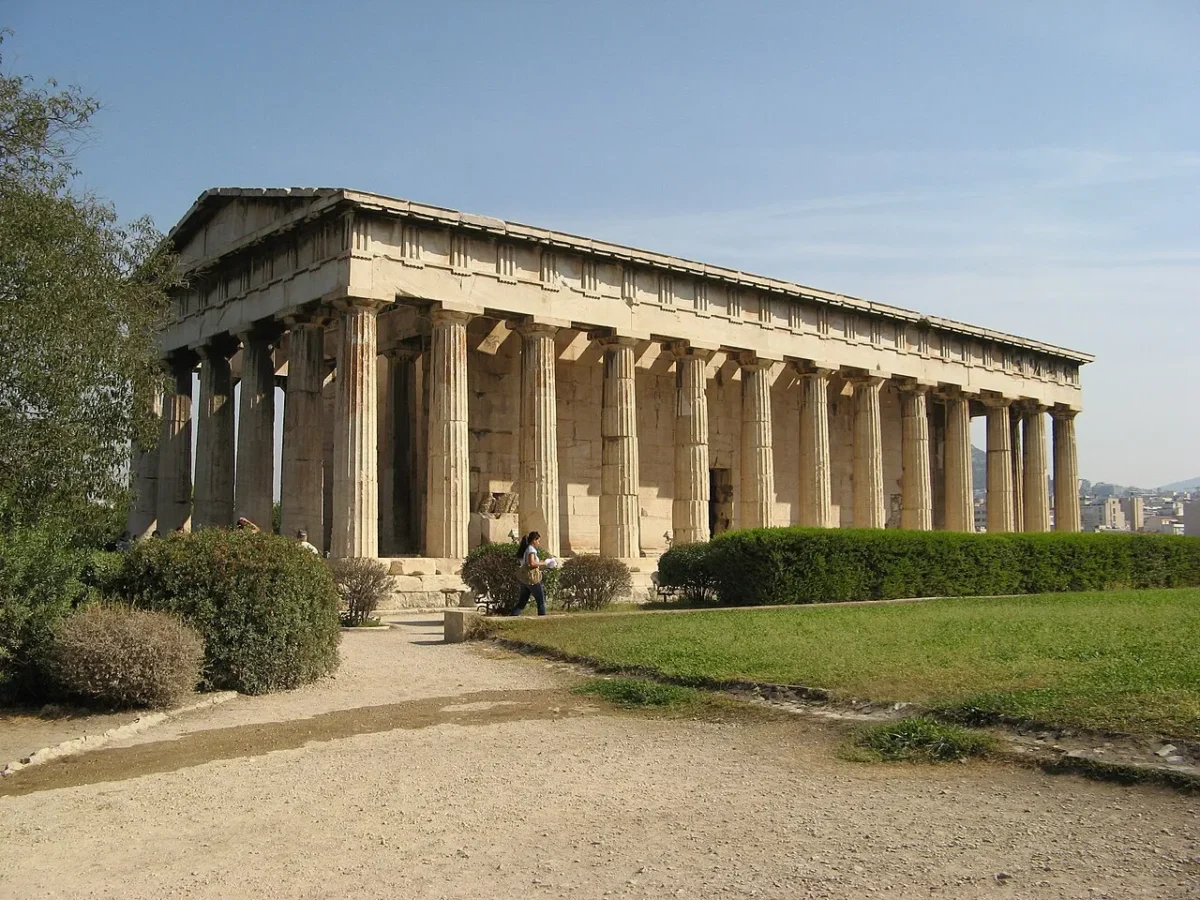
The Temple of Hephaestus rose around 449 BC, designed possibly by Iktinos (one of the Parthenon’s architects) and dedicated to the god of craftsmen and metallurgy. Its location was deliberate. Archaeological evidence reveals numerous pottery and metalworking shops once surrounded the temple, honoring Hephaestus in the very district where his mortal counterparts plied their trades. The temple’s exceptional preservation stems partly from its conversion to a Christian church (Church of Saint George Akamates) in the 7th century AD, which protected it from stone-robbers for over a millennium.
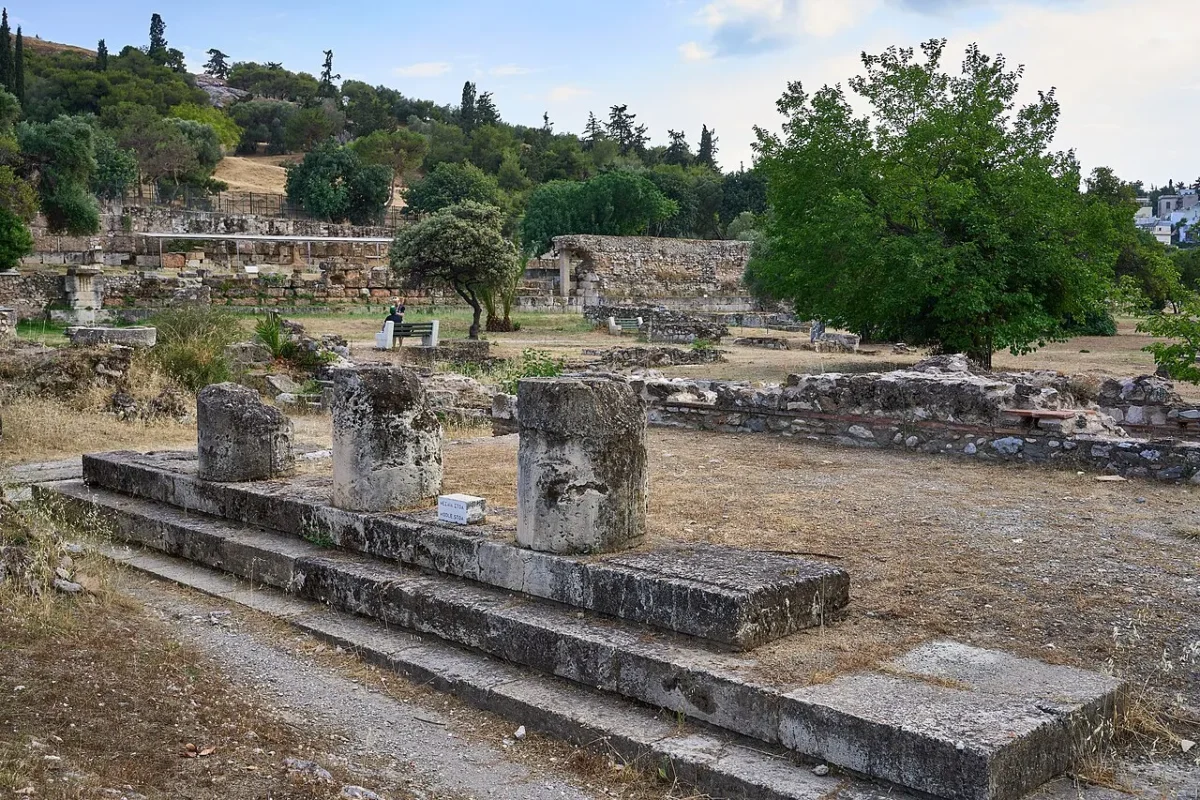
The 5th and 4th centuries saw an explosion of construction: the Stoa Poikile (Painted Stoa, famous for its murals of Athenian military victories and later lending its name to Stoic philosophy), the Tholos (a circular building where the executive committee dined at public expense), the New Bouleuterion (housing the 500-member council), the Southern Stoa, the Stoa of Zeus Eleutherios, the Mint, various law courts (dikasteria), fountains, and countless workshops.
This was where Socrates wandered daily, buttonholing citizens with uncomfortable questions until the democracy he helped nurture condemned him to death in 399 BC for “corrupting the youth”. His student Plato and later Aristotle continued the philosophical tradition, though Plato wisely established his Academy outside the city center. The Stoa Poikile became the gathering place for Zeno’s followers, who became known as “Stoics” precisely because they met at this stoa.
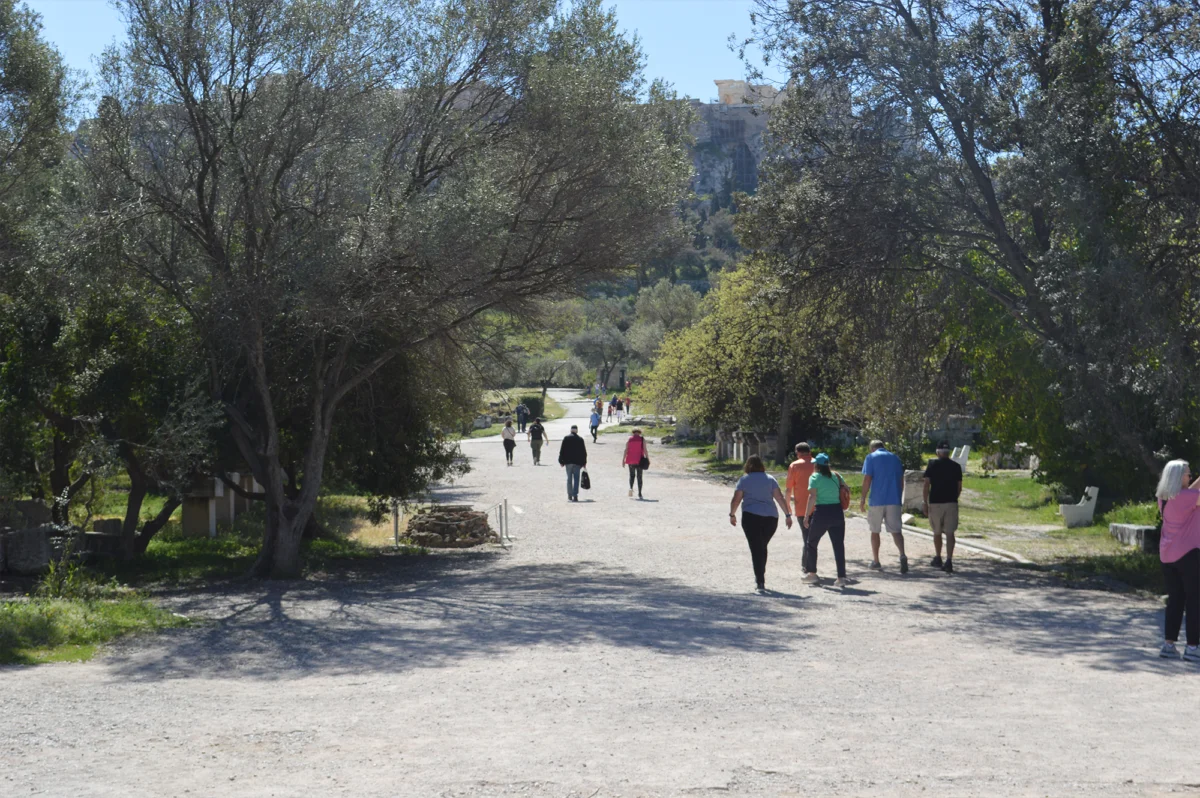
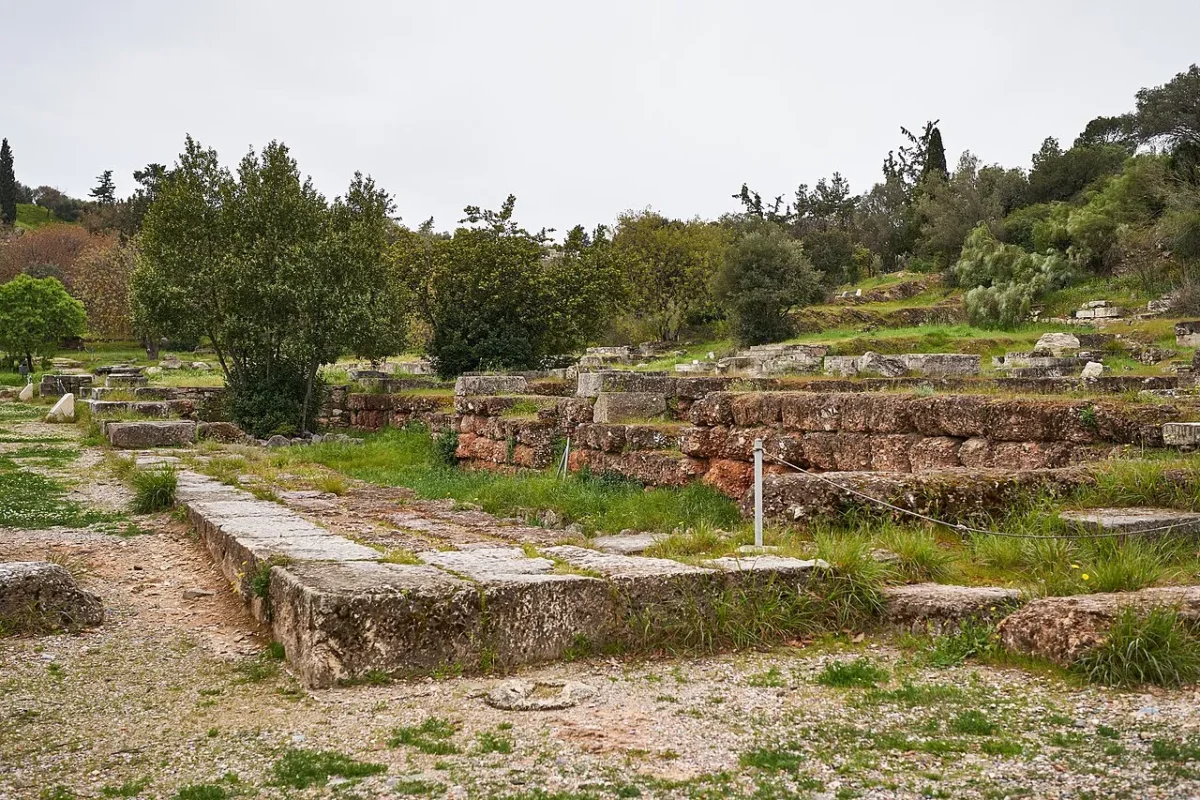
The Panathenaic Way, Athens’ grandest processional route, cut diagonally through the Agora, beginning at the Dipylon Gate (the city’s main entrance) and climbing to the Acropolis. Every four years, the Great Panathenaic Festival saw the entire city parade along this road, carrying a newly woven peplos (robe) for Athena’s cult statue, accompanied by sacrificial animals, musicians, and athletes. You can still trace the worn paving stones of this ancient highway.
The Hellenistic and Roman Periods
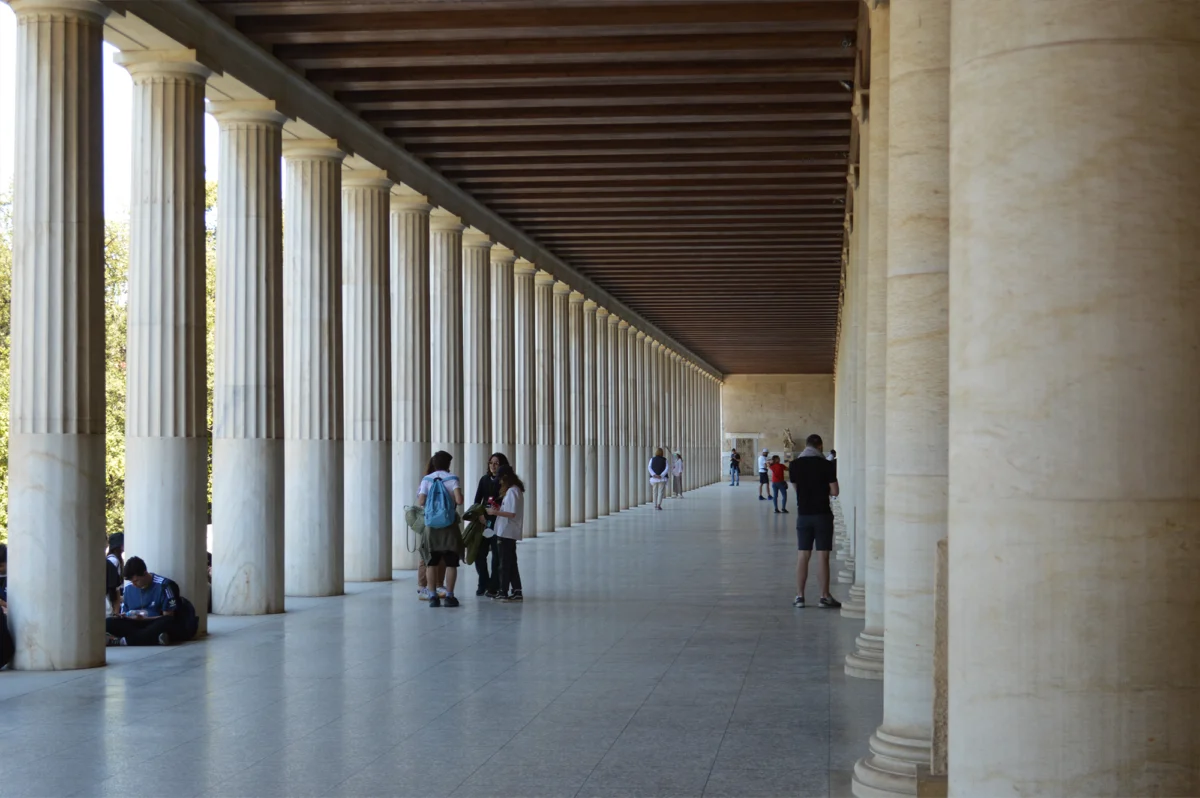
By the late 4th century BC, building activity intensified as Athens, though diminished politically after Macedonian conquest, remained a cultural powerhouse. The Stoa of Attalos was constructed between 159-138 BC, a gift from King Attalos II of Pergamon, who had studied philosophy in Athens as a young prince. This massive two-story colonnade with 42 shops became the Agora’s premier commercial and social center, where Athenians conducted business, exchanged gossip, and escaped the sun.
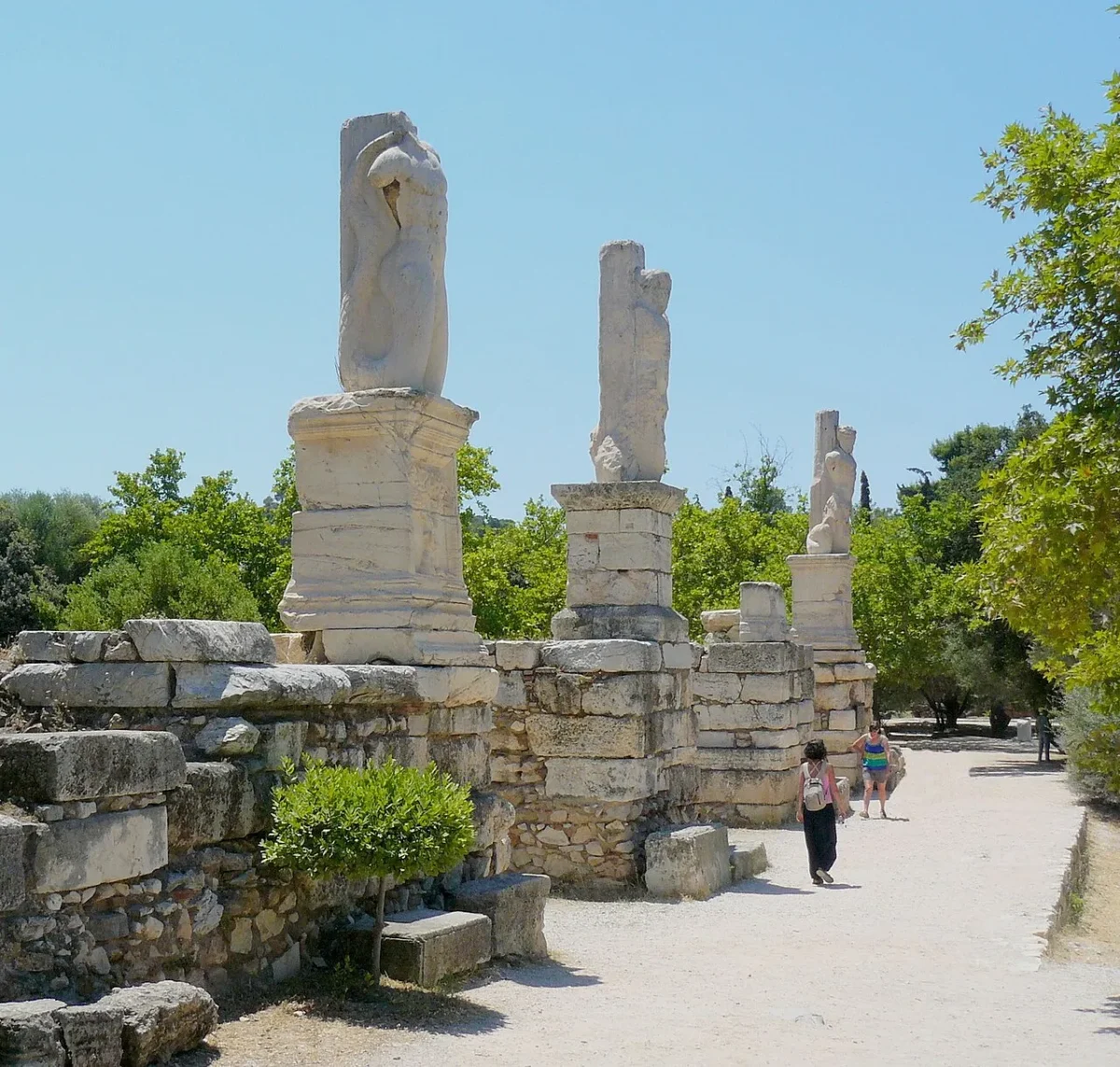
Then came the Romans, who admired Athens but also damaged it. In 86 BC, the Roman general Sulla besieged Athens during the Mithridatic Wars, causing extensive destruction to the Agora’s southern end. Yet Roman emperors, particularly Augustus, soon invested heavily in beautifying the city they considered the cradle of civilization. Around 15 BC, Marcus Agrippa (Augustus’s general and son-in-law) built the Odeion of Agrippa in the Agora’s center, a roofed concert hall seating 1,000 spectators. This was audacious construction, placing a massive entertainment venue right in the civic square. The Temple of Ares, originally a 5th-century BC structure from elsewhere, was dismantled and reassembled in the Agora around 15 BC as part of Augustus’s redesign.
The commercial activity in the Ancient Agora eventually exceeded its capacity, prompting Julius Caesar and Augustus to finance a new, separate Roman Agora (built 19-11 BC) nearby. The Ancient Agora, however, retained its civic and cultural primacy.
Decline and Abandonment
In 267 AD, the Herulians (a Germanic people) invaded Athens and razed much of the city, including the Agora. The Stoa of Attalos was destroyed and its stones incorporated into hastily built defensive walls. Athens never fully recovered its former glory. By 580 AD, Slavic invasions prompted the Agora’s gradual abandonment as a public space.
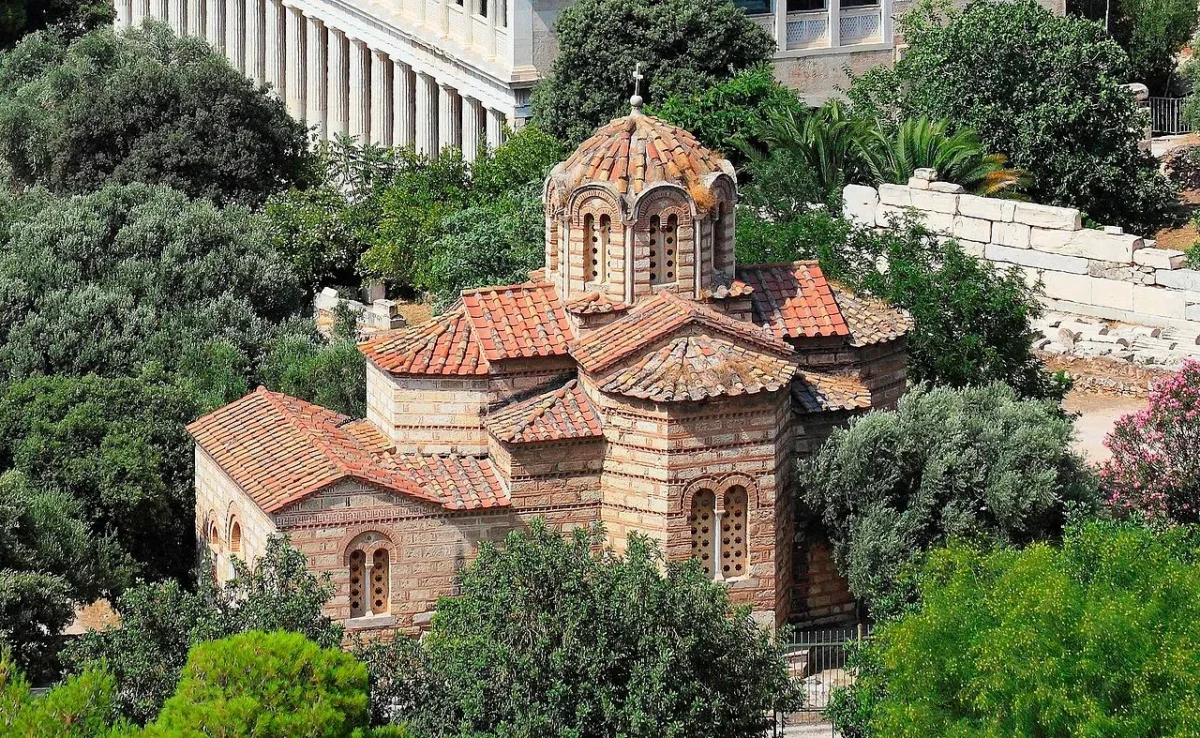
During the Byzantine period through 1834, when Athens was a provincial backwater rather than a capital, the Agora became a residential district. The Temple of Hephaestus survived as a church; other structures were cannibalized for building materials, including stones used for Frankish towers at the Acropolis. Through medieval and Ottoman periods, the ancient civic heart of democracy lay buried beneath houses, streets, and gardens.
Modern Rediscovery
Systematic excavation began only in 1931, after the Greek government acquired the land and demolished 400 modern buildings occupying the site. The American School of Classical Studies has led excavations continuously since, uncovering over 160,000 artifacts that now illuminate daily life in ancient Athens. The reconstruction of the Stoa of Attalos (1953-1956), funded by John D. Rockefeller Jr., was controversial at the time (purists objected to rebuilding ancient structures), but it provided an irreplaceable museum space and gave visitors a tangible sense of the Agora’s original scale.
Today, the Agora stands as both an archaeological site and a living classroom where the foundations of Western political thought, philosophy, and civic culture remain visible beneath your feet. Every stone tells a story of the radical idea that ordinary citizens, not kings or priests, should govern themselves.