
Ancient Rome produced brilliant rulers who expanded frontiers, reformed laws, and built monuments that still stand today. It also produced tyrants whose reigns left scars on the empire that never healed. The worst Roman emperors ruled through terror, drained the treasury, alienated the Senate, murdered rivals without trial, and pushed Rome to the edge of collapse. Their names survive not as examples of glory but as warnings about unchecked power and the consequences of cruelty.
1. Caligula
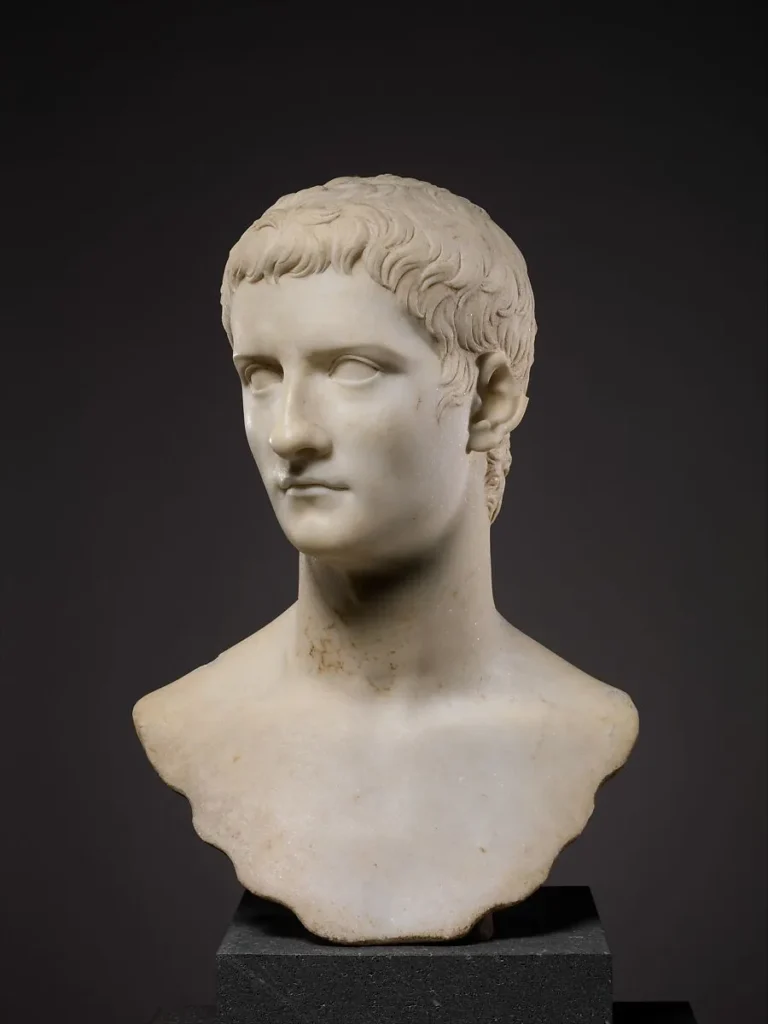
Gaius Caesar Augustus Germanicus, known as Caligula, ruled from 37 to 41 AD. He began his reign with promises of reform and clemency after the paranoid final years of Tiberius. The Senate and Roman people welcomed him as the son of the beloved general Germanicus.
That goodwill evaporated within months. Caligula fell seriously ill seven months into his reign, and when he recovered, his behavior turned violent and erratic. He restored the treason trials that had terrorized Rome under Tiberius, executing senators, rivals, and close advisors on flimsy charges.
Caligula dressed in silk robes, covered himself in jewels, and demanded that Romans worship him as a living god. He forced senators to grovel and kiss his feet, seduced their wives at dinner parties, and confiscated estates to fund his lavish spending. He drained the treasury Tiberius had carefully built and began blackmailing wealthy families to replenish it. In 40 AD, he ordered his statue erected in the Temple at Jerusalem, an act that would have sparked rebellion across Judaea had the local ruler not persuaded him to reverse the order.
On January 24, 41 AD, members of the Praetorian Guard led by Cassius Chaerea ambushed Caligula in an underground corridor beneath the palace. They stabbed him thirty times, driving swords through his jaw and genitals. His wife Caesonia and infant daughter Julia Drusilla were murdered immediately afterward to prevent reprisals.
2. Nero
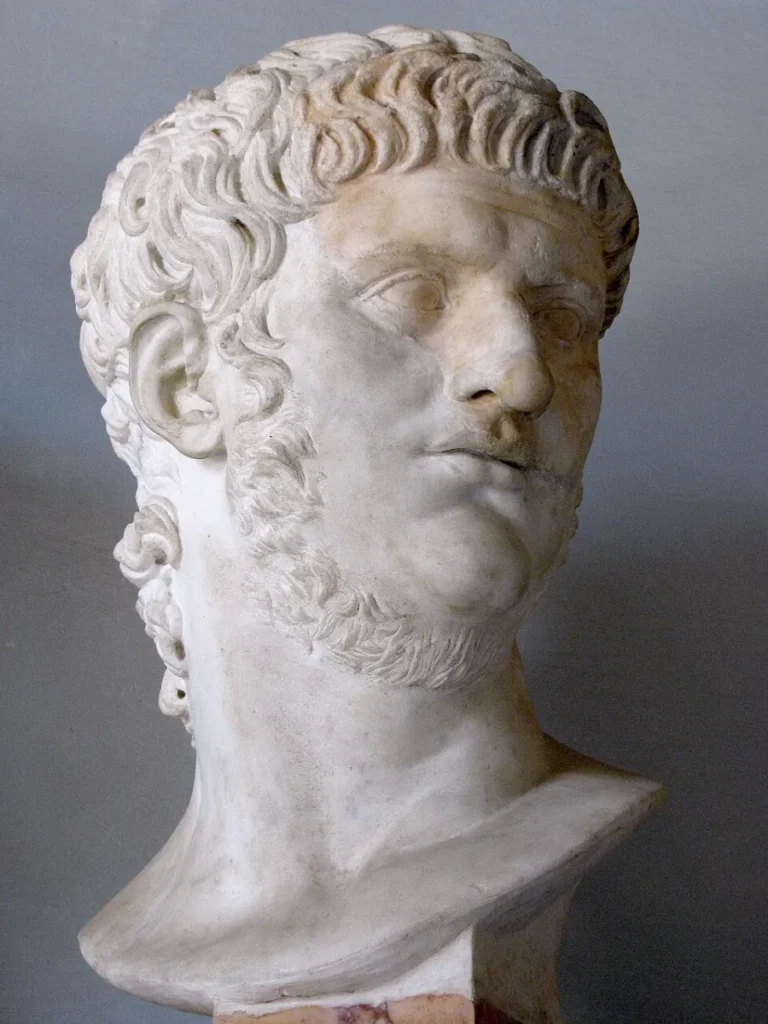
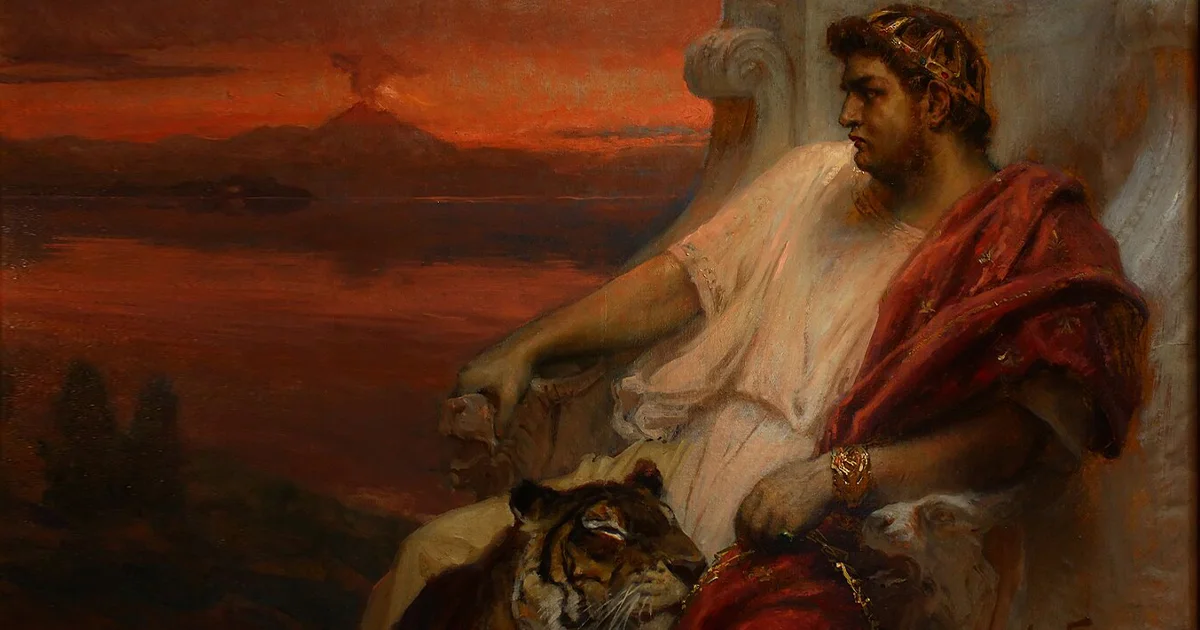
Nero Claudius Caesar Augustus Germanicus ruled from 54 to 68 AD. His early years showed promise under the guidance of the philosopher Seneca and the praetorian prefect Burrus, but after their influence waned, Nero’s reign descended into excess and brutality.
On July 18, 64 AD, a fire broke out in the slums near the Palatine Hill and raged for six days, destroying three of Rome’s central districts and leaving thousands homeless. Rumors spread that Nero had started the blaze to clear land for his planned palace, the Domus Aurea. Whether or not Nero caused the fire, he needed a scapegoat, and he chose Rome’s Christian community. According to the historian Tacitus, Nero blamed Christians for the conflagration and subjected them to “exquisite tortures,” including crucifixion, burning, and being torn apart by dogs in public spectacles.
Nero executed rivals and family members throughout his reign. He murdered his mother Agrippina in 59 AD, his wife Octavia in 62 AD, and his stepbrother Britannicus years earlier. He spent vast sums on theatrical performances, chariot races, and construction projects, draining Rome’s coffers.
By 68 AD, military commanders in Gaul and Spain had revolted, and the Senate declared Nero a public enemy. On June 9, 68 AD, with soldiers closing in, Nero committed suicide at age 30.
3. Domitian
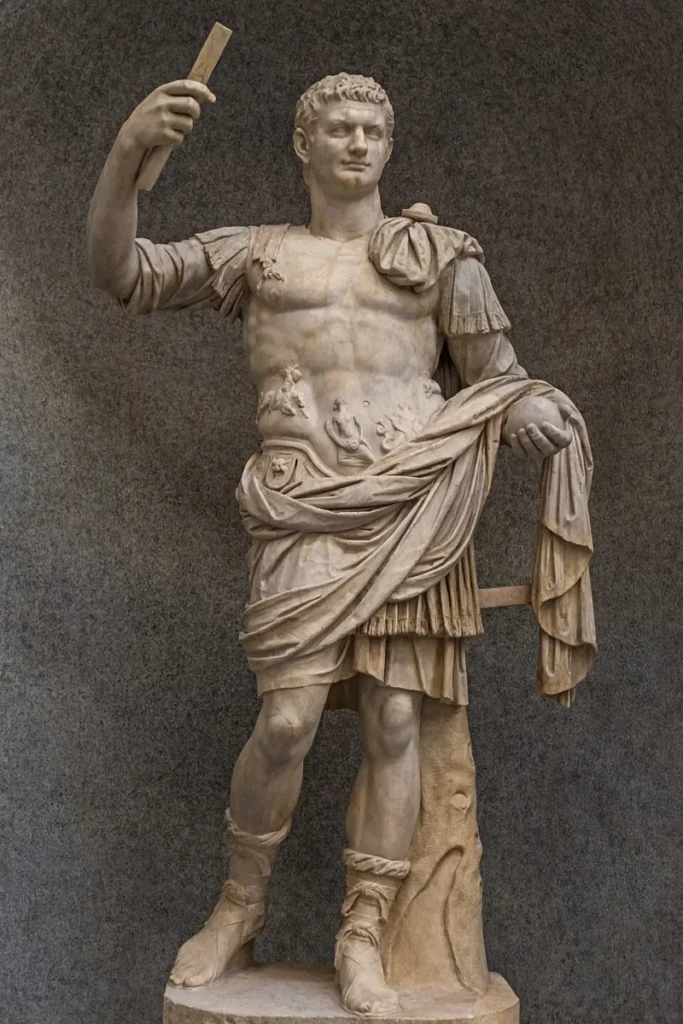
Titus Flavius Domitianus ruled from 81 to 96 AD as the last emperor of the Flavian dynasty. He succeeded his brother Titus and governed with efficiency in some areas, building monuments, strengthening the frontier, and filling the treasury. But he also earned a reputation for cruelty and paranoia that overshadowed his administrative achievements.
Domitian restored treason trials and used them to eliminate perceived enemies among the Senate. He executed senators, confiscated estates, and demanded that Romans address him as “dominus et deus,” lord and god. His cruelty could be sudden and arbitrary. Once, while preparing to sacrifice an animal to the gods, he raised his mallet but at the last moment turned and struck a nearby priest instead, killing him instantly.
He purged the Roman elite of rivals and critics, creating an atmosphere of fear that extended to his own household. On September 18, 96 AD, members of his inner circle, including court officials and possibly his wife Domitia, arranged his assassination. A freedman named Stephanus stabbed him to death in his bedroom.
Built out of a love for history, kept free from distractions.
Spoken Past is an independent project shaped by curiosity, care, and long hours of research. Reader support helps keep it maintained, carefully researched, and open to everyone.
4. Commodus
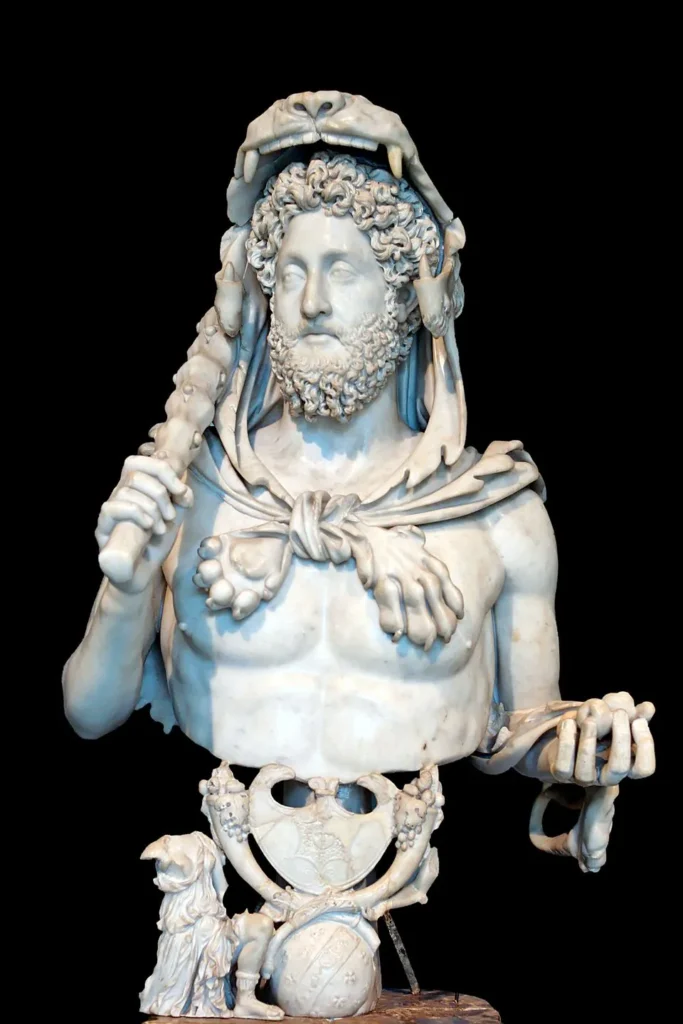
Lucius Aelius Aurelius Commodus ruled from 177 to 192 AD, first as co-emperor with his father Marcus Aurelius and then as sole ruler after 180 AD. He inherited an empire at its height and brought it to the brink of collapse through incompetence, violence, and megalomania.
Commodus had no interest in governing. He delegated administration to advisors and spent his time staging gladiatorial contests in which he fought as a participant, killing animals and human opponents in rigged matches. He renamed Rome “Colonia Lucia Annia Commodiana,” after himself, and declared that he would inaugurate the new year of 193 AD by entering the consulship dressed as a gladiator.
One of his first acts as sole emperor was to debase the currency, reducing the weight and silver content of the denarius. He executed advisors when he tired of them and ruled through a combination of neglect and terror. The Senate and military grew increasingly alarmed.
On December 31, 192 AD, a conspiracy led by his chamberlain Eclectus, the praetorian prefect Laetus, and his mistress Marcia ended his reign. After a failed poisoning attempt, they sent the wrestler Narcissus to strangle Commodus in his bath.
5. Elagabalus
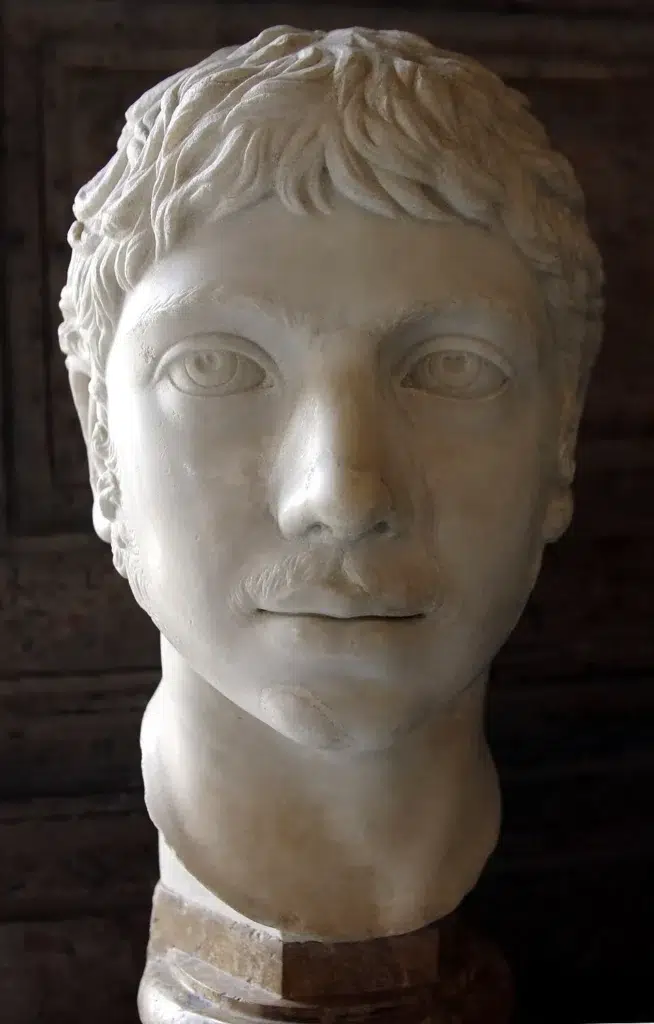
Marcus Aurelius Antoninus, known as Elagabalus after the Syrian sun god he worshiped, ruled from 218 to 222 AD. He became emperor at age fourteen after his grandmother Julia Maesa bribed the soldiers of Legio III Gallica to proclaim him, falsely claiming he was the illegitimate son of the murdered emperor Caracalla.
Elagabalus arrived in Rome in 219 AD and immediately alienated the Senate and the Roman people. He elevated the worship of Elagabal, a Syrian deity, above Jupiter and the traditional Roman gods, building a temple on the Palatine Hill and forcing senators to participate in foreign rituals. He married and divorced five times in four years, including a marriage to a Vestal Virgin, a sacrilege that horrified Romans.
His behavior grew increasingly erratic. He appointed unqualified favorites to high office, including a chariot driver and a barber, based on personal whim rather than merit. He ignored state business and squandered the treasury on lavish banquets and entertainments.
Julia Maesa, recognizing that Elagabalus was destroying the dynasty she had worked to install, turned against him. On March 11, 222 AD, soldiers of the Praetorian Guard murdered both Elagabalus and his mother Julia Soaemias. Their bodies were dragged through the streets of Rome and thrown into the Tiber.
6. Caracalla
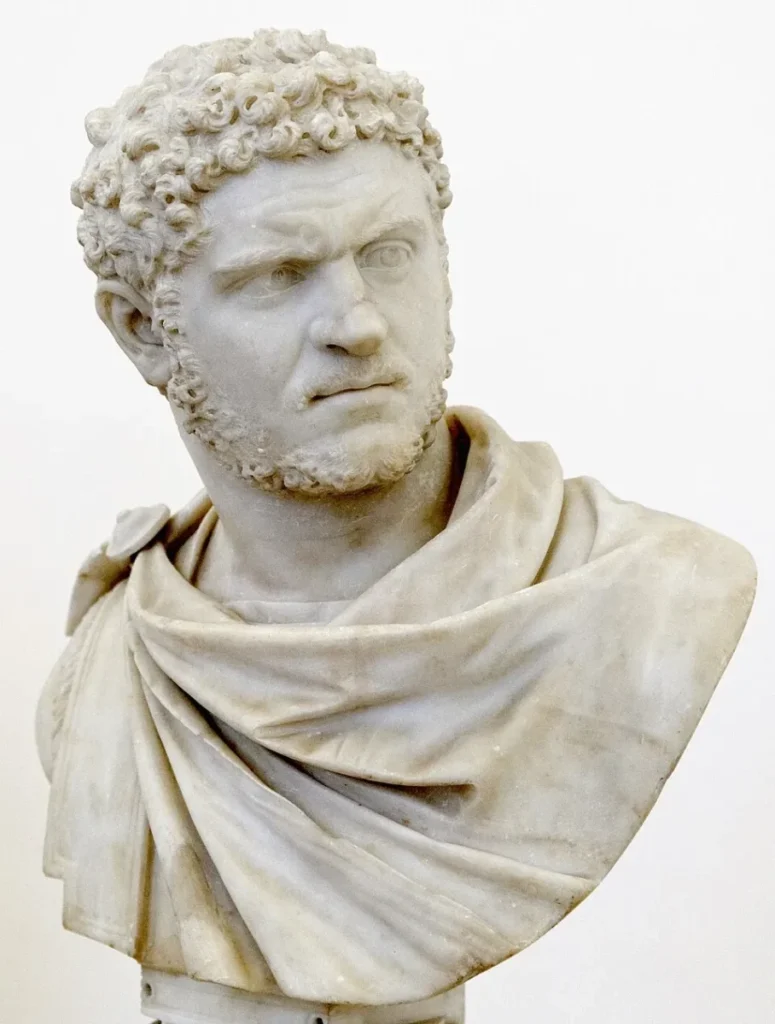
Marcus Aurelius Antoninus, called Caracalla after the Gallic hooded cloak he popularized, ruled from 198 to 217 AD, first alongside his father Septimius Severus and his brother Geta, then alone after 211 AD. His reign combined military competence with shocking brutality.
In 211 AD, shortly after their father’s death, Caracalla lured his younger brother Geta to a meeting with their mother and had him murdered in her arms. Geta was 22 years old. Caracalla then ordered a purge of Geta’s supporters, executing as many as 20,000 people across the empire, including senators, soldiers, and civilians. He commanded that Geta’s name be erased from all inscriptions and monuments, a practice called damnatio memoriae.
Caracalla spent much of his reign on campaign, leading armies along the Rhine and Danube frontiers and in the east against Parthia. He built the Baths of Caracalla in Rome, one of the largest public bath complexes in the ancient world. In 212 AD, he issued the Constitutio Antoniniana, which extended Roman citizenship to nearly all free inhabitants of the empire, a measure likely designed to increase tax revenue rather than expand civic rights.
On April 8, 217 AD, while campaigning near Carrhae in Mesopotamia, Caracalla stopped to relieve himself at the side of the road. A soldier named Julius Martialis, part of a conspiracy led by the praetorian prefect Macrinus, approached and stabbed him to death. Caracalla was 29 years old.
7. Tiberius
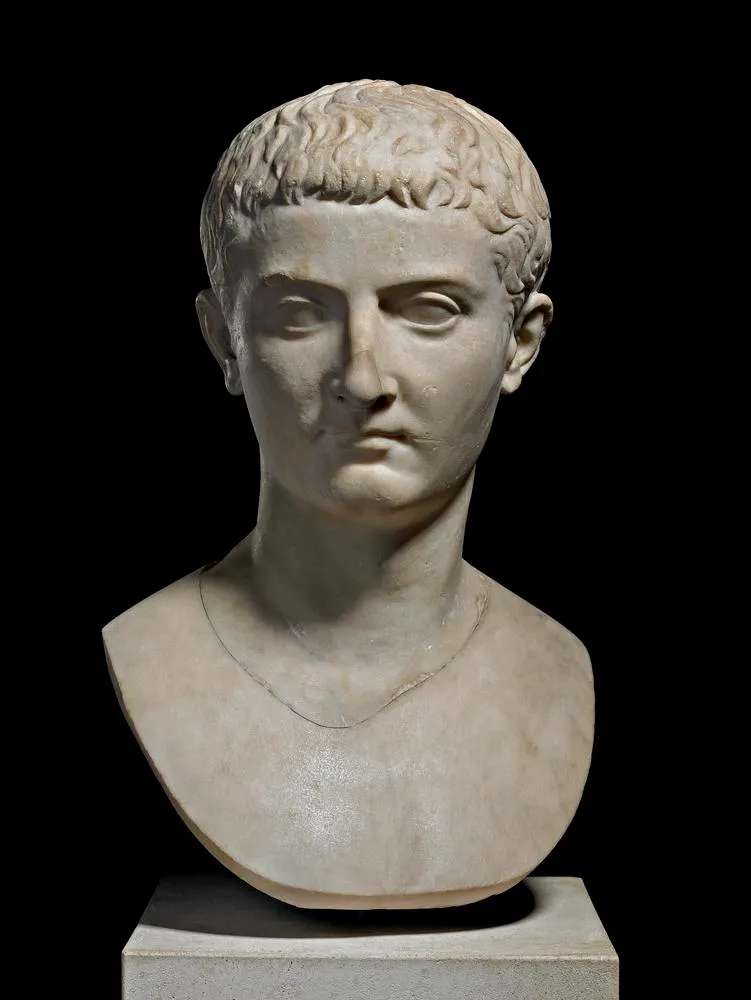
Tiberius Claudius Nero ruled from 14 to 37 AD as Rome’s second emperor, succeeding Augustus. He inherited a stable empire and governed effectively for much of his reign, strengthening the frontiers and maintaining the administrative reforms of Augustus. But his final years turned dark, and his legacy became one of paranoia and cruelty.
Tiberius withdrew from Rome in 26 AD and spent the rest of his life on the island of Capri, governing through letters and representatives. From Capri, he relied on Lucius Aelius Sejanus, the praetorian prefect, to manage affairs in the capital. Sejanus used his position to eliminate rivals through treason trials, purging senators and members of the imperial family. When Tiberius discovered that Sejanus was plotting against him in 31 AD, he had him arrested and executed, along with his children and associates.
The treason trials continued under Tiberius’ direct control. Accusations became instruments of revenge and profit, and senators lived in constant fear. Tiberius executed or exiled members of the Julio-Claudian family, including Agrippina the Elder, the widow of Germanicus and mother of Caligula, who starved to death in exile on the island of Pandateria in 33 AD.
Tiberius died on March 16, 37 AD, at the age of 77. Rumors spread that Sejanus’ successor, Macro, had smothered him, though the truth remains uncertain. Rome did not mourn him.