
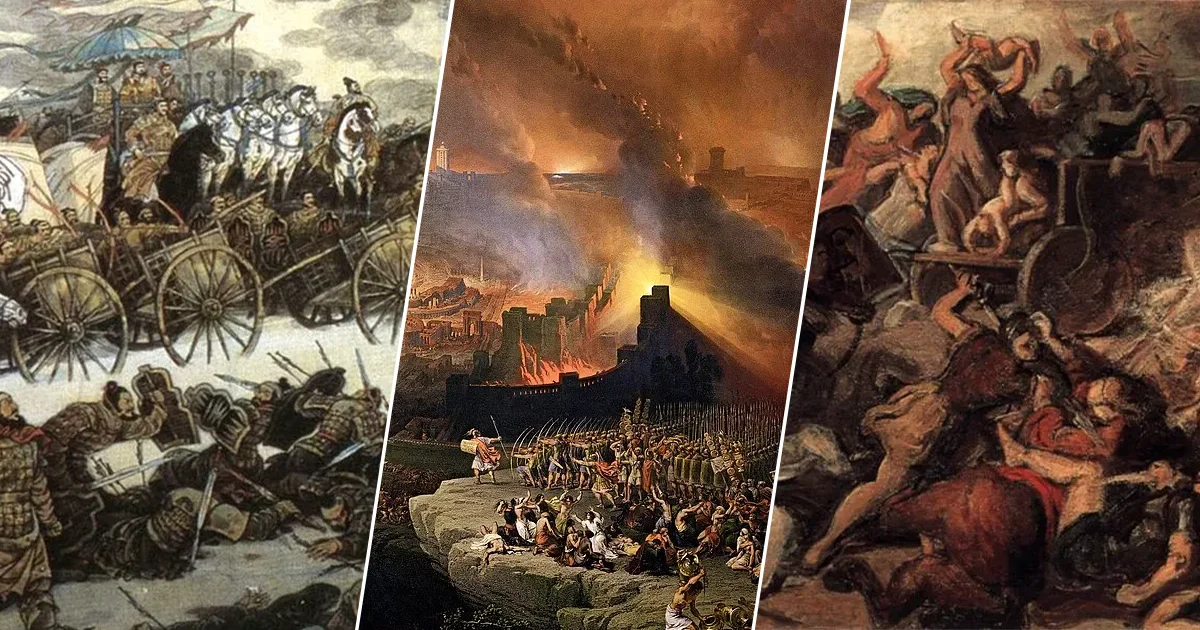
The bloodiest battles in ancient history killed far more soldiers than most people realize, with some engagements claiming between 100,000 and over 600,000 casualties in single campaigns. Ancient warfare produced casualty figures that exceeded entire city populations, reshaping empires through catastrophic losses of military manpower and resources. Understanding which bloodiest battles caused the highest death tolls reveals how commanders miscalculated, how civilizations collapsed, and which engagements left entire regions depopulated. The scale of death in these bloodiest battles changed history through sheer numerical devastation.
1. Battle of Changping (260 BC)
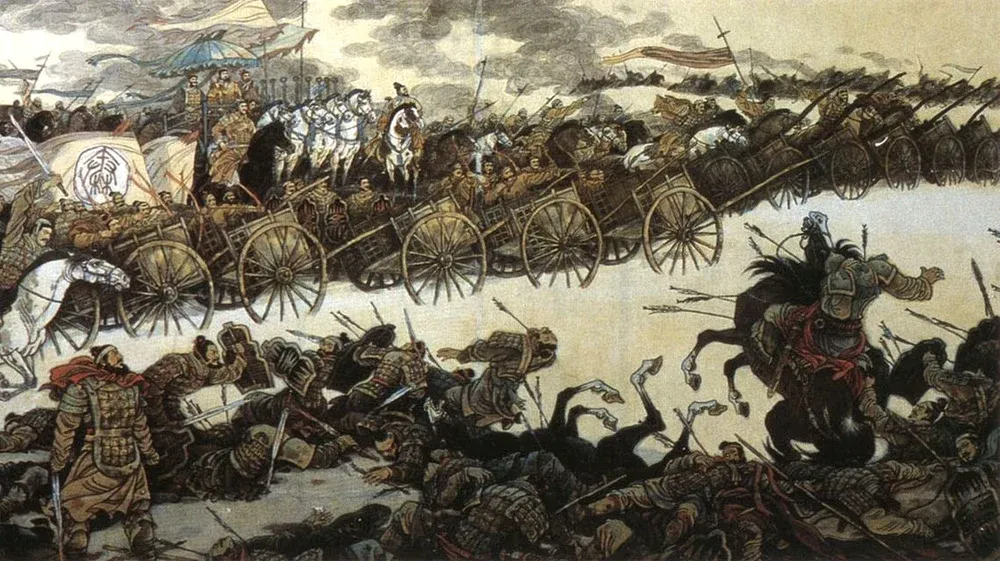
The Battle of Changping during China’s Warring States period produced casualties exceeding 450,000 soldiers, making it potentially the deadliest single engagement in ancient history. The state of Qin defeated the state of Zhao in northern China over ten months of continuous siege warfare and field combat. Zhao forces commanded by General Zhao Kuo faced starvation after Qin General Bai Qi cut off supply lines to the fortress, trapping 450,000 soldiers with dwindling food reserves. The bloodiest battles in ancient history often involved this scale of post-battle execution, and Changping established Qin dominance over rival Chinese states permanently.
Qin General Bai Qi ordered all Zhao prisoners executed by burying them alive in massive pits, killing approximately 450,000 captured soldiers in a deliberate massacre. Zhao Kuo died on the battlefield either by suicide or in combat after realizing his position was hopeless. The mass burial of 450,000 prisoners marked a turning point in Chinese military history, as subsequent generals recognized that surrender meant execution. This bloodiest battle demonstrated that ancient Chinese warfare embraced total annihilation of defeated armies rather than pursuit of conventional victory. Qin’s ruthlessness during this bloodiest engagement accelerated the state’s eventual unification of China within a century, as other states feared similar fate if defeated in open combat.
2. Siege of Jerusalem (70 AD)
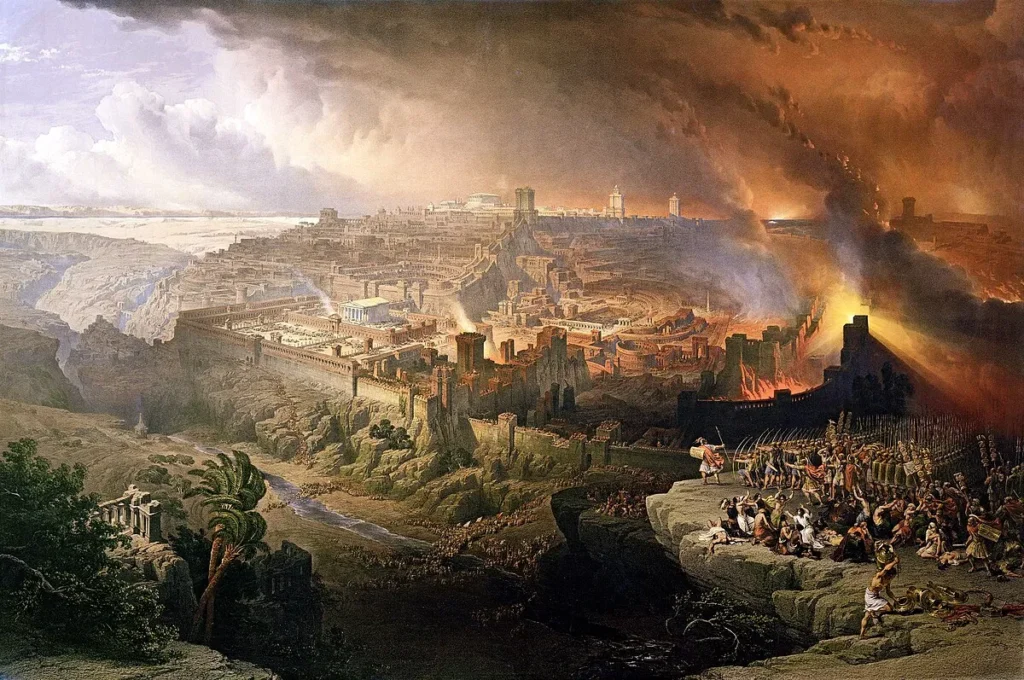
The Siege of Jerusalem produced casualty figures between 600,000 and 1.1 million according to ancient sources, though modern historians debate the exact count. Roman forces commanded by Titus Flavius Vespasianus surrounded the city in 70 AD during Passover celebrations when pilgrims crowded Jerusalem’s narrow streets and buildings. The bloodiest battles in ancient history included this siege because the entire Jewish population faced starvation inside walls, with urban combat producing massive casualties over six months. Roman siege towers, battering rams, and artillery breached multiple defensive lines before legionaries entered the city systematically.
The siege began in April 70 AD when Roman legions encircled the city completely, preventing any resupply or escape. Inside the walls, Jewish defenders faced dual crises of starvation and internal conflict between resistance factions competing for control. The final assault on Jerusalem’s temple complex produced the heaviest casualties as defenders fought from house to house against Roman soldiers entering the city. The bloodiest segments of this siege involved urban combat where defenders had no retreat and Romans showed no mercy in street-by-street conquest. Jewish historian Josephus recorded that bodies piled higher than the defenders could push them over walls, creating blockages in streets. Survivors numbered in the tens of thousands at most, with the remainder killed in combat or executed after capture. This bloodiest engagement resulted in destruction of the Second Temple and the end of Jewish political independence in Palestine.
3. Siege of Carthage (149-146 BC)
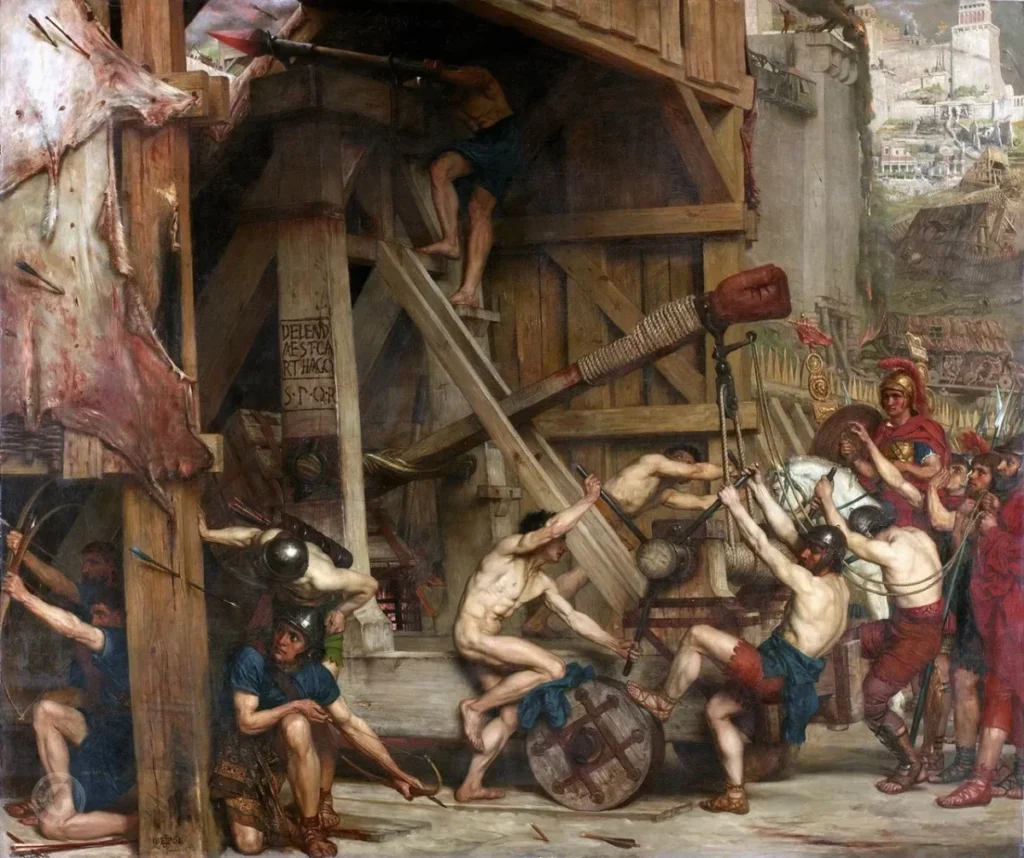
The Siege of Carthage during the Third Punic War produced between 200,000 and 450,000 casualties including soldiers, civilians, and enslaved populations over three years of siege warfare and attrition. Roman forces commanded by Scipio Aemilianus surrounded the city completely, preventing resupply and forcing Carthaginian defenders to endure starvation alongside military assault. The bloodiest battles in ancient history included this siege because Carthage contained approximately 500,000 inhabitants packed into limited space. When Romans breached the walls in 146 BC, urban combat produced casualty figures rivaling pitched battles fought across open fields over days of continuous fighting.
Carthaginian resistance lasted longer than expected, with defenders fortifying inner districts and fighting from rooftops and buildings. Roman soldiers systematically destroyed the city’s buildings, infrastructure, and harbors to prevent any future resurgence. The siege ended with complete destruction of Carthage as a political entity, with survivors either killed or sold into slavery. This bloodiest engagement eliminated Carthage permanently as Rome’s rival, establishing Roman dominance over the Mediterranean entirely. Historical sources record that the stench of decomposing bodies persisted around Carthage for months after the siege concluded. Scipio Aemilianus ordered the complete razing of the city, and the site remained deliberately abandoned as a symbol of Roman power.
Built out of a love for history, kept free from distractions.
Spoken Past is an independent project shaped by curiosity, care, and long hours of research. Reader support helps keep it maintained, carefully researched, and open to everyone.
4. Siege of Alesia (52 BC)
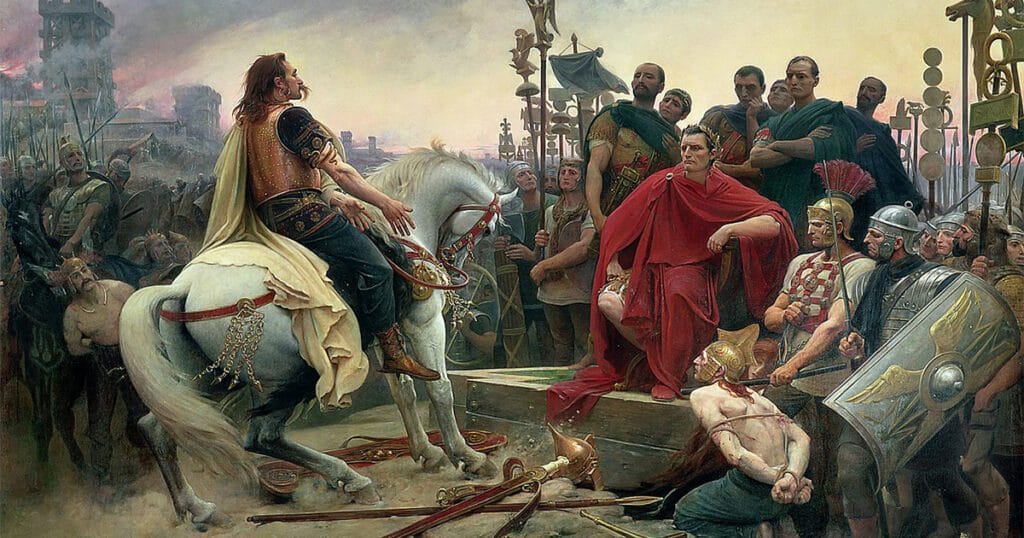
The Siege of Alesia during the Gallic Wars produced casualties between 100,000 and 200,000 soldiers and civilians according to Roman sources and modern analysis. Julius Caesar surrounded the Gallic fortress containing 80,000 defenders commanded by Vercingetorix, while a relief army of 240,000 Gallic warriors attacked from outside simultaneously. The bloodiest battles in ancient history included this siege because three separate armies clashed in coordinated campaigns, with Roman forces fighting on two fronts at once. Roman legionaries defended double lines of fortifications against both the besieged garrison and the external relief force over weeks of intense combat.
Caesar positioned approximately 50,000 legionaries to maintain siege lines facing the fortress while simultaneously defending against the relief army. Over three days of continuous combat, the bloodiest segments occurred when the relief army attempted to breach Roman siege lines. Caesar’s cavalry, commanded by Germanic prince Ariovistus’s allies, counterattacked at critical moments to prevent breakthrough. The final breakthrough attempt involved 60,000 Gallic warriors assaulting Roman fortifications defended by fewer than 50,000 legionaries. When Caesar’s cavalry counterattacked the breaching force, approximately 20,000 Gallic soldiers died in a single cavalry charge. The bloodiest engagement concluded when Vercingetorix surrendered after the relief army was routed, choosing execution over further slaughter. Roman construction of siege fortifications took weeks, demonstrating Caesar’s mastery of logistics and engineering.
5. Battle of Arausio (105 BC)
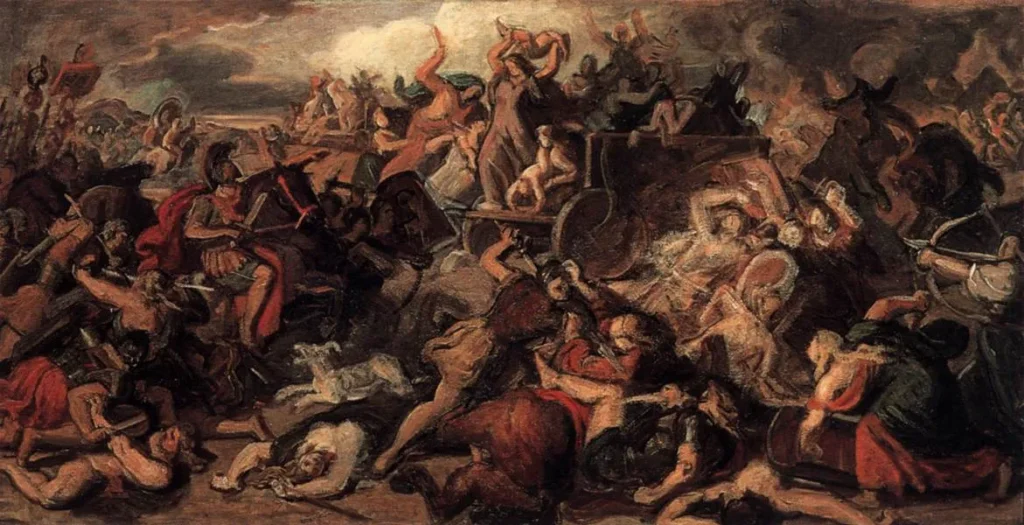
The Battle of Arausio near Orange in southern Gaul killed approximately 120,000 Roman and Italian allied soldiers in a single afternoon, making this the bloodiest Roman military disaster of the Republican era. Cimbri and Teutones Germanic tribes commanded by Boiorix defeated two separate Roman armies that refused to cooperate militarily. Roman commanders Gnaeus Mallius Maximus and Servilius Caepio each led their forces independently into Germanic ambush, creating tactical chaos and preventing unified response. The bloodiest battles in ancient history often resulted from command failure, and Arausio exemplified this dynamic perfectly. The Germanic forces deliberately separated the Roman armies, attacking each independently before they could coordinate.
Germanic warriors deployed cavalry attacks against Roman infantry formations, breaking up legionary cohesion before melee combat began. Approximately 40,000 Roman soldiers died in the initial onslaught, with the remainder killed during disorganized retreat across open terrain. The Germanic tribes took approximately 10,000 prisoners for execution or slavery, capturing enough Roman weapons and equipment to re-arm their entire force of 120,000 warriors. This bloodiest engagement forced Rome to recruit massive new armies and deploy Gaius Marius with reformed legions to defeat the Germanic threat permanently. The disaster at Arausio shocked Rome and prompted military reorganization across the entire Italian peninsula.
6. Siege of Syracuse (214-212 BC)
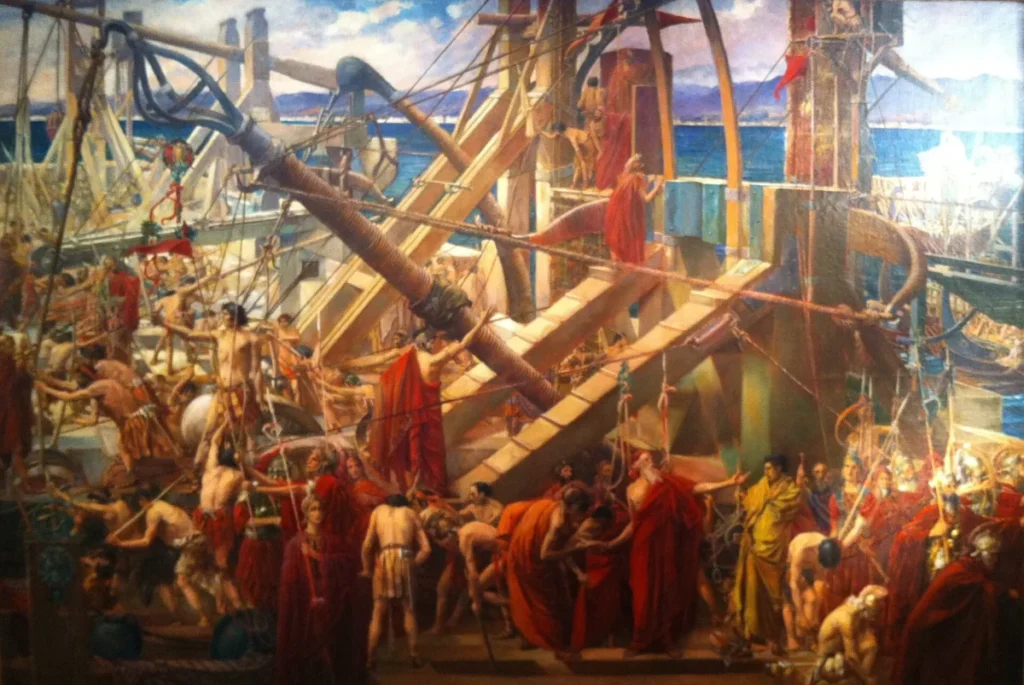
The Siege of Syracuse during the Second Punic War produced casualty figures between 100,000 and 250,000 according to historical sources. Roman forces commanded by Marcus Claudius Marcellus besieged the Greek city in Sicily for approximately two years using starving tactics combined with direct assault. The bloodiest battles in ancient history included this siege because Carthaginian forces defended the city while Roman legionaries attacked continuously. Syracuse contained approximately 350,000 inhabitants who endured starvation, disease, and combat casualties over the extended siege.
Marcellus employed massive siege engines and assault towers to breach city walls, with urban combat producing continuous casualties. The mathematician and engineer Archimedes designed defensive weapons for Syracuse that delayed Roman conquest for months. When Romans finally breached the walls in 212 BC, massacre followed as legionaries advanced through streets killing defenders and civilians indiscriminately. This bloodiest engagement resulted in the capture of Syracuse and gave Rome strategic control of Sicily. The siege demonstrated Rome’s superior logistics and engineering capabilities compared to Greek and Carthaginian forces.
7. Battle of Hadrianopolis (378 AD)
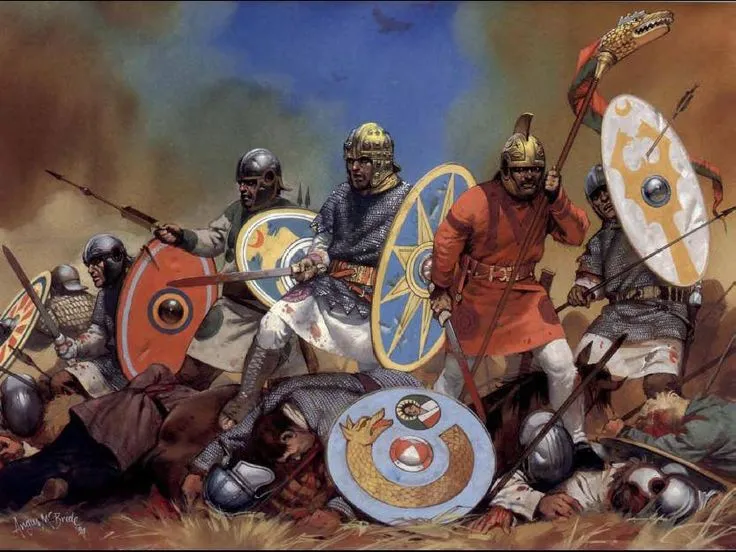
The Battle of Hadrianopolis in 378 AD killed approximately 40,000 Roman soldiers and possibly several thousand Gothic warriors, making this the most catastrophic Roman military defeat of the late imperial period. Gothic forces commanded by Fritigern surrounded and destroyed the Roman army led by Emperor Valens himself during summer campaigning in Thrace against invading barbarians. The bloodiest battles in ancient history included this engagement because the emperor personally fell in combat, along with numerous generals and experienced officers. Roman casualty figures represented an irreplaceable loss of military expertise and command structure that the Eastern Empire could not easily replace.
When Gothic cavalry surrounded the Roman army on open terrain, legionaries experienced complete tactical defeat against mobile Germanic warriors. The bloodiest segments involved hand-to-hand combat where Gothic warriors systematically cut down Roman infantry unable to maintain phalanx formation. Approximately 35,000 Roman soldiers died on the battlefield, with survivors scattered into nearby forests and cities. This bloodiest engagement produced a power shift in Eastern Europe that altered Roman frontier strategy permanently, ultimately leading to Gothic settlement within Roman territory. The consequences of Hadrianopolis contributed directly to the Western Empire’s eventual collapse decades later as Germanic tribes recognized Rome’s military vulnerability.