

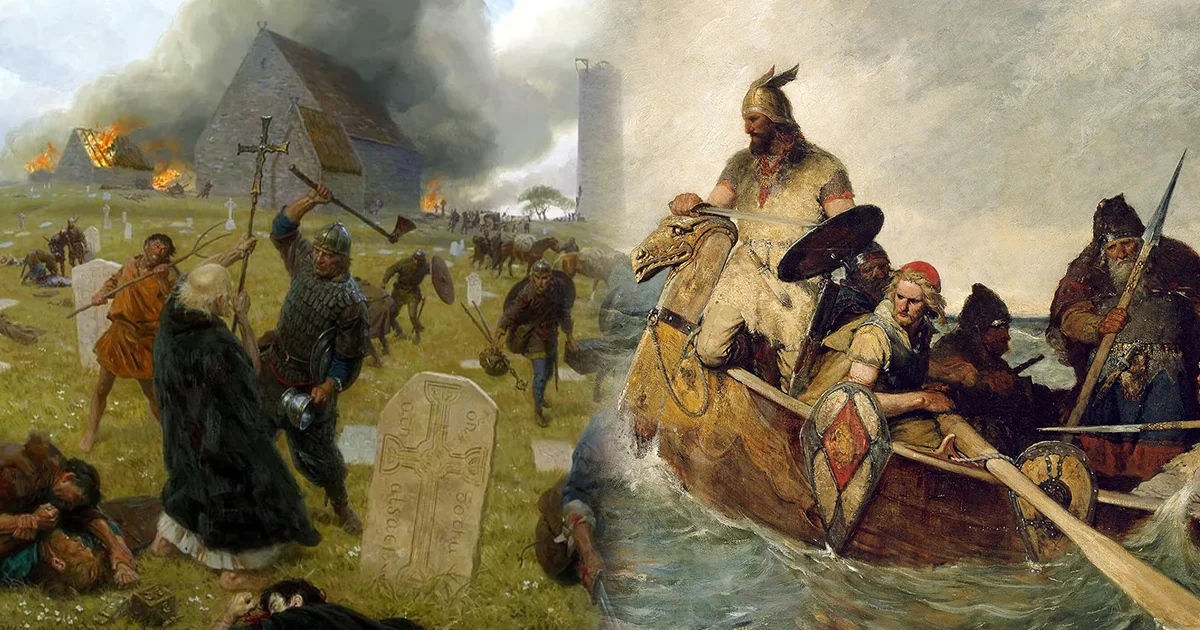
The sudden appearance of Viking longships along European coasts transformed the ninth century into an age of terror for monastic communities and coastal settlements. Early medieval chronicles captured these raids in vivid detail, preserving eyewitness accounts of destruction and plunder. Writers across England, Francia, and Byzantium documented specific attacks by Norse warriors between 793 and 860.
These chronicle entries provide historians with precise dates, locations, and descriptions of Viking tactics. The Anglo-Saxon Chronicle, Frankish Annals of St. Bertin, and Byzantine sources each recorded raids from different perspectives. Monks and court scribes wrote what they witnessed or learned from survivors, creating a network of contemporary evidence.
The following five raids stand out for their exceptional documentation in early medieval texts. Each attack reveals how chroniclers processed the shock of Viking violence and how these raids reshaped defensive strategies across Christian Europe.
1. Lindisfarne Monastery Under Assault in 793
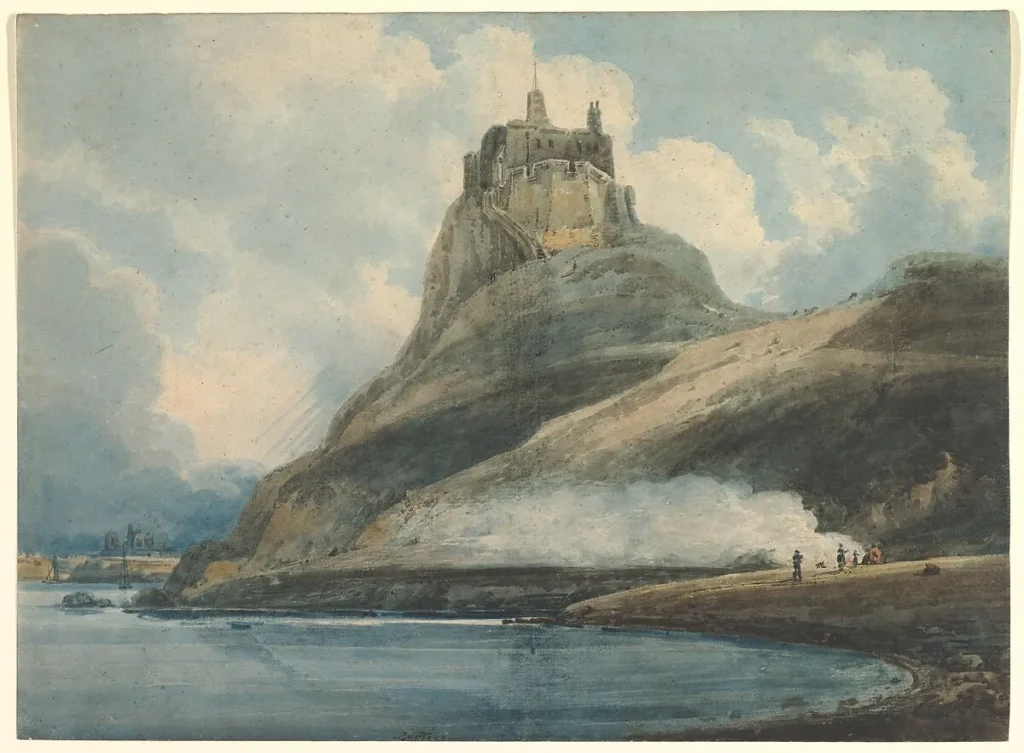
The Anglo-Saxon Chronicle entry for 793 begins with ominous portents: immense sheets of lightning, whirlwinds, and fiery dragons seen flying through the sky over Northumbria. On June 8, 793, Viking longships landed on the tidal island of Lindisfarne off England’s northeast coast. Raiders stormed the monastery of St. Cuthbert, slaughtering monks, drowning some in the sea, and carrying others away as slaves. The attackers desecrated sacred relics and plundered the church’s accumulated treasures before vanishing back across the North Sea.
Alcuin of York, a Northumbrian scholar serving at Charlemagne’s court in Francia, learned of the raid weeks later and wrote urgent letters to church leaders. His correspondence to Higbald, Bishop of Lindisfarne, describes how pagans poured the blood of saints around the altar and trampled the bodies of holy men in God’s temple like dung in the street. Alcuin interpreted the attack as divine punishment for the sins of Northumbria’s people. The raid on Lindisfarne marked the beginning of sustained Viking raids against Britain and entered chronicle tradition as the first major strike against a defenseless Christian community.
2. Jarrow’s Failed Defense in 794
The year following Lindisfarne, Viking ships sailed up the River Tyne to attack another Northumbrian monastery at Jarrow in 794. The Anglo-Saxon Chronicle records this raid with additional details provided by Symeon of Durham writing in the twelfth century but drawing on earlier sources. The raiders targeted the monastery at the mouth of the Don tributary, alighting from their vessels to plunder the religious community that had once housed the Venerable Bede.
Unlike Lindisfarne, the Jarrow raid met resistance. Local defenders killed a Viking leader during the attack, marking one of the earliest recorded instances of successful opposition to Norse raiders in England. A storm arose as the Vikings attempted their escape, breaking their ships on rocks at the river mouth near Tynemouth. The Anglo-Saxon Chronicle states that those who reached shore alive were slaughtered by pursuing Saxons. This raid demonstrated that Viking attacks could fail when met with organized defense and unfavorable weather, though such outcomes remained rare in the chronicle record of early raids.
Built out of a love for history, kept free from distractions.
Spoken Past is an independent project shaped by curiosity, care, and long hours of research. Reader support helps keep it maintained, carefully researched, and open to everyone.
3. Nantes and the 843 Massacre
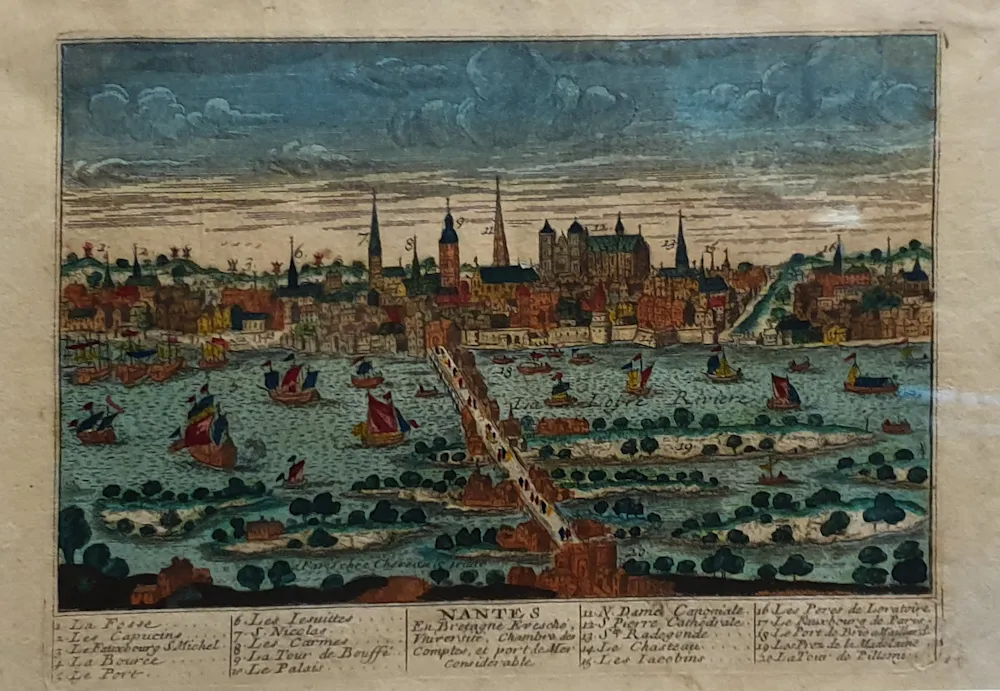
The Frankish Annals of St. Bertin provide a detailed account of the Viking attack on Nantes, a prosperous city on the Loire River in western Francia, on June 24, 843. A Norse fleet that had established a summer base on the nearby island of Noirmoutier sailed up the Loire and found the city depleted of defenders. Recent Frankish civil wars had killed many of Nantes’s nobles and military leaders, leaving the population vulnerable.
Viking warriors stormed through the city on the feast day of St. John the Baptist, killing Bishop Gohard at the altar while he celebrated mass. The Annals record specific brutalities:
- Children clinging to their dead mothers’ breasts drank blood rather than milk
- Stone church floors ran red with the blood of holy men
- The altar dripped with the blood of innocents killed without regard to age or sex
After the massacre, raiders pillaged Nantes’s treasures, burned churches, and seized prisoners for ransom before returning to their ships. The chronicle writer’s eyewitness testimony includes emotional commentary about tears preventing proper description of the day’s calamity. Some historians argue that Lambert, a Breton noble in conflict with Frankish authority, guided the Viking fleet to Nantes, making this raid an early example of Norse warriors serving as mercenaries in local power struggles.
4. Paris Under Siege in 845
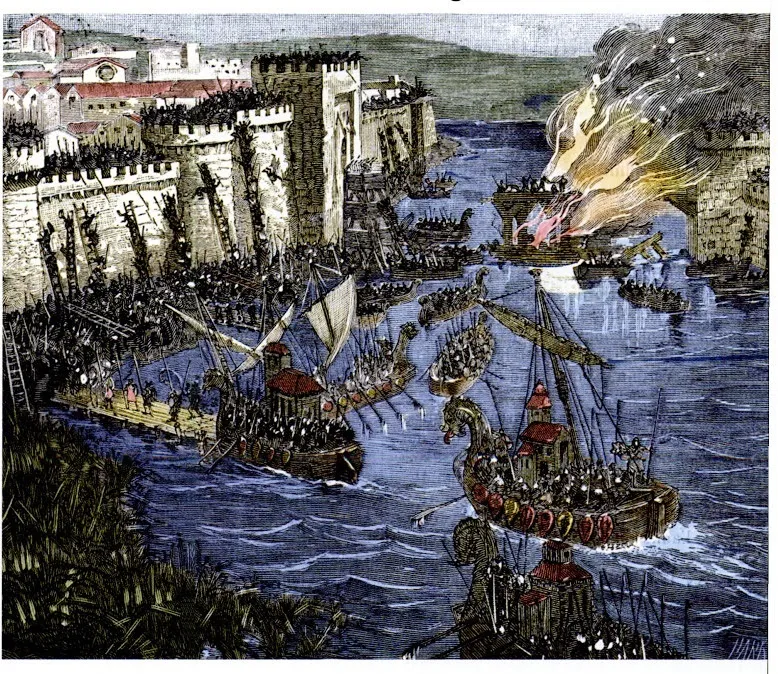
In March 845, a Viking fleet of 120 ships carrying more than 5,000 warriors entered the Seine River under the command of a chieftain the Frankish chronicles call Reginherus, possibly identifiable with the legendary Ragnar Lodbrok. The Annals of St. Bertin chronicle the fleet’s progression up the Seine toward Paris. King Charles the Bald assembled a defensive army and divided it into two contingents, one for each riverbank.
The Viking force attacked and defeated one division of the Frankish army, capturing 111 prisoners whom they hanged on an island in the Seine as sacrifices to Odin. This public execution through hanging served both religious purposes and psychological warfare, terrorizing the remaining Frankish defenders. The Norse warriors reached Paris on Easter Sunday, March 29, and entered the city. A plague outbreak in the Viking camp nearly disrupted the occupation, but the raiders recovered after a Christian prisoner advised them to undertake a fast.
Charles the Bald ultimately paid 7,000 livres (approximately 2,570 kilograms) of silver and gold to secure the Vikings’ withdrawal from Paris. The Annals of St. Bertin record this as the first major Danegeld payment in Frankish territory, establishing a precedent that would encourage future raids. The siege of Paris in 845 demonstrated that even major Frankish cities lacked adequate defenses against determined Viking attacks and that tribute payments offered rulers an alternative to military confrontation.
5. Constantinople Faces the Rus in 860
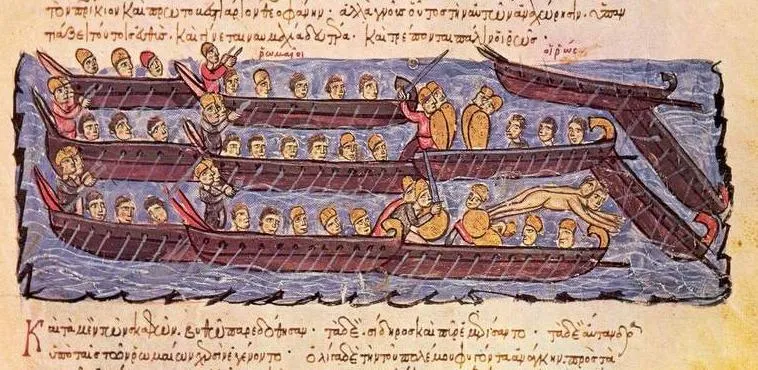
On June 18, 860, a fleet of 200 ships carrying approximately 20,000 Rus Viking warriors emerged from the Bosporus to attack Constantinople, capital of the Byzantine Empire. Patriarch Photius of Constantinople, who led the city’s defense in Emperor Michael III’s absence, documented the raid in homilies delivered to the besieged population. Byzantine sources describe the attack as completely unexpected because the emperor was campaigning on the eastern frontier and the Byzantine navy was engaged fighting Arab forces.
The Rus warriors, Scandinavian Vikings who had established trading settlements along Russian river routes, pillaged the suburbs of Constantinople for several days. Photius’s sermons describe monasteries burned and populations slaughtered in outlying districts while the city’s massive Theodosian Walls prevented the attackers from breaching the urban core. The Byzantine navy and Varangian Guard eventually organized a counterattack using Greek fire, the empire’s secret incendiary weapon that proved effective against wooden ships.
The Rus fleet withdrew suddenly, which later Byzantine chronicles attributed to a miracle performed by the Virgin Mary through the intercession of Patriarch Photius. The patriarch’s contemporary writings provide the earliest detailed Byzantine account of Rus Vikings, whom he describes as an obscure nation from the far north previously unknown to most Romans. This raid prompted Byzantine diplomatic efforts to convert the Rus to Christianity and establish treaties that would transform raiders into trading partners. The 860 attack on Constantinople represents the furthest south that Viking raids reached during the ninth century and demonstrates how Norse warriors operated across extraordinary distances from Scandinavia to the Black Sea.