
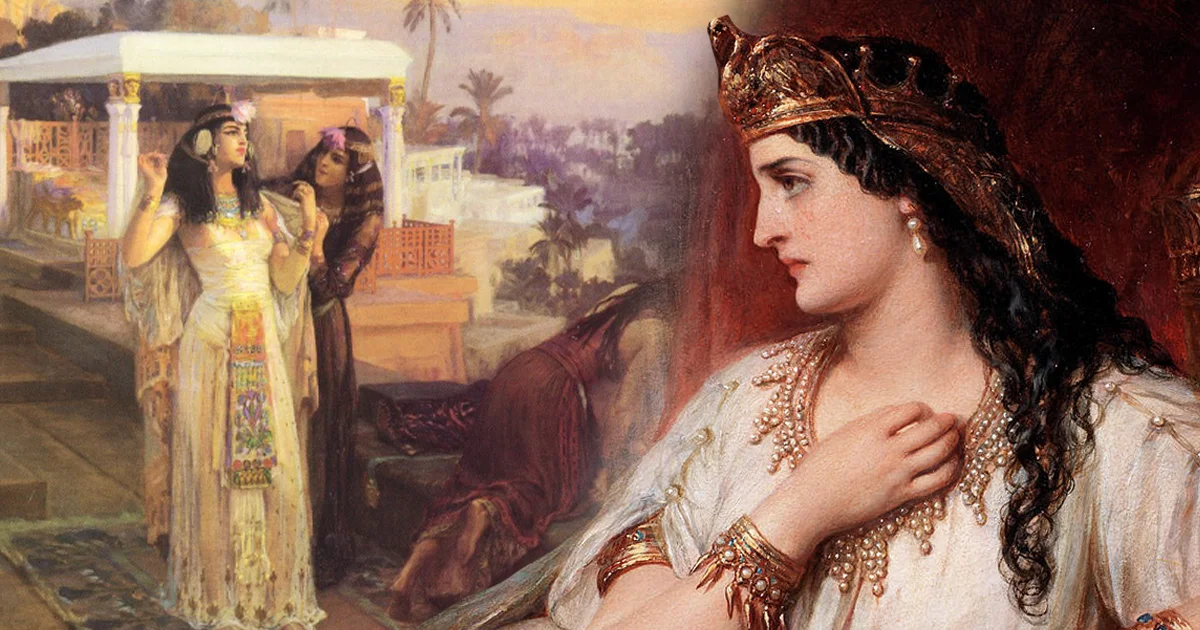
Cleopatra VII Thea Philopator became Egypt’s final sovereign ruler in 51 BC at eighteen years old. She inherited a kingdom drowning in debt, weakened by famine, and caught between warring Roman factions. The Ptolemaic dynasty had controlled Egypt since 305 BC when Ptolemy I Soter, a Macedonian general under Alexander the Great, seized power after Alexander’s death.
For nearly three centuries, Greek-speaking pharaohs ruled from Alexandria while maintaining Egyptian religious traditions. Cleopatra broke this pattern by learning the Egyptian language, becoming the first Ptolemaic ruler in 300 years to speak directly with native subjects. She commissioned temples at Dendera and Philae, appearing in traditional pharaonic dress with the double crown of Upper and Lower Egypt. When Roman soldiers entered Alexandria on August 1, 30 BC, the last pharaoh of Egypt died by her own hand, ending three millennia of independent rule.
Greek Rulers in Egyptian Dress
Ptolemy I Soter founded his dynasty in 305 BC after Alexander’s empire collapsed into competing kingdoms. He established Alexandria as his capital, a Greek-speaking metropolis that would become the Mediterranean’s intellectual center. The Ptolemies married siblings to preserve Macedonian bloodlines while governing millions of native Egyptians who spoke a different language and worshipped different gods.
Each Ptolemaic pharaoh adopted Egyptian royal titles and commissioned temple reliefs showing themselves in traditional regalia. The priests at Memphis crowned them according to rituals dating back to Egypt’s First Dynasty around 3100 BC. They made offerings to Ra, Osiris, Isis, and Horus just as Egyptian-born pharaohs had done for millennia.
By Cleopatra’s birth around 69 BC, the dynasty had survived numerous civil wars and Roman military interventions. The kingdom owed massive debts to Rome after Ptolemy XII borrowed heavily to secure his throne. Egypt’s last pharaoh inherited this precarious situation when her father died in 51 BC.
Palace Coup and Exile
Ptolemy XII named Cleopatra and her ten-year-old brother Ptolemy XIII joint rulers before his death. The teenage queen immediately clashed with the royal advisors who controlled her brother. These officials viewed her intelligence and ambition as threats to their influence over the young king.
Within eighteen months, palace conspirators forced the last pharaoh of Egypt into exile. She fled to Syria in 49 BC and raised mercenary forces among Arab tribes. Egypt meanwhile suffered devastating Nile floods that destroyed crops and triggered food riots in Alexandria. The currency collapsed as officials debased silver coinage to pay government expenses.
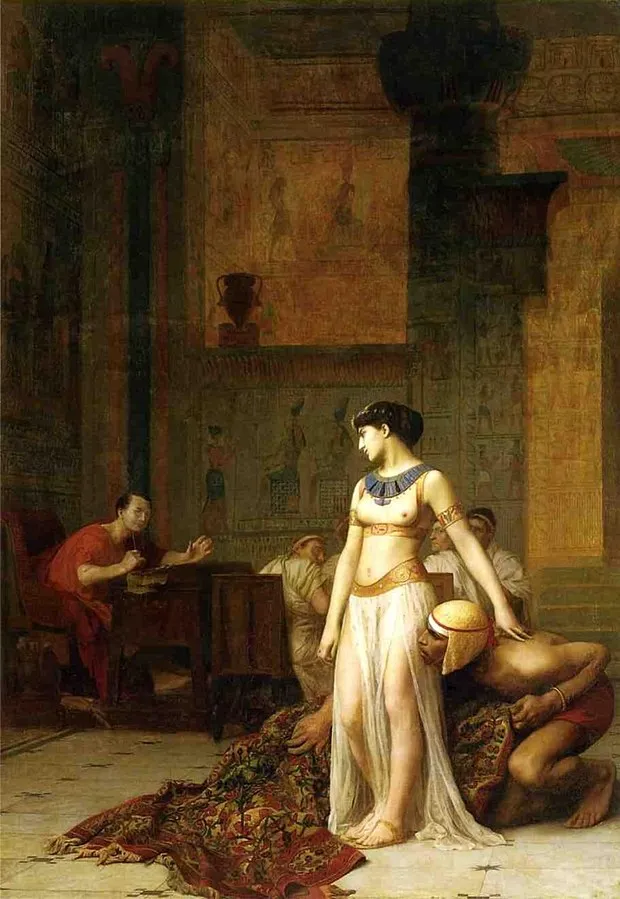
Julius Caesar arrived in Alexandria in October 48 BC while pursuing his enemy Pompey the Great. Cleopatra saw her opportunity and returned secretly to the palace. According to Plutarch, servants smuggled her past guards rolled inside a carpet or linen sack. She appeared before Caesar directly, bypassing her brother’s advisors entirely.
War in Alexandria
Caesar’s presence triggered immediate crisis. Ptolemy XIII’s advisors besieged the royal palace in November 48 BC, trapping Caesar and Cleopatra inside with a small Roman garrison. Fighting erupted across Alexandria’s streets and harbor. The famous Library of Alexandria suffered fire damage when Caesar burned Egyptian ships to prevent their capture.
The siege lasted four months until reinforcements arrived in March 47 BC under Mithridates of Pergamon. The combined Roman-Pergamese army routed Ptolemy XIII’s forces at the Battle of the Nile. The young king drowned in the river while fleeing the battlefield, still wearing his golden armor.
Caesar installed Cleopatra as Egypt’s sole ruler alongside her younger brother Ptolemy XIV as ceremonial co-regent. She held real authority while he remained a figurehead. The last pharaoh of Egypt gave birth to Ptolemy XV Caesar, called Caesarion, in June 47 BC. Ancient sources debate whether Caesar was truly the father, though Cleopatra publicly claimed him as such.
Governing the Nile
The last pharaoh of Egypt demonstrated exceptional administrative skill during her two-decade reign. She personally toured grain storage facilities and irrigation systems along the Nile valley. Tax papyri from her administration show a centralized bureaucracy managing water distribution, crop assessments, and temple endowments across Upper and Lower Egypt.
Cleopatra commissioned major construction at Dendera’s Temple of Hathor, where reliefs still depict her and Caesarion in full pharaonic regalia making offerings to the goddess. These images followed artistic conventions unchanged since the Middle Kingdom, presenting her as a traditional Egyptian ruler despite her Greek ancestry. She controlled Egypt’s vast grain reserves, producing enough wheat to feed millions. This made her kingdom essential to Rome’s survival since Egyptian grain shipments fed the capital’s poor during summer months when other sources ran low.
The pharaoh minted bronze and silver coins bearing her actual portrait rather than idealized images. These pieces circulated throughout the eastern Mediterranean, advertising her sovereignty to merchants and rulers. She spoke nine languages including Egyptian, Greek, Latin, Hebrew, Aramaic, Ethiopian, Troglodyte, and the languages of the Medes and Parthians. This linguistic skill allowed her to negotiate directly with foreign ambassadors without interpreters.
Built out of a love for history, kept free from distractions.
Spoken Past is an independent project shaped by curiosity, care, and long hours of research. Reader support helps keep it maintained, carefully researched, and open to everyone.
The Antony Alliance
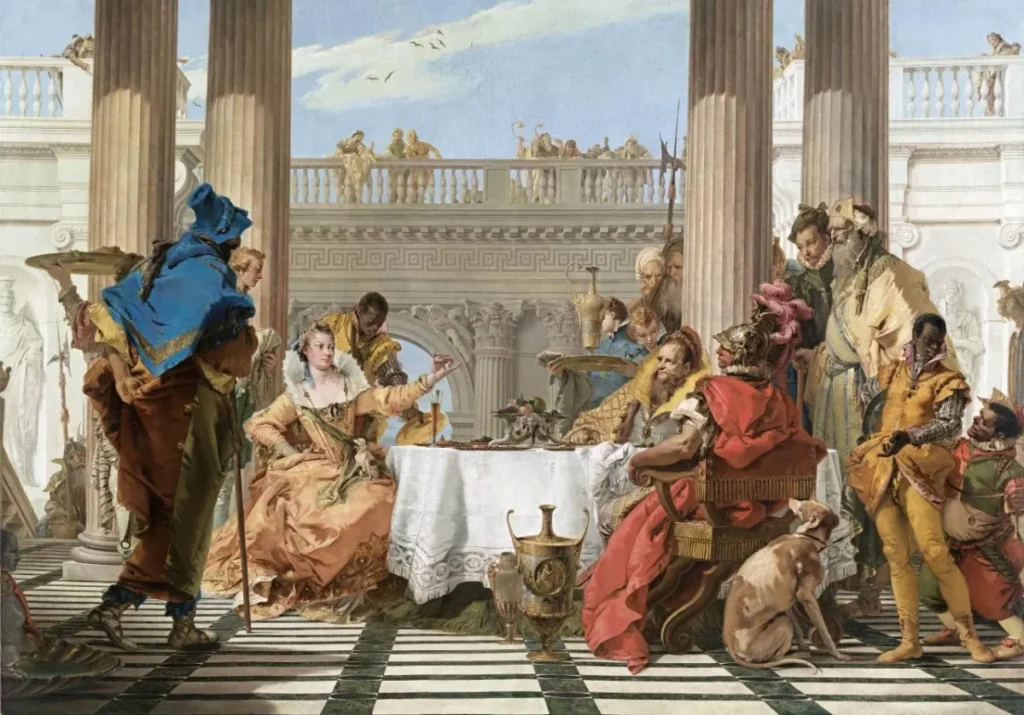
Caesar’s assassination on March 15, 44 BC threw Rome into civil war between his heirs and his assassins. Cleopatra returned to Alexandria with young Caesarion and watched events unfold. When Ptolemy XIV died suddenly in 44 BC, likely poisoned on her orders, she elevated Caesarion to co-ruler status.
Mark Antony summoned Egypt’s last pharaoh to Tarsus in 41 BC to answer questions about her loyalty during Rome’s civil wars. She arrived on a magnificent river barge with purple sails, a gilded stern, and silver oars. Attendants dressed as sea nymphs rowed while musicians played flutes and lyres. Cleopatra herself appeared costumed as Aphrodite, the goddess of love.
The theatrical display captivated Antony completely. They formed a partnership that produced twins Alexander Helios and Cleopatra Selene in 40 BC, then a third child Ptolemy Philadelphus in 36 BC. Antony spent winters in Alexandria while officially governing Rome’s eastern provinces.
In 34 BC, Antony held the Donations of Alexandria ceremony in the city’s main gymnasium. He granted Cleopatra control over Cyprus, Crete, Cyrenaica, and portions of Syria and Phoenicia. He proclaimed Caesarion the legitimate son of Julius Caesar, directly challenging Octavian’s position as Caesar’s adopted heir. These acts gave Octavian the justification he needed to declare war on Egypt rather than on fellow Roman Antony.
Actium’s Disaster
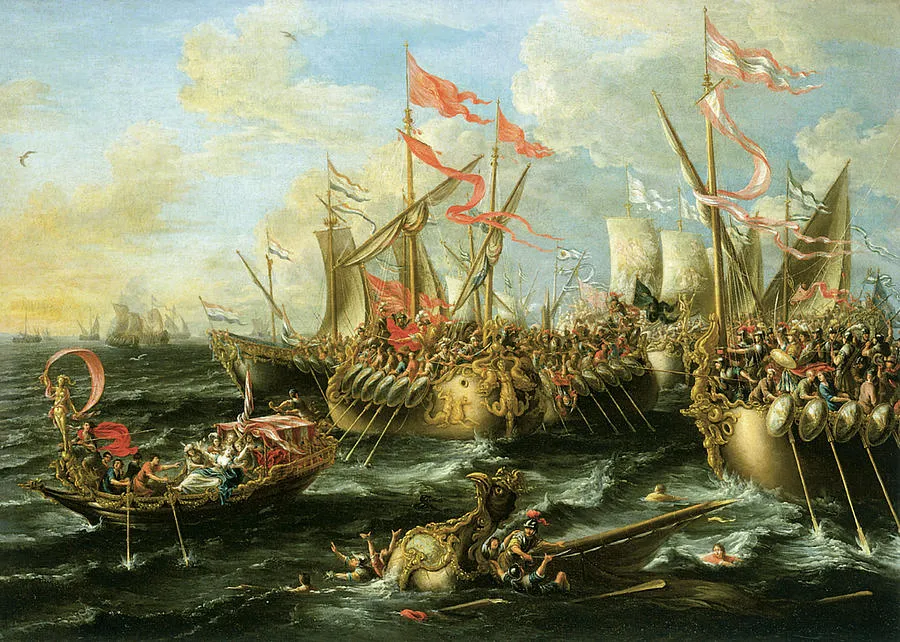
The decisive naval battle occurred off Actium on September 2, 31 BC. Egypt’s last pharaoh commanded sixty Egyptian warships in the engagement. Antony deployed 230 vessels total against Octavian’s 400 lighter, more maneuverable galleys. Marcus Agrippa, Octavian’s admiral, used superior tactics that trapped the heavier Roman-Egyptian ships against the coast.
When afternoon winds shifted favorably, Cleopatra’s squadron broke through the Roman line and sailed south toward Egypt. Antony abandoned his flagship to follow her, leaving his remaining fleet without leadership. Agrippa’s forces destroyed them over the next several hours. Thousands drowned when their burning ships sank. The survivors surrendered or deserted.
The defeat sealed Egypt’s fate. Antony’s land armies defected throughout the winter as Octavian marched east. The last independent kingdom in the Mediterranean world had less than a year remaining before Roman annexation.
Alexandria Falls
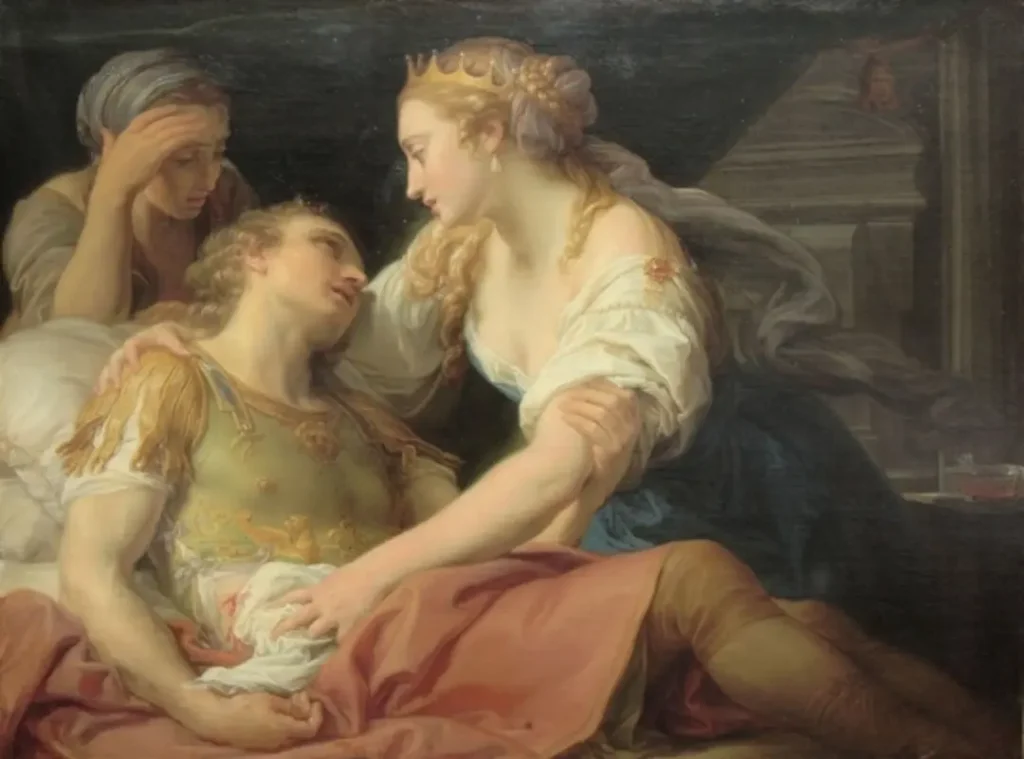
Octavian invaded Egypt in July 30 BC, advancing from the border fortress of Pelusium toward Alexandria. The city’s garrison opened the gates without resistance. Antony led one final cavalry charge on July 31 that achieved minor success, but his infantry and remaining ships defected to Octavian the next morning.
False reports reached Antony claiming Cleopatra had died. He stabbed himself with his sword but botched the suicide attempt. Servants carried the dying man to Cleopatra’s mausoleum where she had barricaded herself with Egypt’s remaining royal treasure. He died in her arms.
Octavian captured the last pharaoh of Egypt and placed her under guard. He intended to display her in chains during his triumph celebration in Rome, the ultimate humiliation for a defeated enemy. On August 10 or 12, 30 BC, she died at age thirty-nine. Ancient historians claim an asp delivered the fatal bite, though modern scholars suggest poison dissolved in wine seems more likely given the snake’s unpredictable venom delivery.
Octavian granted her final request to be buried beside Antony. Their tomb remains undiscovered somewhere beneath modern Alexandria’s streets and buildings. The location probably lies near the ancient palace district, now submerged under Alexandria’s eastern harbor or buried under centuries of urban development.
Three Millennia End
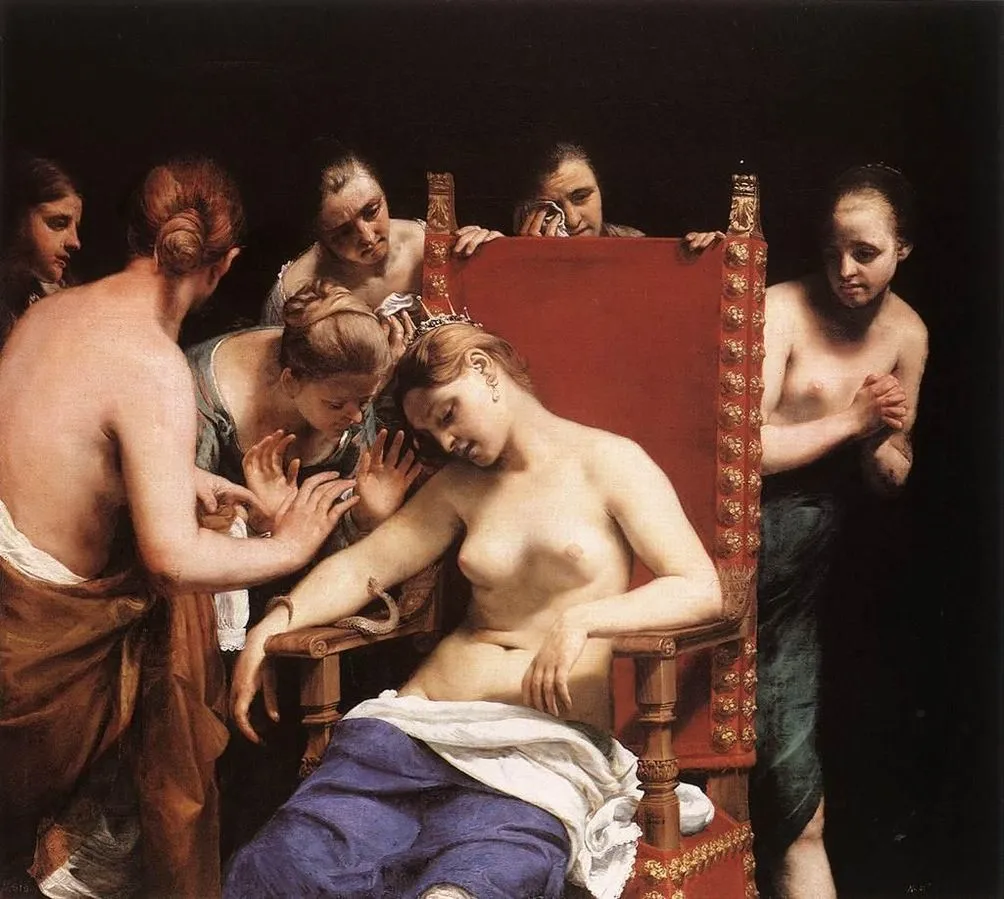
Octavian executed seventeen-year-old Caesarion in late August 30 BC, eliminating any rival claim to Julius Caesar’s legacy. He spared Cleopatra’s three children by Antony, sending them to Rome where his sister Octavia raised them. Cleopatra Selene eventually married King Juba II of Mauretania, becoming queen of a Roman client kingdom in North Africa. Her brothers disappear from historical records and likely died young.
Egypt became Octavian’s personal property rather than a standard Roman province. He appointed equestrian prefects to govern in his name, completely bypassing the Senate. Senators were actually forbidden from entering Egypt without imperial permission, showing how valuable Octavian considered the territory. The country’s agricultural output made it the empire’s most valuable possession, shipping 20 million modii of wheat annually to Rome. This amount fed the capital’s population for four months each year.
Egypt Under Rome
The traditional priesthoods continued performing rituals at temples throughout Egypt for centuries after annexation. They still crowned Roman emperors as pharaohs in absentia at Memphis, maintaining the ancient fiction of divine kingship. Temple reliefs show emperors in Egyptian dress making offerings to the gods, just as Cleopatra had done.
But no one ruled Egypt as an independent sovereign after the last pharaoh of Egypt died in 30 BC. Greek remained the administrative language in Alexandria, Thebes, and other major cities. Egyptian persisted in rural villages, slowly evolving into Coptic. All real authority flowed from Rome through the prefect’s office. The Ptolemaic palace complex became a Roman administrative center. The Museum and Library gradually declined as Alexandria’s intellectual importance diminished under imperial rule.
Pharaonic civilization began around 3100 BC when King Narmer unified Upper and Lower Egypt into a single kingdom. It endured through thirty dynasties, foreign invasions by Hyksos and Assyrians, Persian occupations, and finally the Ptolemaic period. Cleopatra VII ended this three-thousand-year tradition when she chose death over captivity. Egypt’s identity transformed from independent kingdom to imperial province, its legendary wealth fueling Rome’s expansion across three continents.