
A tin cylinder from the seabed opened like a time capsule. Inside lay gray tablets the size of coins, still dry after two thousand years. They were found in a wreck off Tuscany that also yielded a mortarium, a handful of boxwood vials, and a bronze cup likely used for bloodletting. The objects look ordinary until you place them back in a hand: a traveling physician’s hand, Greek trained, working as the ship hugged Italy’s coast in the second century BCE.
The wreck is known as the Relitto del Pozzino, a merchant ship that sank near the Gulf of Baratti, opposite ancient Populonia. Divers located it in 1974. Archaeologists excavated the site in the late 1980s and early 1990s, when planks of hull, cargo, and a cluster of personal items came up through careful lifting and sieving. Among them were the tools and containers of a medical kit. That kit lets us look past textbook summaries and ask a sharpened question: what did a Greco-Roman doctor actually use day to day, and how?
This article focuses on the Pozzino finds and what they can tell us. The date is the second half of the second century BCE, the coast is northern Etruria, and the evidence is a mix of objects, residue analysis, and comparative collections from other sites, especially Pompeii. It is a practical history: each tool, what it is, how it worked, and what kinds of patients it could treat at sea or in a harbor town.
What was in the chest, and how do we know it belonged to a doctor?
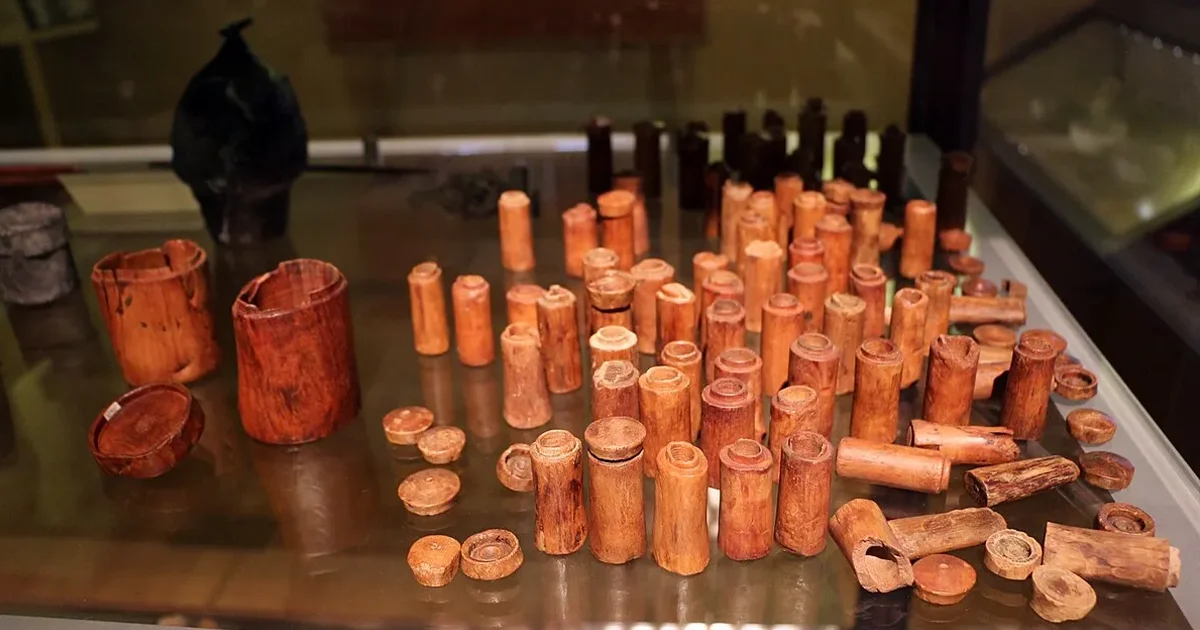
Underwater wood does not last forever. The chest itself rotted away. Its outline survives because the items that once sat inside settled together around an iron lock. Conservators recovered a group that makes a coherent kit: small wooden vials of boxwood, a tin cylindrical container with tablets preserved inside, a mortar for grinding and mixing, glass vessels, and a bronze cup shaped for suction. Outside the cluster lay other objects related to daily life on board. The concentration of medical containers in one patch is the tell.
A second line of evidence comes from modern laboratory work. The tin container was unopened when found. X-rays showed layered content before the lid was lifted. The tablets inside were analyzed using techniques such as X-ray diffraction, gas chromatography mass spectrometry, and microscopy. The results identified abundant zinc compounds together with starch, traces of animal and plant lipids, pine resin, pollen, and plant fragments. In short, a collyrium, a disc-shaped drug for eye complaints that Greek and Roman texts describe and physicians knew how to compound. For a readable overview of the research, see the open abstract of the 2013 study published in the Proceedings of the National Academy of Sciences, which reports the zinc-rich composition and botanical traces from the Pozzino tablets. The full paper is linked later in this article for those who want to dig into methods and spectra.
Where was the ship going, and why would a doctor be on board?
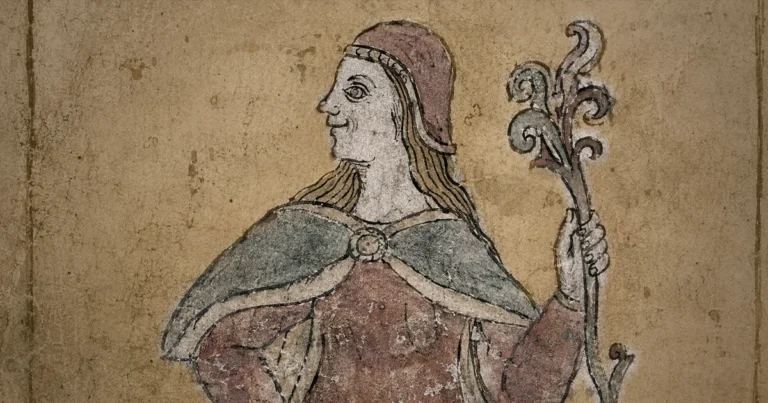
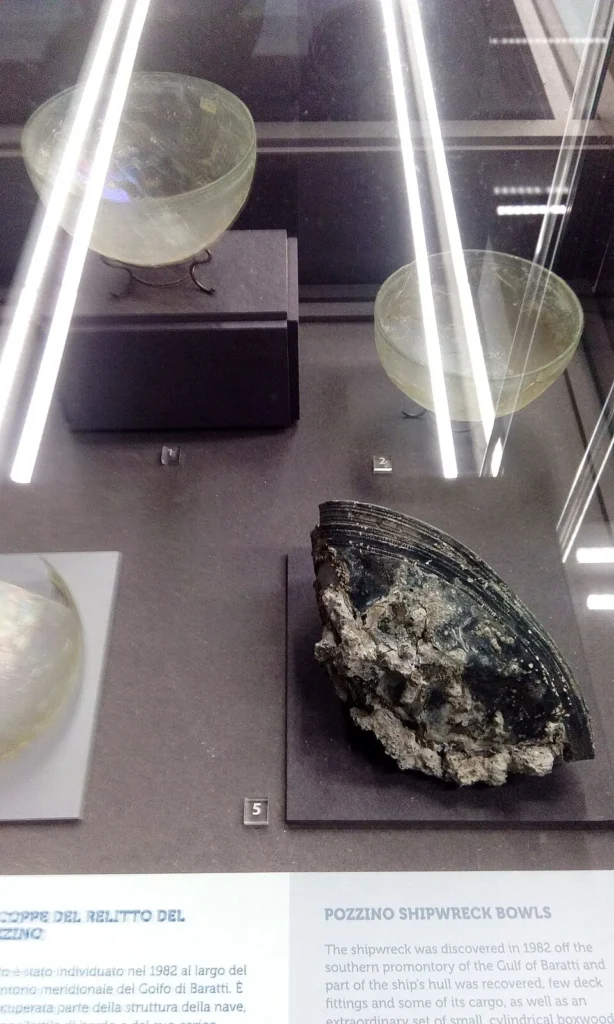
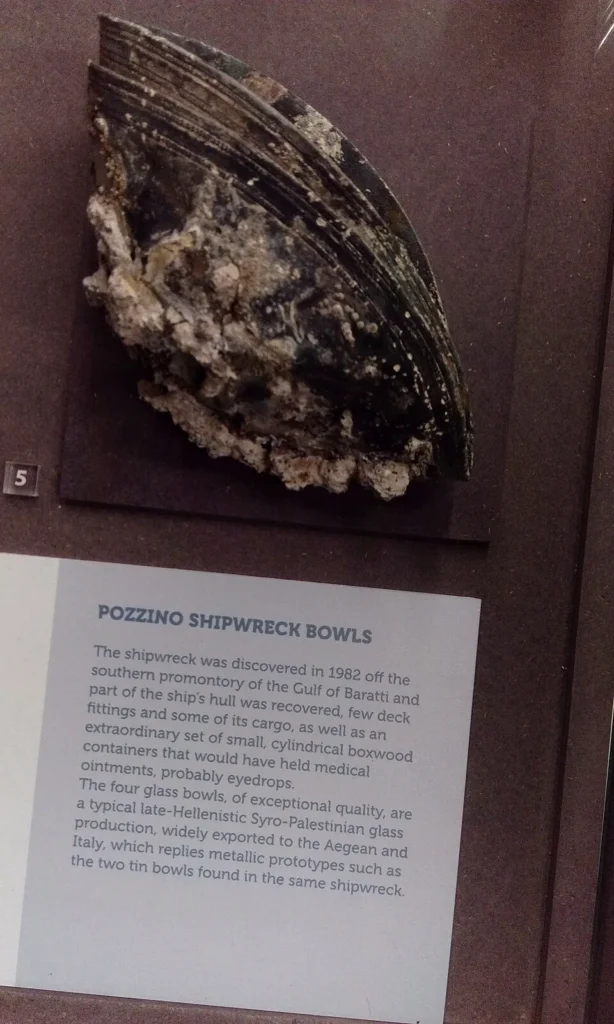
The ship moved along a route that connected the Tyrrhenian ports with markets and anchorages to the south and east. The cargo, which included glass bowls likely from the Syro-Palestinian coast along with tin and bronze vessels, points to eastern suppliers, Italian buyers, and a working crew that might have included migrants or seasonal hands. A physician on such a vessel served for pay, treated sailors and passengers, and did business in the harbors. Greek doctors were common across the Mediterranean by this date, trained in a mix of Hippocratic methods and local craft traditions. A portable chest fit the work. The kit had to be tough enough to travel, and flexible enough to handle eye irritation, infected cuts, chest colds, or a cook’s burn.
The tin pyxis and the eye tablets: how did they work?
A pyxis is a small round container with a tight lid. Tin mattered because it sealed well and resisted corrosion in the short term. The Pozzino pyxis held tablets about 4 centimeters wide, discoid and gray. Analytical work identified hydrozincite and smithsonite as the dominant minerals, together with starch, beeswax traces, pine resin, and signatures of animal and plant fats. Pollen analysis found clumps that likely came from a bee product, perhaps honey or wax used in the mixture. This is not a random dish. Greek and Roman writers describe zinc salts as useful for eye and skin conditions, and they discuss collyria pressed into little loaves or cakes. In practice a doctor moistened a tablet in water or wine, then applied the softened surface to the eyelids or dissolved it to wash the eye. Zinc carbonates calm inflammation and help dry weeping tissue. Resin and wax contribute texture and mild antiseptic action. Starch binds the mix and slows how fast it dissolves.
This is practical chemistry. Nothing here requires a temple or miracle. It requires knowledge of materials, a steady hand with a mortar and pestle, and attention to patients who work in sun and wind, who face grit blown off cliffs, who sleep on deck, and who share cramped spaces. Eye irritation would have been constant on a coastal merchant circuit.
If you want to see the technical summary, the PNAS write-up that first described the Pozzino tablets’ composition is accessible here: Ingredients of a 2000-y-old medicine revealed by chemical, mineralogical, and botanical investigations.
The mortarium: the noisy heart of the kit
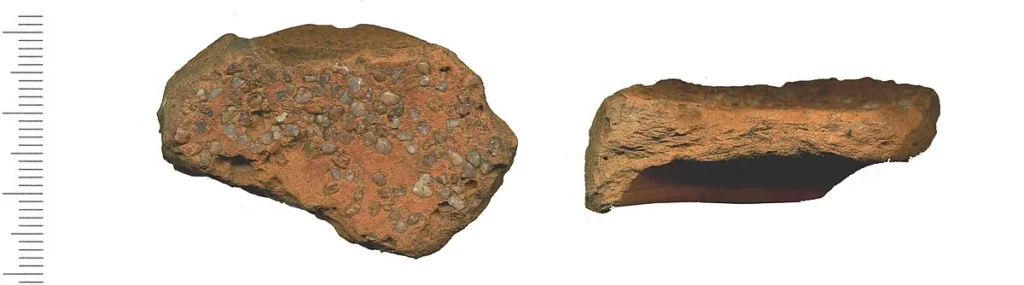
A mortarium is a heavy bowl with a gritty interior used to crush and mix. Roman examples often have a spout so you can pour the finished mixture. On a ship it was the small lab you could carry. Doctors used mortaria to grind dried plant matter, reduce minerals to finer powders, fold resins into fats, and mix soot into salves. Consistency matters in premodern pharmacy. Too coarse, and an eye wash abrades. Too fine, and a powder clumps or loses bite. The visible tools do not tell the whole story because hands do the work. A practitioner learned the sound and feel of the pestle as much as the recipe.
What went through a shipboard mortarium?
-
Dried herbs for poultices, such as thyme or sage for chest rubs.
-
Minerals like zinc carbonate for eye discs.
-
Charcoal for digestive complaints or poultices that need drying power.
-
Resin and wax to stabilize ointments.
-
Salt, wine, and vinegar as solvents or cleansers, depending on the case.
Cupping and bloodletting: what did the bronze cup do?
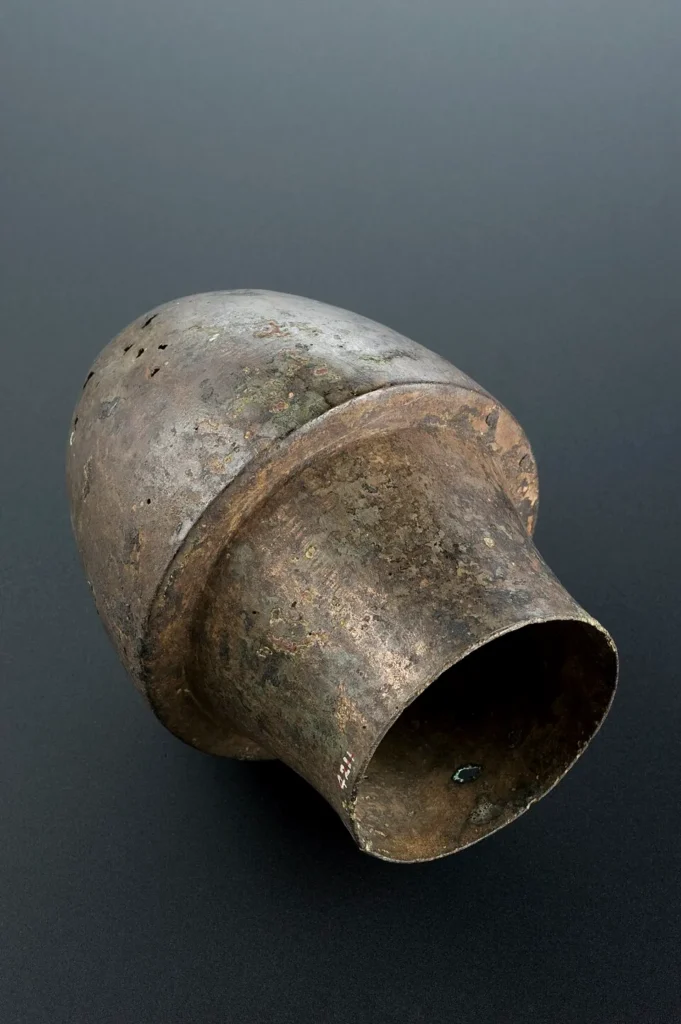
The Pozzino cluster includes a bronze cup that fits cupping practice, a technique Greek writers describe and that Roman doctors adopted widely. Cupping uses heat to create a vacuum inside the cup, then places the rim on the skin to raise a welt and pull fluids to the surface. It can be done dry, which produces suction without an incision, or wet, after light scarification with a scalpel or sharp probe. Practitioners used cupping for deep bruises, sprains, and chest congestion, and to treat what they interpreted as imbalances in humors. Sailors with sore backs and shoulders were prime candidates. The ship gave the practitioner an advantage: steady access to fire. A small brazier, the galley, or even a lamp flame could prime the cup. Wet cupping required a blade that a doctor kept wrapped, then cleaned with vinegar and a cloth.
To a modern reader cupping sits somewhere between massage and minor surgery. To crewmen and deckhands, it was one of the quickest ways to relieve a deep ache or loosen stubborn phlegm. The kit’s bronze vessel suggests a doctor who handled muscular complaints as often as he compounded pills.
Wooden vials and glass bottles: what did they hold?
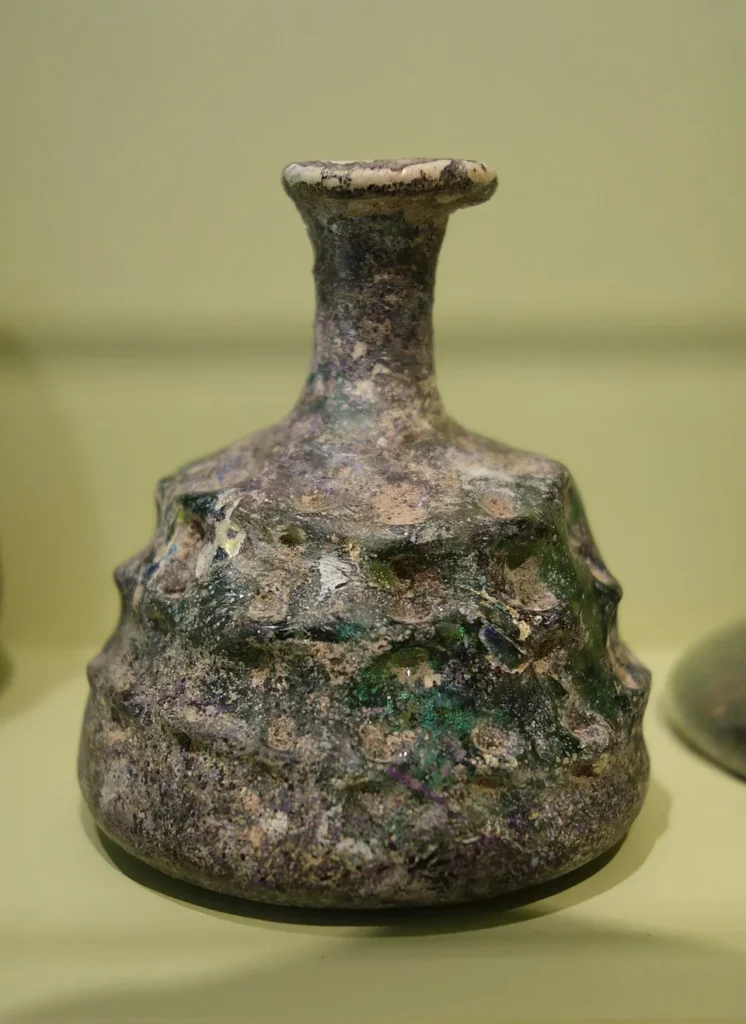
The boxwood vials from the wreck are small, around the size of a thumb, and tough. Boxwood is dense and turns well on a lathe. Wood breathes, so liquids were probably kept in glass, while the wooden vials held dry doses, aromatics, or small amounts of salve wrapped in cloth. The ship also carried glass vessels and, very likely, tiny unguentaria. Unguentaria are slender bottles used for oils, balms, and washes. They travel well, they nest in baskets, and they pour neatly into eyes or onto wounds. A doctor could decant a little oil for a chest rub, mix wine with a mineral powder for a wash, or apply a soothing layer of fat and resin to a cracked heel.
Spatulas and probes: small tools for small jobs
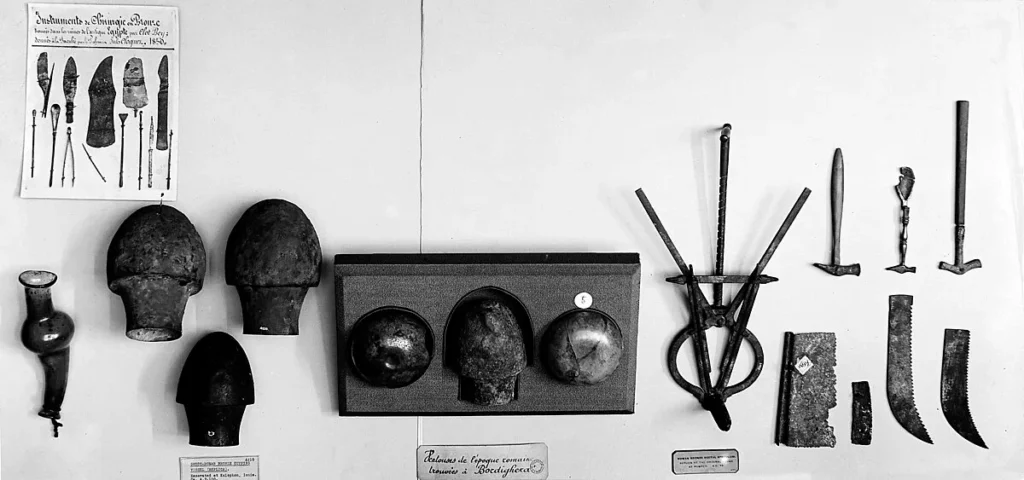
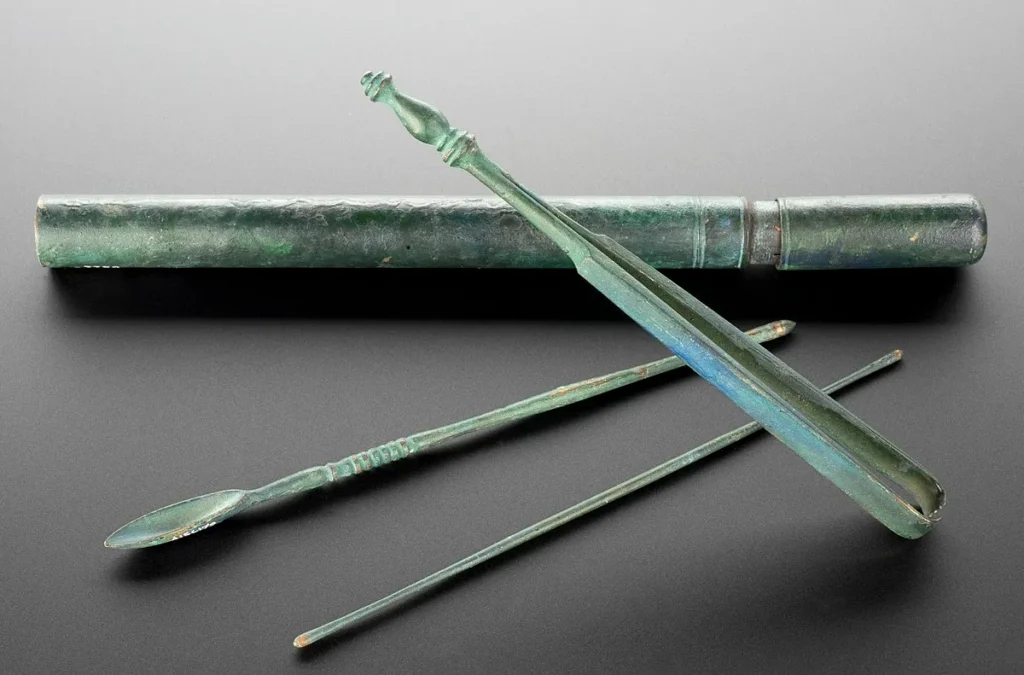
Nothing in the Pozzino kit explicitly names a metal spatula or probe, but these are so common in excavated physician sets that any traveling practitioner likely carried them. The tools are modest and multipurpose. A spatula shaped like a paddle spreads ointments, mixes pastes, or lifts a measured dose from a pyxis without contaminating the rest. Probes come with rounded or pointed ends. They clear earwax, test the depth of a wound, or apply a drop of collyrium to a precise point along the eyelid. The small tools solve small problems, which is where a physician earns trust on a ship. Sailors remember the man who fixed an ear so it no longer buzzed after a storm. Dock workers remember the salve that let a fissure heal.
Comparative sets from Pompeii and other Roman sites show the range. Some include hooks for extracting splinters, tweezers for epilation or wound work, and spoon-probes with little bowls at the tip to deliver liquids one drop at a time.
Built out of a love for history, kept free from distractions.
Spoken Past is an independent project shaped by curiosity, care, and long hours of research. Reader support helps keep it maintained, carefully researched, and open to everyone.
What procedures could a shipboard doctor perform?
You cannot rebuild a city bath house infirmary in a chest. You can do a great deal with a small, well chosen kit. The Pozzino chest and its closest comparanda point to these core procedures:
-
Eye care. Collyria for irritation, redness, and infection. Washes made with wine, vinegar, or water warmed and mixed with mineral powders. Ointments with resin and wax to protect the eyelids.
-
Thermal therapy. Cupping for chest and back complaints, often after light scarification. Warm compresses for muscle strains and coughs.
-
Wound care. Cleaning with wine or vinegar, application of resins and fats, bandaging with cloth and fibers. Spatulas to spread ointment evenly.
-
Skin and nail complaints. Salves with pine resin for cracked heels and calluses. Basic tools to trim or lift ingrown edges.
-
Digestive troubles. Charcoal mixed with wine, soothing oils, or powders dissolved in a liquid to settle the stomach.
-
Respiratory care. Rubs of oil and herbs for colds, and cupping to loosen congestion.
How the Pozzino tablets were made: a practical recipe from the evidence
The Pozzino tablets are remarkable because they preserve enough material to reverse engineer the recipe. The following steps translate the lab results into the doctor’s craft.
-
Prepare the zinc. Start with a zinc-rich mineral such as zinc carbonate scraped from furnace walls during metalworking. Grind it in the mortarium until it is a smooth powder.
-
Bind with starch. Add a measured amount of ground starch. Starch helps bind the tablet and slows dissolution so the medicine lasts when applied. The Pozzino tablets show processed starch granules visible under the microscope.
-
Add fats and resins. Mix in a small amount of animal fat or oil, plus beeswax and pine resin. These give the tablet body, add mild antiseptic properties, and soften the application.
-
Moisten and press. Add just enough liquid to make a workable paste, then press the dough into discs. The Pozzino tablets preserved impressions of fabric on one surface, which suggests the maker pressed or dried them on cloth.
-
Dry and store. Place the discs in a tin pyxis. The tight lid keeps them dry. When needed, moisten the surface to form a smooth layer that can be applied to the eyelid, or dissolve a shaving to make a wash.
The mix reads like a small triumph of practice. Zinc dries and calms. Resin and wax protect. Starch controls the release. The doctor did not need to name hydrozincite or smithsonite to use them well. He needed to know the right scrape of powder, the right sound of the pestle, and the right feel under the fingers when a disc would dry without cracking.
Myth vs Evidence: what a Hellenistic physician could and could not do
-
Myth: ancient medicine was guesswork without results.
Evidence: the Pozzino tablets are targeted preparations, not random mixtures. Zinc carbonates are still used in dermatology. The recipe shows knowledge of binding and stabilizing agents. -
Myth: a traveling doctor carried scalpels and only did surgery.
Evidence: some kits on land include scalpels and hooks, but the Pozzino chest emphasizes pharmacy, cupping, and minor procedures. At sea, prevention and routine care come first. -
Myth: nothing sterile means nothing safe.
Evidence: true sterilization did not exist, yet regular cleaning with wine or vinegar, the use of resins with antimicrobial effects, and sealed storage in tin helped. Risk is real, but so is control. -
Myth: shipwreck finds are too scrambled to tell a clear story.
Evidence: context is always a challenge underwater, but the Pozzino medical items clustered together around an iron lock. Residue analysis ties the cluster to specific therapeutic uses.
What a day with the kit looked like
Picture a coastal run in summer. The physician works the shady side of the deck, because bright light triggers squinting patients and makes eye treatment harder. Two sailors wait. One has grit under the lower eyelid after scraping barnacles. The other cannot shake a cough. The doctor takes a tablet from the pyxis, wets the surface in a small saucer, and smooths the paste across the irritated lid. He instructs the man not to rub and to return after sunset. He stirs oil and crushed herb into a warm rub for the other man’s chest and back, then primes a bronze cup over a flame and sets it on the shoulder blade. The skin rises. He times the cup, releases it with a finger’s edge, and repeats on the other side. Small things first, done cleanly, with tools that fit in a chest.
How we know: methods in plain language
The Pozzino kit is a fortunate case because three kinds of evidence align.
-
Clustered artifacts. Items that had been stored together in a chest now lie together after the wood decayed. The group includes wooden vials, a tin cylinder with tablets, a mortarium, glass vessels, and a bronze cup.
-
Laboratory analysis. Researchers used X-ray imaging to verify intact tablets inside a sealed container before opening it. They then applied a suite of tests: X-ray diffraction for minerals, gas chromatography mass spectrometry for organic compounds, microscopy for fibers and starch granules, and pollen analysis for botanical signatures. The mineral results showed zinc compounds in abundance. Organic analysis detected starch, wax, resin, and lipids. Pollen clumps suggest a bee product as a component.
-
Comparative context. Texts in Greek and Latin describe collyria and zinc treatments for eye conditions. Assemblages from Pompeii and other Roman sites demonstrate the shape and finish of small medical tools. The Pozzino group fits those patterns while highlighting a shipboard emphasis on pharmacy and cupping.
For readers who later plan a visit, the Italian Ministry of Culture notes that Pozzino artifacts are displayed at the Museo Archeologico del Territorio di Populonia in Piombino. The museum’s collection signage and rotating exhibits have featured the shipwreck’s medical chest and related vessels.
Tool by tool: what it is, how it was used, and what a patient felt
Tin pyxis with tablets
-
Form: a small cylindrical tin container with a tight lid, the interior packed with flat medicinal discs.
-
Use: store collyria for eyes, keep them dry and intact. Tin resists moisture and, once corroded shut, protected the contents for two millennia.
-
Patient experience: a cool paste softened and applied to the eyelid that slightly tightens as it dries. Some stinging, then relief.
Mortarium and pestle
-
Form: heavy bowl with a gritty inner surface and a pouring lip.
-
Use: grind minerals to powder, crush herbs, emulsify fats and resins, combine binders.
-
Patient experience: invisible process, but critical to comfort. A well-ground powder makes a gentle eye wash. A poorly ground one scratches.
Bronze cupping vessel
-
Form: small metal cup with a rounded rim.
-
Use: create suction on skin after heating the air inside, either dry or after light scarification.
-
Patient experience: a strong pull, a reddened circle, warmth under the skin. Often a feeling of release after removal.
Wooden vials
-
Form: turned boxwood cylinders with small lids or plugs.
-
Use: store aromatics and dry ingredients, carry measured doses of powders.
-
Patient experience: a steady source of clean drug without the grit of an open bag or the spoilage of a fabric pouch.
Glass unguentaria and small bottles
-
Form: slender glass vessels, sometimes with a pinched rim or narrow neck.
-
Use: hold oils, liquid drugs, and washes; the narrow mouth helps with drop-by-drop control.
-
Patient experience: a drop into the eye, a line of oil along the collarbone, a measured wash over a scrape.
Spatulas and probes (comparative)
-
Form: bronze or iron tools with paddles, spoons, points, and rounded tips.
-
Use: mix, apply, test, and clean; deliver medicine without contaminating a jar; lift a splinter.
-
Patient experience: the comfort of precision. No fingers in the eye, no handful of paste. A narrow spoon places a drop exactly where it belongs.
Tweezers and small hooks (comparative)
-
Form: paired arms in bronze or iron; curved hooks with fine points.
-
Use: remove hairs that inflame follicles, lift skins, catch splinters, manipulate bandages.
-
Patient experience: brief pain, quick relief. Less glory than a dramatic surgery, more impact on everyday life.
What the Pozzino kit tells us about Greek medicine on Roman ships
First, a physician’s identity in this period is Greek as a training and language category, not a passport. Greek-speaking doctors practiced from Spain to Syria. Medicine was portable. Second, the work is less about grand theory and more about the logistics of relief. At sea and in port, the most common complaints are eyes, skin, muscles, and lungs. The kit fits that pattern. Third, pharmacy and minor procedures are not separate worlds. A good doctor could compound a drug to reduce swelling and then use a cup or probe to assist recovery. The kit works because the parts work together.
Finally, the Pozzino set shows how well ancient storage solved problems we still face. A tin cylinder with a tight lid performed as designed. The tablets were dry when opened. The boxwood vials survived because the wood was stable. The mortarium is as useful in a modern herbalist’s shop as it was on a merchant ship. This is the practical core of ancient medicine, recovered plank by plank and vial by vial.
Further reading: For the chemical and botanical analysis of the Pozzino tablets, see the open abstract of the PNAS study here: Ingredients of a 2000-y-old medicine revealed by chemical, mineralogical, and botanical investigations. For visiting context and collection notes, the Italian Ministry of Culture has a notice about the Pozzino materials on display at the Museo Archeologico del Territorio di Populonia in Piombino.