
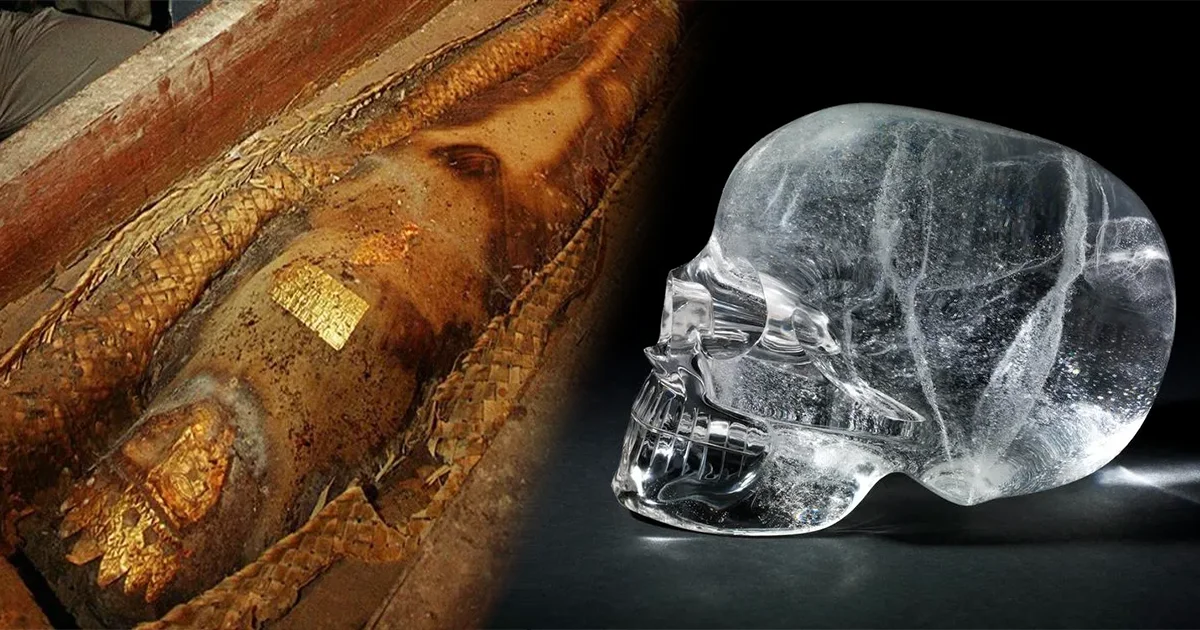
Archaeological hoaxes have embarrassed museums, derailed scientific research, and misled the public for over a century.
Some lasted decades before exposure. Others fooled the greatest scientific minds of their generation. A few continue to spark debate even today. What all these famous archaeological fakes share is a story of ambition, deception, and the uncomfortable truth that experts can be fooled when evidence confirms what they desperately want to believe.
These nine archaeological hoaxes represent some of the most audacious frauds in scientific history. Each one teaches us something valuable about the intersection of wishful thinking, national pride, and the human capacity for deception.
1. Piltdown Man: Britain’s 41-Year Embarrassment
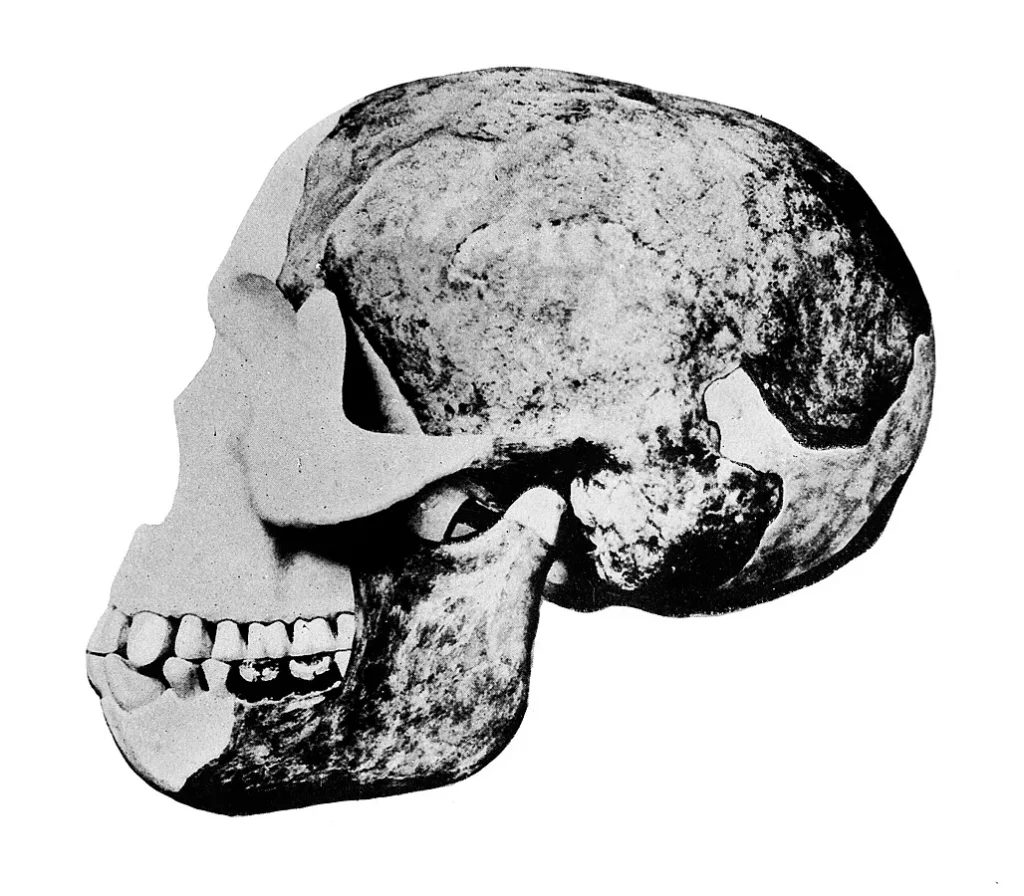
On December 18, 1912, amateur antiquarian Charles Dawson and paleontologist Arthur Smith Woodward announced a discovery that would reshape our understanding of human evolution. In a gravel pit near Piltdown, Sussex, they had found fragments of a skull that appeared to bridge the gap between apes and humans. The scientific community was electrified.
The specimen, named Eoanthropus dawsoni or ‘Dawson’s dawn man,’ possessed exactly what British scientists hoped to find: a large, human-like braincase paired with a primitive, ape-like jaw. It suggested that human intelligence evolved before other modern features, a theory many researchers found appealing.
For 41 years, Piltdown Man occupied a prominent place in human evolution studies. Casts of the skull were distributed to museums worldwide. Textbooks were rewritten. Careers were built on studying the specimen.
Then, in 1953, Kenneth Oakley at the British Museum applied fluorine dating to the bones. The results were devastating. The skull fragments were only about 600 years old. The jaw was even younger, and it belonged to an orangutan.
A 2016 study published in Royal Society Open Science finally closed the case. Researchers led by Isabelle De Groote used DNA analysis, CT scanning, and spectroscopy to examine every Piltdown specimen. Their findings were remarkable: all the orangutan material, including teeth from both the Piltdown I and Piltdown II sites, came from a single individual, likely sourced from southwestern Sarawak in Borneo. The team found the same putty used throughout all specimens, the same staining techniques, and the same gravel fragments packed into bone cavities.
The modus operandi pointed to one person: Charles Dawson himself. The study revealed that Dawson had filed down orangutan teeth to simulate human wear patterns, stained bones with iron and chromium compounds, and used a dental putty to hold everything together. He had even cracked the jaw at the chin to destroy the diagnostic symphysis that would have immediately identified it as an ape.
Why did Dawson do it? The researchers suggested ambition. Dawson had written to Smith Woodward in 1909 lamenting that he was ‘waiting for the big find which never seems to come along.’ His younger brother had just received a knighthood. Dawson’s wife had even written to the Home Secretary requesting recognition for her husband’s scientific contributions. Piltdown was supposed to be his ticket to the Royal Society.
He died in 1916, never achieving that honor, but leaving behind a forgery that would contaminate paleoanthropology for nearly half a century.
2. The Crystal Skulls: Victorian Forgeries for Modern Mystics
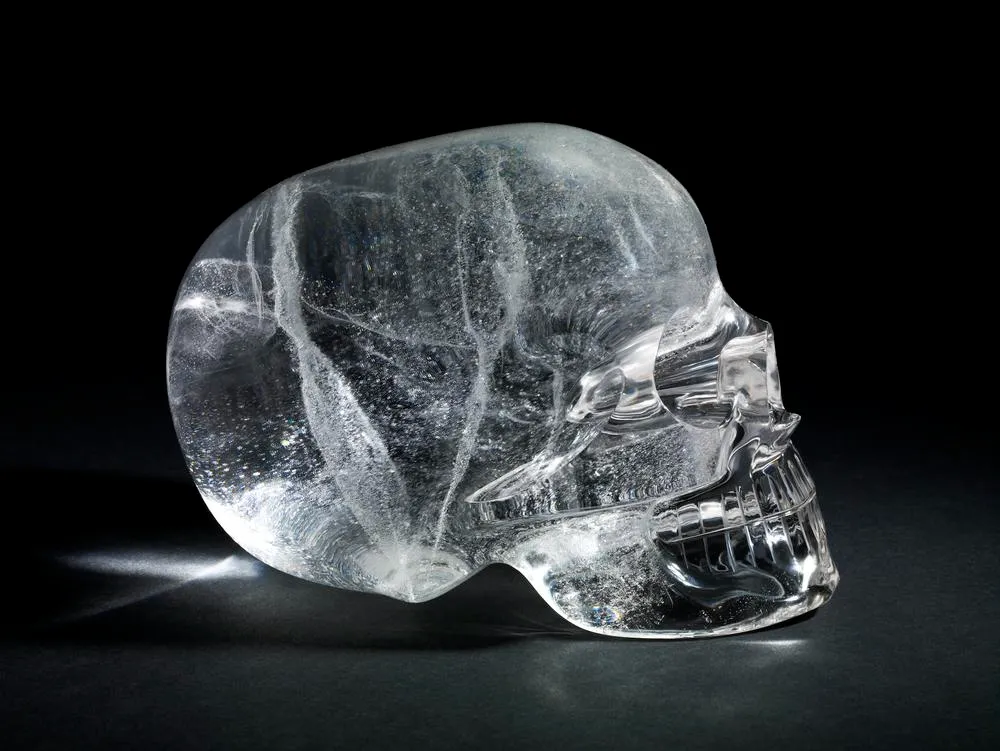
They sit in museum cases around the world, their empty eye sockets staring back at visitors who imagine ancient Aztec priests channeling supernatural powers through translucent quartz. The crystal skulls have become icons of mystery, subjects of documentary films, conspiracy theories, and a blockbuster Indiana Jones movie.
They are also complete fakes.
Jane MacLaren Walsh, an anthropologist at the Smithsonian’s National Museum of Natural History, has spent decades investigating these objects. Her research, conducted alongside British Museum scientist Margaret Sax, has systematically demolished every claim of pre-Columbian authenticity.
The key evidence comes from tool marks. Walsh and Sax used scanning electron microscopy to examine the carved surfaces of crystal skulls at the British Museum and Smithsonian, comparing them to authenticated pre-Columbian rock crystal artifacts from secure archaeological contexts. The results were unambiguous.
Genuine Mesoamerican crystal work, like a Mixtec rock crystal goblet from Monte Alban excavated from a documented tomb context, shows random, irregular striations consistent with hand-held tools and natural abrasives. The craftsmen used stone and wood tools charged with materials like emery sand, laboriously filing and polishing over long periods. No evidence of rotary wheels appears on any authenticated piece.
The museum skulls tell a different story. Their surfaces bear regular, parallel striations characteristic of rotary wheel cutting with hard abrasives like corundum or diamond. The teeth are carved with mechanical precision impossible without powered equipment. These are the marks of 19th-century European lapidary workshops, not pre-Columbian artisans.
The Smithsonian skull delivered even more damning evidence. X-ray diffraction revealed traces of silicon carbide, also known as carborundum, trapped in surface cavities. This synthetic abrasive was not invented until 1891 and did not become commercially available until the mid-20th century. The skull was almost certainly manufactured shortly before an anonymous donor mailed it to the museum in 1992.
Even the raw material betrays the fraud. Microscopic analysis of fluid inclusions in the British Museum skull’s quartz revealed it formed in a mesothermal metamorphic environment consistent with sources in Brazil or Madagascar. These regions were far outside any pre-Columbian trade networks and were not exploited for large crystal blocks until the 19th century.
Walsh traced the origins of the earliest skulls to a single source: Eugene Boban, a French antiquarian who operated in Mexico during the 1860s. Boban served as Emperor Maximilian’s official archaeologist and built an impressive collection of genuine and fake artifacts. When he tried to sell a life-sized crystal skull to Mexico’s national museum in 1885, the curator rejected it as a modern glass fake and accused Boban of fraud.
Boban fled to New York, where he auctioned his collection in 1886. Tiffany and Company purchased the skull for $950 and later sold it to the British Museum in 1897. The connection between Boban and multiple crystal skulls now in major museums establishes a clear pattern of deliberate deception for profit.
Today, the skulls remain on display, but museums present them as examples of forgery rather than authentic artifacts. They serve as reminders that spectacular objects without documented provenance deserve the highest skepticism.
3. The Cardiff Giant: America’s Greatest Archaeological Prank
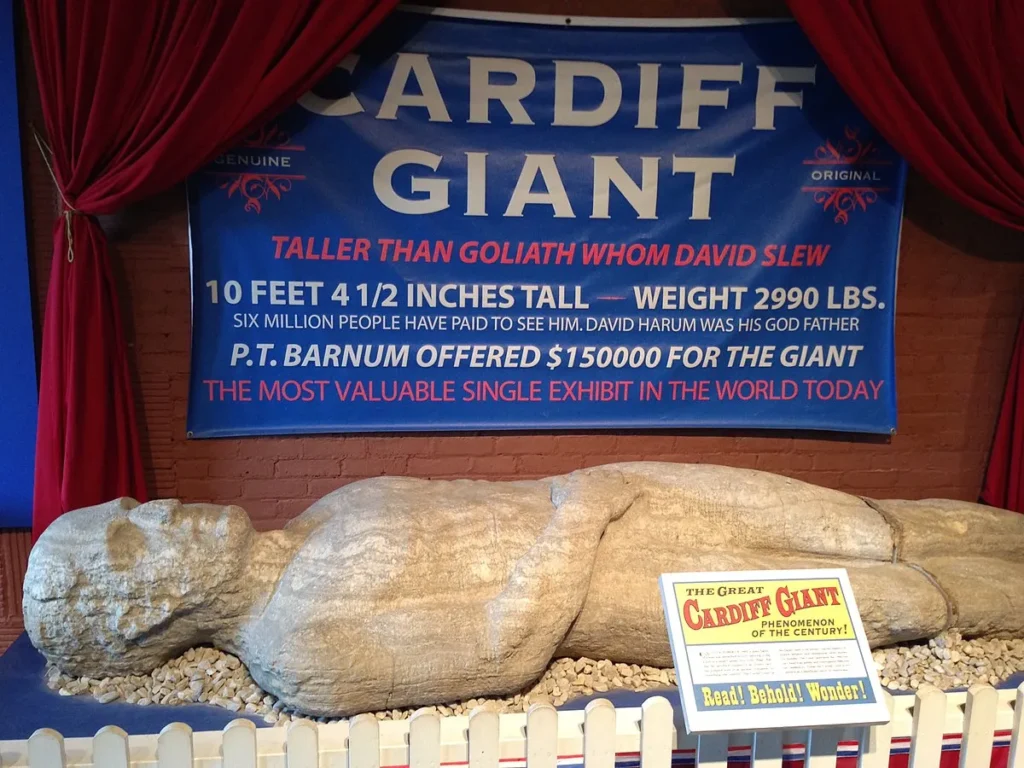
On October 16, 1869, workers digging a well on William Newell’s farm in Cardiff, New York, struck something massive buried three feet underground. They unearthed a ten-foot-tall stone figure of a man, lying on his back with one arm across his stomach. Within hours, crowds were gathering. Within days, it became a national sensation.
The Cardiff Giant, as it became known, sparked immediate debate. Some claimed it was a petrified human from biblical times, a literal giant from the Book of Genesis who had turned to stone during Noah’s flood. Others argued it was an ancient statue carved by early inhabitants of North America. Newspapers across the country covered the story.
Newell erected a tent over the pit and began charging fifty cents admission. When crowds grew too large, he raised the price to a dollar. Thousands came. Scientists arrived to study the figure. Religious leaders debated its theological implications.
P.T. Barnum, the famous showman, offered to lease the Giant for exhibition. When Newell refused, Barnum simply had a copy made and displayed it in New York City, claiming his was the authentic one and Newell’s was the fake.
The truth emerged within months. George Hull, Newell’s cousin and a cigar manufacturer from Binghamton, confessed to orchestrating the entire scheme. Hull was an atheist who had grown irritated with fundamentalist preachers insisting on literal interpretations of biblical giants. He decided to make fools of them.
Hull had spent nearly $3,000 on the project. He purchased a massive block of gypsum from Fort Dodge, Iowa, hired sculptors in Chicago to carve it into human form, and used darning needles to create the appearance of pores on the skin. He treated the surface with acid to simulate aging, then shipped the 3,000-pound statue to Cardiff and had it secretly buried on his cousin’s property.
Despite the confession, people kept paying to see the Giant. Some refused to believe Hull’s story. Others simply wanted to see what all the fuss was about. The Giant eventually toured the country and today resides at the Farmers’ Museum in Cooperstown, New York, a monument to American gullibility and the enduring appeal of a good hoax.
4. The Kensington Runestone: Vikings in Minnesota?
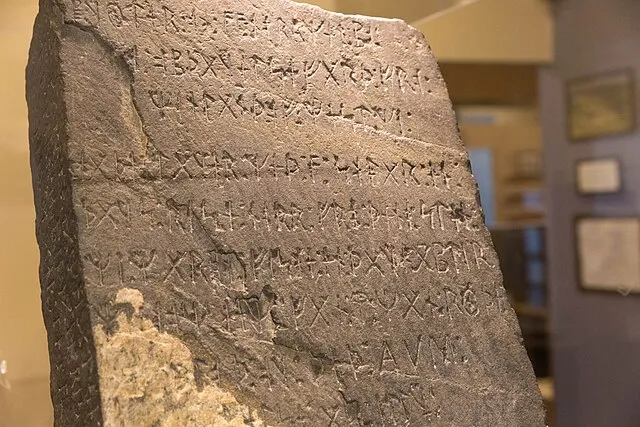
In November 1898, Swedish immigrant Olof Ohman was clearing land on his farm near Kensington, Minnesota, when he discovered a 200-pound stone tablet tangled in the roots of a tree. Carved into one face of the grayish stone was an inscription in runic characters, the ancient alphabet of Scandinavia.
The inscription told a dramatic story. According to translations, a party of eight Swedes and twenty-two Norwegians on an expedition from Vinland had made camp near two rocky islands. When ten of the men went fishing, they returned to find their companions ‘red with blood and dead.’ The stone bore a date: 1362, more than a century before Columbus.
If authentic, the Kensington Runestone would prove that Scandinavian explorers penetrated deep into the North American interior during the medieval period. It would rewrite the history of European contact with the New World. It would validate the heritage of the region’s substantial Scandinavian immigrant population.
Professional runologists were skeptical from the start. Scandinavian linguists pointed out that the language on the stone did not match 14th-century medieval Norse. Instead, it contained grammatical forms, vocabulary, and spelling conventions that closely resembled 19th-century Swedish, specifically the dialects spoken by immigrants in Minnesota.
Several runes on the stone were completely unknown in medieval inscriptions but appeared in popular books about runic writing published in the late 1800s. One character seemed to have been invented entirely. The numerals used were Arabic rather than runic. The word ‘opthagelse farth,’ translated as ‘voyage of discovery,’ was a modern construction with no medieval precedent.
Geologists examined the weathering on the carved surfaces and concluded it was consistent with decades of exposure, not centuries. The carving appeared fresh when compared to genuinely ancient runic inscriptions from Scandinavia.
Ohman and his neighbor Sven Fogelblad, a former minister with knowledge of runes, remain the primary suspects. Fogelblad owned books on runic inscriptions that contained the unusual characters appearing on the stone. Both men had the knowledge, opportunity, and motive to create a hoax that would bring attention to their community.
Despite overwhelming scholarly consensus that the stone is a 19th-century fake, it remains on permanent display at the Runestone Museum in Alexandria, Minnesota. True believers continue to argue for its authenticity, and state legislators have periodically introduced bills affirming the stone as a genuine medieval artifact.
5. The Metropolitan Museum’s Etruscan Warriors: A Confession Decades Later
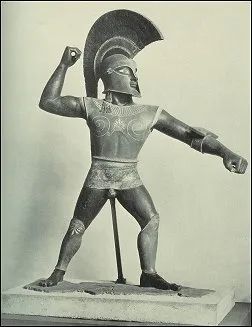
In 1915, the Metropolitan Museum of Art in New York acquired a spectacular life-sized terracotta statue of an Etruscan warrior for $40,000. Over the following years, two more colossal warriors joined the first. They were among the largest ancient terracotta sculptures ever discovered, remarkable survivals from a civilization that flourished in Italy before the rise of Rome.
The warriors became centerpieces of the museum’s ancient art collection. Scholars studied them. Publications reproduced them. They represented the finest achievements of Etruscan craftsmanship.
Almost from the beginning, doubts circulated among experts. The figures seemed too complete, too pristine. Their style combined elements from different periods of Etruscan art in ways that seemed inconsistent. The black glaze had an unusual quality. Some critics noted that the warriors’ thumbs were positioned incorrectly for the period.
The museum defended its acquisitions for decades. Curators pointed to supporting scientific analyses. They dismissed critics as jealous rivals who wished they had acquired such impressive pieces themselves.
The truth came out in 1961 when Alfredo Fioravanti, an Italian art restorer living in Rome, walked into the offices of the Italian magazine Epoca and confessed. He and five colleagues had manufactured all three warriors in a workshop in Orvieto between 1915 and 1921. They had studied authentic Etruscan fragments, learned ancient techniques, and created figures that fooled the world’s most prestigious art museum.
Fioravanti provided proof: he produced a missing finger from one of the warriors, which he had kept as a souvenir. It fit perfectly. Scientific analysis confirmed that the manganese content in the black glaze was inconsistent with ancient formulations. The terracotta itself had been fired at temperatures achievable only in modern kilns.
The Metropolitan Museum removed the warriors from display. Today, one remains visible in the museum’s study collection, labeled as a forgery. It serves as a cautionary example for curators and collectors who may be tempted to believe in objects too spectacular to be true.
Built out of a love for history, kept free from distractions.
Spoken Past is an independent project shaped by curiosity, care, and long hours of research. Reader support helps keep it maintained, carefully researched, and open to everyone.
6. Shinichi Fujimura: Japan’s God’s Hands Scandal
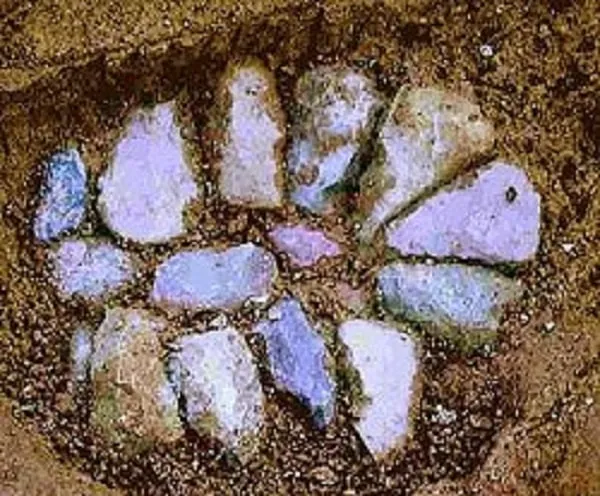
For two decades, Shinichi Fujimura was the most celebrated archaeologist in Japan. His colleagues called him ‘God’s Hands’ for his uncanny ability to discover ancient artifacts at site after site. His finds pushed back the date of human habitation in Japan to 700,000 years ago, making the islands one of the oldest continuously inhabited places outside Africa.
Fujimura discovered stone tools at more than 180 sites. His findings appeared in school textbooks. National and local governments funded museum exhibits based on his research. Towns competed to have him excavate in their jurisdictions, hoping his discoveries would bring tourism and prestige.
Some archaeologists noticed troubling patterns. Fujimura’s artifacts were always found in perfect condition. They appeared at precise, predicted locations. Other researchers working at the same sites before Fujimura arrived found nothing, yet his digs always succeeded. The statistical improbability of his success rate raised quiet concerns that few voiced publicly.
On November 5, 2000, journalists from the Mainichi Shimbun newspaper revealed the truth. They had secretly filmed Fujimura the night before an excavation, capturing him on video as he dug holes and buried artifacts with his own hands. The next morning, television cameras recorded him ‘discovering’ the very objects he had planted hours earlier.
Confronted with the footage, Fujimura confessed immediately. He admitted to fabricating discoveries at 42 sites spanning his entire career. Every major find that had established Japan’s deep paleolithic history was fraudulent. The artifacts were genuine stone tools, but Fujimura had obtained them from different locations and planted them in carefully prepared deposits.
The scandal devastated Japanese archaeology. Textbooks were withdrawn. Museum exhibits closed. Academic papers were retracted. Researchers who had built careers studying Fujimura’s sites saw their work invalidated overnight. The Japanese Archaeological Association expelled Fujimura and issued formal apologies.
Fujimura blamed mental illness and personal pressure. He checked himself into a psychiatric hospital and has avoided public life since. His case demonstrates how national pride, combined with a desire to establish cultural antiquity, can create an environment where scientific skepticism is suppressed and fraud can flourish unchecked.
7. The Lying Stones of Wurzburg: An 18th-Century Academic Prank
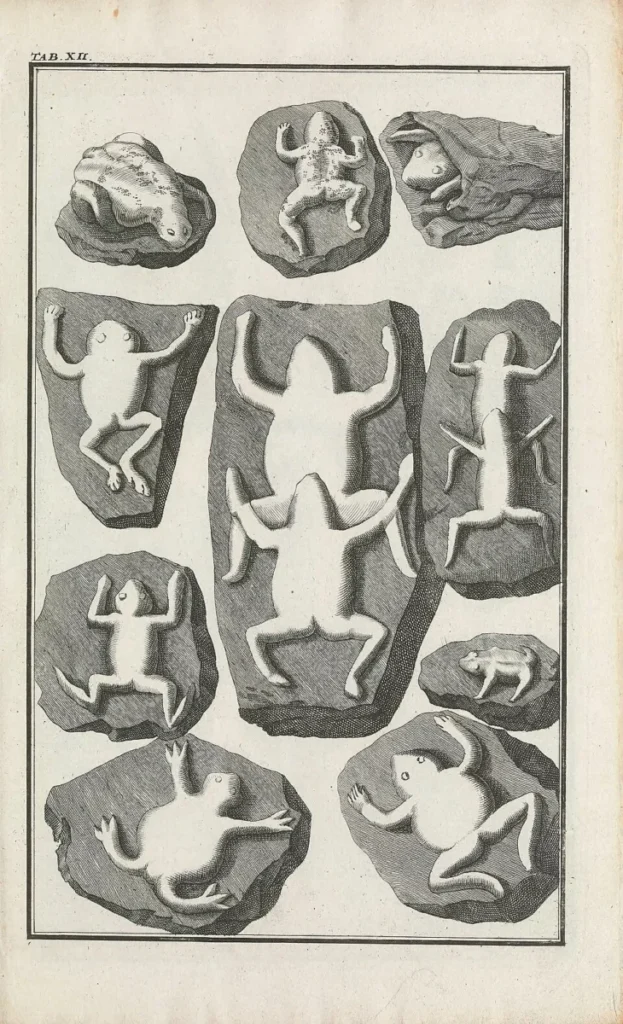
Dr. Johann Bartholomew Adam Beringer was a respected professor of medicine at the University of Wurzburg in Germany. He was also an avid fossil collector who regularly hired local boys to bring him interesting specimens from the hills around the city. In 1725, three young men began delivering remarkable finds: limestone tablets bearing perfectly preserved images of insects, birds, spiders, frogs, and even Hebrew letters spelling the name of God.
Beringer was fascinated. He believed these ‘figured stones’ were divine creations, objects planted by God in the rock to test human faith or demonstrate His creative power. He amassed hundreds of specimens and, in 1726, published an elaborate scholarly treatise complete with detailed engravings of his collection.
Shortly after publication, Beringer discovered a stone bearing his own name.
The truth was devastating. J. Ignatz Roderick, a colleague at the university, and Georg von Eckhart, the university librarian, had orchestrated an elaborate hoax. They carved the tablets themselves and paid the local boys to ‘discover’ them where Beringer would find them. Their motives combined professional jealousy with amusement at Beringer’s gullibility.
Beringer sued his tormentors and won the case. Both Roderick and Eckhart faced professional disgrace. But Beringer’s own reputation never recovered. He reportedly spent his remaining fortune attempting to buy back copies of his book from circulation. The story became legendary, and the fake fossils became known as ‘Lugensteine’ or ‘lying stones.’
Some of Beringer’s original lying stones survive in museum collections today, reminders that scholarly expertise offers no protection against determined pranksters and an unwillingness to accept evidence that challenges one’s preconceptions.
8. The Persian Princess: A Murder Disguised as Archaeology
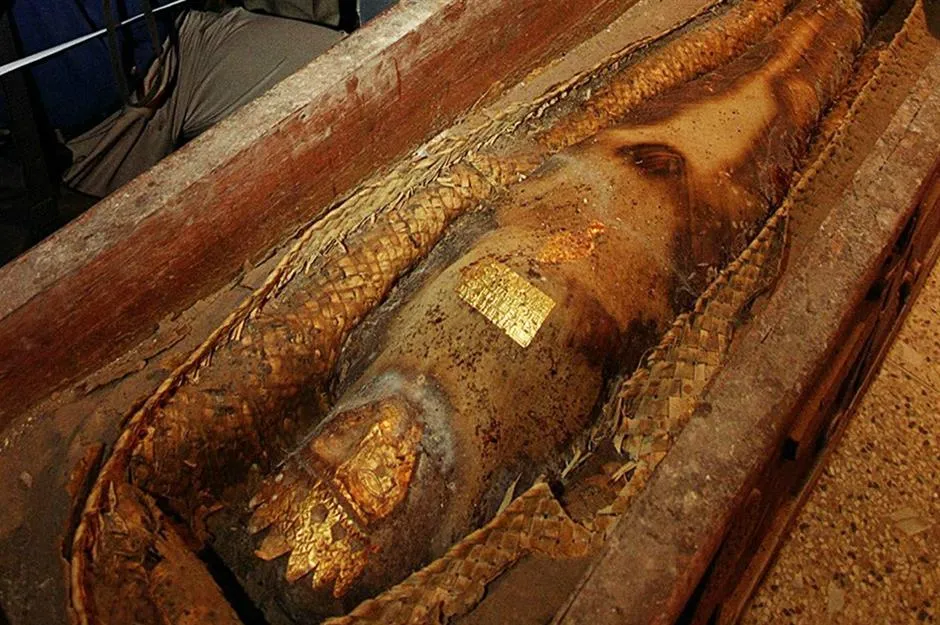
In October 2000, Pakistani police in Karachi raided a house and discovered something unprecedented: a mummy in a gilded wooden coffin, offered for sale to international collectors for $11 million. Inscriptions identified the remains as Rhodugune, daughter of the Persian King Xerxes I, who ruled in the 5th century BCE.
If authentic, it would have been the most significant archaeological discovery in decades. Persian royal mummies were virtually unknown. The find would rewrite our understanding of ancient burial practices across the Near East.
Iranian and Pakistani officials both claimed ownership, and international tensions rose as each country prepared legal arguments. Museums expressed interest. Scholars debated the find’s implications.
Then forensic scientists examined the mummy more closely.
The cuneiform inscriptions contained grammatical errors no ancient scribe would have made. The mummification technique combined Egyptian and Persian elements in historically impossible ways. CT scans revealed modern dental work. Carbon dating placed the death within the previous few years.
The Persian Princess was a murder victim.
Pakistani authorities determined that the body belonged to a young woman, approximately 21 years old, who had died from a broken neck. Someone had removed her organs, treated her body with chemicals, and wrapped her in ancient-looking cloth. They fabricated an elaborate backstory, complete with a mat inscribed with a royal genealogy, and attempted to sell the corpse as a priceless antiquity.
The identity of the victim was never conclusively established. One suspect, a Pakistani tribal leader, was arrested but later released. The case transformed from an archaeological sensation into an unsolved murder investigation. The woman now known as the Persian Princess was eventually buried in Pakistan, her true name still unknown.
This hoax stands apart from others on this list. It was not merely scientific fraud but an attempt to profit from human death. It demonstrates the dark extremes to which the antiquities trade can descend when buyers are willing to pay millions for spectacular objects without asking difficult questions.
9. Archaeoraptor: The Dinosaur That Never Was
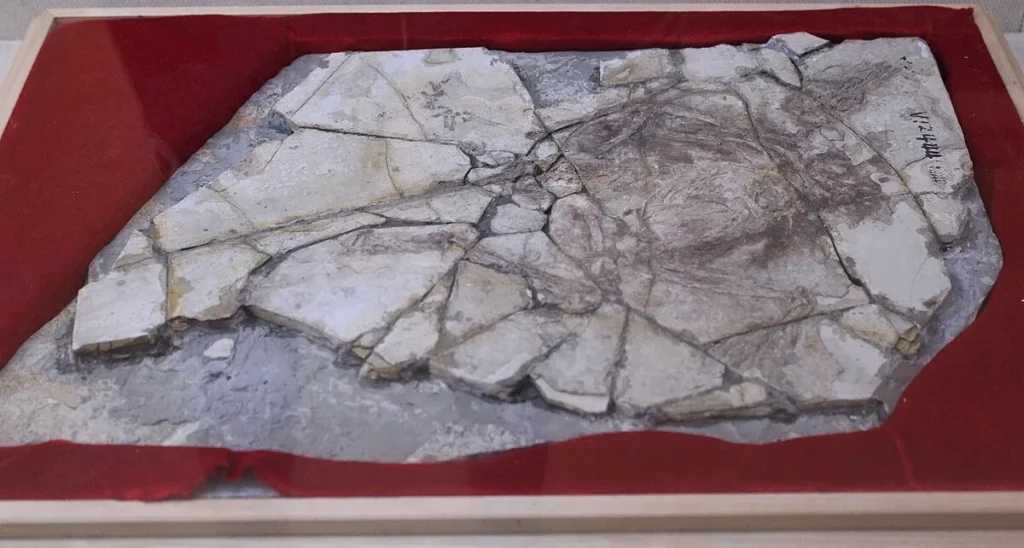
In November 1999, National Geographic magazine announced a spectacular discovery: Archaeoraptor liaoningensis, a 125-million-year-old fossil from China that appeared to be the missing link between dinosaurs and birds. The specimen had the arms of a primitive bird, the tail of a small dinosaur, and feathered wings. It seemed to be caught in the very act of evolution.
The announcement made headlines worldwide. Here at last was dramatic proof that birds descended from dinosaurs, preserved in stone from the Cretaceous period.
Except it was not a single animal at all.
Within months, scientists realized something was wrong. CT scans revealed that the fossil was actually a composite of multiple specimens glued together. The tail came from a small dromaeosaurid dinosaur called Microraptor. The body belonged to an early bird called Yanornis. A Chinese farmer, hoping to increase the value of his find, had combined unrelated fossils into a single slab using modern adhesives.
National Geographic issued a public correction and apology. The episode became a cautionary tale about the dangers of publishing scientific discoveries before peer review. The magazine had bypassed normal scientific vetting procedures in its eagerness to break a major story.
The irony is that genuine feathered dinosaur fossils were abundant in the same Chinese deposits. Authentic specimens like Sinosauropteryx, Caudipteryx, and the real Microraptor provided solid evidence for the dinosaur-bird connection. The scientific consensus on avian evolution did not depend on Archaeoraptor at all.
The fraud arose from the commercial fossil trade rather than deliberate scientific deception. Chinese farmers had discovered that fossils from Liaoning Province commanded high prices from Western collectors and museums. Some learned to enhance incomplete specimens by combining parts from multiple animals. Without proper excavation records and scientific documentation, distinguishing genuine fossils from composites became nearly impossible.
Archaeoraptor demonstrates how commercial pressures can corrupt even legitimate scientific discoveries. When fossils become commodities worth thousands of dollars, the temptation to ‘improve’ incomplete specimens becomes overwhelming.
Why Archaeological Hoaxes Succeed
These nine cases span three centuries, four continents, and motivations ranging from personal ambition to commercial profit to malicious pranking. Yet certain patterns emerge.
Successful archaeological hoaxes tend to confirm what their audiences want to believe. Piltdown Man told British scientists that their island had produced an important early human. The Kensington Runestone validated the heritage of Scandinavian immigrants. Crystal skulls appealed to romantic notions about ancient mysteries and lost civilizations. The Japanese paleolithic finds established a national history stretching back hundreds of thousands of years.
Hoaxes also exploit gaps in expertise. The forgers of Piltdown Man understood anatomy well enough to create a plausible-looking specimen, but they also knew that few scientists had direct experience comparing human and ape bones. Crystal skull makers recognized that 19th-century collectors had little knowledge of pre-Columbian technology. Fujimura’s colleagues lacked the specialized training to question his statistical impossibilities.
Perhaps most importantly, these hoaxes thrived in environments where skepticism was discouraged. Experts who raised doubts about Piltdown were marginalized. Those who questioned Fujimura were accused of jealousy. Museum curators invested institutional prestige in objects they had purchased for enormous sums.
Modern archaeological science has developed powerful tools for detecting fraud. DNA analysis, CT scanning, isotope dating, and microscopic examination can expose forgeries that fooled earlier generations. But technology alone cannot prevent hoaxes. That requires a culture of rigorous skepticism, transparent peer review, and the courage to admit when spectacular discoveries turn out to be too good to be true.
Every archaeological hoax ultimately failed. The forgers were exposed, their reputations destroyed, their fakes consigned to museum storage or exhibited as cautionary examples. Yet the damage they inflicted lasted decades. Research programs were derailed. Resources were wasted. Public trust in science eroded.
These nine frauds remind us that archaeology, like all sciences, depends on integrity. When we examine objects from the past, we must be willing to accept what they tell us, not merely what we hope to hear. The truth about our origins and our history is remarkable enough without embellishment. The genuine artifacts in our museums represent real human achievements that need no forger’s hand to make them extraordinary.