
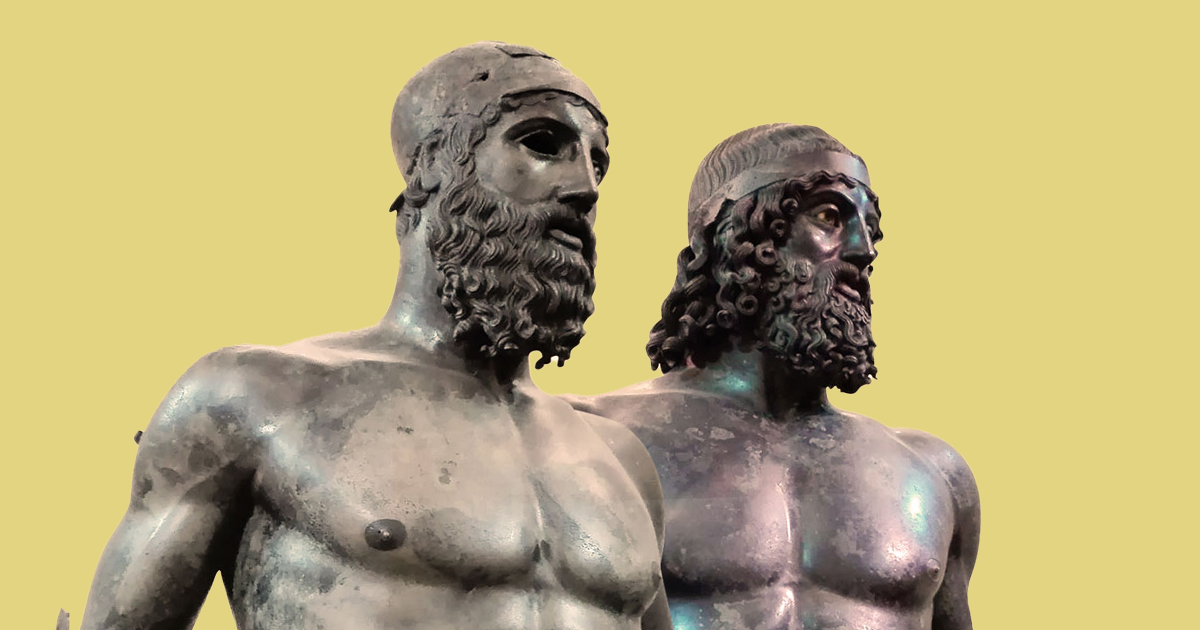
On August 16, 1972, a Roman scuba diver named Stefano Mariottini was exploring the seafloor near Riace Marina in Calabria when his hand brushed against what he initially thought was a human corpse. The arm moved under his touch. Clearing away sand and marine growth, Mariottini realized he had discovered something far more extraordinary: a life-sized bronze warrior, perfectly intact, lying on the seabed at a depth of approximately 8 meters. Swimming further, he found a second bronze figure just a few meters away. The Riace Bronzes, as they became known, represent two of the finest examples of Classical Greek sculpture ever recovered. Unlike the fragmentary remains that typically survive from antiquity, these warriors emerged from the sea with their original surface details, inlaid eyes, and anatomical precision virtually unchanged after spending roughly 2,400 years underwater. This article examines the specific factors that allowed these masterpieces to survive in such remarkable condition, from the chemical properties of their bronze alloy to the unique circumstances of their marine environment, revealing how a combination of metallurgical excellence, underwater conditions, and sheer fortune preserved what would otherwise have been melted down centuries ago.
The Chemistry of Bronze Preservation Underwater
Bronze presents fundamentally different preservation challenges than stone or terracotta. The alloy traditionally consists of copper and tin, with ancient Greek bronzesmiths typically using ratios between 85-90% copper and 10-15% tin. This composition creates a material simultaneously strong and workable, capable of capturing minute anatomical details while maintaining structural integrity over millennia.
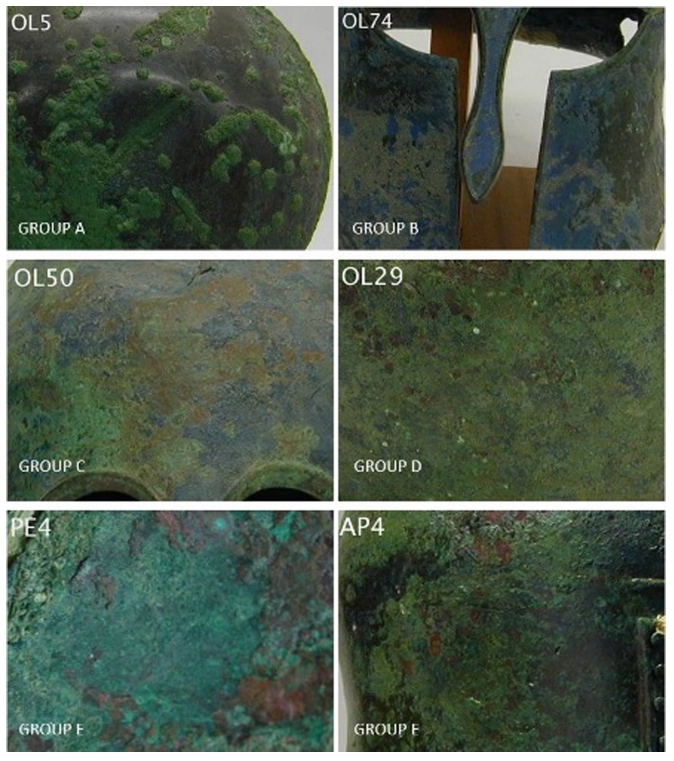
When bronze objects enter seawater, they immediately begin forming a protective patina through electrochemical processes. The copper in the alloy reacts with chloride ions, oxygen, and other compounds dissolved in seawater to create layers of cuprous oxide, cuprous chloride, and eventually copper carbonates. According to research published in the Journal of Archaeological Science, these corrosion products form a relatively stable barrier that actually slows further deterioration once fully developed. The Riace Bronzes developed this protective coating during their first decades underwater, essentially self-sealing against more aggressive corrosion.
The specific tin content in ancient Greek bronzes plays a critical role in this preservation mechanism. Tin creates a harder, more corrosion-resistant alloy than pure copper would provide. Analysis of the Riace Bronzes during restoration campaigns in Florence (1975-1980) and Rome (1992-1995) revealed that both statues contain trace amounts of lead, zinc, and iron alongside the primary copper-tin composition. These additional elements, likely present as impurities in the original ore rather than intentional additions, actually enhanced the alloy’s resistance to marine corrosion by creating localized galvanic cells that distributed oxidation more evenly across the bronze surface.
Furthermore, the casting technique used for these statues contributed significantly to their preservation potential. The Riace warriors were created using the indirect lost-wax method, which produced bronze walls typically 7-9 millimeters thick. This substantial thickness provided enough material that even after forming a corrosion layer several millimeters deep, the structural integrity of the statues remained intact. Thinner castings would have corroded completely through in similar conditions.
The Protective Environment of the Ionian Seabed
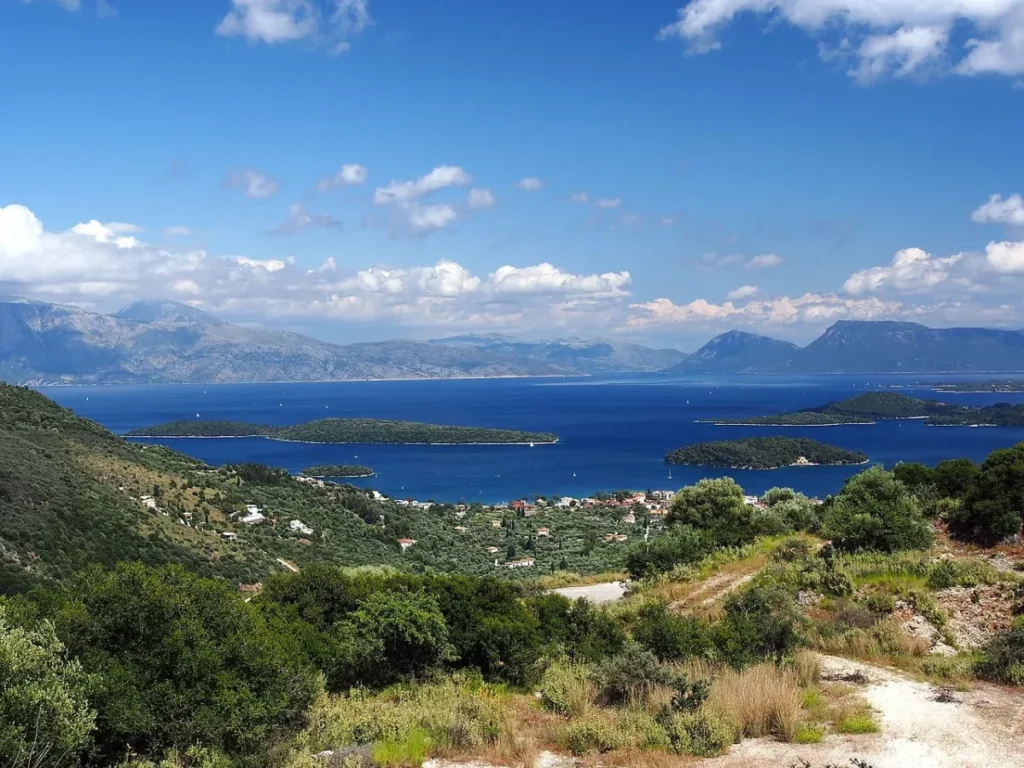
The specific location where the Riace Bronzes spent over two millennia profoundly influenced their preservation. The statues lay on a sandy bottom in the Ionian Sea at a depth of approximately 6-8 meters, a zone characterized by particular chemical and biological conditions that proved remarkably favorable for bronze conservation.
At this depth, water temperature remains relatively stable year-round, fluctuating only between 14-18 degrees Celsius. These moderate temperatures slow chemical reaction rates compared to warmer surface waters, reducing the speed of corrosion processes. The sandy substrate itself provided additional protection by partially burying the statues during periods of sediment movement, creating localized anaerobic (oxygen-poor) conditions that further inhibited oxidation.
Marine growth patterns also played an unexpected preservative role. Calcium carbonate deposits from shellfish, algae, and other organisms accumulated on the bronze surfaces, creating an additional barrier layer between the metal and seawater. While this biological coating appeared problematic to conservators (requiring years to remove during restoration), it actually functioned as a secondary protective barrier during the statues’ underwater residence. The limestone-like deposits sealed small fissures in the bronze patina and reduced direct contact between aggressive seawater and the metal surface.
Crucially, the Riace discovery site experiences relatively gentle currents compared to other Mediterranean coastal areas. Strong currents would have continuously abraded the bronze surfaces with suspended sand particles, gradually eroding fine details. The protected waters off Riace Marina allowed the statues to remain essentially undisturbed except during major storm events. Archaeological surveys conducted by the Soprintendenza Archeologica della Calabria confirmed that the seabed in this area shows minimal signs of violent sediment disturbance, suggesting the bronzes rested in a relatively stable position for centuries.
The absence of significant pollution proved equally important. Industrial contamination introduces aggressive chemicals that accelerate bronze corrosion. The Ionian coast remained largely undeveloped until the late 20th century, meaning the statues spent most of their underwater existence in relatively clean seawater with naturally-occurring dissolved compounds rather than industrial pollutants.
Why the Riace Bronzes Escaped Ancient Recycling
Perhaps the most critical factor in the survival of the Riace Bronzes has nothing to do with chemistry or environment. These statues exist today primarily because they never reached their intended destination in antiquity. Nearly all ancient bronze statuary disappeared not through natural corrosion but through intentional melting for reuse.
Bronze represented an extraordinarily valuable commodity in the ancient world. A life-sized bronze statue contained roughly 160-200 kilograms of metal (the Riace warriors weigh approximately 160kg each after restoration). This amount of bronze could be reforged into weapons, tools, coins, or new sculptures. During periods of economic pressure or warfare, bronze statues became irresistible targets for recycling. The Roman historian Pliny the Elder, writing in his Natural History around 77-79 CE, mentions that Rhodes alone once contained over 3,000 bronze statues, yet virtually none survive today.
The Riace Bronzes evidently sank while being transported by ship, most likely during the Hellenistic or Roman period when Greek artworks were actively collected and transported to Italy. Research on casting core composition published in the Journal of Archaeological Science by Gianni Lombardi and Massimo Vidale identified petrographic characteristics in the clay cores suggesting manufacture somewhere in Greece, possibly the Argolid region of the northeastern Peloponnese. The statues were probably being shipped to a wealthy Roman patron when their transport vessel foundered.
This shipwreck preserved the bronzes from the systematic melting campaigns that destroyed most ancient bronze sculpture. During the Late Roman Empire, bronze statues were stripped from public spaces to mint coins. Early Christian authorities melted pagan statuary for reuse. Medieval Europeans recycled ancient bronzes for church bells and cannons. The Renaissance witnessed another wave of destruction as classical bronzes were recast into artillery. By remaining hidden underwater, the Riace warriors escaped every one of these destructive episodes.
The contrast with marble sculpture illuminates this point. Thousands of ancient marble statues survive, albeit often damaged, because marble cannot be easily recycled. Once carved, marble remains marble. Bronze, however, returns to raw material with simple heating. The Riace Bronzes represent astonishing exceptions to the near-total destruction of ancient bronze statuary, survivors of an economically-driven extinction event.
Anatomical Precision and Manufacturing Excellence
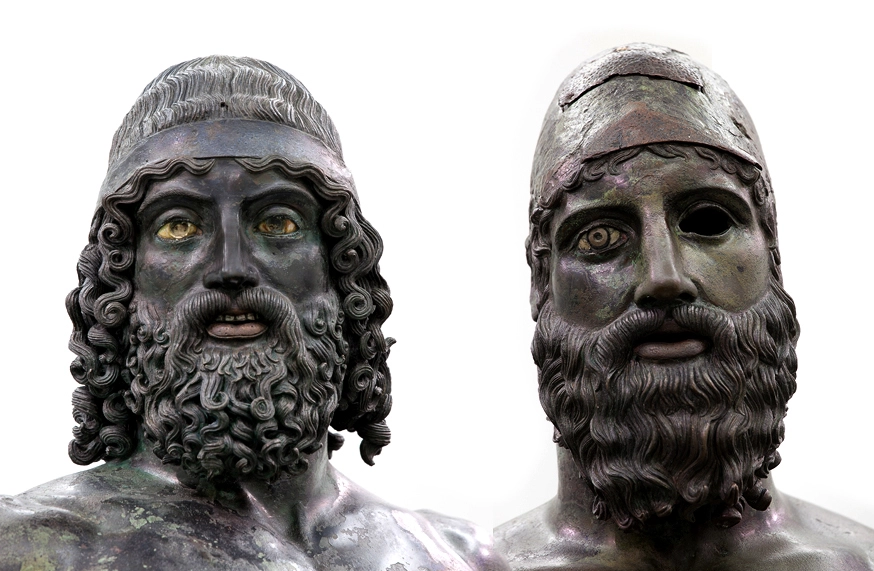
The exceptional preservation of the Riace Bronzes allows modern scholars to observe details of Greek bronze-casting technique that would otherwise remain purely theoretical. Both statues display anatomical precision that borders on the uncanny, with muscle groups, veins, and bone structures rendered with accuracy that suggests the sculptors possessed sophisticated understanding of human anatomy.
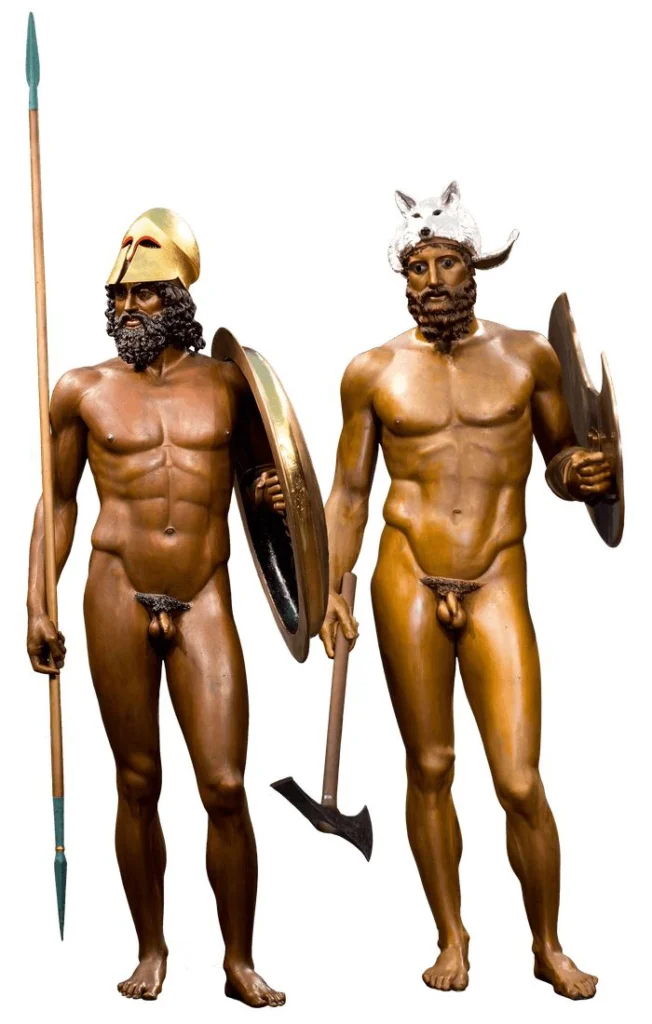
Statue A stands 198 centimeters tall and depicts a younger warrior with a more inflated chest, suggesting active inhalation. Every detail from the individual strands of hair in his beard to the tendons visible in his relaxed left foot demonstrates the sculptor’s attention to naturalistic detail. Statue B measures 197 centimeters and appears slightly older, with a more settled stance and different musculature. The differentiation between these figures, despite their similar size and pose, reveals that ancient Greek bronzesmiths could achieve extraordinary individuation.
Recent research has proposed controversial interpretations of how such precision was achieved. In a 2004 article in the Oxford Journal of Archaeology, Nigel Konstam and Herbert Hoffmann argued that certain anatomical features, particularly the naturalistic undersides of the feet showing weight-bearing deformation, suggest the torsos and limbs may have been cast from life using plaster molds rather than modeled entirely from clay. This hypothesis remains debated among scholars, but the anatomical accuracy is undeniable.
The preservation of surface details provides insight into finishing techniques. Copper inlays originally highlighted the lips and nipples (these have since corroded away or been lost). Silver decorated the teeth, visible when conservators carefully opened Statue A’s slightly parted mouth. The eyes originally contained glass or stone inlays set in copper frames, creating a lifelike gaze that would have been startling to ancient viewers.
Microscopic examination during restoration revealed tool marks on interior surfaces where craftsmen smoothed the inner bronze walls. These marks show the statues were assembled from separately-cast sections, head joined to torso, arms attached at the shoulders, legs connected at the hips. The precision of these joins, invisible on the exterior, demonstrates remarkable technical control. Each section was cast with flanges that nested inside the adjacent piece, then secured with bronze pins and reinforced with lead solder from the interior.
The Casting Core Evidence and Dating Debates
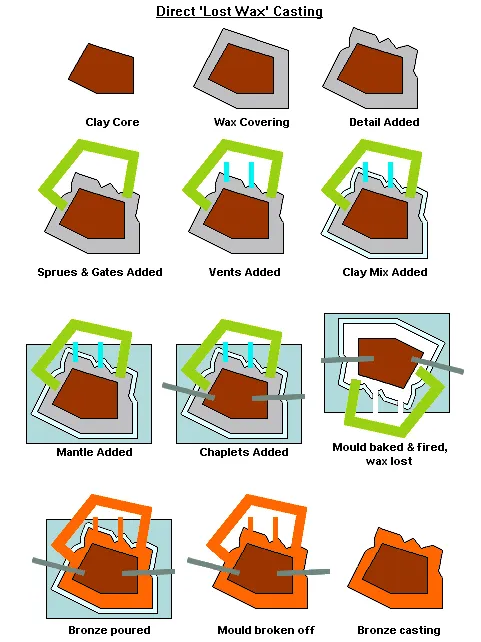
During restoration campaigns at the Istituto Centrale del Restauro in Rome during the late 1980s and early 1990s, conservators systematically excavated the clay casting cores from inside both statues. This process, documented by Mario Micheli and Massimo Vidale, revealed over 72 kilograms of core material from Statue A and more than 56 kilograms from Statue B. Analysis of these cores has provided crucial evidence about manufacturing techniques, geographical origin, and potentially the chronology of the statues.
The cores were built using a distinctive slab manufacturing technique. Clay mixed with animal hair was rolled into concentric layers around iron armatures, creating the internal form over which wax would be modeled for the lost-wax casting process. Petrographic and chemical analyses published by Lombardi and Vidale identified low-grade metamorphic rocks, sedimentary materials, and notably, ophiolite fragments containing high chromium values characteristic of Greek geological formations. Comparison with geological maps suggested the plain of Argos in the northeastern Peloponnese as a possible manufacturing location, though this remains tentative.
Radiocarbon dating of organic materials from the cores has provided absolute chronological data. Analysis published in Nuclear Instruments and Methods in Physics Research by L. Calcagnile and colleagues dated charcoal, vegetal remains, and animal hairs extracted from the cores. Results from Statue B showed remarkable consistency, clustering between 509-394 BCE at 95% confidence level. Statue A produced some outlying early dates alongside a cluster similar to Statue B’s range, possibly reflecting reuse of older materials in the foundry environment.
These dates align well with stylistic analyses that have traditionally placed Statue A around 460-450 BCE based on comparison with Early Classical sculptural conventions, while Statue B appears closer to 430-420 BCE based on High Classical characteristics. The radiocarbon evidence supports 5th-century BCE manufacture while acknowledging the calibration curve’s limitations for this period make precise dating impossible.
Importantly, analysis of the right arm of Statue B revealed it as a later replacement, probably dating to the Hellenistic or Roman period based on its different bronze composition (containing approximately 20% lead). This discovery demonstrates that the statue underwent ancient repair, suggesting it was valued and maintained for centuries before finally being lost at sea. The core material from this replacement arm differs geologically from the statue’s original core, indicating repair work occurred at a different location from initial manufacture.
Built out of a love for history, kept free from distractions.
Spoken Past is an independent project shaped by curiosity, care, and long hours of research. Reader support helps keep it maintained, carefully researched, and open to everyone.
Conservation Challenges and Modern Preservation
The discovery of the Riace Bronzes presented conservators with unprecedented challenges. While the statues had survived remarkably well underwater, exposure to air initiated new corrosion processes that required immediate intervention. The transition from marine to atmospheric environment proved more dangerous to the bronzes than their previous 2,400 years on the seabed.
When bronze saturated with seawater chlorides enters an oxygen-rich environment, active corrosion accelerates dramatically. Chloride ions embedded deep in the bronze structure combine with moisture and oxygen to form hydrochloric acid, which attacks the metal from within. This “bronze disease” can destroy a seemingly well-preserved artifact within months if left untreated. The initial restoration campaign in Florence (1975-1980) focused primarily on stabilizing the bronzes and removing the most dangerous chloride contamination.
The second major restoration at the Istituto Centrale del Restauro in Rome (1992-1995) employed more sophisticated techniques. Conservators used micro-cameras mounted on remote-controlled mechanical arms to explore the statues’ interior cavities completely. They systematically removed all remaining core material to prevent internal corrosion and allow thorough treatment of interior bronze surfaces. This process took approximately two years and required developing entirely new conservation technologies.
Treatment protocols included extended desalination baths where the statues were immersed in deionized water that gradually drew chloride ions out of the bronze structure through diffusion. Electronic monitoring tracked chloride concentrations in the bath water, and the water was replaced repeatedly until chloride levels dropped to safe thresholds. This process alone required many months for each statue.
After desalination, conservators applied protective coatings to slow future corrosion. Modern conservation philosophy emphasizes reversibility, so treatments use materials that future conservators could remove without damaging the original bronze. Current protective layers consist of acrylic resins that provide a barrier against atmospheric moisture and pollutants while remaining removable with appropriate solvents.
A third restoration campaign (2010-2013) addressed issues that had developed since the 1990s treatment, demonstrating that conserving ancient bronzes requires ongoing maintenance rather than one-time intervention. The statues now reside in climate-controlled galleries at the Museo Archeologico Nazionale di Reggio Calabria, where temperature and humidity remain strictly regulated. Even minor fluctuations in environmental conditions could restart corrosion processes.
The Riace Bronzes represent extraordinary survivors of multiple extinction events. They escaped ancient recycling through accidental shipwreck, survived underwater through favorable chemical and environmental conditions, avoided modern looting through sheer luck (remaining undiscovered until 1972), and persist today through intensive conservation efforts. Their preservation required bronze alloy chemistry, Mediterranean seabed conditions, historical accident, and modern conservation science working in concert across 2,400 years. These warriors stand today not because bronze naturally survives but because an improbable combination of factors protected them from the economic, environmental, and chemical forces that destroyed virtually every other monumental bronze statue from Classical Greece. Their existence allows modern viewers to see Greek bronze sculpture as ancient audiences did, complete with surface details, anatomical precision, and technical excellence that would otherwise exist only in literary descriptions and Roman marble copies. The question of what makes the Riace Bronzes so perfectly preserved ultimately has no single answer but rather a constellation of metallurgical, environmental, historical, and circumstantial factors that converged to save two masterpieces from oblivion.