In the summer of 390 BC, a regiment of Spartan hoplites made a routine march along the coastal road near Corinth. There were around 600 of them, part of the garrison at Lechaeum, and they were moving without cavalry support and without any missile troops to screen their flanks. They were Spartans. They had beaten nearly everyone they had ever faced. The thought that light infantry could threaten them in open country probably did not register as a serious concern.
It should have. Within a few hours, the Athenian general Iphicrates and his peltasts had killed roughly 250 of them and scattered the rest. The Spartan commander took his own life out of shame. It was the first time in Greek history that a force composed almost entirely of peltasts had destroyed a unit of heavy infantry in the field, and the ancient sources treated it as something close to a military shock.
The battle at Lechaeum did not come from nowhere. Peltasts had been present in Greek warfare for generations, operating in the background of battles that historians and ancient writers alike tended to narrate through the actions of the hoplite phalanx. Understanding what peltasts were, where they came from, and how they actually fought makes the events of 390 BC not just comprehensible but almost inevitable.
What Was a Peltast?
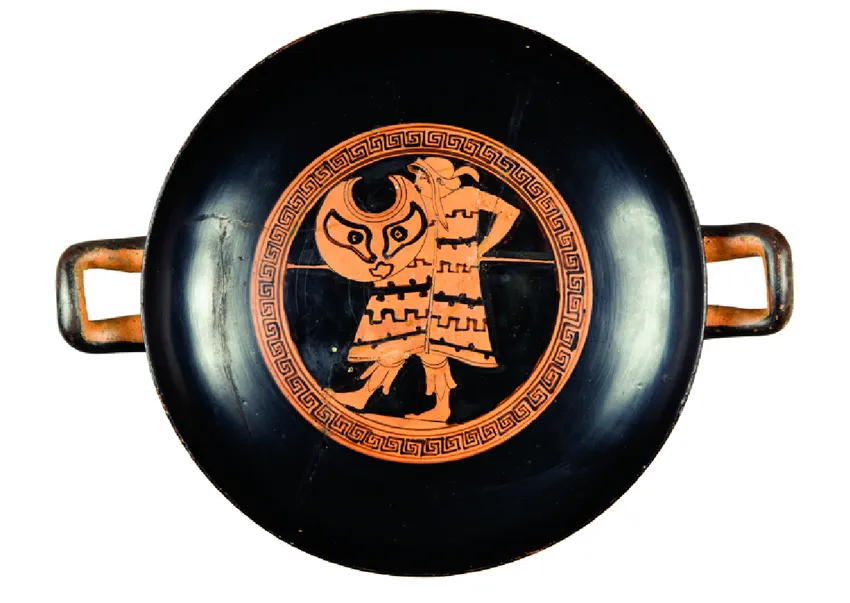
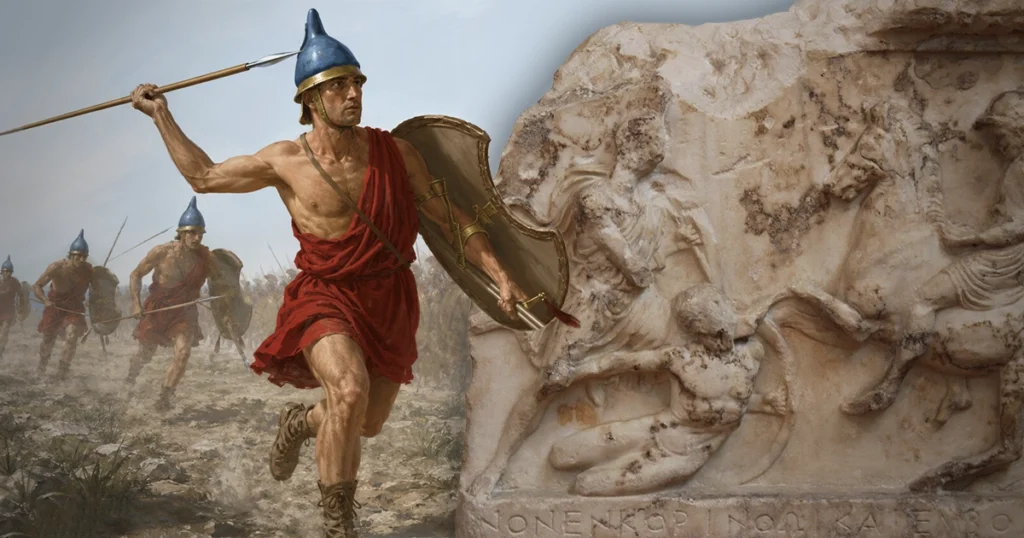
The word peltast comes from peltē, the light shield that defined the soldier type. According to Aristotle, the peltē was a rimless shield covered in goat or sheepskin. In ancient visual sources it is almost always shown as crescent-shaped, though some literary sources describe it as round. It was made of wicker or thin wood, light enough to carry easily while running, and it offered nothing like the protection of the heavy bronze-faced aspis carried by hoplites. That was the point. The peltast was not built for close combat. He was built for movement.
Peltasts originated among the Thracians and Paeonians to the north of the Greek world. J.G.P. Best’s foundational monograph Thracian Peltasts and Their Influence on Greek Warfare traces the type from its Thracian roots through the Peloponnesian War and into the fourth century, establishing that Greek armies encountered this fighting style primarily through mercenary recruitment and contact with northern tribes. The Greeks did not invent the peltast. They adopted and adapted a military tradition that had been working effectively in Thrace for some time.
The primary weapon was the akontion, a javelin thrown at range. Peltasts carried multiple javelins, though ancient sources do not give us a consistent precise count. Their equipment was considerably cheaper than hoplite gear, which had real consequences: peltasts were accessible to poorer citizens and to mercenaries who could not afford bronze armor and a large shield. By the fourth century they had become the dominant type of Greek mercenary infantry. They could sustain a campaign more cheaply, move faster on difficult terrain, and perform tasks that hoplites simply could not.
The entry on peltasts in the Oxford Classical Dictionary by J.F. Lazenby describes them as particularly effective in a skirmishing role, as an advanced guard, and for seizing passes and other strategic points. What they could not do, under normal circumstances, was defeat hoplites in a pitched, close-quarters engagement. Their thin shields and absence of body armor made direct confrontation with a locked phalanx suicidal. The entire logic of peltast tactics depended on maintaining distance.
The Warning at Sphacteria That Sparta Ignored
Thucydides is the earliest historical source to use the word peltast, and he introduces them in the context of the Peloponnesian War. His first mention comes at Pylos in 425 BC, where the besieged Spartans on the island of Sphacteria were harassed by Athenian light troops, archers, and peltasts from Aenus in Thrace. The Spartans on Sphacteria could not effectively charge, could not hold a coherent formation against missile fire from multiple directions, and were eventually forced to surrender. Around 120 Spartiates were taken prisoner, an event that stunned the Greek world because Spartans simply did not surrender.
Sphacteria was not a peltast victory in isolation, and historians have argued about how to apportion credit among the various light troop types involved. But the structural lesson was there for anyone willing to read it. Hoplites who cannot close with their attackers, who are exposed to sustained missile fire, and who lack support troops to chase down their tormentors, are in serious danger. The Spartans had experienced exactly this. They chose, for the most part, not to change how they operated.
Thucydides also records peltasts operating with the Spartan general Brasidas in Chalcidice, and Xenophon in the Anabasis distinguishes clearly between Thracian and Greek peltast troops serving among the Ten Thousand on their long march back from Persia. By the late fifth century, peltasts were a recognized and frequently deployed element of Greek armies, most commonly on the flanks, in rough terrain, or on the march. Their role was modestly important and seldom decisive, and ancient writers tended to ignore them unless something went wrong.
Something went wrong at Lechaeum.
Enjoying Spoken Past?
I created Spoken Past to share my love of history. I research, write and develop everything myself, and I want my articles and basic guides to remain free for everyone.
If you enjoy my work, please consider supporting Spoken Past with a small donation.
How Iphicrates Destroyed a Spartan Regiment
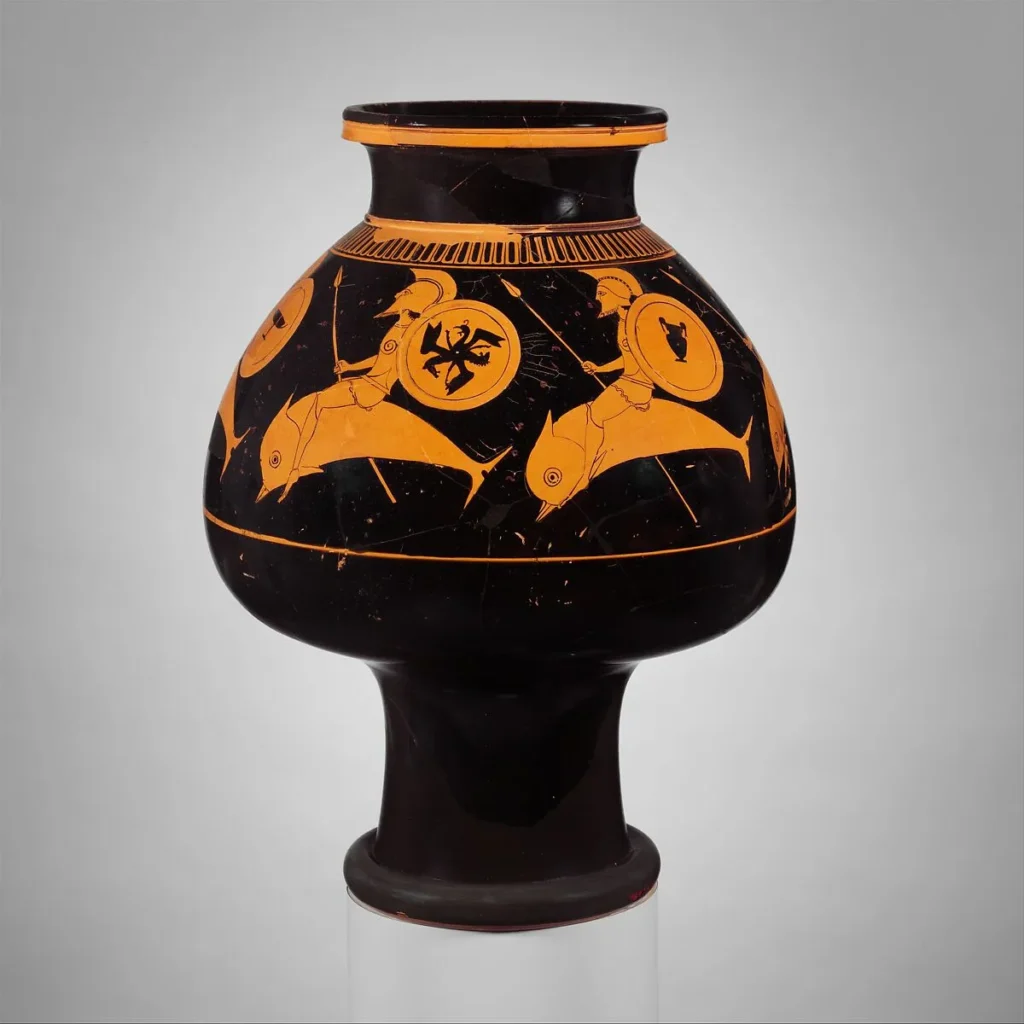
Xenophon’s account in Hellenica Book 4, Chapter 5 is the essential primary source for what happened. The Spartan garrison at Lechaeum had decided to escort a group of Amyclaean soldiers who needed to return home for the festival of the Hyacinthia. The commander split his force, sending the cavalry with the Amyclaeans toward Sicyon while his roughly 600 hoplites turned back toward Lechaeum on foot. They were marching along an open coastal road, in daylight, with no cavalry and no missile troops to protect them.
Iphicrates and the Athenian commander Callias saw the opportunity. Callias deployed the Athenian hoplites outside Corinth as a reserve while Iphicrates sent his peltasts forward. The tactic was direct and devastating. The peltasts advanced to javelin range and began wounding men on the exposed right flank of the Spartan column, the side not covered by the shield. The wounded were sent forward toward Lechaeum. The casualties accumulated.
The Spartan commander ordered the younger men to charge. They sprinted after the peltasts. The peltasts ran. By the time the hoplites stopped, winded and out of formation, the peltasts turned and resumed throwing. The Spartans who had given chase were now isolated and were cut down. This happened again and again. As Xenophon describes with uncomfortable precision, each failed pursuit killed more men, broke the formation further, and left the survivors more exhausted and more afraid. When the Spartan cavalry finally arrived, it was too late, and even then the cavalry charged poorly, maintaining an even front with the hoplites rather than aggressively running the peltasts down.
What Xenophon is describing is not a battle in any traditional Greek sense. There was no clash of shields, no shoving match between phalanxes, no moment of heroic single combat. The Spartans were ground down across a coastal road over the course of an afternoon. By the end, Xenophon records them gathered on a small hill about two stadia from the sea, from where the survivors made their way back into Lechaeum. The Athenian casualties were minimal.
The Bryn Mawr Classical Review‘s assessment of the Sekunda and Burliga volume on Lechaeum calls it plainly “a symbol of the collapse of traditional hoplite warfare under pressure from light forces.”
Did Iphicrates Invent a New Kind of Soldier?
The popular version of this story adds a further claim: that Iphicrates was so impressed by his peltasts at Lechaeum that he reformed Greek infantry entirely, replacing the large hoplite shield with a smaller peltē and equipping his men with longer spears and swords, effectively creating a new hybrid soldier that anticipated the Macedonian phalangite. This story comes primarily from Diodorus Siculus, and it has shaped popular histories of Greek warfare for generations.
The scholarly picture is more complicated. The Sekunda and Burliga volume, reviewed in full at the Bryn Mawr Classical Review, represents the current specialist assessment, and its contributors argue carefully that the men who won at Lechaeum in 390 BC were traditional javelin-throwing peltasts, not the product of any Iphicratean reform. Nicholas Sekunda argues that the reform, if it happened in the form Diodorus describes, came roughly a decade or more later, perhaps around 374 BC, and produced something quite different: soldiers armed with small shields, longer thrusting spears, and swords, closer to substitute hoplites than to traditional skirmishers. Brian Bertosa’s contribution to the same volume treats Iphicratean peltast equipment as a transitional link between earlier javelin-throwing light troops and the Macedonian phalangites, supporting the view that the Lechaeum victory was won by old-style missile soldiers and the actual reform came later.
Roel Konijnendijk’s chapter in the same collection surveys how modern scholars have handled the ancient sources and frames the Lechaeum victory as a superb example of combined arms tactics of the kind already visible at Sphacteria, not as evidence of a new military invention. The innovation was not in the troops themselves. It was in recognizing and exploiting a specific tactical situation: elite heavy infantry moving without support, on open ground, too confident to call for help before it was too late.
This distinction matters. Iphicrates was a gifted commander, and the victory at Lechaeum was real and significant. But the structural weakness it exposed was not new, and the light infantry who exploited it were not a new invention. They were soldiers who had been operating in the margins of Greek warfare for decades, waiting for a commander who would put them in the right place at the right time.
Why the Hoplite Could Not Simply Solve the Problem
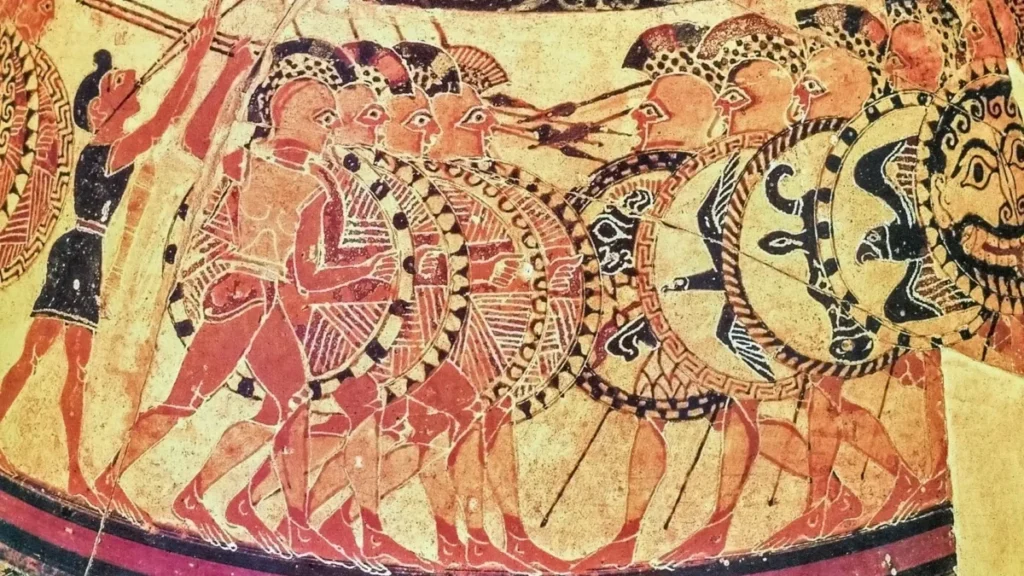
The hoplite was an extraordinary instrument of war within its intended domain. A locked phalanx of armored men with overlapping shields and long spears, moving in disciplined formation across flat ground against a comparable enemy, was nearly impossible to break from the front. Greek city-states had built their military cultures, their civic identities, and their social hierarchies around this fact for generations.
But the aspis was also the hoplite’s prison. It weighed around seven kilograms. Combined with a bronze breastplate, greaves, and helmet, a fully equipped hoplite was carrying somewhere between fifteen and twenty-five kilograms of equipment. He could not sprint effectively. He could not sustain a long pursuit. If he broke formation to chase a peltast, he left the phalanx, and a hoplite outside the phalanx was a much more vulnerable creature than one inside it.
Xenophon understood this dynamic precisely. In Book 4 of the Hellenica, he notes that Iphicrates’ peltasts had ranged through much of Arcadia, plundering and attacking walled towns, because the hoplite defenders refused to come out and face them in the open. They were not cowards. They were rational. A hoplite force without cavalry and without its own light troops was precisely what the Spartan regiment at Lechaeum had been: powerful, slow, and exposed.
The solution to peltasts was combined arms. You needed cavalry to run them down, your own light troops to match them at range, or terrain that forced close engagement. The Spartans at Lechaeum had none of these things, and their commander pressed on anyway. Derrick Niese’s graduate thesis on peltasts and javelineers at Wright State University makes a related point about the ancient sources themselves: Greek historians consistently underreported light troops because those soldiers were often foreigners, mercenaries, or poor citizens without the political standing to earn narrative attention. The hoplite was a citizen, a landowner, the backbone of the polis. The peltast was frequently a Thracian for hire, or a man too poor to afford bronze. Ancient writers followed the politics, and the politics followed the heavy infantry.
This means that every time we read a battle narrative from Thucydides or Xenophon that centers on the hoplite clash, there is a near-invisible layer of activity on the flanks and in the approach routes that the sources record only when it produced a result too dramatic to omit. Sphacteria was too dramatic to omit. Lechaeum was too dramatic to omit. The many engagements in which peltasts screened a column, seized a pass, or delayed a pursuit long enough to save an army mostly went unrecorded.
The men who died on the coastal road near Corinth in 390 BC were not killed by a new way of war. They were killed by an old one that their own tradition had never taken seriously enough to answer.