
In the winter of 1198 BCE, the Hittite Empire’s granaries lay half empty while scribes at Hattusa documented pleas for emergency grain shipments. Within three years, the capital itself would be abandoned and the empire erased from existence. For centuries, the collapse of this Bronze Age superpower remained one of ancient history’s most unsettling mysteries, but recent tree-ring evidence has revealed a previously unknown environmental catastrophe at its center.
The Roots of Hittite Dominance
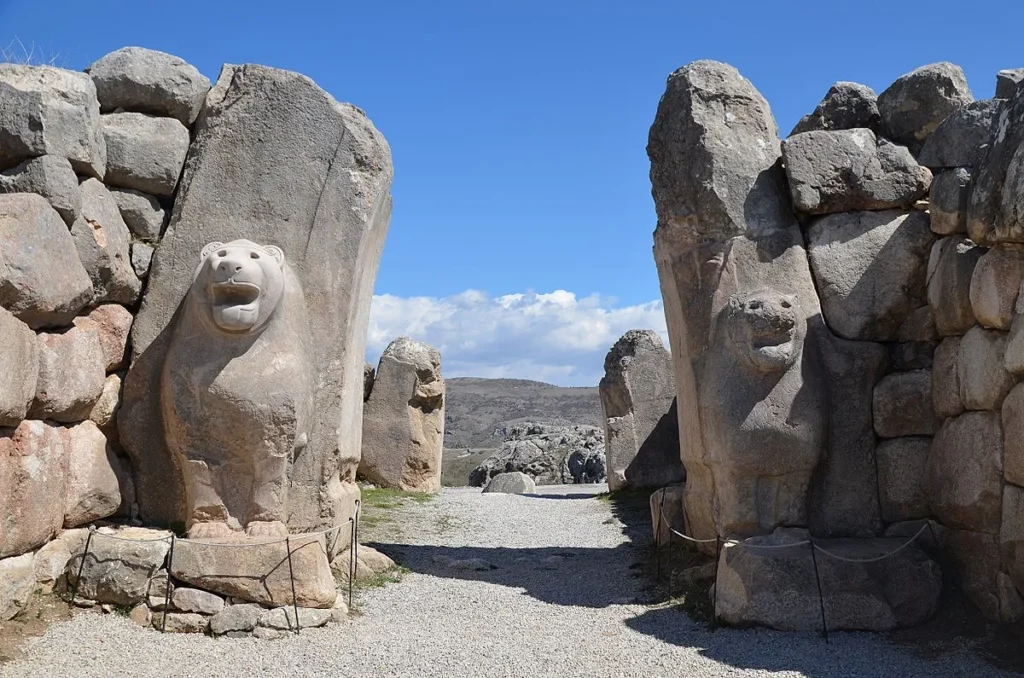
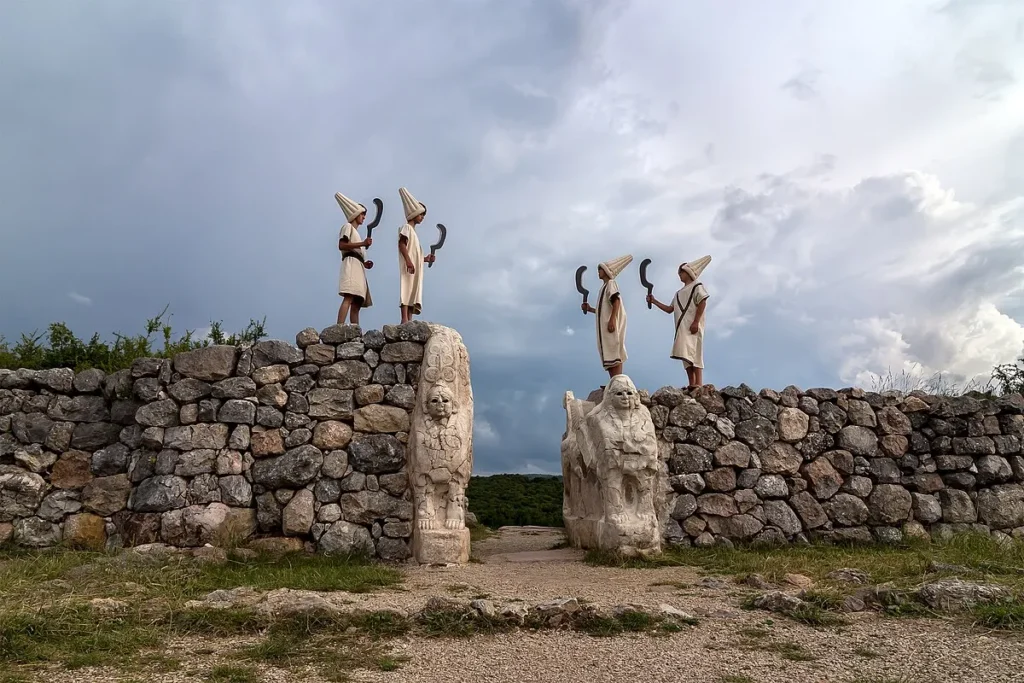
The Hittite state emerged in central Anatolia around 1650 BCE, building power from its strategic position and iron-rich highlands. From Hattusa, carved into the rocky plateau near modern Bogazkale, Hittite kings controlled trade routes connecting the Aegean to Mesopotamia. Their empire expanded through a blend of military conquest and diplomatic marriage alliances, establishing vassal kingdoms across Anatolia and into northern Syria. The city itself sprawled across 180 hectares, protected by massive stone fortifications and guarded by lion-carved gates that still survive today.
The empire reached its zenith during the 14th and 13th centuries BCE. King Suppiluliuma I conquered the wealthy kingdom of Mitanni around 1350 BCE, bringing skilled craftsmen and tribute-paying cities under Hittite authority. His successors battled Egyptian pharaohs for control of Canaan in campaigns that exhausted both powers. The Battle of Kadesh in 1274 BCE, fought against Ramesses II near modern Homs, ended in a stalemate that led to history’s first recorded peace treaty. At this peak, the Hittite realm encompassed over 200,000 square kilometers.
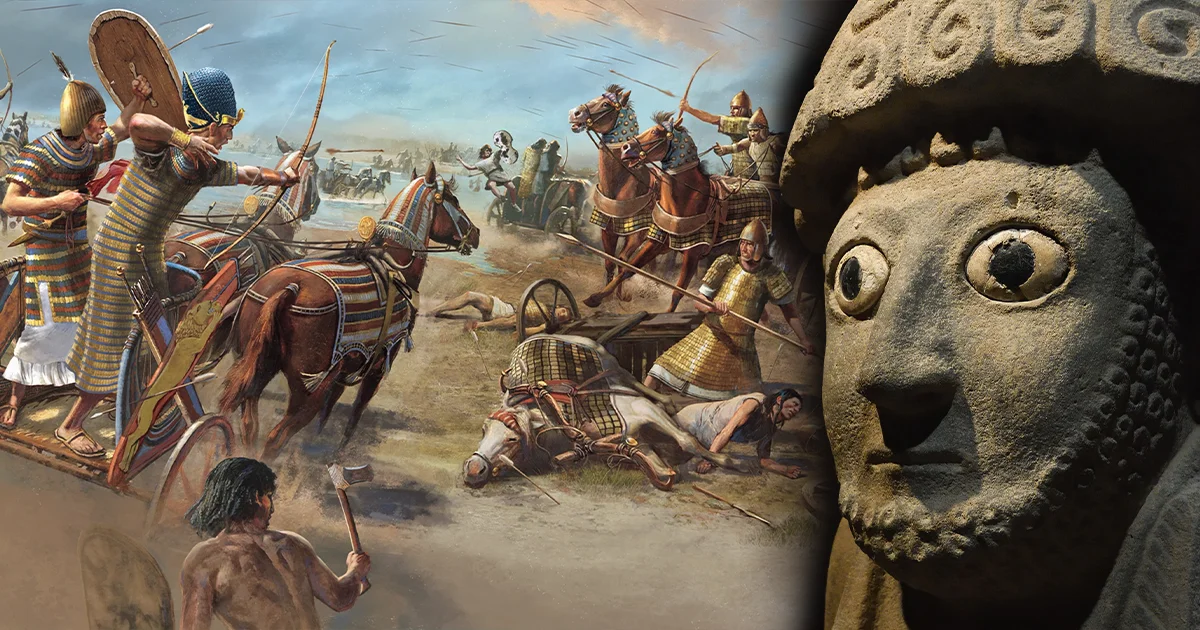
Hittite military strength rested on chariot warfare and disciplined infantry formations. Their iron-working technology, closely guarded in royal workshops, produced superior weapons that terrified Bronze Age opponents. Cuneiform tablets reveal organized military campaigns involving thousands of chariots and tens of thousands of foot soldiers. Administrative tablets reveal a sophisticated bureaucracy managing agriculture, taxation, and diplomatic correspondence across vast distances. Officials tracked grain stores, monitored vassal tribute, and coordinated defense operations with precision that rivaled any contemporary state.
The Empire’s Agricultural Foundation
Central Anatolia’s climate supported wheat and barley cultivation through winter rainfall and spring snowmelt. The region received 400 to 500 millimeters of annual precipitation during normal years, sufficient for dryland farming on the Anatolian plateau. Hittite engineers constructed dams and storage facilities at sites like Arinna and Alacahoyuk, channeling water to terraced fields carved into hillsides. Archaeological surveys document hundreds of farming settlements radiating from Hattusa, each contributing grain taxes to royal storehouses according to carefully maintained assessment records.
This agricultural surplus funded the military, supported urban craftsmen, and maintained trade relationships across the Near East. The Hittite economy operated on a palace-centered model where the king controlled resource distribution through appointed officials. Cuneiform tablets detail shipments of grain, textiles, and metals moving between cities according to royal decree. Merchants traveled established routes to trade Anatolian wool and silver for Mesopotamian tin, essential for bronze production that equipped armies and filled workshops.
Drought posed an existential threat to this arrangement. Even brief dry spells could disrupt grain supplies, forcing desperate diplomatic measures. During one 13th-century crisis, Queen Puduhepa negotiated emergency shipments from Egypt while Ramesses II sent irrigation specialists northward to revive Hittite farmlands. These interventions stabilized the situation temporarily, demonstrating vulnerability to climate variation. Yet Hittite dependence on Anatolian agriculture remained absolute, with no coastal ports for maritime grain trade.
Climate Evidence from Ancient Trees
In 2023, researchers analyzing juniper trees buried near Hattusa discovered evidence of catastrophic drought between 1198 and 1196 BCE. The juniper specimens, preserved in ancient construction timber, provided continuous climate records spanning nearly 700 years. Tree-ring analysis measures annual growth patterns, with narrow rings indicating moisture stress during growing seasons. The three-year sequence showed the most severe water deficit in the entire sample, representing rainfall failures unprecedented in seven centuries of data.
The timing matches historical records describing Hittite Empire collapse around 1190 BCE with remarkable precision. While drought occurred periodically in Anatolia, multi-year episodes strained agricultural systems beyond recovery capacity. Grain shortages would have cascaded through the palace economy within seasons, disrupting taxation collection and halting trade networks. Without food reserves after the third failed harvest, maintaining large military forces became impossible. Soldiers required daily rations, and chariot horses consumed massive quantities of fodder that disappeared during prolonged drought.
Pollen samples from across the Eastern Mediterranean confirm broader climate deterioration during the late 13th and early 12th centuries BCE. Studies from sites in Italy, Greece, Turkey, Syria, Lebanon, Israel, and Iran document declining annual rainfall beginning around 1250 BCE and intensifying after 1200 BCE. The Hittite heartland, lacking coastal ports for maritime grain imports and surrounded by mountains that blocked moisture, suffered worst from these deteriorating conditions.
Built out of a love for history, kept free from distractions.
Spoken Past is an independent project shaped by curiosity, care, and long hours of research. Reader support helps keep it maintained, carefully researched, and open to everyone.
Internal Fractures and External Pressures
The drought coincided with mounting military threats on multiple frontiers that stretched Hittite defensive capabilities. Inscriptions from Hattusa mention increasing raids by Kaskan tribes from northern mountains and escalating conflicts with resurgent Assyria to the southeast. The mysterious Sea Peoples, documented in detailed Egyptian temple reliefs, launched devastating raids across the Eastern Mediterranean beginning around 1200 BCE.
Hittite military strength depended absolutely on feeding thousands of soldiers, support personnel, and chariot crews stationed across the empire. As grain supplies dwindled through successive harvest failures, maintaining border garrisons became unsustainable. Tablet evidence from the final years suggests mass desertions when soldiers’ rations fell short or disappeared entirely. Troops abandoned posts to seek food for families, leaving frontiers undefended.
Vassal states seized opportunities to break free from Hittite Empire collapse when central power weakened. Syrian territories like Carchemish and Aleppo, previously subdued through military pressure and tributary obligations, stopped sending resources to Hattusa as enforcement capacity evaporated. The empire’s administrative correspondence reveals increasingly desperate tones during its final decades, with officials reporting unrest and pleading for grain shipments. Requests for assistance replace the confident directives characteristic of earlier reigns.
The Capital Falls Silent
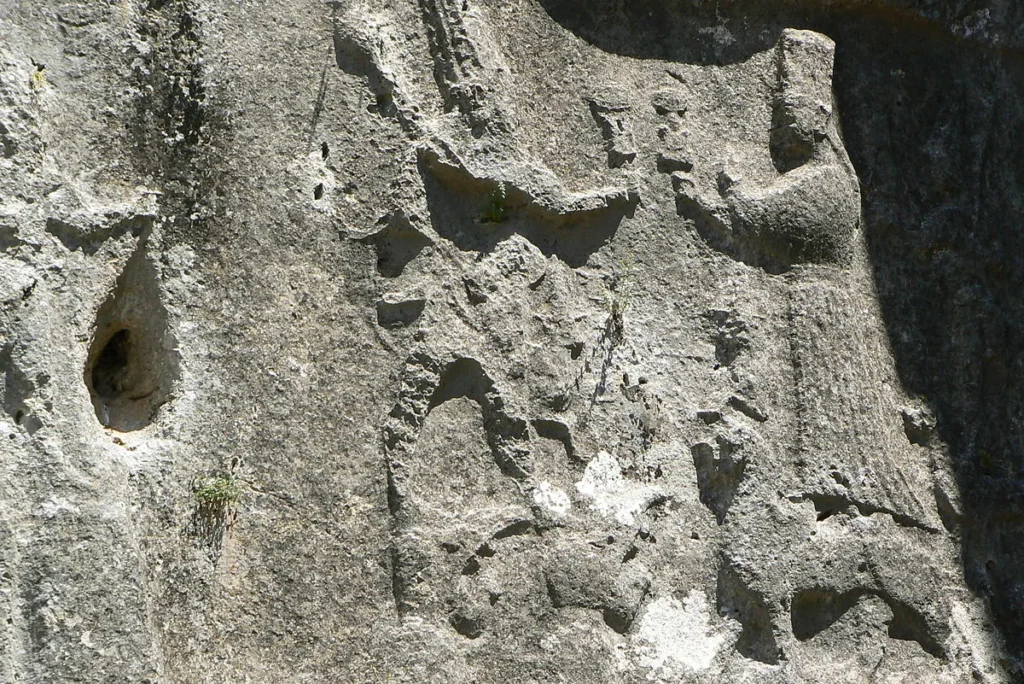
Hattusa’s destruction remains archaeologically dramatic and deeply puzzling. Excavations reveal widespread burning and deliberate abandonment around 1200 BCE, with temples stripped of valuables and palaces left to collapse. Unlike earlier destructions followed by immediate reconstruction, the capital lay empty for nearly four centuries afterward. Royal archives end abruptly in the 1190s BCE, cutting off the written record of Hittite civilization mid-sentence.
The Hittite Empire collapse extended beyond the capital to encompass the entire administrative network throughout Anatolia. Regional centers like Sapinuwa, Tarhuntassa, and Tapikka show similar patterns of violent destruction or orderly abandonment during the same narrow time window. Surveys document sharp population decline across central Anatolia between 1200 and 1150 BCE, with settlement patterns suggesting migration toward coastal regions. The sophisticated palace economy vanished virtually overnight when the administrative apparatus dissolved.
Recent studies connect the Hittite Empire collapse to broader Bronze Age instability affecting interconnected civilizations. The Mycenaean palace system in Greece failed around 1190 BCE, with major centers like Pylos and Mycenae destroyed or abandoned. Ugarit on the Syrian coast burned in flames that preserved desperate final letters describing approaching enemy ships. The drought hypothesis explains synchronous collapse better than isolated military invasions, accounting for the geographic breadth and temporal clustering of destructions.
Survival and Adaptation After Empire
Not all Hittite territories succumbed immediately to chaos and depopulation. Excavations at Çadır Höyük, located 70 kilometers northeast of Hattusa, reveal cultural continuity through the early Iron Age despite clear evidence of imperial withdrawal. Residents adapted to post-imperial conditions by diversifying food sources beyond grain monoculture and developing localized pottery styles independent of palace workshops. Zooarchaeological evidence shows strategic shifts toward herding sheep and goats better suited to drier climates.
In southeastern Anatolia and northern Syria, Neo-Hittite kingdoms emerged during the 11th and 10th centuries BCE as political organization gradually recovered. These successor states preserved Hittite cultural elements including hieroglyphic script, religious practices honoring storm gods, and architectural styles featuring lion sculptures at city gates. Cities like Carchemish, Melid, and Sam’al maintained regional importance through the Iron Age. They operated on dramatically reduced scales compared to the Bronze Age empire but demonstrated cultural persistence.
The transition from Bronze to Iron Age accelerated following the collapse as tin supplies from distant sources became inaccessible. With bronze production impossible, iron-working spread rapidly across Anatolia using abundant local ore deposits. This technological shift eventually revolutionized warfare and agriculture throughout the ancient Near East.
Long-Term Implications for Collapse Studies
The Hittite Empire collapse demonstrates how environmental stress interacts with political and economic vulnerabilities. The empire possessed sophisticated infrastructure, trained bureaucracy, and extensive diplomatic networks, yet proved catastrophically vulnerable when multiple crises converged simultaneously. Three years of exceptional drought overwhelmed systems designed to handle periodic shortages of one or two seasons.
Modern climate research provides unprecedented precision in reconstructing ancient environmental conditions. Dendrochronology offers year-by-year resolution impossible through traditional archaeological methods based on pottery styles or building phases. Combining tree-ring data with cuneiform historical texts and stable isotope analysis creates detailed collapse narratives grounded in multiple evidence streams. The Hittite drought now stands documented with scientific certainty rather than speculative reconstruction.
Other Bronze Age civilizations show similar patterns of environmental and social stress during the same period. Egypt survived the crisis through Nile irrigation that remained reliable despite reduced rainfall and maritime trade access through Mediterranean ports. The Hittites, landlocked on the Anatolian plateau and dependent entirely on rain-fed agriculture, lacked these geographic alternatives when climate patterns shifted. Geography determined survival as much as political structure or military strength.