
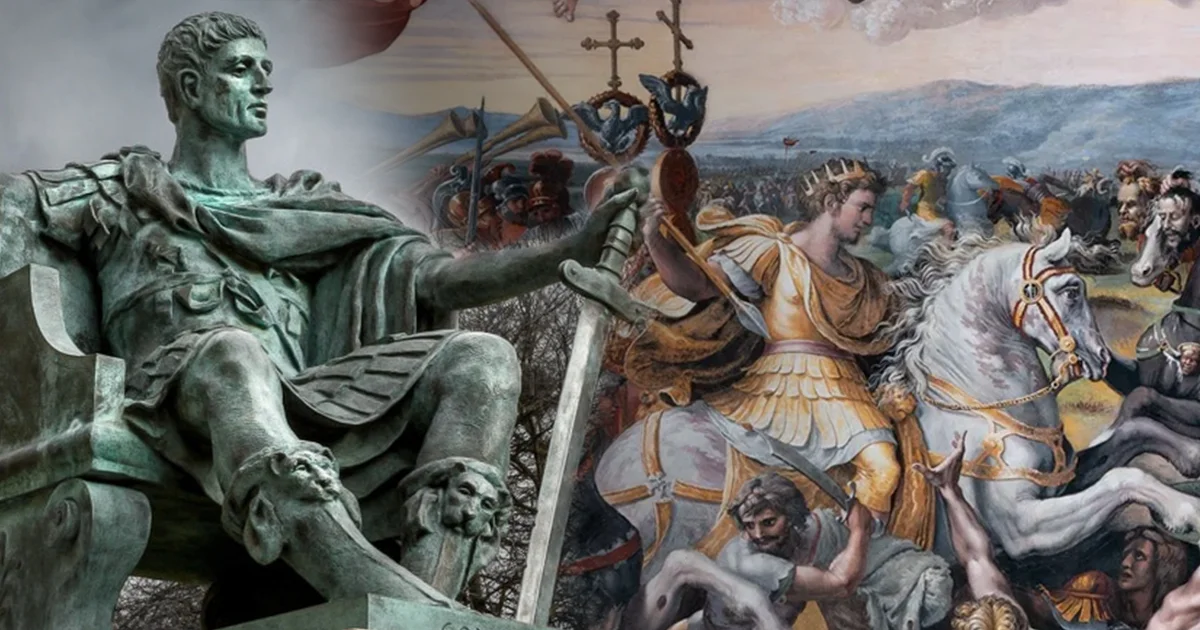
On October 27, 312 AD, the night before one of history’s most decisive battles, Roman Emperor Constantine experienced something that would transform an empire. Whether divine intervention or calculated strategy, Constantine’s vision before the Battle of the Milvian Bridge became the pivot point between pagan Rome and Christian dominion. The story comes filtered through ancient sources with competing details, but its impact remains undeniable.
The Emperor at a Crossroads
Constantine controlled the western provinces by 312 AD, yet his grip remained tenuous. Maxentius held Rome itself, the empire’s symbolic heart, with superior numbers and fortified defenses. Constantine marched his army south along the Via Flaminia, knowing that victory or death awaited at the Tiber River. His troops were outnumbered, facing an opponent who had successfully endured two previous sieges.
The Christian community offered no military advantage. Three centuries of persecution had left them scattered, underground, without temples or political influence. Constantine’s father Constantius had shown relative tolerance toward Christians, but invoking their god on a battlefield bordered on madness. Rome’s traditional deities had secured victories for a millennium.
A Cross in the Sky
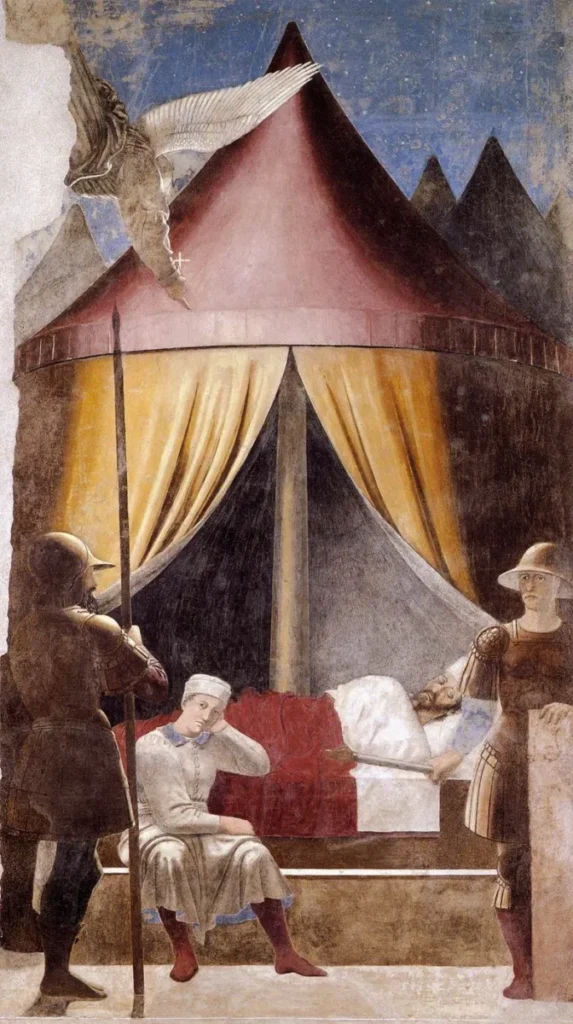
Constantine’s vision manifested differently depending on which ancient writer tells the story. The event occurred either during daylight as his army marched, or at night in a dream within his tent. Both versions center on a luminous cross appearing with a promise of divine victory inscribed in the heavens. The Greek phrase “En toutōi níka” meant “in this, conquer.”
Lactantius, writing closest to the events as tutor to Constantine’s son Crispus, described the vision as a nighttime dream. Constantine received direct instruction to mark his soldiers’ shields with a heavenly sign denoting Christ. The symbol Lactantius described was a staurogram, essentially a Latin cross with its upper portion curved into a P-shape.
Conflicting Ancient Accounts
Eusebius of Caesarea provided two separate accounts that contradict each other in crucial details. His earlier Ecclesiastical History, written while Constantine lived, mentions divine assistance but omits any vision entirely. Only later, in his Life of Constantine composed after the emperor’s death, does Eusebius present the dramatic sky-cross narrative. He claimed Constantine personally told him the story under oath.
According to Eusebius’s later account, Constantine and his entire army witnessed the cross of light above the sun during their march. The vision occurred in daylight, visible to thousands of soldiers, with the prophetic Greek words emblazoned across the sky. That night, Christ appeared to Constantine in a dream, explaining the symbol’s meaning and commanding its use against enemies.
The Chi-Rho Symbol Takes Form
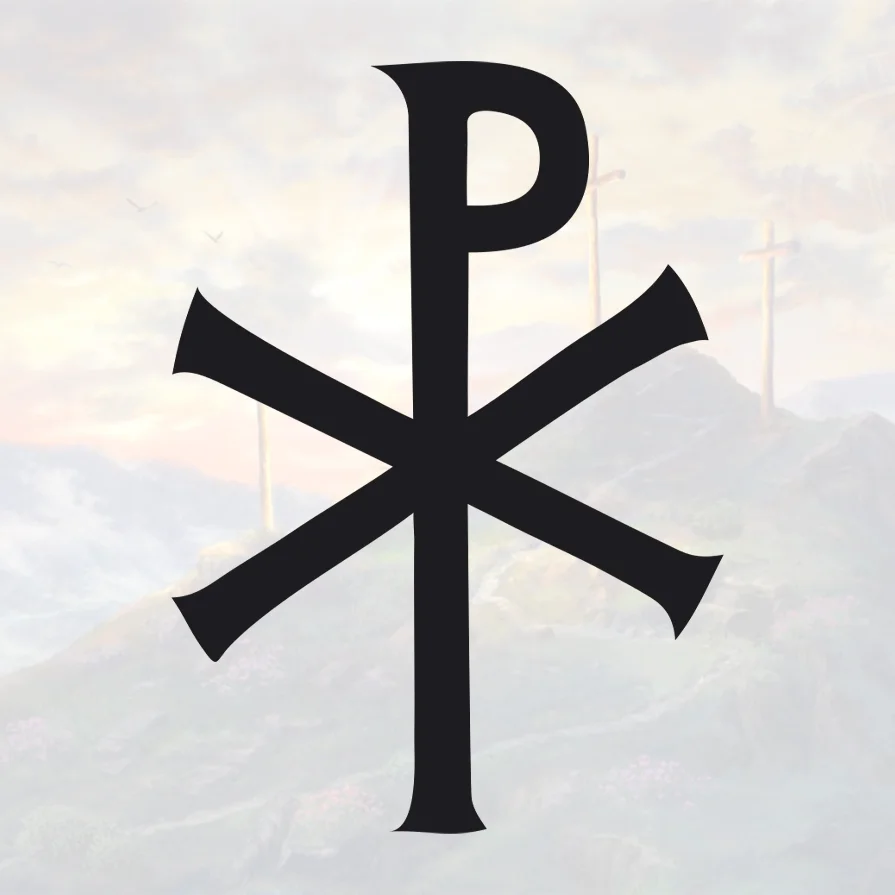
The Chi-Rho became Constantine’s chosen emblem, formed by superimposing the Greek letters X (chi) and P (rho). These comprised the first two letters of Christos in Greek. Unlike the staurogram Lactantius described, the Chi-Rho became the lasting symbol associated with Constantine’s vision. He ordered it painted on shields, later incorporating it into a military standard called the labarum.
Most of Constantine’s troops had no idea what the symbol represented. Christians recognized it instantly, but the army consisted primarily of pagans devoted to Sol Invictus, Mars, and Jupiter. Constantine gambled everything on an outlawed religion’s god, binding his fate to a symbol most Romans considered treasonous or foolish.
Built out of a love for history, kept free from distractions.
Spoken Past is an independent project shaped by curiosity, care, and long hours of research. Reader support helps keep it maintained, carefully researched, and open to everyone.
From Dream to Military Reality
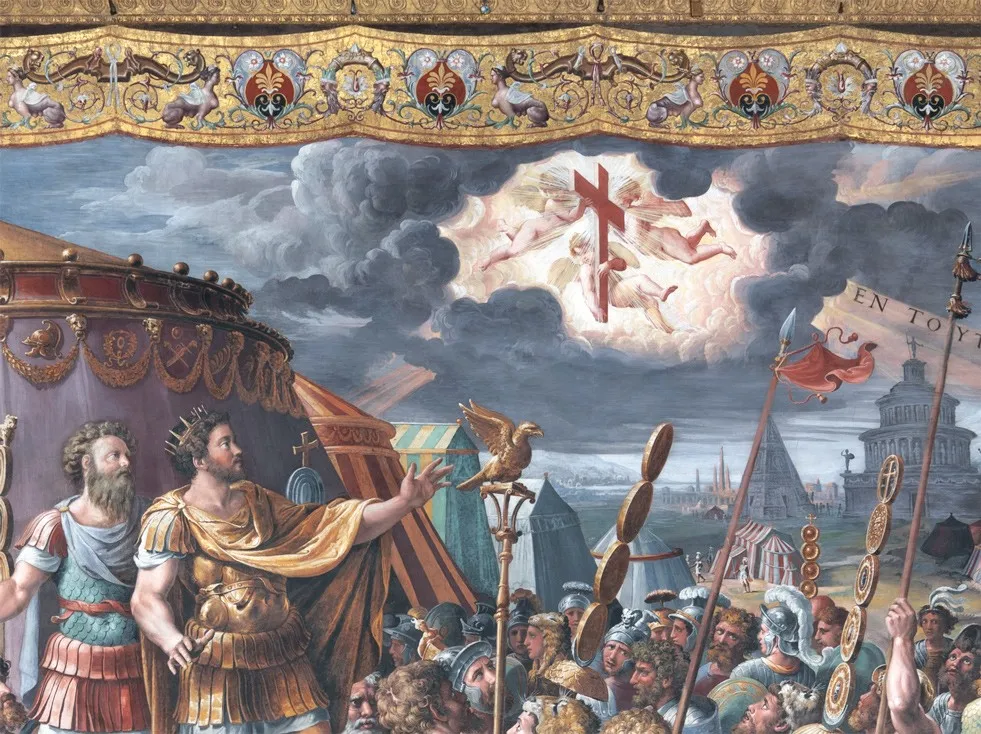
Constantine’s decision to embrace the Christian symbol represented calculated risk as much as faith. He needed something to distinguish his cause from Maxentius, who controlled Rome’s traditional religious apparatus and Senate support. The Christian god offered an alternative source of legitimacy, a divine patron untainted by association with his rival.
The night of October 27 passed with soldiers hastily marking shields by firelight. Some painted the Chi-Rho, others perhaps the staurogram, still others crude crosses. Uniformity mattered less than the symbolic break from Rome’s pagan pantheon. Dawn arrived with Constantine’s army positioned near Saxa Rubra, nine miles north of Rome.
Victory at the Milvian Bridge
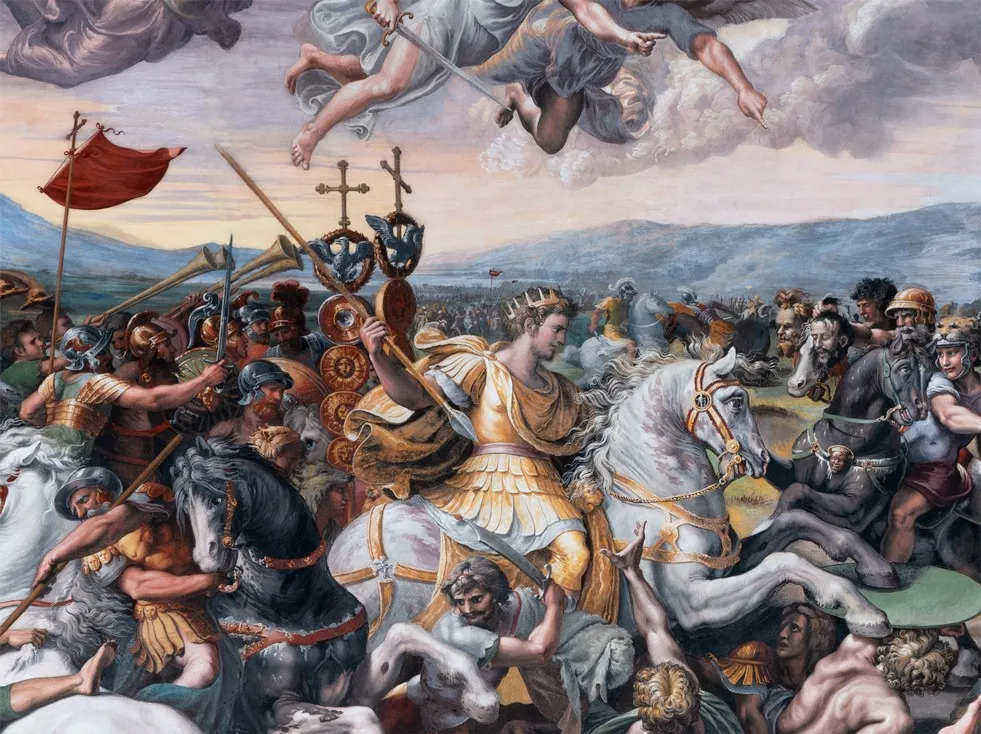
Maxentius made the fatal error of leaving Rome’s walls to fight in open battle on October 28, 312 AD. Ancient sources attribute his decision to superstition and oracular prophecy. The Sibylline Books supposedly predicted that “an enemy of the Romans” would perish that day. Maxentius interpreted this as favorable to himself.
Constantine’s forces drove Maxentius’s army back toward the Milvian Bridge, the stone crossing carrying the Via Flaminia across the Tiber. A temporary pontoon bridge constructed alongside it collapsed under the weight of retreating soldiers. Maxentius drowned in the river, weighed down by armor, while his army disintegrated. Constantine entered Rome the following day in triumph.
Christianity’s Turning Point
The victory at the Milvian Bridge ended three centuries of imperial persecution. Constantine attributed his success entirely to the Christian god, cementing his commitment to the faith. Within months, he issued the Edict of Milan in 313 AD alongside co-emperor Licinius, granting religious tolerance throughout the empire. Christians emerged from hiding, their churches rebuilt with imperial funding.
Constantine’s vision, whether genuine religious experience or brilliant propaganda, transformed Christianity from persecuted sect to favored religion. He constructed basilicas, convened church councils, and inserted himself into theological disputes. The emperor who fought under the Chi-Rho symbol never received baptism until his deathbed in 337 AD, maintaining ambiguity about his personal beliefs.
The Historical Puzzle
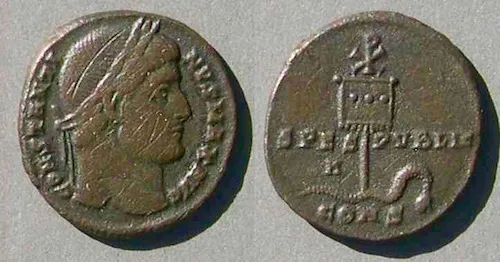
Modern historians debate whether Constantine’s vision actually occurred or represented later fabrication. The contradictions between Lactantius and Eusebius raise legitimate questions. Lactantius wrote within a decade of events, yet mentions only a dream. Eusebius’s dramatic sky-cross appeared only in his posthumous biography of Constantine, decades after the fact.
A panegyric from 310 AD mentions Constantine experiencing a vision at Apollo’s temple, suggesting he had prior form for claiming divine encounters. The emperor understood the propaganda value of supernatural endorsement. Whether Constantine saw a genuine miracle or recognized an opportunity, his decision to fight under the Christian symbol changed Western civilization’s trajectory irreversibly.