Colosseum water battles put ships, oarsmen, and fighters on a flooded arena floor so crowds could watch staged sea fights inside Rome’s greatest amphitheater. The spectacle took an older Roman tradition of mock naval combat and brought it into a venue built for maximum sightlines, dramatic timing, and raw imperial power on display for 50,000 spectators at once.
Origins of Colosseum Water Battles
Colosseum water battles came from an older Roman tradition called naumachiae, which were mock sea battles staged in massive artificial basins built specifically for public festivals. Julius Caesar kicked off the trend in 46 BC when he had workers dig an enormous basin near the Tiber River and filled it with convicted criminals rowing actual war galleys, complete with marines and archers shooting real arrows at each other. Augustus topped that in 2 BC by building an even larger basin near modern Trastevere, where 3,000 fighters and 19,000 rowers put on a show recreating a famous Greek naval battle between Athens and Persia.
The word Naumachiae meant both the naval show itself and the special water basin, which creates confusion in ancient sources because writers used the same term for open-water basin fights and smaller arena pageants. Later emperors kept the tradition going because turning military victories into live entertainment reinforced their image as conquerors while giving the public an unforgettable spectacle. When the Flavian Amphitheater opened under Titus in 80 AD, planners faced a new engineering puzzle: how do you flood a tight elliptical arena, make the action visible from every seat, and still switch back to dry-floor gladiator fights the same afternoon?
The earliest programs at the amphitheater included water shows that ancient writers described with amazement, noting how quickly the floor transformed from sand to a shallow lake dotted with ships. These weren’t just crowd-pleasers but also propaganda tools that demonstrated Rome’s engineering mastery and the emperor’s ability to control nature itself for public entertainment.
How Romans Flooded the Colosseum
Writers from the first century describe the arena turning into water almost instantly, which tells us planners used shallow depths, strong water inflow, efficient drainage, and careful scheduling around the day’s other events. The most likely method involved placing a temporary watertight platform over the permanent substructures below the arena floor, then sealing all the seams with bituminous compounds, canvas sheets, or leather liners stretched tight and weighted at the edges.
Once sealed, workers opened valves connected to nearby aqueduct lines and let water flow across the platform until it reached the planned depth. The goal wasn’t to create a real harbor but rather a stage that looked like water, so most estimates put the depth at knee to thigh height for an adult man. That shallow layer was enough to float low-draft boats, create splashes and wave effects, and let crews move around safely without the risk of drowning that would come with deeper water.
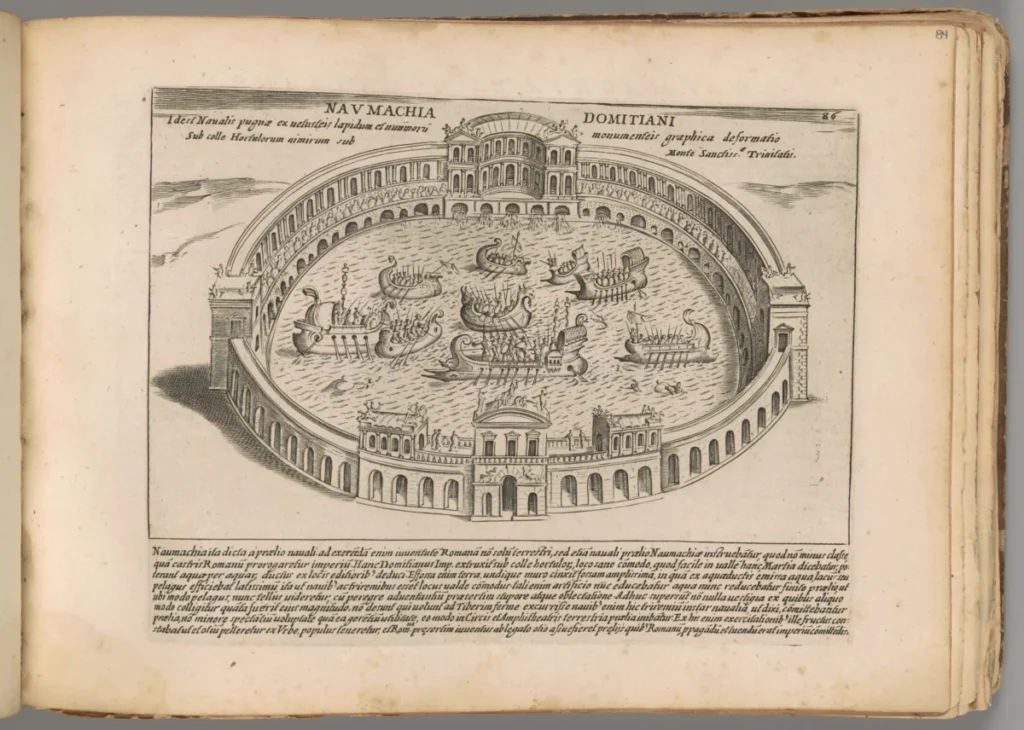
A technical description of the measurements and staging logistics appears under Naumachiae of Titus and Domitian, which synthesizes ancient texts with modern topographical analysis and water supply calculations. The sources suggest water came from branches of the Aqua Claudia or other nearby aqueduct lines that could deliver enough volume to fill the arena floor in under an hour. Gravity drains built into the valley floor then pulled water back out through channels and pipes, allowing crews to dry and reset the floor for afternoon gladiator bouts or animal hunts.
The entire system worked because planners kept things simple: shallow water meant less weight on temporary platforms, faster fill and drain times, and easier movement for performers who needed to jump between ships during boarding actions. The engineering was sophisticated but not magical, relying on Rome’s existing water infrastructure and the kind of temporary construction techniques Roman builders used for bridges, docks, and military camps.
Roman Naumachiae and Arena Shows
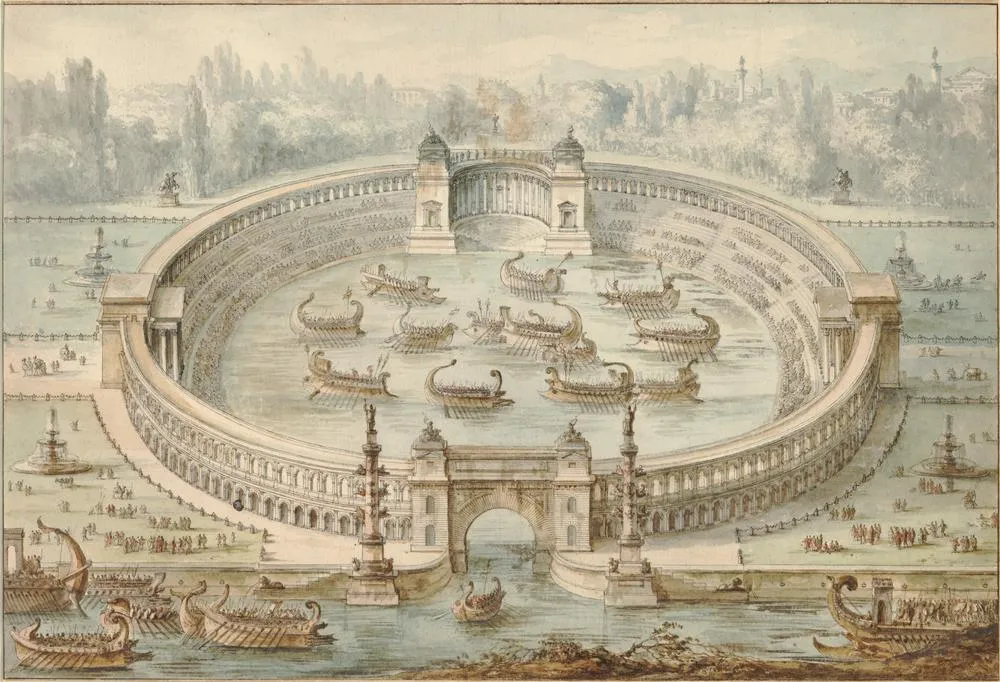
In a purpose-built basin like the ones Caesar and Augustus commissioned, organizers had room to float full-size warships, set up artificial islands, and build bridges where soldiers could stage amphibious assaults in front of the crowd. Basin shows could last for hours because there was genuine space for ships to maneuver, turn, and build up speed for ramming attacks that felt convincing.
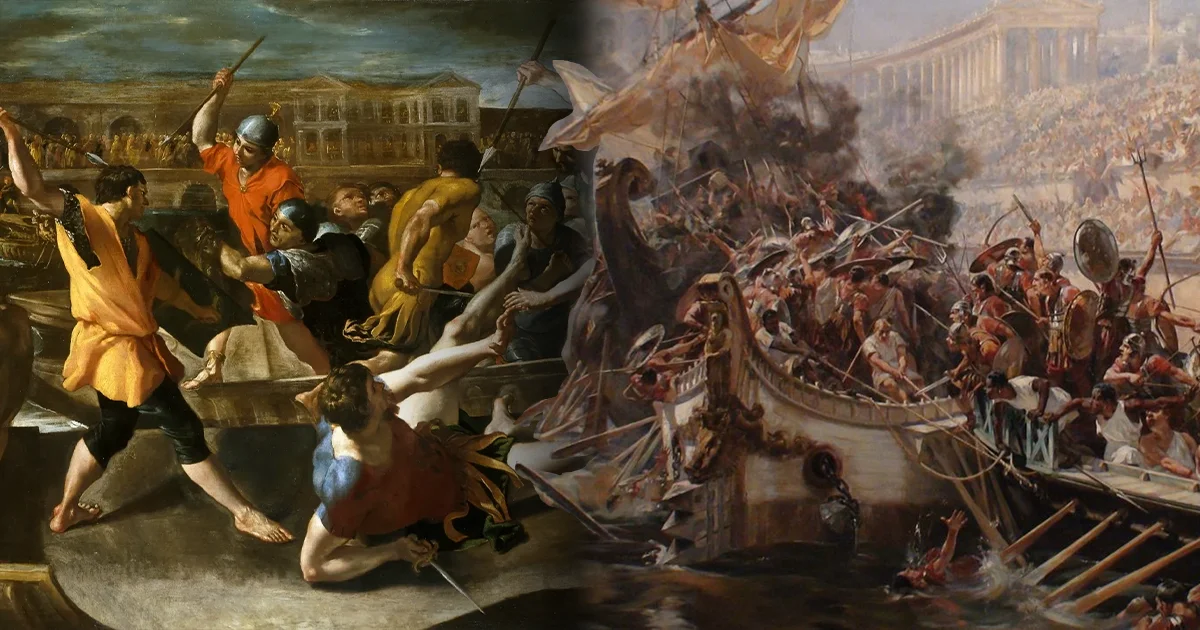
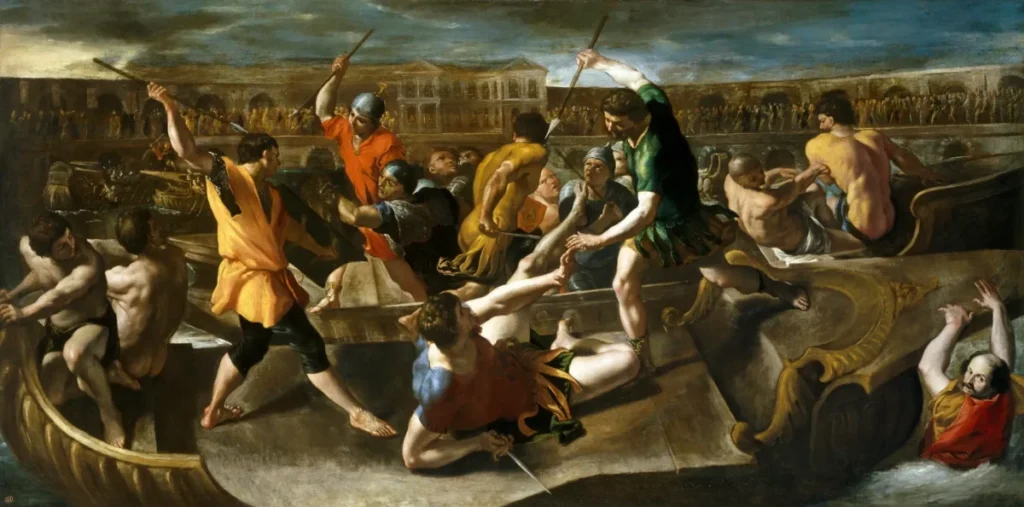
Colosseum water battles had to work differently because the elliptical arena was far smaller and tighter than any basin. That forced organizers to use smaller ships with reduced draft, shorter oars that wouldn’t tangle, and fight choreography that emphasized boarding and close combat over long-distance maneuvering. The audience watched flags, painted prows, shields mounted on rails, and fighter silhouettes to identify which side was which, and that visual code became so standard that painters and printmakers repeated the same elements centuries later.
The shared visual language made a flooded arena feel like an actual sea battle even when the water was barely deep enough to soak your sandals. Crowds saw oars striking the surface, heard the crack of wood on wood when ships came together, and watched fighters scramble across boarding planks to clash on enemy decks. That tight, readable action played better in an amphitheater than wide-open naval maneuvers that would be hard to follow from the upper tiers.
Engineering of the Colosseum Flooding System
Roman engineers faced three linked problems: keep water where it belonged, keep people and equipment dry where needed, and switch the arena back to a dry floor on a strict timetable so the rest of the day’s program stayed on schedule. Waterproofing likely combined multiple techniques including tightly fitted wooden planks, bituminous sealants similar to what builders used on roofs and cisterns, and flexible liners made from canvas or leather that could be rolled out, anchored, and removed after the show.
Hidden ramps and submerged platforms gave performers secure footing when they needed to jump between ships or stage dramatic boarding sequences where fighters appeared to leap from one deck to another. Inflow used temporary connections to aqueduct distribution lines, with valves and gates that workers could open in sequence to control the fill rate and avoid sudden surges that might swamp ships or damage platforms.
Drainage took advantage of the site’s natural slope and built channels that carried water downhill and out of the structure entirely. The whole system was reversible, which mattered because the substructures under the arena were not designed to stay underwater for long periods. Planners treated water shows as rare set pieces that justified the cost, labor, and disruption to the building’s normal operations.
Reconstruction drawings like the Cutaway perspective reconstruction of the Colosseum helped later scholars visualize where temporary waterproofing and platforms would sit in relation to permanent architectural features. Those early modern cutaway views combined direct observation of surviving ruins with educated guesses about how ancient engineers solved practical problems.
Built out of a love for history, kept free from distractions.
Spoken Past is an independent project shaped by curiosity, care, and long hours of research. Reader support helps keep it maintained, carefully researched, and open to everyone.
Ships and Weapons in Arena Naval Battles
Ships used in Colosseum water battles were purpose-built for shallow water, with flat bottoms that sat stable in thin depths and decorative rams that looked impressive but sat on hulls designed for pageantry rather than actual naval warfare. Oars were shorter and mounted higher than on real warships so blade tips could bite into a shallow surface without hitting bottom or jamming against hidden platforms.
Steering relied on quick, exaggerated motions that spectators could read from hundreds of feet away, with helmsmen making dramatic gestures to signal turns or charges. The visual language had to be clear because sightlines mattered more than nautical realism. Missile fire opened most fights, with archers and javelin throwers exchanging volleys while ships closed distance, then grappling hooks, boarding bridges, and knotted lines pulled vessels together for the main event.
Once ships locked together the fight turned into a series of small deck battles where individual combatants clashed with swords, spears, and shields while the crowd roared. Organizers wanted faces, shields, and outcomes that read cleanly across the entire amphitheater, so the best sequences stacked multiple boarding points and kept action moving from one rail to the next. Weapons were real but ship combat skills were minimal, which made sense because most fighters were condemned criminals or prisoners trained just enough to follow basic choreography.
Fighters and Crews in Naval Shows
Most crews were condemned criminals, prisoners of war, or expendable recruits who received minimal training before being thrown into a choreographed fight in front of 50,000 screaming spectators. Rowers made up the bulk of each crew because visual impact required dozens of oars per ship all moving in rough coordination to sell the illusion of a real galley in action.
Armed fighters were fewer but more visible, wearing colored tunics, painted shields, or distinctive helmets so crowds could tell sides apart instantly. The presiding emperor controlled the final outcome, sometimes staging mass pardons for dramatic effect or ordering wholesale executions to demonstrate power and satisfy bloodthirsty sections of the audience. That balance between spectacle and violence explains why organizers kept water depth low, movement routes simple, and boarding actions central to every fight sequence.
Elite gladiator schools rarely supplied crews for water battles because the skills didn’t transfer and the business model for gladiators relied on reusable, valuable fighters rather than disposable participants. Water shows drew from a different labor pool entirely, one that cost less to recruit and required almost no ongoing investment in training or equipment maintenance.
Crowd Experience and Sightlines in the Colosseum
Colosseum water battles opened with shock value as spectators watched the arena floor disappear under a sheet of water while stagehands rolled ships into position and crews scrambled aboard. The sound of oars hitting water carried clearly in the amphitheater’s stone bowl, and shouts from fighters mixed with crowd noise to create an overwhelming sensory experience that ancient writers tried to capture in their descriptions.
Short distances between seating tiers and the arena meant even spectators in cheap upper seats could read facial expressions, follow individual duels, and see exactly when a fighter went down or a ship started taking water. That intimacy distinguished amphitheater water shows from basin spectacles where viewers sat farther back and relied more on general impressions than specific moments. Painters and engravers working centuries later preserved those key elements because they matched what Roman audiences remembered most vividly: flags snapping in the wind, boarding bridges slamming down, fighters locked in hand-to-hand combat, and the emperor’s raised hand signaling mercy or death.
Baroque art like the Prado’s Roman Naumachia helped cement the public image of a flooded arena ringed by stacked arcades full of spectators leaning forward to catch every moment. Those paintings became reference points that shaped how later generations pictured Rome’s most ambitious spectacles.
Why Colosseum Water Battles Ended
As decades passed builders expanded the substructures under the arena floor to house animals, equipment, and elaborate lift systems that brought gladiators and beasts up through trapdoors for dramatic entrances. Those permanent underground installations made large-scale flooding increasingly difficult and risky because water could damage expensive machinery, rot wooden components, and flood storage areas that needed to stay dry.
Other types of shows also filled the calendar and cost far less to produce, so rare expensive water battles became occasional special events rather than regular attractions. Gladiator fights, animal hunts, and public executions delivered reliable entertainment without the logistical headache of sealing, flooding, and draining an entire arena floor. Over time organizers shifted water spectacles back to purpose-built basins outside the city center or abandoned them entirely as public tastes evolved and budgets tightened.
The symbolic power of the flooded arena outlasted the actual events, surviving in texts, prints, and paintings that kept the idea alive even after Rome stopped staging the shows. That enduring image became part of how people understood Roman imperial power: absolute control over nature, enemies, and the capital’s physical spaces all demonstrated in a single afternoon for the masses.
Frequently Asked Questions
How much water did they put in the Colosseum?
Estimates suggest a thin layer reaching knee to thigh depth for an adult, which was enough to float shallow-draft boats while keeping ships stable and fighters safe during boarding actions.
How long did it take to fill the Colosseum with water?
With direct aqueduct connections and gravity flow, engineers could likely fill the arena floor in under an hour using controlled valves and staging, then drain it in similar time using valley-slope channels.
What ships were used in Colosseum water battles?
Organizers used flat-bottomed vessels with reduced draft, decorative rams, and short oars designed for shallow water rather than full-size war galleys built for deep harbors and open seas.
Did gladiators fight in Colosseum water battles?
Most crews were condemned criminals and prisoners rather than trained gladiators, since water combat required different skills and relied on disposable participants rather than valuable reusable fighters.
When did the last water battle happen in the Colosseum?
Ancient sources link water spectacles to the earliest imperial programs under Titus and Domitian, with later references becoming rare as permanent substructures made flooding impractical by the second century.
Could the Colosseum be flooded today?
Modern archaeology shows permanent underground structures now occupy spaces that would need to remain clear for flooding, making a historical recreation impossible without major reversible modifications.