
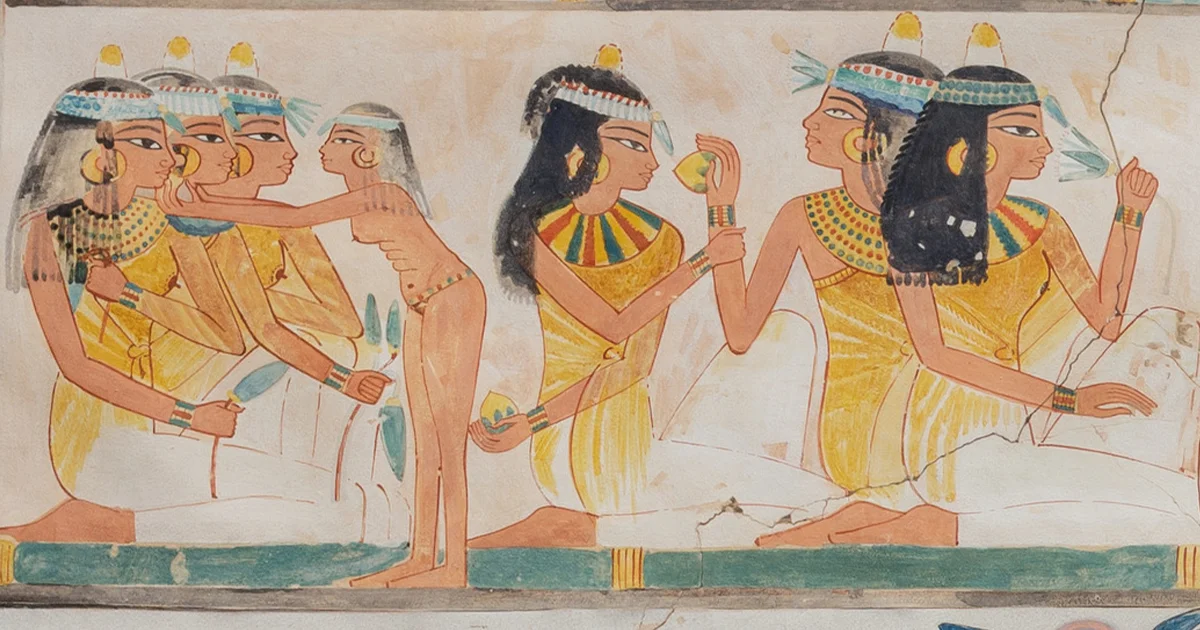
Beauty and cosmetics in ancient Egypt formed a central part of daily life from the earliest settlements along the Nile. Archaeological evidence shows that Egyptians of all social ranks, from peasants to pharaohs, applied eye paints, rouged their cheeks, anointed their bodies with fragrant oils, and created elaborate beauty rituals that served religious, medicinal, and aesthetic purposes simultaneously.
Kohl and the Art of Eye Painting
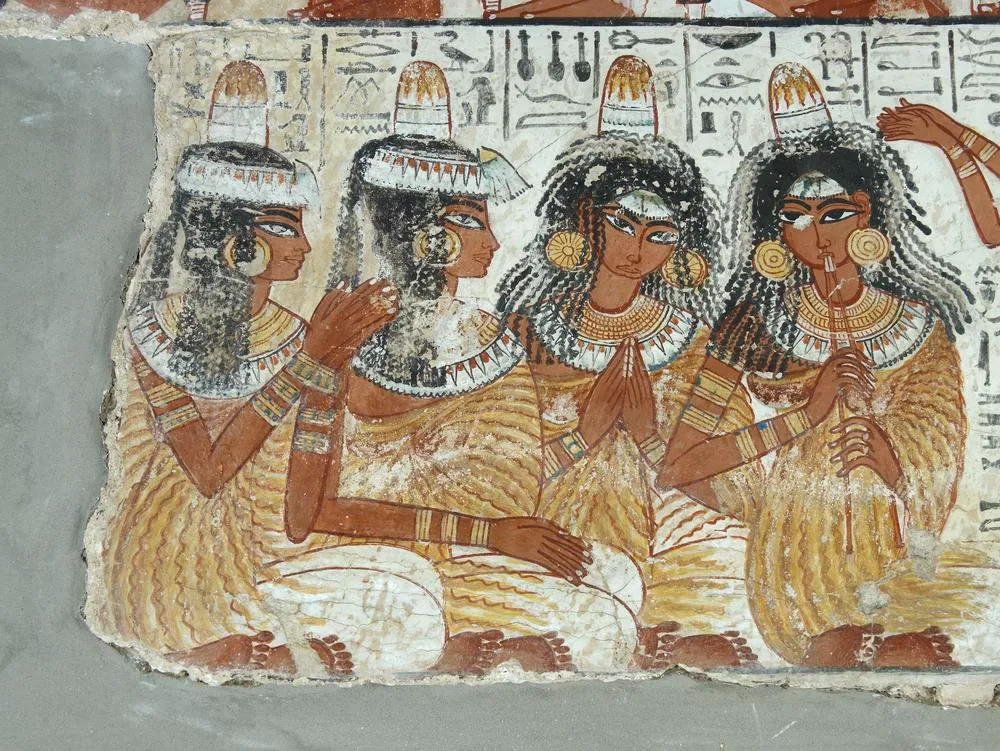
The most iconic Egyptian cosmetic was kohl, the dark eye paint worn by men and women alike to line their eyes and darken their lashes. Two primary minerals provided this pigment. Green malachite, a copper carbonate ore, dominated in predynastic times and continued in use through the Nineteenth Dynasty. Black galena, a lead sulfide ore, appeared in late predynastic burials and eventually became the preferred eye cosmetic throughout pharaonic history.
Tomb excavations reveal the manufacturing process. Raw chunks of malachite and galena appear in graves alongside grinding palettes and rubbing stones stained with pigment residue. The minerals were pulverized into fine powder on stone palettes, then mixed with a liquid medium to form paste. Water or gum solution served as the binding agent, never fat or oil. The paste dried into compact cakes or remained as loose powder stored in shells, hollow reed segments, and small pottery vessels designed specifically for cosmetics.
Chemical analysis of surviving kohl samples reveals unexpected sophistication. Thirty-seven samples out of fifty-eight analyzed contained galena as the primary ingredient. The remainder included lead carbonate, copper oxides, iron oxides, manganese compounds, and rarely, antimony sulfide. Some black kohls contained synthetic lead compounds, laurionite and phosgenite, manufactured deliberately rather than mined. The Egyptians produced these chemicals through controlled reactions, demonstrating advanced knowledge of mineral chemistry as early as the Old Kingdom.
The Geography of Beauty Materials
Egypt supplied most cosmetic minerals domestically. Malachite came from Sinai and the eastern desert. Galena deposits near Aswan and along the Red Sea coast provided black pigment. Iron oxide for red face paint, called haematite or red ochre, occurred naturally throughout the Nile valley. Only antimony compounds, rarely used in Egyptian cosmetics despite modern assumptions, required import from Asia Minor or Persia.
Texts from the Twelfth Dynasty record eye paint arriving from Asiatic traders. Nineteenth Dynasty accounts mention eye paint from Koptos, probably galena from Red Sea sources. The Eighteenth Dynasty saw eye cosmetics imported from Naharin in western Asia and from Punt, though what Punt contributed remains puzzling since that region, likely modern Somaliland or southern Arabia, lacked mineral deposits suitable for cosmetics. Perhaps Punt served as a trading hub for materials originating elsewhere.
Application Methods and Social Functions
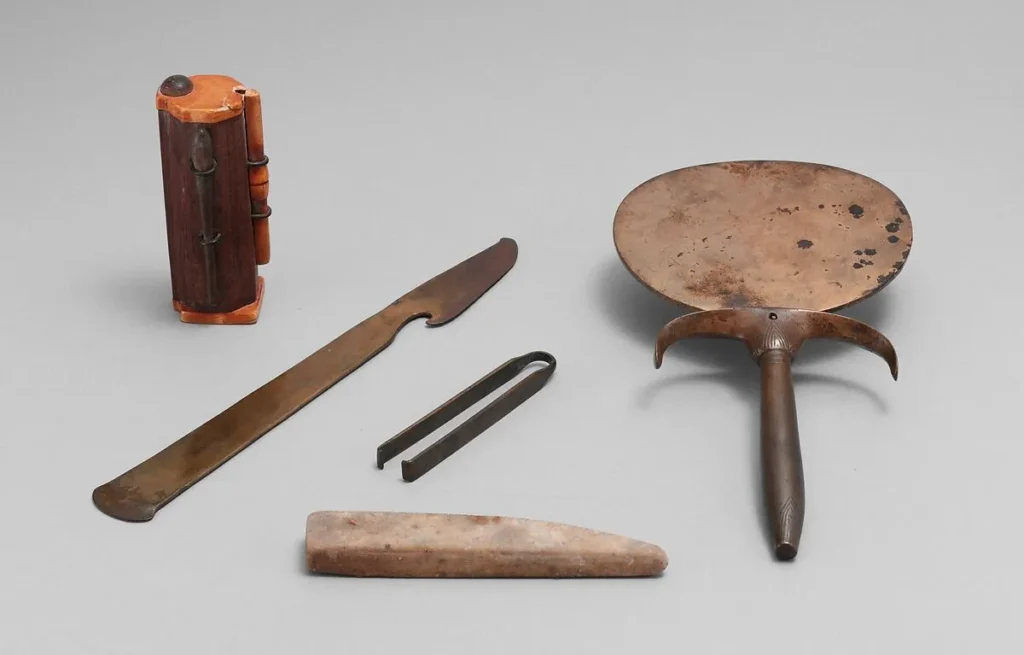
Egyptians applied kohl with small rods of wood, bone, ivory, or bronze. These applicator sticks appeared in burials beginning in the Eleventh Dynasty. Before that period, fingers likely served the purpose. The user moistened the rod tip, dipped it into powdered kohl, and drew lines around the eye perimeter, extending from the inner corner across the lid to the outer edge.
This dramatic eye treatment served multiple functions beyond vanity. Medical papyri prescribe kohl as treatment for eye diseases, suggesting Egyptians believed it prevented infection. Modern analysis confirms that synthetic lead compounds in some kohls possess antibacterial properties. Religious significance also mattered. Temple reliefs show gods and goddesses wearing elaborate eye paint, and sacred texts describe kohl as essential in ritual purification.
Face Paint and the Pursuit of Color
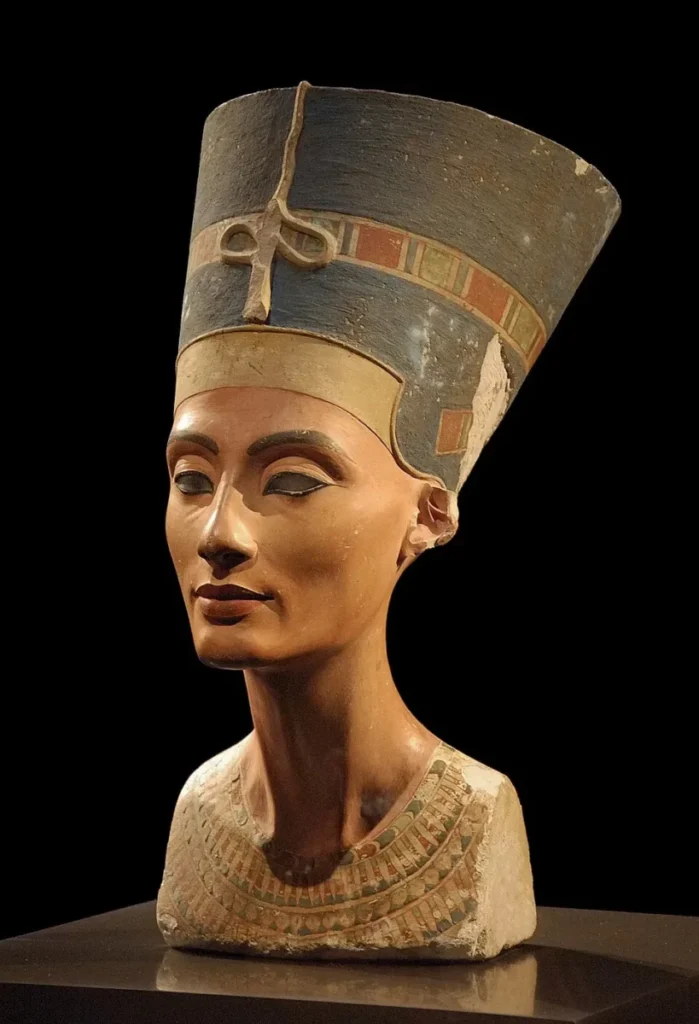
Women colored their cheeks and lips with red ochre, the same iron oxide pigment used for tomb paintings and scribal ink. This mineral appears in graves associated with cosmetic palettes and as reddish stains on grinding stones. The ochre was pulverized and likely mixed with fat or oil to create rouge that adhered to skin.
No yellow face paint has been identified archaeologically, despite yellow ochre’s abundance in Egypt. Green malachite served double duty as eye shadow and possibly as decorative face pigment for special occasions. The color green held religious symbolism, associated with rebirth and vegetation, making green cosmetics appropriate for festivals and funerary rites.
Oils, Fats, and Fragrant Ointments
Beauty and cosmetics in ancient egypt extended beyond mineral pigments to organic preparations. The desert climate demanded skin protection, and oils served this practical need while also functioning as luxury items and status symbols. Castor oil, native to Egypt and still used in Nubia today, was the common person’s skin treatment. Wealthier Egyptians imported olive oil, almond oil, and oil from the Syrian balanos tree.
Solid animal fats provided an alternative to liquid oils. Chemical analysis of fatty residues from tomb containers reveals palmitic and stearic acids, indicating animal fat sources. Some samples show predominantly stearic acid composition, suggesting degraded castor oil. These fats, whether animal or vegetable, would have turned rancid quickly in Egypt’s heat, necessitating the addition of aromatic substances.
Built out of a love for history, kept free from distractions.
Spoken Past is an independent project shaped by curiosity, care, and long hours of research. Reader support helps keep it maintained, carefully researched, and open to everyone.
The Technology of Scent
Perfume technology operated under severe constraints. Distillation, essential for extracting essential oils and producing alcohol-based perfumes, was unknown in pharaonic times. The earliest reference to distillation comes from Aristotle in the fourth century BC, and even then, the process remained primitive. Egyptians developed alternative methods to capture and preserve scent.
The primary technique involved steeping fragrant plant materials in oil or fat. Flowers, leaves, seeds, or aromatic wood sat in warm oil or were pressed into layers of solid fat, transferring their volatile compounds to the fatty medium. After the plant matter exhausted its scent, workers removed it and sometimes added fresh material for additional strength. The resulting scented oil or fat could be applied directly to skin and hair.
Tomb evidence and texts reveal specific recipes. The Mendesian unguent, famous throughout the ancient Mediterranean, originally combined balanos oil, resin, and myrrh. Later versions grew more complex, incorporating bitter almond oil, olive oil, cardamom, sweet rush, honey, wine, galbanum, and turpentine resin. Such elaborate formulations demonstrated both chemical knowledge and access to far-ranging trade networks.
Resins, Gums, and Aromatic Additions
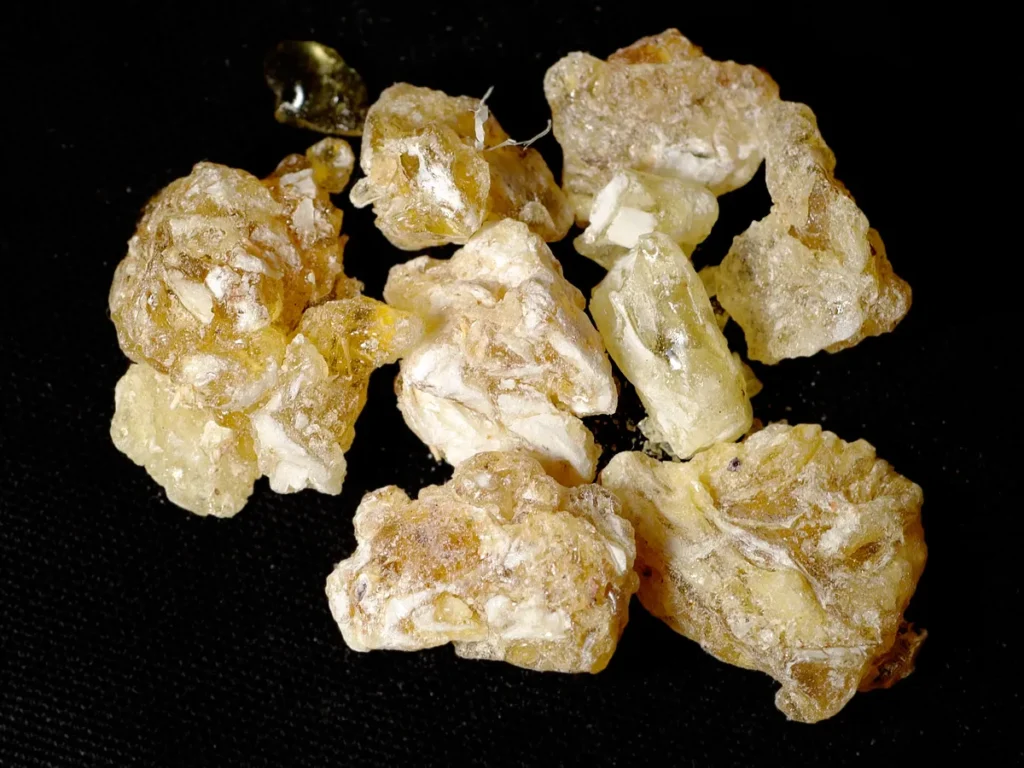
Fragrant tree resins played essential roles in Egyptian cosmetics. Frankincense and myrrh, imported from Somaliland and southern Arabia, appeared in ointment recipes and as independent aromatics. Texts mention “sweet oil of gums” and “ointment of gums,” though the word “gum” in ancient usage referred to any tree exudate, including resins and gum-resins that actually possess fragrance.
Analysis of cosmetic residues reveals complex organic chemistry. Beeswax mixed with aromatic resin and vegetable oil formed one preparation. Other samples contained fatty acids combined with compounds from the Pinaceae family, indicating pine or cedar resin. Some specimens showed benzoic acids, cinnamic acids, and vanillic acids, possibly from storax or similar Mediterranean balsams. Animal fats occurred in three analyzed samples, and one contained trace amounts of beeswax along with specific fatty acids characteristic of ancient Egyptian formulations.
Cosmetic Containers and Archaeological Context
Beauty products required specialized storage. Shells, particularly cowrie and dentalium varieties, served as containers for kohl and rouge. Hollow reed segments, wrapped in plant leaves, held powdered cosmetics. Potter’s workshops produced small vessels shaped like reeds or designed with narrow necks to prevent spillage and contamination.
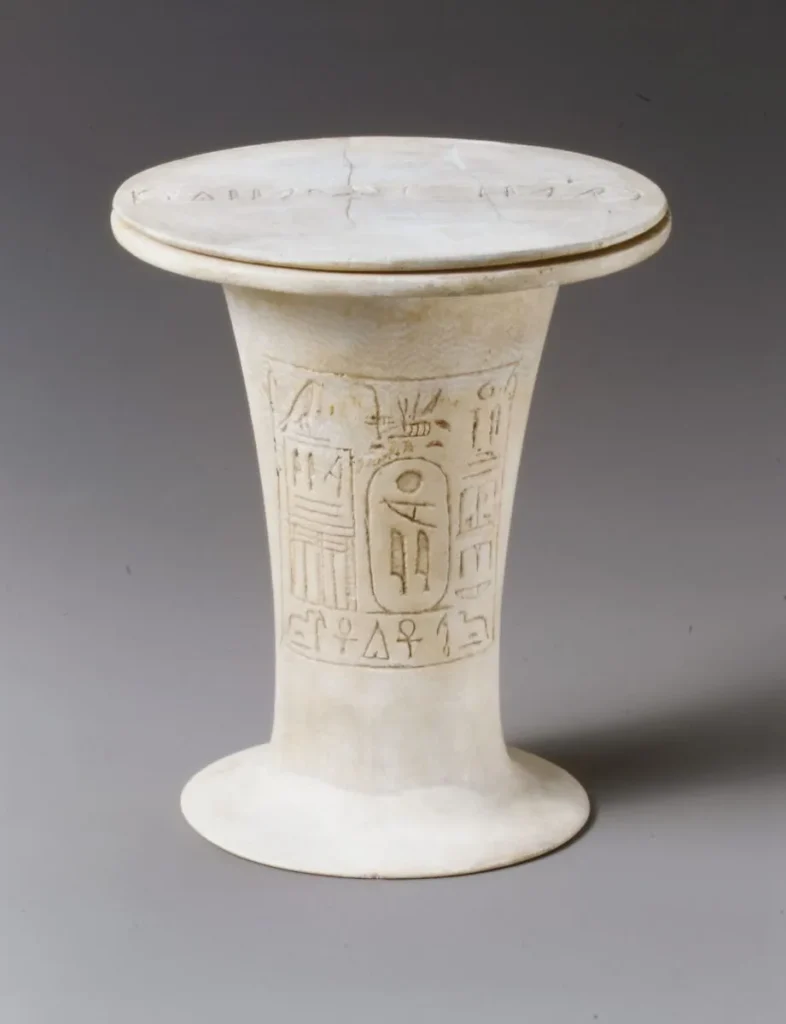
The most elaborate containers came from elite burials. Alabaster jars with fitted lids contained precious ointments. Wooden cosmetic boxes featured multiple compartments, each holding different preparations. One analyzed box, of unknown date, contained five separate materials in different sections, each a distinct mixture of wax, resin, and oil. Such diversity within a single container demonstrates that Egyptians maintained sophisticated beauty routines requiring multiple products applied in sequence or for different purposes.
Henna and Body Decoration
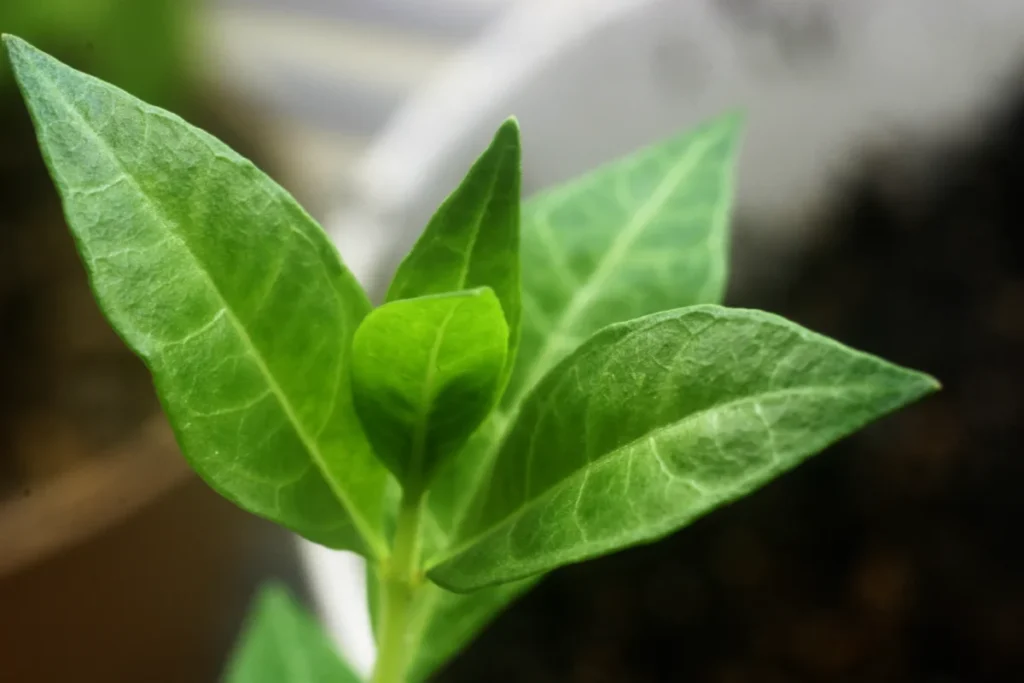
Henna, the Egyptian shrub Lawsonia inermis, provided orange-red dye for hair, nails, palms, and foot soles. This practice, documented for Romans who learned it from Egypt, likely extends back to pharaonic times. One Eleventh Dynasty mummy showed fingernails tinted with henna. Another from the Eighteenth Dynasty displayed reddish-dyed hair. Modern scholars debate whether some staining represents intentional cosmetic treatment or accidental discoloration from embalming materials, but the Roman evidence strongly supports deliberate henna use in earlier periods.
The leaves were crushed into paste and applied to the area requiring color. The lawsone molecule in henna binds to keratin in skin, hair, and nails, producing a stain lasting several weeks. Egyptian women today continue this ancient practice, and archaeological discovery of henna twigs in a Ptolemaic cemetery at Hawara confirms the plant’s cosmetic applications.
Beauty Across Social Classes
Cosmetic use transcended social boundaries. Peasant graves from predynastic cemeteries contain malachite fragments and grinding palettes. Royal tombs hold elaborate cosmetic kits with dozens of containers and rare imported ingredients. The difference lay in quality and variety, not in practice itself.
Poorer Egyptians used locally available materials: castor oil for skin, galena or malachite powder for eyes, red ochre for cheeks. Wealthy individuals accessed exotic oils from Syria, frankincense from Punt, and complex ointments made to secret recipes. Royal cosmetic collections included items never found in common burials: aromatic resins from distant lands, chemically synthesized pigments, and custom-blended perfumes created by specialized craftspeople.
The Persistence of Ancient Beauty Standards
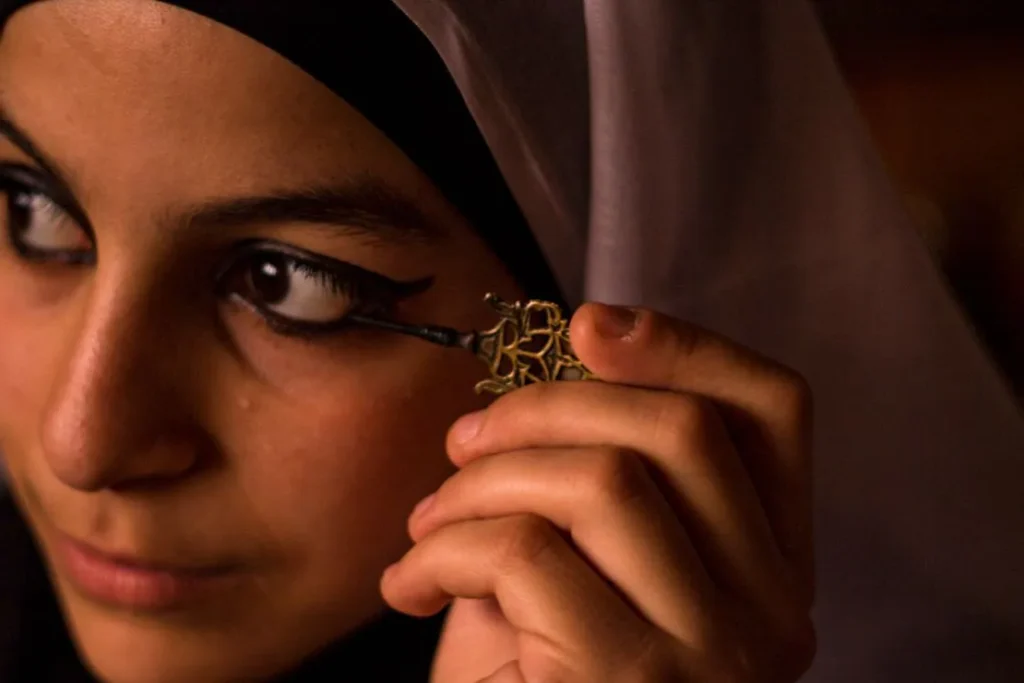
The cosmetic tradition established in predynastic Egypt, five thousand years before the present, continued with remarkable consistency through the Ptolemaic period and Roman occupation. Kohl application methods remained unchanged. The same minerals provided pigments. Oils and ointments served identical functions. Even after Christianity replaced traditional Egyptian religion, Coptic-era burials contain frankincense, ladanum, and aromatic resins identical to those used millennia earlier.
This continuity reflected environmental constants. Desert climate still demanded skin protection. The same minerals remained available. Traditional knowledge passed from mother to daughter, from cosmetician to apprentice, preserving formulas and techniques across generations. Modern Egyptian women who line their eyes with kohl, apply henna to their hands, and scent themselves with oils participate in beauty rituals essentially identical to those practiced in the age of the pyramids.
Beauty and cosmetics in ancient egypt represented far more than vanity. They provided medical treatment, fulfilled religious obligations, marked social status, and protected bodies from harsh environmental conditions. The chemical sophistication evident in synthetic pigments and complex ointment formulas demonstrates that Egyptian knowledge of practical chemistry was more advanced than previously recognized. These ancient beauty secrets, preserved in tomb deposits and decoded through modern analysis, reveal a culture that understood the power of appearance and developed elaborate technologies to enhance and preserve it.