
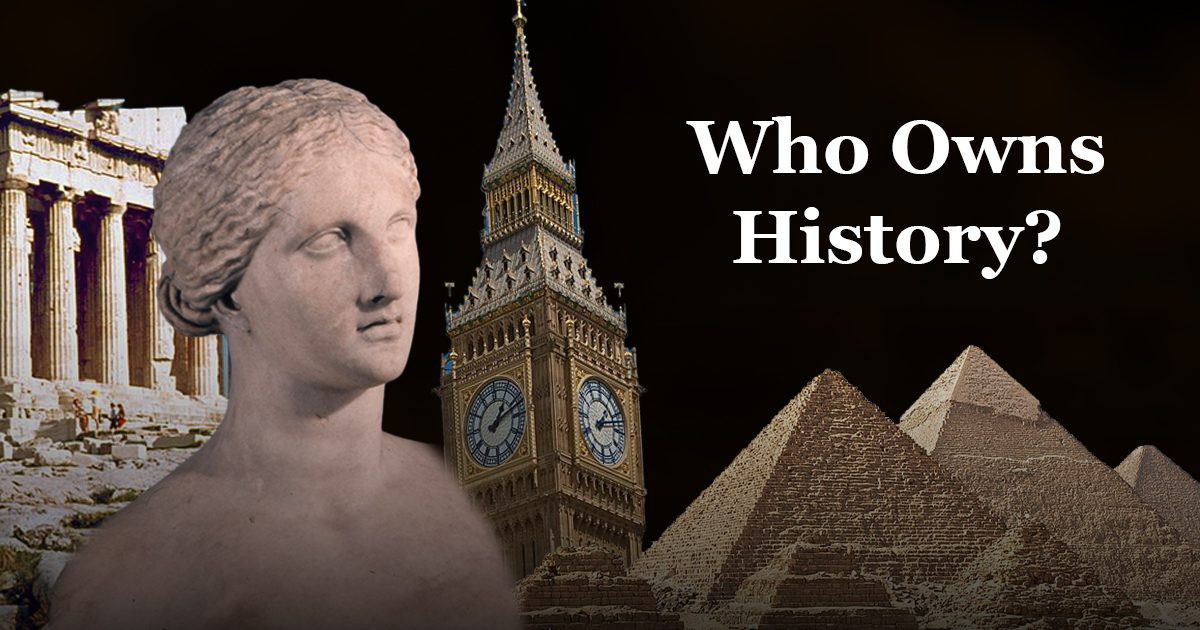
In 1801, Thomas Bruce, the Seventh Earl of Elgin and British Ambassador to the Ottoman Empire, dispatched workers to the Athenian Acropolis. Over the following eleven years, they sawed off approximately half of the surviving sculptural program of the Parthenon, one of the best-preserved ancient buildings in the world, and shipped it to London. The legal authority for this operation rested on a document, a firman issued by Ottoman officials, whose original has never been found. The only surviving copy, a translation into Italian, authorizes Elgin to make drawings and take away stones from the ground. It says nothing about removing sculptures from the building itself. In 1816, the British Parliament purchased the collection from the now-bankrupt Elgin and transferred it to the British Museum, where it has remained for more than two centuries. The question of whether that sequence of events constitutes a legal acquisition or an act of vandalism under diplomatic cover is the question at the center of the most consequential heritage dispute in the world. But the Parthenon Marbles are not unique. They are the most famous example of a pattern that repeated itself across the nineteenth and early twentieth centuries as European imperial powers assembled the collections that now define the world’s major encyclopedic museums. Understanding colonialism and ancient history, and the question of who owns what was taken during that period, requires separating legal title, cultural belonging, ethical obligation, and practical stewardship into distinct questions before trying to answer any of them.
How ancient objects moved under empire
Under imperial rule, antiquities left their contexts through several distinct mechanisms, and conflating them produces bad history and bad policy. Outright seizure occurred: Napoleon’s Egyptian campaign of 1798 brought French scholars who systematically documented and removed Egyptian artifacts, and British forces at the Battle of Alexandria in 1801 transferred French-held objects including the Rosetta Stone to British possession under the terms of the Capitulation of Alexandria. Coerced transactions also occurred, in which asymmetrical power relationships allowed European diplomats and collectors to acquire objects at prices, and under conditions, that no genuinely free market would have produced. The partage system, a division of excavated finds between the excavating institution and the host country, was standard practice through much of the nineteenth and early twentieth centuries and consistently favored European institutions, which had both the legal authority to negotiate terms and the financial resources to fund the excavations in the first place.
Not every object now in a European or North American institution was obtained through these mechanisms. Some were legally purchased from private owners under the laws of their time. Some were exported before modern protective legislation existed. Some were excavated under agreements that both parties genuinely entered voluntarily, even if the power dynamics behind those agreements were not equal. Sorting these cases out requires patient provenance research: tracing the documented history of each object from its findspot through every owner, sale, exhibition, and publication to its current location. A clean and complete provenance builds trust. A thin or broken one shifts the burden of proof and raises questions that responsible institutions are obligated to take seriously rather than dismiss.
The legal frameworks that govern ownership now
Three international instruments set the current legal baseline. The 1954 Hague Convention for the Protection of Cultural Property in the Event of Armed Conflict, negotiated in the aftermath of World War Two’s systematic cultural destruction, established obligations to protect cultural property during warfare and occupation. The 1970 UNESCO Convention on the Means of Prohibiting and Preventing the Illicit Import, Export, and Transfer of Ownership of Cultural Property is the instrument most commonly invoked in repatriation disputes today, as it established 1970 as the baseline year: acquisitions made after 1970 without clear documentation of legal export are presumptively suspect. The 1995 UNIDROIT Convention on Stolen or Illegally Exported Cultural Objects added private-law mechanisms for restitution claims. These three instruments together constitute the framework, but their practical impact is limited by uneven ratification, by the fact that most famous disputed acquisitions predate all three by decades or centuries, and by the absence of any international enforcement mechanism with real teeth.
The British Museum presents a specific legal complication that has become increasingly significant in the Parthenon Marbles dispute. The British Museum Act of 1963 prohibits the museum’s trustees from permanently deaccessioning objects in the collection except in narrowly defined circumstances. Unlike the Victoria and Albert Museum, which operates under different legislation and has been able to explore loan agreements and transfers, the British Museum cannot simply return the Marbles even if its trustees wanted to. Changing this would require an Act of Parliament. A 2023 YouGov poll found that 64 percent of the British public supported returning the sculptures as part of a cultural exchange program, a figure that suggests the political barrier is more surmountable than the institutional barrier, but both remain real obstacles.
Built out of a love for history, kept free from distractions.
Spoken Past is an independent project shaped by curiosity, care, and long hours of research. Reader support helps keep it maintained, carefully researched, and open to everyone.
Colonialism and ancient history: the major case studies
The Parthenon Marbles
The case for return rests on three arguments that have grown stronger over time. First, the sculptures were created as integral parts of a single architectural program, and their removal has made it impossible to read the sculptural narrative as it was designed to be read. The Acropolis Museum, opened in Athens in 2009 with a dedicated gallery designed to receive the sculptures should they return, displays surviving Athens-held originals alongside plaster casts of the London-held pieces, making the gap visually explicit. Second, the legal basis for Elgin’s removal has become increasingly difficult to defend: no document authorizing the removal of sculptures from the building itself has ever been produced, and in 2023 a Turkish UNESCO representative confirmed that no such document exists in the Ottoman archives. Third, the British Museum’s own record of care for the sculptures includes a significant own goal: in the late 1930s, museum staff scraped the marble surfaces with metal tools in an attempt to make them appear whiter, removing surface detail and tool marks that cannot be recovered. The case for retention rests primarily on the British Museum Act’s legal constraints, the argument that the sculptures’ presence in London makes them accessible to a global audience rather than a specifically Greek one, and the precedent concern that a return would generate cascading claims against every encyclopedic museum in the world. That last argument has been substantially weakened by the fact that numerous returns have occurred without producing the cascade that was predicted.
The Rosetta Stone
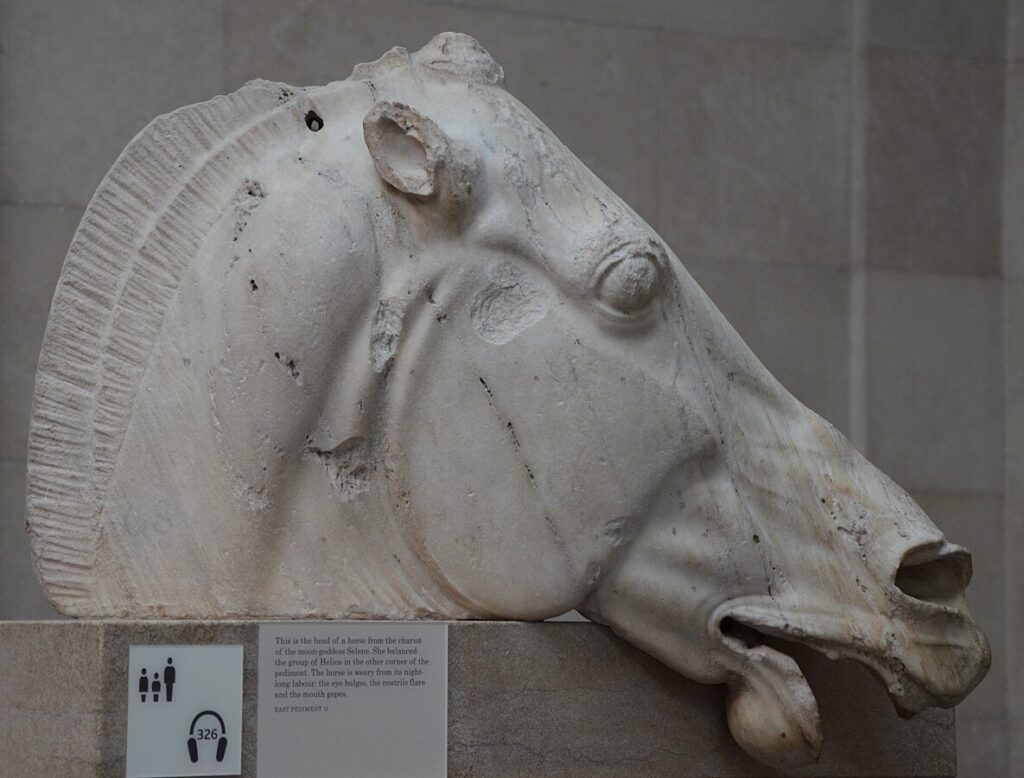
The Rosetta Stone was inscribed in 196 BCE during the reign of Ptolemy V, a decree from the Memphis priesthood confirming the young king’s divine honors, written in Greek, Demotic Egyptian, and ancient hieroglyphic script. It was discovered by French soldiers in 1799 during Napoleon’s Egyptian campaign, transferred to British possession after French defeat in 1801, and has been in the British Museum since 1802. Its extraordinary significance was not immediately apparent: it was the trilingual structure of the inscription that allowed Thomas Young and Jean-Francois Champollion to crack the hieroglyphic code between 1814 and 1822, opening the entire corpus of ancient Egyptian writing to modern scholarship for the first time in over a thousand years. Egypt’s repatriation claim rests on the circumstances of removal, which occurred during foreign military occupation and involved no Egyptian agency whatsoever, and on the object’s centrality to Egyptian national identity and cultural memory. The British Museum’s case rests on legal succession under the 1801 treaty and on the argument that the stone’s role in the global history of decipherment gives it a significance that transcends any single national narrative. Unlike the Parthenon Marbles, where physical reunification with surviving sculptures on the building itself is a meaningful argument, the Rosetta Stone’s case is primarily symbolic, which makes it both more emotionally powerful and less architecturally clear-cut.
The Nefertiti Bust
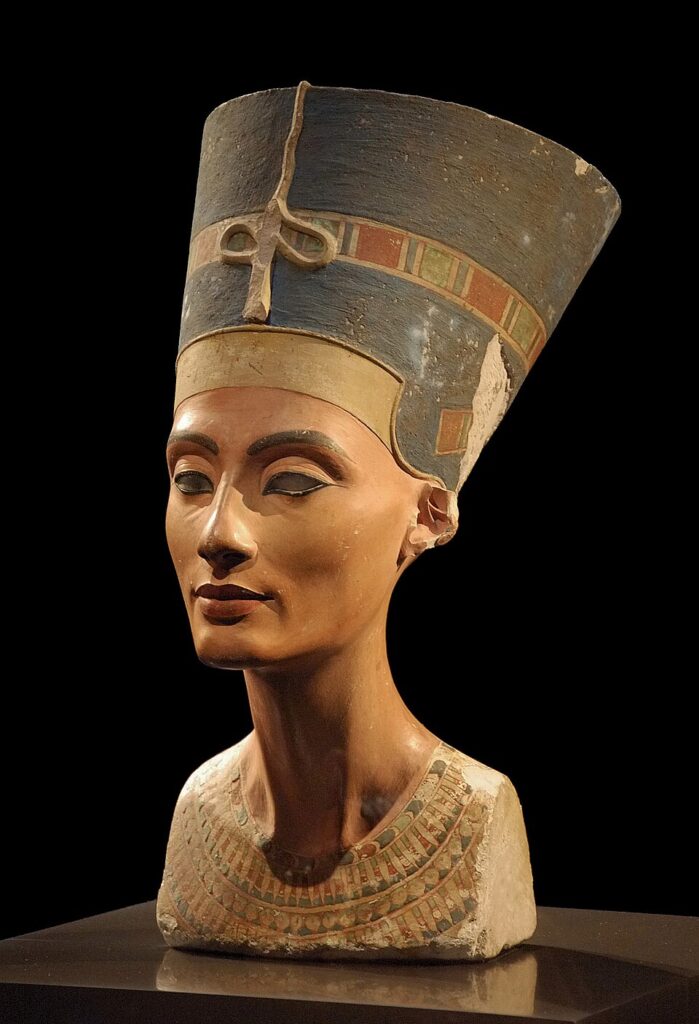
The painted limestone bust of Nefertiti was excavated from the Amarna workshop of the sculptor Thutmose in 1912 by a German expedition led by Ludwig Borchardt. Under the partage system then governing Egyptian excavations, finds were divided between the Egyptian Antiquities Service and the excavating team. Egyptian authorities have long alleged that Borchardt concealed the bust’s true appearance during the division of finds, wrapping it and describing it in ways that prevented the Egyptian inspector from recognizing its quality and retaining it for Egypt. Borchardt’s own diary entry for the day of division records his satisfaction at the outcome in terms that many historians read as deliberately evasive. The bust reached Berlin in 1913 and entered the Neues Museum, where it became one of the most recognizable objects in world art. Germany’s position has been that the acquisition was legal under the rules in force at the time and that no evidence of deliberate concealment has been definitively proven. Egypt’s position is that the evidence of bad faith is substantial and that the partage system itself was a colonial instrument that cannot be validated retroactively. High-quality 3D scans of the bust have been made available and a replica was sent to Egypt, but Egypt has consistently refused to treat digital access as a substitute for physical return.
The Pergamon Altar and the Ishtar Gate
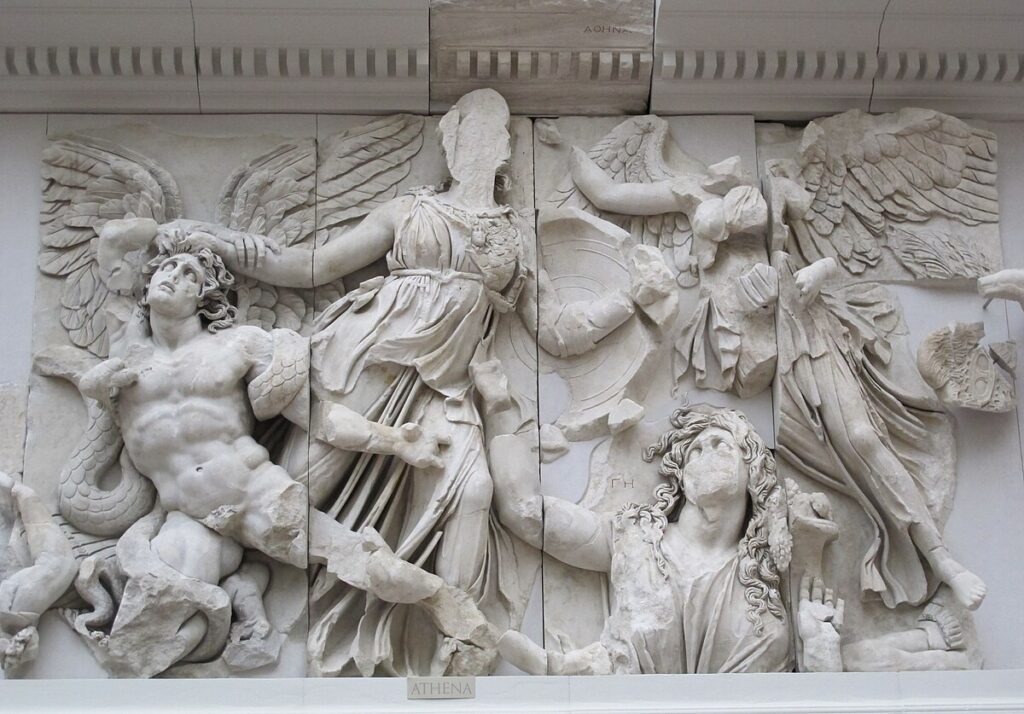
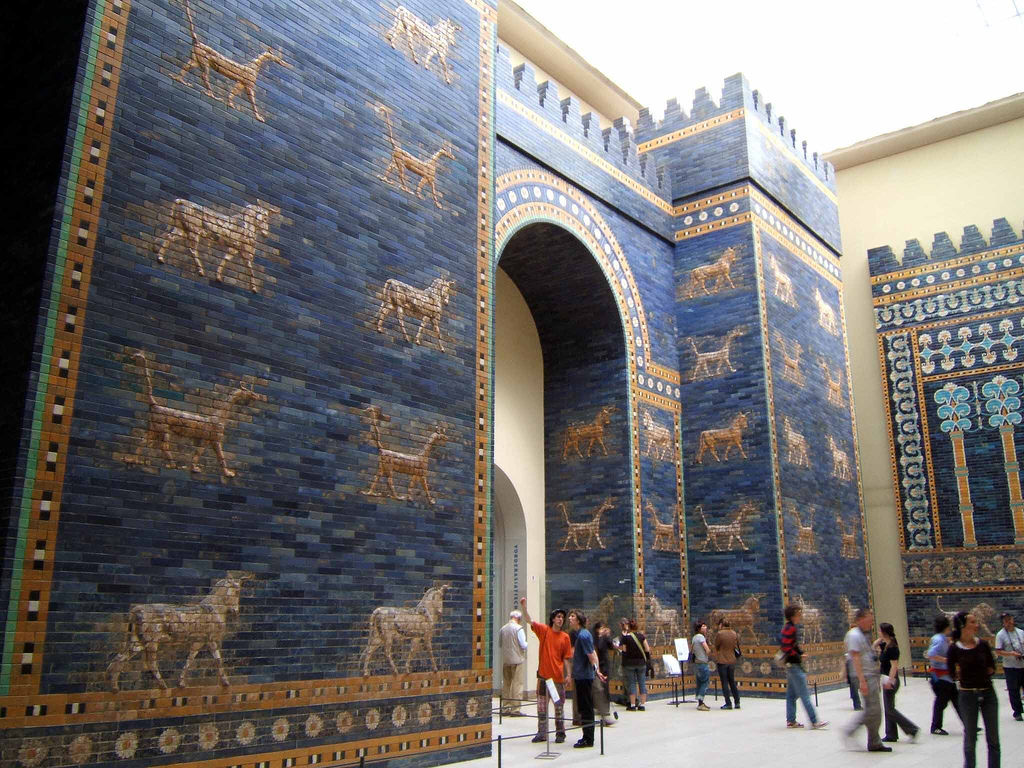
Both monuments reached Berlin under late-Ottoman-era excavation agreements: the Pergamon Altar through excavations led by Carl Humann beginning in 1878, and the Ishtar Gate through excavations at Babylon directed by Robert Koldewey for the Deutsche Orient-Gesellschaft between 1899 and 1917. Both were moved with permits that were legally valid at the time under the laws of the Ottoman Empire, which then controlled both regions. Turkey and Iraq, as successor states to the territories where these monuments were found, now argue that the permits reflected colonial power dynamics rather than genuine sovereign consent and that the monumental objects cannot be understood outside their original architectural context. The reconstructed Ishtar Gate in Berlin is made from thousands of glazed bricks excavated at Babylon and reassembled into an approximation of the original structure. Whether this reassembly constitutes preservation or displacement is itself a contested question, since the bricks were removed from their original stratigraphic contexts in the process, making certain types of future archaeological analysis impossible.
The Obelisk of Axum: a successful return
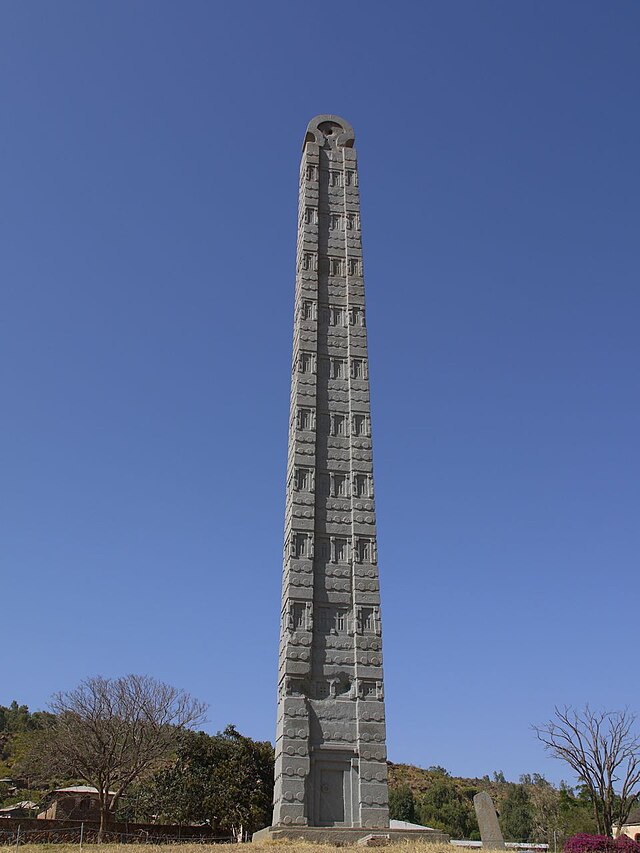
Italy seized the Axum Obelisk in 1937 during Mussolini’s occupation of Ethiopia and erected it in Rome near the headquarters of the Food and Agriculture Organization. Ethiopia formally requested its return beginning in 1947. The process of actually returning it took until 2005, when a complex logistical operation funded by Italy and supported by UNESCO transported the monument in three sections by air, the only practical transport method given its size, and re-erected it at Axum. The return was not simply a symbolic gesture. It was a technically demanding international project that demonstrated the practical feasibility of repatriation for even very large and fragile objects. It also illustrated the typical timeline between a justified claim and its resolution: fifty-eight years in this case, driven by political will that had to be rebuilt in each successive Italian government before it finally held long enough to execute the return.
The Cyrus Cylinder: shared access as a model
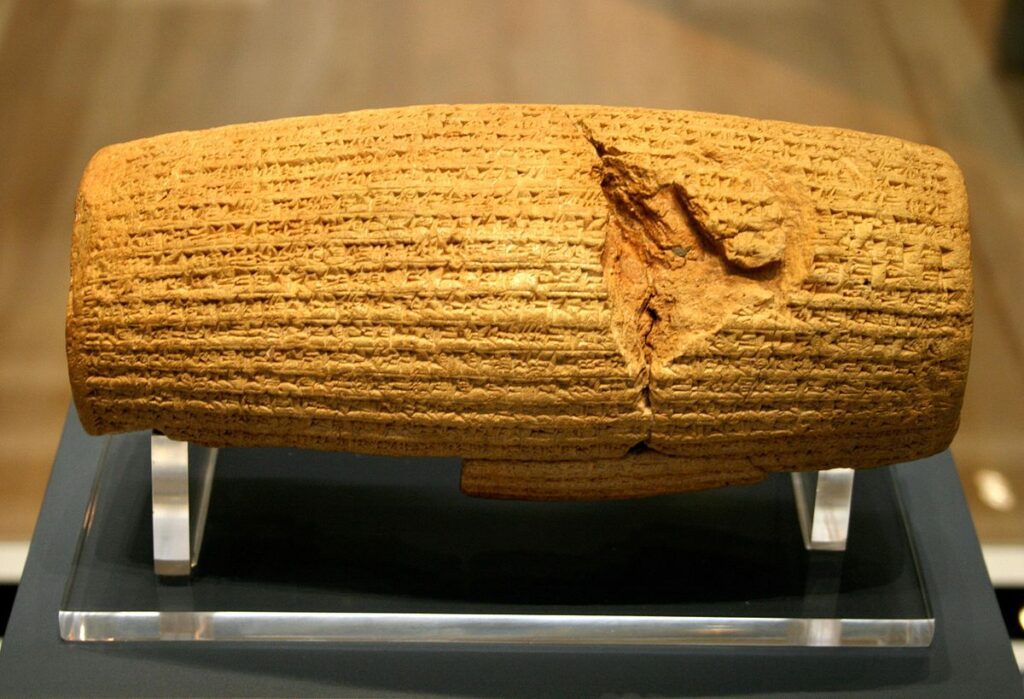
The Cyrus Cylinder, an Akkadian clay barrel inscription from around 539 BCE recording Cyrus II’s conquest of Babylon and his policies toward the peoples of the empire, has been the subject of a long-running loan arrangement between the British Museum and Iran. The cylinder was loaned to Tehran’s National Museum for four months in 2010, drawing enormous public attendance and considerable diplomatic significance. Multiple loans, joint exhibitions, and collaborative research projects have followed. The arrangement has not resolved the underlying question of permanent ownership, which Iran has not formally contested in legal terms, but it has demonstrated that substantial benefits for access, public engagement, and scholarly collaboration can be achieved through structured partnerships while larger questions remain under negotiation. Whether this model constitutes a genuine solution or simply a way of managing a dispute without resolving it is a question that different stakeholders answer differently.
What good policy looks like in practice
The framing of heritage disputes as all-or-nothing choices between return and retention has consistently produced deadlock rather than solutions. The cases where progress has been made share a set of characteristics that are replicable. Provenance research conducted openly and published in full, including acknowledgment of gaps where documentation is missing, establishes a factual baseline that both sides can engage with rather than contest. Involving origin communities, not just origin states, in decisions about objects that carry cultural or spiritual significance for specific groups rather than just national pride produces more durable agreements than purely intergovernmental negotiations. Staged arrangements, renewable long-term loans, rotating displays, co-curation agreements, joint research programs, and revenue-sharing from image licensing, create concrete benefits without requiring either party to concede the underlying legal question before a resolution is politically achievable.
The argument that encyclopedic museums serve humanity by making global collections accessible in a single location has genuine force, but it depends on those museums actually fulfilling that function universally rather than primarily for the wealthy international visitors who can afford to travel to London, Berlin, and Paris. Digital access, open image licensing, and traveling exhibitions extend reach significantly, but they do not replicate the experience of encountering objects in the context for which they were made. The legal and ethical arguments around colonialism and ancient history are not going to be settled by any single ruling or return. They are going to be worked through case by case, object by object, over decades, through negotiations that require all parties to operate in good faith with their full factual records on the table. The Obelisk of Axum shows that this is possible. The Parthenon Marbles show how much political will it takes to get there.
Sources: American University International Law Review, The Hellenic Republic’s Legitimate Claim to the Parthenon Marbles (2025); Alexander Herman, The Parthenon Marbles Dispute: Heritage, Law, and Politics (Bloomsbury, 2023); John Henry Merryman, “Thinking About the Elgin Marbles,” Michigan Law Review 83 (1985); UNESCO, 1970 Convention on Cultural Property; Irini Stamatoudi, Cultural Property Law and Restitution (Edward Elgar, 2011); Patty Gerstenblith, Art, Cultural Heritage and the Law (Carolina Academic Press, 4th ed. 2019); D. Voudouri, “Law and the Politics of the Past,” International Journal of Cultural Property 17 (2010); Center for Art Law, Repatriation in Context: The Case for Cooperation (2025); UK Parliament House of Commons Library, Lord Elgin’s Authority to Obtain the Parthenon Sculptures, Research Briefing SN02075 (revised June 2024).