

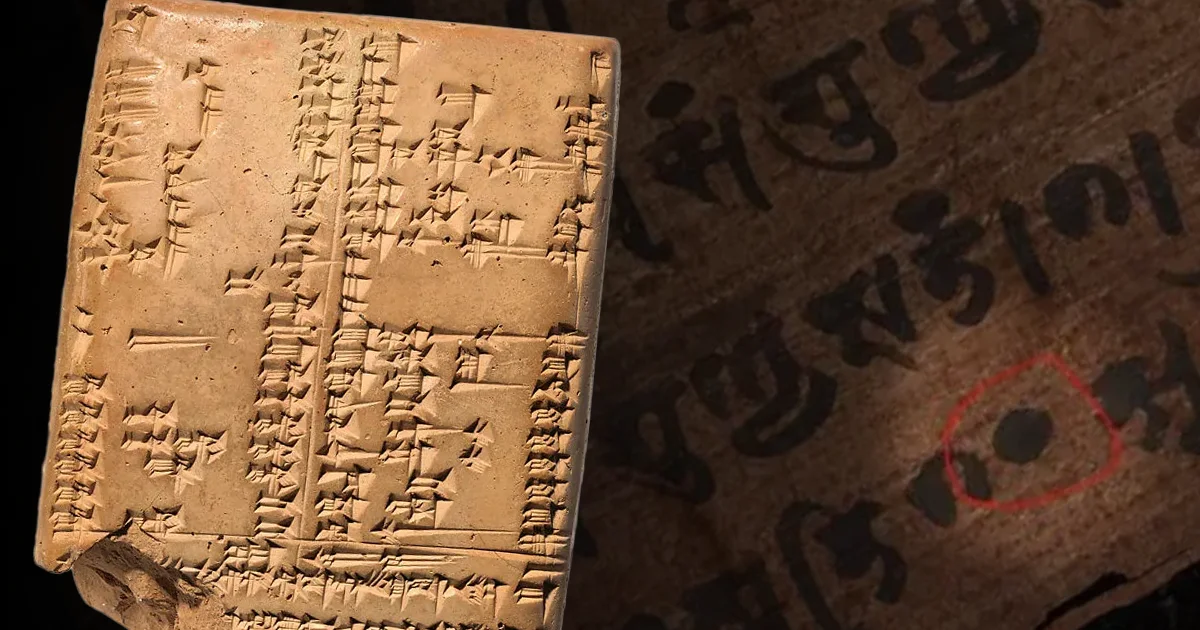
The history of mathematics reveals a profound divide among ancient civilizations. Mathematicians in Rome, Greece, and Egypt built sophisticated societies without grasping what we now consider fundamental to mathematics.
The Roman general counting legions had no symbol for it. The Egyptian architect designing temples worked without it. Yet by the fifth century AD, mathematicians in India recognized that the concept of zero could be both a placeholder and a true number.
This development represents one of the most revolutionary shifts in how humans represent quantities, perform calculations, and understand mathematics itself. Understanding how Indian scholars developed this concept of zero requires examining both what came before and what made their approach fundamentally different.
The Mesopotamian Foundation
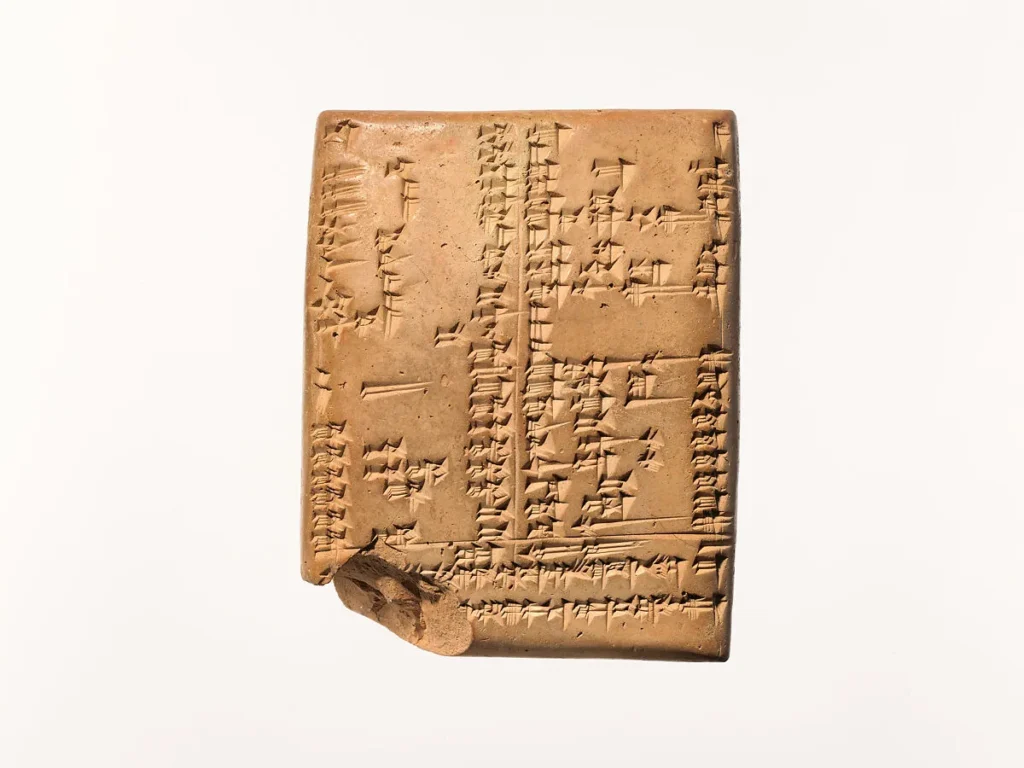
Most early civilizations encountered the problem of representing absence in numbers. When a merchant in ancient Babylon recorded thirty-three empty granaries alongside three full granaries, how should that numerical distinction be written?
The Babylonians responded around 300 BC with a practical solution: two angled wedges inserted between cuneiform numerals to mark where no quantity existed. This placeholder functioned like punctuation, allowing scribes to differentiate between 33 and 303 or 330.
Yet the Babylonians never considered this absence a number itself. They used a base-60 system, known as sexagesimal, which framed their entire approach to recording quantities and astronomical observations.
The Sumerian civilization, predating the Babylonians by millennia, used a pair of diagonal parallel lines on clay tablets around 3000 BC. These marks appeared on mundane records such as grain inventory receipts and tax tallies.
The physical appearance shifted over time, but the function remained constant: indicating an absence in a counting position. Merchants tracking barley shipments or tax collectors recording grain stores needed precision in written notation.
These early innovations solved immediate practical problems in record-keeping. A symbol for nothingness served the need for clarity without requiring new conceptual frameworks.
The concept remained frozen at this instrumental level for thousands of years across Mesopotamian civilization. The zero was a tool, nothing more.
Greek Philosophical Resistance
The Greek mathematical tradition, despite its brilliance in geometry and philosophy, rejected zero as a legitimate number. Greek philosophers grappled with the logical question “How can not-being be?”
This created a philosophical barrier against treating absence as a quantity. Philosophers like Zeno of Elea constructed paradoxes that hinged partly on the uncertain interpretation of zero and void.
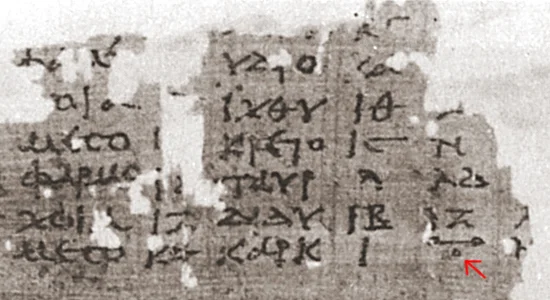
After 500 BC, Greek astronomers borrowed the Babylonian placeholder zero for astronomical calculations. They used the Greek letter omicron, written as O, to mark empty positions.
Hipparchus and later Ptolemy, the great Alexandrian astronomer, applied this zero placeholder when calculating celestial mechanics around 150 AD. Ptolemy’s work Syntaxis, known as the Almagest in later translation, demonstrates Greek use of a zero symbol purely for astronomical notation.
Yet once their calculations were complete, they converted results back into traditional Greek numerals. Zero never embedded itself into Greek mathematical thought.
Greek philosophy maintained intellectual resistance to zero as a genuine number. The concept existed only as a borrowed tool for specific technical purposes, not as an accepted component of mathematics itself.
Roman Rejection and Empire
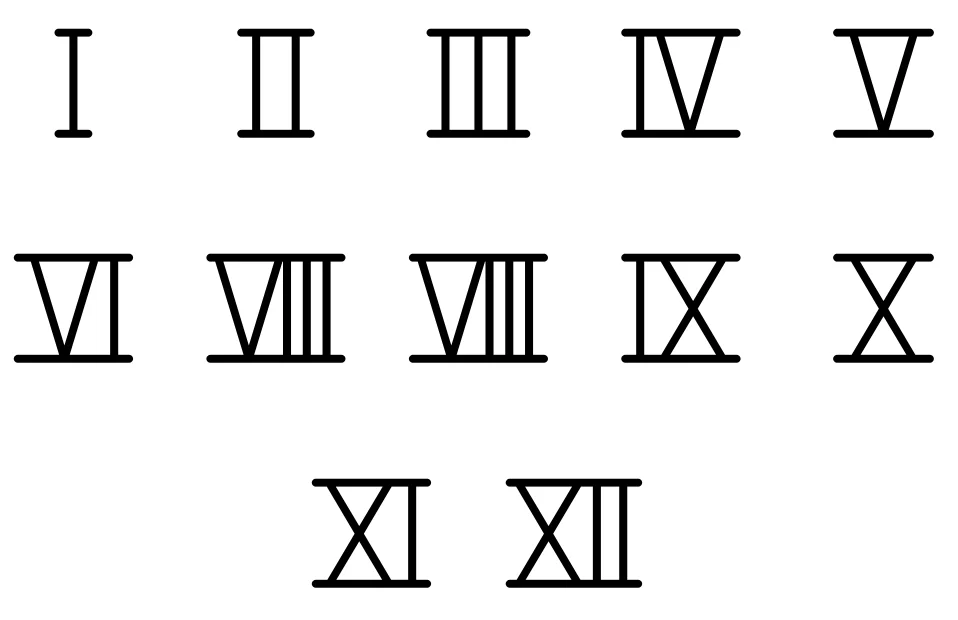
The Romans presented an even starker case of zero’s absence. Their numeral system was fundamentally non-positional.
An X always meant 10 regardless of where it appeared. A V always meant 5. An I always meant 1. This additive structure made zero unnecessary.
In the Roman worldview, zero was philosophically unwelcome. Nothingness carried associations with chaos and the void in Roman religious and philosophical tradition.
Consequently, Roman mathematics advanced without any representation of zero or its concept. Roman engineers constructed aqueducts and roads across three continents using this system.
Roman accountants tracked tax revenues across provinces using these numerals. Roman military officers recorded troop strengths and logistics without zero.
The vast Roman Empire, spanning from Britain to the Euphrates by 100 AD, built sophisticated infrastructure and administration without requiring zero. Roman architects designed the Colosseum without it.
This absence reflects not a mathematical limitation but a cultural and philosophical choice embedded in Roman thought itself.
Indian Mathematical Innovation in the Third Century
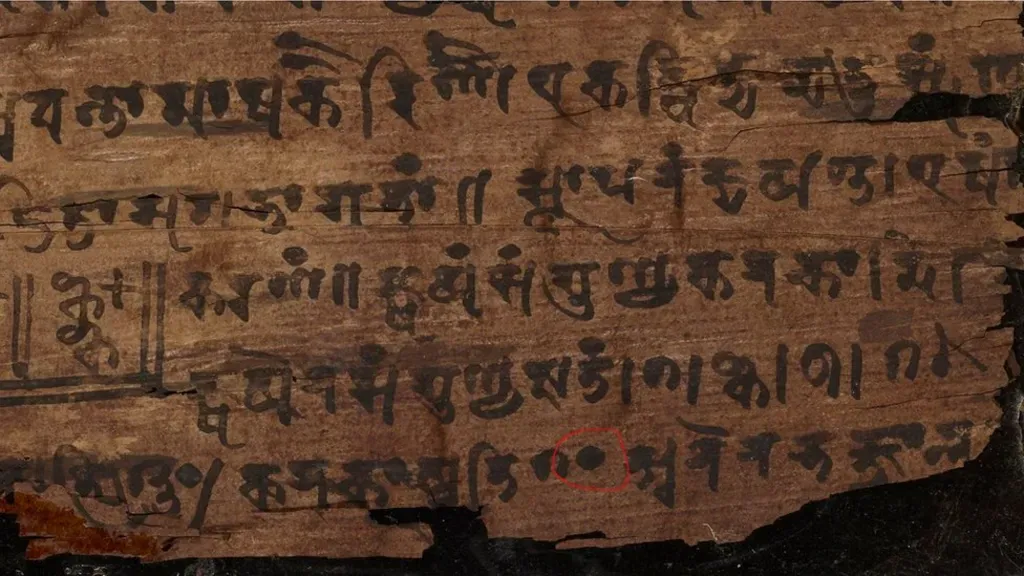
The mathematical breakthrough emerged in India during the third century AD. A manuscript discovered in present-day Pakistan demonstrates the first systematic use of a dot symbol serving as a positional zero.
This dot carried the same placeholder function as the Babylonian wedge. Yet the context within Indian mathematics differed fundamentally.
Indian scholars working with the decimal system were developing positional notation that made zero essential, not merely convenient. The decimal system’s structure demanded a zero to function properly.
Indian mathematics operated within a framework that treated numerical positions hierarchically: the ones place, the tens place, the hundreds place, and so forth. This extended upward infinitely.
Within this system, zero became mathematically necessary. Without a symbol for zero, no clear distinction existed between 101 and 11 or between 1001 and 101.
The Indian decimal system’s internal logic made zero not optional but mandatory for mathematical expression. The concept of zero was no longer peripheral but central.
Built out of a love for history, kept free from distractions.
Spoken Past is an independent project shaped by curiosity, care, and long hours of research. Reader support helps keep it maintained, carefully researched, and open to everyone.
Aryabhata and the Fifth Century Transformation
Aryabhata, the mathematician-astronomer born around 476 AD, contributed decisively to this breakthrough. His seminal work Aryabhatiya presented mathematical and astronomical theory in 118 verses of Sanskrit covering algebra, trigonometry, and arithmetic.
Though Aryabhata did not explicitly write a zero symbol in his extant texts, his entire system of calculation depended on understanding void and absence as a positional concept. He used the Sanskrit term “kha,” meaning emptiness or void, to indicate where no quantity occupied a place value.
His astronomical calculations, particularly the determination of planetary positions and eclipse predictions, required mathematical precision that only a true understanding of positional zero could achieve. No Babylonian placeholder or Greek notation could express such complex calculations.
Aryabhata calculated pi to an accuracy of five decimal places by measuring circles with a diameter of 20,000 units. This precision demanded sophisticated positional arithmetic.
His method for determining the circumference as (4+100) x 8 + 62,000, yielding 62,832 units, shows mathematical operations requiring handling empty positions in multi-digit representations. Only the Indian concept of zero as an integral component of a decimal positional system enabled this level of sophistication.
His astronomical predictions addressed the motion of celestial bodies, requiring simultaneous calculations of position, velocity, and rotation across different planes. Roman astronomers using non-positional numerals could not perform such calculations.
Greek astronomers using borrowed Babylonian zeros for temporary notation could not sustain such complex operations throughout a complete astronomical system. Only the Indian approach permitted these calculations.
The Concept Versus the Placeholder
The critical distinction lies in how Indian mathematicians treated zero conceptually. The Babylonians recognized that nothing could occupy a position.
The Indians recognized that nothing itself occupied a position with mathematical properties. This subtle philosophical shift transformed zero from a notational convenience into a mathematical quantity.
Aryabhata’s work demonstrates this shift through its internal logic and the precision it achieved. His calculations for planetary motion required operations on numbers containing multiple zeros.
Ancient Babylonian mathematics, even at its most sophisticated, never extended to such operations. The need to multiply numbers like 203 by 305 or divide 5000 by 200 demanded that zero be treated as something with specific arithmetic properties.
These operations yield results that cannot be verified through Babylonian placeholder notation alone. The zero had become a number.
The Cultural Context of Indian Mathematics
The Indian development of zero occurred within a distinct philosophical and cultural context. Sanskrit terminology for emptiness and void carried no stigma of chaos or evil.
Buddhist and Hindu philosophy embraced concepts of shunya, the void or emptiness, as spiritually meaningful and philosophically sophisticated. This cultural framework permitted mathematicians to conceptualize absence as legitimate and mathematically valid.
Where Greek philosophy raised logical objections to the very possibility of not-being, and Roman thought avoided the topic entirely, Indian scholarship took a different path. They transformed philosophical acceptance into mathematical innovation.
The development of the decimal system and the concept of zero reflected a broader Indian intellectual tradition that embraced abstraction. Indian scholars developed sophisticated grammars, composed elaborate poetry, and created philosophical systems of breathtaking complexity.
Within this context, the mathematical abstraction of zero emerged naturally as an extension of existing intellectual practices. The transition from placeholder to number reflects this cultural sophistication.
Transmission Across Civilizations

The transmission of this concept outward from India shaped the future of mathematics globally. Arab mathematicians encountered zero through Indian texts and merchants’ calculations traveling trade routes.
Al-Khwarizmi, the ninth-century mathematician from the Islamic world whose name derived the word “algorithm,” absorbed Indian methods and promoted them throughout the Islamic sphere of influence. The Arabic numeral system that incorporated zero as an essential digit rather than incidental symbol emerged from this transmission.
When Fibonacci, the medieval Italian mathematician, introduced Arabic numerals and zero to European merchants and scholars in the twelfth century, the foundation had been established in India many centuries earlier. The entire computational revolution followed from this Indian breakthrough.