
Excavations across six continents have produced finds that rewrite textbooks and answer questions scholars have debated for generations. Teams working in Egypt, Norway, Peru, Israel, and Azerbaijan unearthed tombs, temples, and artifacts dating from 8,400 years ago to the Renaissance. These archaeological finds of 2025 range from royal Egyptian burials lost for millennia to Viking boat graves with skeletal dogs still curled beside their owners.
The year began with the announcement of Thutmose II’s tomb in February, the first royal Egyptian discovery since Tutankhamun in 1922. Archaeologists working at Pompeii revealed massive Dionysian frescoes stretching across three walls of a banquet hall. In the Azerbaijani highlands, a Japanese team analyzed an 8,400-year-old stone figurine with microscopic engravings showing early artistic traditions. Remote-sensing technology and traditional excavation methods combined to produce these results. The archaeological finds of 2025 demonstrate how modern techniques reveal secrets buried beneath deserts, forests, and seabeds.
1. Thutmose II’s Lost Royal Tomb
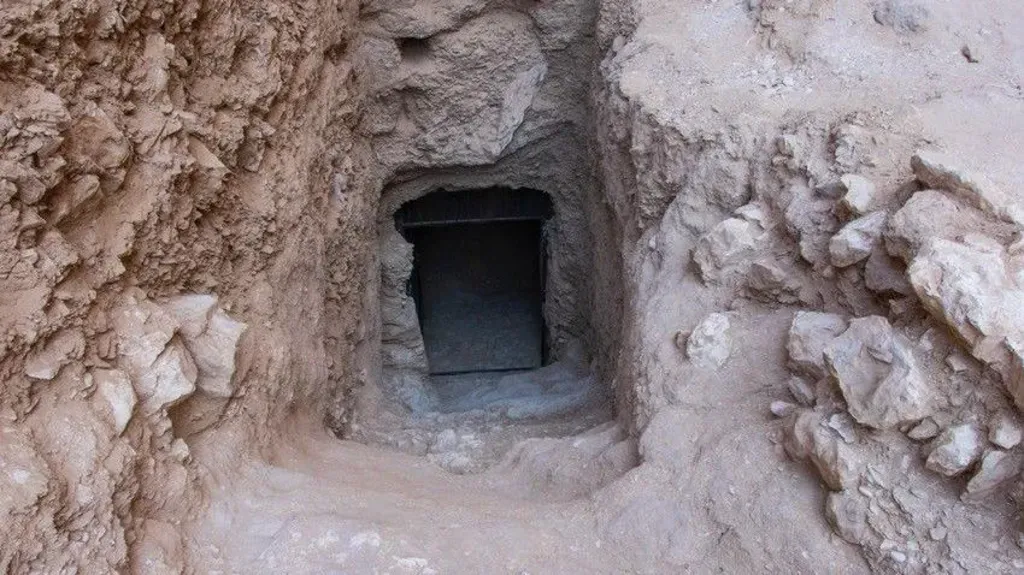
The Valley of the Kings yielded its first royal tomb discovery in over a century when Egyptian archaeologists announced the identification of Thutmose II’s burial chamber in February 2025. Mohamed Ismail Khaled, secretary-general of Egypt’s Supreme Council of Antiquities, called it one of the most important archaeological discoveries in recent decades. Thutmose II ruled Egypt from 1493 to 1479 BC during the 18th Dynasty, the same era that produced Hatshepsut and Thutmose III.
The tomb contained funerary furniture specific to this pharaoh, marking the first time scholars could examine his burial equipment. Previous excavations had found his mummy in the Deir el-Bahari cache, reburied by priests centuries after tomb robbers stripped his original burial. This discovery filled the last missing piece of the New Kingdom’s 18th Dynasty royal burials.
The Valley of the Kings has produced fifty-three documented tombs since archaeological work began there in the 1700s. Howard Carter’s discovery of Tutankhamun’s intact tomb in 1922 set a standard no subsequent find has matched. Thutmose II’s tomb joins that exclusive list of confirmed royal burials, though robbers emptied it in antiquity. The archaeological finds of 2025 included fragments of canopic jars, shabti figures, and painted wall texts identifying the owner.
2. Viking Boat Burial in Norway
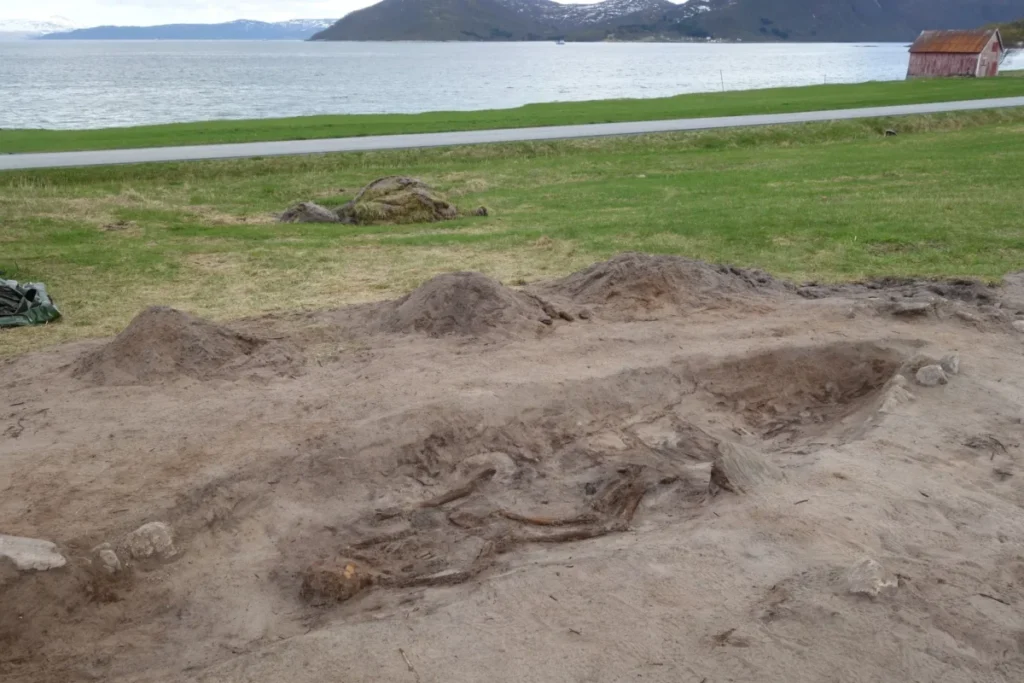
A woman’s grave discovered on Senja Island in northern Norway in June contained her skeletal remains alongside a small dog, both placed in a wooden boat around AD 900 to 950. The burial practice followed Viking Age traditions where high-status individuals received ship burials to transport them to the afterlife. The dog’s skeleton lay curled near the woman’s feet, suggesting it was placed there deliberately rather than wandering into the grave later.
Boat burials remain relatively rare in Norwegian archaeology despite their prominence in Viking sagas and literature. Most Viking graves contain individual bodies without ships or boats. This find preserved organic materials exceptionally well due to Senja’s cold climate and specific soil chemistry. Archaeologists could identify wood types, fabric traces, and even leather fragments from the burial.
The woman’s social status remains under investigation, though boat burials typically marked wealthy or politically connected individuals. DNA analysis and isotope studies will determine her geographic origin and diet. The archaeological finds of 2025 from Senja Island included bronze brooches, glass beads, and iron tools buried alongside the deceased. These objects follow patterns seen in other high-status Viking burials across Scandinavia.
3. Peñico: 3,500-Year-Old Peruvian City
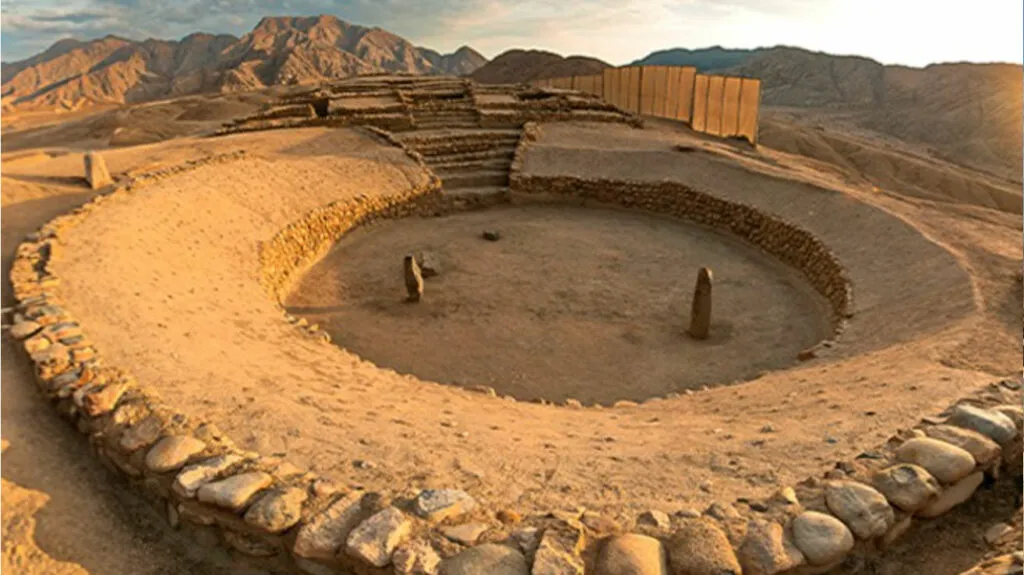
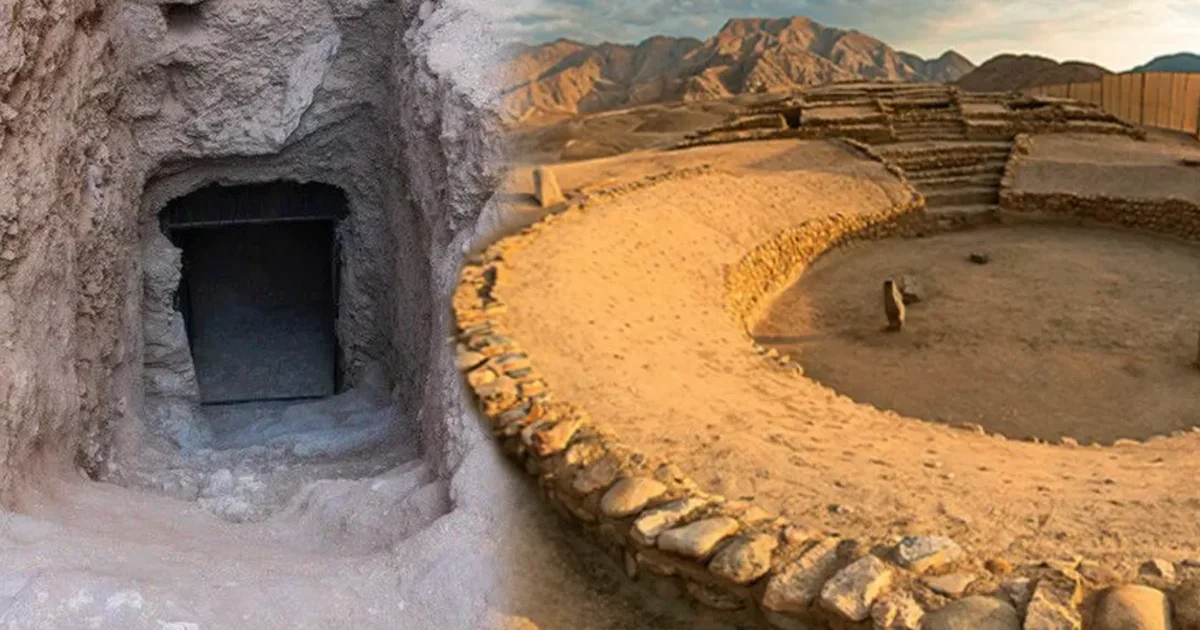
Archaeologists announced the discovery of Peñico in Peru’s northern Barranca province in July, revealing a city occupied around 1500 BC. The site covers several hectares and includes residential structures, ceremonial platforms, and defensive walls built from river stones. Peñico dates to Peru’s Formative Period when complex societies began developing along the Pacific coast.
The city’s architecture shows clear planning with designated residential zones separate from ceremonial spaces. Plaza areas contained traces of large gatherings, suggesting community rituals or administrative functions. Ceramic fragments recovered from the site display decorative patterns connecting Peñico to other coastal cultures of the same era.
This discovery fills gaps in understanding how Andean civilizations developed before the Inca Empire. Peñico existed during the same centuries that saw Chavín de Huántar rise to prominence in Peru’s highlands. The archaeological finds of 2025 at Peñico included grinding stones, weaving tools, and fishing implements showing the population relied on both agriculture and marine resources. Stone-lined canals diverted water from nearby rivers to irrigate crops, demonstrating sophisticated hydraulic engineering.
4. Dionysian Frescoes in Pompeii
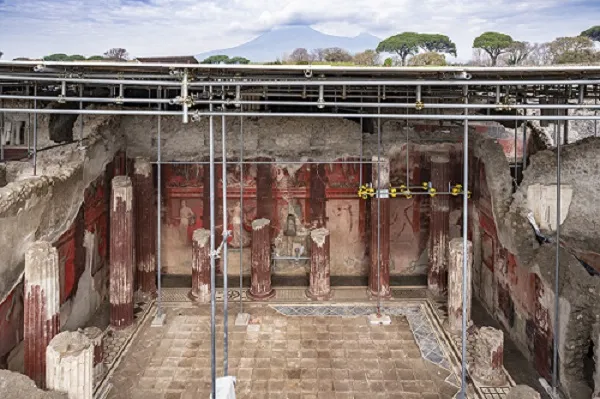
The House of Thiasus in Pompeii revealed a massive frieze in February spanning three walls of a banquet hall. The artwork depicts followers of Dionysus, the Greek god of wine and ecstasy, in a procession featuring satyrs, maenads, and ritual scenes. Artists painted the frieze roughly a century before Mount Vesuvius buried Pompeii in AD 79.
The frieze measures several meters in length and preserves vibrant reds, blues, and golds despite two millennia underground. Figures show detailed musculature, flowing garments, and expressive faces demonstrating the painter’s exceptional skill. The scenes reference Dionysian mystery cults that offered initiates promises of favorable afterlife treatment.
Pompeii has produced numerous frescoes since excavations began in 1748, but this example ranks among the largest and best-preserved. The House of Thiasus sat in a wealthy residential district where owners commissioned elaborate decorations to advertise their cultural sophistication. The archaeological finds of 2025 from this house also included marble sculptures, bronze household items, and mosaic floors showing geometric patterns typical of first-century Roman design.
Built out of a love for history, kept free from distractions.
Spoken Past is an independent project shaped by curiosity, care, and long hours of research. Reader support helps keep it maintained, carefully researched, and open to everyone.
5. 8,400-Year-Old Figurine in Azerbaijan
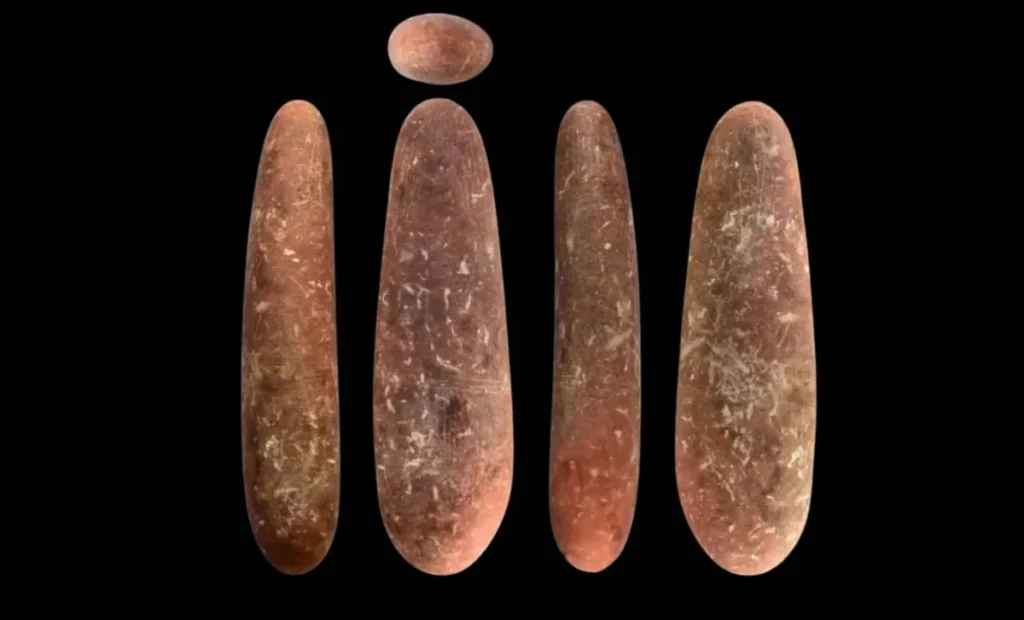
A collaborative Azerbaijani-Japanese team discovered a sandstone figurine in Damjili Cave dated between 6400 and 6100 BC, placing it in the Mesolithic period. The figurine depicts a human form without facial features, showing instead detailed engravings across the body. Microscopic analysis revealed hairlines, a possible belt, and geometric patterns carved with stone tools.
The object measures several centimeters tall and required significant time investment from its creator. CT scans showed the carver removed material carefully to shape the torso and limbs while leaving the head smooth and featureless. This stylistic choice differs markedly from Neolithic figurines found elsewhere in the South Caucasus, which typically show elaborated faces.
Damjili Cave has produced archaeological deposits spanning from the Middle Paleolithic through the Neolithic, making it a crucial site for understanding cultural transitions. The figurine came from stratified layers containing shell pendants, bone beads, and decorated tools suggesting ritual or symbolic activities. The archaeological finds of 2025 from Azerbaijan provide reference points for tracking how artistic traditions evolved during the shift from hunter-gatherer to agricultural societies in the region.
6. Roman Sarcophagus in Israel
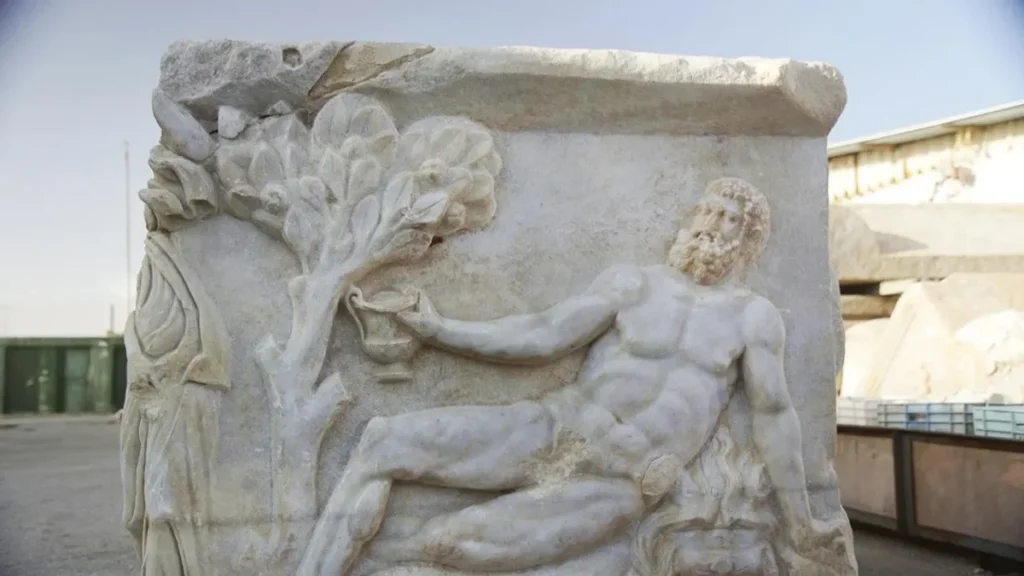
A 1,700-year-old marble sarcophagus emerged from excavations outside Caesarea’s ancient walls in June, featuring a carved relief showing Dionysus and Hercules competing in a drinking contest. The scene depicts both gods holding cups while attendants pour wine. Dionysus typically won such contests in mythology, but Hercules’ presence suggests the deceased identified with the hero’s strength and divine favor.
The sarcophagus measures roughly two meters long and weighs several tons, indicating the occupant came from Caesarea’s wealthy elite. Marble used in its construction likely came from quarries in Greece or Asia Minor, shipped across the Mediterranean specifically for this burial. Carving quality shows professional craftsmanship with detailed musculature, flowing drapery, and expressive faces.
Caesarea served as a major Roman administrative center and port city from the first century BC through the Byzantine period. The city’s inhabitants included Roman officials, wealthy merchants, and military veterans who adopted Roman burial customs. The archaeological finds of 2025 at Caesarea included fragments of inscriptions, bronze coins, and ceramic oil lamps buried near the sarcophagus. These objects help date the burial to around AD 300 to 350 based on coin typology and ceramic styles.
7. Royal Abydos Dynasty Tomb in Egypt
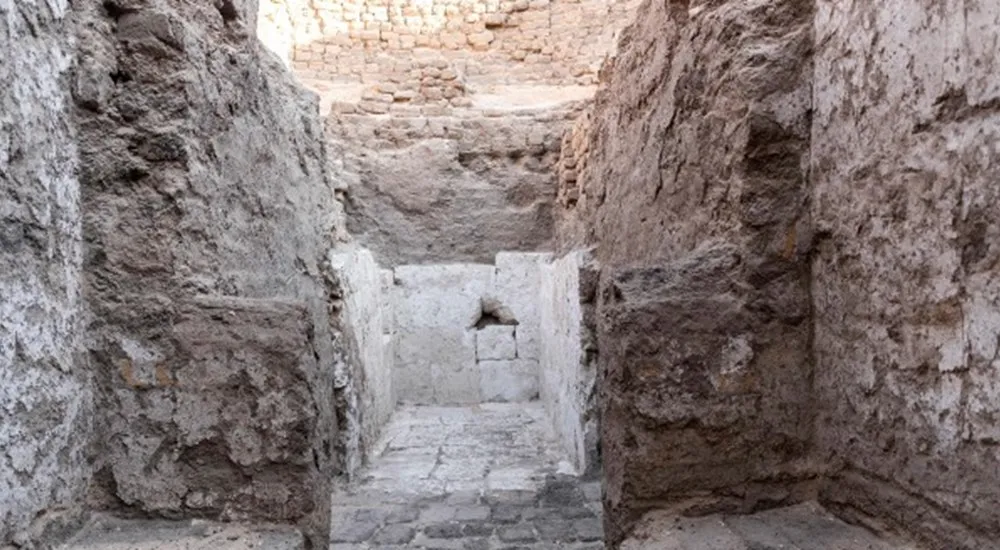
An Egyptian-American team uncovered a royal tomb from the Second Intermediate Period at Abydos in March, buried seven meters underground. The tomb features a limestone burial chamber with a six-meter-tall vaulted ceiling constructed from mudbricks. Wall paintings show the goddesses Isis and Nephthys flanking the burial space in traditional protective poses.
Hieroglyphic inscriptions on the walls once identified the tomb’s owner, but damage over millennia rendered them illegible. Scholars hypothesize this burial belongs to a predecessor of King Senebkay, whose tomb was discovered at Abydos in 2014. The Abydos Dynasty ruled Upper Egypt between 1700 and 1600 BC during a period when the Hyksos controlled the Delta region in Lower Egypt.
This dynasty remains poorly documented in historical sources, making each new discovery crucial for reconstructing Egyptian history during these centuries. The tomb’s architecture follows patterns established during the Middle Kingdom but shows modifications reflecting the political instability of the Second Intermediate Period. The archaeological finds of 2025 from this tomb included pottery fragments, amulets, and traces of wooden furniture demonstrating burial practices continued despite Egypt’s political fragmentation.
8. Sanctuary of Apollo in Cyprus
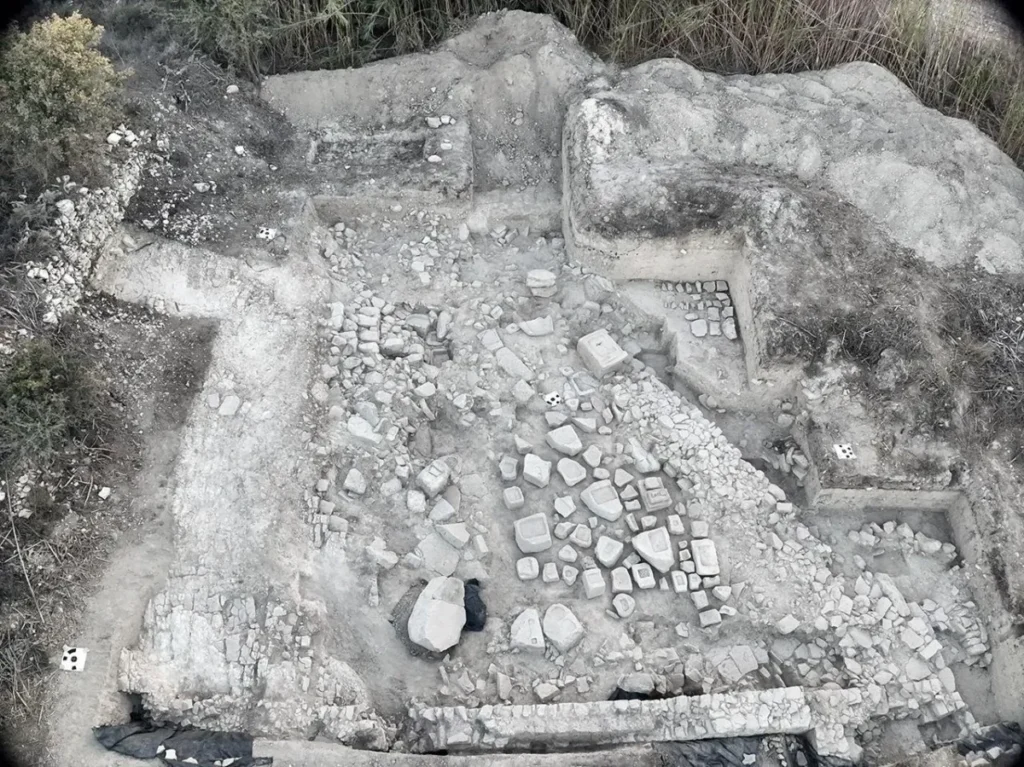
The long-lost Sanctuary of Apollo resurfaced in Cyprus after being buried under sand for 140 years. British archaeologists originally excavated the site in 1885 but failed to properly document its location before abandoning work. Wind-driven sand dunes gradually covered the sanctuary until April 2025 when a Cypriot team relocated it using nineteenth-century excavation notes and ground-penetrating radar.
The sanctuary contained over 100 statue bases arranged around a central temple platform. Fragments of colossal limestone feet scattered across the site suggest the original statues stood several meters tall. Inscriptions on several bases recorded dedications to Apollo from individuals and city-states across the eastern Mediterranean.
Cyprus served as a major cult center for Apollo during the Archaic and Classical periods, when city-states competed to demonstrate their piety through elaborate temple complexes. This sanctuary operated from roughly the seventh century BC until the Roman period when Christianity gradually displaced traditional religion. The archaeological finds of 2025 at the Sanctuary of Apollo included bronze figurines, ceramic vessels used in libation rituals, and fragments of painted architectural elements showing the temple’s original appearance.