A customs officer opens a wooden crate and photographs a terracotta head. The item seems ordinary to a non-specialist, but the photo is clear enough to show a chipped ear and a faint line across the cheek. She runs the image and a few details through a stolen-art database. A match returns: same chip, same line, same height. The piece had vanished from a museum storeroom fifteen years earlier during building work. The crate does not go forward to the buyer. It goes into evidence, and the object goes home.

The modern art market runs on trust and verification. Ancient vases and statues move through hands, across borders, and into storage. Honest buyers want to know what they are buying. Honest museums want to know the history of what they accept. Police and customs officers need a fast way to check whether an object has been reported missing. That is what the database does: it makes a unique object findable by its unique traits. When it works, a record made on the worst day for a museum, a theft report, becomes the guide that brings a work back.
This article focuses on how the INTERPOL Stolen Works of Art database functions in the real world, why it lowers risk for thieves, and what kinds of records make it effective. It looks at the fields that power searches, the workflow from theft to seizure, the limits of the system, and how related tools like the Object ID standard reinforce the whole ecosystem. Examples come from museum documentation, casework published by law enforcement, and well-known recoveries that show how a single image or measurement can tip a decision at an airport counter or an auction desk.
What is the database in plain terms?
INTERPOL’s Stolen Works of Art database is a global police-run register of objects officially reported as stolen or missing. It catalogs descriptions and images, then makes these records available to law-enforcement agencies worldwide and, through controlled access, to museums, dealers, and other vetted users. Records are added by police, typically after a museum or private owner files a theft report. Many entries include photographs, measurements, materials, inscriptions, and distinct features like cracks or repairs. With that information, a simple query can return a possible match.
INTERPOL also provides a mobile gateway, ID-Art, that lets users check objects against published entries and, importantly, create their own secure inventories using the same field logic that makes stolen objects findable. You can learn more about the database and the app on INTERPOL’s site, which explains access and data scope, and about the Object ID fields that sit behind the records on the International Council of Museums website: the standard list of the minimum information needed to identify a work clearly. Those two structures, the database and the standard, are the backbone of modern due diligence.
Why does a stolen-art database work when thieves can hide objects?
Stolen art has a problem that ordinary contraband does not. A specific vase, seal, or figurine is unique in its cracks, images, measurements, and surface wear. That uniqueness is hard to alter without lowering value. A freshly polished patina looks suspicious. A shortened rim or reworked handle changes the object someone wants to buy. The best way to sell a distinctive ancient work for full price is to keep it intact, which makes it identifiable. The database converts those unique, visible traits into searchable fields. Once the record exists, time works for the record, not for the thief. The item may go quiet for years. It will surface when someone tries to insure it, loan it, sell it, or cross a border. At each step, a clerk or officer can compare the object in hand to the record on screen.
That is the first reason it works: the market gatekeepers use it. Auction houses and dealers check lots against it to reduce risk. Museums check prospective gifts and loans. Customs officers check crates that flag as risky. The second reason is that the database uses standardized fields. If every record lists height, material, technique, and a short description in the same order, matching becomes practical. The third reason is network effect. One shared register reduces the gaps between national systems and private lists. A record entered in one country can stop a sale in another.
What information goes into a record, and which pieces matter most?
The most effective entries contain the core Object ID fields, because those are the attributes other users are likely to have at check time.
-
Object type: krater, kylix, cylinder seal, figurine, stele, coin, textile, pendant, relief plaque.
-
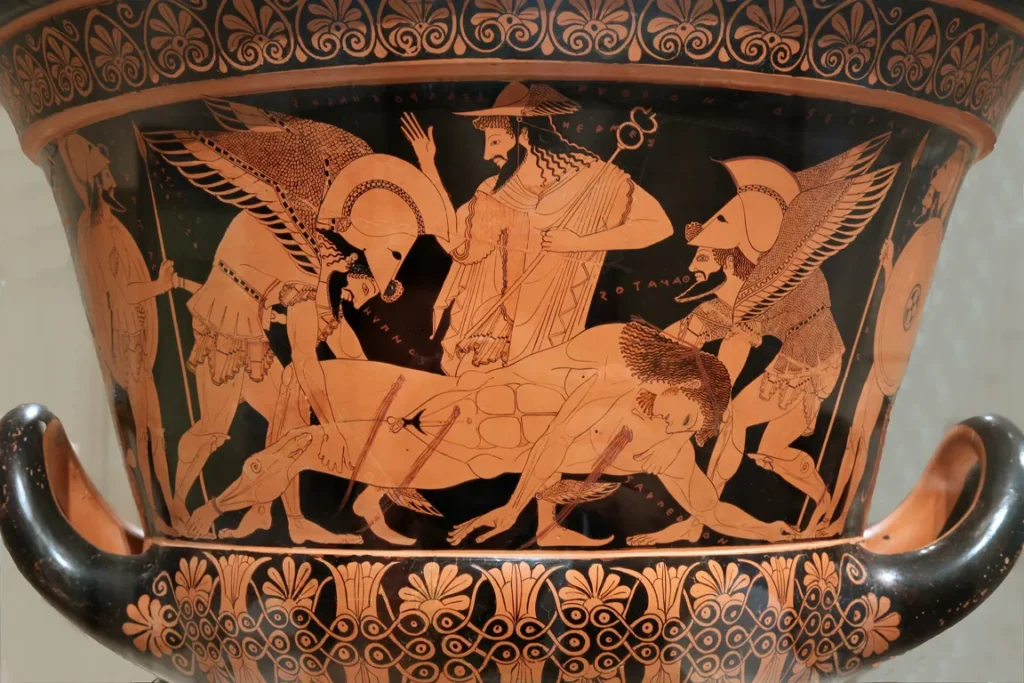
Title or short description: what the object depicts or is called, such as “red-figure calyx-krater, Sarpedon carried by Hypnos and Thanatos.”
-
Maker or culture: Attic, Corinthian, Roman provincial, Hellenistic, Gandharan, Sasanian.
-
Materials and technique: terracotta, bronze, marble, linen, ink on papyrus, cast, hammered, carved, wheel-made, painted.
-
Measurements: height, width, depth, diameter, weight, recorded in standard units.
-
Inscriptions and marks: signatures, dedications, accession numbers, collection marks, ancient graffiti, museum stamps.
-
Distinguishing features: chips, cracks, repairs, missing elements, weathering patterns, a distinctive join line, a misfired patch in the glaze, mineral encrustations.
-
Photographs: color images from multiple angles, with scale if possible.
-
Provenance note: when it was acquired by the museum or owner and the last known lawful location.
In practice, the combination that triggers a solid match is a clear image plus one or two measurements and a distinctive feature. A vase can be copied, but the exact height, the spacing of figures, and a chip on the foot work together like a fingerprint.
Who gets to search, and what do they see?
Law enforcement and customs see the fullest view. Registered art-market professionals and museums can request access or search subsets, including via the ID-Art app. Private collectors can use the app to build inventories in the same structure, then share those inventories with an insurer or museum registrar when needed. The public can browse selected data. The model balances data protection with the need to make checks easy. If a dealer is about to accept a consignment, they can run the image and description through the system. If a border inspector has a box of “decorative stone reliefs,” she can check the patterns and measurements to see if they match a group reported stolen from a site museum.
What happens from the moment of theft to the moment of recovery?
The path is procedural and increasingly standardized.
-
Theft report and initial documentation. A museum or owner alerts local police. Museum registrars update internal records and share photographs and identifiers.
-
National entry and international notice. Police load the case into a national system, then create a record in the international database. That record often includes photographs, measurements, and any accession numbers or inscriptions.
-
Watchlists and alerts. Customs and law enforcement agencies may flag shipments or buyers tied to the theft. Auction houses may receive informal alerts if specific high-profile objects are at risk of surfacing.
-
Market friction. An auction house or dealer checks a newly consigned item. If the record matches, the sale pauses and police are notified. If it is at a border, customs holds the shipment.
-
Verification. Photographs, measurements, and marks are compared. In some cases, a conservator confirms a repair pattern or surface detail. If the match is strong, the object is seized.
-
Legal process and repatriation. Courts or prosecutors handle ownership and export issues, then the item returns to its documented owner or country of origin.
Which kinds of objects are most easily identified?
Some categories travel better in pictures than others.
-
Figurative pottery. Red-figure and black-figure Greek vases have scene compositions that are easy to describe and compare.
-
Stone sculpture. Breaks, missing noses, and chisel traces can be matched, especially when an older photo exists.
-
Metalwork. Bronze patina patterns, repairs, and dents read clearly in good light.
-
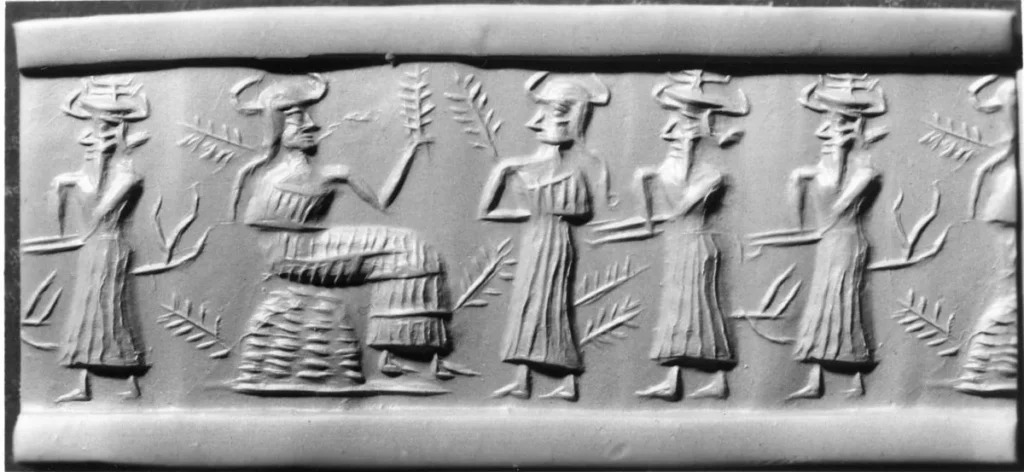
Cylinder seals. A rolling impression, an exact scene, and size combine to make a match persuasive.
-
Epigraphic items. Inscriptions are unique sequences of signs. Even worn texts can match earlier photographs.
-
Icons and panel paintings. Craquelure, wormholes, and nail patterns are surprisingly unique, and digital imaging captures them well.
Coins are a partial exception. They are cataloged by type and die, and there are many duplicates. High-value coins still benefit from database checks, but recovery often depends on die studies and dealer awareness more than a single theft record.
How does the database reduce crime rather than only catalog loss?
The existence of a shared, police-vetted database changes incentives in the market.
-
It raises the cost of fencing. A thief who wants the best price needs a reputable buyer. Reputable buyers conduct checks.
-
It gives honest buyers confidence to refuse. A dealer can decline a consignment with a screenshot of a matching entry rather than an argument.
-
It speeds triage at borders. Customs can hold a suspicious shipment for a concrete reason.
-
It rewards good documentation. The more complete the original record, the higher the chance of recovery. Museums and owners who maintain solid inventories deter theft, because thieves learn that such objects are hard to sell.
-
It crowds-in supportive tools. The ID-Art app, museum collection-management software, national files like the FBI’s NSAF, and private registries align around similar fields. Interoperability is never perfect, but it is improving.
What about privacy, ongoing investigations, and false positives?
Investigations sometimes require that details stay nonpublic for a time. The international system handles that by allowing police to restrict visibility while still enabling cross-border leads. False positives happen when an item looks similar to a stolen one, especially in categories with many near-duplicates. That is why human verification matters. A close reading of measurements, surface wear, and microscopic detail rules out look-alikes. When two objects share type and style, a match still fails if the micro-features do not line up.
What does “Object ID” have to do with recovery?
Object ID is the basic checklist of information you should record about every object in a collection, private or public. It asks for a standardized set of headings: object type, materials, measurements, inscriptions and marks, distinguishing features, description, title, maker or culture, date or period, provenance notes, and photographs. When a museum registers a new acquisition, these fields become the permanent record. When a private collector photographs a seal and measures it with calipers, then writes down the inscription and a short description, that record can be shared with an insurer or police if needed. When an object is stolen, the Object ID record converts directly into a database entry. It is the bridge between ownership and searchability.
A practical example: how a vase becomes searchable
Imagine a red-figure krater, 55.0 centimeters in diameter, painted around 515 BCE, showing Hypnos and Thanatos carrying Sarpedon while Hermes watches. The workshop is known, the painter is attributed, and an accession number is present on the base. The museum has old photos. After a theft, the registrar and police build a record. It includes diameter and height, the scene description and painter, the accession number, and high-resolution photos of both sides. The database entry lists those elements in the same way most users will search: object type, material, measurements, scene keywords, and any numbers or marks. When an auction house photographs a similar krater, the image comparison and the diameter align. The chip on the foot, visible in both photos, seals the match.
What about objects looted from the ground with no prior record?
This is the hard edge of the field. If no one photographed a figurine before it was dug up and smuggled out, there is no prior inventory to enter into a stolen-art database. That makes prevention and site protection crucial. It also makes other tools important, such as the ICOM Red Lists that warn the market about categories at risk from specific regions, and emergency import restrictions that let customs hold suspicious items even without a prior photo. As looters and smugglers adapt, museums and archaeologists respond by documenting sites more thoroughly, and by publishing photographs of storerooms and study collections so that, if theft happens, there is at least a baseline image.
How do museums label and mark objects for identification?
Registrars use reversible, conservation-safe methods. On ceramics and metalwork, a thin barrier coat, a layer of white or clear reversible adhesive, a hand-written accession number in archival ink, and a protective top coat. For textiles and fragile surfaces, a sewn tag or a tie-on label. For paper and panel paintings, labels on frames or mounts rather than the object. Marks go where they do not interfere with display or study, often in a discreet spot on the back or underside. Good photographs back up the number: a picture of the number itself, then several angles of the full object. The goal is not to trap a thief with a hidden code. The goal is to make positive identification reliable and fast when a match is needed.
Enjoying Spoken Past?
I created Spoken Past to share my love of history. I research, write and develop everything myself, and I want my articles and basic guides to remain free for everyone.
If you enjoy my work, please consider supporting Spoken Past with a small donation.
How does a customs officer or dealer actually perform a check?
At a border post, officers scan manifests for terms like “decorative stone panel,” “antique vase,” or “ethnographic object,” then examine the physical item. They measure height and width, note materials and obvious features, and photograph distinguishing marks. If they have access, they search the database with those fields and compare returned images to the item in hand. A positive hit triggers a hold and a call to the national contact point. In an auction house, a registrar takes incoming lots to the photo studio, records measurements, and runs batch checks on consignments that fit high-risk categories. If something pings, the sale is suspended while the specialist team contacts police.
Where do national systems and private registries fit?
Several countries run parallel databases. The FBI’s National Stolen Art File is one prominent example in the United States. Italy’s Carabinieri art unit maintains detailed records of thefts and recoveries. Private registries like the Art Loss Register aggregate reported thefts and aid insurers, dealers, and museums in due-diligence checks. The international database ties these strands together because it is police-vetted, crossing borders through a standard framework. In practice, dealers and museums often search more than one system. The efficiency gain comes when records share field order and vocabulary. A registrar who knows Object ID can move between systems without relearning the logic of each search form.
What technology sits under the hood?
The core is not flashy. It is structured text fields and images, built for speed and shared vocabulary. Photographs matter most. Image comparison does not need to be fully automated to be effective, because specialists can spot matches quickly once candidate images are on screen. That said, image-matching tools help cluster similar items and reduce the number of manual comparisons. Optical character recognition can surface inscribed numbers or short texts. In a good record, even the way a fracture line wanders across a surface becomes a data point.
Myth vs evidence: common claims about stolen-art tracking
-
Myth: criminals can defeat the system by polishing or repainting surfaces. Evidence: altering surfaces typically destroys value and raises suspicion. High-value buyers avoid objects with obvious reworking.
-
Myth: there is a single master blockchain for art titles. Evidence: there is no global, authoritative ledger for antiquities ownership. Recovery depends on police-vetted records, photographs, and court decisions.
-
Myth: publicizing stolen objects helps thieves hide them better. Evidence: publication makes them harder to sell. Cases of recovery often begin when a photo published years earlier is recognized by a registrar or dealer.
-
Myth: databases trap innocent owners in endless disputes. Evidence: the system is designed to prevent bad purchases before they happen, and to resolve clear matches quickly through established legal channels.
How much detail is enough in a record?
Two practical rules help. First, include photographs from multiple angles with a scale. Straight-on photos of the front and back, an angle showing depth, and a close-up of any inscription or repair. Second, include at least two measurements, recorded in centimeters or millimeters, with clear labels for diameter, height, and depth. If there is an accession number, photograph it and transcribe it exactly. The more precise the record, the less room there is for argument later.
What role do storage and internal audits play?
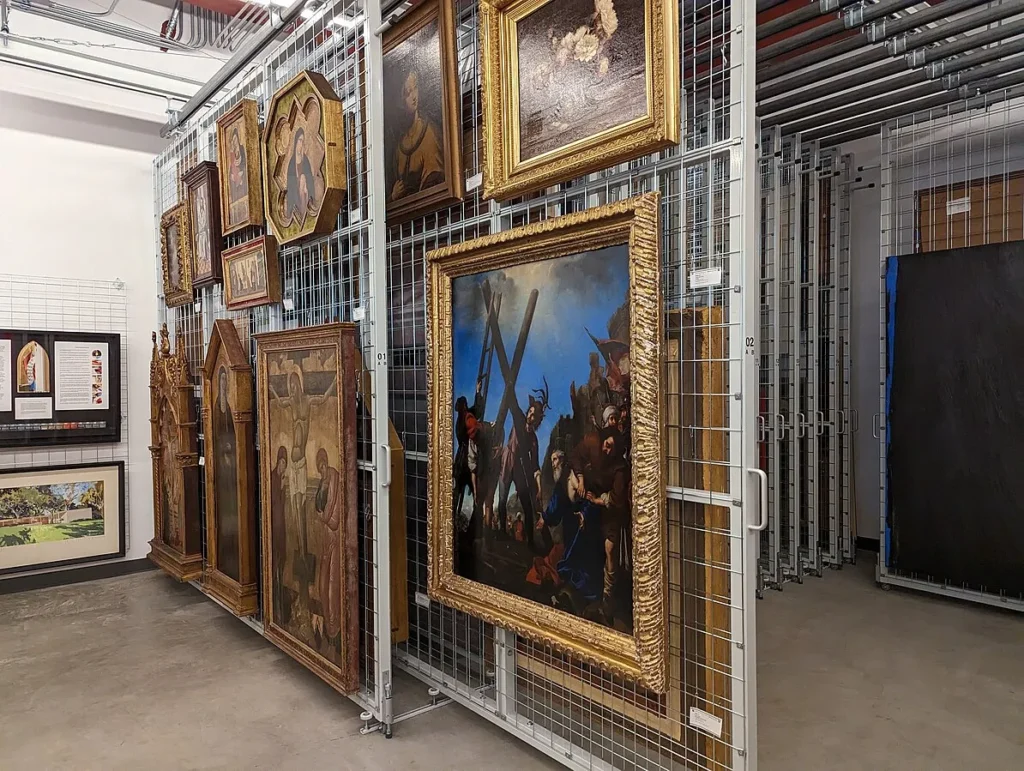
Most art spends most of its life off display, on racks and shelves in storerooms. That is where thefts often occur, and that is where missing-object audits begin. A regular shelf-by-shelf check finds lost items early. It also forces a museum to verify that labels, numbers, and storage locations match the central database. When a theft does occur, a recent storeroom photo may be the only clear image of the object, which makes recoveries possible. In that sense, registrars and collections managers are the first line of defense in a system that spans continents.
What does a persuasive match look like in a report?
Law enforcement will often lay out a short grid of features.
-
Measurements: 45.7 cm high, 55.1 cm diameter.
-
Scene description: Hypnos and Thanatos carry Sarpedon, Hermes at left, shield with specific device.
-
Distinguishing features: chip on foot at 5 o’clock, hairline fracture on right figure’s leg, misfired patch on rim.
-
Accession number: inked under base, “L.2006.10” or earlier museum number documented in the file.
-
Photographic comparison: side-by-side crops showing the same defects and paint flicks.
Even when an inscription or number has been removed, the combination of stable measurements and surface features usually suffices. The standard is not absolute proof in isolation. It is enough to justify a seizure and to initiate a legal process built on expert opinions and earlier documentation.
How do returns and repatriations work after a match?
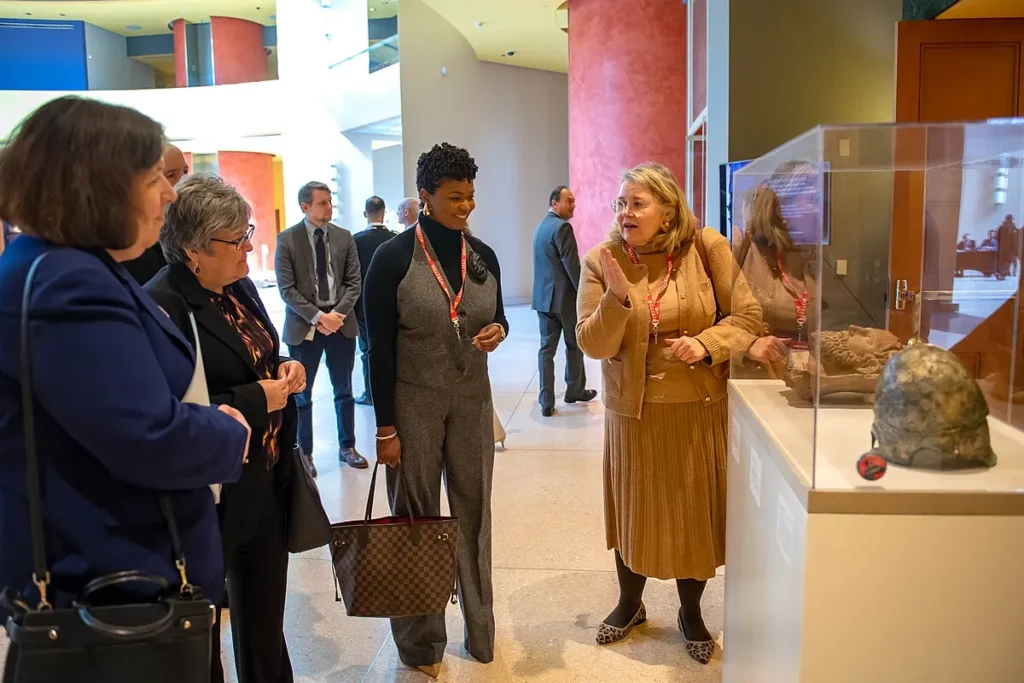
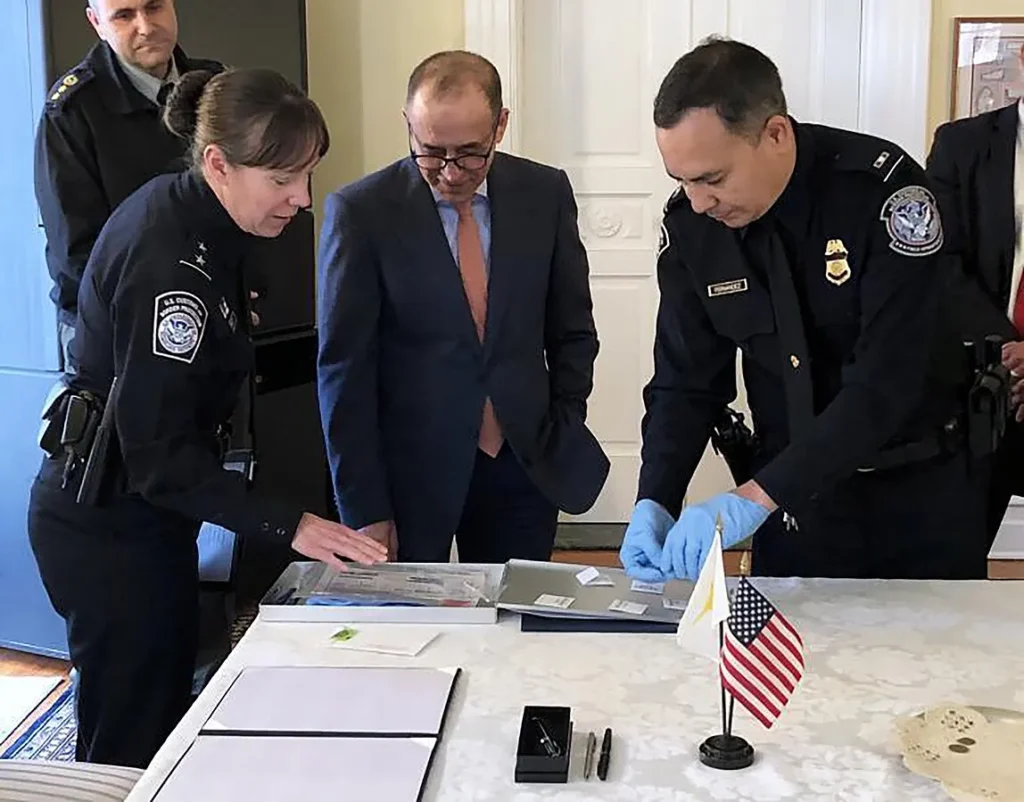
Once an object has been seized, prosecutors and courts resolve ownership and export questions. If there is a clear theft from a museum or a documented illegal export, decisions can be quick. Government agencies stage handovers with representatives of the country or museum that owns the piece. News photos show artifacts lined up on tables with officials and flags behind them. Those images are not only ceremonial. They are part of the database story. Each public handover signals to the market that the system works and that risky categories will be watched.
What are the limits and the honest challenges?
-
Unrecorded looting. Objects looted from unexcavated sites without photographs are difficult to trace. Import restrictions and category-based alerts are tools of last resort in these cases.
-
Thin documentation. Some older collections lack measurements and good photos. If a theft happens, the record may be weak.
-
National variation. Not all police or customs agencies have the same resources or priorities.
-
Volume. The number of small objects, especially minor ceramics, amulets, or beads, is high. Prioritizing high-value or high-risk categories is pragmatic.
-
Legal complexity. Good matches still need to pass through courts. Ownership, export permits, statutes of limitation, and good-faith purchase claims vary by country.
Even with those limits, the structure works because it changes calculations. Thieves learn that high-value items bring attention for a long time. Buyers learn that clean paperwork and database checks are non-negotiable. Museums learn that a few hours spent photographing and measuring objects save years later.
What can small museums and private owners do today to help the system help them?
-
Audit storerooms with fresh photos.
-
Write Object ID records for objects at risk.
-
Mark accession numbers with reversible, conservation-approved methods.
-
Store copies of records offsite or in secure cloud storage.
-
Train staff on what to do in the first hour after a theft.
-
Build relationships with local law enforcement and customs.
-
For private owners, keep purchase invoices and export paperwork with photographs in one folder, and share both with an insurer.
A short walk-through of the most common questions
Is there one global list of everything that could be stolen? No. There are national police files, the international police register, and private databases. They interact but remain distinct. The key is that the international database aggregates police-verified thefts and is recognized by customs and border agencies worldwide.
Do I need a serial number to make an object findable? No. A serial or accession number helps enormously, but photographs, measurements, and distinctive features are enough to make a strong match.
Do thieves file off numbers? Sometimes. They rarely fix a break pattern, repaint a specific device on a shield, or change a height without raising suspicion. Those traits stay matchable.
Can anyone search? The public can browse selected records, and vetted users can request fuller access. Law enforcement and customs have the broadest access. Museums and professional dealers typically maintain logins or use the ID-Art app and national systems as part of their intake checks.
What happens if my object is not in the database but looks like a risky category? Category-based tools, like Red Lists and import restrictions for conflict-affected countries, can trigger holds and further checks. In the meantime, build a full Object ID record for your collection.
Does the system catch fakes? The database tracks stolen and missing works. It is not a fake-detection tool. That said, the due-diligence culture around the database reduces the space for forgeries by insisting on documented histories and careful examination.
Two case snapshots that illustrate how the record wins
A high-profile vase, decades in dispute. A famous Athenian krater was photographed repeatedly in the 1970s and 1980s, then linked to illicit excavation and export. Police and prosecutors assembled a file that combined older scholarly photos, museum measurements, and market records. When a solution came, it involved negotiation and return, but the opening move was simple: the object pictured in a book matched the object in a storeroom, line for painted line.
A box of small seals on a passenger manifest. A shipment declared as “collectible stones” showed repeatable imagery in a quick roll across a clay test strip. A customs officer used reference images and a search on size and motif to match several seals to a burglary at a regional museum. None of the seals had numbers. All had unique iconography visible in the impressions.