

A pencil trace crawled across paper in a tidy loop, hour after hour. On August 12, 1942, an archivist named Adelaide Minogue stood in the stacks and checked that line on a mechanical humidity recorder, because a wet week in Washington could curl paper, buckle bindings, and ruin years of work. The line was steady that day. It is not always steady, and holding it flat has never been cheap.

Small museums carry that same responsibility, usually with fewer staff, tighter budgets, and buildings that were not designed for close control. Many end up paying for equipment or electricity they do not need, because myths about the “right” environment have outlived the science. The idea that every gallery must sit at 70 degrees Fahrenheit and 50 percent relative humidity year-round is one of those myths. Another is that buying a portable humidifier or dehumidifier will fix everything. A third is that every room needs precision HVAC running around the clock, even when the objects are already buffered in cases.
This piece focuses on small and midsize museums and historic houses with mixed collections: paper, photographs, paintings on canvas and panel, furniture, textiles, archaeological finds, and metals. It draws on preventive conservation practice, building physics, and the tools conservators actually use, from data loggers to salt calibration tests. The aim is blunt and practical: to replace expensive myths with workable ways to protect collections.
Why do fixed numbers like 70°F and 50% RH stick around?
Simple numbers feel safe. For decades, lenders, insurers, and building engineers repeated one set point because it was easy to write into a loan agreement and an HVAC specification. That habit has momentum. The trouble is that a single, rigid target makes little sense for most buildings and most objects. A stone church in Cornwall, a timber farmhouse in Iowa, a concrete art center in Arizona, and a basement archive in New York have different envelopes, different loads, and different risks. If the building fights the set point, the system works harder, energy bills climb, and the environment still swings when weather pushes hard.
Modern preventive conservation emphasizes risk over dogma. The central questions are not “did you hold 50 percent,” but “how fast did the humidity change,” “how damp did it get,” “how dry did it get,” and “what materials are at risk at those edges.” For most mixed collections, slow seasonal drift is acceptable, rapid swings are not, and extremes, especially dampness, are dangerous. Public guidance from reputable institutions explains the shift clearly, and it is worth reading that guidance rather than inheriting rules secondhand. See, for example, the Canadian Conservation Institute’s discussion of “incorrect” relative humidity and its four risk types, which prioritizes avoiding dampness and rapid fluctuation over hitting a single number (Agent of deterioration: incorrect relative humidity). The American Institute for Conservation’s community guidance summarizes where the field settled after years of debate and testing, and why a range with managed drift often makes more sense than a rigid point (Environmental Guidelines).
What do collections really need: stability, edges, and time
Materials move at different speeds. Wood, paint films, adhesives, parchment, and canvas respond to moisture content and to the rate of change. Metals respond differently, with corrosion risks tied to sustained high humidity and pollutants. Photographs have their own chemistry and often benefit from cooler storage. If you want one rule that does not waste money, it is this: avoid sustained dampness, avoid sharp swings, and let the building and cases do some of the buffering.
A practical mixed-collection envelope that keeps risk low without heroic energy use usually looks like this:
-
Humidity stays mostly between the mid 30s and the high 50s, with slow seasonal drift, and with deliberate measures to avoid spending long periods over 60 to 65 percent.
-
Temperature stays within a broad comfort band for people, roughly the mid 60s to low 70s in Fahrenheit for galleries, cooler for storage when possible, and without fast changes.
-
Cases and microclimates protect the most sensitive objects with passive buffering so that the room does not have to be perfect to protect the object.
The exceptions matter. Panel paintings, gessoed sculpture, and certain composite artifacts crack when humidity drops fast into the 20s, especially if that drop comes on a cold, dry, windy week with the heat running. Archeological metals and many modern alloys corrode quickly with damp air, especially above about 60 percent relative humidity if chloride contamination is present. If your collection has many such objects, you adjust your targets and your displays.
A quick methods box: how do we know when the environment is safe enough?
-
Log continuously. Use calibrated temperature and RH data loggers with logging intervals of 5 to 15 minutes. One logger per distinct space is a minimum, with extra units for case interiors, problem corners, and near exterior walls. Confirm placement avoids direct sun and air blasts.
-
Calibrate annually. Use saturated salt tests for RH calibration. Even a two point check, at roughly 33 percent and 75 percent, gives confidence that a spike is real.
-
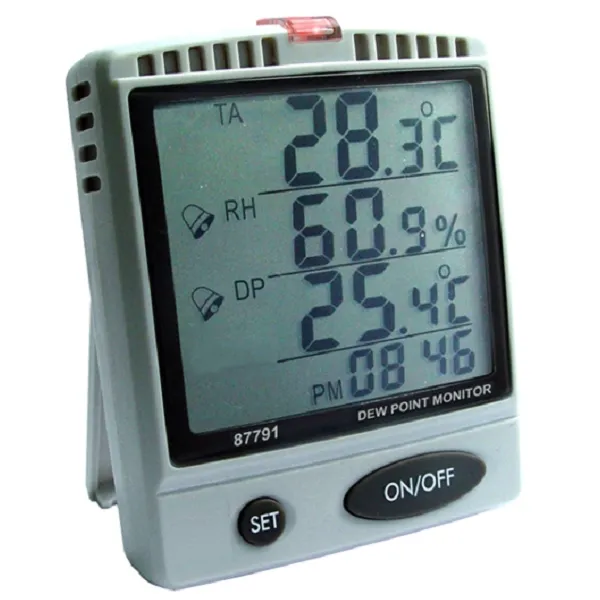
Look at dew point. Dew point tracks absolute moisture. If the dew point in the room reaches a cold surface, condensation and mold risk rise. Many false “mysteries” disappear when staff plot dew point rather than RH alone.
-
Correlate with weather and operations. Note when doors are propped, when events occur, when a humidifier is filled with tap water, when the boiler cycles, when a case is opened. Those notes make the graph intelligible.
-
Link to object response. If a panel painting cups during a cold snap, align the photos with the RH graph for that period. If a textile shows mold, find the period of sustained RH above roughly 65 percent. Evidence aligns practice.
Myth vs. evidence: the expensive habits that do not help
Myth: You must hold 50 percent RH plus or minus 5 all year, or you will damage everything.
Evidence: Risk depends on what you own and how fast the environment moves, not on hitting a single value. Slow seasonal drift within reasonable bounds is not a threat to most mixed collections. Trying to flatten seasons in a leaky, historic shell costs a fortune and often fails. Focus your money on avoiding sustained dampness and on buffering sensitive pieces.
Myth: Cooling more will dry the air.
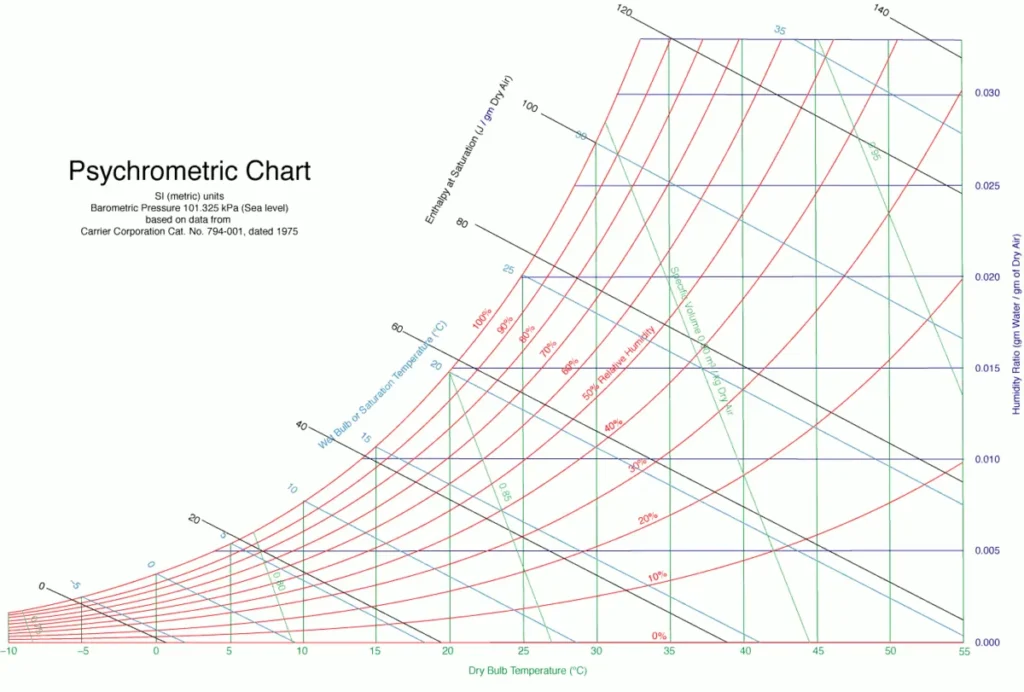
Evidence: Air conditioning may remove moisture if the coil runs long enough and is cold enough. In shoulder seasons a unit can short cycle and drop temperature faster than it removes moisture. RH then rises because cooler air holds less moisture. The way out is to manage latent load, not just sensible load. That can mean dedicated dehumidification or reheat, or simply running a smaller unit longer instead of a larger unit in short bursts. The psychrometric chart explains why.
Myth: A portable humidifier or dehumidifier is a cure-all.
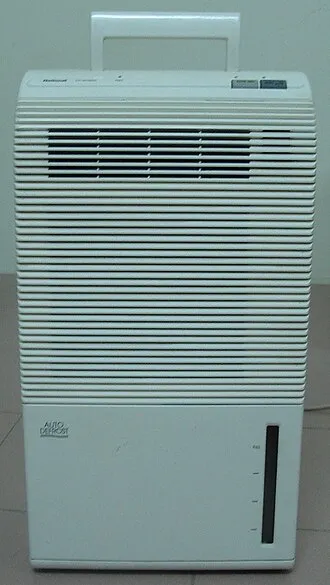
Evidence: Portable units are band-aids with side effects. Ultrasonic humidifiers leave mineral dust if you use tap water. Evaporative wick units harbor bacteria and need weekly maintenance. Overpowered dehumidifiers can overshoot and dry delicate objects. Portable machines have their place, especially inside sealed rooms or cases, but they create new risks if they run unmonitored.
Myth: Every room needs full HVAC 24/7.
Evidence: Zoning and microclimates save money. If most risk sits in a small study room with parchment and photographs, stabilize that room and let robust stone or metal collections ride a broader building range. Cases with passive buffers, gasketed frames, and smart placement reduce the demand on the central plant.
Myth: Mold blooms overnight with one high reading.
Evidence: Mold risk depends on temperature, RH, and time. A brief spike at 65 percent RH is not a disaster. A week at 70 percent after a leak, with dust and nutrients present, is very different. Dew point and duration matter more than one logger line.
Myth: Data loggers are optional because you can feel humidity.
Evidence: You cannot. Your skin notices air movement and temperature far more than moisture. Preventive conservation is evidence driven. Calibrated loggers and salt checks give you that evidence.
Dew point, walls, and why condensation fools people
Relative humidity is a ratio. Dew point is a fact. When humid air touches a surface at or below its dew point, moisture condenses. In historic buildings with solid masonry, interior surface temperature can drop far below the room air temperature on cold nights. If store rooms sit against that wall, a response team might see “mystery damp patches” and blame a roof or a pipe. The data often tell a simpler story. The room dew point and the wall temperature met, so water appeared.
You do not always need a new HVAC system to reduce that risk. A few cheap measures go a long way:
-
Seal air leaks to stop humid outdoor air from washing across cold surfaces in summer and cold dry air in winter.
-
Move objects and shelving a few inches off exterior walls to reduce cold bridging and to allow air flow.
-
Add thermal blinds or insulated shades that you open during the day and close at night.
-
Run a small fan gently across problem spots to de-stratify and lift surface temperatures.
-
In winter, plan a modest humidification strategy that favors stability rather than chasing any single number.
Passive buffering and microclimates beat whole-building heroics
Every cubic foot of air you control costs money. If your most sensitive objects live in a few cases, spend money where it matters: on cases that seal well, on a passive buffer inside, and on placing those cases where the environment is easiest to hold. Options include conditioned silica gel, molecular sieves for low-RH targets, and specialized sheets such as Art-Sorb. In practice, a well-sealed case with 5 to 10 kilograms of conditioned gel can hold within a few percentage points for weeks, even if the room cycled under a school group.
Frames can be microclimates too. Backboards with gaskets, edge seals, and small sachets of conditioned gel create a low-maintenance buffer for works on paper and panel paintings. When you add an object to a case or a frame, let the gel and the interior acclimate for a day before you close fully. Monitor before you trust.
What different materials want: practical edges and warning signs
No two collections match, but certain patterns recur:
-
Wood, gesso, and panel paintings: The risky zones are very low RH with fast change, which promotes shrinkage and cracking, and sustained high RH that softens glues and ground layers. Visible signs are new checks along the grain, cupping, or lifting gesso. Avoid quick drops into the 20s, avoid weeks over about 65 percent, and slow the rate of change.
-
Canvas paintings: Canvas is more forgiving than panel, but fast swings slacken and tighten supports, and damp conditions encourage mold and metal soap formation in some paints. Good framing and a stable room help more than chasing one set point.
-
Paper and parchment: Dryness embrittles and tight curl can appear in parchment under low RH. Dampness brings cockling and mold. Cases with buffers are efficient, and cool storage helps.
-
Textiles: Many textiles tolerate a wide range if change is slow, but dyes and finishes complicate the picture. Dampness and dirt invite mold and insects. Steady air movement and routine cleaning reduce risk.
-
Metals: Active corrosion for iron, copper alloys, and archaeological metals accelerates in damp air, often above about 60 percent if chlorides are present. Pay attention to cases, desiccants, and pollutant control.
-
Photographs and film: Cool and dry is safer. For valuable image materials, consider a dedicated cold storage, even if the rest of the building runs warmer.
Lighting, heat, and the climate you pay to remove
Lighting adds heat. Heat drives cooling. Cooling cycles can raise relative humidity if coils short cycle. This loop is easy to overlook. Converting high-watt halogens to efficient LEDs often pays back twice: lower lux on sensitive surfaces with better control of spectrum, and lower cooling loads with longer lamp life. Review display lighting when you review HVAC. If you drop heat at the source, you need less air movement to compensate.
The quiet power of housekeeping and sealing
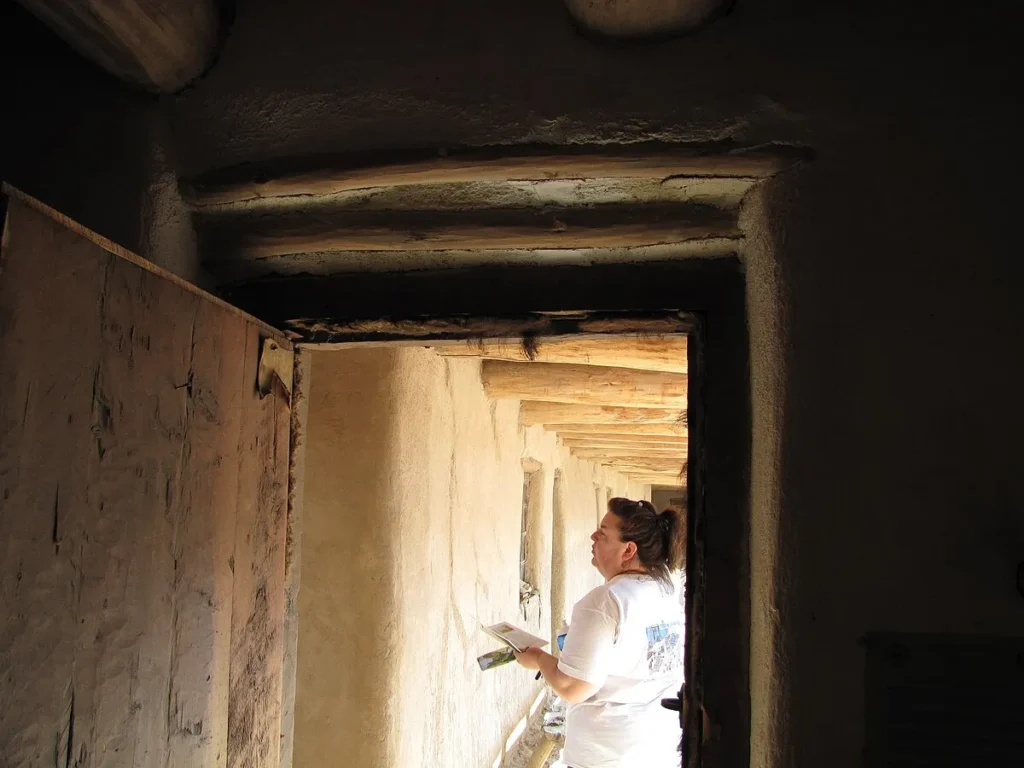
Dust is food for mold and insects. It also holds moisture. Regular vacuuming with HEPA filters, attention to floor edges and tops of cases, and sensible handling protocols reduce the need to run equipment hard. Sealing around door frames, window sashes, and penetrations costs little and pays back immediately. A leaky envelope forces your system to treat outdoor air endlessly. A tighter shell means smaller equipment and fewer hours.
When a portable unit makes sense, and when it does not
There are three defensible uses for portable equipment in small museums.
-
Emergency drying after a leak. Get RH down quickly to stop mold, then return to normal control. This is short term, high benefit.
-
Close control in a sealed, small space. A photograph study room with a door sweep and gaskets can run a small dehumidifier with a drain and a controller. Add a secondary thermometer and hygrometer so staff can verify conditions without entering.
-
Inside a large, well-sealed case or cabinet. Micro-dehumidifiers with dry-rotor cartridges or small Peltier units can manage a case that cannot use silica gel, but only if monitored.
Poor uses include placing an ultrasonic humidifier in a dusty gallery and letting it run on tap water, or setting a dehumidifier in a leaky room with no drain and no monitoring. Both create more problems than they solve.
A realistic way to commission or replace HVAC without overspending
If you must buy or overhaul a system, spec performance, not perfection. Ask for:
-
Sensible zoning that matches collections, occupancy, and sun exposure.
-
Latent control sized for your summer moisture loads, with the ability to run coils long enough for dehumidification.
-
Controls that allow seasonal set points and deliberate ramp rates, not a rigid 50 percent year-round.
-
Economizer logic that does not bring in damp air for “free cooling” when it will create condensation risk inside cases.
-
Off-the-shelf controls your local contractors can maintain. Proprietary systems often lock you into expensive service.
Run a year of logging before and after replacement. It is the only way to prove that new equipment reduced risk rather than simply changing numbers on a touchscreen.
Built out of a love for history, kept free from distractions.
Spoken Past is an independent project shaped by curiosity, care, and long hours of research. Reader support helps keep it maintained, carefully researched, and open to everyone.
How a psychrometric chart prevents bad decisions
A common and costly mistake is to confuse temperature control with moisture control. On the chart, cooling without enough latent removal moves you along a line of constant moisture toward higher relative humidity. If your logger shows RH rising during cool nights, that is not a paradox. You cooled, the absolute moisture did not change, so the relative humidity went up. The fix is to remove moisture or to reheat modestly after dehumidification so that the display temperature remains comfortable while the air is dry enough to be safe.
The case for seasonal drift and ramp rates
Consider a museum in a temperate climate with humid summers and cold winters. The building is a two-story brick house from 1890, with plaster walls and wooden sash windows. A rigid demand for 50 percent RH all year becomes a war against the seasons. Energy costs spike, the boiler and chiller cycle heavily, and loggers still show swings.
A better plan sets winter at 40 to 45 percent, spring and fall at 45 to 50, and summer at 50 to 55, with ramp rates of a few percentage points per week. Cases with buffers hold steady inside. Storage runs cooler than galleries, and you suppress damp spells by dehumidifying after-hours when outside dew points are low. Staff plan object moves during stable periods. Lenders accept a well justified plan backed by evidence, not just a number in a contract.
What a modest widening of targets does to energy
Numbers vary by building, but the direction is consistent. Widening a strict heating set point band by a degree or two saves fuel immediately. Allowing a few percentage points of RH drift reduces compressor run time and reheat. If dehumidification is electric and expensive in your region, delaying it until outdoor air is drier and cooler, then running longer cycles at night, can cut peak demand charges. The important part is to plan these moves on the chart and to verify with data afterward.
Common failure modes that look like “mysteries”
-
Night spikes in RH with no change in absolute moisture. Likely the result of overnight cooling. You changed temperature, not moisture.
-
Mold near exterior walls but not in the center of the room. Likely cold surfaces below the dew point. Check wall temperatures and move shelving away from the wall.
-
Case RH climbs during public hours. Likely intake of humid air through poor seals and repeated opening. Improve gaskets and change procedures.
-
Short baseline changes that line up with weekend staffing. Someone is propping a door or a back-of-house service entrance. Change behavior and add a self-closing hinge or door alarm.
Lighting, visitors, and latent load
Humans breathe out water vapor. Crowded openings and school tours add latent load quickly, especially in small rooms full of absorbent materials. If RH rises during events, that is normal. The fix is to let the room recover after-hours. Keep entry doors closed, add vestibules or curtains where feasible, and reduce lighting heat. If your galleries run track lights, plan an LED conversion with controls that dim between tours.
Cheap improvements that usually beat buying more machinery
-
Seal the building. Door sweeps, window gaskets, and sealing service penetrations often cut humidity swings by more than new equipment does.
-
Reduce direct solar gain. Shade problematic windows and add interior films where appropriate. Lower solar loads reduce cooling and reheat.
-
Use cases intelligently. Place sensitive objects in microclimates and reduce your demand on the room.
-
Schedule maintenance. Clean coils, check drains, replace filters, and verify that sensors read what you think they read.
-
Design for drainage. Dehumidifiers with no continuous drain create floods when staff forget a bucket. Plumb them, and add a floor sensor in rooms with sensitive objects.
-
Practice good housekeeping. Dust less, mold less. It is that simple.
-
Make dew point a daily number. If staff monitor anything, monitor dew point and keep it off cold spots.
When to spend for precision, and when not to
Certain collections warrant tighter control. Panel paintings in active exhibition programs, lacquer, veneered furniture in poor condition, parchment in tension, and archaeological metals need what they need. In those cases, buy performance where it matters: sealed cases, dedicated small rooms with robust dehumidification, or cold storage for photographs. Buying a large, whole-building precision system for a leaky historic house with mixed objects is often the wrong move. You will pay a lot to fight the seasons and still lose in the basement and the attic.
Talking to lenders and trustees about ranges instead of rules
Trustees and lenders often arrive with numbers in mind. Show your data. Demonstrate that your gallery tracks seasons slowly, that your cases buffer, and that your dew point stays well below cold surfaces. Walk them through the risk: not a single value on a touchscreen, but the conditions that actually harm objects. Explain your ramp rates on a calendar. Most lenders accept a well documented plan, especially when you show that the plan prevents the specific damage their object might suffer.
A short, sane specification you can live with
If you need language for a policy or a loan agreement that avoids waste while protecting objects, use plain terms:
-
Maintain relative humidity in occupied galleries and storage within a seasonally adjusted range that avoids sustained dampness and rapid change. Typical targets for mixed collections are mid 30s to high 50s RH, with slower drift between seasons and ramp rates not exceeding a few percentage points per week.
-
Maintain temperature in galleries for human comfort and object stability, typically mid 60s to low 70s Fahrenheit, cooler where feasible in storage. Avoid rapid shifts.
-
For sensitive objects, provide sealed microclimates with passive buffering or dedicated close control rooms. Monitor case and room conditions with calibrated loggers.
-
Manage light levels and heat loads through efficient lighting and shading to reduce climate control demand.
-
Base all adjustments on logger data, dew point calculations, and periodic review by conservation staff.
A realistic triage checklist for the next 90 days
-
Place and calibrate loggers in representative rooms, cases, and problem corners. Download weekly for a month, then monthly.
-
Measure exterior wall surface temperatures during the coldest and hottest weeks you see next.
-
Install door sweeps and plug visible service penetrations. Add a curtain or vestibule where doors to the exterior open directly to galleries.
-
Condition and load silica gel into the two cases that hold your most sensitive objects. Add interior loggers.
-
Map your lighting loads. Plan to replace the hottest fixtures first. Dim where possible.
-
Test your dehumidifier drains and verify that any overflow trips an alarm.
-
Write a one-page seasonal strategy that sets winter, shoulder, and summer targets and ramp rates. Share it with trustees and staff.
A small museum case study, without the drama
A county museum with two galleries and a storage room spent years aiming for 50 percent RH in a brick building with tall windows. Energy bills were high and mold appeared every August. Staff placed four loggers, one in each space and one behind a case near an exterior wall. They recorded six months of data. The pattern was obvious. Summer nights cooled quickly, RH rose, and dew point met the cold plaster behind the case.
The museum sealed the case and added 6 kilograms of conditioned silica gel. It installed weatherstripping on three exterior doors and added solar film to the two sunniest windows. It scheduled dehumidification to run longer at night rather than surging during public hours. It accepted a slow seasonal drift: 42 percent in winter, 50 in summer, ramping at two points a week. It turned the halogen track lights down and set a plan to convert to LED.
After the changes, the logger behind the case showed no further condensation. Electricity use dropped. Summer mold did not return. The galleries were still comfortable, and the museum could explain the data and the plan to lenders with confidence.