Origins: From Swamp to Sacred Ground (8th-6th Century BC)
Before Rome existed as city, the low-lying valley between the Palatine and Capitoline Hills collected water, creating marshy ground unsuitable for habitation. The earliest inhabitants used this soggy depression as cemetery, burying their dead in waterlogged soil. Archaeological evidence from the 8th century BC shows votive offerings at what would become the Comitium and Vulcanal, indicating early religious use despite the inhospitable terrain.
Everything changed in the late 7th to early 6th century BC when engineering traditionally attributed to the Etruscan Tarquin kings drained the valley. The Cloaca Maxima, one of the world’s earliest sewage systems, channeled water away, transforming swamp into usable space. By roughly 600 BC, the drained area had been paved and converted into an open-air market adjacent to the Comitium, the political assembly where early Romans gathered to vote and hear speeches. Archaeological evidence shows substantial development between 625-600 BC, with terracotta decorations indicating increasingly elaborate structures around the Forum’s perimeter.
This was the beginning of what would become the most famous meeting place in human history. The transformation from cemetery swamp to civic center represents one of history’s most consequential acts of urban engineering.
The Republican Forum Takes Shape (509-27 BC)
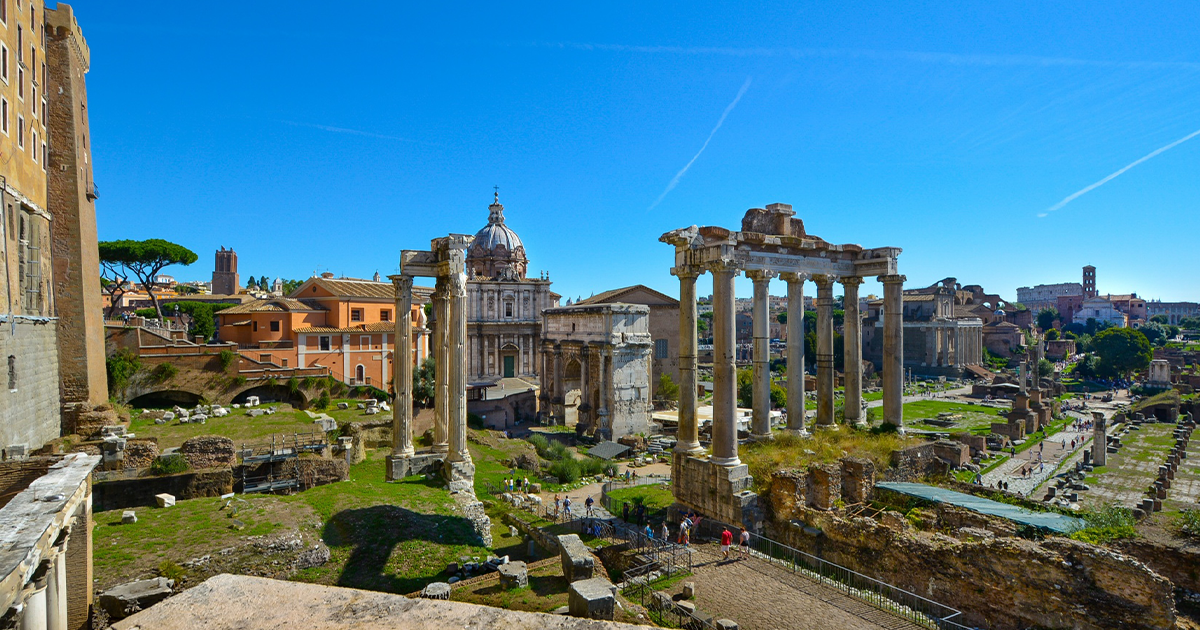
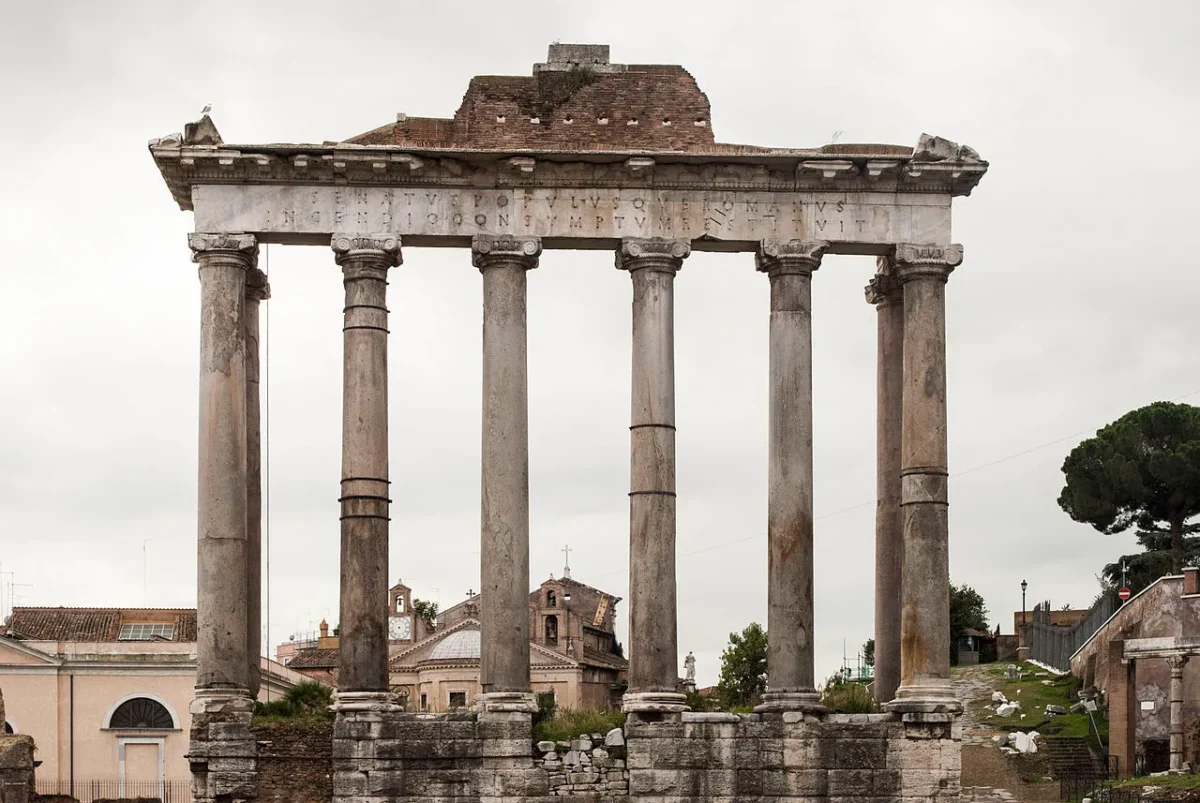
With the Roman Republic’s founding in 509 BC, the Forum evolved from marketplace to political arena. Public speeches were delivered from the Rostra, criminal trials conducted, elections held. The Temple of Saturn rose around 497 BC, becoming one of Rome’s oldest and most important sanctuaries. Its role as repository for the state treasury (Aerarium Saturni) ensured it remained central to Roman financial administration for centuries. The temple stored not just gold and silver reserves but also official weighing scales for precious metals and critical state documents.
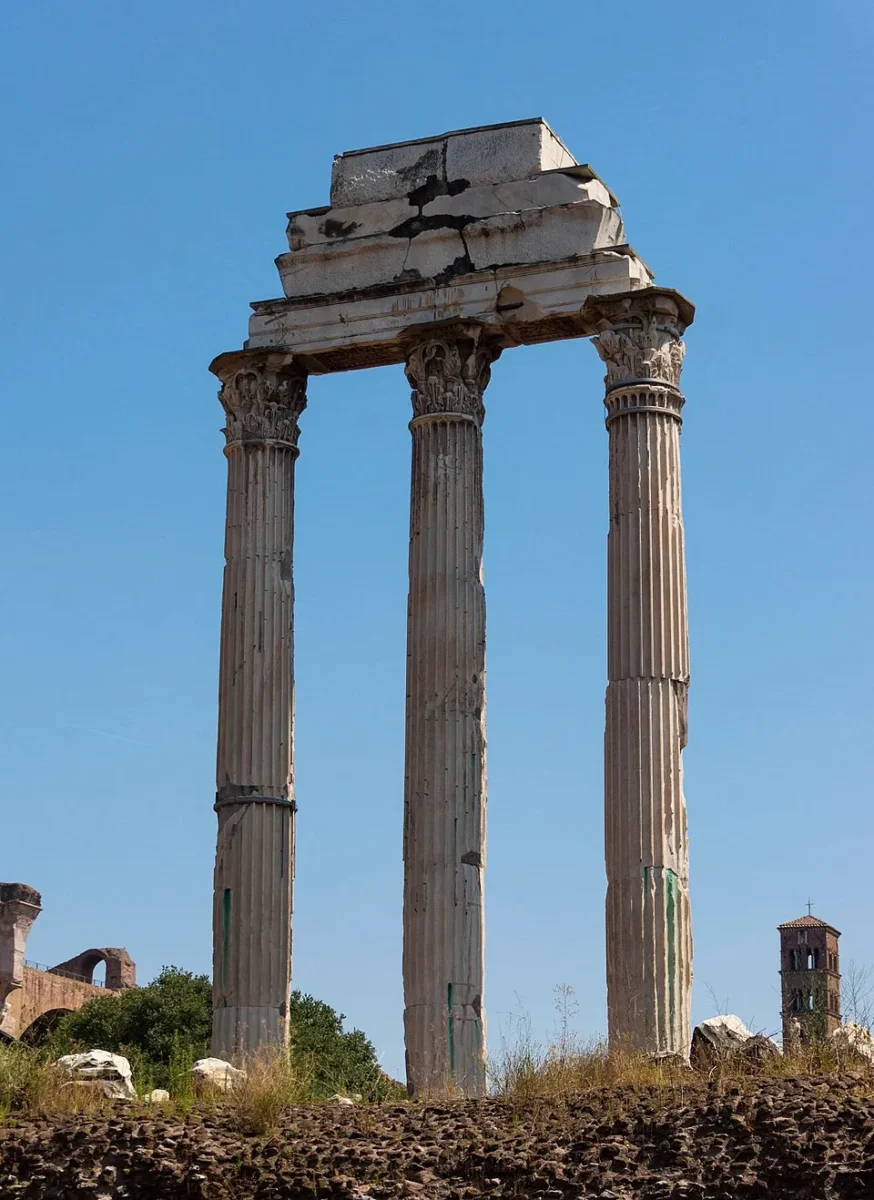
The Temple of Castor and Pollux followed in 484 BC, commemorating the legendary twins who appeared at the Battle of Lake Regillus to announce Rome’s victory. The Lapis Niger shrine, with its archaic Latin inscriptions warning against defiling a sacred spot, marked what Romans believed was Romulus’s final resting place or murder site. Generations treated it with superstitious reverence.
As Rome grew from city-state to Mediterranean power, the Forum expanded. Basilicas appeared to house commercial and legal activities. The Basilica Aemilia, begun in 179 BC, handled business transactions and legal proceedings. Called one of Rome’s three most beautiful buildings by Pliny the Elder, it featured marble floors with intricate inlays, frescoed walls, and two-story colonnades. Julius Caesar commissioned the Basilica Julia in 54 BC (though it burned before completion and was finished by Augustus), creating space for four simultaneous law court sessions separated only by marble screens and curtains between columns.
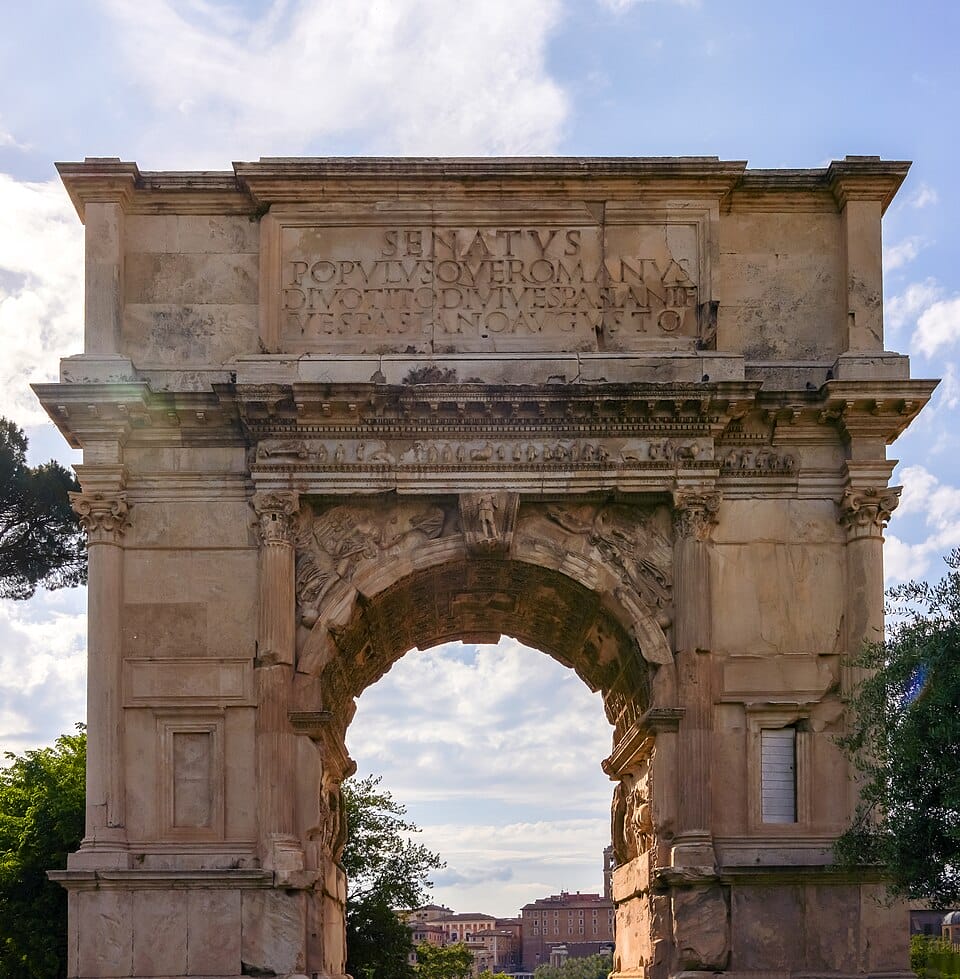
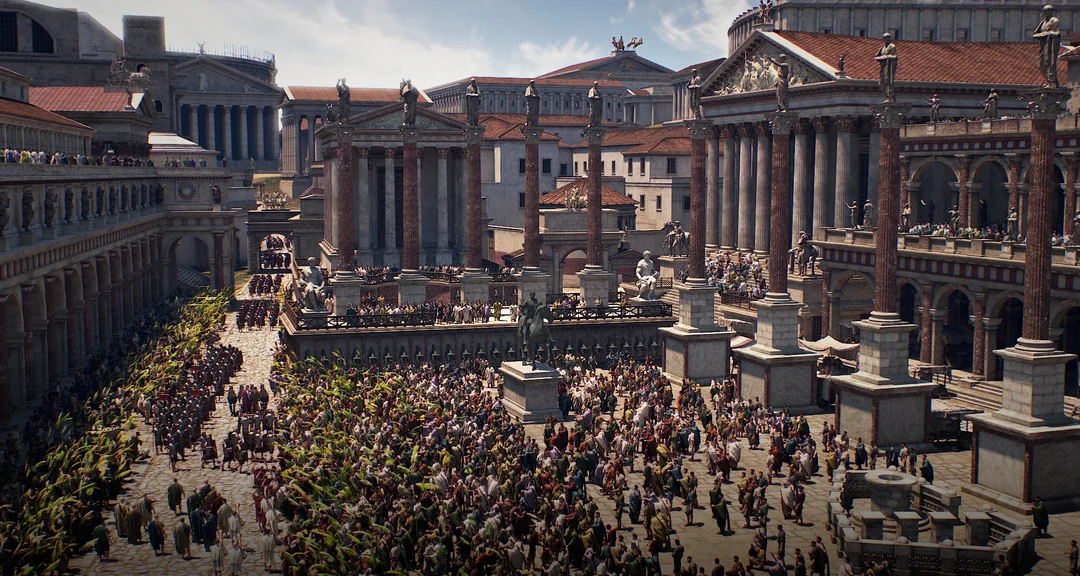
The Via Sacra, Rome’s oldest and most important street, cuts through the Forum connecting the Capitoline Hill to the Arch of Titus. This cobbled road served as the climactic final segment of the Roman Triumph, the elaborate victory procession. The triumphant general, crowned with laurel and painted red to resemble Jupiter, rode in a four-horse chariot followed by his entire army, captured enemies in chains, wagons loaded with plundered treasures, exotic animals, musicians, and thousands of cheering citizens. The procession wound through the city, entered the Via Sacra, passed through the Forum where Senate and magistrates waited, and ascended to Jupiter’s temple on the Capitoline Hill. These spectacles could last two to three days.
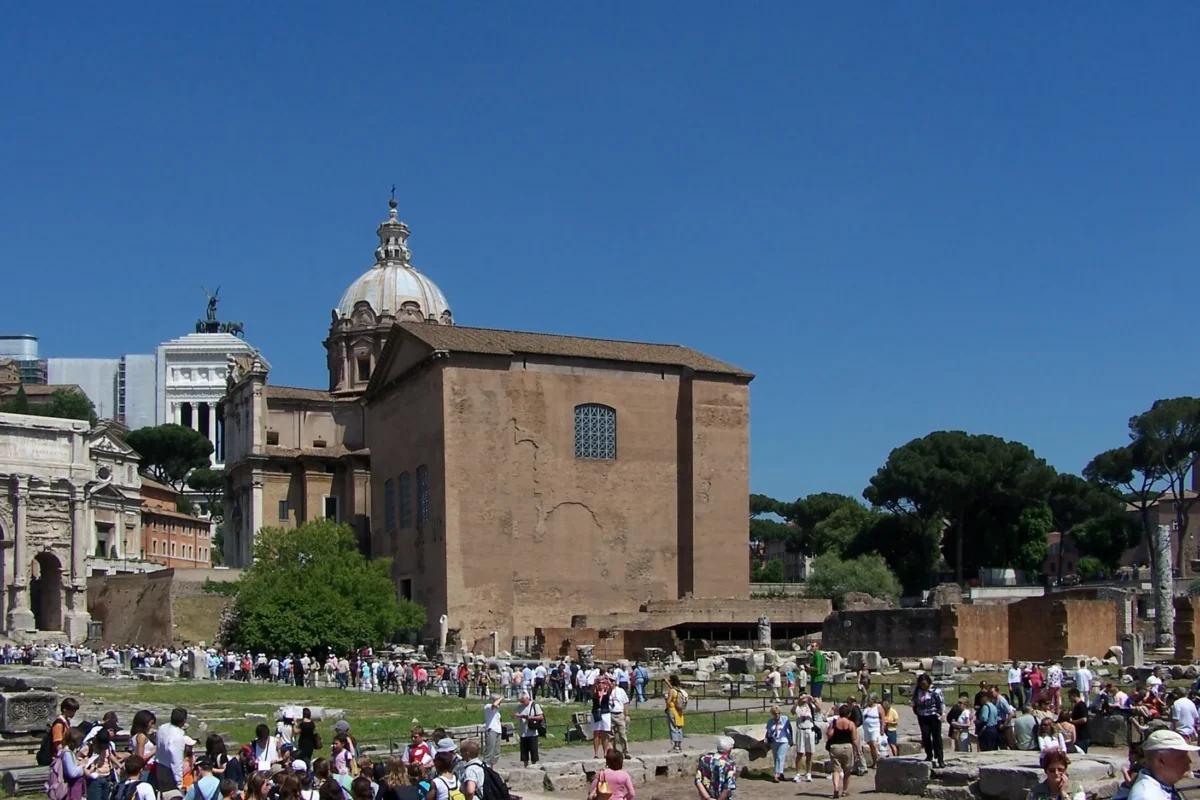
By the 1st century BC, Rome had outgrown its Forum. Julius Caesar undertook ambitious redesign, commissioning new structures while building his own Forum (Forum Iulium) nearby. His most significant intervention was the Curia Julia, the new Senate House, begun in 44 BC to replace the aging Curia Hostilia. Caesar’s assassination interrupted construction; Augustus completed it in 29 BC. The rectangular hall housed benches on three tiers for senators, with a presidential tribune at the far end. The building survives remarkably intact today, thanks to its 7th-century conversion to a church (Sant’Adriano al Foro), which preserved it from medieval stone-robbers.
The Imperial Forum: Augustus Through the Severans (27 BC-235 AD)
Augustus inherited Caesar’s building projects and expanded them dramatically. After fires in 14 BC and 9 AD devastated portions of the Forum, Augustus rebuilt extensively. He completed and rededicated the Basilica Julia to his deceased grandsons Gaius and Lucius Caesar. The Temple of Castor and Pollux was reconstructed around 6 AD by Tiberius.
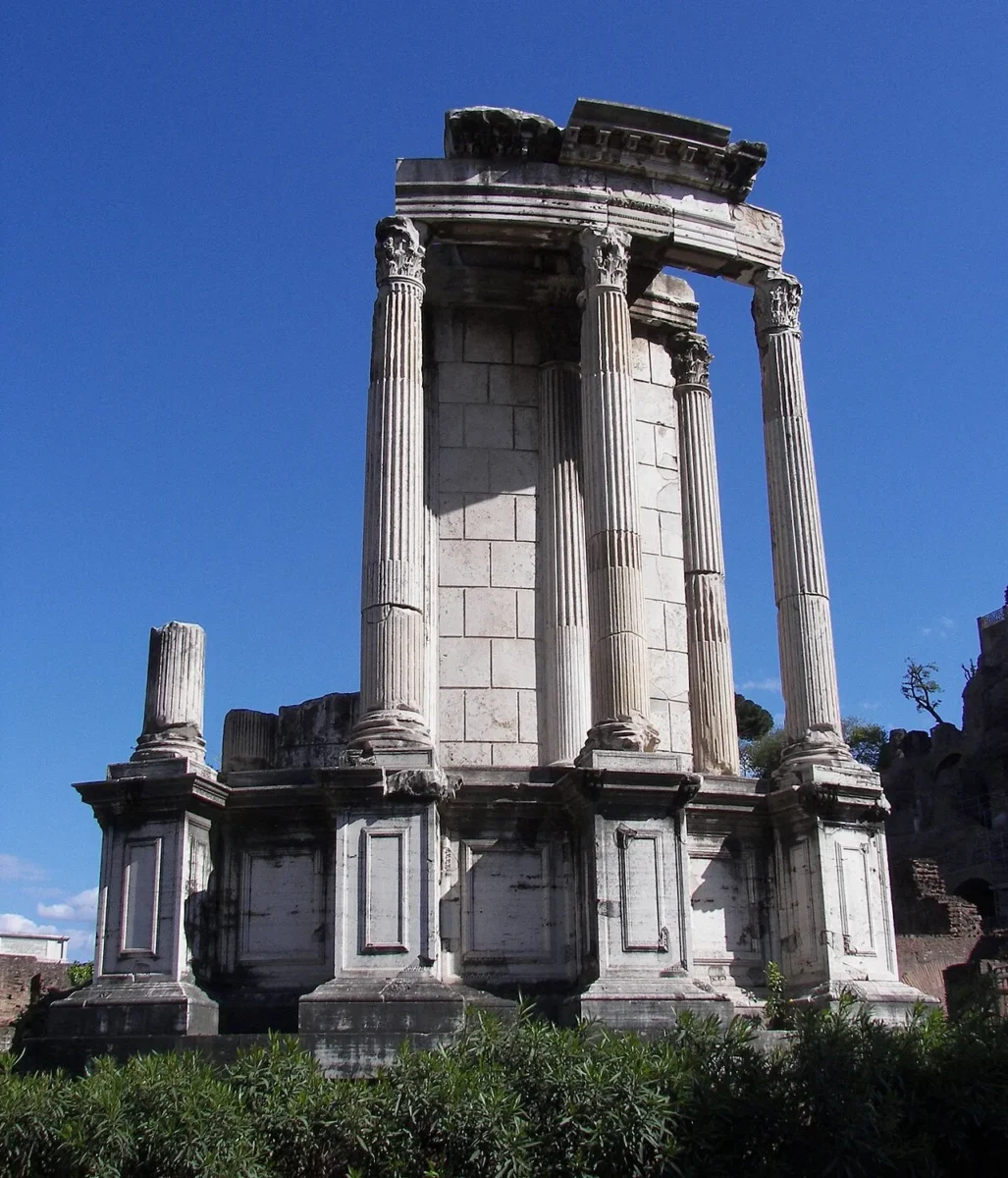
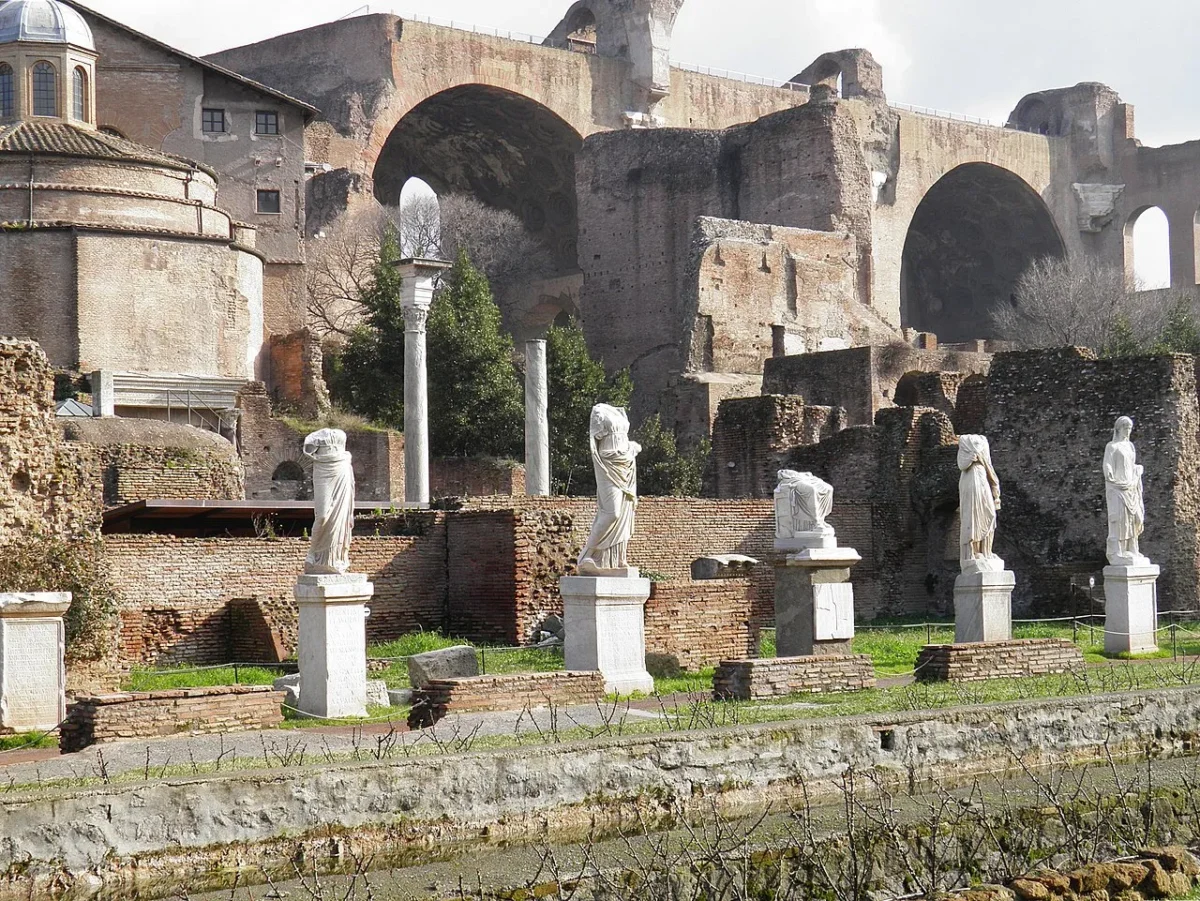
The Forum reached its architectural zenith during the early Empire. The Temple of Vesta, Rome’s oldest cult dedicated to the hearth goddess, stood alongside the Atrium Vestae (House of the Vestal Virgins), a luxurious 50-room palace housing the six priestesses responsible for maintaining Vesta’s eternal flame. These women, selected as children between ages 6 and 10 and serving 30-year terms under vows of chastity, possessed extraordinary privileges: they could own property, make wills, testify in court without male guardians, and pardon condemned criminals by meeting them on the street. Their role was considered so essential to Rome’s survival that a Vestal who let the sacred fire die could be beaten by the Pontifex Maximus, while one who broke her chastity vow faced live burial.
The punishment was horrific and ritualistic. The condemned Vestal was stripped of her badges of office, scourged, dressed like a corpse, placed in a closed litter, and borne through the Forum with full funeral rites to the Campus Sceleratus (“Evil Field”) near the Colline Gate. There she descended a ladder into an underground chamber containing a bed, blankets, a lit lamp, bread, water, and oil. The chamber was sealed. She was left to die alone in darkness. This avoided the legal problem that Roman law prohibited burial within city walls and that a Vestal’s body was inviolable. The technical fiction was that she died “naturally” in a “room,” not that Rome killed her. Her lover, if identified, was publicly flogged to death in the Forum.
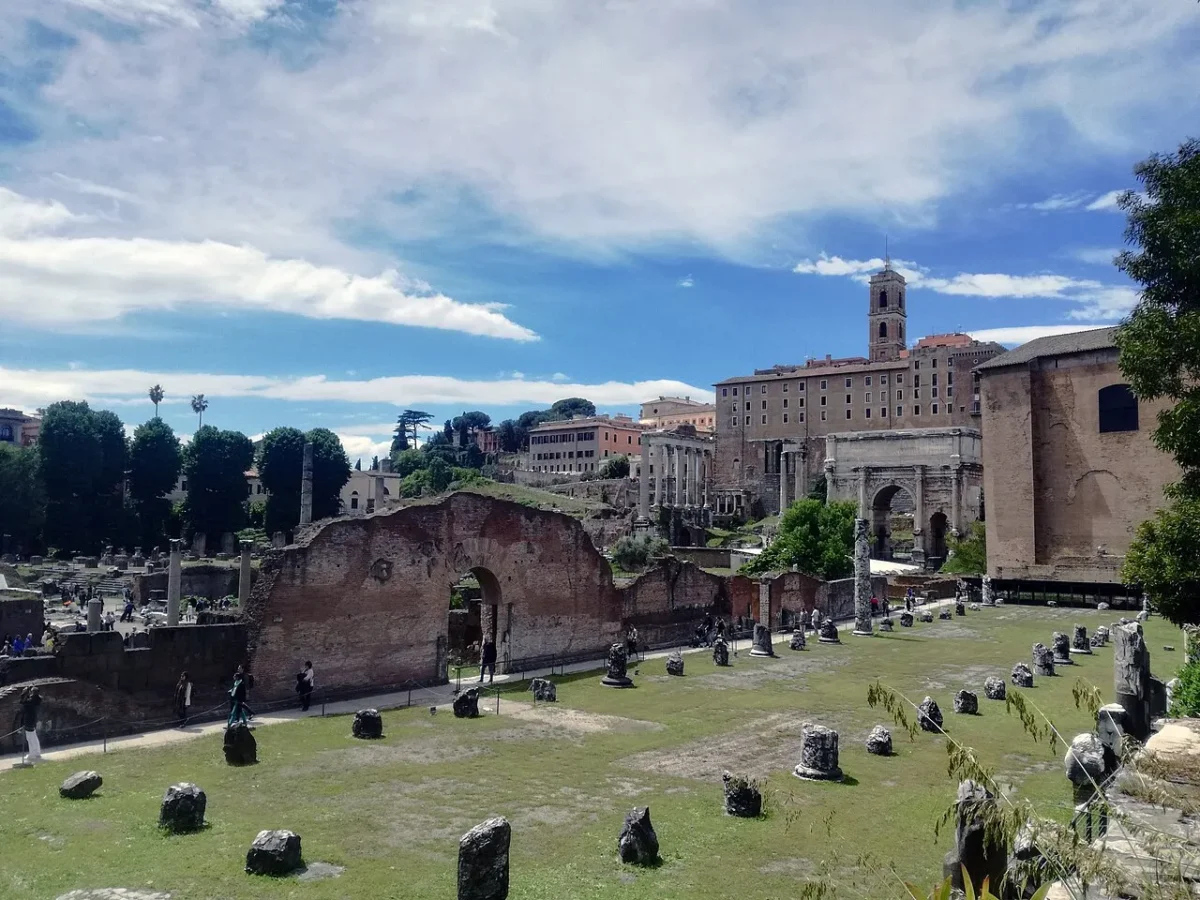
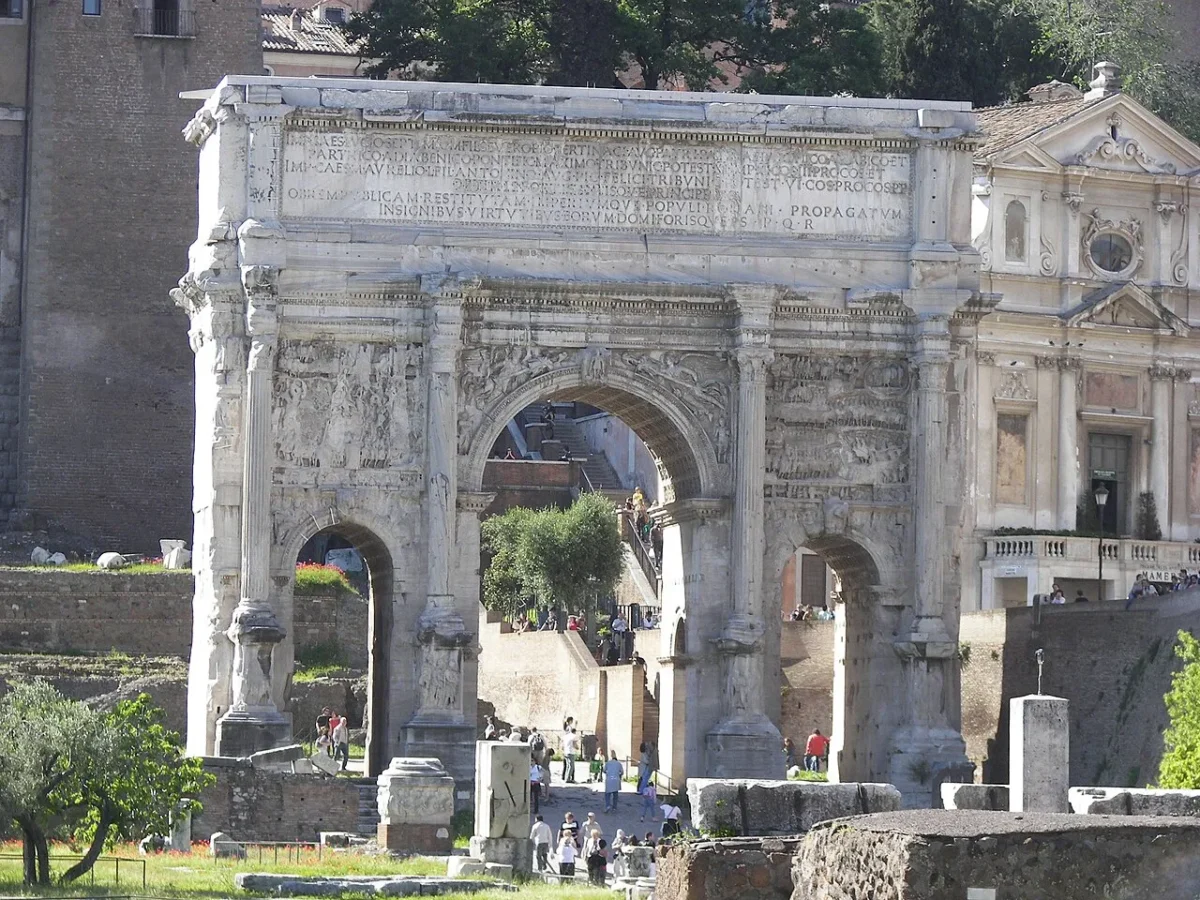
The Severan dynasty (193-235 AD) contributed the Forum’s most impressive surviving monument: the Arch of Septimius Severus, erected in 203 AD to commemorate victories over the Parthians. This triple triumphal arch originally bore bronze inscriptions naming Emperor Septimius Severus and his sons Caracalla and Geta. After Caracalla murdered Geta in 211 AD and ordered his name erased from all monuments (damnatio memoriae), workers chiseled out Geta’s name, leaving visible gaps in the inscription still visible today.
Decline, Abandonment, and Campo Vaccino (5th-18th Century AD)
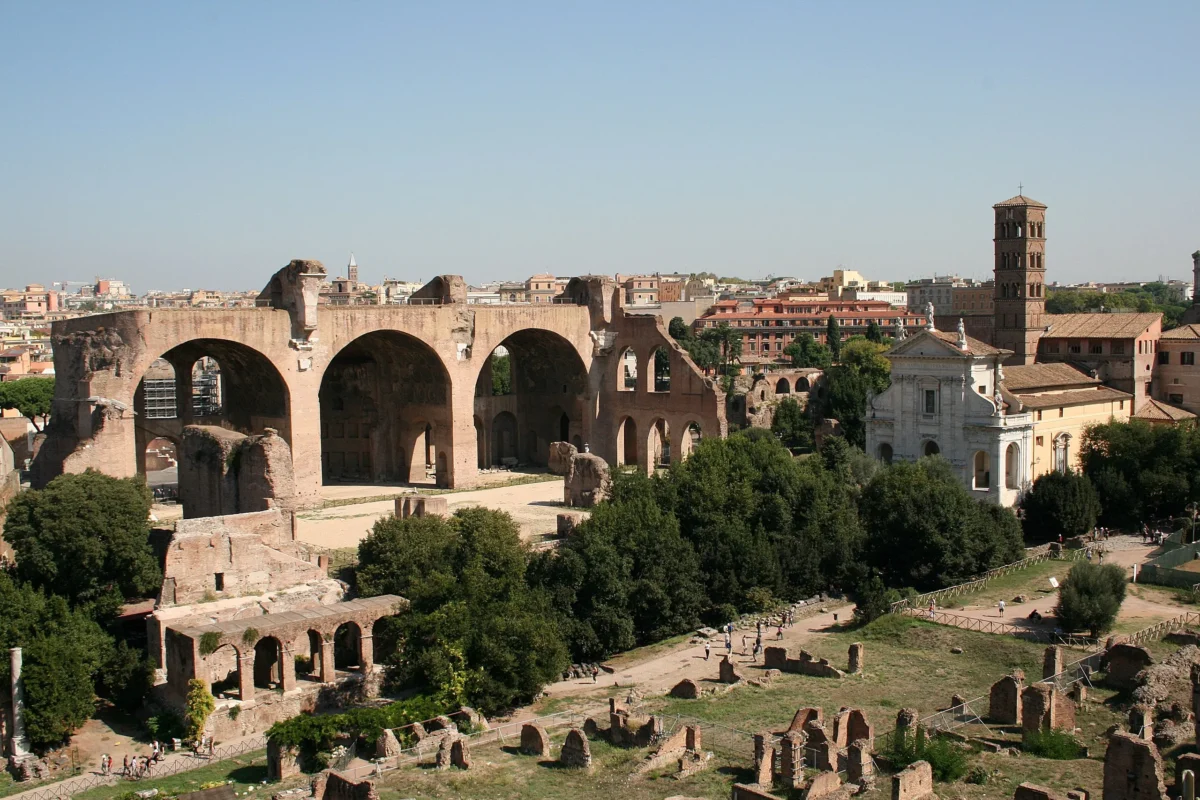
By the 3rd century AD, the Forum’s importance had begun declining as emperors built their own fora and shifted imperial administration elsewhere. The Fire of Carinus in 283 AD destroyed much of the Forum; restoration took 20 years. The last major construction was the Basilica of Maxentius and Constantine, completed 312 AD. Around 600 AD, the Column of Phocas became the final monument erected. The Forum then ceased functioning as Rome’s civic center.
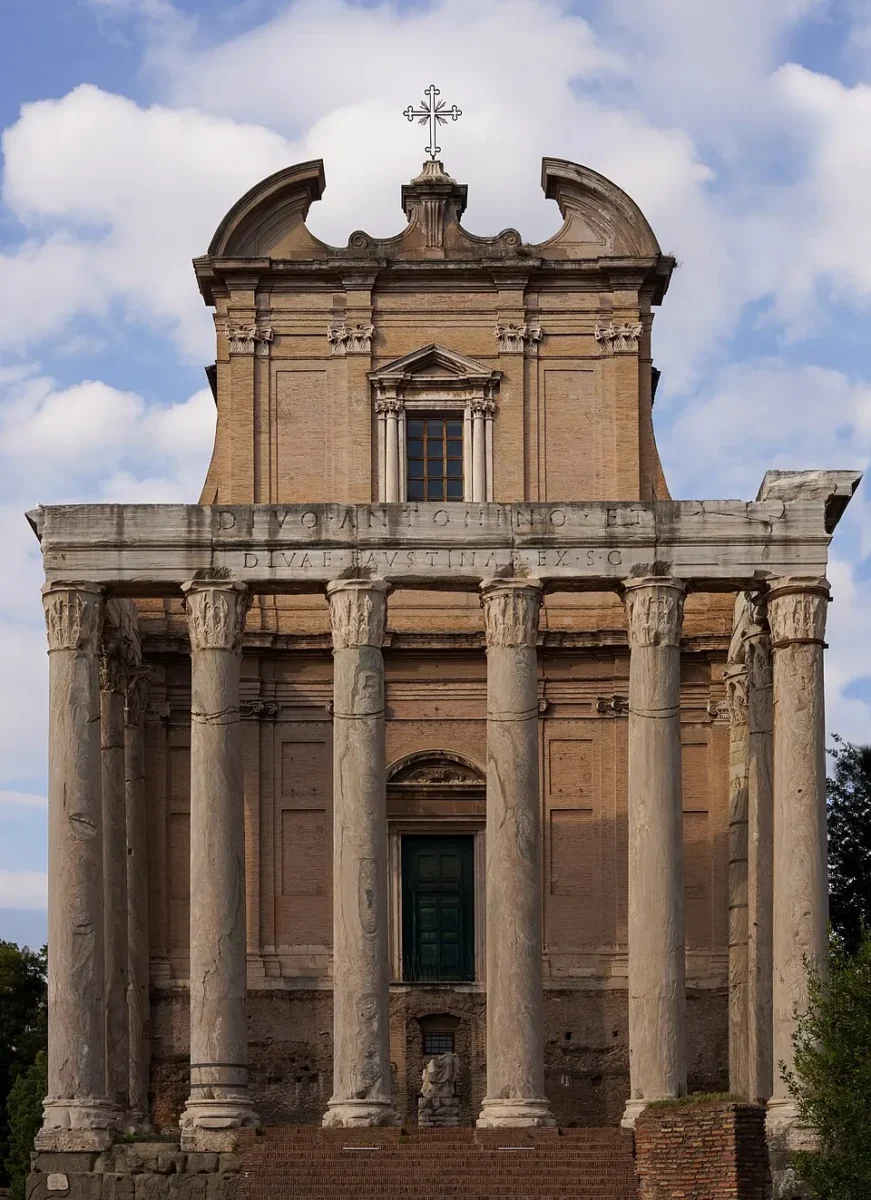
What followed was catastrophic. The Forum became a quarry. Medieval Romans cannibalized ancient structures, reusing marble, bronze, and stone for new buildings. Temples became churches (saving them) or rubble heaps (destroying them). Earthquakes toppled columns. Soil and debris gradually buried the ruins. By the Renaissance, the Forum was called “Campo Vaccino” (Cow Field) because it literally served as pasture where cattle grazed among scattered column drums and broken statuary.
The Italian Renaissance saw some of the Forum’s worst depredations. Between 1540 and 1550, Pope Paul III exploited it intensively for materials to build St. Peter’s Basilica. Just before, in 1536, Holy Roman Emperor Charles V held a triumph in Rome after conquering Tunis. To prepare the Forum for procession imitating ancient Roman pageantry, papal authorities undertook sweeping demolitions of medieval structures, excavated a new “Via Sacra” to pass under the arches of Titus and Septimius Severus, and excavated prominent monuments to reveal foundations. This required clearing some 200 houses and several churches.
Systematic archaeological investigation began only in the 19th and 20th centuries, as Italian unification sparked renewed interest in Rome’s ancient glory. Excavators removed centuries of accumulated debris, exposing structures buried since late antiquity. The process continues today.