
The idea that foragers lived in timeless peace and that “war” arrived only with farms and states is a powerful modern myth. Archaeology tells a messier story. From the Late Pleistocene through the Bronze Age, bones, tools, landscapes, and paintings record raids, ambushes, and battles. The evidence is not a single smoking gun; it’s a chorus of data points that, taken together, show that organized human violence long predates palaces and princes.
The problem with “peace by default”
The “noble savage” stereotype grew from early modern debates about nature and culture, then echoed through 20th-century anthropology. It assumed that without property or hierarchies, hunter-gatherers lacked motives and means for warfare. Yet even a brief tour of the archaeological record reveals motives that are basic and old: control of waterholes and fishing stretches; access to prey migrations and plant stands; movement corridors through marsh and forest; the defense of kin; and the desire for captives. Weapons, fortifications, and—most stark of all—skeletal trauma let us see these motives acting out in deep time.
Skeletons that read like eyewitnesses
Bones keep score. Perimortem fractures on skulls, embedded points in ribs, parry fractures on forearms, sharp-force cuts to necks—these are signatures of interpersonal violence. At Jebel Sahaba, a Late Pleistocene cemetery on the Nile (site 117), reanalysis of 61 individuals documents both healed and unhealed injuries from arrows and clubs across multiple episodes, indicating recurrent conflict among foragers living millennia before farming. The lesions cluster in predictable places—faces, forearms, ribs—and some skeletons preserve embedded projectiles, the ancient equivalent of ballistic evidence. (Open-access overview of the reanalysis: Scientific Reports, 2021.)
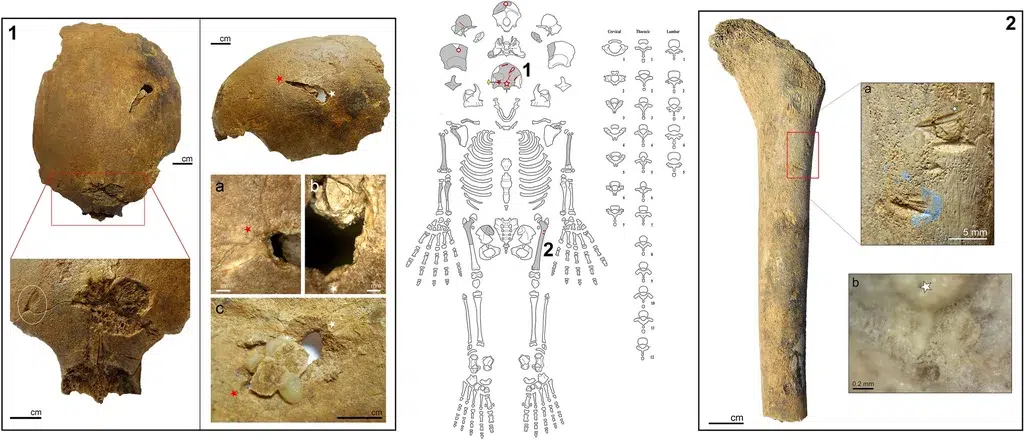
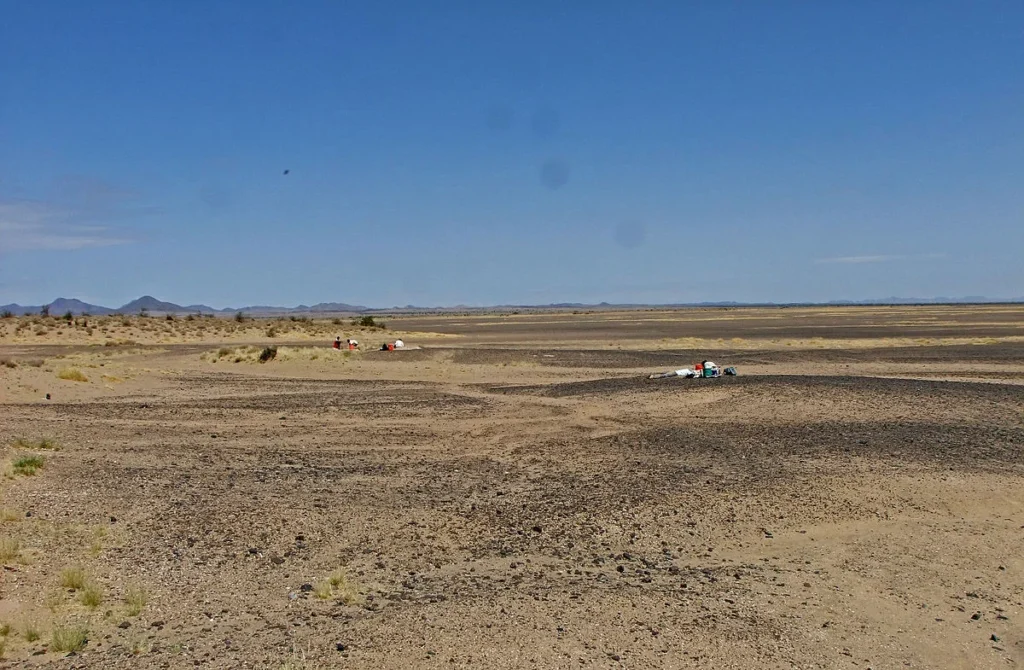
At Nataruk in Kenya’s Turkana Basin, a mid-Holocene forager camp preserves bodies left where they fell. Several skeletons show cranial trauma from clubs, stone points lodged in bone, and bound hands. Some researchers debate aspects of site formation, but even critics grant that multiple individuals died violently. The broader point stands: among mobile foragers without fields or walls, organized lethal encounters happened. For an accessible summary, see the University of Cambridge briefing on the discovery and debate, which also links the original paper in Nature (Cambridge Research News).
Mass death in the Neolithic: not anomalies, patterns
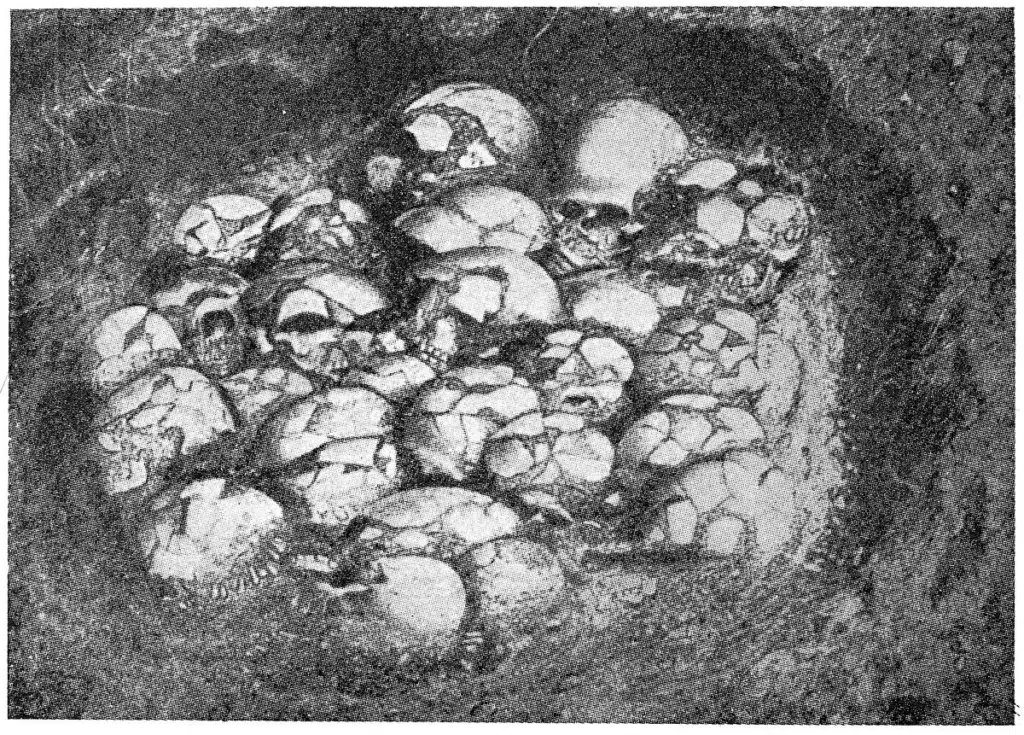
With the spread of early farming across Europe (Linearbandkeramik/LBK and neighbors), violence scales up and settles in. The Talheim “death pit” in southwest Germany, c. 5000 BCE, contained men, women, and children killed by adzes and arrows and dumped together. Similar features appear at Schletz-Asparn in Austria and Schöneck-Kilianstädten near Frankfurt. These are not tidy cemetery burials; they are chaotic commingled deposits with perimortem trauma and demographic profiles pointing to raids and mass killings. In the Schöneck-Kilianstädten pit, researchers documented a startling pattern: the systematic breaking of lower legs around the time of death—interpreted as mutilation or immobilization of victims—along with the under-representation of young women, consistent with abduction.
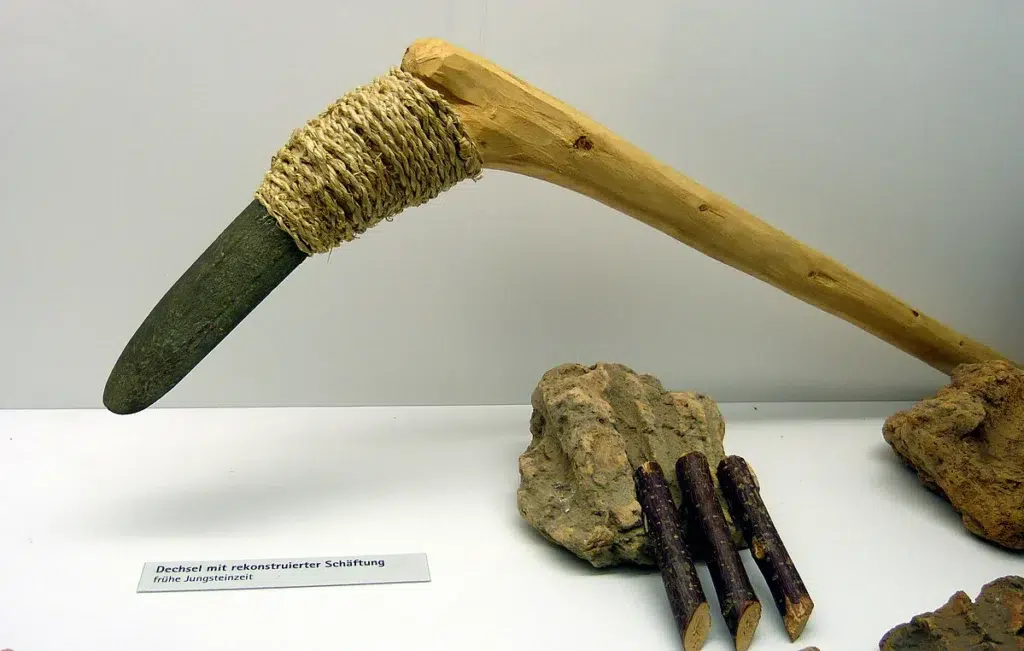
The LBK toolkit makes sense of the wounds. The shoe-last celt—an elongated, hafted adze—was a farmer’s workhorse, but its sharp and blunt edges leave distinct cranial signatures matching the Talheim and Schletz injuries. Fortified ditches at some LBK sites, with palisades and controlled entrances, speak to anticipated threats, not accidents of architecture. When crops, land, and herds concentrate value, neighbors become rivals, and the landscape begins to fill with earthworks.
Rock art that shows organized fighting
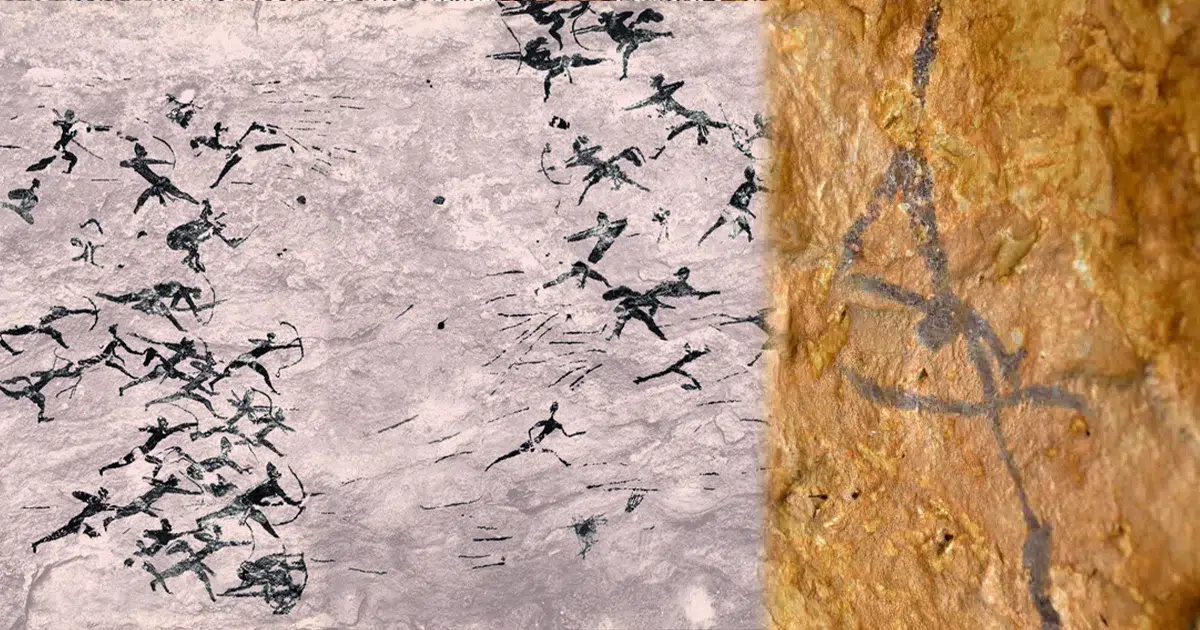
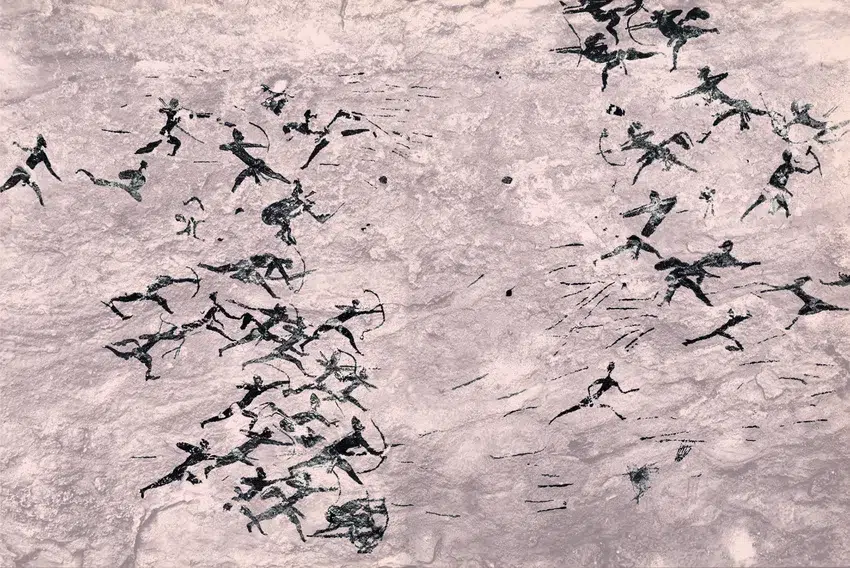
Mediterranean Iberian rock art includes scenes that are hard to read as anything but combat. At sites such as Morella la Vella and Ares del Maestrat, groups of archers face off, some with headdresses and lines of movement; the figures are small, stylized, and dynamic, and the scenes feature pursuit, encirclement, and volleys. These are not isolated duels, but group actions with tactics. UNESCO’s listing for Spain’s Levantine rock art notes panels with “dynamic hunting and combat scenes containing human figures,” placing warfare among the standard themes of life in these communities.
Built out of a love for history, kept free from distractions.
Spoken Past is an independent project shaped by curiosity, care, and long hours of research. Reader support helps keep it maintained, carefully researched, and open to everyone.
When a skirmish becomes a battle: Tollense Valley
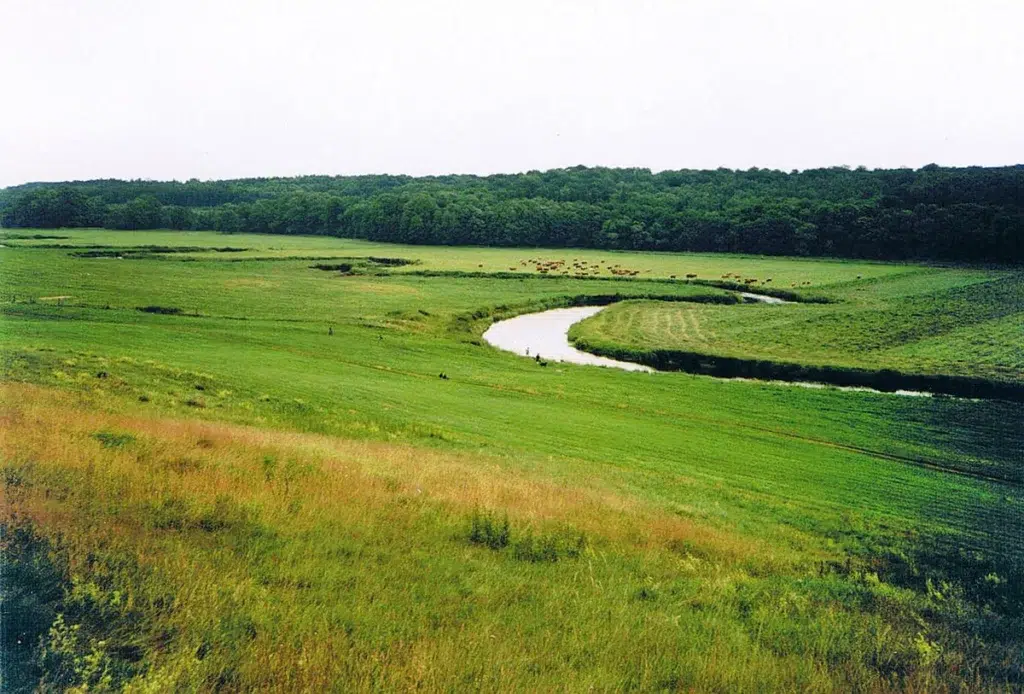
Jump to c. 1300–1250 BCE in what’s now northeastern Germany and the Tollense Valley battlefield, a river crossing that turned into a slaughter. Over 130 individuals (mostly young men) have been recovered amid weapons, horses, and broken gear, with isotope data suggesting fighters from distant regions converged on this place. There are wooden clubs, flint and bronze arrows, spearheads, and evidence for close-quarters combat on a scale unimagined for temperate Europe until this site came to light. The river and causeway created a choke point; peat and anaerobic sediments preserved the chaos. As one field summary put it, Tollense documents “a violent group conflict hitherto unimagined for this period of time in Europe” (Open-access geoscience overview, 2019). A narrative feature from Science gives a vivid, accessible synthesis of the archaeology and why it rewrites European prehistory (Science, 2016).
Reading violence in bone, landscape, and things
Trauma typology. Forensic criteria distinguish between injuries inflicted around the time of death and damage from burial or excavation. Depressed fractures on frontal bones, radiating crack patterns, sharp-force cutmarks with V-shaped cross-sections, and embedded points that match known projectile types (stone, bone, bronze) allow tight inferences about weapons and angles of attack. Healed lesions indicate life histories of prior conflict; a population with lots of healed cranial trauma among males suggests frequent fighting, not a single anomalous event.
Demography. Who dies tells a story. Adult male predominance can indicate battlefield assemblages; mixed sex/age massacres point to raids on settlements or camps. Under-representation of young women hints at capture. At Jebel Sahaba, injuries appear across age and sex, pointing to recurrent attacks in a contested corridor; at Tollense, the profile skews heavily to young adult males, consistent with an organized clash.
Context and site formation. Careful burials with offerings are different from bodies tossed into ditches. Settlement ditches packed with disarticulated bones, long bones snapped while fresh, and crania with clustered blows look like post-raid disposals. In marshy crossings, the mix of human and animal remains, weapon scatters, and broken gear suggests a rout rather than a funerary rite.
Isotopes and aDNA. Strontium and oxygen isotope ratios, alongside ancient DNA, tell us who came from where. At Tollense, non-local signatures among some combatants imply mobilization across regions rather than a village quarrel. In earlier periods, obsidian or exotic chert in embedded points can signal attackers from different ecological zones—as discussed for Nataruk.
Architecture and logistics. Ditches, palisades, and causeways are engineering responses to the expectation of violence. In the Neolithic, enclosure systems with controlled entrances are over-represented along movement corridors and can be read as settlement defenses. In the Bronze Age, river crossings become strategic assets; Tollense’s bridge and trackway focused movement and risk.
Why people fought before farms and states
Territory isn’t just land; it’s calories and kin. In arid and seasonal environments, control of a riparian stretch or lagoon mouth could define a group’s survival prospects. Migratory ungulates and fish runs are predictable in space and time, making ambush and theft possible and tempting. Captives are valuable as labor, mates, and symbols. The reputational economics of small-scale societies—honor, vengeance, alliance—can escalate tit-for-tat cycles. Climate variability sharpens edges: droughts compress ranges; floods redraw shorelines; resource pulses draw competitors into the same bottlenecks. None of this requires chiefs or cities.
The shape of early combat
Weapons and wounds. Clubs are ubiquitous because wood is everywhere; their signatures—depressed fractures and cranial crush injuries—are clear at Nataruk and Jebel Sahaba. Hafted stone adzes and axes leave sharp and blunt trauma matching LBK patterns. Arrow injuries rise and dominate where archery is common; embedded microliths or metal points are the best kind of bad luck for archaeologists.
Tactics. Rock art scenes and battlefield distributions suggest encirclement, flank attacks, and pursuit. River crossings and narrow passes foster ambush. At Tollense, the weapon mix and the positioning of bodies in the channel point to a melee that moved back and forth across the causeway, with archers behind and club/spear fighters up front.
Targets. Raids against lightly defended camps produce mixed-age victims and hurried body disposal in trenches or abandoned features. Skirmishes between patrols or hunting parties concentrate in transit zones and leave small clusters of adult males. Set-piece battles are rare in prehistory but erupt where geography forces confrontation and where networks mobilize enough men to matter.
Rethinking the myth
None of this turns prehistory into a nonstop war film. Many communities likely spent most years without major violence, and cooperation, trade, and marriage between groups stitched regions together. But the combined record—skeletal trauma, mass graves, fortified settlements, battle paintings, and one unmistakable battlefield—refutes the claim that warfare waited for civilization. The noble savage was simply never the only story humans told with their bodies and their tools.