
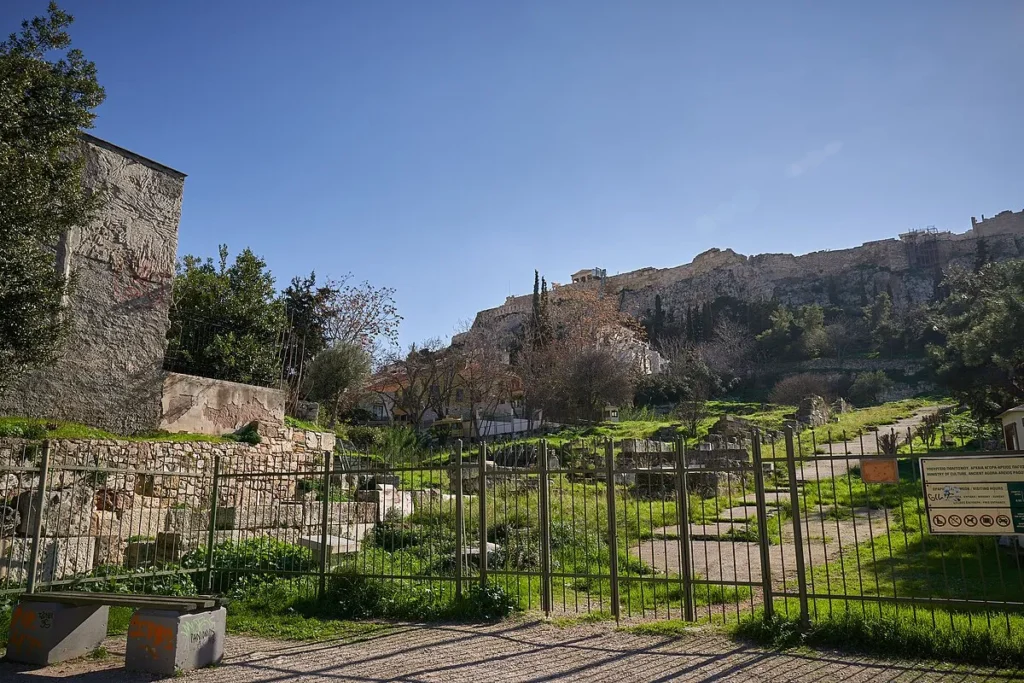
The hill is bare rock, cut with steps, and streaked with the wear of feet. In a fifth-century play that every Athenian knew, a terrified man climbs that rock to ask for justice. He is Orestes, son of Agamemnon and Clytemnestra. He has killed his mother and her lover. A chorus of Furies hunts him for the blood of kin. On the Areopagus, west of the Acropolis, the goddess Athena calls a court. Citizens sit in judgment. The vote splits even. Athena tips the balance, and a cycle of revenge becomes a civic trial. The scene is literature, but it echoes a real institution. For Athenians, Orestes at the Areopagus was a story that explained why homicide belonged to a court, not to clans with knives and oaths.

Why did Athenians put a murder trial on a rock?
Athens kept homicide apart. Killing brought ritual pollution. It tainted the killer, and in a community bound by common sacrifice, it could taint anyone who touched him. The Areopagus, a rocky height in open air, offered the right setting for a trial that had to avoid enclosed sanctuaries. A defendant spoke in the open, under the sky, with oaths sworn beside altars. The hill had older sanctities too. By the classical period, Athenians honored the Semnai Theai there, the “August Goddesses,” also known as the Eumenides, the Kindly Ones. To hold trials on that ground was to fold the wild force of vengeance into the city’s order.
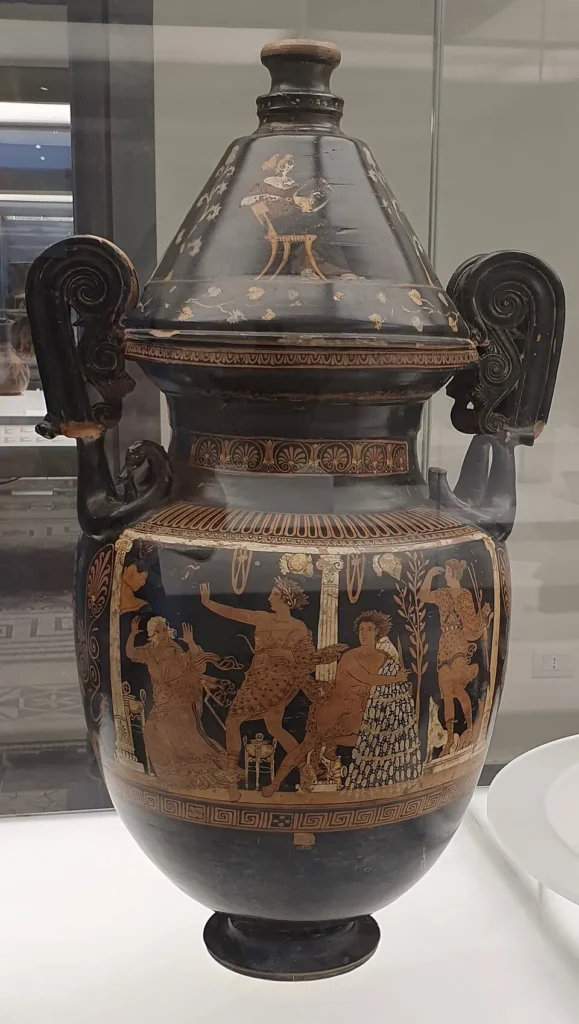
The myth gives the place a drama that law codes cannot. In Aeschylus’ Eumenides, produced in 458 BCE, Orestes flees from Delphi to Athens. Apollo protects him but cannot acquit him. Athena hears both sides, the Furies for the mother’s blood, Apollo for the son’s duty to avenge a murdered king. She forms a court and presides. When the ballots come up equal, she declares that ties favor mercy. The Furies accept a new role in the city, honored with a shrine near the hill. A tale of blood becomes a charter myth for the Areopagus.
What parts of this story are myth, and what parts match historical practice?
The gods and the named defendant are mythic. The court is not. The Areopagus was the oldest of Athenian councils, composed of former archons, and by the fifth century it held jurisdiction in cases of intentional homicide and certain forms of sacrilege. Trials were conducted with strict rules: oaths sworn by all parties, speeches timed by the water clock, no appeals to pity, and a narrow focus on the killing itself rather than character or civic service. The defendant and the prosecutor stood before judges who weighed evidence and oaths. The outcome could be death or exile, but the process mattered most. It replaced revenge with procedure.
Aeschylus does not invent that reality. He dramatizes it and ties it to a foundational moment. His audience knew that only a generation earlier, in 462 or 461 BCE, reforms led by Ephialtes had stripped the Areopagus of many political powers while leaving it homicide jurisdiction. The Eumenides arrived in that afterglow. To stage a divine endorsement of the Areopagus’ authority over blood was to praise a balance that many Athenians wanted to keep: let democratic bodies handle politics, let the ancient council handle murder.
Who was Orestes, and why did his case matter so much to Athenians?
Orestes belonged to the house of Atreus, which already carried a story of curses and cycles of retaliation. Agamemnon sacrificed his daughter Iphigenia to get winds for Troy. Clytemnestra killed him when he returned, with help from her lover Aegisthus. Orestes, urged by Apollo and by his sister Electra, killed his mother and Aegisthus. The Furies, spirits of familial blood guilt, hunted him. This mythic tangle gave Aeschylus everything he needed to ask a civic question. If private vengeance is sacred, how does a city survive? If all killing brings the same curse, how does a community distinguish murder from duty?
In the play, the answer is the Areopagus trial. Orestes confesses the act but defends the motive. The Furies insist that the murderer of a mother must pay with his blood. Apollo counters that the father’s line is primary and that Orestes acted under divine sanction. Athena chooses citizens as jurors. Their deadlock lets her decide for acquittal. There is no triumphal moment. Aeschylus ends with negotiation. The Furies accept worship in a new sanctuary. The city gains a court blessed by old powers. It is a political settlement in mythic language.
How did homicide law work in classical Athens?
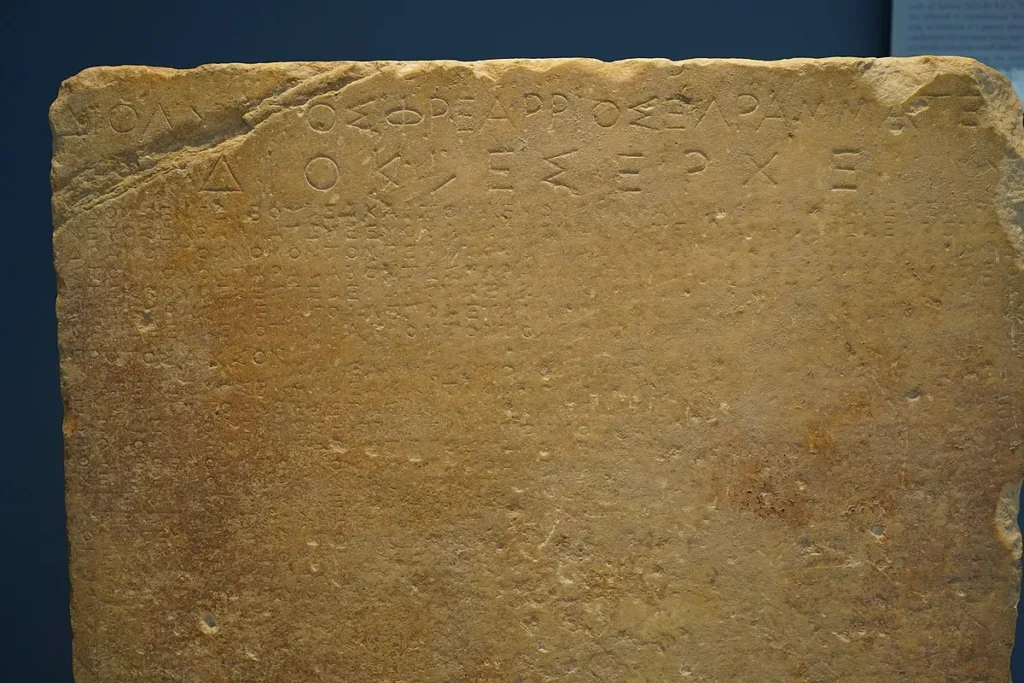
The earliest Athenian homicide law, traditionally attributed to Draco around 621 or 620 BCE, distinguished categories of killing. Intentional homicide belonged to the Areopagus. Unintentional killing and justifiable homicide were assigned to other courts, such as the Palladion and the Delphinion. A later copy of Draco’s law, re-inscribed on stone in 409 or 408 BCE, preserves key details of procedure. These include who could prosecute, where the accused could go during proceedings, and how oaths and challenges were handled. The substance is clear: homicide was a civic matter with public forms, not a private feud.
At trial, procedure narrowed debate. Litigants swore binding oaths. They spoke in turns measured by a water clock. They were discouraged from bringing their families to weep before the judges. The council sat on the rock in the open. A conviction could mean execution, but often it meant exile with property consequences. The point was not to erase passion. It was to channel it through forms that the community recognized.
Did the Areopagus exist before the play, or does the myth claim to found it?
The council is older than Aeschylus. Athenians traced it back into the archaic period. Before reforms by Solon around 594 BCE and the later rebalancing under Ephialtes in 462 or 461 BCE, the Areopagus had broad oversight of morals and stability. After those reforms, it kept homicide. Aeschylus did not pretend to create an institution. He argued for its role by putting it under Athena’s protection and by giving the city’s favorite myth a courtroom finish. If anything, the play defends tradition under the cover of origin story.
What exactly happens in Aeschylus’ courtroom?
The stage directions are simple and efficient. The Furies take their places as prosecutors. Apollo speaks for the defense. Athena seats jurors. Each side argues from first principles: blood guilt and kinship for the Furies, divine command and a new anthropology for Apollo. The god declares that the child is the seed of the father and that the mother is a mere nurse for the embryo. Athena, born without a mother, declares sympathy for the male line. Then the jurors vote. The votes come up equal. Athena announces a rule, short and decisive: when ballots tie, the defendant goes free. The Furies rage, then bargain. They will accept honors and a sanctuary near the court. From now on, rage for blood will protect the city as a civic blessing, not tear it apart as revenge.
Aeschylus gives the court a style that Athenians recognized. There are oaths, measured speeches, and a final count of votes. There is no appeal to weeping children or patriotic deeds. The words are about the act, the person, and the city. The outcome is not God’s thunder, it is a count of pebbles.
Why a tie matters: Athena’s rule and Athenian ideas about doubt
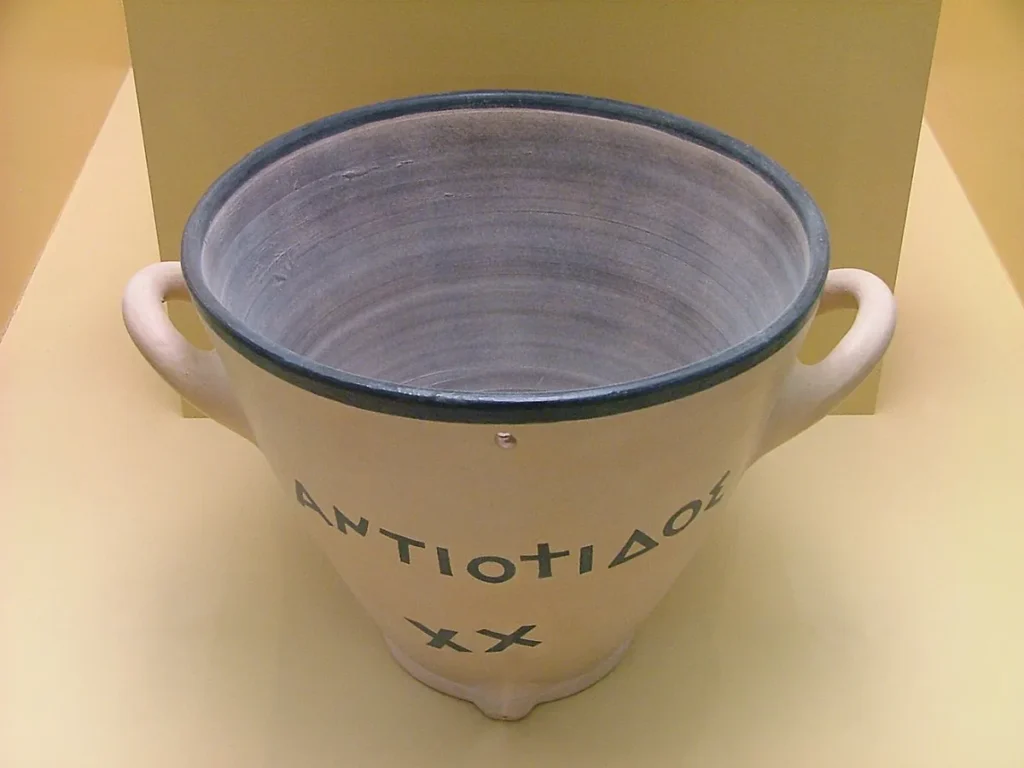
Equal votes meant acquittal in Athenian homicide courts. That convention, which Aeschylus places on Athena’s lips, did more than set a technical rule. It said that when a community divides evenly over a killing, it will choose the path that prevents further blood. The city accepts uncertainty rather than risk another death, another exile, or a clan feud. Athena’s reasoning in the play is partisan when she talks about fathers and mothers, but her rule is pragmatic. The hill will be a place where deadlocks save the living.
The scene also signals to the audience that a trial is not a referendum on the accused’s character or the jurors’ sympathies. It is a structured competition of arguments under time limits, and when those arguments tie, the defendant survives. The city values procedure more than righteous fury.
Was there really a shrine to the Furies beside the court?
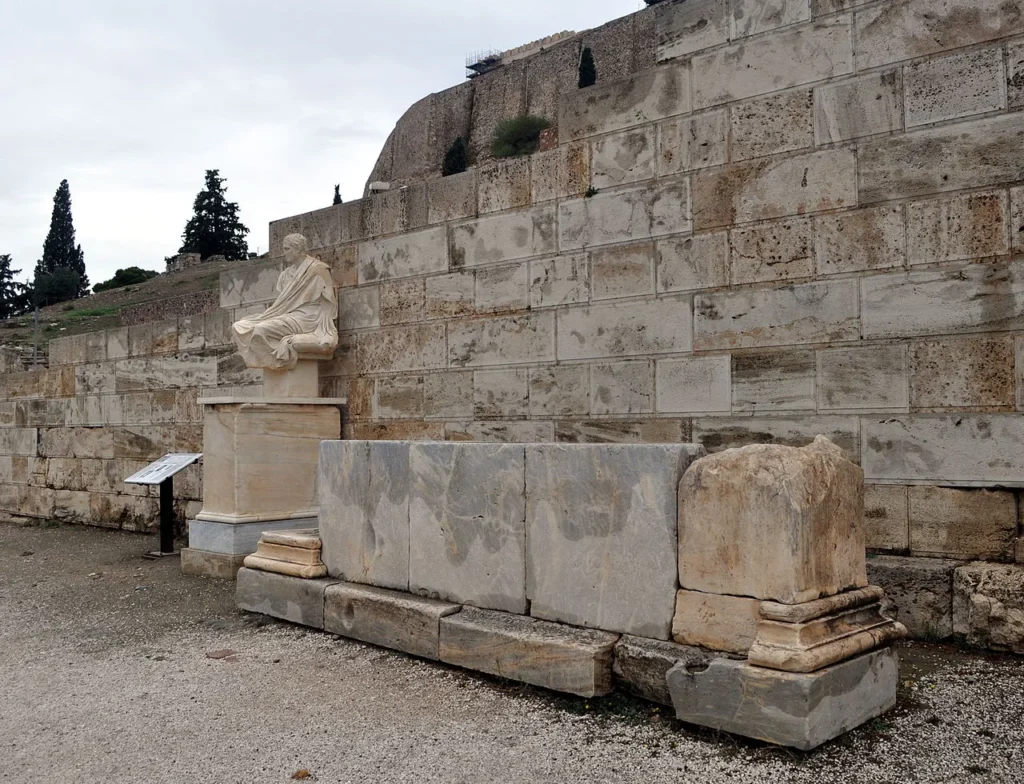
Ancient authors speak of a sanctuary of the Semnai Theai, the August Goddesses, on or beside the Areopagus. In Aeschylus’ ending, the Furies receive that new civic cult, with processions, offerings, and a cave-like space. Later writers describe a sanctuary on the slope. Modern visitors can still see the area of the hill’s northeast where that cult likely stood. That match between text and place helped Athenians feel that the myth did not float free. The goddesses who once chased a killer around the stage now sat at the city’s side as protectors of sworn oaths and homicide law.
How did the Areopagus differ from other Athenian courts?
Athens ran many courts, but homicide stood apart. Juries in popular courts could be huge, hundreds of citizens chosen by lot. Those dikasts judged private suits, commercial cases, and public prosecutions. They met indoors and listened to rhetoric loaded with character attacks and appeals to civic duty. The Areopagus was different. Its members were former archons, experienced magistrates serving for life. They sat on the hill and devoted themselves to facts, oaths, and specific laws about blood. Even when other powers were trimmed, that homicide jurisdiction remained. The city could experiment with politics, but it would not gamble with murder.
The homicide system had specialized venues too. The court at the Palladion heard unintentional killings. The court at the Delphinion heard justifiable killings, such as slaying in self-defense. The court at Phreatto heard cases when the accused was in exile and stood offshore on a boat while speaking, so his pollution did not touch the land. The Areopagus kept the central task: intentional murder and certain deadly wounding.
How do historians know how these courts worked?
The sources come from different genres, and they fit together. Tragedies like the Eumenides do not set out rules, but they show assumptions about procedure and sacred space. Forensic speeches by orators such as Antiphon and Demosthenes give explicit descriptions of homicide law and the way prosecutors and defendants spoke. Athenian inscriptions preserve law texts, including a late fifth-century copy of Draco’s homicide law. Archaeology adds place and texture: the steps cut into the Areopagus rock, the remains of cult sites beside the hill, and the water clocks and ballot devices that kept trials moving. Read together, they recover a civic culture where the city’s safety relied on law’s rituals as much as on walls and spears.
What politics sit in the background of Aeschylus’ story?
In the 460s BCE, Athens rebalanced its constitution. Ephialtes, and later Pericles, curtailed the Areopagus’ political oversight and strengthened popular institutions. The council kept homicide, but in other matters the people’s courts grew stronger. Aeschylus brought his trilogy to the Theater of Dionysus in 458 BCE, right after these reforms. The ending reads as a defense of a particular settlement. Let the old council keep its sacred work of judging blood. Let the new democracy handle the rest. The Furies, once wild, become civic guardians. The message is not conservative or radical. It is conciliatory. It imagines a city where tradition and change share a hill.
Did Athenians believe the Areopagus began with Orestes?
They enjoyed the story, they honored the shrine, and they tried cases on the hill. That is enough to let the myth do its work. But they also kept records and took pride in old laws. Inscriptions and political history show the council at work long before Aeschylus. Athenians had a habit of seeing old practices through new myths. Aeschylus helped them by offering a myth that praised the institution they already used. He did not tell them when to meet. He told them why it mattered.
What did the rules of homicide say about justice in Athens?
Several features stand out.
Public form for private harm. A killing, however intimate, belonged in public court. Relatives of the dead took the lead as prosecutors, but the city framed the case.
Oaths and divine audience. Homicide trials were heavy with oath taking, because oaths made witnesses and litigants answer to gods as well as to peers.
Narrow argument. The city tried to confine speeches to facts about the killing, not to open-ended appeals about character or service.
Measured speech. The water clock moved without pity. When the water ran out, a speaker stopped.
Different venues for different acts. Intentional, unintentional, and justifiable killings did not go to the same bench.
Acquittal on a tie. Doubt saved the defendant, because the city would not let uncertainty draw more blood.
These rules do not remove passion. They tell passion where to stand.
Built out of a love for history, kept free from distractions.
Spoken Past is an independent project shaped by curiosity, care, and long hours of research. Reader support helps keep it maintained, carefully researched, and open to everyone.
How does the myth of the Furies becoming “Kindly Ones” connect to real cult?
Aeschylus ends with a process that looks like civic integration of a dangerous force. The Furies demand to be honored. Athena promises worship and a home. The chorus becomes the Eumenides, the Kindly Ones. That story matches the way Greek cities often handled powerful local cults. Give the force a ritual seat. Offer it sacrifice. Ask it to guard oaths and punish perjury. By the classical period, Athenians seem to have had a sanctuary for the Semnai Theai on the Areopagus slope. The place and the play reinforce each other. To stand near the hill and speak under oath was to speak near goddesses who loved vengeance but now loved the city more.

Did Athens really ban pity in homicide trials?
The rule was not a ban on emotions. It was a matter of style and focus. Litigants were discouraged from staging scenes with their children in tears or from listing civic services that had nothing to do with a killing. In homicide, Athens wanted clarity and ritual respect. The people could be swayed on many issues. On murder, the city insisted that the oaths and the facts carry the day. That is why the open air mattered, why the council’s age and dignity mattered, and why Aeschylus placed the courtroom on a rock that felt older than the city walls.
What does the Areopagus look like in later tradition?
The hill stayed famous. Roman travelers and later writers noted its view. Christian tradition remembered Paul addressing Athenians at the Areopagus. That later memory does not change the classical role of the place. In antiquity, the name meant the council and the court as much as the stone. When people said that a decree came from the Areopagus, they meant a body of former archons with long memories and a narrow mandate. Over time, the city’s political life drifted. But the rocky hill kept its reputation as the place where Athens treated blood as a legal question.
Myth vs evidence: what can we trust, and what must we treat as poetry?
Foundation scene. Poetry supplies the first trial. History supplies a council already judging homicide before Aeschylus.
Athena’s tie-break. The specific rule, acquittal when votes tie, matches Athenian practice. The goddess as presiding officer is poetic.
Furies’ transformation. The sanctuary is plausible and likely. The dialogue that converts Furies into Kindly Ones is drama, but it maps onto a real cult.
Courtroom detail. Oaths, time limits, and outdoor setting align with what inscriptions and speeches tell us. The roles of Apollo and Athena belong to the stage.
Political message. The play comments on recent reforms. Its endorsement of the Areopagus’ homicide jurisdiction reflects a live debate in 458 BCE.
What did an Athenian homicide case feel like from the inside?
Begin with the first hour after a killing. Kin gather. A relative prepares to prosecute. The accused may seek sanctuary or go into temporary exile until trial. Oaths are sworn. Days pass while each side collects witnesses and prepares speeches. On the day, the Areopagus sits on the rock. The prosecutor names the killing, sets the scene, and presents evidence. The defendant admits or denies, then argues intent, accident, or justification. The water clock runs. Witnesses affirm under oath. When the speeches end, judges cast ballots. Sometimes the decision is quick. Sometimes the pebbles split evenly. In that case the defendant walks away, free in law, not always free in reputation. The city has chosen order over vengeance, and the living go on.
What does the play add that the law code does not?
Law gives rules. Aeschylus gives readers a city that feels the cost of keeping those rules. The chorus is not an abstract principle. It is a group with a long memory of blood. Athena is not a rote presiding officer. She is a goddess who wants to build a civic home for anger. Apollo is not simply a lawyer. He is a god who wants his sanctuary free from pollution. A law code can define homicide. A tragedy can show what it takes to accept that definition, and who must be persuaded to live with it. That may be why the Eumenides mattered so much to Athenians. It told them that their rules for homicide were not only practical. They were blessed, argued, and settled.
What can we still see on the hill and around it?
Visitors climb the same cut steps. They stand on the rock and look toward the Agora and the Acropolis. To the north and east, the slope once held the shrine of the Semnai Theai. In the Agora Museum, fragments of water clocks and ballots remind visitors how timed and counted a trial could be. In the Epigraphic Museum, the stone copy of Draco’s homicide law preserves the measured line of a rule that once governed the most dangerous events in a family’s life. The theater below the Acropolis remains a curve of stone where Athenians learned to watch arguments unfold. Taken together, the landscape still teaches the lesson of the story. A city keeps order by giving anger a place to speak, and by teaching that even a killing must pass through law.
Did Athenians embrace or resist the idea that civic law could tame divine wrath?
They embraced it carefully. The end of the Eumenides does not show the Furies silenced. It shows them satisfied. They accept honors, an underworld identity in a daylight city, and a role as enforcers of oaths. The Athenians, for their part, accept that oaths and homicide cannot be handled casually. Trial becomes a ritual as much as a procedure. That shared respect is the settlement the play imagines. It is also what the city practiced. In that sense, the myth and the archives agree. The Areopagus was less a courtroom in our sense than a sacred place where the city risked speaking for the dead without making more dead.
How did speeches in homicide trials differ from those in other courts?
They were shorter, more constrained, and more bound by oaths. The water clock enforced an equal share of time. The rhetoric avoided flamboyance about public service or patriotic sacrifices. Speechwriters who made a living in the popular courts could not always leverage their favorite tools. They had to address the killing: where, how, and with what intent. Witnesses swore with a weight that other courts did not require. The style suited the stakes. In a city that loved clever argument, homicide law demanded plainness.
What exactly did Aeschylus say about the tie vote?
He gave Athena words that Athenians recognized as policy: a tie acquits. One famous line in plain translation is short enough to remember: “The votes are equal; the defendant is free.” The play hangs a rule on a divine mouth so that a rule feels like a blessing. In practice, the rule did the work that any legal system must do. It told jurors how to act when conviction did not meet a clear standard. It favored caution with life and exile over certainty in doubt.
Why did Athenian homicide law prefer exile so often?
Execution existed, and the city used it. But exile was central to the logic of pollution. Removing the killer from the land ended the stain. It also answered the instincts of the dead person’s kin, who wanted the killer gone. Exile made room for settlement in cities full of connections. Families could count exile as a victory without forcing the city to kill another citizen. Law solved a problem vengeance would not. It removed the danger without repeating the act that made it.
Did the Areopagus have a reputation beyond homicide?
Yes, and that reputation shifted over time. Before the mid-fifth century, the council had a broader moral guardianship. After reforms, it retained homicide and some oversight in sacred matters. It remained a body of elders whose authority came from service as archons and from a religious aura. Public discourse treated it as venerable even when political clout faded. The Eumenides leans into that aura. It casts the council as a place where divine and human reckoning meet on a rock the city could not move.
How does the story of Orestes help us read Athenian democracy?
It shows a democracy proud enough to put a trial in a play and traditional enough to anchor that trial on a god-guarded hill. It suggests that Athenians thought of their laws as both inventions and inheritances. Aeschylus wrote in a year charged with politics. He offered a vision of balance. Citizens will vote. Old powers will guide. The outcome will not please everyone, but it will bind the city together. The Areopagus becomes the symbol of that compact. It accepts blood as a question for law, not for midnight knives.
What survives of the Areopagus as an idea?
Modern law descends by twisted routes, not by simple lines from an Athenian rock. But the idea that a city must have a forum for its hardest injuries is still with us. The Areopagus stands for a civic choice. A community gathered itself there, in light and air, to hear about a death and to decide what to do. A poet made that choice vivid by giving it a defendant with a famous name and a chorus with famous rage. The hill remains. The steps still rise. The story still explains why an argument in public can save a city.