The Moche on Peru’s north coast painted some of the most detailed ritual scenes in the ancient world on clay bottles and bowls. Among these, the sacrifice ceremony stands out for its clear sequence of capture, bloodletting, and offering, set around a small circle of high-status officiants. These vessels were not simple illustrations. They carried a program of power that linked warfare, sacred obligation, and elite identity across centuries.
Scholars did not piece together this ceremony from texts. The Moche did not leave writing that we can read. Instead, specialists traced the story across dozens of painted scenes and then compared those images with burials, regalia, and temple finds. The match is precise enough to feel like field notes taken in pigment: who holds the goblet, who collects blood, who receives it, and where the captives kneel.
What a Moche sacrifice vessel shows
A classic “sacrifice ceremony” bottle divides its surface into stacked registers. In the lower band, bound captives sit or lie while attendants cut throats or chests and catch blood in shallow cups. In the upper band, a warrior‑priest raises a goblet toward a second figure—sometimes a priestess, sometimes a bird‑being—beneath a curling serpent that ties worlds together. The reading direction typically runs right to left, which sets action and response into a clean rhythm.
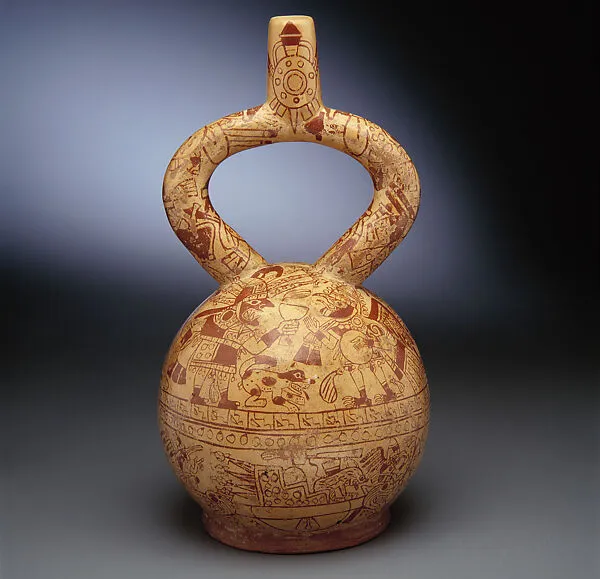
Painters marked roles with repeatable kit. The warrior‑priest wears a crescent headdress and sometimes a nose ornament; the priestess appears with a double-plumed headpiece; owl elements and feline belts identify other actors. A serpent divider helps viewers parse the scene as two linked domains, the world below where blood is taken and the world above where it is offered.
When read this way, a single pot preserves an entire ceremony with start, middle, and end. It also tells an audience who can do what. The figures with regalia act; the captives do not. That simple visual grammar communicates hierarchy without a word.
How artists encoded capture and decapitation
Scenes of capture set up the ceremony. Painters show line after line of bound warriors led by ropes tied at the neck or passing through nose ornaments. Some captives have been stripped of headgear and earspools, a sign that their rank has been removed along with their jewelry. Ropes and torn ornaments serve as shorthand for defeat.
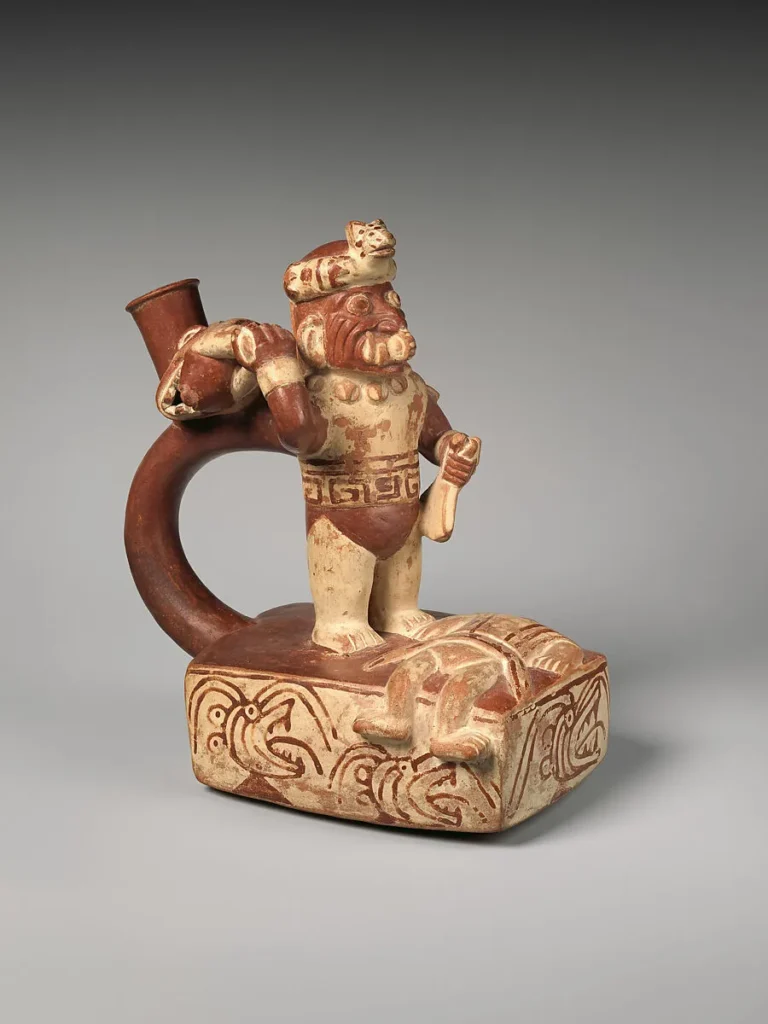
Decapitation is not always part of the same scene as the offering, but Moche painters treated it as a related act. The tumi knife, owl-bead necklaces, and snake belts cluster around figures who dispatch enemies or stand on platforms above bodies. These marks show which actors move between battle and ritual, and they link violence to sacred display.
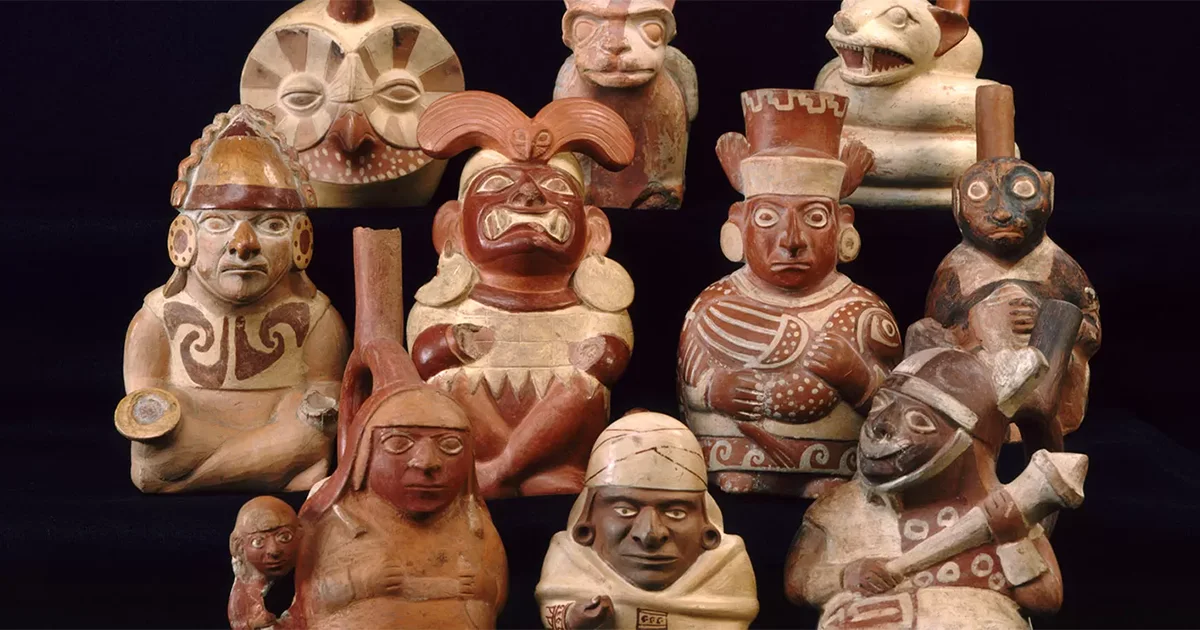
A broader view of vessel imagery shows how painters practiced economy. One raised goblet speaks for a speech. One plume set declares office. Repeated devices make complex stories legible at a glance.
Who the main actors are
Researchers call three figures the Warrior Priest, the Owl Priest, and the Priestess. These modern labels name roles, not specific people, and they come from repeated regalia in the scene cycle. The Warrior Priest raises the goblet. The Owl Priest, marked by owl elements, handles sacrifice or oversees prisoners. The Priestess stands with a tall, double-plumed headdress and can also receive the goblet.
Archaeology gives those painted roles weight. Rich tombs at Sipán and San José de Moro contained regalia that echo the painted kit, from crescent helmets to owl beads to the goblets themselves. Those burials suggest the ritual actors were real elite persons whose costumes signaled office. The clearest overview of how grave finds and vessel imagery intersect is in the discussion of the Royal Tombs of Sipán, where excavated ensembles match features seen on painted bottles.
What the sequence likely meant
The ceremony ties three necessities together: capture in war, the shedding of blood, and an offering to powers above. Farmers on the Peruvian north coast depended on river irrigation and feared drought and El Niño floods. A rite that takes the lifeblood of enemies and presents it in an ordered exchange claims control over danger. It also binds local elites to a performance that only they can complete.
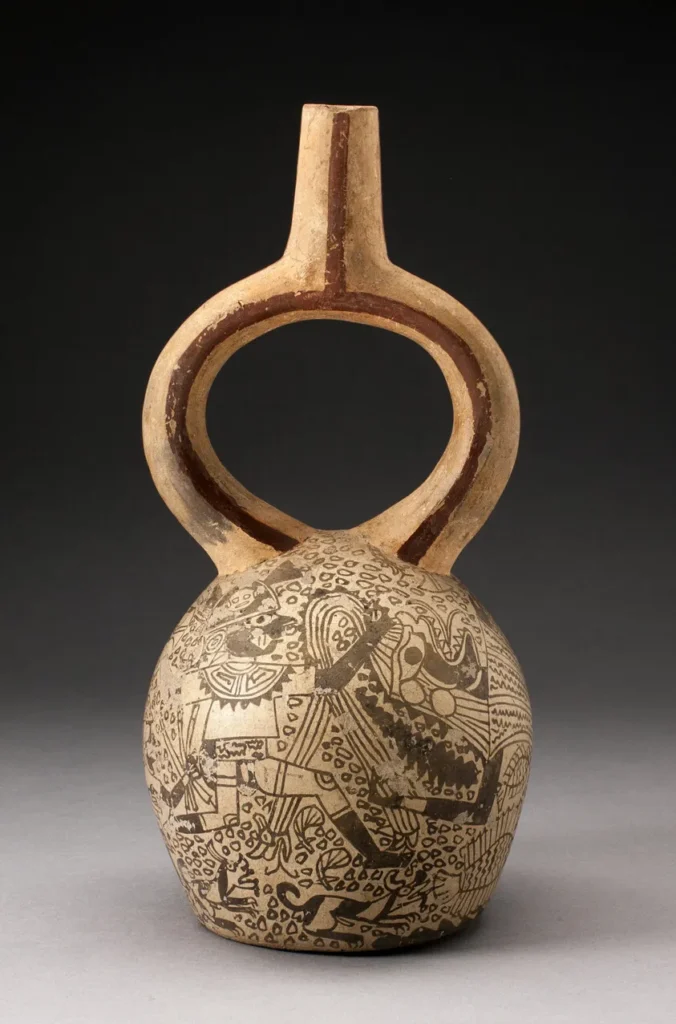
The serpent divider on many vessels reminds viewers that worlds connect. The lower register shows necessary violence. The upper register shows its safe delivery. Repetition across dozens of bottles, bowls, and murals turns the message into a social law: authority rests on victory and correct offering.
How painters built the scenes
Moche painters worked on mold‑made clay forms with cream grounds and iron‑oxide reds. They laid out figures in contour and filled garments and feathers with dense pattern. The fineline style is true to its name—thin, even strokes that let a brush describe soft feathers and hard blades in a single line.
Technical and social context matters. Potters used standardized shapes—stirrup‑spout bottles and flaring bowls—to make narratives predictable around a curved surface. Workshops could repeat stock scenes with small changes in headgear or gesture to adjust meaning for a patron or event. The Met’s survey of Moche decorated ceramics shows how vessel types, painting approaches, and workshop practice made complex storytelling portable.
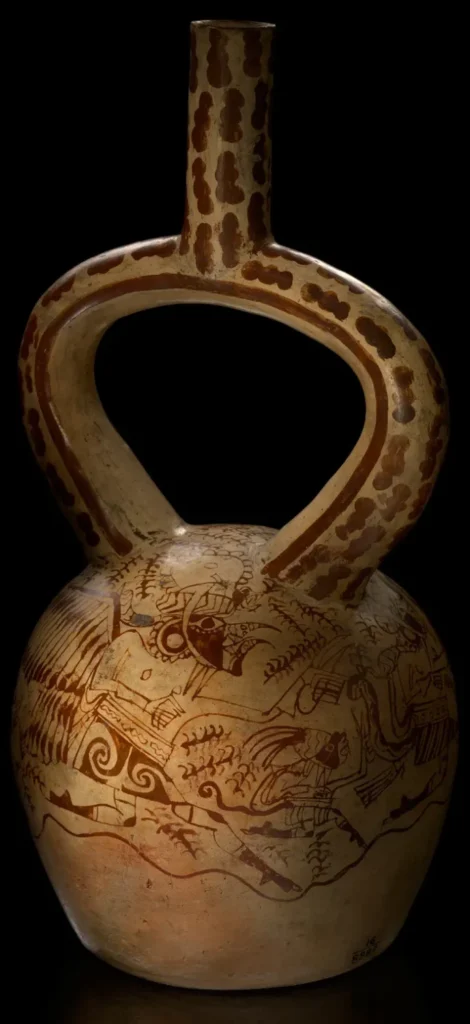
Because these narratives are portable, they move ceremonies beyond temples and plazas. A household that sets out a bottle painted with captives, goblets, and serpents claims identity with the rite. In small rooms, a pot can do what a mural does for a courtyard: stage the actors, order the steps, and make the order visible.
Built out of a love for history, kept free from distractions.
Spoken Past is an independent project shaped by curiosity, care, and long hours of research. Reader support helps keep it maintained, carefully researched, and open to everyone.
What archaeology adds
When tombs at Sipán were excavated in the late 1980s, their regalia echoed painted scenes. Crescent helmets, backflaps with the Decapitator, owl‑bead necklaces, and goblets appeared in graves of high‑status men; at San José de Moro, elite women were buried with items that match the painted Priestess. These finds turned a debated iconography into lived practice.
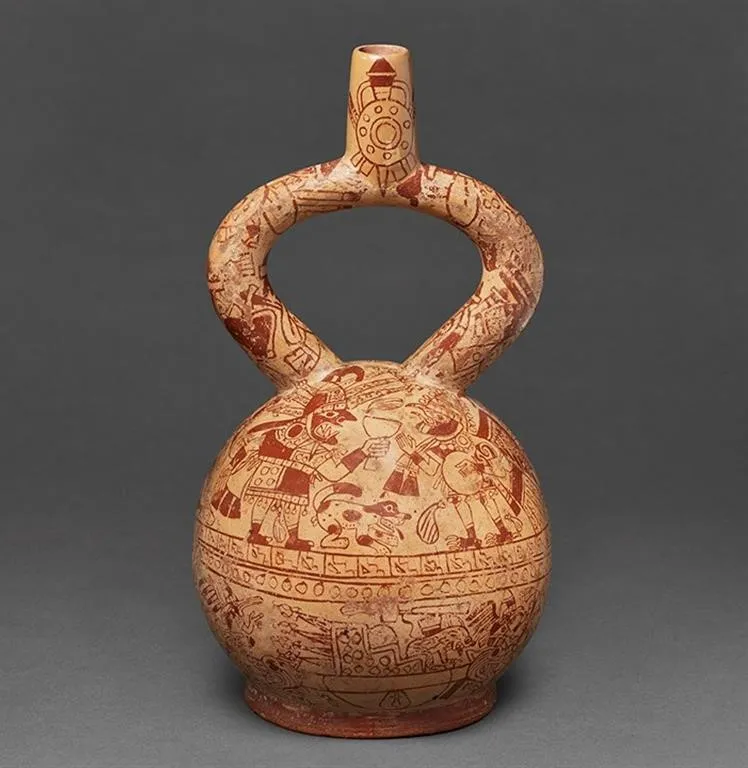
Those matches also help time the rite. While the ceremony spans centuries, clusters of regalia suggest phases in which certain actors dominate the upper register. Local workshops likely followed regional preferences tied to rulers and temple complexes. Narrative differences across valleys then map political difference as well as style.
A museum case today can bring these multiple strands together. Painted vessels sit beside metal backflaps and headdresses, letting visitors see how clay drawings and hammered gold once worked in the same ritual.
Captives, portraits, and memory
Portrait head vessels show individual faces with scar patterns, earspools, and sometimes broken noses. In galleries, their realism is arresting. In context, they expand the sacrifice cycle by giving captives and officials personal identity. Some heads wear cords around the neck or carry marks of defeat; others display elite ornaments. The message is steady: persons become roles under ritual order.
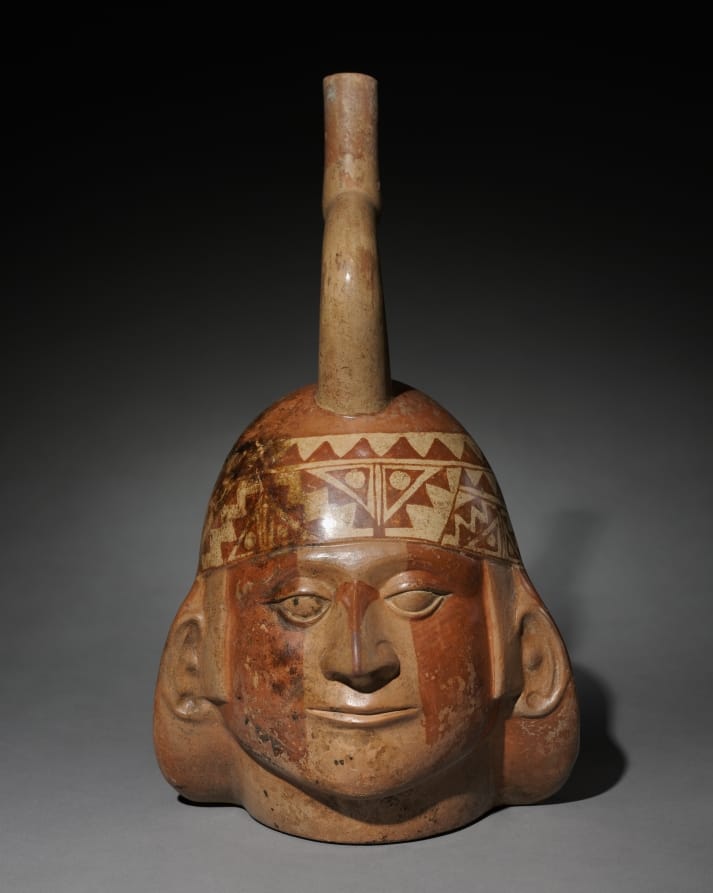
Fine‑line scenes of bound captives reinforce this point. Stripped ornaments, tied hands, and pulled nose rings mark how power reorganizes bodies. The painter’s brush is careful but unsentimental. Hierarchy sits in the details.
Why the vessel form mattered
The stirrup‑spout bottle, with its rounded body and arching handle, invites continuous viewing. Turn the vessel and the scene unfolds like a scroll. A small register break—a serpent, a stepped platform—gives a pause at just the right beat. This design turns a person who holds the bottle into a participant who performs the story by rotating it.
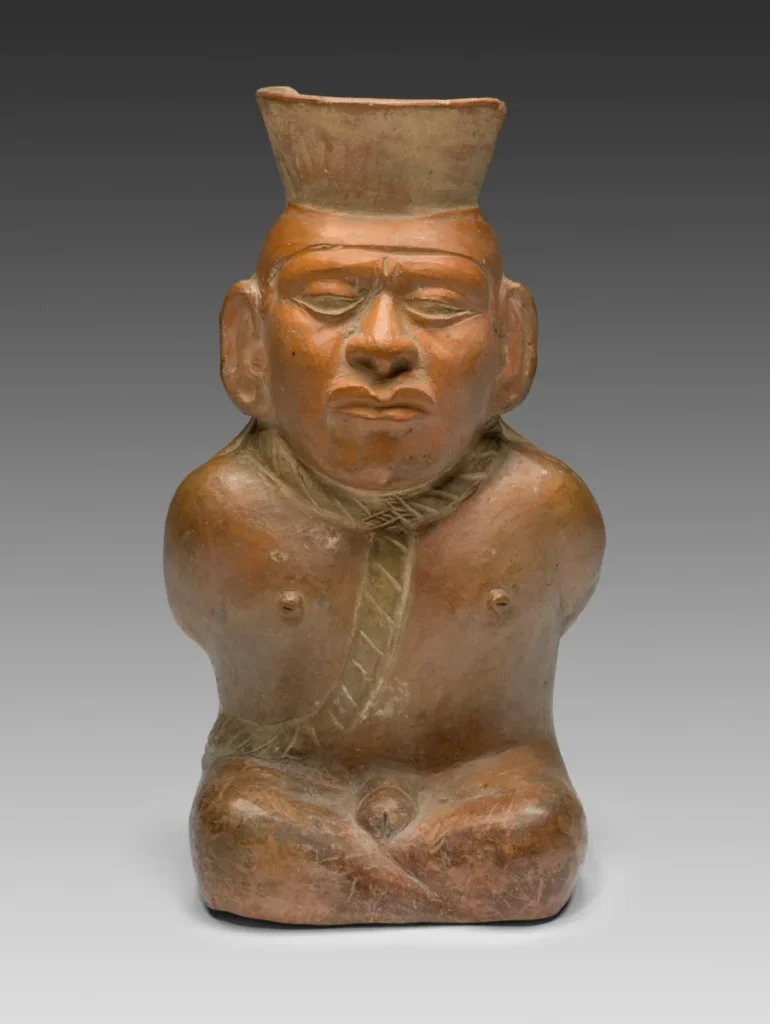
This portability made the ceremony scalable. A ruler could command the full rite in a plaza. A household head could echo its meaning in a feast with a single bottle. In both cases, the same actors and steps appear, teaching viewers who holds sanctioned power and how that power must be used.
Reading the serpent, the goblet, and the knife
Three motifs carry most of the meaning. The serpent is a connector, a moving border between underworld, surface, and sky. The goblet is a token of transfer, held up to show that the dangerous thing—blood—has been secured and made safe. The knife does the necessary harm that feeds the exchange.
Moche painters keep each sign clean. The snake undulates but does not entangle. The goblet lifts straight. The knife angle sharpens intent. Over time, these repeated marks instruct the eye to see cause and effect in a fixed order. Once learned, the grammar is hard to unsee.
What today’s museums help us see
Object pages let modern readers study scene logic and paint technique at a level that once required a study room visit. The Museo Larco’s entry on the Moche Sacrifice Ceremony summarizes the stacked-register schema and serpent divider in one place. The Met’s overview of Moche decorated ceramics explains fineline practice, vessel types, and workshop methods. The Sipán excavations, presented clearly by Smarthistory, anchor painted regalia in excavated metal and textile ensembles.
Together, these resources show why painted vessels are not illustrations copied from myth. They are primary records of ritual logic in clay. Once paired with burials and temple floors, their scenes read as instructions for making order—by taking enemies, taking blood, and giving it up in a set way.