Introduction to Ancient Mesopotamia
Between the Tigris and Euphrates, communities learned to live with rivers that nourished the soil and threatened it in equal measure, and from this precarious balance grew the world’s first durable urban cultures more than five thousand years ago. From early Sumerian cities to the empires of Akkad, Assyria, and Babylonia, political power shifted hands while shared habits of writing, ritual, building, and record-keeping threaded continuity across the millennia. This social fabric, captured in texts, temples, and artifacts, is not a single line of “progress,” but a long conversation about how to organize life, regulate time, manage resources, and give meaning to work and worship in landscapes both generous and volatile.
Rivers, Land, and Cities
“Mesopotamia” literally means the land between rivers, a geographical name that is also a historical thesis: fields flourished because people engineered channels, levees, and canals to tame floodwater and keep soil productive for cereals, dates, and fodder crops. Villages became towns and then cities when canal labor, storage, and ritual obligations drew people into coordinated routines that required reliable accounting and collective authority. Clay as the common building material left a cityscape of mudbrick walls, platforms, and courtyards. Although these weather easily, the archaeological record still preserves the outlines of dense urban quarters scaled for coordinated work, worship, and exchange.
Household Economy and Daily Work
Homes clustered along alleys and courtyards, with roof spaces doubling as work areas, and household economies stitched together farming, animal keeping, textile production, brewing, and small-scale trade according to family capacity and seasonal demand. The social world moved by predictable obligations—family care, cultic observance, irrigation shifts, assessment of grain and wool—that were managed by habit as much as by written decree. Work rhythms responded to the agricultural calendar and to the city’s periodic demands for maintenance, ceremony, and defense, sustaining a civic life whose basic needs—bread, oil, cloth, and security—were never far from view.
Food, Textiles, and Craft
Barley and emmer fed people and animals, while dates, oils, and pulses diversified diets and supported steady brewing and pressing that left administrative fingerprints across urban archives. Wool textiles emerged as a core industry in cities that organized labor, raw material, and finished cloth for local use and export, reinforcing how technology and administration reinforced each other in practice. Workshops for pottery, metalwork, and glyptic arts developed near supply routes and palaces or temples, creating craft landscapes in which skills, styles, and standardized outputs could be taught, tracked, and taxed.
Writing and the Scribal World
The clay tablet, impressed with wedge-shaped signs, was not simply a tool but an institution, a way of binding together livestock tallies, land allotments, deliveries, legal contracts, and letters into a system where memory could be consulted, audited, and argued. The scribal curriculum did more than teach sign lists and models; it taught a common intellectual posture toward the world, in which precision, categorization, and precedent gave shape to decisions in courts, storerooms, and workshops. Even literary compositions and scholarly handbooks grew in the shade of this practice, because literature, omen lists, and lexical corpora were curated by the same class of professionals who made daily administration legible to the city.
Time, Numbers, and Astronomy
Mesopotamian scholars excelled at turning observation into calendar and ledger: a base-60 number system, careful sky-watching, and procedural methods for reckoning intervals underwrote accounting, surveying, and ritual timing alike. Hours and degrees as modern habits conceal an old craft: the practice of subdividing time and circles reflects the same preference for useful regularities that shows up in metrology tables and problem texts from scribal schools. These routines were not “pure science” or “mere calculation” but a shared craft of reliable counting that linked field measures, temple offerings, and festival dates into one civic beat.
Technology and Urban Infrastructure
Canals and levees served fields, but they also served cities that needed water, waste management, and transport, and the same construction knowledge that raised ziggurats also raised embankments and quay walls. Brick production scaled with public works: the capacity to mold, dry, and lay vast quantities of standardized units made monumental projects feasible and gave masonry a public character every passerby could read and remember. Tools and techniques migrated from workshop to building yard and back again, reinforcing a technical culture in which administrative clarity, material knowledge, and social cooperation functioned as a single apparatus.
Trade, Money, and Administration
Urban life depends on flows, and Mesopotamian cities stood at the crossing of routes for metals, stones, timber, and finished goods carried by caravan and boat, with ledgers keeping the traffic intelligible at scale. Records of allotments, deliveries, loans, and repayments show a money sense rooted in measures of grain, oil, silver, and labor time, and these same media functioned as practical tools to manage risk across seasons. The independence of merchants and the oversight of institutions were negotiated day by day in texts that show cooperation, dispute, and precedent layered into routine business.
Law, Kingship, and Justice
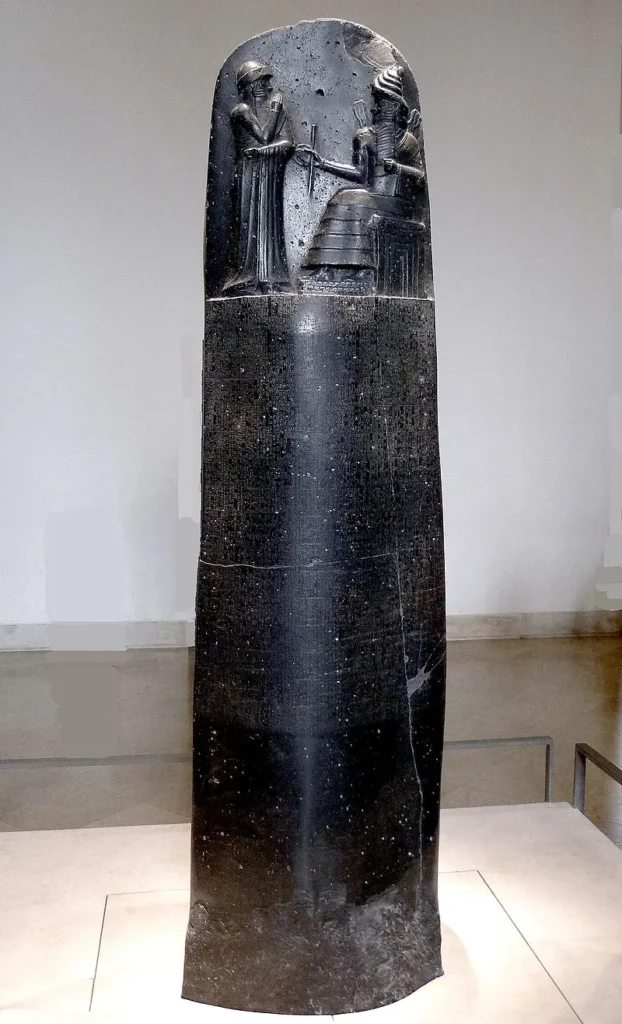
Law collections attributed to Hammurabi publicized norms about property, injury, contract, and status, best seen as royal statements of justice rather than exhaustive codes, since real disputes continued to be settled in local courts with documents and witnesses. Kingship anchored itself to building and provisioning gods’ houses, securing irrigation, guarding routes, and arbitrating disagreements, fusing royal image-making with practical services a city could judge in brick and grain. These texts, monuments, and public works do not float apart but act in chorus, so that a stele or a wall stands as both rhetoric and infrastructure.
Built out of a love for history, kept free from distractions.
Spoken Past is an independent project shaped by curiosity, care, and long hours of research. Reader support helps keep it maintained, carefully researched, and open to everyone.
Temples, Gods, and Ritual
Temples organized offerings, managed land and personnel, and staged festivals that knit the calendar to the city’s self-understanding, with religious specialists curating both ceremonial purity and scholarly knowledge. The feeding of the gods was not metaphor but a daily logistics of grinding, baking, pressing, and brewing in volumes that required careful accounting and reliable labor hierarchies. Processions, lamentations, and rituals occupied real streets and courtyards, shaping public time and reinforcing the alliance of devotion, duty, and display that civic life required.
Art, Image, and Meaning
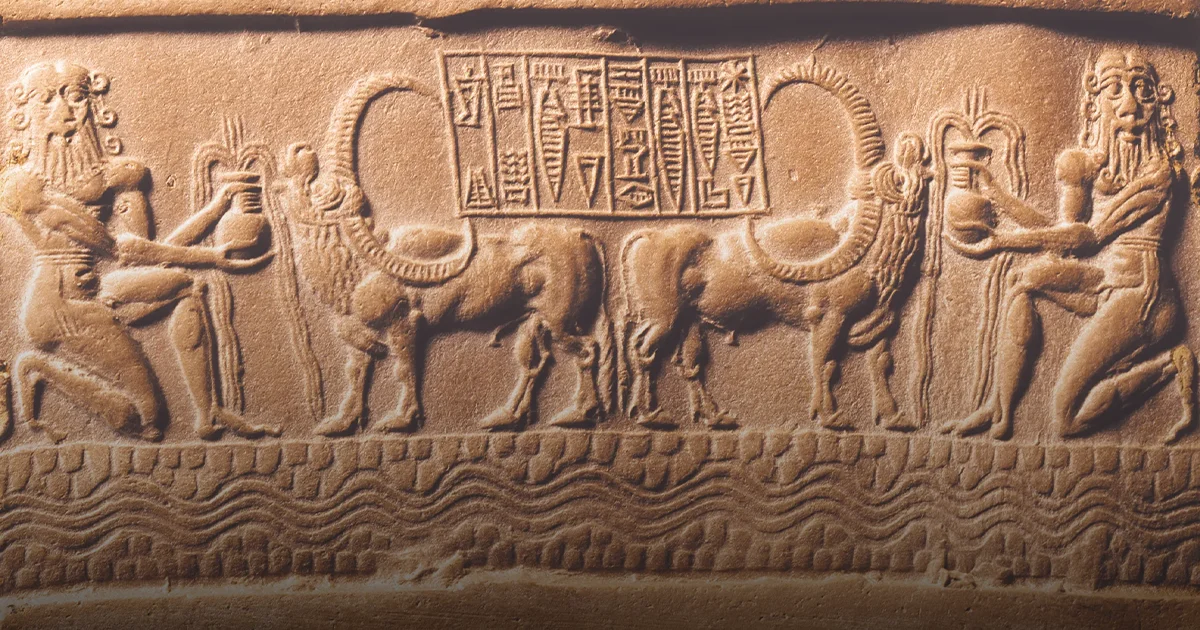
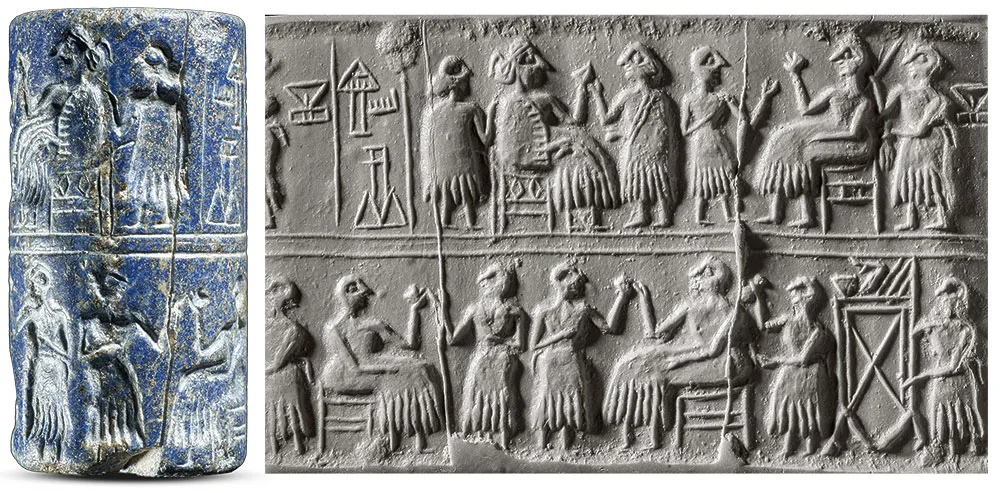
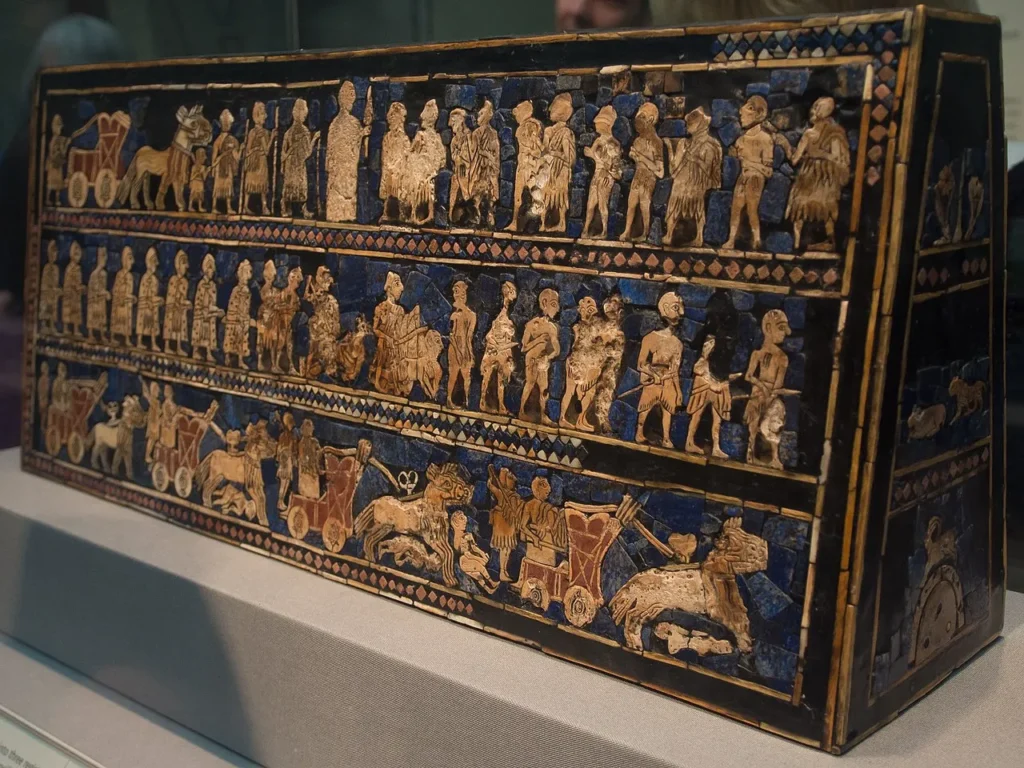
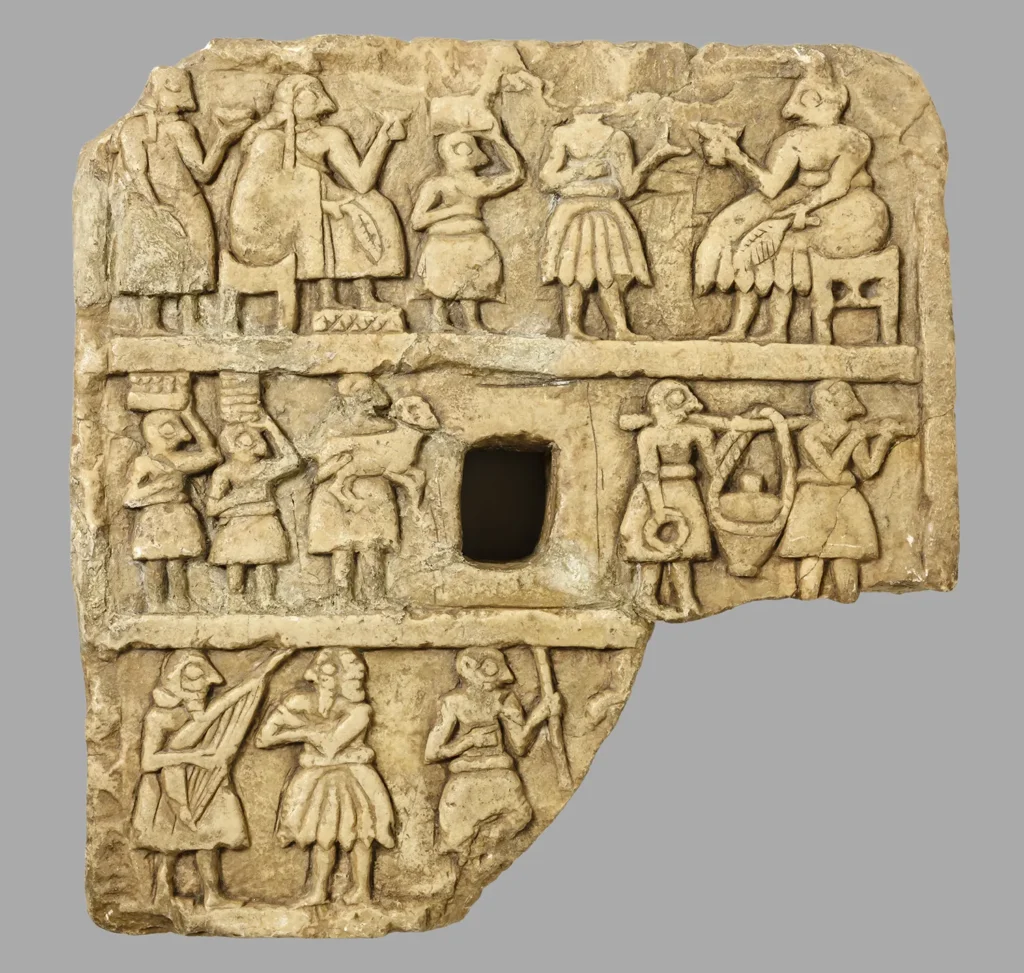
Mesopotamian art is a system of signs that works like writing: recurring motifs—banquets, hunting, processions, offering scenes—encoded hierarchy, piety, and power in forms that trained viewers could read quickly and remember long. Glyptic art on cylinder seals condensed identity, authorization, and style into an object that could roll its image across wet clay and leave behind both a picture and a signature. Monumental reliefs and portable sculpture both served to stabilize memory; whether mounted in palaces or carried as votives into shrines, they taught the city how to picture itself to itself.
The City as a Teaching Machine
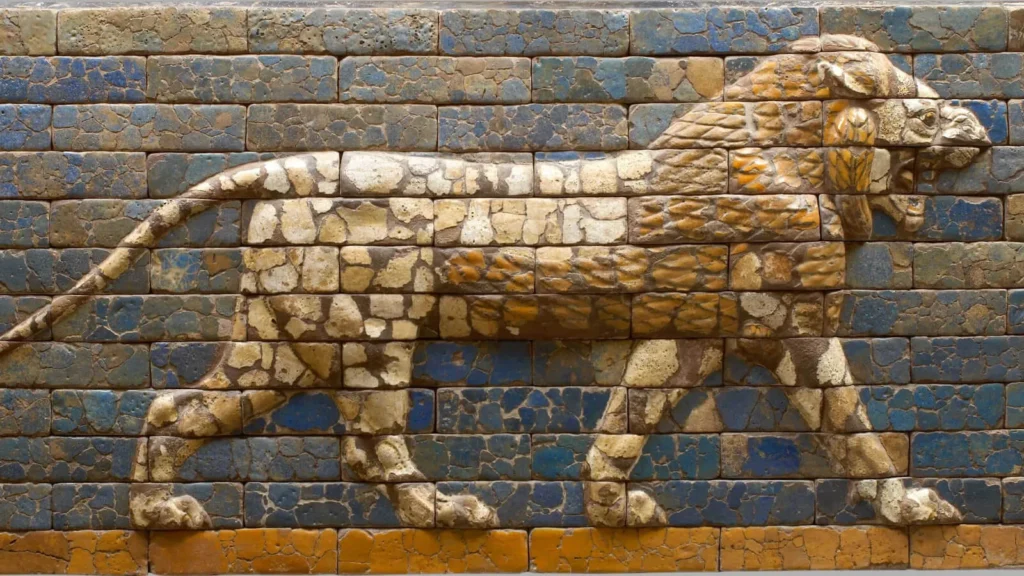
A visitor moving from gate to temple to palace learned what mattered—strength, piety, order—not through lectures but by walking a landscape saturated with curated images and proportional spaces. Bricks with inscriptions inserted into walls, statues with dedicatory lines, and boundary stones marked relationships among king, deity, household, and plot so that private property, public trust, and divine favor could be grasped together at a glance. The same clarity that made a ledger legible made a façade legible, so that texts and buildings educated citizens in the grammar of their own city.
Households, Status, and Work Roles
Household archives and institutional records show differentiated roles by skill, age, and status, with women’s labor central to textile production and provisioning at both family and temple scales. Apprenticeship, learning by copying, and promotion by competence were not only scribal experiences but also craft patterns that gave trades staying power across generations. These local structures, visible in contracts, allotments, and receipts, grounded the larger political stories told in royal inscriptions.
City, Countryside, and Risk
The countryside produced cereals, oils, and wool, but the city turned harvests into storable, measurable assets that could be redistributed and traded when floods failed or crops fell short. Irrigation is a technology of risk management, and its maintenance required seasonal labor coordination, assessment of obligations, and penalties for neglect that appear in legal and administrative texts as civic necessities. Canals, courts, and calendars belong to the same survival kit, each enabling a community to anticipate, budget, and adapt.
Education, Libraries, and Memory
Scribal houses and temple libraries accumulated tablets not as inert treasures but as working tools that could be copied, excerpted, and reorganized for current use—whether for settling a dispute, timing a ritual, or training a novice. Lexical lists and sign exercises trained hands and minds to operate with categories and sequences, skills that then carried over into inventorying storerooms, dividing fields, or tallying labor shifts. The persistence of these schools across centuries explains the continuity of style and method that lets scholars trace a thread from the earliest archives into the imperial period with confidence.
Monumental Building and Collective Time
Ziggurats, terraces, and precinct walls functioned as calendars in brick: they took years to raise, employed many hands, and anchored festivals whose recurrence gave families a felt sense of belonging to a long story. Public works projects multiplied documents—contracts, payment lists, temple records—leaving behind structures and archives that let historians see labor, supply, and authority in motion. Because a wall remains while a ration list must be read, archaeology and philology together illuminate Mesopotamian urban life.
Empire, Archives, and Communication
When Assyrian power stretched from the Iranian plateau to Egypt’s frontiers, communication by courier and archive was as decisive as iron and horse, because distant garrisons, governors, and tax receipts depend on written oversight to remain coherent. Royal palaces systematized record-keeping for tribute, building, and war, producing a scale of documentation that allowed both command and critique to circulate with news and orders. The resulting archives make empire legible to us—and to itself—a condition for large-scale projects to function beyond the will of a single ruler.
Legacy and First Cities
Mesopotamia’s inheritance is practical: writing as a habit of accountability; measures that permit coordination at scale; calendars that make ritual and work predictable; and buildings that stabilize memory and authority in public space. These are not relics but frameworks still visible in urban life wherever schedules, taxes, waterworks, and legal archives hold people together without dissolving them into chaos or coercion. Mesopotamia remains a first chapter not because everything begins there in myth, but because so many of our durable civic tools were first crafted there to face real risks with steady hands.
Further Reading
- “Daily Life in Ancient Mesopotamia,” World History Encyclopedia
- “Ancient Mesopotamia,” Institute for the Study of Ancient Cultures, University of Chicago
- “Mesopotamian Inventions,” World History Encyclopedia
- “Mesopotamia: Civilization Begins,” Getty Museum
- “Art of Mesopotamia,” The Metropolitan Museum of Art