

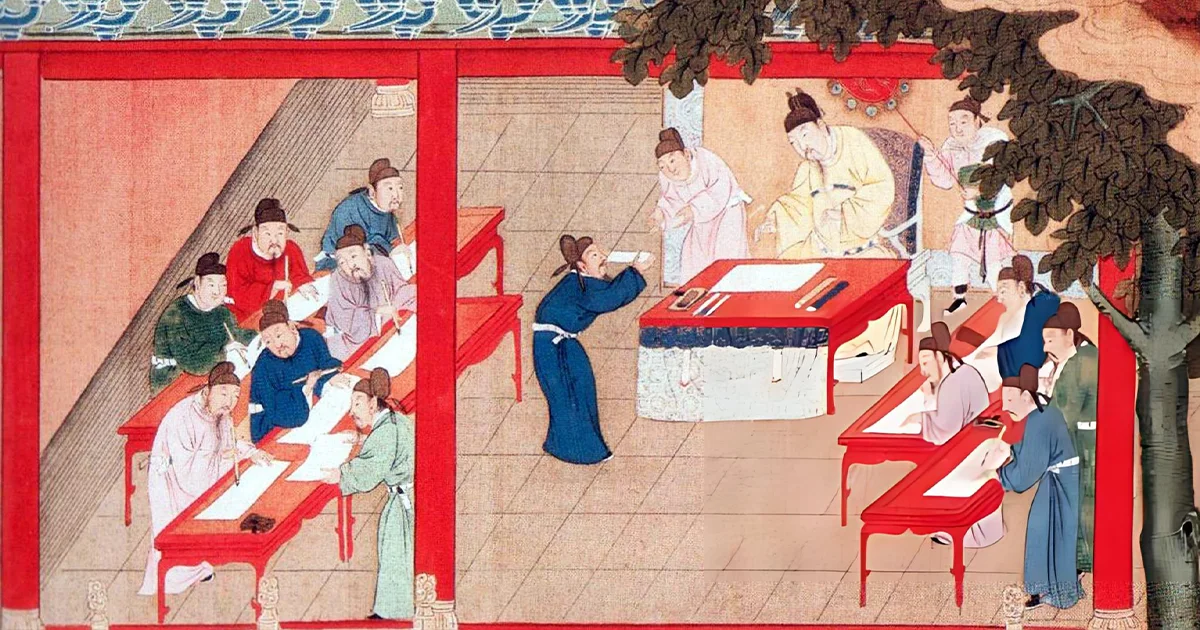
In the spring of 605 CE, Emperor Yang of the Sui dynasty ordered officials to gather candidates for the first standardized examination in Chinese history. Young men from across the empire converged on the capital, their years of memorizing Confucian texts about to be tested in a way no aristocratic recommendation could measure. This moment marked the birth of the Chinese Civil Service Exam, an institution that would endure for thirteen centuries and transform how empires selected their governing officials. What began as a modest experiment during the brief Sui dynasty would become the world’s first merit-based examination system, setting precedents that would eventually influence civil service systems across the globe.
Before the Exams: Han Dynasty Foundations
The roots of China’s examination system reach back nearly 2,000 years to the Han dynasties, which ruled from 206 BCE to 220 CE. During this period, the imperial state developed the precursor to formal testing through a system centered on textual expertise. The Han Imperial Academy, known as the Tai-hsueh, trained disciples under erudites who specialized in one of the Five Classics.
After completing their studies, these disciples underwent oral examinations before receiving government appointments. This recruitment process, while less formalized than what would follow, established a crucial principle: government service should be linked to mastery of Confucian learning. The examination tested knowledge of specific classical texts, including the Change, Documents, Poetry, Rites, and Spring and Autumn Annals.
However, this early system remained limited. Access depended heavily on recommendations from aristocratic families who controlled political power. The great clans of medieval China, strategically located in the Northwest near Chang-an and Lo-yang, dominated the social and political elite. Birth and kinship connections, not demonstrated ability, determined entry into positions of authority.
The Sui Dynasty Breakthrough in 605 CE
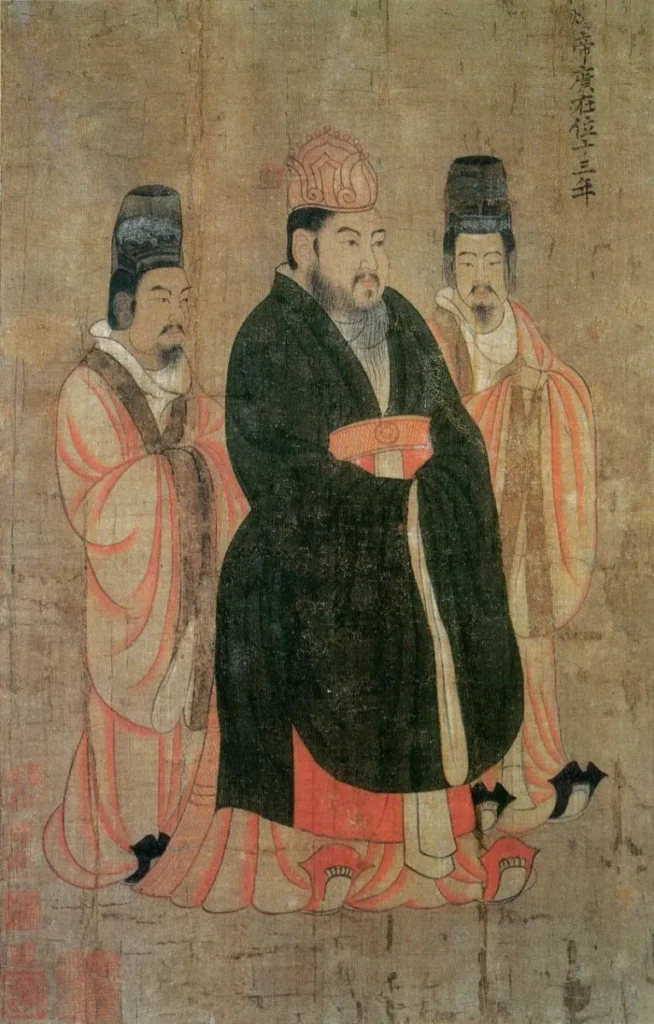
The Sui dynasty, ruling from 581 to 618 CE, faced a fundamental challenge: how to assert imperial authority against entrenched aristocratic families. In 605 CE, the authorities introduced the earliest standardized tests open to all male candidates. This radical departure from recommendation-based selection aimed to identify talented men who owed their positions to the emperor rather than noble patrons.
The Sui innovation represented a deliberate effort to break the aristocracy’s monopoly on power. By opening examinations to qualified candidates regardless of family background, the dynasty created an alternative path to office that bypassed traditional power structures. Although the Sui would fall after only 37 years, this institutional foundation would prove more enduring than the dynasty itself.
The examination tested candidates on Confucian texts and required both memorization and analytical ability. Successful candidates received appointments to the imperial civil service, their authority derived from demonstrated merit rather than inherited privilege. Additionally, the Sui established the principle that exams should be administered on a regular basis, creating institutional permanence.
Tang Expansion Under Empress Wu
The Tang dynasty, established in 618 CE, initially maintained the examination system on a modest scale. Emperors Kao-tsu and Tai-tsung reinstituted civil service exams in the early seventh century, but the great majority of officials during early Tang times were not examination graduates. The system remained a simple two-tiered process based either on local recommendations or attendance at capital schools.
The turning point came during the reign of Empress Wu, who ruled from 690 to 705 CE. She recognized that officials selected through open examinations could serve as a useful countervailing force against entrenched aristocrats in capital politics. By expanding the examination system and promoting its graduates, Empress Wu created a bureaucratic class whose loyalty belonged primarily to the throne.
During the Tang, the examination system operated only in the capital. Candidates either received local recommendations or attended government-run schools before taking the exams. The content focused heavily on Confucian classical texts, poetry composition, and policy questions about governance. Examiners looked for candidates who could demonstrate both mastery of ancient wisdom and ability to apply it to contemporary challenges.
However, even under the Tang, examination graduates remained a minority among officials. Most positions continued to be filled through recommendations, family connections, or school attendance. The system had been established, but it had not yet become the dominant mechanism for recruiting the empire’s administrators.
The Song Dynasty’s Revolutionary Transformation
Between 750 and 1000 CE, China underwent revolutionary social changes. The great aristocratic clans that had dominated since before the Tang began their final decline following the An Lu-shan Rebellion of 755 to 763. Southern literati rose to prominence in national politics, and economic power shifted decisively toward South China and the Yangtze delta region.
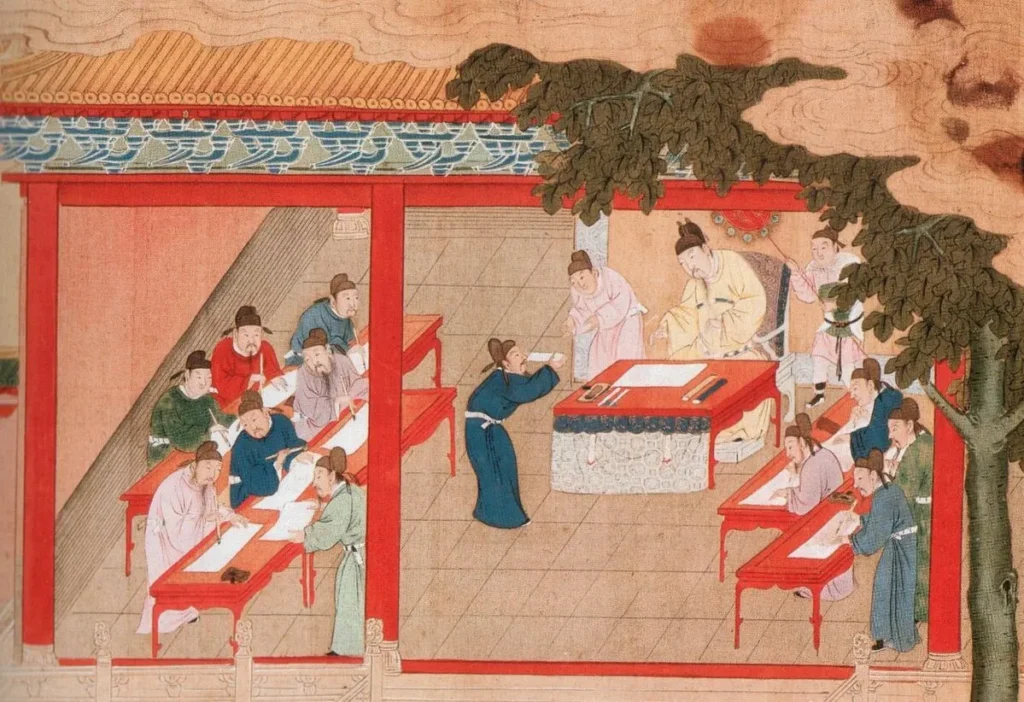
When the Song dynasty unified China in 960 CE, emperors faced the challenge of governing an empire of over 60 million subjects undergoing decisive demographic change. Northern Song rulers, particularly Emperor Tai-tsu who reigned from 960 to 976, made civil service examinations the primary measurement of talent in the empire. In 973, Emperor Tai-tsu introduced a crucial innovation: the palace examination administered by the emperor himself to all those who had passed the highest-level capital examination.
This decision transformed the examinations from a selection mechanism into a political institution that demanded oaths of loyalty. The emperor became, in effect, the nation’s premier examiner, personally validating the credentials of successful candidates. For all subsequent dynasties, this practice would cement the connection between examination success and political legitimacy.
The Song also introduced quotas based on the ratio between successful and failed candidates, beginning in 997. This allowed the state to regulate the power of elites by controlling access to official positions. Furthermore, the Song established a three-tiered system that would endure: local licensing examinations at the prefecture level, provincial qualifying examinations, and national metropolitan examinations culminating in the palace exam.
Built out of a love for history, kept free from distractions.
Spoken Past is an independent project shaped by curiosity, care, and long hours of research. Reader support helps keep it maintained, carefully researched, and open to everyone.
How the Early System Actually Worked
By the late tenth century, the examination structure had achieved recognizable form. Candidates began preparing in childhood, typically starting to learn characters around age five and memorizing the Four Books and one of the Five Classics by their teens. The minimum requirement for competing meant mastering hundreds of thousands of characters of textual material.
The licensing examination at the prefecture level served as the entry point. Success at this level granted the title of shengyuan and entry into the lower class of gentry. These literati received tax exemptions and corporal punishment immunity, marking their elevated status. Beyond personal privileges, this status offered opportunities to manage local affairs, assist officials, or teach.
Those who passed could attempt the provincial examination, held triennially in provincial capitals. Successful candidates received the title of juren and became eligible for official appointments. The final stage, the metropolitan examination held in the capital, ranked the empire’s top scholars. These presented scholars, or jinshi, received guaranteed government positions and the highest prestige.
The exams tested mastery of Confucian texts through a variety of formats that changed over time. Early formats included poetry, prose composition, and policy essays addressing questions of governance. Candidates had to demonstrate not just memorization but analytical ability to apply classical principles to contemporary situations. Furthermore, examination papers were transcribed to prevent examiners from recognizing candidates’ handwriting, an early attempt to ensure fairness.
Opening a Ladder of Success
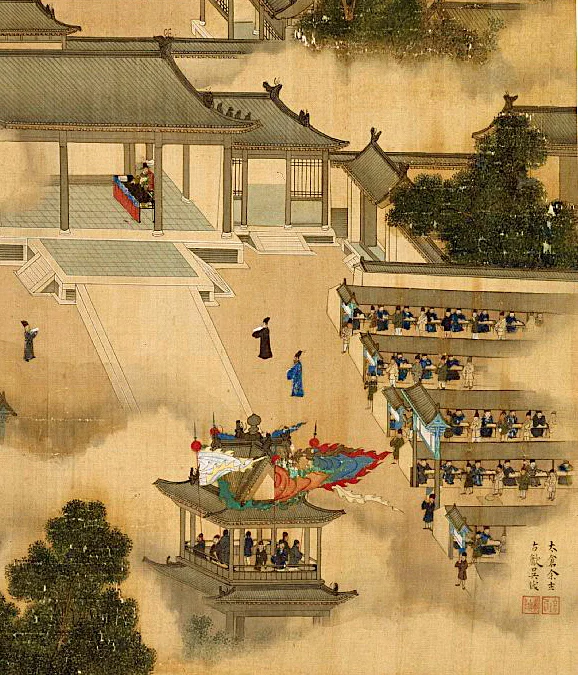
The examination system’s most revolutionary feature was its theoretical openness. In principle, the exams were available to all males regardless of social background. Unlike medieval Europe, where nobility remained largely hereditary, or even earlier Chinese practice based on aristocratic recommendations, the Song examination system offered a path to elite status based solely on demonstrated ability.
However, theoretical openness confronted practical barriers. Preparation required years of intensive study in classical Chinese, a written language that diverged dramatically from vernacular speech. Most students needed tutors, texts, and freedom from productive labor, resources available primarily to families of some means. Similarly, candidates needed access to the Confucian classics and reference materials, the availability of which varied enormously across regions due to transportation costs.
The examination nevertheless created genuine social mobility within the literate classes. During the Song period, scholars have estimated that approximately 50 percent of successful candidates came from families with no officials in their immediate background. Over generations, roughly 80 percent of elite families faded from prominence, replaced by new examination graduates. This circulation of elites prevented the consolidation of a permanent aristocracy.
Local communities recognized the examination system’s importance. Families pooled resources to support promising candidates, lineages established schools to prepare their sons, and villages celebrated when local men succeeded. The system thus became deeply embedded in social structures and family strategies throughout the empire.
Why This System Succeeded Where Others Failed
Several features help explain the examination system’s extraordinary longevity. First, it aligned the interests of rulers seeking competent, loyal officials with the aspirations of families seeking status and security. The state gained administrators trained in Confucian principles of governance, while successful candidates and their families gained prestige, privilege, and access to wealth.
Second, the system’s basis in classical learning created cultural unity among elites. Officials from distant regions shared a common education in the same texts, examined in the same language. A literatus from the northwest could communicate easily with his counterpart from the southeast through their shared classical Chinese, despite speaking different dialects. This linguistic and cultural uniformity strengthened imperial coherence.
Third, the examination system successfully mystified social selection under the guise of merit. By testing linguistic competence in classical Chinese, a skill that required years of expensive preparation, the exams effectively screened out those from families without educational traditions. Yet because success theoretically remained open to anyone who mastered the material, the system appeared fair and legitimate.
Finally, the exams served multiple functions beyond selecting officials. They transmitted orthodox ideology, reinforced social hierarchies, provided local elites with meaningful status markers, and offered a mechanism for imperial control over the educated class. This multifunctionality made the system valuable to many constituencies.
The Foundation of a Thirteen-Century Institution
By 1000 CE, the Chinese Civil Service Exam had evolved from the Sui dynasty’s modest innovation into a powerful institution central to Song governance. The system had survived the fall of its founding dynasty, expanded under the Tang, and achieved its mature form under the Song. What began as a tool to break aristocratic monopolies had become the primary pathway to political power and social prestige.
The examination system would continue for another nine centuries, adapting to different dynasties and evolving in format and content. Yet its core principles, established in these early centuries, remained remarkably stable: government service should be based on demonstrated mastery of Confucian learning, selection should occur through standardized written examinations, and the process should be theoretically open to qualified males regardless of birth. These principles would shape Chinese society and governance until 1905, when the exams were finally abolished just six years before the fall of the last imperial dynasty. The examination system’s early evolution demonstrates how institutional innovations, once established and aligned with multiple interests, can endure across centuries and fundamentally shape the character of civilizations.