
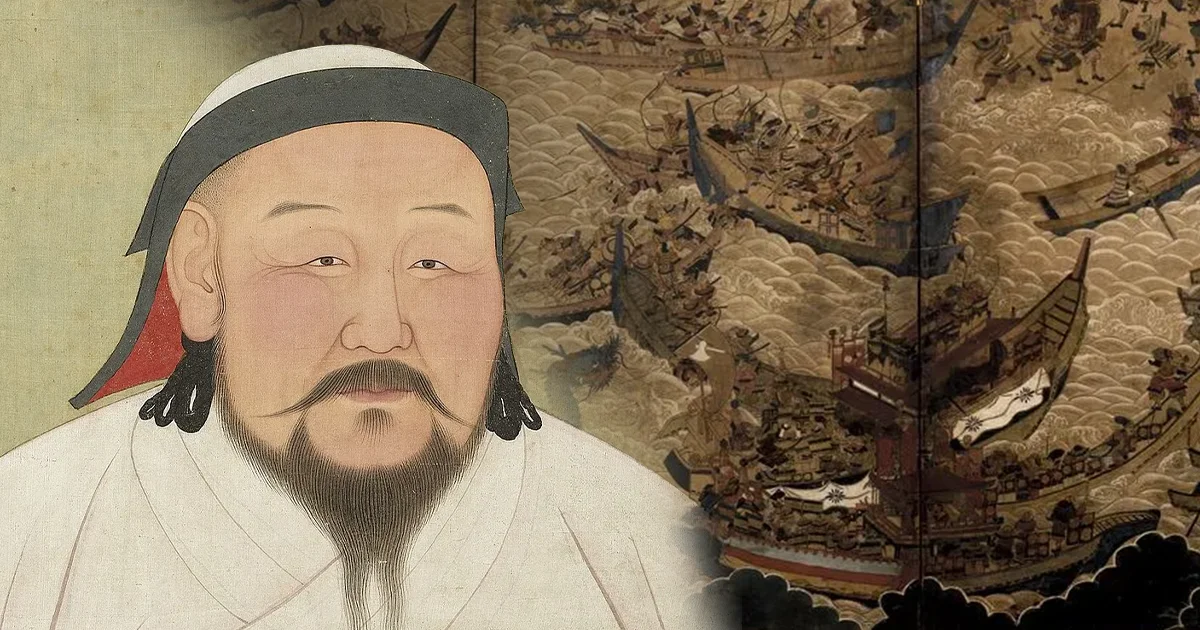
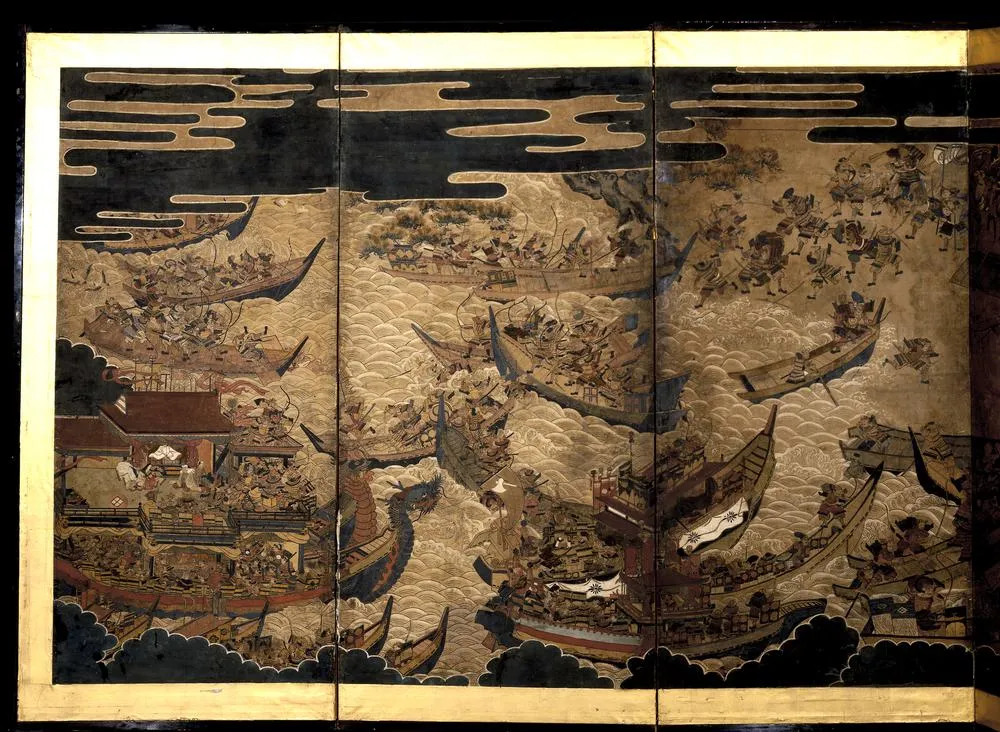
Kublai Khan launched two massive naval invasions against Japan in 1274 and 1281, commanding fleets that numbered in the thousands of ships and carried over 140,000 warriors at their peak. Both times, his armadas were obliterated not by samurai swords but by catastrophic typhoons that Japanese defenders called kamikaze, meaning divine wind. These storms became so legendary that centuries later, suicide pilots in World War II adopted the same name, believing they too would become instruments of supernatural protection for Japan.
The grandson of Genghis Khan who had conquered most of Asia expected Japan to submit without resistance. Instead, he watched two of history’s largest naval invasions end in disaster, with an estimated 100,000 men drowning in the waters off Kyushu island. The kamikaze storms didn’t just save Japan from foreign conquest—they shaped Japanese national identity for the next seven centuries.
Kublai Khan’s First Invasion Fleet 1274
In autumn 1274, Kublai Khan dispatched an armada of 500 to 900 vessels carrying approximately 30,000 to 40,000 troops across the Korea Strait toward Japan. The force consisted primarily of ethnic Chinese and Korean soldiers commanded by Mongol officers, assembled after Khan’s successful conquest of the Song Dynasty in China. His ships sailed from Masan in Korea, crossing the narrow but treacherous waters separating the Asian mainland from the Japanese islands.
The invasion fleet reached Hakata Bay on the western shore of Kyushu, Japan’s southernmost major island. Mongol forces initially overwhelmed the approximately 6,000 Japanese defenders with superior numbers and advanced military technology including explosive projectiles that terrified samurai warriors who had never encountered such weapons. The invaders established a beachhead and prepared for a full-scale assault on the Japanese positions.
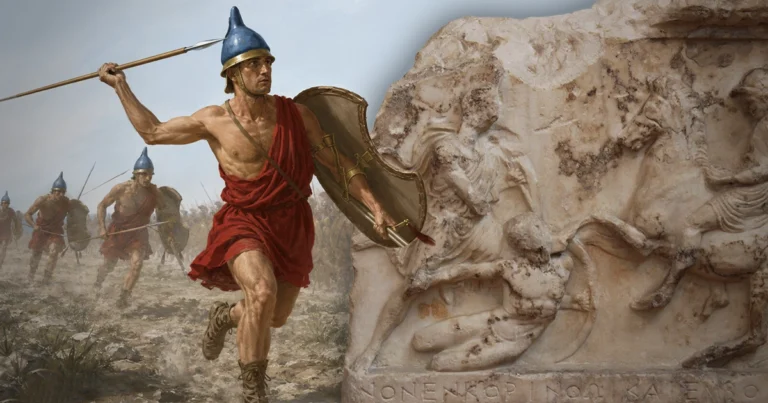
Japanese resistance proved fiercer than expected. Samurai fought using traditional methods of individual combat, challenging Mongol warriors to single duels even as the invaders employed coordinated group tactics. The cultural clash extended to battlefield customs—Japanese warriors announced their names and lineage before fighting, while Mongols simply attacked in formation.
As night fell on the first day of fighting, Mongol commanders made a fateful decision. Rather than camping on shore where they might face nighttime raids, they ordered their entire fleet to retreat to the safety of their ships anchored in Hakata Bay. That night, a massive typhoon struck. The storm sank approximately one-third of the Mongol fleet, drowning an estimated 13,000 men. The surviving ships, heavily damaged and demoralized, limped back to Korea without completing the invasion.
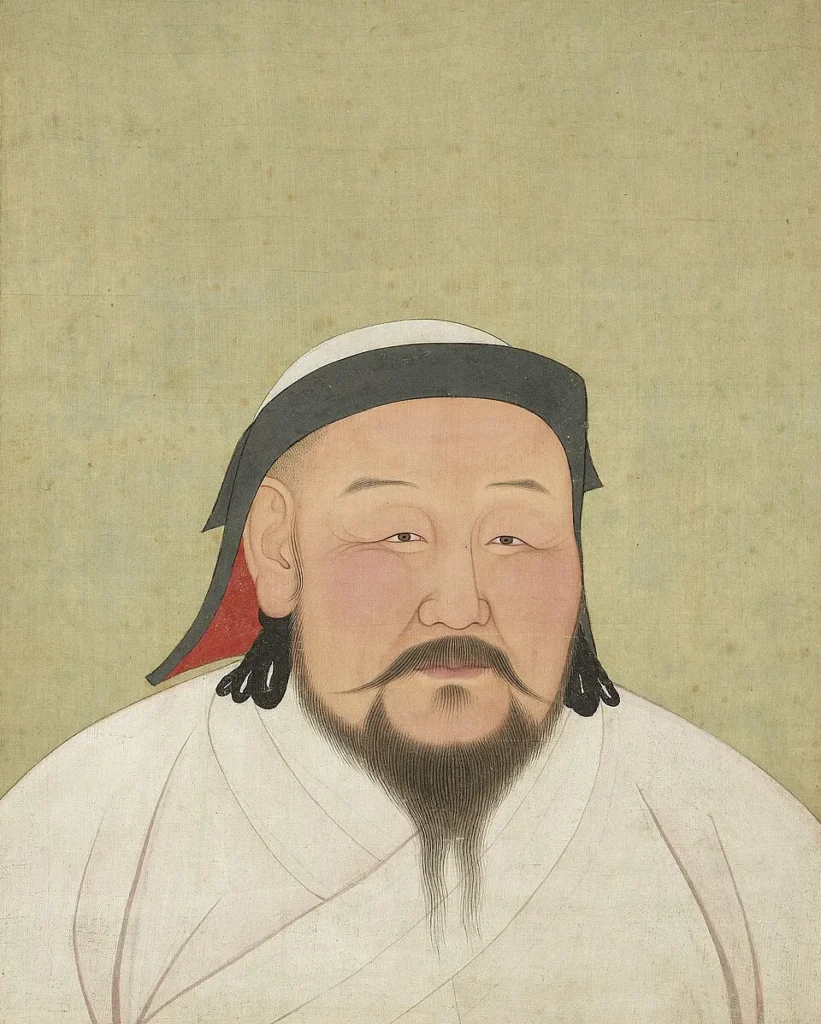
Why Kublai Khan Tried Again in 1281
Kublai Khan refused to accept defeat. He spent the next seven years building an even larger invasion force, determined to succeed where his first attempt had failed. The 1281 expedition dwarfed its predecessor in scale, consisting of two separate fleets that would converge on Japan simultaneously.
The Eastern Route Army sailed from Masan, Korea, with approximately 40,000 troops and 900 ships. The larger Yangtze River fleet departed from southern China carrying roughly 100,000 soldiers aboard 3,500 vessels. Combined, this armada of 4,400 ships transporting 140,000 warriors represented one of the largest naval invasions ever attempted in human history
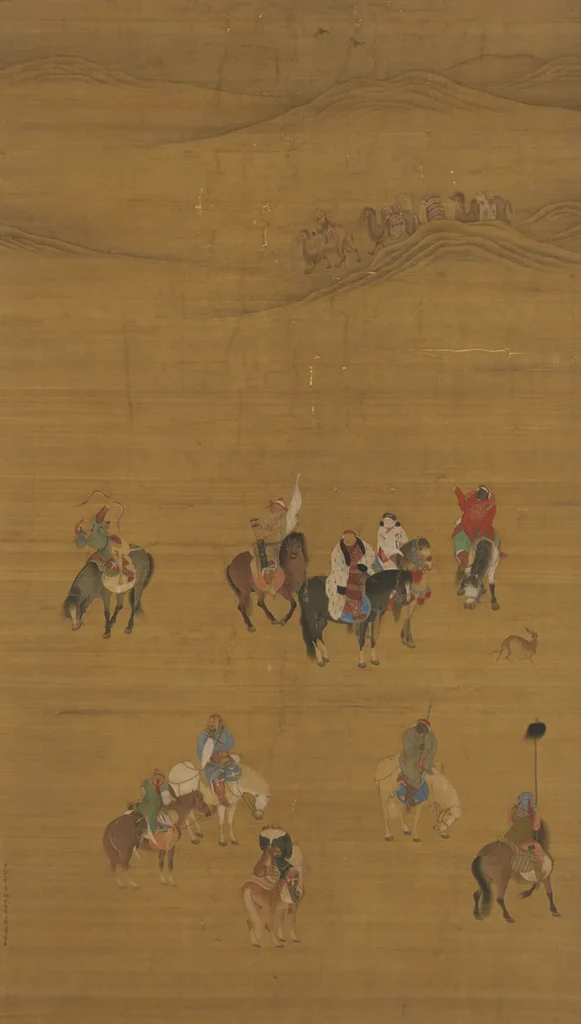
The two fleets rendezvoused near Hakata Bay on August 12, 1281. Japanese defenders had spent seven years preparing for this moment, constructing a massive stone wall along the coastline that prevented easy landing. Samurai warriors and local defenders, numbering around 40,000, manned defensive positions behind these fortifications.
Mongol forces struggled to establish beachheads against determined Japanese resistance. The coastal wall forced invaders to approach in small groups rather than overwhelming defenders with mass landings. For weeks, fighting raged along the Kyushu shoreline as Mongol troops repeatedly attempted to break through Japanese defenses.
The Second Kamikaze Storm
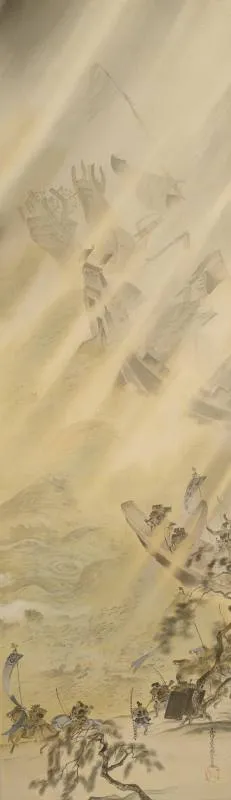
On August 15, 1281, as Mongol commanders prepared a massive coordinated assault designed to finally overwhelm Japanese defenses, weather conditions deteriorated rapidly. A typhoon far more powerful than the 1274 storm descended on the invasion fleet anchored off Kyushu. The timing could not have been worse for the Mongols—their ships were tightly packed in the bay, offering no room to maneuver as winds and waves intensified.
The destruction was catastrophic. The typhoon wrecked the vast majority of the Mongol fleet, smashing ships against each other and driving them onto rocks along the coastline. Soldiers trapped below decks drowned as vessels capsized and sank. The storm raged for hours, systematically demolishing seven years of preparation and the largest naval force assembled in Asia up to that point.
When the typhoon finally passed, the scale of the disaster became apparent. At least half of the 140,000 Mongol warriors had drowned during the storm. Thousands more were stranded on Kyushu’s shores, separated from their ships and supplies. Over the following days, Japanese samurai hunted down and killed most of these survivors. Only a small fraction of Kublai Khan’s original invasion force managed to reach home.
Built out of a love for history, kept free from distractions.
Spoken Past is an independent project shaped by curiosity, care, and long hours of research. Reader support helps keep it maintained, carefully researched, and open to everyone.
How Japanese Understood the Divine Wind
Japanese defenders interpreted both storms as supernatural intervention. The term kamikaze combined the characters for “god” or “spirit” with “wind,” reflecting belief that deities had personally protected Japan from foreign conquest. This interpretation gained strength because both typhoons struck at precisely the moments when Mongol victory seemed inevitable.
The legend held that a retired emperor had undertaken a pilgrimage to pray at sacred shrines, beseeching the gods to save Japan from invasion. When the typhoons destroyed the Mongol fleets, this appeared to be direct divine response to these prayers. Shinto priests promoted this narrative, crediting specific deities with raising the protective storms.
The kamikaze became central to Japanese national identity and military culture. The belief that Japan enjoyed divine protection from foreign invasion persisted for centuries, shaping attitudes toward external threats. Warriors viewed their role as defenders of a sacred land chosen by the gods for special protection.
This mythology took on renewed significance in the 20th century. During World War II, Japanese military leaders invoked the kamikaze legend when recruiting suicide pilots to crash their planes into Allied ships. These pilots adopted the kamikaze name, seeing themselves as modern incarnations of the divine wind that would once again save Japan from invasion. The connection between 13th century storms and 20th century warfare demonstrates how powerfully the Mongol invasion failures shaped Japanese historical consciousness.
What Samurai Records Show About the Invasions
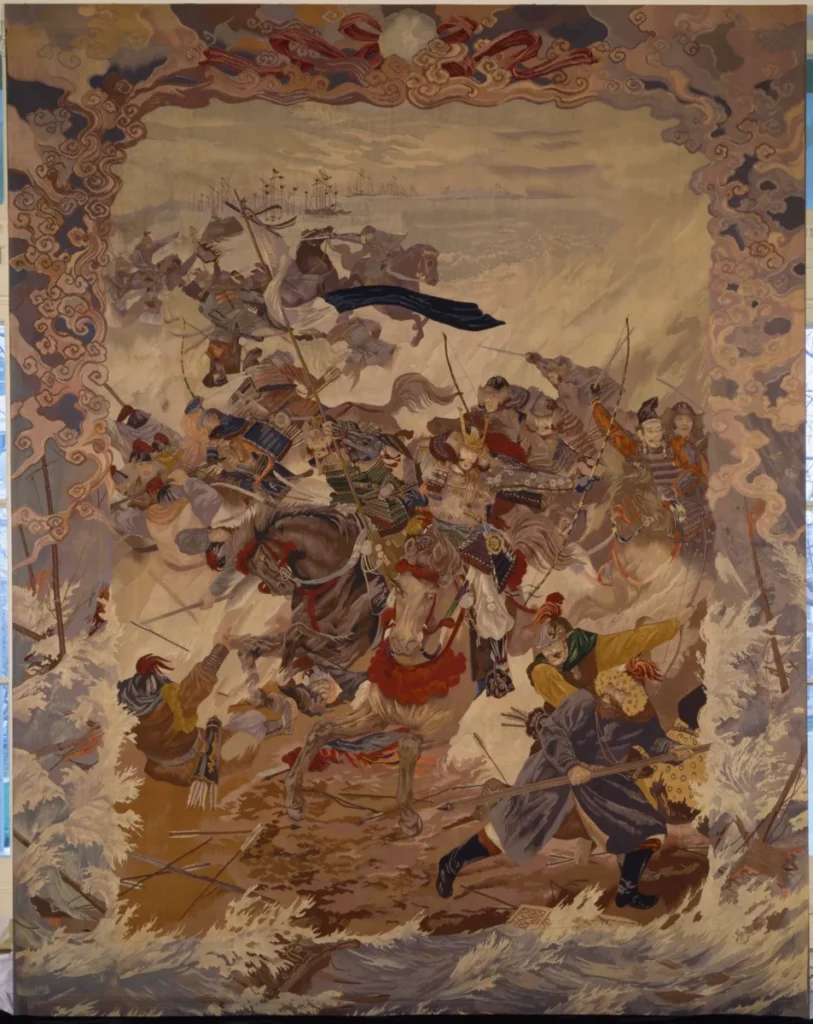
A samurai named Takezaki Suenaga commissioned illustrated scrolls documenting his personal experiences fighting the Mongol invasions. The Mōko Shūrai Ekotoba, completed in 1293, provides the earliest artistic depictions of both invasion attempts. These scrolls show Suenaga’s wartime deeds at the Battle of Bun’ei in 1274 and the naval Battle of Kōan in 1281.
The scrolls reveal practical details about combat during the invasions. Illustrations depict Mongol warriors using coordinated archery volleys and explosive projectiles, technology unfamiliar to Japanese defenders. Samurai appear in traditional armor engaging in individual combat while Mongol forces fight in disciplined formations. These visual records confirm written accounts describing the cultural and tactical differences between the opposing forces.
Suenaga’s scrolls also document his attempts to gain recognition and rewards from the Japanese government for his battlefield service. The Kamakura shogunate struggled to compensate warriors who defended against the invasions because the battles produced no captured territory or plunder to distribute. This economic reality created political tensions that would eventually contribute to the shogunate’s downfall decades later.
The scrolls currently reside in the Museum of the Imperial Collections at Tokyo Imperial Palace, recognized as invaluable historical documents. Their combination of text and illustration provides scholars with detailed information about 13th century Japanese military culture, Mongol invasion tactics, and how samurai understood their role in defending against foreign conquest.
Evidence for the Kamikaze Typhoons
For centuries, historians debated whether the kamikaze storms were real meteorological events or patriotic mythology. In 2014, geologist Jon Woodruff from the University of Massachusetts Amherst discovered physical evidence supporting the historical accounts. He analyzed sediment cores from lake beds near Hakata Bay, the site where both Mongol fleets were destroyed.
The sediment layers contained distinctive deposits matching those created by major typhoons. Critically, two such layers dated to the late 13th century, corresponding to 1274 and 1281. The geological evidence confirmed that typhoon-strength storms did indeed strike Kyushu during both invasion attempts.
Underwater archaeology has also provided evidence. Divers have discovered shipwrecks off Kyushu’s coast containing artifacts consistent with Mongol invasion fleets. The locations and condition of these wrecks suggest vessels were violently destroyed by storms rather than sunk in battle. Pottery, weapons, and ship components recovered from these sites match descriptions in historical texts.
The scientific confirmation of the kamikaze storms doesn’t diminish their historical significance. Whether divine intervention or meteorological coincidence, the typhoons genuinely did save Japan from conquest by destroying invasion fleets at crucial moments. The storms’ timing was so improbable that Japanese interpretation of divine protection was understandable given 13th century knowledge of weather patterns.
Frequently Asked Questions
How many ships did Kublai Khan lose to kamikaze?
Kublai Khan lost approximately 4,000 ships across both invasion attempts in 1274 and 1281. The 1274 typhoon destroyed about one-third of a 500-900 vessel fleet, while the catastrophic 1281 storm wrecked most of a 4,400-ship armada. Combined, these represent one of history’s greatest naval disasters.
How many Mongol soldiers drowned in the kamikaze storms?
An estimated 100,000 Mongol, Chinese, and Korean soldiers drowned during the two typhoons. The 1274 storm killed approximately 13,000 men, while the far more destructive 1281 typhoon drowned at least 70,000 warriors, with Japanese samurai killing most survivors who reached shore.
Why did the kamikaze stop Kublai Khan’s invasions?
The kamikaze typhoons destroyed the ships Kublai Khan needed to transport and supply invasion forces. Without vessels to maintain supply lines across the Korea Strait, surviving troops stranded in Japan faced starvation and defeat. The massive casualties and loss of ships made further invasion attempts economically impossible.
When did the kamikaze typhoons hit Japan?
The first kamikaze struck Hakata Bay in autumn 1274, likely in November, destroying approximately one-third of the Mongol fleet on the invasion’s first night. The second and more devastating typhoon hit on August 15, 1281, during peak typhoon season, obliterating most of a 4,400-ship armada.
Did Kublai Khan try to invade Japan again after 1281?
No, Kublai Khan never attempted a third invasion despite his determination to conquer Japan. The catastrophic losses in 1281—over 70,000 men and thousands of ships—made another invasion attempt economically and militarily unfeasible, even for the powerful Mongol Empire.
How did samurai fight the Mongol invasions?
Samurai employed traditional individual combat tactics, challenging enemies to single duels and announcing their names before fighting. This clashed with Mongol coordinated group tactics using massed archery and explosive projectiles. Japanese defenders built coastal walls before the 1281 invasion to counter Mongol advantages.
What does kamikaze literally mean?
Kamikaze combines the Japanese characters for kami (god or spirit) and kaze (wind), literally meaning “divine wind” or “spirit wind”. The term originated specifically to describe the typhoons that destroyed Kublai Khan’s invasion fleets in 1274 and 1281.