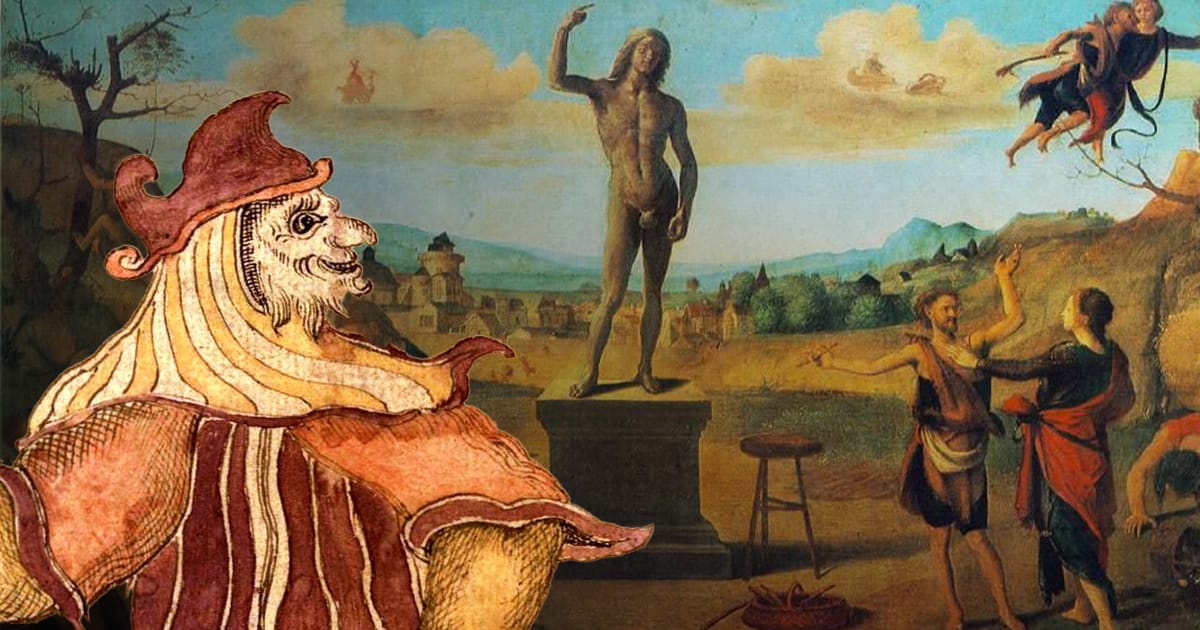
In 1956, the folklorist Paul Radin published his landmark study of the Winnebago trickster cycle, arguing that the figure represented something foundational in human storytelling: a being whose failures teach more than any hero’s success. Radin’s Winnebago materials showed a character who stole, blundered, transformed, and accidentally gave the world things it could not live without. Decades of cross-cultural research since have confirmed that trickster figures in world mythology appear from Mesopotamia to Polynesia, each shaped by a specific ecology, language, and social system. Hermes in Greece, Loki in Norse tradition, Eshu among the Yoruba, Raven on the Northwest Coast, Maui across Polynesia, Anansi in Akan culture, and Enki in ancient Sumer are not the same character in different costumes. They are distinct figures who happen to perform overlapping social work: crossing boundaries, exposing rules, distributing guarded goods, and leaving communities changed by the encounter. This post explains how they work, what they actually do in ritual and law, and how to compare them without flattening what makes each one different.
What a Trickster Actually Is and Is Not
A trickster is not simply a liar or a clown. The defining characteristic is boundary crossing: tricksters move between places, categories, and statuses that are normally kept separate. They enter sacred spaces without permission, speak across social hierarchies, disguise their bodies, and exploit the gap between the letter of a rule and its intent. When they steal fire, music, or daylight, they are not merely committing theft. They are transferring something from a restricted domain into a shared one, and the community that benefits then owes a new obligation to whatever power the trickster offended in the taking.
William Hansen of Indiana University, whose work on classical mythology traces trickster themes across Greek and comparative folklore traditions, distinguishes the trickster from the straightforward culture hero precisely on this point. A culture hero acquires goods for the community through sanctioned means. A trickster takes them through transgression and often pays a physical price, a scar, a binding, a humiliation, that makes the memory of the rule stick. The scars are not punishment in a simple moral sense. They are marks that teach: the boundary was real, crossing it had a cost, and what came back across it now carries that cost as a condition of use.
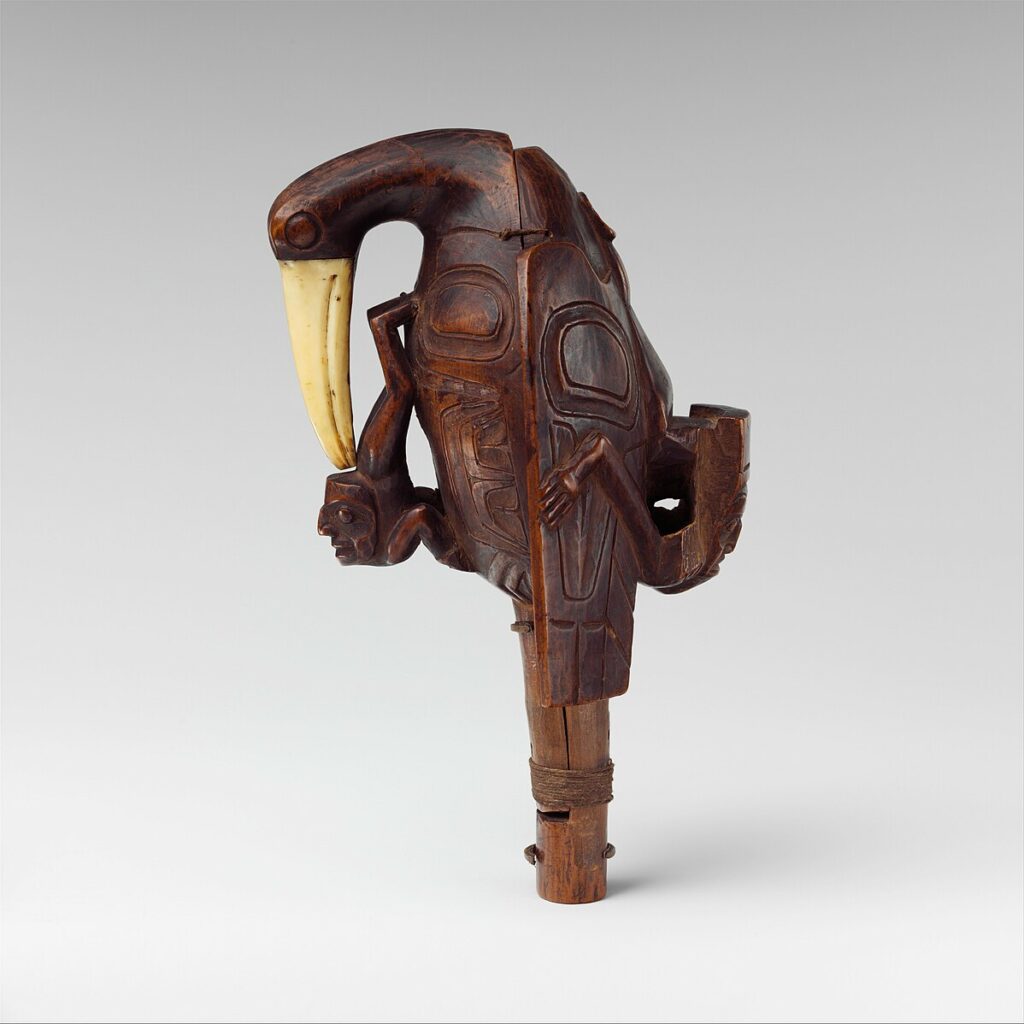
Tricksters are also insistently local. Hermes belongs to a Greek world of crossroads, markets, oracles, and competitive rhetoric. Eshu belongs to a Yoruba world of road junctions, divination, and commercial exchange. Raven belongs to a Northwest Coast world of ranked kinship, winter ceremonies, and the politics of feasting. None of these translates directly into the others, and treating them as versions of a single archetype loses the specific work each one does inside its own tradition.
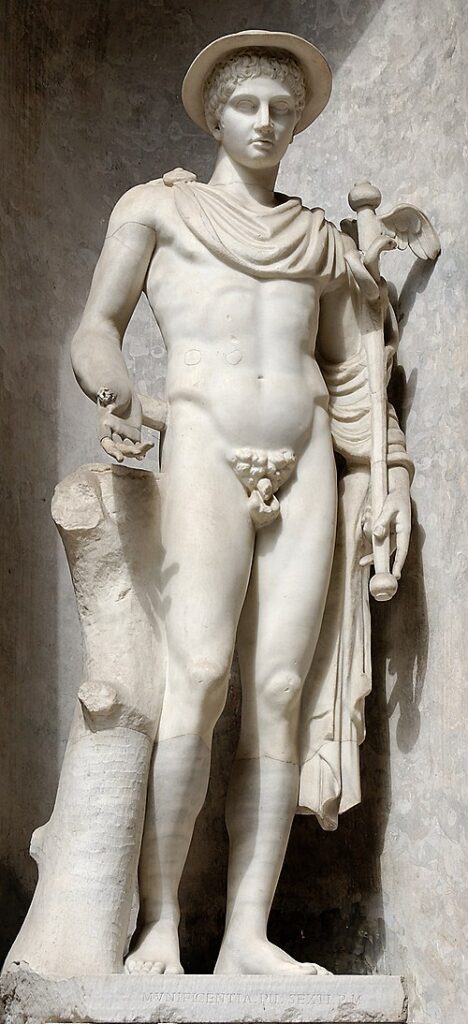
Hermes and Loki: Two Tricksters in Detail
The Homeric Hymn to Hermes, composed probably in the sixth century BCE, is the clearest extended trickster narrative in the Greek tradition. On the day of his birth, Hermes slips from his cradle, kills a tortoise and fashions its shell into a lyre, steals fifty cattle from his brother Apollo, drives them backward to confuse trackers, and then negotiates his way out of divine punishment by playing the lyre for Apollo, who is so delighted he trades the cattle for it. The story is not primarily about theft. It is about the emergence of the lyre into the world, the establishment of Hermes as messenger and patron of herders, and the formalization of a bargain between two divine powers that will structure their relationship forever after. The transgression is the mechanism that makes all of this happen.
Loki in the Norse Eddic tradition is a more unstable case. For most of the mythological cycle he is genuinely useful: he solves problems, outwits giants, and retrieves stolen divine goods. He helps recover Thor’s hammer in the Thrymskvida by disguising both of them as a bride and her handmaid. He engineers the recovery of Idun’s apples from the giant Thjazi. But Loki also causes the death of Baldr through a trick that cannot be undone, and the texts make clear that this act shifts his function permanently. Before Baldr’s death he is the dangerous but necessary boundary crosser who makes the gods more capable. After it he is the agent of destruction, bound beneath the earth until Ragnarok.
John Lindow, Professor Emeritus at the University of California, Berkeley, has argued that Loki’s trajectory illustrates what happens when a trickster’s transgressions exceed the community’s capacity to absorb them. Every trickster operates within a tolerance range. Hermes crosses lines but his crossings are recoverable; they create gifts and institutions. Loki eventually crosses a line that the Norse cosmos cannot recover from. The contrast shows that trickster figures are not infinitely elastic. Their value to a community depends on operating inside a particular band of transgression, and the mythology keeps a record of what happens when they go outside it.
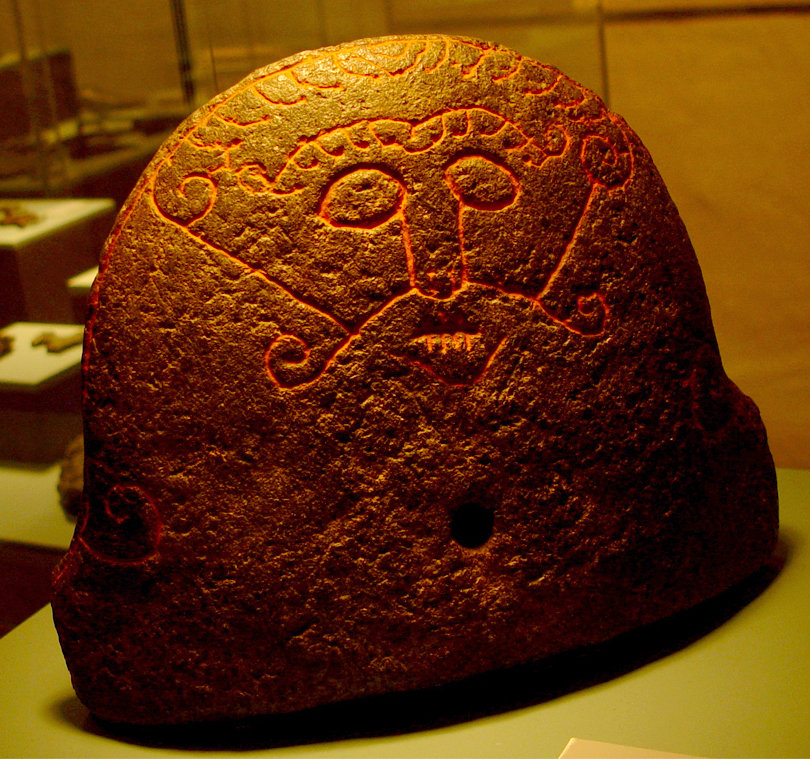
Trickster Figures in World Mythology Across Africa and the Pacific
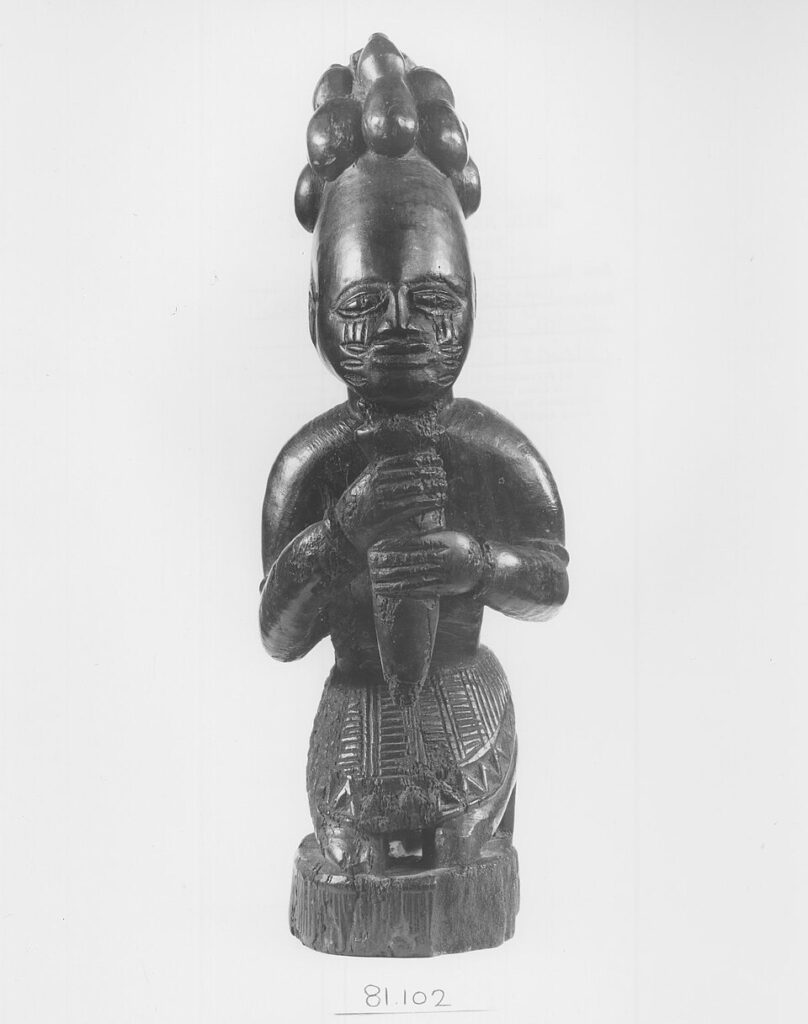
Eshu-Elegba in Yoruba tradition is the gatekeeper of all crossroads and the master of all roads between the human and divine worlds. No communication between humans and the Orisha can proceed without Eshu’s participation, which means he is simultaneously the enabler and potential disruptor of every ritual transaction. Wande Abimbola of Obafemi Awolowo University, one of the leading scholars of Ifa divination and Yoruba religion, has documented how Eshu’s role in the Ifa corpus is not simply mischievous but structurally necessary: without an acknowledged figure who can disrupt communication, the entire divinatory system would have no way to account for the failures and ambiguities that real consultations inevitably produce. Eshu is the explanation for why messages go wrong, and therefore the reason why care and correct procedure are required.
Anansi the spider in Akan tradition from Ghana and later in Caribbean diaspora cultures is primarily a culture hero who acquires stories themselves from the sky god Nyame by paying a price no one else could afford: hornets, a python, a leopard, all captured through tricks. Before Anansi, stories belonged to Nyame exclusively. After his transaction, they belong to everyone. This narrative structure does something specific: it grounds storytelling itself in trickery, which means every story carries a trace of the transgressive act that made it possible to tell. The Akan story of Anansi acquiring stories is itself one of the stories Anansi acquired, a recursive structure that literary scholars have found unusually sophisticated in its self-awareness.
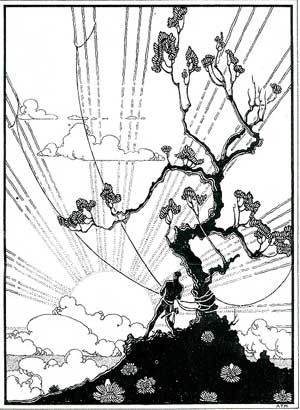
Maui across Polynesian traditions from Hawaii to New Zealand performs actions of enormous consequence through means that are improper by normal standards. He fishes up islands using a hook made from his grandmother’s jawbone, a use of human remains that would be deeply transgressive in ordinary life. He slows the sun by lassoing it with a rope of his sister’s hair, which is possible only because the sun does not know what a rope is. In Maori tradition, he dies attempting to gain immortality for humanity by crawling into the sleeping body of the goddess of death, Hine-nui-te-po, and is crushed when a small bird laughs and wakes her. His death is a trickster’s death: the failure of a trick at the limit of what transgression can accomplish. Humanity does not gain immortality, but the attempt itself is the reason the story is told.
Enki: The Mesopotamian Trickster in Cuneiform
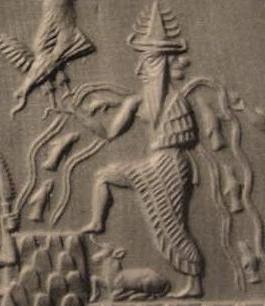
Enki, known as Ea in Akkadian tradition, is the Sumerian god of freshwater, wisdom, craft, and magic. He is not usually grouped with trickster figures in popular accounts, but the Sumerian mythological texts preserved on tablets from Nippur and Ur make his trickster functions unmistakable. In the myth of Enki and Ninhursag, Enki repeatedly impregnates goddesses in ways that violate proper reproductive sequence, is cursed by Ninhursag for eating sacred plants, and is only healed when Ninhursag relents and creates eight new deities to cure his ailments. The story moves through transgression, punishment, and resolution in the classic trickster pattern.
More directly trickster-like is the myth of Enki and the Mes, in which the goddess Inanna visits Enki’s underwater palace and, after he has drunk too much beer, receives from him the Mes, the fundamental laws and arts of civilization. Enki sobers up and sends demons to retrieve them, but Inanna has already delivered them to Uruk. The story is etiological: it explains why the city of Uruk has civilization while also assigning a drunken transaction as the mechanism of transfer. Civilization, in this telling, arrived through an exchange that its original owner was not entirely competent to authorize. Samuel Noah Kramer and John Maier’s translation and analysis of this text, published through the Oxford University Press, remains the standard scholarly treatment of Enki’s mythological functions.
What makes Enki’s case particularly interesting for comparative purposes is the way his trickster functions are embedded in a hydraulic civilization’s cosmology. Freshwater is the source of irrigation, agricultural surplus, and urban life in Sumer. The god who controls freshwater and who also controls wisdom through transgressive means is the god without whom civilization literally cannot be sustained. His trickery is not peripheral to the social order; it is its foundation.
Built out of a love for history, kept free from distractions.
Spoken Past is an independent project shaped by curiosity, care, and long hours of research. Reader support helps keep it maintained, carefully researched, and open to everyone.
Where Tricksters Live: Thresholds and the Archaeology of Liminal Space
Trickster figures cluster in the landscape at points where categories meet and where rules are most likely to be tested. Road junctions are the most consistent location across cultures. In Greece, herms, stone pillars bearing the head of Hermes and an erect phallus, were placed at crossroads, doorways, and property boundaries from at least the sixth century BCE. They were not merely decorative. Travelers touched or oiled them to ask safe passage, and the practice left visible wear patterns on surviving examples. The herm is a material record of the anxiety that crossroads produce and the expectation that Hermes as boundary figure could be petitioned to manage it.
Among the Yoruba, the crossroads is Eshu’s primary domain, and shrines to Eshu in southwestern Nigeria are consistently placed at road junctions, market entrances, and the thresholds of compound gates. Architectural surveys of traditional Yoruba compounds document Eshu’s shrine as a standard feature at the point where the public road meets the private family space. The shrine does not simply mark the threshold; it provides a supplicant who manages the moral danger of passage between domains with different obligations.
Markets appear as trickster habitats across multiple traditions for related reasons. A market is a space where strangers meet, where the value of things is negotiated rather than fixed, and where the rules of normal social relations are suspended in favor of exchange logic. These are precisely the conditions in which trickster dynamics are most likely to emerge. Norse skaldic poetry and saga literature consistently associate Odin’s trickster capacities with the space of the thing, the assembly, where words are weapons and wit determines outcomes. The association is not accidental. Where rules are negotiated rather than simply enforced, the figure who excels at exploiting rule-gaps has the greatest social power.
The Social Work of Trickster Tales: Ethics, Law, and Laughter
Trickster stories do ethical work without ever issuing ethical commands. When a tale shows Anansi tricking a more powerful animal into a humiliating position, the audience learns something about how intelligence can compensate for vulnerability, without anyone declaring that intelligence is a valid tool for the powerless. When a tale shows Loki’s trick rebounding catastrophically, the audience learns something about the limits of transgression without a single moral pronouncement. The knowledge arrives through laughter, vicarious experience, and narrative consequence rather than through precept.
This sideways ethics has specific social utility. In hierarchical societies, direct criticism of superiors is dangerous. Trickster tales create a licensed space in which a figure who resembles the powerful can be made to look foolish without anyone having to claim personal authorship of the insult. Winter ceremonial traditions among Northwest Coast peoples explicitly licensed verbal and behavioral transgressions during performance contexts that would be punishable outside them. The license was not anarchic; it was precisely bounded and ended when the performance did. But inside that boundary, things could be said that could not be said otherwise.
Law also benefits from trickster stories. When Hermes tricks Apollo through a loophole in divine procedure, the myth does not simply celebrate cleverness. It exposes the loophole and thereby prompts its closure. Trickster tales in oral legal traditions function as case studies in how rules can be circumvented, which is valuable information for the people who write and enforce rules. Rebecca Benefiel of Washington and Lee University, whose work on the Ancient Graffiti Project tracks informal writing in Roman Pompeii, has shown how humor and transgressive speech operated in Roman public spaces within understood conventions about where and when such speech was permissible. The Roman walls are not Norse myths, but they share the underlying principle: transgression has its licensed places, and those places teach as much as the rules they bend.
Technology, Invention, and the Trickster’s Accidental Gifts
Many of the most important technologies in mythological traditions enter the human world through trickster action. Hermes’ lyre is the clearest Greek example: the instrument is improvised from a dead animal, tested as a personal tool, and then traded as a diplomatic gift in a dispute that its existence helps resolve. The lyre arrives in the divine world fully formed not from deliberate craftsmanship but from the opportunistic creativity of a being who was not supposed to be making anything at all on the day of his birth.
Prometheus in Greek tradition is a culture hero more than a trickster, but his theft of fire from the gods follows the trickster pattern precisely. He conceals fire inside a fennel stalk to smuggle it past divine surveillance, a detail that preserves the specific knowledge that fire can be carried inside the hollow stems of certain plants. The myth is etiological and technological simultaneously: it explains why fire is available to humans and also preserves the particular technique by which fire could be transported before ceramic containers existed. Myths that look like pure theology often contain embedded practical knowledge whose value becomes clear only when read against the material conditions of the time they encode.
Maui’s fishhook made from a jawbone is similarly embedded in specific material practice. The jawbone hook is a real technology documented in Polynesian archaeology, and the mythological account of its origin through transgressive use of human remains gives it a ritual status that regulates its use. You do not simply pick up any jawbone and make a hook; you understand that the technique carries a history of transgression and that using it requires acknowledgment of the forces that made it available. Technology in trickster traditions is never morally neutral. It arrives with the cost of its acquisition attached.
How Trickster Traditions Travel and Transform
Anansi is among the clearest cases of a trickster tradition adapting across forced cultural displacement. The Akan spider figure traveled to the Caribbean and North America with enslaved West Africans from the seventeenth century onward, and in new contexts he acquired new functions without losing his core structure. In Jamaica and the wider Caribbean, Anancy stories became a vehicle for encoding knowledge about how to survive under conditions of radical power imbalance, how to appear compliant while sabotaging the expectations of the more powerful, and how to maintain community solidarity through shared humor at the powerful’s expense. The trickster’s toolkit, already developed for a West African context, proved directly applicable to the social conditions of plantation slavery.
This adaptability is characteristic. Trickster figures in oral traditions do not have fixed texts. Each performance is a version, shaped by the performer’s assessment of what the audience needs to hear. A trickster tale told in a time of food scarcity will emphasize different elements than the same tale told in a time of political oppression. The figure’s consistency lies not in any particular story but in the set of functions it performs, and those functions can be recombined endlessly as social circumstances change. This is part of why trickster traditions persist when so much else in oral culture is lost. They are genuinely useful, and useful things get kept.
The comparison of trickster figures across cultures is most valuable when it holds differences intact. Hermes does not die; Maui does. Loki is eventually bound under the earth; Anansi retains his stories indefinitely. Eshu cannot be ignored or bypassed; Raven can be tricked by his own greed. Each variation is information about the specific community that shaped the figure, and each variation is lost the moment you decide that all tricksters are really one archetype seen through different cultural lenses. The patterns are real. The differences are where the history lives.
Sources: Paul Radin, The Trickster: A Study in American Indian Mythology (Schocken Books, 1972 reprint of 1956 original), with commentaries by Karl Kerenyi and C.G. Jung; William Hansen, Classical Mythology: A Guide to the Mythical World of the Greeks and Romans (Oxford University Press, 2020); John Lindow, Norse Mythology: A Guide to Gods, Heroes, Rituals, and Beliefs (Oxford University Press, 2001); Samuel Noah Kramer and John Maier, Myths of Enki, the Crafty God (Oxford University Press, 1989); Rebecca R. Benefiel, “Dialogues of Ancient Graffiti in the House of Maius Castricius in Pompeii,” American Journal of Archaeology 114.1 (2010), pp. 59-101; Wande Abimbola, Ifa: An Exposition of Ifa Literary Corpus (Oxford University Press Nigeria, 1976); Antony Alpers, The World of the Polynesians (Oxford University Press, 1987).