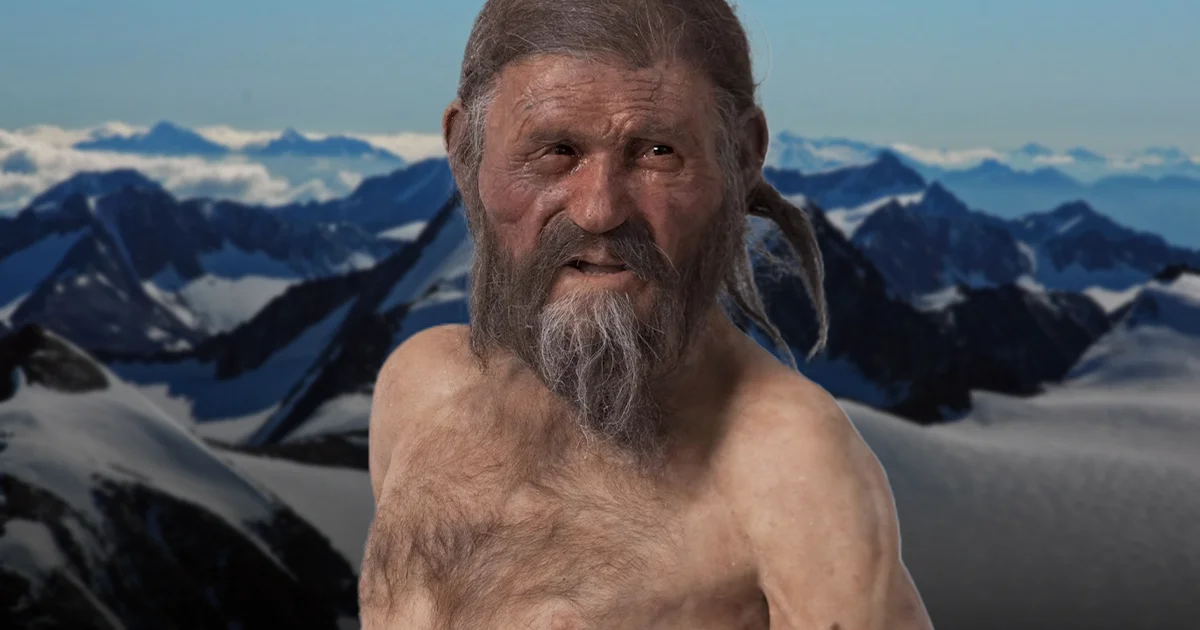
Ötzi the Iceman died from an arrow wound to his left shoulder that severed his subclavian artery, causing him to bleed to death within minutes on an Alpine mountain pass around 3300 BC. The stone arrowhead, revealed through computed tomography scans in 2001, tore a 13-millimeter gash in the major blood vessel and triggered massive hemorrhage that killed him almost instantly.
The mummy lay frozen in the Ötztal Alps for 5,300 years before hikers stumbled on the body in September 1991 at 3,210 meters above sea level. What first seemed like a modern mountaineering accident turned into the oldest murder case in human history once radiocarbon dating revealed the corpse’s true age.
The Stone Arrowhead in His Shoulder
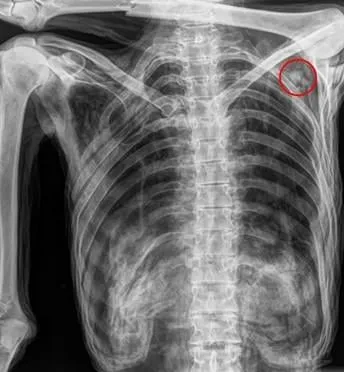
Routine X-ray examination in 2001 revealed a flint arrowhead lodged in Ötzi’s left shoulder region, ten years after the initial finding of the body. The projectile measured approximately 4 millimeters wide and sat 6.5 millimeters away from the damaged artery in the scan images. The arrow had penetrated through the left scapula from behind, and the shaft was removed shortly before or after death, leaving only the stone tip embedded in the tissue.
Multislice CT scanning in August 2005 provided the forensic evidence needed to confirm murder. The radiological team at the General Hospital in Bolzano used advanced imaging technology to trace the arrowhead’s path through Ötzi’s shoulder and identify the specific damage it caused. The scans showed a slightly curved tubular structure in the left subclavian region with higher density than surrounding tissue, marking the preserved artery itself.
The Fatal Laceration
The subclavian artery’s vessel wall showed a 13-millimeter section where damage was clearly visible on the CT images. A 3-millimeter irregular pseudo-aneurysm formed at the injury site, a typical complication when an artery is torn open. The pseudo-aneurysm occurs when blood escapes through the damaged vessel wall but remains contained by surrounding tissue, creating a blood-filled bulge.
Surrounding the damaged artery, the scans revealed a large hematoma spreading through the soft tissue. This mass of clotted blood extended from the left subscapular region through the scapula and into the wound channel toward the skin surface. The hematoma proved the arrow shaft had been removed while Ötzi was still alive or immediately after death, and that he remained in a semi-upright position similar to how his corpse was eventually found.
The arrowhead itself registered at 1,840 Hounsfield units on the CT scan, confirming its stone composition. The damaged subclavian artery showed readings of negative 40 Hounsfield units, while the surrounding soft tissue measured negative 290 units. These density measurements allowed researchers to distinguish blood vessels from other anatomical structures in the mummified remains.
Death by Hemorrhagic Shock
Historic medical records show that subclavian artery injuries almost always prove fatal. Even with modern emergency care, more than 60 percent of people with this type of wound die before reaching a hospital. The major symptoms include massive bleeding, expanding hematoma, and shock-related cardiac arrest.
At 3,210 meters elevation in the Copper Age, Ötzi had no chance of survival. The arrow severed a major thoracic artery, and he would have experienced rapid blood loss leading to hemorrhagic shock. His heart would have stopped beating within minutes as his blood pressure dropped and his organs shut down from lack of oxygen.
The absence of intravascular blood in the mummy and the lack of post-mortem lividity fit perfectly with death from complete exsanguination. When a person bleeds out entirely, gravity does not pull remaining blood into the lowest parts of the body to create the purple discoloration typically seen in corpses. The radiological evidence leaves almost no doubt about the cause of death.
The Hand Wound
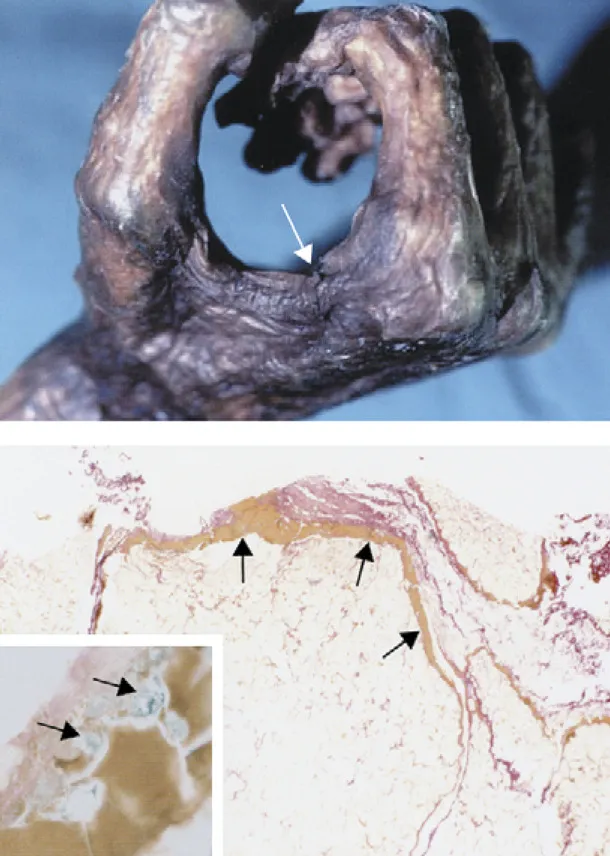
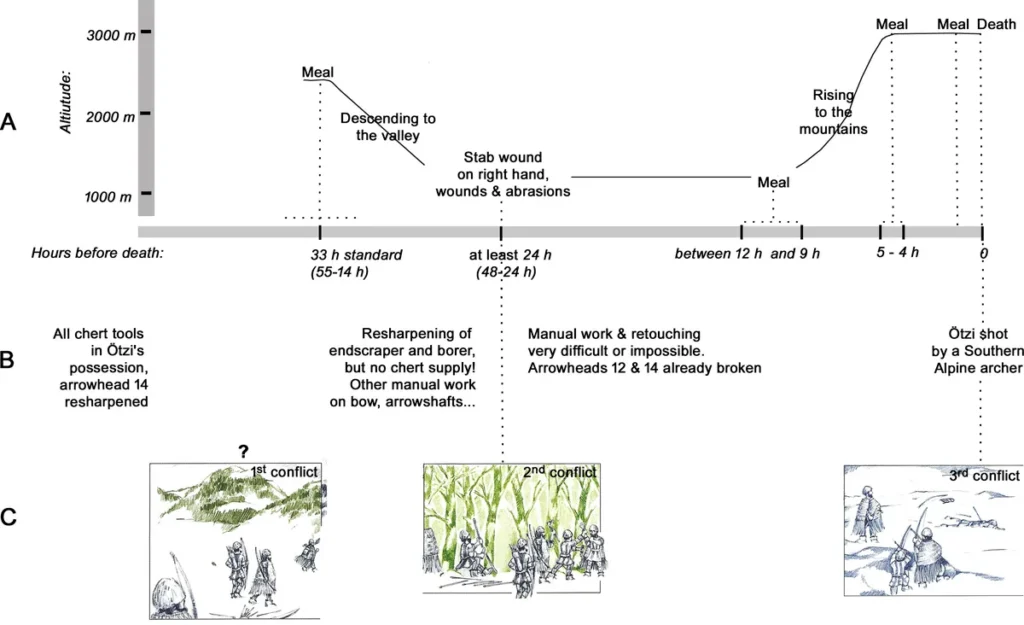
Additional CT examinations in 2005 uncovered another injury that helps reconstruct Ötzi’s final hours. His right hand showed a fresh defensive wound sustained one to two days before death. This cut suggests he had been involved in a violent confrontation shortly before climbing into the high Alps.
The hand injury indicates Ötzi was fleeing or fighting in the days leading up to his death. The wound had not healed, proving it occurred very close to the time of the arrow attack. Some researchers initially theorized he was running from pursuers after an earlier skirmish, but other evidence contradicts this scenario.
The Full Stomach
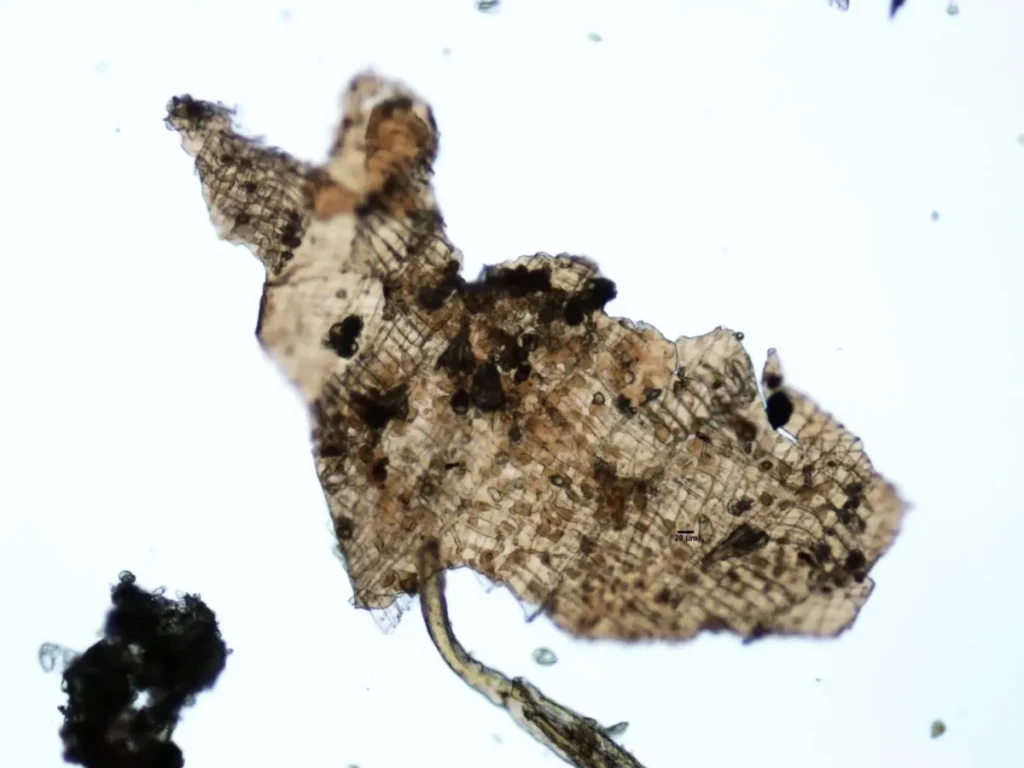
Radiological re-examination identified Ötzi’s stomach for the first time in 2011. The organ appeared as a transverse, inhomogeneous structure in the upper abdomen, stretching from the cardiac region downward and then toward the right. For years, researchers assumed the stomach was empty because they could not locate it on scans and a laparoscopic attempt to recover stomach contents had failed.
The stomach was actually positioned relatively high behind the ribcage in a transverse orientation, making it difficult to access surgically. The organ was completely filled with food, meaning Ötzi had eaten a substantial meal shortly before the arrow struck him down. The colon, visible as a narrow horizontal strip below the stomach, contained bone fragments from ibex and deer that were previously mistaken for the last meal.
A full stomach contradicts theories that Ötzi was fleeing in panic from attackers. A person under extreme stress from a chase would not stop to eat a large meal. Instead, the evidence suggests he felt safe enough after a strenuous mountain ascent to rest and consume food. He may have moved only a short distance from his dining spot before an ambush attack came from behind.
The Arrow’s Trajectory
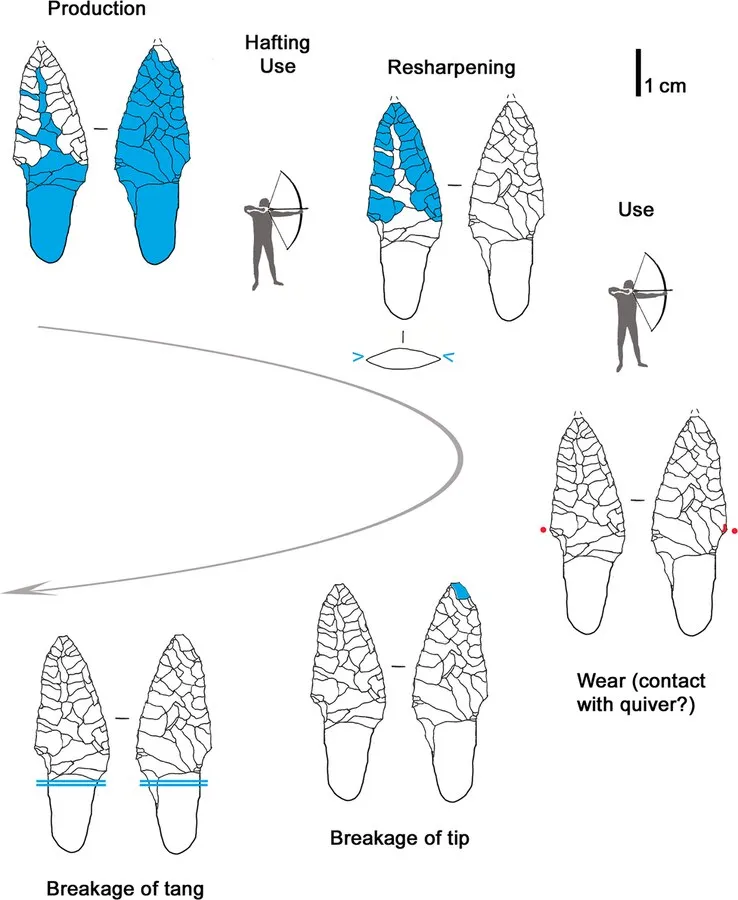
The arrow entered through Ötzi’s back at the left shoulder, passing through the scapula before the flint head lodged in the subclavian region. The penetration wound in the skin showed no signs of healing, confirming death occurred immediately or very soon after impact. Someone removed the wooden shaft from the wound channel, but the barbed stone point caught in the tissue and separated from the shaft.
The trajectory indicates the shooter stood behind and possibly below Ötzi when releasing the arrow. The man may have been crouching or standing downslope when he aimed at the target’s exposed back. This positioning supports the ambush theory rather than a face-to-face confrontation.
The left subclavian vein, positioned slightly more forward than the artery, showed no damage in the CT scans. This proves the projectile struck the more posterior vessel. The right subclavian artery and vein both appeared intact with smooth walls and no surrounding hematoma, ruling out any injuries to the right side of the body.
Built out of a love for history, kept free from distractions.
Spoken Past is an independent project shaped by curiosity, care, and long hours of research. Reader support helps keep it maintained, carefully researched, and open to everyone.
His Final Position
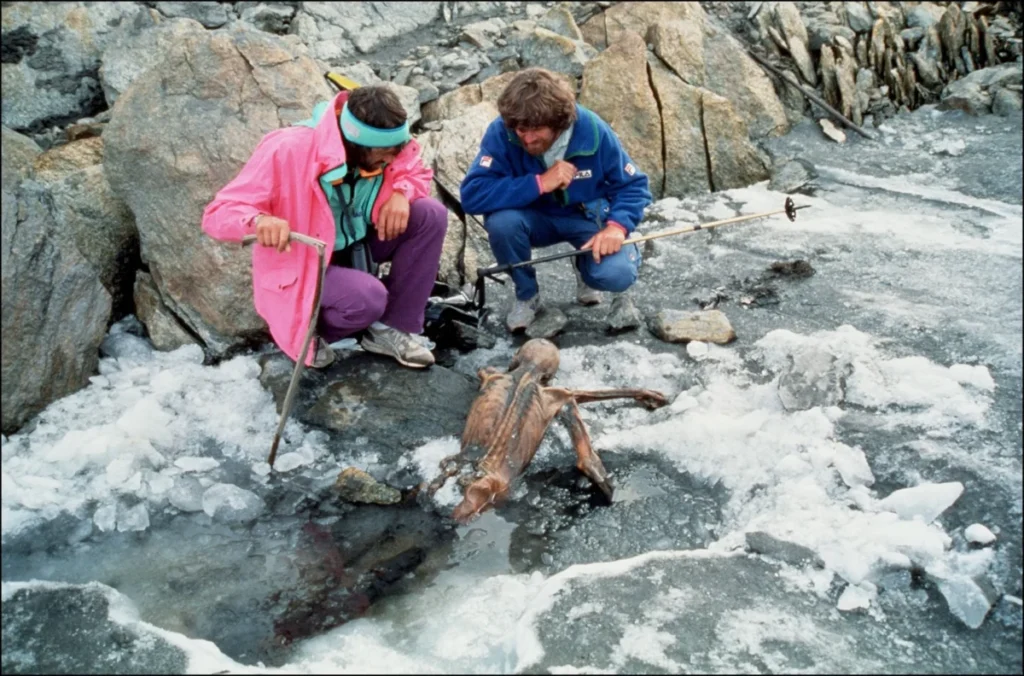
Ötzi collapsed or was positioned in a semi-upright posture after the arrow struck. The hematoma’s spread pattern through the tissue and the blood settling in specific areas indicate he was not lying flat when he died. The corpse’s final position, face-down with the left arm frozen in an upward-transverse direction, matches this reconstruction.
His prominently bent right arm partially obstructed the outer end of the arrow’s wound channel. This arm position, combined with the blood distribution patterns, helps forensic analysts understand exactly how he fell and where he lay as he bled out and the mountain cold preserved his body.
Mountain Life and Joint Strain
Both of Ötzi’s knee joints showed enthesopathy, calcifications forming at the points where tendons attach to bone. The cortical bone of both patellae appeared thickened and roughened, with small calcium deposits visible on the right kneecap. These changes indicate repeated heavy strain on the knee joints over many years.
Enthesopathy typically causes pain and swelling during weight-bearing activities that subsides when the joints rest. The condition develops in people who spend extensive time hiking in steep mountain terrain rather than living in valley settlements. Ötzi was clearly accustomed to strenuous walks at high altitude, possibly as a semi-nomadic herdsman supervising animals on alpine pastures.
Gallstones and Diet
The 2011 CT re-examination found at least three small gallstones in Ötzi’s gallbladder, measuring up to 3.5 millimeters across. The stones showed a mean density of 614 Hounsfield units, indicating a mixed composition of calcium, cholesterol, and pigment. Combined with previously identified atherosclerotic plaques in his abdominal aorta, the gallstones suggest elevated cholesterol levels.
Early studies based on stable carbon and nitrogen isotopes from Ötzi’s hair proposed he maintained a predominantly vegetarian diet. The high dental abrasion on his teeth, typical of plant fiber consumption, seemed to support this theory. However, the colon contents contained meat remnants, and the cardiovascular evidence points toward regular consumption of animal products.
If Ötzi worked as a herdsman conducting seasonal migrations with livestock, he would have had steady access to dairy and meat. This occupation would explain both his mountain-adapted physiology and his apparently cholesterol-rich diet. Recent analysis of his fur clothing showed the materials came from domesticated rather than wild animals, supporting the herdsman hypothesis.
The Murder Weapon
The flint arrowhead represented sophisticated Copper Age weaponry. Stone projectile points required considerable skill to manufacture, and the barbed design prevented easy removal from a wound. The shooter likely crafted or obtained the arrow specifically for hunting or warfare.
After striking Ötzi, someone made the deliberate choice to remove the arrow shaft from his body. This action could indicate the killer wanted to retrieve valuable equipment, or perhaps wanted to obscure evidence of the attack method. The barbs prevented complete extraction, so the stone point remained buried in the tissue while the wooden shaft was pulled free.
Preservation in Ice
Ötzi’s body survived 5,300 years because it quickly froze and remained mostly encased in ice. The rocky depression where he lay only thawed superficially during warm periods, allowing his back and shoulders to occasionally contact melt water while his front and legs stayed frozen. This explains why vivianite (iron phosphate) deposits from surrounding minerals accumulated in the shallow depressions of his upper back but not on his anterior surface.
The partial thawing caused clothing on his exposed back and shoulders to decay and blow away, while the feet and front torso remained covered with well-preserved garments and shoes. If the entire body had thawed completely even once during the millennia, decomposition would have destroyed the remains entirely.
The Unsolved Mystery
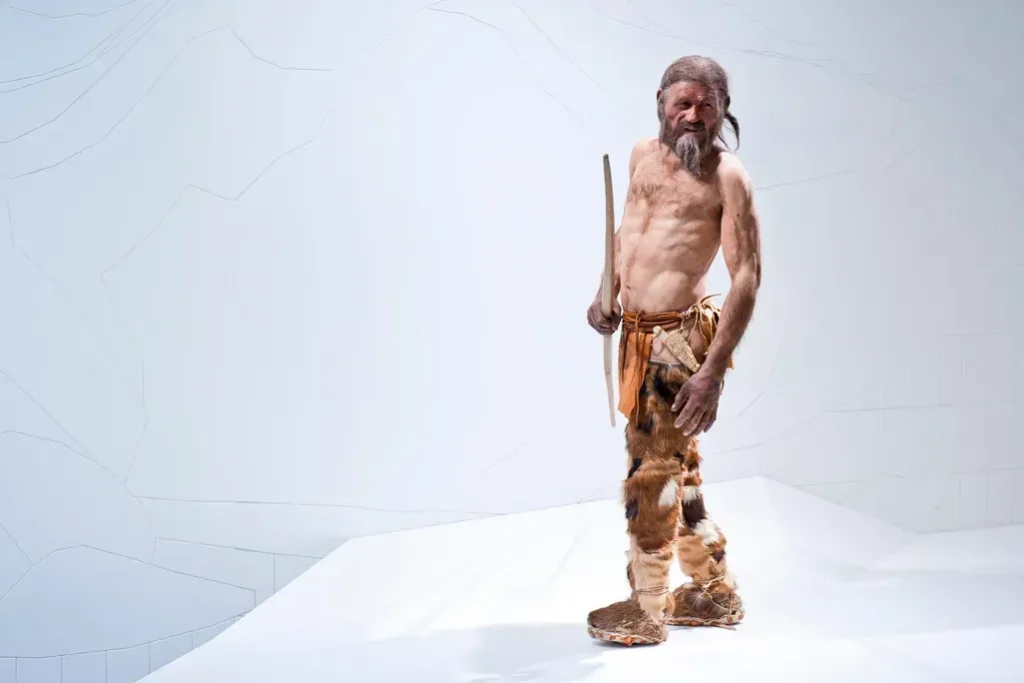
No one knows who killed Ötzi or why. The arrow attack from behind, the removal of the shaft, and the earlier hand wound paint a picture of violent conflict, but the specific circumstances remain unknown. Was this a personal dispute, a territorial conflict, a robbery, or warfare between communities?
The forensic evidence proves murder beyond doubt, but the human story died with Ötzi on that mountain pass. Radiological technology revealed how he died with remarkable precision, yet the identity of the archer and the reason for the killing are questions that 5,300 years of ice will never answer.