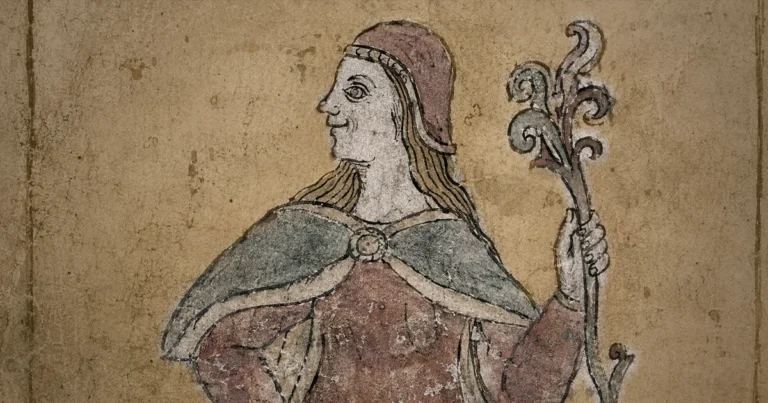

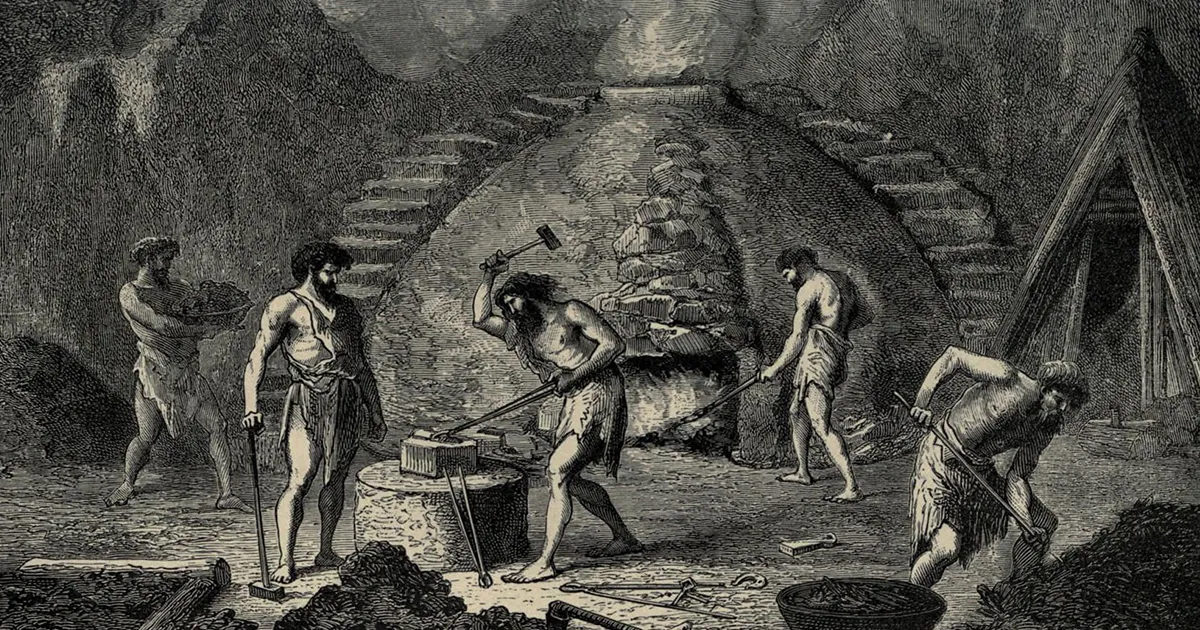
In 1734, a miner working an active salt tunnel in the Austrian Alps came upon a human body preserved in the rock. The corpse was wearing Bronze Age clothing and carried Bronze Age tools. Salt had kept it intact for three thousand years. The find was not anomalous. The Hallstatt salt mines, worked intermittently since around 1500 BCE according to excavations conducted by the Natural History Museum Vienna’s Department of Prehistory, have produced more prehistoric organic material than almost any comparable site in temperate Europe, including wooden staircases, leather shoes, woollen sacks, food scraps, and the clothing of miners whose names are permanently lost. That exceptional preservation record is a side effect of what made Hallstatt worth mining in the first place: salt in such concentrations that it saturates everything around it and refuses to let organic tissue decay. This post examines the Hallstatt salt mines as an economic engine, tracing how crystalline rock salt extracted from a single Austrian mountain valley paid for feasts, funded warriors, moved along rivers to the Danube and beyond, and ultimately tied Celtic Europe into a coherent exchange system spanning from the Alps to Atlantic Gaul.
What the Hallstatt salt mines preserve and why it matters
The Department of Prehistory at the Natural History Museum Vienna has conducted excavations in and around Hallstatt continuously since 1960 and at the burial site since 1992. Since the mid-nineteenth century the museum has held primary responsibility for the site, and its researchers have built the most detailed published record of prehistoric salt mining available for any site in the world. Dr. Hans Reschreiter, who leads the NHM Vienna’s underground excavation programme at Hallstatt, has focused particularly on reconstructing the organization and technology of mining across different periods, mapping how Bronze Age miners using pick-and-sack methods gave way to Iron Age miners extracting salt in large bars from wider galleries.
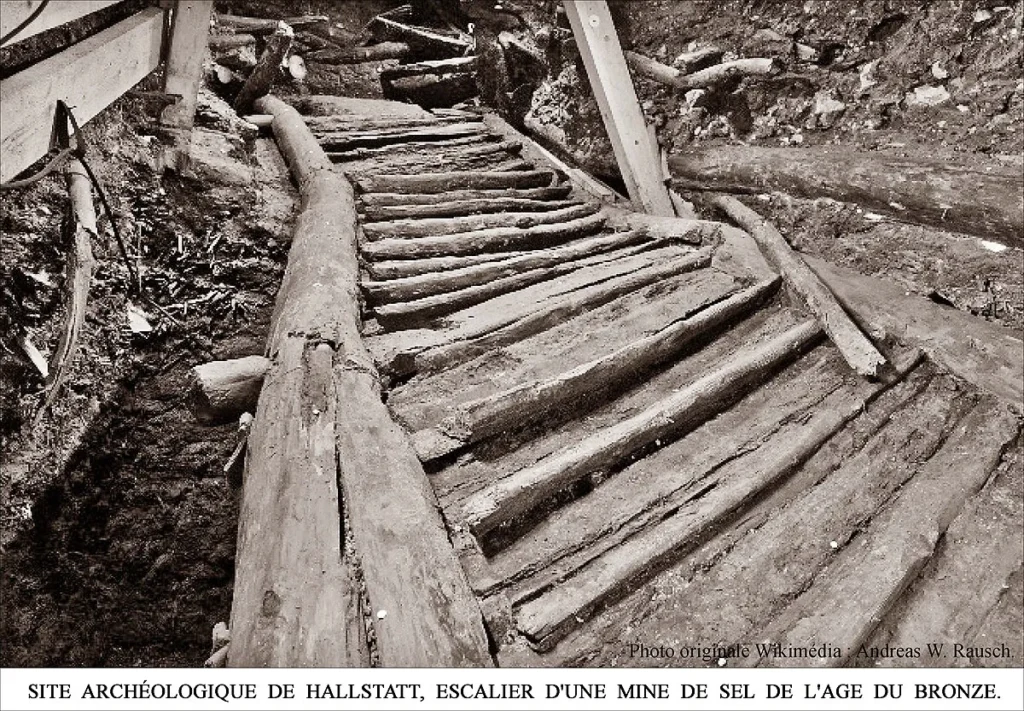
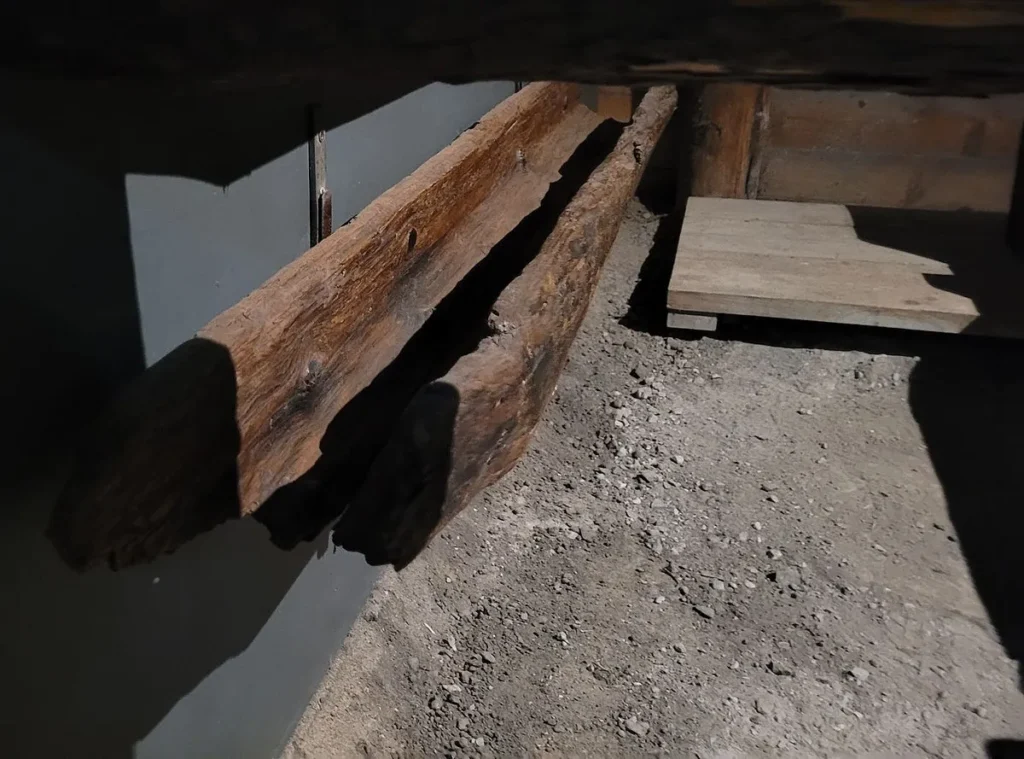
The staircase dendrochronologically dated to 1344 to 1343 BCE is the oldest wooden staircase ever found in Europe. It was not a casual construction. The steps are notched to standard widths, the treads bevelled to prevent pooling of the brine water that seeped through tunnel floors, and the side stringers are cut from timber selected for straight grain rather than whatever wood happened to be available. Whoever commissioned and built this staircase was managing a production facility, not scratching for occasional mineral deposits. The scale of investment is the first piece of evidence that salt from this mountain was feeding a demand much larger than local consumption could justify.
The second Alpine mining district that operated alongside Hallstatt from the Bronze Age onward was Dürrnberg, above the town of Hallein near Salzburg, where thick halite bodies close to the surface allowed different extraction techniques. At Dürrnberg, miners could exploit shallower seams and also generate brine by directing water through salt-bearing rock and collecting the saturated liquid in surface basins for evaporation. The two sites were not rivals but complementary suppliers feeding the same downstream market along the same river system.
How miners worked the salt and turned crystal into cargo
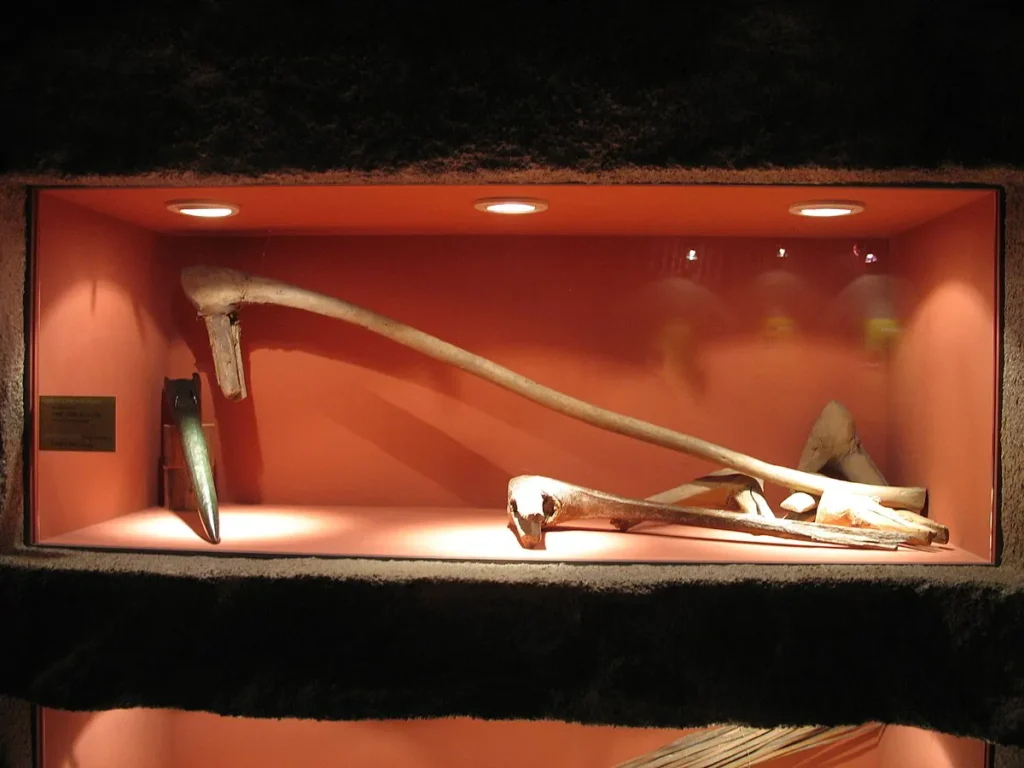
Bronze Age miners at Hallstatt worked in narrow tunnels using bronze picks to break the salt face into small pieces, which were then loaded into thick woollen sacks and hauled up through the gallery system by hand. Dr. Karina Grömer, textile archaeologist in the NHM Vienna’s Prehistory Department, has spent two decades studying the approximately 700 textile fragments recovered from the Hallstatt mine, and her analysis of the Bronze Age woollen sacks, published through the NHM Vienna’s Hallstatt textile research programme, shows that these were purpose-built carrier bags with reinforced seams and buttonhole-stitched edges specifically designed for the abrasion and weight of salt transport. They were not repurposed clothing but purpose-manufactured equipment, indicating a textile production infrastructure dedicated to maintaining the mine’s logistics.
By the Iron Age, the method had shifted entirely. Iron Age miners cut salt from wider gallery faces in large rectangular bars rather than smashing it into fragments, which meant the sacks became redundant. The Iron Age textiles Grömer has analysed from the Hallstatt mine are fine-quality wool fabrics, originally garments, torn into strips and brought underground for use as ties, padding, and cleaning cloths. The change in textile function tracks the change in mining method with precision. That kind of material logic, where what survives underground reflects the specific requirements of the technique being used, is what makes the Hallstatt textile record an unusually direct window into the organisation of prehistoric labour.
Underground, work ran in shifts timed by torch burn. When a torch expired, a team’s task ended and the crew rotated. This timing system, reconstructed by Reschreiter’s team from the soot distribution patterns on tunnel walls and the spacing of dropped torch fragments, imposed a rhythm on the underground workforce that required coordination at the surface as well. Wood for torches, food and water for crews, timber for props and staircase maintenance, and fresh sacks for transport all needed to arrive in the right quantities at the right frequency. The mines were not just extraction points but logistical systems requiring continuous management.
What salt preservation made possible across the landscape
Salt’s primary economic function was to extend the shelf life of perishable foods by drawing moisture from bacterial environments and creating conditions in which spoilage could not proceed. A valley community that could salt and hold meat after autumn slaughter could provision a construction workforce through winter, feed a gathering of allied families at a spring feast, or move surplus protein to a trading partner two river bends away. None of those things is possible with fresh meat, which spoils within days in temperatures above freezing. Salt turns a seasonal surplus into a storable asset, and storable assets are the precondition for sustained specialised labour, long-distance exchange, and the kind of elite hospitality that builds political relationships across geographical distance.
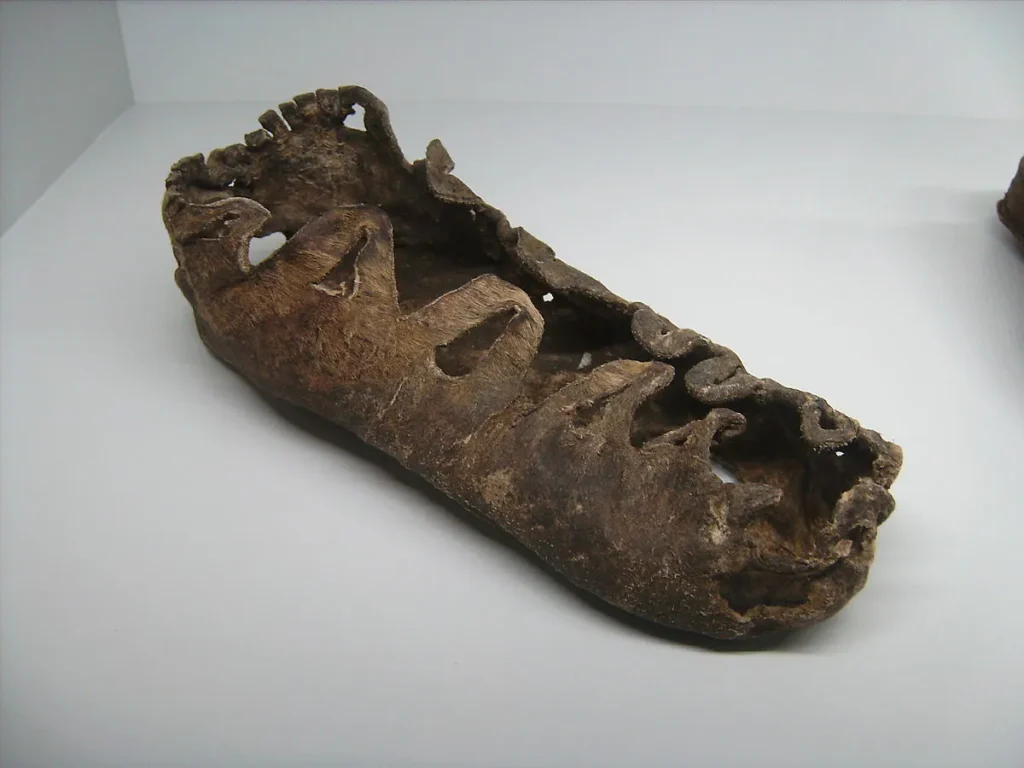
The same logic applies to hides and dairy. Untreated hides rot before they can be tanned and worked into the leather goods that mining communities themselves needed in quantity: the carbatinae shoes, the belt straps, the tool handles, and the carrying bags that show up throughout the Hallstatt and Dürrnberg material record. Salt in the tanning process extends the window between slaughter and working the hide from days to weeks or months, which means a tanner no longer needs to be present at the moment of slaughter and can instead be a specialist operating at a fixed location. Salt, in other words, enables specialisation by removing the time pressure that forces generalism.
Dairy preservation worked similarly. Hard cheese requires salt both in its production and in its rind formation. A farming community near the Alpine foothills that could access salt in quantity could produce cheeses stable enough to travel and trade. The same routes that carried rock salt down from Hallstatt toward the Danube carried processed dairy goods back upvalley in exchange. This bidirectional flow is not speculative: the meat-curing installations found in the settlement above the Hallstatt mine, including wooden tubs radiocarbon dated to the thirteenth and twelfth centuries BCE that would each have held between 150 and 200 pig carcasses, show that large-scale preservation was happening at the mine site itself, not just at downstream distribution points.
Built out of a love for history, kept free from distractions.
Spoken Past is an independent project shaped by curiosity, care, and long hours of research. Reader support helps keep it maintained, carefully researched, and open to everyone.
Rivers as trade routes and salt as the cargo that made them viable
The Salzach River, whose name encodes the German word for salt (Salz) and the word for stream (Ach), drains the northern slope of the Alps directly through the Hallein-Dürrnberg district and runs northwest to join the Inn, which then flows east into the Danube. The Traun, which drains the Hallstatt district specifically, joins the Danube further east. These are not coincidental geography. The two principal Alpine salt districts of the first millennium BCE sit precisely at the headwaters of the rivers best positioned to carry bulk cargo to the primary arterial system of Central European exchange. It is possible, though not provable, that the early exploitation of both sites was partly a function of their river access rather than the relative richness of their halite deposits.
Downstream, salt entered a distribution network whose nodes can be traced archaeologically through the pattern of imported prestige goods that salt income purchased. Bronze cauldrons of south European manufacture, Greek and Etruscan wine amphorae, amber beads from the Baltic coast, and fine glass vessels from Mediterranean workshops all concentrate along the same river corridors that salt travelled in the opposite direction. The goods do not move for their own sake. They move because the people who controlled the salt’s downstream transit had surplus purchasing power that they spent on objects signalling wealth, alliance, and access to the broader Mediterranean world.
Pack trains on dry routes supplemented the river system in winter when ice or low water made boat travel impractical. The Alpine passes used by these routes can sometimes be identified by the clustering of Iron Age finds at their summits and by the distribution of standardised object types, particularly certain fibula (brooch) designs, that spread along demonstrable route corridors rather than simply radiating outward from a single production centre. The fibula distributions function as a kind of cartographic residue of the trade, marking where people with similar material connections regularly encountered one another.
Hallstatt cemeteries and Dürrnberg burials as records of salt wealth
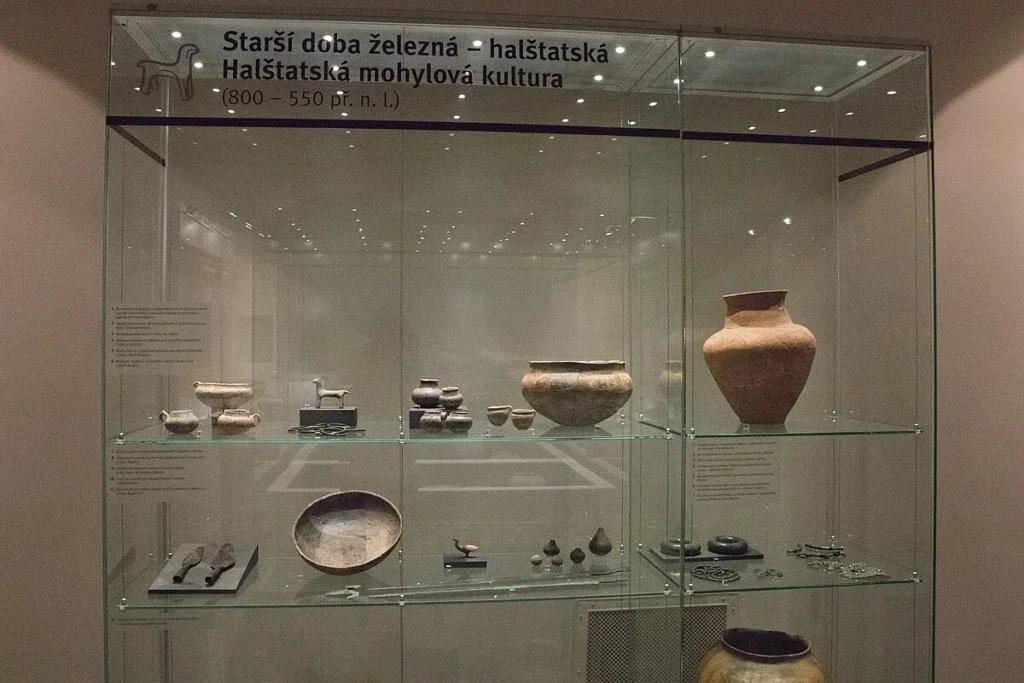
The cemetery above the Hallstatt mine, excavated and recorded since the 1840s and constituting one of the largest and best-documented Early Iron Age burial grounds in Europe, holds more than a thousand graves dating from roughly 800 to 400 BCE. The NHM Vienna’s ongoing excavation programme under Reschreiter’s direction, now combined with stable isotope analysis and ancient DNA work at cooperating European laboratories, has been refining what those graves tell us about who worked at and around the mine. The results are consistent: a significant proportion of the adult population in the burial ground was engaged in mining or closely related activities, and the range of grave goods from modest iron knives to elaborate bronze belt sets and imported Mediterranean vessels shows that salt income was distributed across several social levels rather than concentrated exclusively at the top.
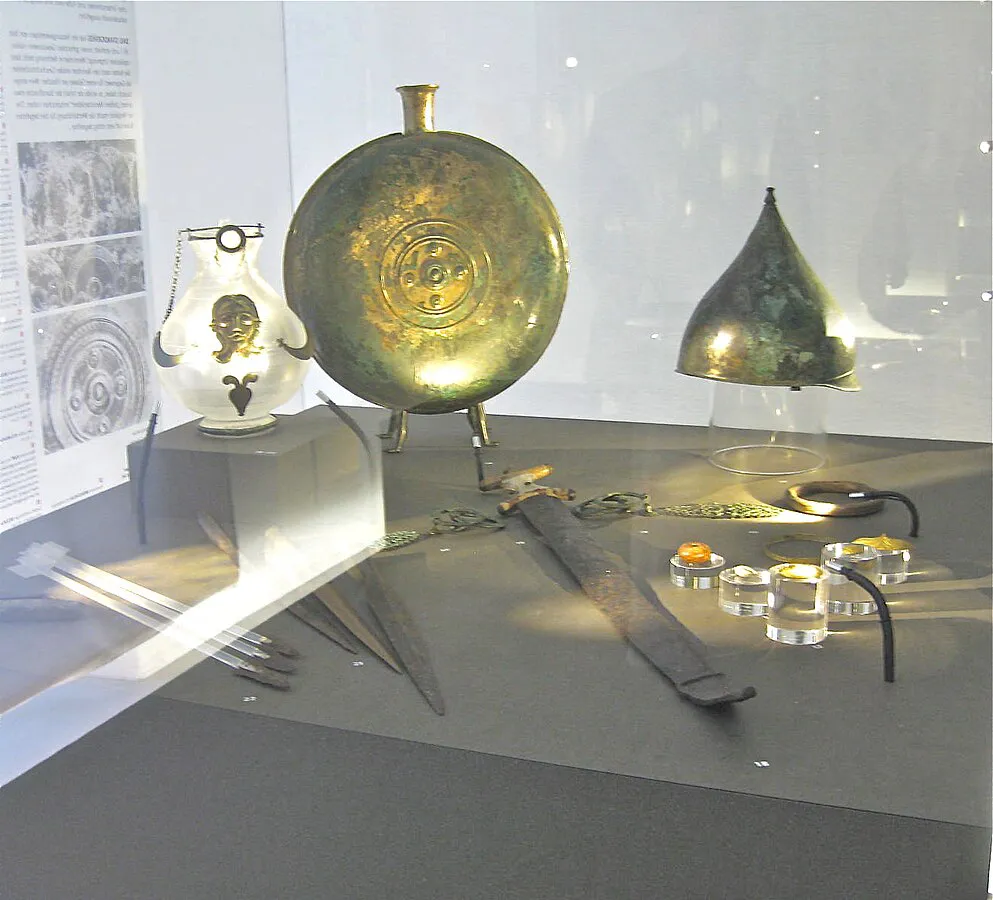
At Dürrnberg, the picture is more sharply stratified. A group of exceptionally rich burials, often called princely graves in the older literature, contain combinations of weapons, horse gear, fine bronze vessels, and imported goods that indicate individuals controlling the mine’s output at a level that generated enormous personal wealth. The Keltenmuseum Hallein, which houses the principal collection from Dürrnberg, displays burial assemblages from tombs at sites including Moserstein that put imported Etruscan bronzes beside locally made iron swords and fine amber ornaments. The objects tell a consistent story: salt turned a mining community into a node of long-distance exchange, and long-distance exchange turned certain individuals within that community into an elite whose material culture was indistinguishable in ambition from that of the aristocracies around the Mediterranean that they traded with.
The feasting dimension of that elite culture deserves attention in its own right. Large bronze cauldrons and sets of drinking vessels, the standard equipment of the Iron Age feast, appear in the richest Hallstatt zone burials with a frequency that reflects the specific economic logic of salt. A community that can preserve surplus food can stage feasts at will and invite allies from outside its own valley. Feasting is a political technology, a mechanism for building and maintaining alliances through conspicuous generosity, and the ability to feast impressively depends on having storable surplus. Salt is the enabling condition that makes the feast economically possible, and the feast is the social mechanism that turns the mine’s output into political power.
The La Tène expansion and the scaling of salt production across Europe
By the fifth century BCE, the horizon we call La Tène after the find site on Lake Neuchâtel in Switzerland saw Celtic material culture spread across a much wider territory, carried in part by the trade networks that Alpine salt had helped establish in the preceding centuries. The characteristic La Tène art style, with its curvilinear animal and vegetal interlace, appears on objects from Ireland to the Carpathian Basin within a relatively compressed timeframe, suggesting that the exchange networks were operating with sufficient speed and reliability to spread workshop styles across most of temperate Europe within a generation or two.
At the same time, inland brine sources across France, Britain, and Central Europe were being developed at a scale that marks a qualitative change in the salt economy. The Briquetage de la Seille complex in the Seille River valley of Lorraine is the best-documented example. Laurent Olivier of the Musée d’Archéologie Nationale at Saint-Germain-en-Laye and Joseph Kovacik published the first systematic analysis of the site in the journal Antiquity in 2006. Their work documented mounds of broken salt-production ceramics (the briquetage that gives the site its name) reaching twelve metres in height and half a kilometre in length, with evidence for two concentrated production booms: one running from the eighth to the sixth century BCE, and a second from the second to the first century BCE.
Briquetage refers to the coarse ceramic moulds and support vessels used in brine-boiling operations, which were broken to release the hardened salt block after each firing cycle. At the Seille complex the waste material accumulated over centuries into the enormous mounds Olivier and Kovacik measured, creating what amounts to the slag heaps of a salt industry. The volume of ceramic waste at the Seille is so large that it permanently altered the local river geomorphology, constricting channels and contributing to the waterlogging that turned the valley into marshland and preserved the industrial residues in the first place. A salt operation large enough to reshape a river valley was not supplying a local market. It was supplying a continent.
Redistribution hubs, oppida, and how salt became hierarchy
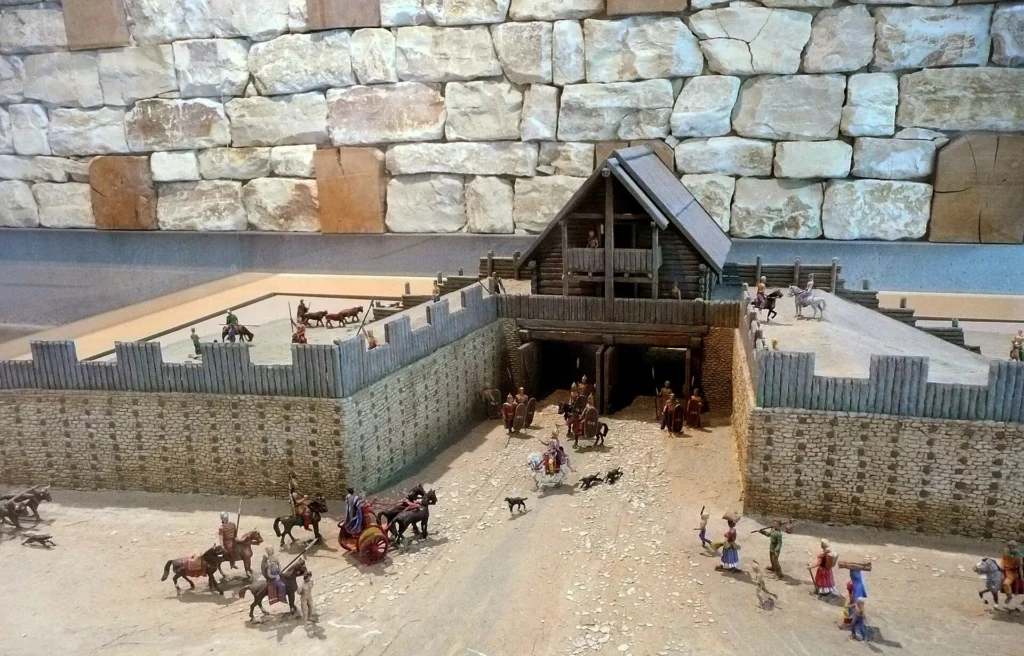
Salt in bulk requires redistribution infrastructure: places where large loads are broken into smaller units, weighed, contracted, and dispatched in several directions simultaneously. In the La Tène period these functions were concentrated at the major enclosed settlements known as oppida, a Latin term applied by Caesar and other Roman writers to the large, fortified Celtic towns that appear across Europe from roughly the second century BCE onward. Manching, near the Danube north of modern Munich, is one of the best-excavated examples. Its ramparts enclosed approximately 380 hectares, and the internal organisation revealed by excavation, with distinct craft quarters for iron working, bronze casting, glassworking, and coin production, shows a settlement functioning as a manufacturing and commercial centre rather than a purely defensive refuge.
The location of Manching on the Danube plain, at the confluence of land routes from the Alpine passes and river routes running east and west, is precisely the kind of position that a salt redistribution hub required. A cargo of rock salt arriving by raft from the Salzach-Inn river system would be unloaded here, sorted, and dispatched in smaller parcels toward the numerous valley communities that fed the oppidum’s commercial life. The coinage produced at Manching itself, recovered in significant quantities from controlled excavation, reflects the need for a medium of exchange that could standardise transactions across communities with different local equivalences. Salt almost certainly moved through some of those transactions, even if it does not leave as direct an archaeological trace as coin.
The social stratification that salt income generates does not stop at the feasting table. It reaches into the mine itself. The repair patterns in the textile straps and sacks from Hallstatt, where different stitch signatures appear on the same piece of equipment, suggest that tools and supplies circulated through multiple hands and underwent staged maintenance rather than being personally owned by individual miners. That is a workshop management logic, not an improvised economy. Someone was organising the supply chain for underground equipment and tracking its condition across multiple use cycles. The same administrative capacity that managed the mine’s tool supply also managed the mine’s salt output and its downstream sale. Salt wealth does not arise from the crystal alone. It arises from the systems built around the crystal.
Sources: Natural History Museum Vienna, Department of Prehistory, Hallstatt Research overview; Karina Grömer and Hans Reschreiter, NHM Vienna, Textiles from the Hallstatt Salt Mines; Laurent Olivier and Joseph Kovacik, “The Briquetage de la Seille (Lorraine, France): proto-industrial salt production in the European Iron Age,” Antiquity 80 (2006): 558–566; John Collis, The Celts: Origins, Myths and Inventions (Stroud: Tempus, 2003); John Coles and Anthony Harding, The Bronze Age in Europe: An Introduction to the Prehistory of Europe, c. 2000–700 BC (London: Methuen, 1979); Peter S. Wells, The Barbarians Speak: How the Conquered Peoples Shaped Roman Europe (Princeton: Princeton University Press, 1999); Barry Cunliffe, By Steppe, Desert, and Ocean: The Birth of Eurasia (Oxford: Oxford University Press, 2015); Mark Pearce, “The Spirit of the Age: Hallstatt as a European Archaeological Icon,” World Archaeology 50/2 (2018): 264–278.