

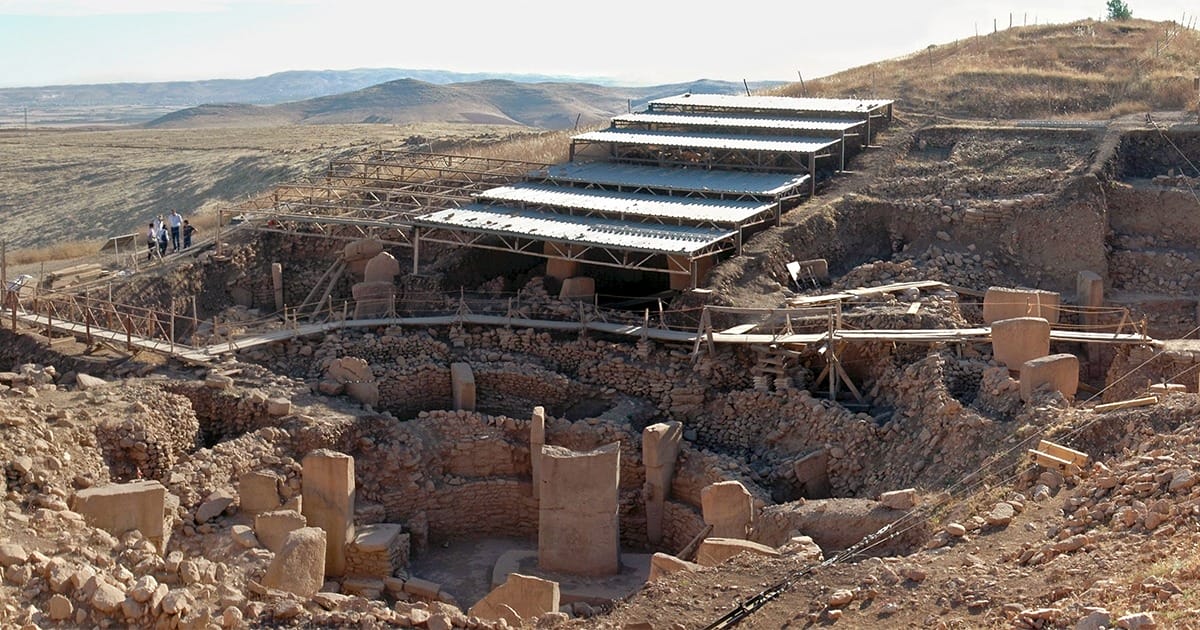
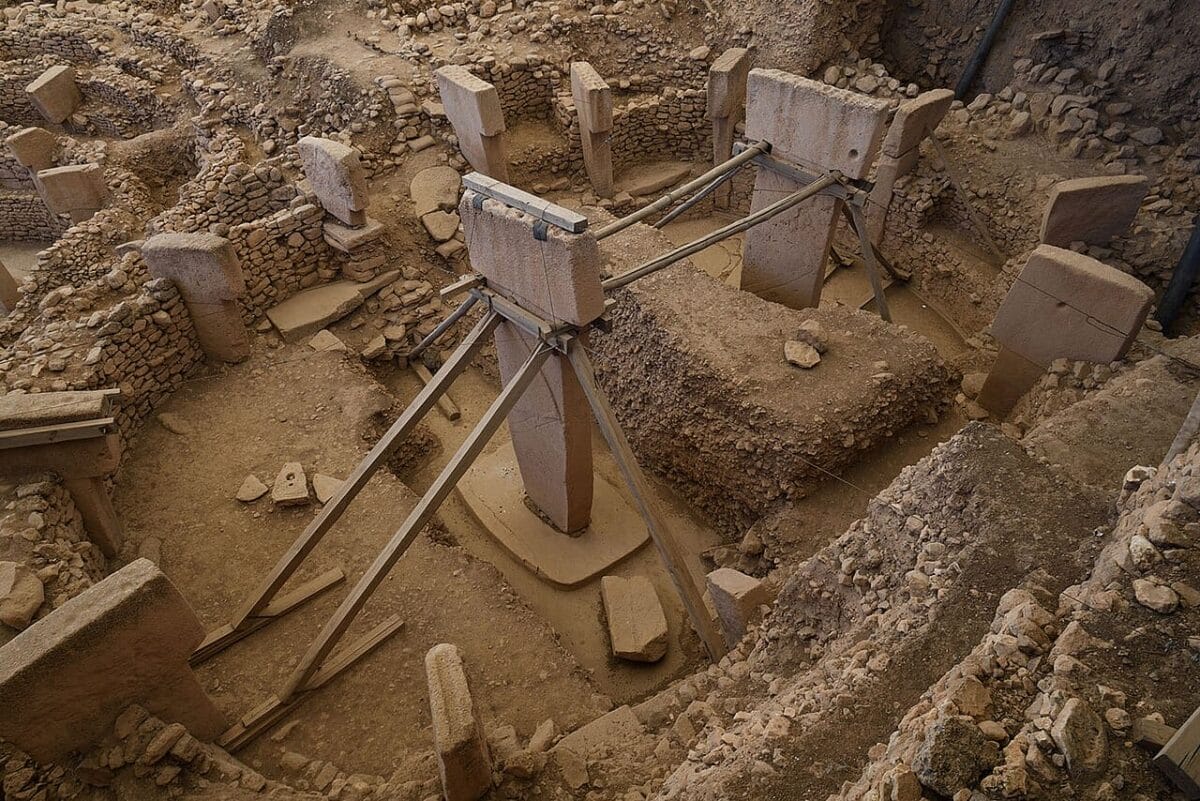
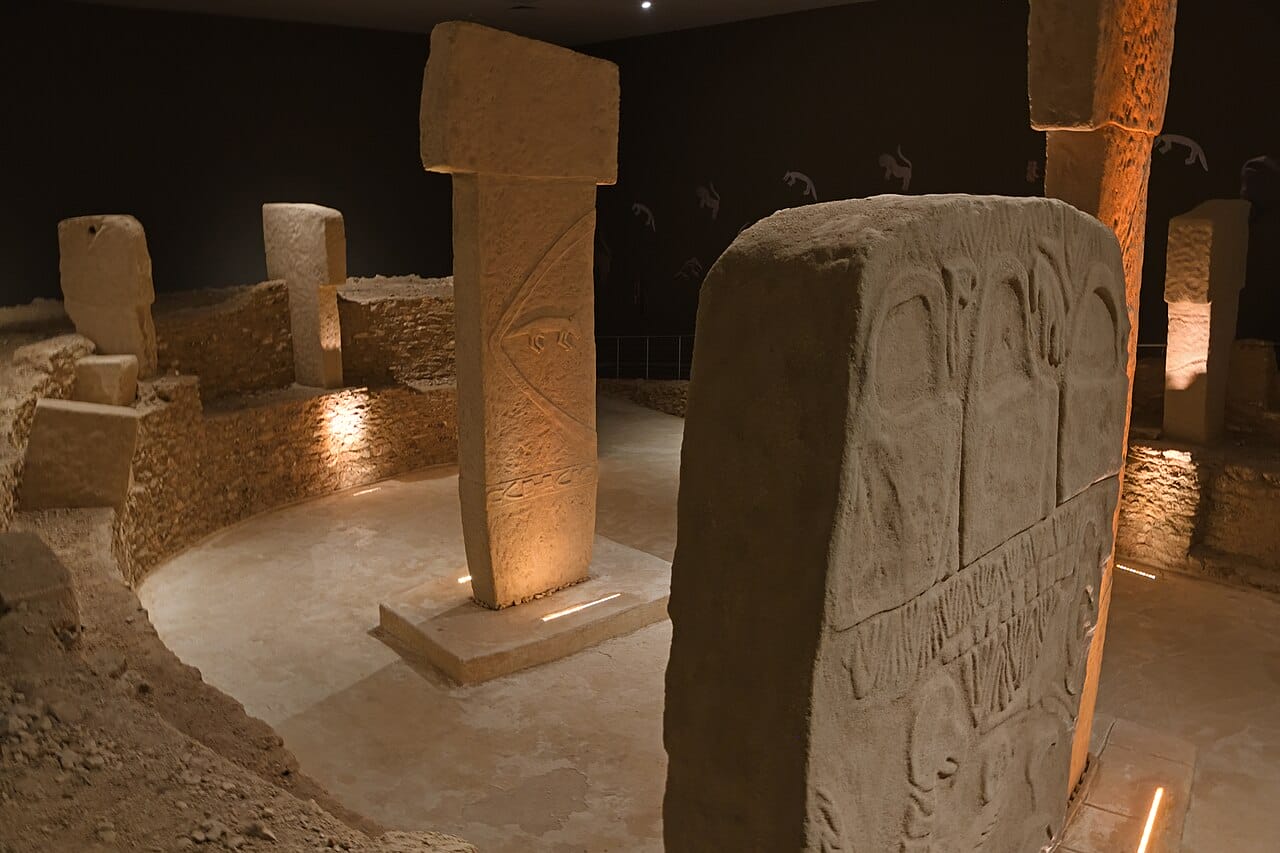
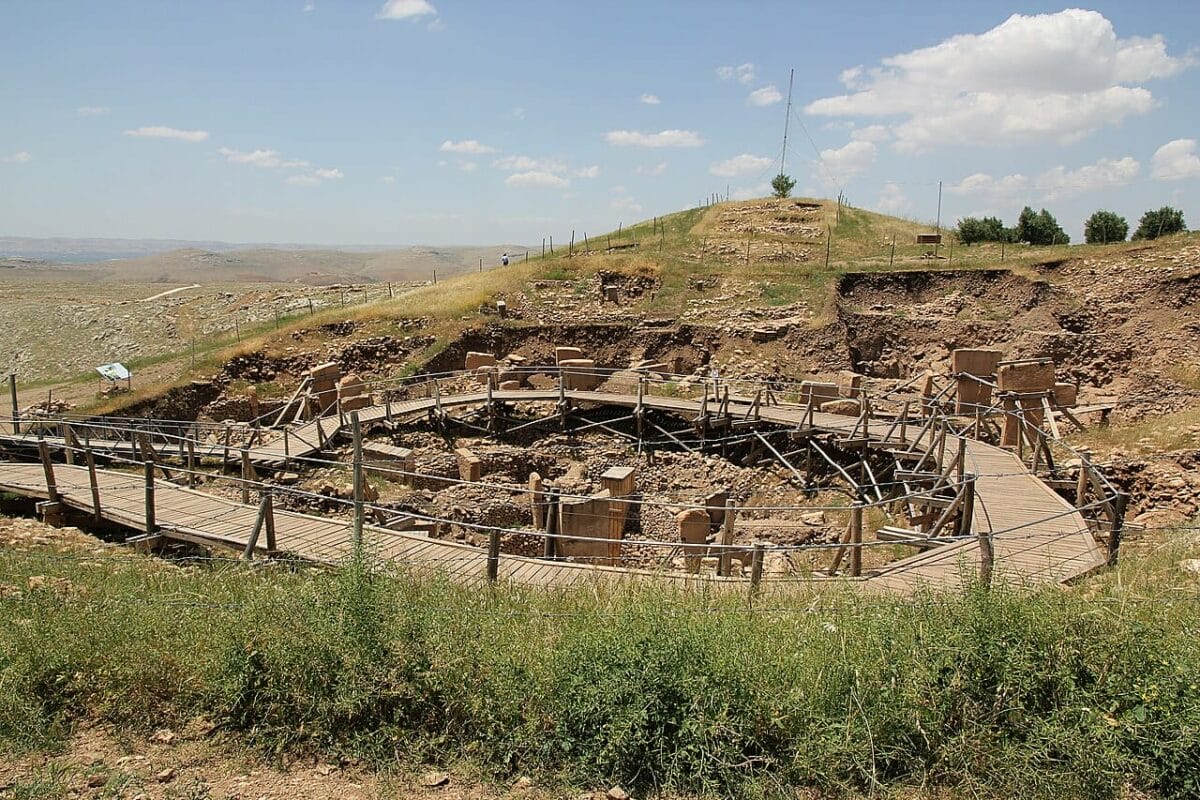
In 1994, Klaus Schmidt of the German Archaeological Institute noticed a scatter of flint and carved limestone on a ridge in southeastern Turkey that no one had examined seriously. By the time excavations began in earnest the following year, it was clear that what lay beneath the surface of Göbekli Tepe, “Potbelly Hill” in Turkish, would rewrite the opening chapters of human history. The circular enclosures of the Pre-Pottery Neolithic A period, radiometrically dated to roughly 9600 BC, hold T-shaped limestone pillars up to 5.5 metres tall, carved with extraordinary animal reliefs and, in several cases, with unmistakably human arms, hands, and belt motifs. No site of comparable age shows anything close to this scale of organised, symbolic construction. But a decade of sweeping interpretations, from astronomical calendars to pilgrimage cities that triggered agriculture, has created almost as much noise as understanding. What Göbekli Tepe actually offers, when examined through residue chemistry, sediment analysis, stable isotopes, and careful zooarchaeology, is something less dramatic and more useful: a picture of seasonal gatherings where ritual and provisioning worked together rather than in opposition.
The Site That Resists Easy Labels
The argument over whether Göbekli Tepe was a sanctuary or a settlement has produced some of the most productive debate in Neolithic archaeology. E. B. Banning of the University of Toronto published a challenge in Current Anthropology in 2011 arguing that the structures could have been roofed domestic buildings rather than open-air cult sites, and that identifying a space as sacred on the basis of elaborate decoration alone was methodologically circular. Oliver Dietrich and Jens Notroff of the German Archaeological Institute responded directly, defending an archaeology of cult while acknowledging that the boundary between everyday and ritual action was always permeable. That debate was never truly settled, and more recent fieldwork suggests the honest answer is that the binary was always poorly chosen. The enclosures are not purely symbolic spaces, and the domestic areas are not purely functional ones. Both kinds of activity leave chemical and biological traces that overlap.
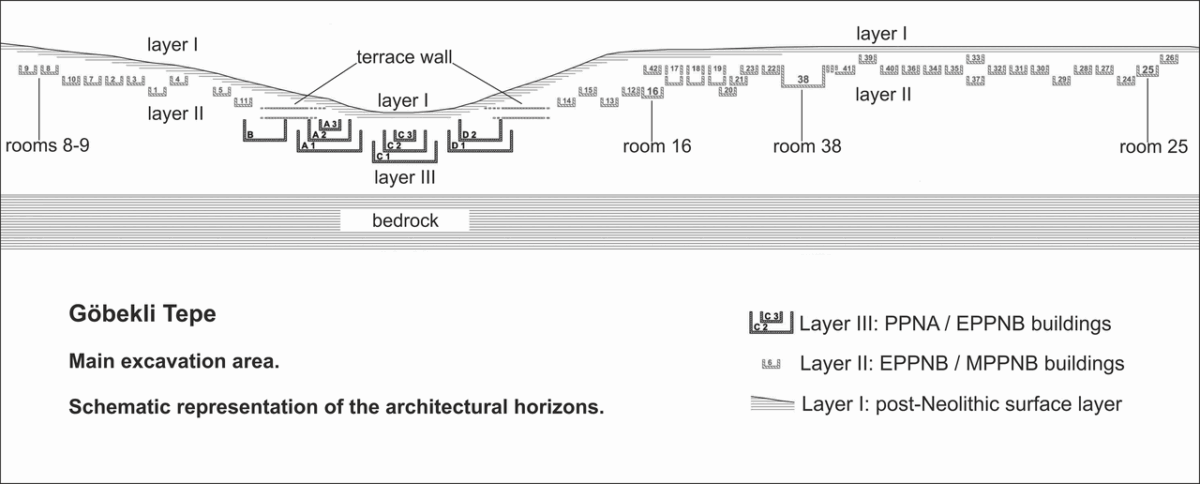
The excavation project, based at the German Archaeological Institute’s Orient Department and operating in collaboration with the Turkish Ministry of Culture, has expanded its sampling programme significantly since 2015. In the surrounding Taş Tepeler region, a broader landscape project examines dozens of Pre-Pottery Neolithic sites to contextualise what Göbekli Tepe represents within a dense cluster of early monumental construction. Geochemical and sedimentological data now accompany every major excavation trench, and a systematic programme of radiocarbon dating has produced a sequence from roughly 9600 BC to approximately 8000 BC across the site’s main building phases. The stratigraphic picture has also become more nuanced: what was once described as the deliberate backfilling of enclosures is now understood by Dietrich, Notroff, and colleagues as more likely resulting from slope slippage and erosional events that washed midden material from higher parts of the mound into the lower enclosures.
Stone Vessels and the Chemistry of Feasting
Among the most productive applications of laboratory science at Göbekli Tepe has been the systematic study of its stone vessel assemblage. Laura Dietrich, now Heisenberg Associate Professor at Martin Luther University Halle-Wittenberg, led an integrated analysis of approximately 600 stone vessel fragments published in the Journal of Archaeological Science: Reports in 2020. The assemblage includes small open limestone bowls 20 to 30 centimetres in diameter, decorated greenstone containers, and massive stone troughs of up to 165 litres capacity. The troughs are the most telling objects: nothing of their scale in a site of this period has any straightforward domestic parallel.
The 2020 study applied use-wear analysis alongside organic residue chemistry to establish what these vessels held and how they were used. Fatty acid compounds recovered from the interior walls of limestone troughs using Fourier-transform ion cyclotron resonance mass spectrometry indicate the processing of animal fats, consistent with large-scale cooking. Oxalate residues, the calcium deposits that form on vessel surfaces during the steeping and fermentation of grain, appeared in a subset of trough samples. Oxalate is a recognised proxy for beer-making, having been systematically studied in ceramic and stone vessels from multiple Neolithic contexts across the Near East. The results do not confirm beer production with certainty, and Dietrich’s own language is carefully qualified. They do show that cereal-based liquids were processed in these containers at temperatures and timescales beyond what simple cooking requires.
Grinding stones add a further dimension. Laura Dietrich’s 2023 monograph Plant Food Processing Tools at Early Neolithic Göbekli Tepe, published by Archaeopress, catalogues over 7,000 grinding and pounding implements from the site. Use-wear patterns on these objects are consistent with the repeated processing of cereals, legumes, and herbs, and their spatial distribution clusters around the exterior of the monumental enclosures rather than inside them. That distribution implies cooking activity in the margins surrounding the symbolic heart of the site, which fits a model where feasting in support of communal building work took place in dedicated preparation zones that fed into the ceremonial core.
The Skull Cult and What the Bones Actually Say
Although formal human burials remain entirely absent from Göbekli Tepe, excavators have recovered a total of 691 fragmented human bone pieces from fill deposits across multiple trenches. Most are skull fragments rather than postcranial bones, a pattern that almost certainly reflects deliberate selection rather than taphonomic accident. Julia Gresky of the German Archaeological Institute’s Natural Science Department, working with colleagues Juliane Haelm and Lee Clare, published an analysis in Science Advances in 2017 that focused on three partially preserved skulls bearing a previously undescribed category of modification. Deep linear grooves had been carved into the outer surface of the frontal and parietal bones using flint tools. One skull additionally carried a carefully drilled perforation. Gresky interpreted the grooves as intended to prevent a suspension cord from slipping when the skull was hung on display, and the drill hole as a suspension point itself.
The modifications are unlike any other recorded case in the Neolithic Near East. Plastered skulls of the kind documented at Ain Ghazal and Kfar HaHoresh involve rebuilding the face with lime to create a lifelike mask over the bone. Göbekli Tepe’s grooved skulls show no such remodelling. Instead, the interventions are structural, designed to make the skull portable and displayable over an extended period. This fits a pattern of interaction between the living and the dead that is visible in other ways at the site, including a small decapitated human statue and a pillar relief showing a headless human figure with a bird perched on the stump of the neck. The human skull was not merely a relic here. It was a material participant in whatever rites the enclosures hosted.
Collagen fingerprinting, or zooarchaeology by mass spectrometry (ZooMS), has been applied to some of the more ambiguous bone splinters from fill contexts to distinguish human from non-human fragments before committing to ritual interpretations. This technique, which identifies species through the characteristic peptide masses of collagen protein, is particularly valuable at a site like Göbekli Tepe where burning, fragmentation, and mixing have destroyed the morphological features needed for visual species identification. The practical effect is that readings of the bone assemblage become more precise: fragments previously carried in the human count as uncertainties can be reassigned, and the resulting inventory of genuinely human bones reflects deliberate selection rather than random accumulation.
Built out of a love for history, kept free from distractions.
Spoken Past is an independent project shaped by curiosity, care, and long hours of research. Reader support helps keep it maintained, carefully researched, and open to everyone.
Animals, Seasons, and the Logistics of Gathering
Zooarchaeological work at Göbekli Tepe has consistently returned an assemblage dominated by wild species. Gazelle, wild cattle or aurochs, wild sheep, wild boar, red deer, and large birds including vultures and cranes are all present. The complete absence of domestic animal remains reinforces the pre-agricultural dating of the main building phases. Jörg Peters of Ludwig Maximilian University Munich, who has led faunal analyses of the site over multiple seasons, identified a kill trap or desert kite structure in the vicinity of the site that may have been used to drive migratory gazelle herds into positions where they could be taken in large numbers. Stable isotope analysis of long bones from wild caprines shows strontium and oxygen ratios consistent with animals that spent part of the year in upland grazing zones before descending to lower ground, a seasonal pattern that would make them predictably available at certain times of year.
The seasonal movement of prey animals through the Germuş range is directly relevant to the question of when and how often gatherings occurred at Göbekli Tepe. If migratory gazelle passed through the area during specific seasons, communal hunting events could have anchored the ritual calendar. Work feasts of the kind documented ethnographically in contexts where communal construction is needed would have been staged to coincide with moments of food abundance. The zooarchaeological evidence does not prove this model, but it is fully consistent with it and it constrains the alternatives. A sanctuary visited only sporadically by pilgrims from distant regions would not necessarily be located where it could exploit seasonal game movements. A site that was also a seasonal base for managed hunting would be.
Peters and Schmidt’s 2004 paper in Paléorient first articulated the connection between feasting, communal hunting, and the scale of construction at Göbekli Tepe. Subsequent isotope work has filled in the ecological frame. The plain visible from the ridge of Göbekli Tepe was wetter during the PPNA than it is today, supporting a steppe and woodland mosaic with pistachio, almond, and wild cereal patches alongside the grazing corridors used by large herbivore herds. The animals processed in the vessels, the cereals ground on the slabs, and the stone quarried from the local plateau all came from within the visible landscape. Ritual sites are supply chains as much as they are sacred geographies.
Water, Lime Plaster, and Evidence of Habitation
One of the more underappreciated aspects of Göbekli Tepe is its water management infrastructure. Bedrock-cut cisterns on the site are capable of collecting and storing rainwater on a substantial scale. Lime plaster floors and surfaces sampled for stable isotope analysis carry signatures consistent with water sources that varied seasonally, pointing to a managed rather than purely ad hoc supply. This kind of infrastructure is not necessary for an occasional pilgrimage site visited a few times per decade. It is necessary for a place that hosted substantial numbers of people for extended, predictable periods and needed to guarantee their water supply regardless of precipitation that year.
Sediment chemistry from floor surfaces in the rectangular buildings of the later PPNB phase at Göbekli Tepe shows phosphate concentrations consistent with human and animal activity in enclosed spaces. Microbotanical remains, including phytoliths and charred plant fragments in pockets of ash near working areas, are consistent with domestic-scale food preparation rather than purely large communal cooking events. The rectangular buildings of the later phase differ architecturally from the circular enclosures in ways that suggest different functions: lower ceilings, smaller floor areas, internal benches, and the absence of the large decorated central pillars that define the round structures. That functional differentiation within a single site, which also includes quarry areas and stone tool production zones documented by Joris Peters and his collaborators, implies an organised and permanent enough occupation to divide activities into dedicated spaces.
None of this requires that Göbekli Tepe was a year-round settlement in the full sense. It may have been a repeatedly occupied seasonal base, maintained by a quasi-sedentary population or by rotating groups from surrounding communities. What the combined evidence argues against is the older model of an empty hill visited only for sacred purposes by hunters who otherwise lived entirely elsewhere. The cisterns need maintenance between visits. The floors need cleaning. The construction sequences visible in the radiocarbon data show continuous building activity across at least 1,500 years. Someone was keeping the site operational.
The Pillars, the Images, and What Science Can and Cannot Settle
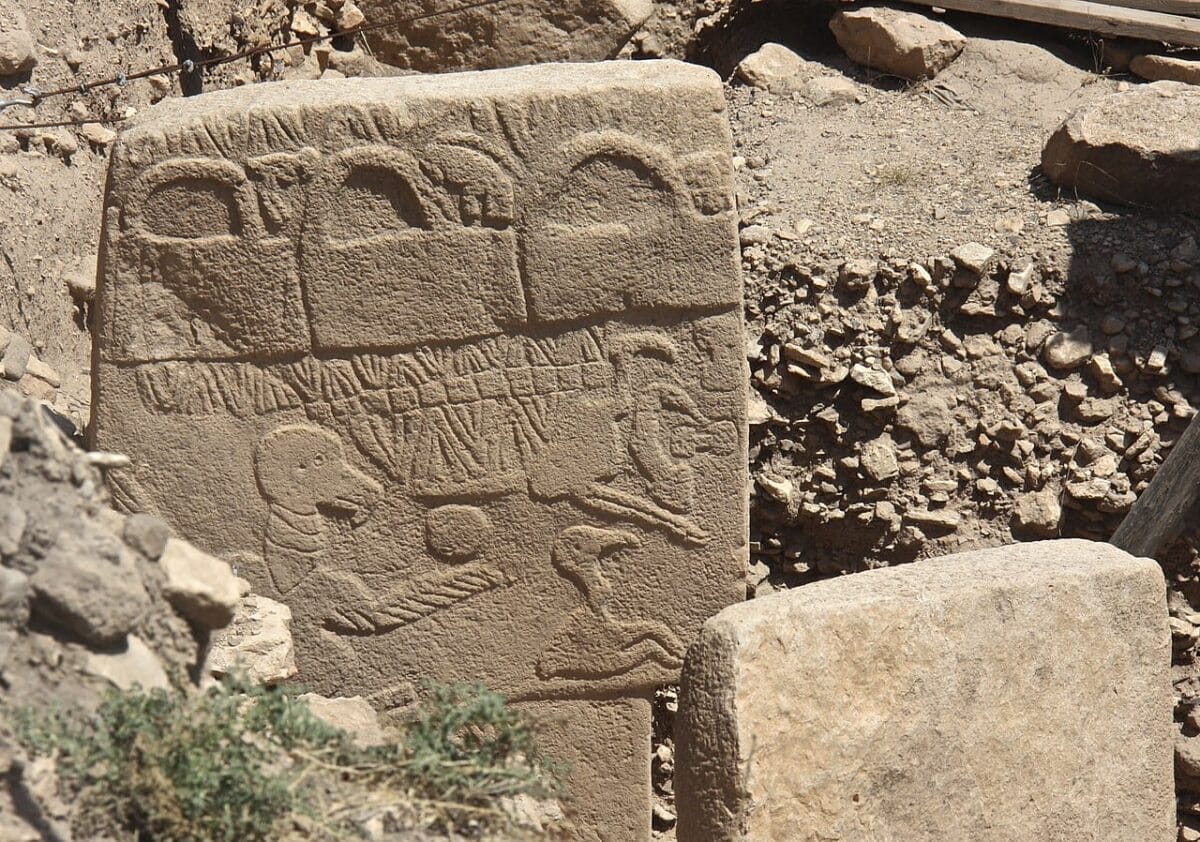
No amount of lipid chemistry dissolves the interpretive challenge posed by the carved pillars. Pillar 43 in Enclosure D, sometimes called the Vulture Stone, carries a scorpion, a headless human figure, and a large vulture with a round object balanced on one wing. Whether this represents a cosmological narrative, a record of a specific event, or a symbolic grammar we lack the key to decode entirely remains an open question. The central pillars of each enclosure carry arms and hands pressed against their shafts at human waist height, belt-like bands, and in some cases what appear to be fox-skin loincloths. They are, as Dietrich and Notroff have argued, probably anthropomorphic beings rather than simple structural posts. That interpretation does not require abandoning the possibility that they also served a structural role in a roofed building.
What residue analysis and bone chemistry have done for pillar interpretation is constrain the context. The chemistry of basins inside the enclosures differs from the chemistry of basins outside them: inner basins return different fat profiles and a narrower range of plant signatures, consistent with more controlled and perhaps more restricted use. Microfaunal traces thin out in zones of heaviest foot traffic within the enclosures, suggesting specific movement patterns rather than unrestricted access. These are fragile observations, and the teams publishing them acknowledge that clearly. But when the physical chemistry of a space aligns with what the architectural design implies about controlled access and structured movement, the two lines of evidence reinforce each other in a way that neither could achieve alone.
The zoomorphic and anthropomorphic imagery on the pillars has attracted proposals involving astronomical alignments, Göbekli Tepe as the origin point for agricultural domestication, and even a connection to an ancient comet impact. The biomolecular and geochemical work does not directly engage with these proposals in most cases, but it does provide a calibrating framework. A site where large numbers of people gathered seasonally to hunt migratory game, process it collectively in large stone vessels, build and maintain elaborate stone structures, and curate the skulls of specific individuals as displayable objects is already a site of extraordinary social and symbolic complexity. It does not need an astronomical observatory function layered on top to be significant. The science has made Göbekli Tepe smaller in imagination and larger in human reality at the same time.
Primary sources and key scholarship: Oliver Dietrich, Manfred Heun, Jens Notroff, Klaus Schmidt, and Martin Zarnkow, “The role of cult and feasting in the emergence of Neolithic communities: New evidence from Göbekli Tepe”, Antiquity 86 (2012), 674–695; Laura Dietrich, Eva Götting-Martin, et al., “Investigating the function of Pre-Pottery Neolithic stone troughs from Göbekli Tepe“, Journal of Archaeological Science: Reports 34 (2020), 102618; Julia Gresky, Juliane Haelm, and Lee Clare, “Modified human crania from Göbekli Tepe provide evidence for a new form of Neolithic skull cult”, Science Advances 3 (2017), e1700564; Lee Clare, Göbekli Tepe, Turkey: A brief summary of research at a new World Heritage Site (2015–2019), E-Forschungsbericht des DAI 2020; Laura Dietrich, Plant Food Processing Tools at Early Neolithic Göbekli Tepe (Archaeopress, 2023); the Tepe Telegrams, the official research blog of the Göbekli Tepe Research Project at the German Archaeological Institute, for ongoing excavation reports and methodological updates.