
A dark, uncarved stone rolled through Rome in a four-horse chariot. Parasols shaded it. Musicians kept time with drums and cymbals. The emperor, still a teenager, walked in front of the wagon and faced the stone the whole way, stepping backward so he would not turn his back on the god. Senators watched the parade pass the Forum. The Praetorian Guard held the line. People asked what it meant when a foreign god took the city streets as if they already belonged to him.
The four-year story runs from 218 to 222. It starts at Emesa, now Homs in Syria, where a powerful priestly family served a sun god whose presence was a sacred stone. It moves through the eastern legions, across the Aegean, and onto the Palatine Hill. Our evidence is mixed. Ancient historians Cassius Dio and Herodian write with clear dislike for the young ruler, so their rhetoric needs trimming. Coinage is better for the simple reason that the emperor chose the images himself. Archaeology fills in the ground plan on the hill. With those pieces in hand, a clear picture appears: a civil war put a priest on the throne in 218, his religious program then sparked revolts in 219 and 220, and a showdown in the Praetorian camp in 222 finished the reign. The cult did not cause the first war. It helped ignite the instability that ended his rule.
What was the stone from Emesa?
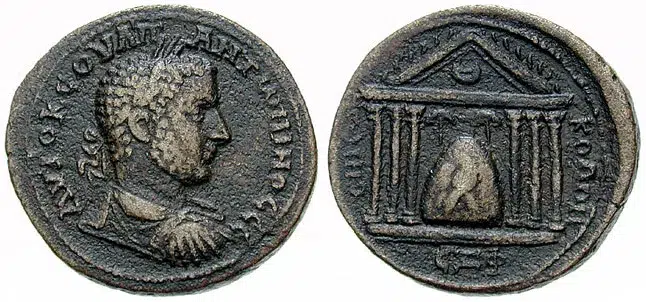
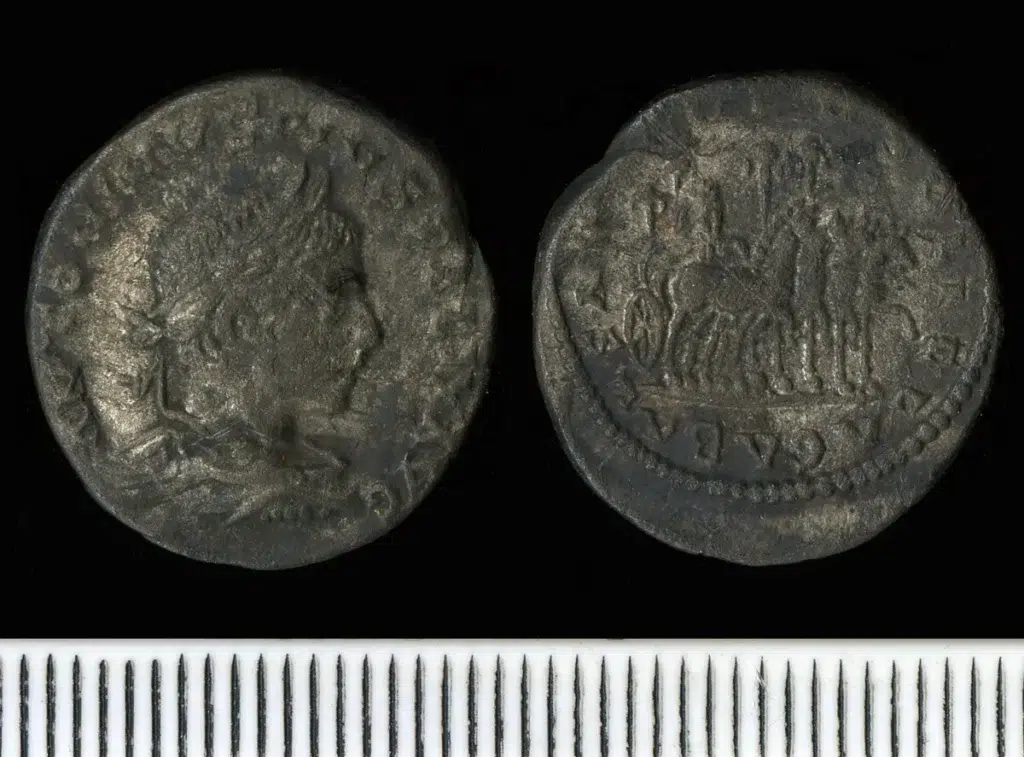
People in the Roman world called it a baetyl, a sacred stone that housed a god’s presence. Writers say it was conical and unworked. They say it fell from the sky. The shape fits the idea of a meteorite, but we cannot test that now, since the object does not survive. What we can test is the consistency of the iconography. Coins of Emesa, and coins struck across the empire during the reign of Elagabalus, show the same features again and again: a cone, an eagle perched near the top, a four-horse chariot used for ritual movement, and a canopy of parasols above the stone. Those elements are too specific and too stable to be fantasy. They tell us that a real object, with a real ceremonial kit, stood at the center of the cult.
In that cult the god’s name is rendered in Latin as Elagabal or Elagabalus. Many scholars connect it to a Semitic title, “god of the mountain.” The stone served as a visible and portable body for the god. That portability matters. It allowed a priestly family to move the god from Syria to Rome and to claim that the god’s authority traveled with the stone. Anyone in Rome who doubted the stone’s power had to watch the chariot roll by.
How did a teenage priest become emperor?
In April 217, the emperor Caracalla was murdered near Carrhae during a journey to the East. His Praetorian prefect, Macrinus, claimed power. The Severan women lost influence at court and returned to Syria. One of them, Julia Maesa, sister of Julia Domna and grandmother of the teenage high priest at Emesa, still had money, connections, and a keen sense of how Roman armies chose emperors. She set to work.
Her grandson, Varius Avitus Bassianus, served as the high priest of the Emesa sun god. Maesa brought him forward as a candidate the eastern legions could rally behind. She paid troops who were in arrears, reminded officers of their loyalties under Caracalla, and promoted the idea that the boy had Severan blood. In the spring of 218, Legio III Gallica, stationed in Syria, acclaimed him. Macrinus marched to stop the revolt. In June 218, near Antioch, his army collapsed. He fled and was captured. The high priest of Emesa now had a new title: emperor. Officially he took the name Marcus Aurelius Antoninus. Later writers call him Elagabalus, after his god.
That first civil war did not begin with a stone in Rome. The stone was still in Syria. The war grew out of a contested succession, unpaid soldiers, and a political class in the East that wanted the Severan brand rather than a new man from the guard. Only after the army chose the priest did the god start the journey west.
When did the stone reach Rome, and where did it live?
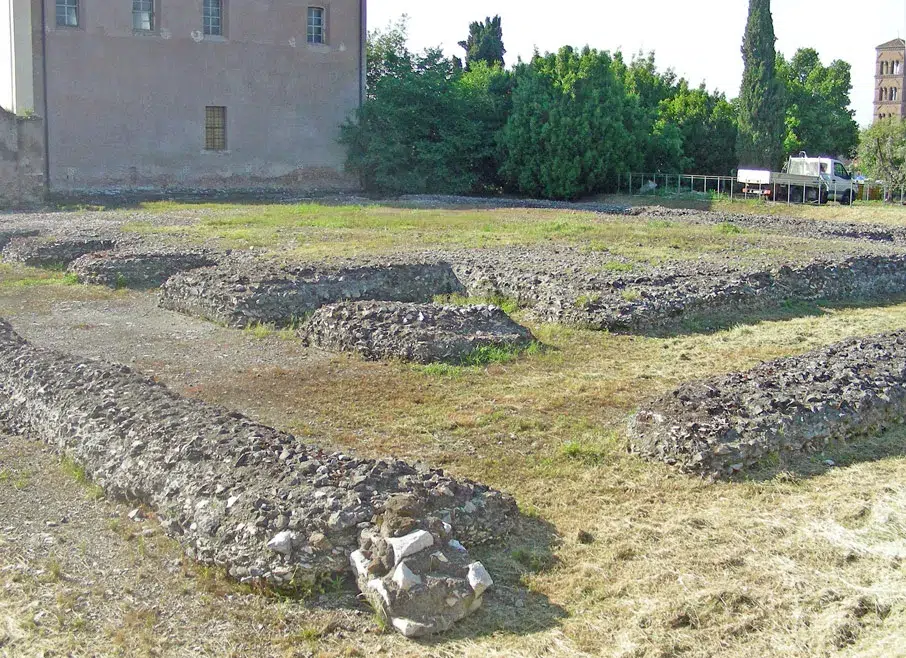
The imperial party spent the winter after the victory in Bithynia, then moved slowly toward Italy. By 219 or 220 the sacred stone entered Rome and took its place on the Palatine Hill. The sanctuary that received it is called the Elagabalium in later sources. The location is not guesswork. The northeast corner of the Palatine sits on a massive terrace that looks across the Forum and toward the Colosseum valley. In late antiquity and the Middle Ages, the church of San Sebastiano al Palatino reused that platform, which helps modern visitors fix the footprint. Coins and texts agree that the emperor built the sanctuary on this commanding site so the god would stand over the civic center of Rome.
The city learned the cult by sight. Processions in summer carried the stone in a richly decorated chariot. The emperor walked in front of the wagon, facing the god the entire way. Musicians played. Priests wore foreign-style robes. Parasols floated above the chariot roof like signs of high rank from an eastern court. Senators and crowds did not need a handbook to understand the basic message. The emperor had brought a god to Rome and set him higher than any other god by giving him the Palatine and by making the city watch that priority in motion.
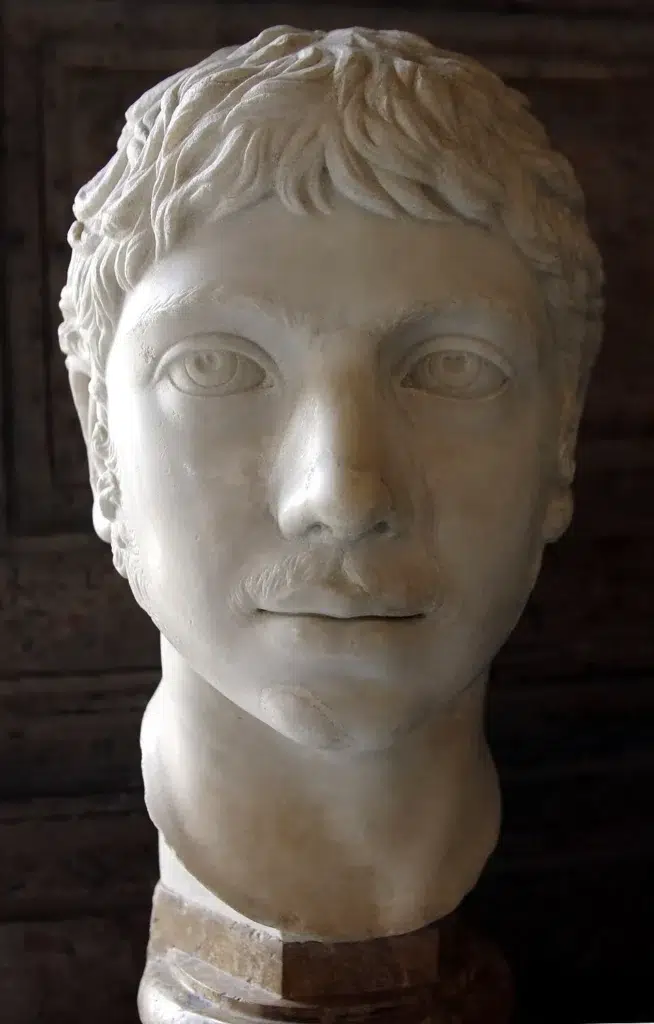
What was Elagabalus trying to do with Roman religion?
Roman religion worked by place, office, and calendar. Temples held ancient privileges. Priesthoods had set duties. Festivals and sacrifices followed fixed days. Rome could adopt foreign gods, and often did. The usual pattern was slow absorption. Elagabalus changed the tempo and the balance. He tried to rerank the pantheon by placing the Emesa sun at the top and by drawing other cult tokens into his new sanctuary on the Palatine. He also tried to frame the change as union rather than conquest.
Two examples make that point clear. First, he staged a ceremonial marriage between the Emesa sun and a goddess that Romans identified as Venus Caelestis. Herodian, a near-contemporary historian, reports that the emperor had a statue of the goddess brought from Carthage. The union, presented as sun and moon or heaven and queen, aimed to make the Syrian god part of a familiar pair. Readers can consult the English Herodian at LacusCurtius for the description of these festivals and processions. The site hosts a reliable, open translation for anyone who wants to see the language for themselves.
Second, the emperor married a Vestal Virgin, Aquilia Severa. Vestals were sworn to thirty years of chastity. Their purity was tied to the safety of the city. Elagabalus explained the marriage as a sacred pairing, high priest to high priestess, that would produce godlike offspring for Rome. Romans did not accept that logic. Earlier violations of Vestal vows brought swift and harsh penalties. Even if the punishment could not touch an emperor’s wife, the public act still felt like pollution. It broke a line that most Romans thought should never be crossed.
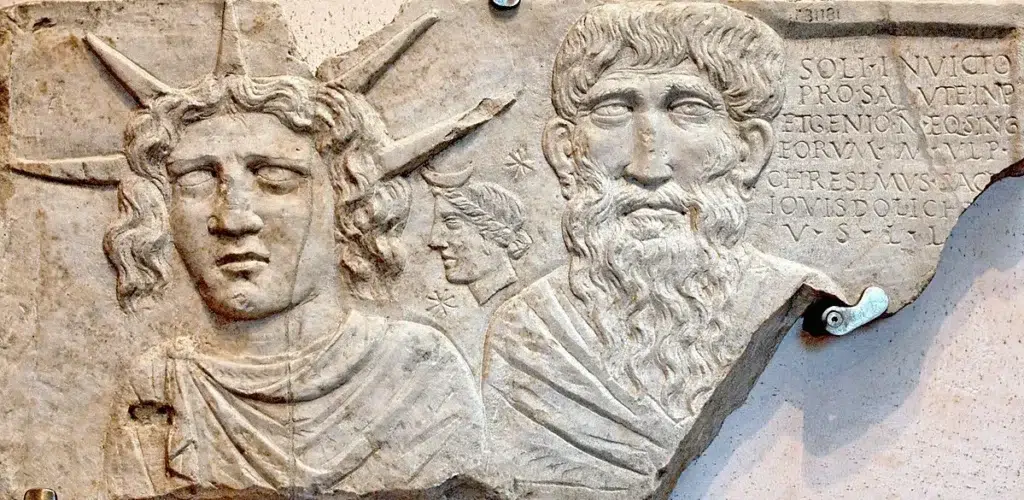
If Rome already knew sun gods, why did this cause outrage?
Solar religion was not a shock by itself. Emperors had worn radiate crowns on coins for decades. Soldiers saluted the sun at dawn. Later in the third century, Aurelian would build a great temple for Sol Invictus and make the sun the banner of imperial power without tearing the city in half. What changed under Elagabalus was ownership and rank. He brought one particular sun god, the Emesa sun tied to his own family’s priesthood, and placed it above Jupiter. He made the Palatine sanctuary the center of the city’s sacred life and asked the rest of the pantheon to take their place beneath it. That was a challenge to identity and to office. The emperor was always pontifex maximus by tradition, but now he was also the high priest of a specific imported god. The two roles no longer sat comfortably together.
A senator could object for many reasons at once. The Palatine had long signaled imperial values, since the days of Augustus and his temple of Apollo. Replacing that signal with an imported stone felt like breaking a pact. The marriage to a Vestal Virgin insulted a priesthood that Romans treated as the city’s living hearth. The chariot parades forced a captive audience. By making each festival a public spectacle, the emperor turned private doubts into civic theater.
What do our sources actually say, and how solid are they?
No single type of evidence tells the whole story, so the safest path is to layer them.
-
Literary texts: Cassius Dio and Herodian wrote within a generation of the events. Dio was a senator and writes with anger. Herodian writes for a broader audience but echoes many upper-class assumptions. Both agree on the main actions: the arrival of the stone, the processions, the Palatine sanctuary, the ceremonial marriage of the gods, and the scandal of the Vestal wedding. Readers who want to check their wording can consult the English Dio at LacusCurtius, which provides an accessible translation.
-
Numismatics: Coins struck between 218 and 222 are direct messages from the regime. Many reverses show the conical stone on a chariot with an eagle and parasols. Legends honor the sun god explicitly. Provincial mints copy the motif. These pieces confirm the processions and the ceremonial kit. Museums and online collections display dozens of examples. The British Museum collections are particularly useful, and they include coins where the chariot, eagles, and canopies are crystal clear.
-
Archaeology: The Palatine terrace is visible today. Later buildings, including San Sebastiano al Palatino, reused the platform where the Elagabalium stood. The location makes sense of the literary drumbeat that the god “ruled” from the hill. This was a stage that looked over the Forum and toward the Colosseum valley. A sanctuary here would dominate the city’s ritual landscape.
When those three lines agree, we have stronger ground than any single anecdote can provide. The tabloid stories in the later Historia Augusta can be ignored without losing the core of what happened.
How did coin images turn a religious plan into an empire-wide message?
Coins moved faster than letters. A denarius struck in 219 might pay a cohort in the Alps and a grain merchant in Carthage within weeks. Reverses that showed the stone on a chariot, with its eagle and canopies, taught viewers to read the emperor’s program in a single glance. Earlier emperors had used Jupiter’s thunderbolt, eagles, and temple fronts to advertise stability. Elagabalus replaced the thunderbolt with a stone and set it under parasols, a detail that many Romans associated with eastern royal courts. The message was not subtle. It announced a new center of gravity and asked people far from Rome to accept that center as theirs.
Numismatists also notice variation. Some reverses enlarge the temple frame and make the stone smaller inside it. Others make the chariot more prominent and highlight the parasols. Those choices hint at an active propaganda workshop, testing which picture made the foreign object look safest to different audiences. The point is not that the regime wavered. It is that it worked hard to persuade.
Did the meteorite cult cause the second round of fighting?
The civil war of 218 had older roots: Caracalla’s murder, Macrinus’s weakness with soldiers, and the Severan women’s ability to rally money and loyalties in Syria. The reign that followed, however, saw a string of revolts that fit poorly with the image of a united empire. In 219, commanders in Syria raised challenges. In 220, new fires flared. Each attempt failed quickly, but failure does not make them unimportant. A series of revolts tells us that officers and units felt free to test the throne. The religious program did not invent their grievances, yet it gave them a banner. If a man disliked his promotion prospects and also disliked seeing senators forced to watch eastern-style parades, he did not need to separate those feelings. He could just move.
Inside Rome, tempers rose. High offices went to men loyal to the new court. The Praetorian prefect Comazon, a longtime ally from the Syrian campaign, became a symbol of the shift. Senators who had lost influence under earlier Severans lost more now. Ritual life, legal life, and political life are hard to untangle in Rome. The program on the Palatine touched all three at once.
Why did the Praetorian Guard choose Severus Alexander?
In 221, Julia Maesa, who had built the throne for one grandson, created an insurance plan for the dynasty. She pushed Elagabalus to adopt her other grandson, Alexianus, as Caesar, under the name Severus Alexander. The city cheered, officers smiled, and the Guard took note. The new Caesar looked modest and safe. He knew how to speak to senators. He seemed unlikely to upend the calendar or parade sacred transgressions through the streets. Elagabalus soon tried to reduce his cousin’s honors and, according to later accounts, to remove him by force. The Guard would not allow it. Two teenagers could not both rule. The soldiers chose the one who promised quiet.
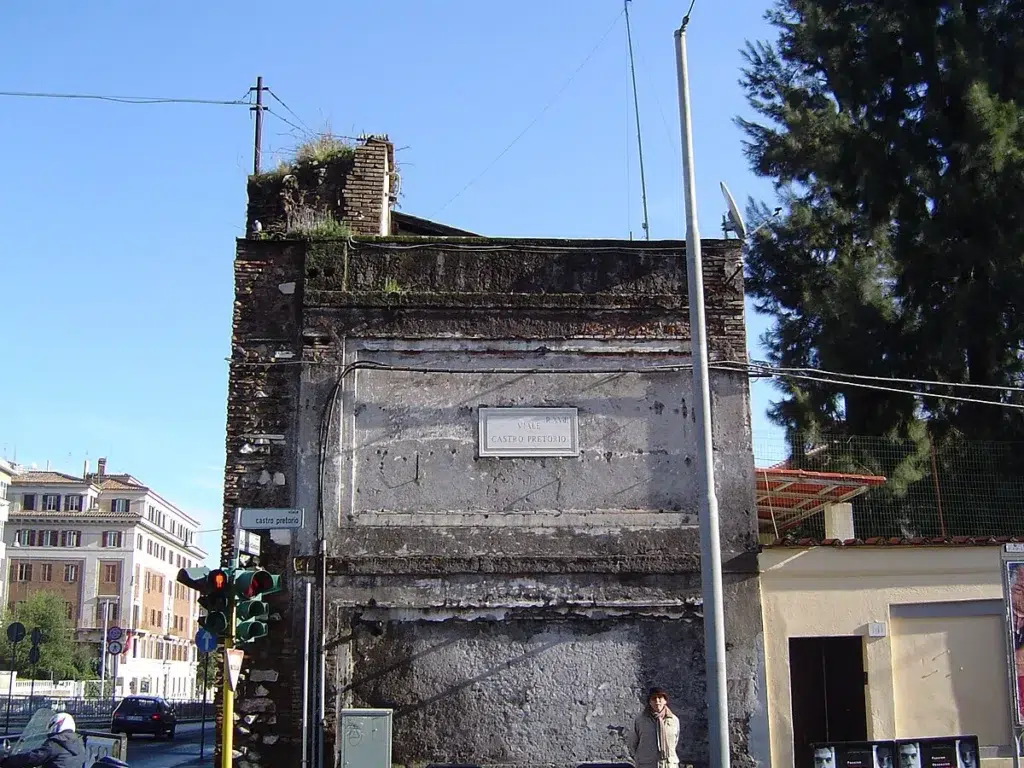
On 11 March 222, the Praetorian Guard killed Elagabalus and his mother inside the camp. Their bodies were dragged through Rome and thrown into the Tiber. The stone returned to Emesa. The Palatine sanctuary was rededicated. Severus Alexander became emperor. The decision was brutal, but it avoided a street battle between the Guard and the city that might have spiraled into a war inside Rome itself. The stone’s presence had not caused the final act, yet the program it announced had narrowed the emperor’s base until a small shove toppled it.
Built out of a love for history, kept free from distractions.
Spoken Past is an independent project shaped by curiosity, care, and long hours of research. Reader support helps keep it maintained, carefully researched, and open to everyone.
What changed in Rome after 222?
Severus Alexander and his advisers understood the mood. They restored the public precedence of Jupiter and let the city’s ritual year resume its familiar rhythm. They did not erase solar devotion. They simply lowered its profile and reattached it to Roman frames that felt older. The Palatine platform remained, and later a Christian church took root there, which is why the terrace is easy to see today. Memory softened the episode into a cautionary tale. Later writers portrayed Elagabalus as a symbol of excess. The coins do not care about that story. They just keep showing a chariot, four parasols, a small eagle, and a dark cone, reminding us that a teenage high priest tried to make Rome accept what had made him powerful at Emesa.
How did the Palatine sanctuary speak to Romans who never went inside?
Topography carried the message. The Palatine was the hill of emperors. Augustus built his house there and tied it to a temple of Apollo. Domitian filled the hill with terraces that dominated the Forum and the amphitheater valley. Putting the Emesa god on the northeast terrace told every passerby that the god sat over the city. The position also turned every parade route into a line drawn from that terrace through the civic core. If you stood in the Forum and looked up, you understood the change without seeing a single inscription.
Coins worked the same way for people who never saw the sanctuary. A legionary in the Danube could hold a denarius that pictured the stone under parasols. He did not need to read a decree or hear a speech. He received the message in pay. He was part of the plan whether he liked it or not.
Myth vs Evidence: four claims tested
“The stone was definitely a meteorite.”
Texts say it fell from heaven. The cult treated it as a sky gift. The object does not survive for testing, so the composition cannot be proven. The safest language is to call it a baetyl that worshipers believed had a celestial origin.
“Elagabalus tried to abolish Roman religion.”
He did not close temples or ban rites. He reranked the pantheon by putting the Emesa sun above Jupiter and pulled other cult tokens into a new sanctuary. Ritual marriages and public festivals tried to frame the change as union. Romans saw supremacy and insult.
“Our information comes only from gossip.”
Dio and Herodian write with bias, but their common claims line up with coin types and with the archaeology of the Palatine terrace. The overlap supports the processions, the sanctuary, the ceremonial marriage of the gods, and the Vestal wedding. For a close look at the narratives, see the open translations of Herodian and Cassius Dio.
“The cult alone caused the revolts.”
Pay, promotions, and regional politics always mattered. The religious program turned those problems into a visible campaign that many soldiers and senators disliked. It did not create every grievance. It made all of them easier to rally around.
How we know: a compact methods box
The basic timeline comes from two near-contemporary historians, Cassius Dio and Herodian. Their tone is hostile, so we prune exaggerations and keep the parts that match stronger evidence. The strongest confirmation comes from coins, because the regime chose what to mint. Reverses that show the conical stone in a chariot under parasols appear on silver and on provincial bronze across the empire. Those images align with the accounts of summer festivals and processions. Archaeology locates the Elagabalium on the northeast terrace of the Palatine, a platform later used by San Sebastiano al Palatino. The revolt sequence in 219 and 220 is harder to plot in detail, but there is enough agreement to say that eastern units tested the regime more than once before 222. The Praetorian coup of 11 March 222 is secure. The bodies, the Tiber, and the adoption and promotion of Severus Alexander form a clear chain.
What did the parades look and sound like?
Herodian describes music, robes, and the emperor’s backward walk in front of the chariot. The coins freeze the scene. Start with the chariot. It appears with tall sides, decorated to carry and protect the stone. Above it hang parasols, which in Roman eyes signaled special rank and ceremonial privilege. Near the stone sits an eagle, a Roman emblem that hints at imperial power acknowledging the god. Priests and attendants flank the wagon. The emperor, who served as the god’s high priest, walks ahead while facing the stone, a devotional act that also puts the emperor in the role of minister, not just ruler. That reversal, the emperor serving a god from Syria in full public view, marks the program’s boldest claim. It asked Rome to accept that the strongest office in the state now announced its authority by serving a new divine center.
Why did the marriage to a Vestal matter so much?
Vestal vows were tied to Rome’s safety in a direct way. The goddess Vesta guarded the city’s hearth. If a Vestal broke her vow of chastity, Romans believed the city’s protection was in danger. In earlier centuries, a convicted Vestal was buried alive. That punishment was not used in this case, but the public meaning did not disappear. Elagabalus framed the union as a pious pairing of the city’s highest priestess with the high priest of the sun. The legal and religious class heard a boast that the emperor could overrule a rule older than the republic. It gave critics a simple line: the emperor disrespected the mos maiorum, the ancestral way that senators loved to defend. It is hard to build support while trampling the very ideal your opponents use to measure good rule.
What did the eastern revolts reveal?
They showed that support in 218 was broad but shallow. Many units had backed the Severan name and the promise of better pay. When Rome saw unfamiliar rituals and an aggressive shift in honors, and when eastern officers realized their gifts were smaller than expected, some tried open rebellion. A pattern repeats in Roman history. Revolts rise where hope and resentment meet. The religious program supplied the resentment. The Severan label supplied the hope. When the mix turned sour, commanders gambled. Their losses do not erase the fear in Rome that the regime could fall at any moment.
Where does Sol Invictus fit into the story?
It shows that sun worship and Roman identity could sit together without friction. Aurelian, who ruled from 270 to 275, built a grand temple to Sol Invictus and made the sun a unifying symbol for the state. He did not rank it above Jupiter in a way that insulted older priesthoods, and he did not tie the cult to a family from one provincial city. The difference highlights what went wrong for Elagabalus. His sun was a specific god, carried by a specific stone, served by a specific family, and advertised as the head of a rearranged pantheon. Romans could accept a sun. They would not accept a takeover.
What, finally, turned dislike into a lethal confrontation?
Adopting Severus Alexander as Caesar in 221 changed the math. The city saw a path back to normal. The Guard saw a spare key. The emperor’s attempts to sideline or eliminate his cousin forced the Guard to choose. They chose the boy who looked like stability. Killing Elagabalus in the camp avoided a battle in the streets that could have drawn in the city’s population and created a larger civil war. The murder was a violent shortcut that prevented a worse disaster. In that sense, the cult did not cause the final act by itself. It made the final act easy to justify.
What survives today, and what does it teach?
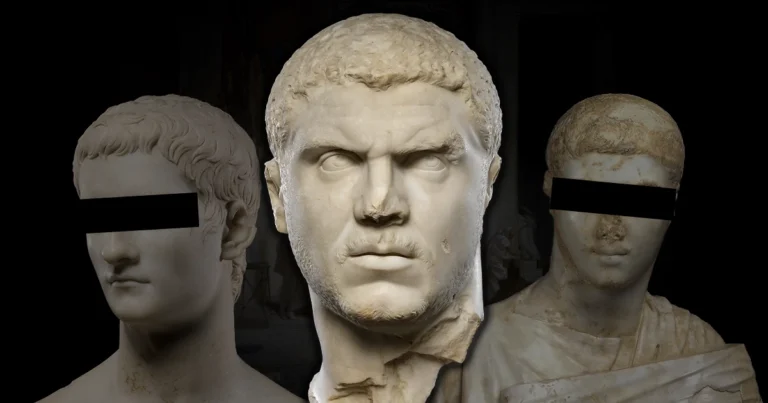
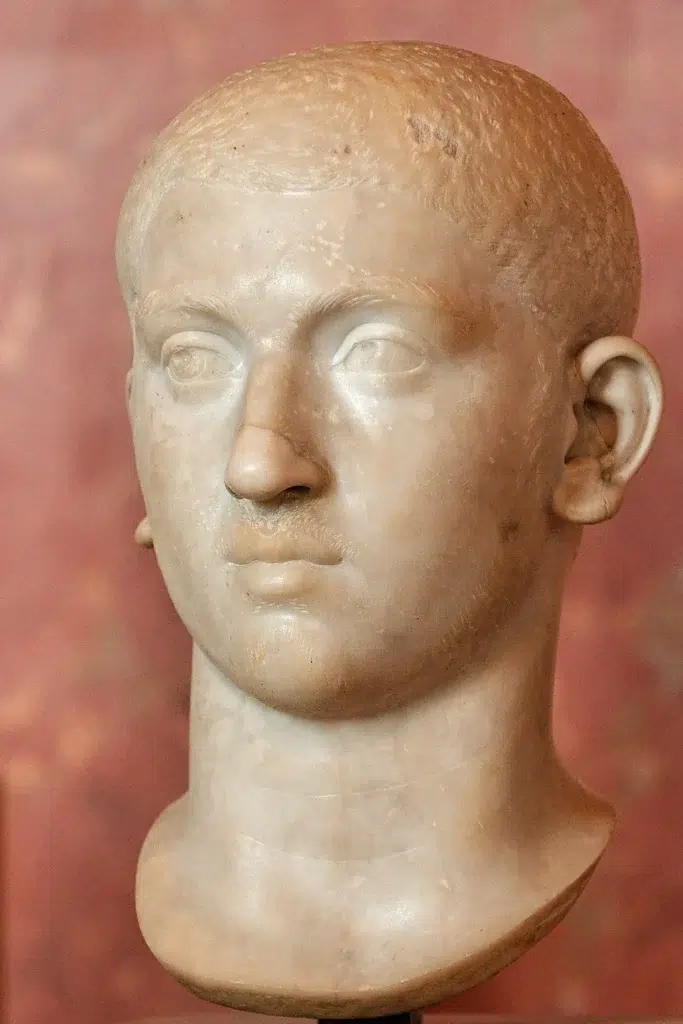
The Palatine’s northeast terrace holds the memory in stone. Standing there, you see why the sanctuary mattered. The Forum lies at your feet. The Arch of Titus frames one side. The Colosseum valley opens to the other. A god seated here would command the city’s ritual heart. The remains of the Praetorian camp remind visitors where the decision happened in 222. Museums preserve portraits of Elagabalus and Severus Alexander. Coin cabinets hold the crispest short stories we have: a chariot, canopies, an eagle, and a cone. If we strip away the slander that later writers used to darken Elagabalus’s name, those pieces still tell a plain story. A priest believed his god should be Rome’s god. He had the office and the money to try. Rome pushed back.