
The Romans called it the cameleopard—a neck like a camel’s, spots like a leopard’s. To most spectators, a giraffe was a marvel. To the emperor Commodus, it was stage dressing: a gentle, strange-bodied creature that could be cast as a “monster” so he, playing Hercules, could kill it in the arena and claim a hero’s victory. The episode sits at the junction of imperial vanity, imported wonders, and a public appetite for spectacle that confused zoology with myth.
Who turned a giraffe into a monster?
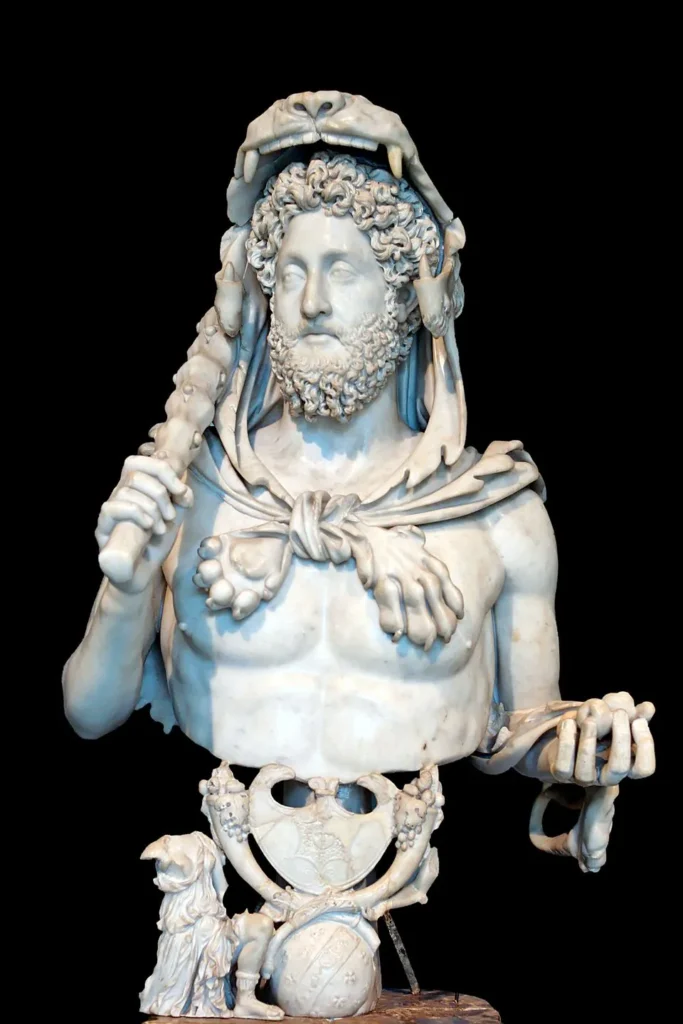
Commodus (r. 180–192 CE) loved to perform in the amphitheater. He did so as a secutor, as an archer, and—most scandalously—while styling himself as Hercules. “Heroic” killing was part of the act. Contemporary accounts describe him slaughtering exotic animals from a raised platform and even bringing their remains toward the elite seats to taunt senators. Among the creatures he killed was a giraffe—explicitly named by Cassius Dio, a senator-historian who watched Commodus’s games in person. Dio’s epitome of Book 73 notes the imperial habit of dispatching rare beasts, including a camelopardalis (giraffe). The detail matters: in the imperial imaginary, a giraffe’s ungainly body could be framed as monstrous prey for a self-declared Hercules. (See Cassius Dio, Roman History 73, Loeb edition.)
“Monster” here isn’t a biological category; it’s propaganda. Commodus’s public persona fed on re-enacting myth. Hercules kills monsters; Commodus, wearing the lion skin and brandishing a club, kills anything he can label as one—panthers, elephants, ostriches, hippos, and, yes, a giraffe. The rhetorical trick is simple: call the unfamiliar “monstrous,” then claim moral credit for its defeat.
Why a giraffe made perfect “monster” material
A giraffe is a peaceful, awkwardly magnificent herbivore. To a Roman crowd it was also deeply foreign—a living postcard from Africa, towering over handlers, moving with a delicate, unnatural-seeming gait. Spectacle organizers knew how to paint that strangeness as threat. Costumes, placards, and the emperor’s own speeches helped recast “marvel” into “menace.” Once framed as a foe, the animal’s very vulnerability added to the drama: what sort of god-hero can strike down a creature that almost seems like a myth pulled into daylight?
This wasn’t entirely new. Romans had been parading far-flung fauna for generations. Julius Caesar introduced Rome’s first giraffe during his triumphal celebrations in 46 BCE, and late Republican and imperial elites made a habit of showing off imported beasts at venationes (staged hunts). By the high empire, the crowd expected novelty: stranger animals, new choreographies, louder gasps. Commodus understood that expectation and built an emperor’s brand on meeting it.
“Heroics” with safety rails
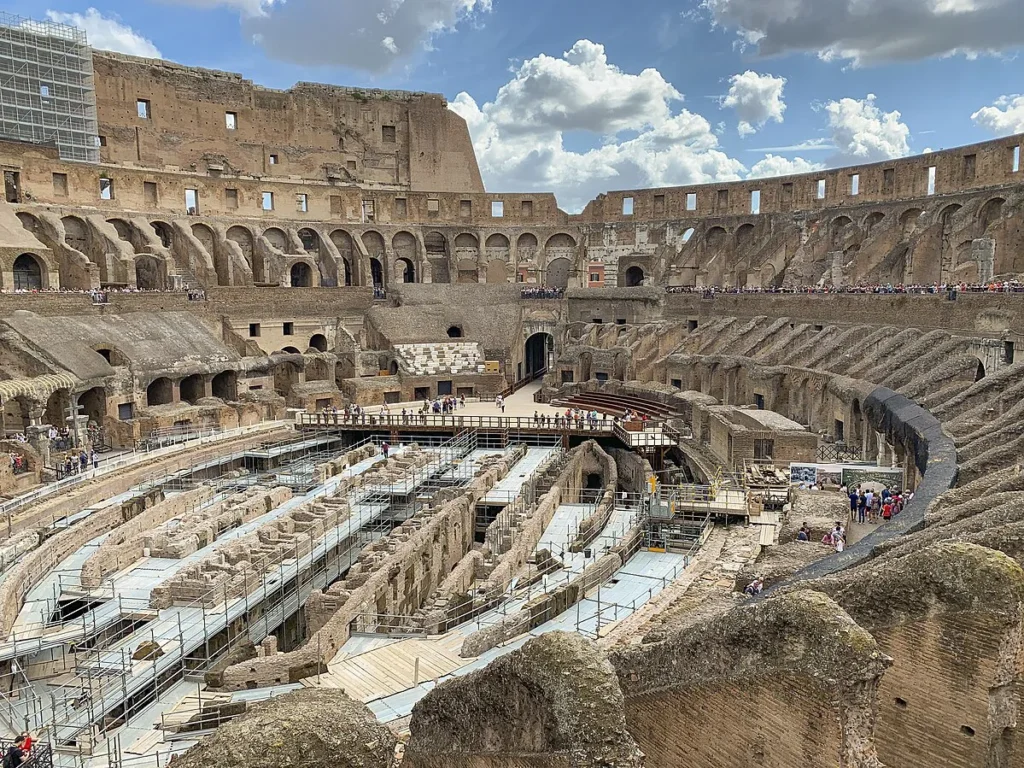
Our most vivid ancient descriptions of Commodus’s animal-killing make him look less like a gladiator and more like a rich man performing archery tricks above the danger. Herodian, another near-contemporary historian, describes a terrace constructed around the arena so the emperor could hurl javelins from an elevated, protected position. The point wasn’t risk; it was choreography. Commodus displayed skill while avoiding the close-quarter mauling that real bestiarii faced. The giraffe’s death fits that script: a rare, eye-catching target presented to the “Roman Hercules,” safely dispatched from above. (Herodian 1.15 gives the setup for these engineered “hunts.”)
Cameleopard: when language invents a creature
Even the name cameleopard turns zoology into fable. The label insists that a giraffe is a hybrid—camel-leopard—announcing strangeness before the animal steps into view. Words matter. When your emperor greets a giraffe with Hercules’ club and a hybridizing name, he doesn’t meet a beast of the African savanna; he meets a scripted creature already halfway to becoming myth.
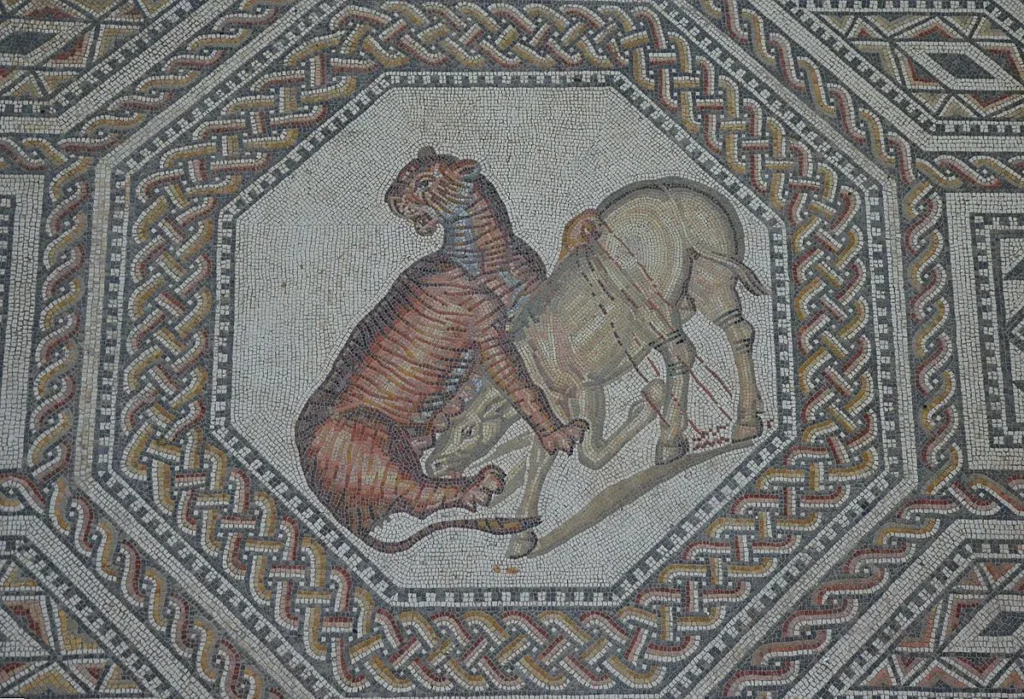
Roman viewers helped complete that transformation. They had seen mosaics and wall paintings of Nilotic landscapes packed with crocodiles, hippos, exotic birds—and occasionally long-necked creatures that a modern viewer recognizes at once. Those images taught an audience how to look: exotic animals were at once natural wonders and fitting opponents in the amphitheater. The giraffe, like the crocodile, could be taken for a sign that the empire reached the edges of the known world.
What the crowd saw—and what some hated
Commodus’s theatrics sparked two, often simultaneous reactions: awe at the spectacle and disgust at the emperor’s shamelessness. Killing a giraffe did not look heroic to everyone. Senators in particular loathed watching the head of state posture as a showman, and Dio tells us more than once that people laughed behind their garlands—even as they clapped before his face. The cognitive dissonance was the point. Commodus demanded the paradox: be afraid of me as Hercules; also, pay to watch me like a celebrity athlete.
Giraffes added another layer of unease. Romans understood lions and boars as dangerous quarry; they made sense in a hunter’s logic. A giraffe is not a predator. The gap between pose and prey unsettled some portion of the audience. That gap, however, helped Commodus’s brand. If he could turn a gentle marvel into a nightmare with a name and a costume, think what he could do to enemies who truly opposed him.
How a giraffe got from Africa to Rome
A giraffe in Rome implies logistics. Traders, hunters, and handlers coordinated over oceans and deserts. Capture likely involved pitfalls and nets around water sources, followed by an arduous overland march to a river port, a careful sea leg, and a final trek up the Italian roads. Feeding a giraffe en route is a full-time job: fodder, fresh water, shade, and space to rest without damaging the animal’s skin or legs. Every stop required build-outs—tall pens, slings and hoists for support, specialist grooms.
Cost made the animal precious. That price tag is precisely why parading and killing such a rarity reads as imperial largesse and power: who but an emperor can import a six-meter wonder and use it as a prop? Museum essays on the Roman games stress how expensive exotic beasts were to acquire and train; the more outlandish the creature, the clearer the sponsor’s wealth and reach.
Built out of a love for history, kept free from distractions.
Spoken Past is an independent project shaped by curiosity, care, and long hours of research. Reader support helps keep it maintained, carefully researched, and open to everyone.
How the killing worked
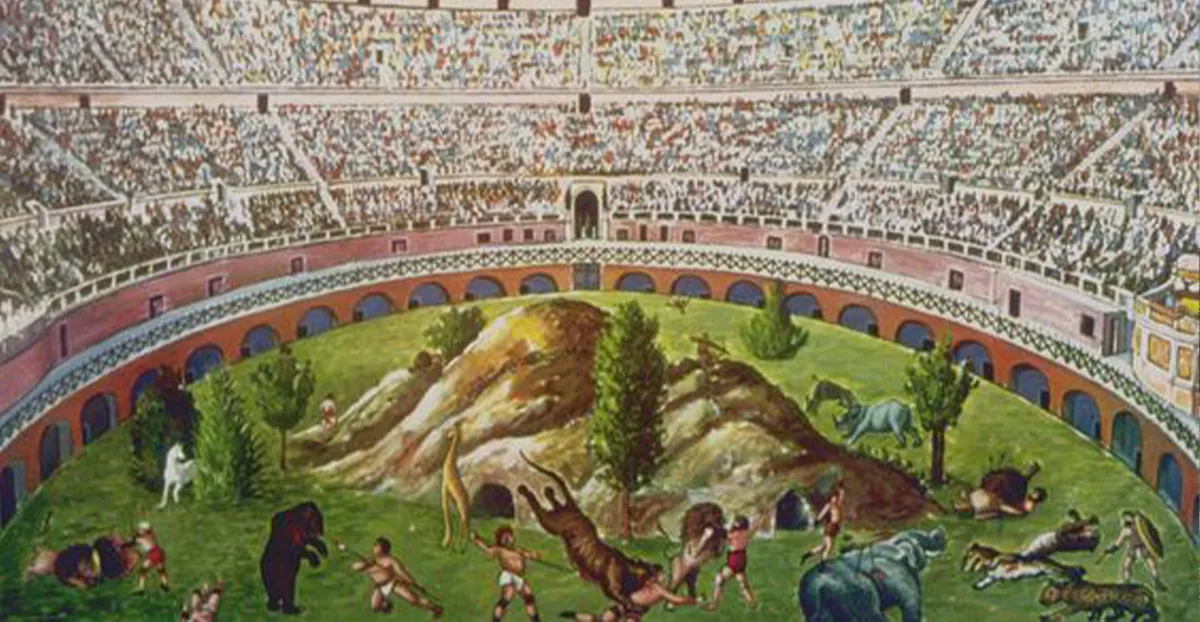
In a venatio, the organizers controlled nearly everything: sightlines, entrances, the distance between hunter and animal, the sequence of events. Nets funneled beasts toward the emperor’s ideal angle; attendants distracted with cloaks and poles; the arena crew regulated thirst and fatigue so a creature would pace or pause on cue. Commodus preferred distance weapons—spears, arrows, thrown darts with specialized heads—because they offered spectacle without risk. Herodian’s terrace makes sense here: a high ring around the sand keeps the emperor visible and the animal constrained.
A giraffe’s physiology—light bones, long neck—makes it tragically vulnerable to missiles. A spear to the chest or shoulder, a deep cut from a crescent-bladed dart, a well-placed shaft to the throat: all grotesquely effective. For a crowd trained by decades of amphitheater shows to applaud blood, that slow collapse read as proof that Hercules had tamed yet another monster.
Why a giraffe, specifically?
Novelty, above all. Lions and bears were staples. A giraffe is a head-turner. Its color and proportions make it the best billboard in the menagerie parade. It also moves in a way that reads as unreal: that floating gait, the swing of the neck, the cautious reach of the forelegs. To cast it as monstrous requires almost no work; strangeness does the job.
There is also symbolic geography. Giraffes signal Africa. To parade one in Rome (or in the provinces) is to say: our arms, our traders, our imperial prestige reach that far. Commodus wanted imperial scope attached to his private fame. By killing the animal himself—within view of the senators he detested—he folded that geography into his own body: Hercules’ club stretches Rome’s power to the Nile, then back again to the emperor’s hand.
The visual afterlife: mosaics, statues, and memory
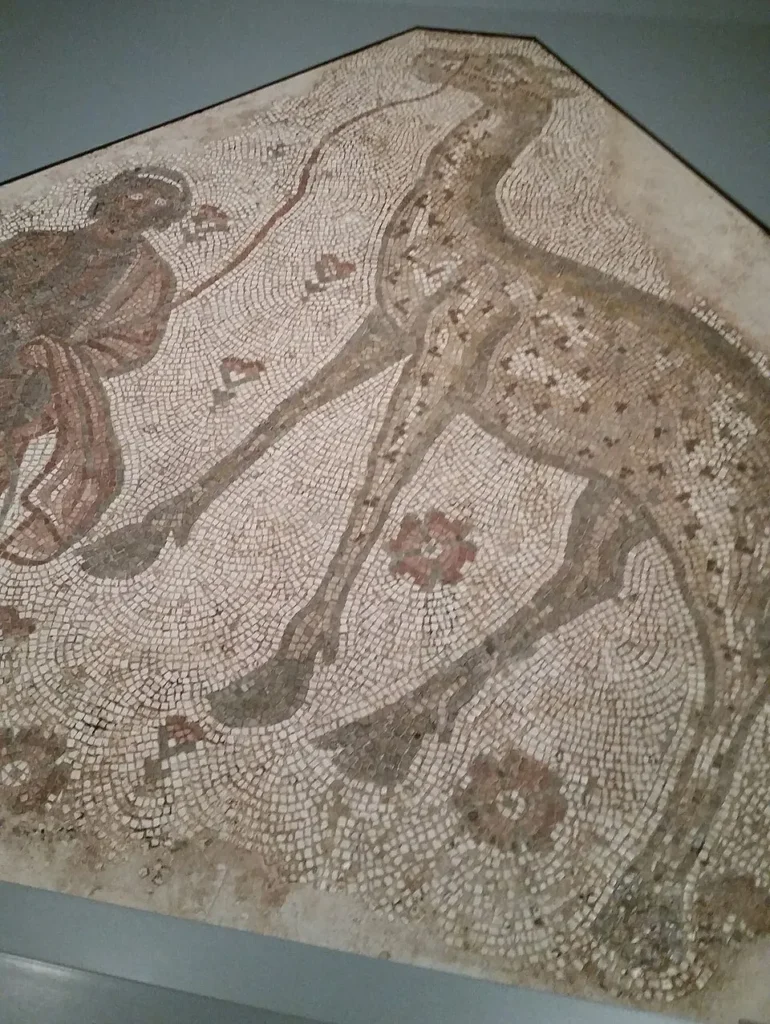
Roman and late antique art captured this whole ecosystem of marvel and murder. Mosaics from villas and public buildings show venationes as elaborate pageants: hunters with nets and spears, leopards and ostriches, sometimes hybrid landscapes crammed with Egyptian fauna. In museums today, you can stand before a panel where a handler leads a giraffe by a rope—an image of calm control that doubles as a program note for the arena.
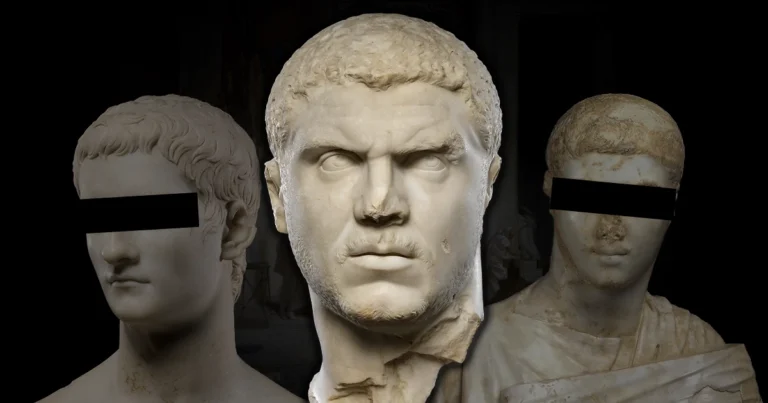
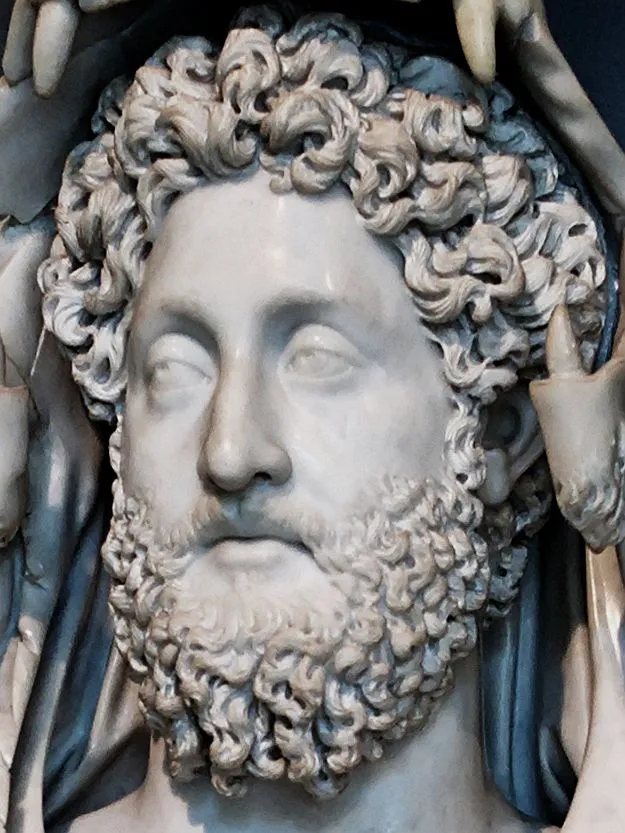
Meanwhile, the bust of Commodus as Hercules distills the performance to its essence: lion skin over curls, club poised, apples of the Hesperides at hand. The message is not subtle. When that figure strides into an amphitheater and a giraffe enters the sand, myth is already halfway to victory. The rest is theater.
How spectators learned to see monsters
The Roman public didn’t arrive at the amphitheater as blank slates. Schooling in images—mosaics in dining rooms, frescoes in porticoes, carved lamp discs—taught people to read animals as types. A leopard is fierceness; a stag is grace; an ostrich is speed and ridiculousness; a giraffe is wonder that can be flipped to menace. Add trumpets, banners, and the emperor’s mythic costume, and the narrative writes itself.
The same training shapes laughter, too. Dio’s senators chew laurel leaves to hide giggles because they already know the script is fake. Yet they also witness its power: laughter swallowed, applause performed, myth confirmed. When Commodus lifts a club over a giraffe, he is striking at the fragile membrane between reality and story—and proving that, for a price, an emperor can do what storytellers do for free.
The cost in bodies and coin
Behind the show were handlers who raised and transported the animals, architects who modified amphitheaters for the latest gimmick, accountants who balanced outlays for capture and freight against expected political return. A giraffe represents hundreds of laborers’ days—a network of ports, garrisons, caravans. Killing it is both consumption and advertisement. The money is spent; therefore the ruler is rich. The marvel dies; therefore the ruler is mighty.
This is why the language of “monster” matters so much. The word provides a moral fig leaf. It is easier to cheer the death of a “monster” than the slaughter of a docile herbivore that has traveled a thousand miles under whip and rope.
A note on sources and their moods
Ancient writers are not neutral cameramen. Cassius Dio disliked Commodus, and his accounts of the emperor’s games balance clinical detail with scorn. Herodian presents the terrace and the thrown spears with a similar mix of awe and disgust. Yet the convergence of their testimony gives the giraffe episode weight: an emperor who styled himself as Hercules treated living creatures—however gentle—as raw material for myth. For readers two millennia later, the core is clear enough: an imported marvel, an imperial performance, a kill that pretended to be heroic because the audience had been told a story about monsters. (Primary references: Cassius Dio, Roman History 73; Herodian 1.15.)