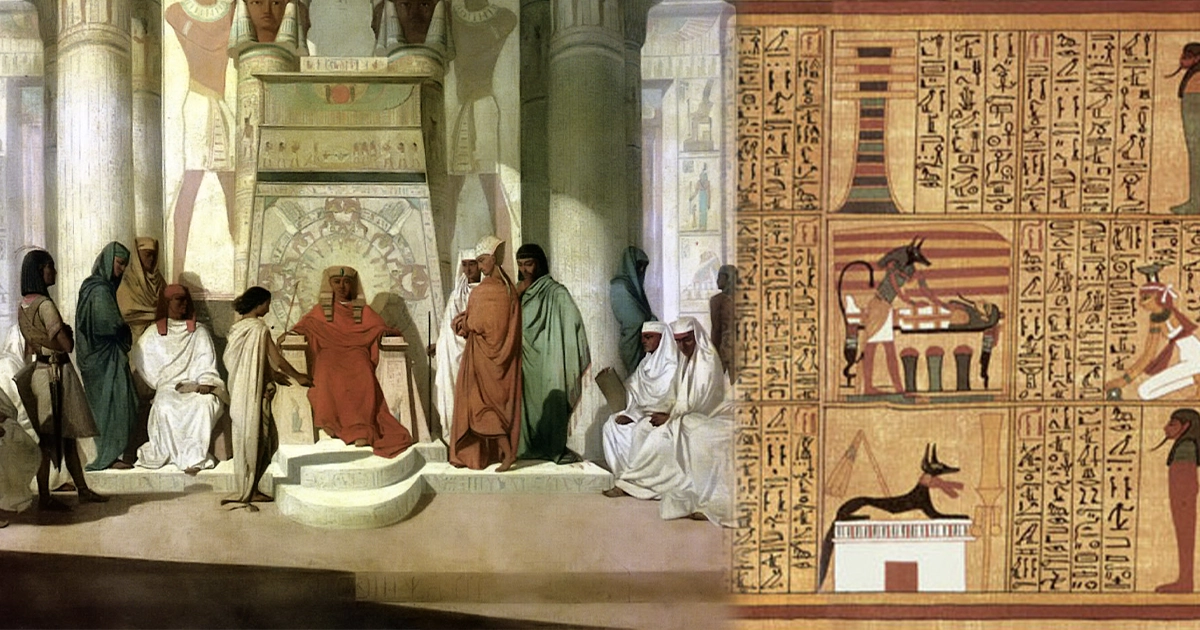
In 1928, excavators working at Deir el Medina, a walled village on the west bank of the Nile near Thebes, uncovered a collection of papyri hidden in the superstructure of a tomb. Among the documents was a hieratic papyrus unlike any other substantial dream manual known from pharaonic Egypt: the Egyptian Dream Book, now held by the British Museum as Papyrus Chester Beatty III. It listed dream images beside predicted outcomes, not as psychology, but as divination. What it reveals about the people who wrote it, owned it, and possibly used it is more complicated than it first appears.
How Papyrus Chester Beatty III Was Found and Reused
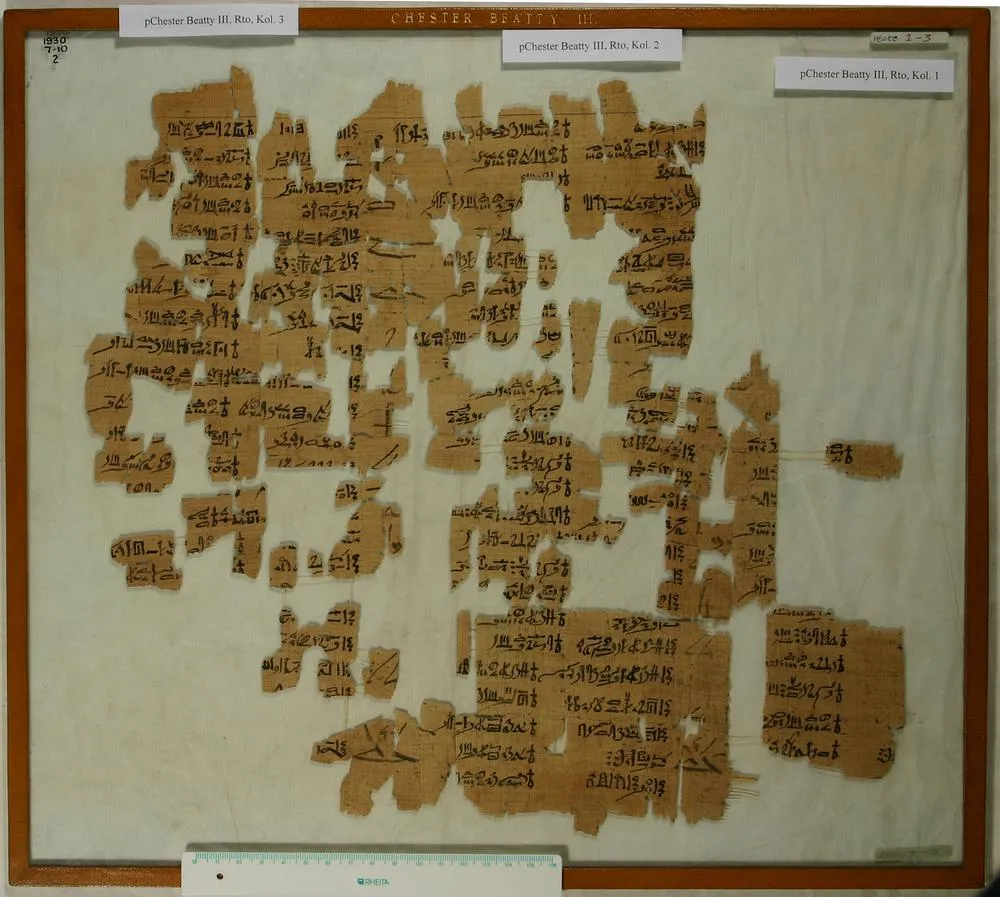
Papyrus Chester Beatty III dates physically to the 19th Dynasty, probably the early reign of Ramesses II or not long after. The British Museum identifies it as a hieratic manuscript in four frames, with a dream manual on the recto and literary texts on the verso. The dream entries are written in a fine literary hand by an unknown scribe.
The verso was later used by Qenherkhepshef, one of the better documented scribes of Deir el Medina. He belonged to the community of royal tomb workers who built and decorated tombs in the Valley of the Kings. On the reverse side of the Egyptian Dream Book, he copied a poem about the Battle of Kadesh and a letter to the vizier. The British Museum record distinguishes his bold, cursive hand from the original copyist of the dream manual.
Qenherkhepshef did not write the dream manual itself. He acquired it, kept it, and reused its blank side. After his death, the papyrus collection passed through the family of his wife and later to Amennakht, who added a colophon that wrongly credited himself with the text. This chain of ownership matters because the papyrus was not simply a temple document locked away from ordinary readers. It moved through a household in one of the most literate communities in New Kingdom Egypt.
How the Dream Omens Were Organized
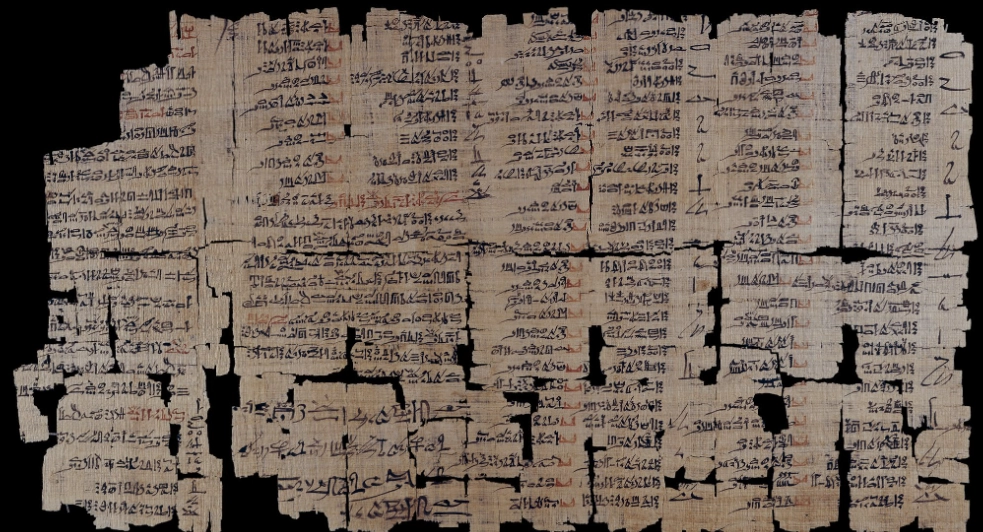
The Egyptian Dream Book follows a consistent structure. Each entry begins with the formula “If a man sees himself in a dream,” followed by an image, a verdict of “good” or “bad,” and a predicted result. Google Arts and Culture notes that the word “bad” was written in red, a color associated here with ill omen in the manuscript.
The surviving entries number about 222, divided into good and bad omens. Alan Gardiner published the standard edition in Hieratic Papyri in the British Museum in 1935. Some examples show how direct, strange, and culturally specific the system could be:
- If a man sees himself immersing in the river in a dream, it is good. It means purification from badness.
- If a man sees his face in a mirror in a dream, it is bad. It means another wife.
- If a man sees himself shod with white sandals in a dream, it is bad. It means roaming the earth.
- If a man sees himself dead in a dream, it is good. It means a long life is ahead of him.
- If a man sees himself writing on a papyrus roll in a dream, it is bad. It means his crimes will be reckoned by his god.
The logic is not always obvious to a modern reader. Some interpretations work by symbolic correspondence, some by wordplay, and some by cultural reference. Kasia Szpakowska, in Behind Closed Eyes, emphasizes the role of punning and specialist scribal language. That makes the manual difficult to read without knowledge of Egyptian language and religious culture.
What Egyptian Dream Omens Actually Predicted
The Egyptian Dream Book did not interpret dreams as expressions of private emotion in the modern psychological sense. It treated them as omens. A dream image predicted a future event, a social outcome, a divine judgment, or a change in status.
The concerns reflected in the entries are practical and social. They include food, disputes, legal judgment, office, divine favor, magic, family, death, and contact with the dead. Seeing the god who is above in a dream means a great meal. Seeing nomads means the love of a dead ancestor will come into one’s presence. Being bitten by a dog means being touched by magic. Writing on a fresh palette is good and means being established in office. Writing on a reused papyrus roll is bad and means that crimes will be reckoned by one’s god.
Good and bad do not always match modern expectation. Seeing oneself dead is good because it predicts long life. Falling appears as a good omen in the surviving text. Burying an old man may predict prosperity, probably because the image evokes funerary duty and inheritance rather than simple death.
This distinction is important. The manual separates omen from morality. A bad dream does not always mean the dreamer has done something evil. A good dream does not always describe something pleasant. The image, the verdict, and the prediction must be read as a divinatory sequence.
Built out of a love for history, kept free from distractions.
Spoken Past is an independent project shaped by curiosity, care, and long hours of research. Reader support helps keep it maintained, carefully researched, and open to everyone.
Who Could Read or Use the Manual?
The question of who used the text remains unresolved. The provenance at Deir el Medina suggests a setting outside the formal temple archive, but the language and interpretive methods point to highly trained scribal culture. Szpakowska treats both possibilities seriously: it may have been a practical manual, a collector’s object, a source of writing material, or a way to preserve an oral tradition.
Qenherkhepshef was an avid collector of texts, and the papyrus height suggests a formal manuscript rather than a casual note. Yet the concerns inside the manual fit a literate working community. Deir el Medina had tomb workers, scribes, ritual specialists, and access to magical and religious knowledge. In a village without a full temple priesthood, residents may have performed some ritual functions themselves.
The identity of the interpreter is also uncertain. Direct evidence for professional dream interpreters in pharaonic Egypt is weak. One Deir el Medina example involves a woman who responds to a dream by going to an oracular shrine of Queen Nefertari. Another ostrakon asks whether future dreams will be good, suggesting that divine oracles could be consulted about dreams. The Dream Book itself does not name an interpreter. Its formula addresses the dreamer directly.
The surviving entries are also gendered. They begin with “If a man sees himself,” and the imagined dreamer is male throughout. Later Demotic dream books, including material connected with Papyri Carlsberg XIII and XIV, include dreams experienced by women. That later material should not be projected backward onto the Ramesside text, especially because large parts of Papyrus Chester Beatty III are missing.
Why the Sethian Dreamer is Important
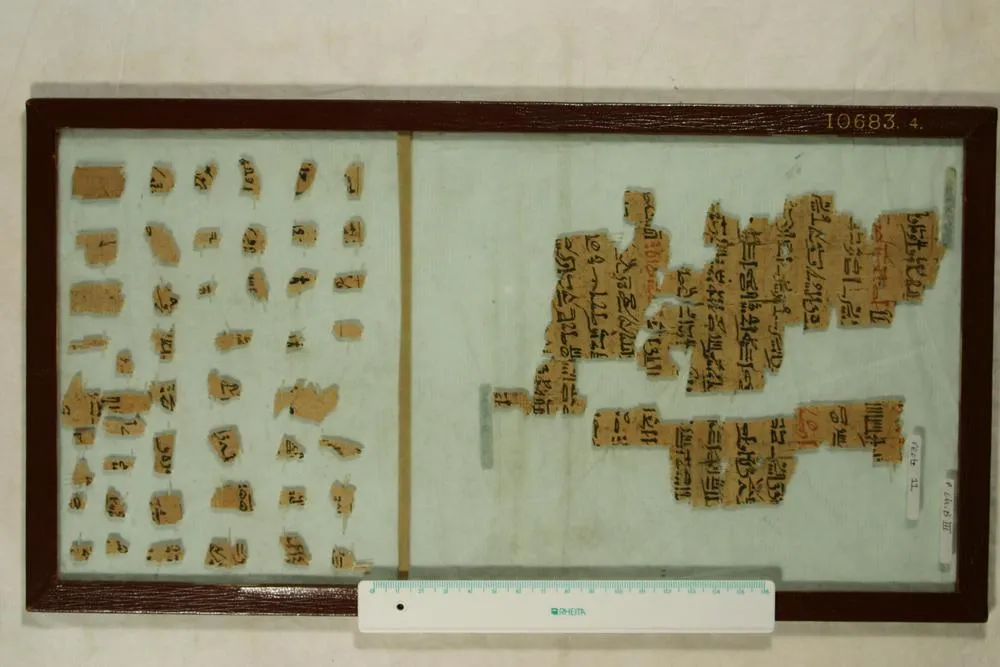
Near the end of the surviving recto, the manual includes a distinctive section about what Gardiner called a “Sethian man.” This figure is described through bodily and behavioral traits, including reddish coloring, drunkenness, rage, and disorderly conduct. The passage is damaged, and parts of its reconstruction remain debated.
The section matters because it shows that dream interpretation was not only about the image seen in sleep. The identity and constitution of the dreamer could affect the meaning of the omen.
Seth was associated with storms, desert spaces, foreigners, violence, and dangerous power. To describe someone as connected with Seth was not a neutral label. It placed the dreamer within a specific social and religious category. In this section, evidence, interpretation, and speculation must be kept apart. The evidence is the damaged passage. The interpretation is that the dreamer’s type mattered. The speculation is how often such categories were used beyond this manuscript.
This is one reason the papyrus should not be treated as a universal dream dictionary. It was a technical text shaped by language, ritual knowledge, social categories, and local context.
How Old Is the Surviving Dream Book?
The physical papyrus dates to the Ramesside period, around the 13th century BC. The text’s original date is more difficult. Gardiner argued that the language pointed to an earlier Middle Kingdom composition, roughly 2040 to 1640 BC. That remains an important hypothesis, but not a settled fact.
Szpakowska challenges a simple Middle Kingdom date. Middle Egyptian continued to be used as a prestige written register in later periods, so grammar alone cannot prove an early composition. She also notes that some terms in the manual are not attested before the New Kingdom. Groll proposed that the text systematized a technical dream language linked with literary Late Egyptian, though Szpakowska does not accept every part of that analysis. The safest conclusion is that the surviving manuscript is Ramesside, while the composition date remains disputed.
The manuscript is still singular. Only two Egyptian dream book traditions survive in substantial form: the Ramesside hieratic manual now in the British Museum and the later Demotic material from the Roman period. The Oxford thesis by Luigi Prada treats Egyptian dream books as a genre, but the surviving evidence remains thin.
Papyrus Chester Beatty III was donated to the British Museum by Alfred Chester Beatty in 1930. It was first published in full by Gardiner in 1935 and remains accessioned as EA10683. Its importance rests partly in what it preserves and partly in what it cannot answer. It shows that some Egyptians treated dreams as structured omens. It shows that a skilled scribal household kept and reused the text. It does not prove how many such books existed, how often they were consulted, or who usually interpreted them.