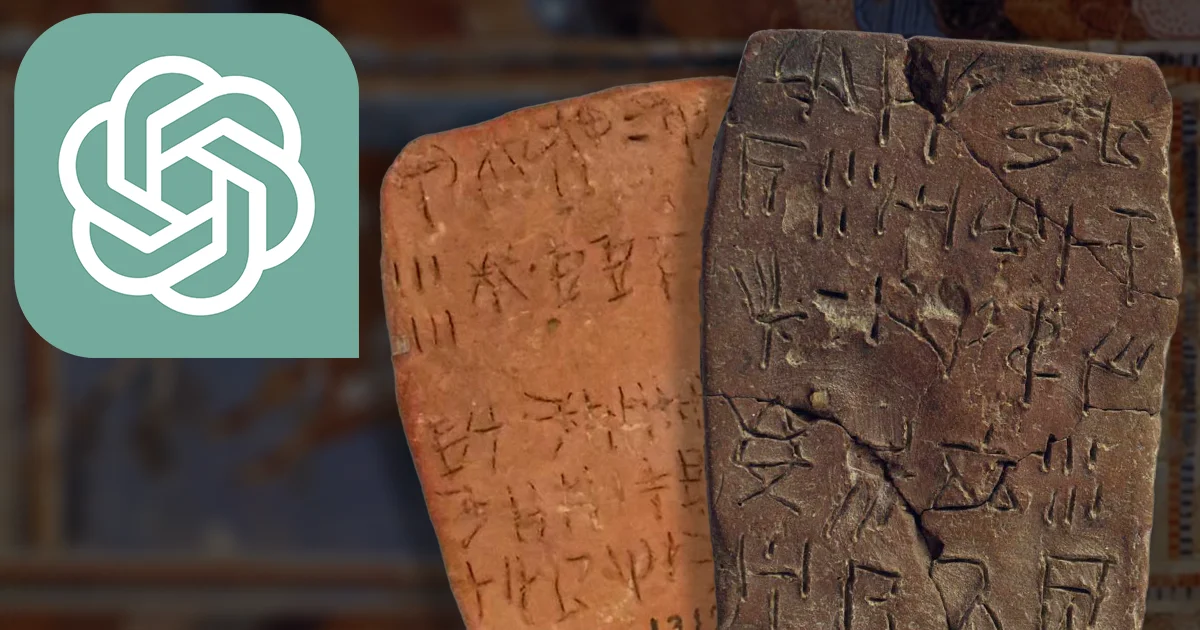
When Arthur Evans began excavating Knossos in March 1900, he found something no one had expected: a fully developed Bronze Age writing system on clay tablets, incised with crisp, angular signs unlike anything then known from the Aegean world. He called it Linear A, distinguishing it from the slightly later and related Linear B that appeared at the same site. More than 125 years after Evans lifted those first tablets from the Cretan soil, Linear A remains completely undeciphered. The signs can be read aloud with approximate phonetic values borrowed from Linear B, but the words produced are meaningless because the underlying Minoan language is unknown. Artificial intelligence has brought formidable new tools to the problem since around 2019, and researchers at Cambridge, Melbourne, and other institutions are actively applying them. The results so far are illuminating but not transformative. Understanding exactly why requires understanding what makes Linear A so fundamentally different from every other script that has been successfully decoded.
What Linear A Actually Is
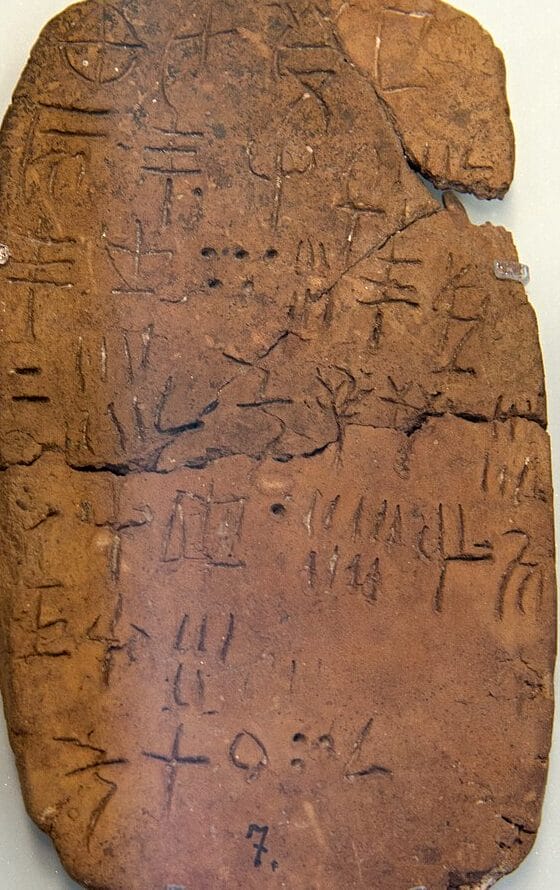
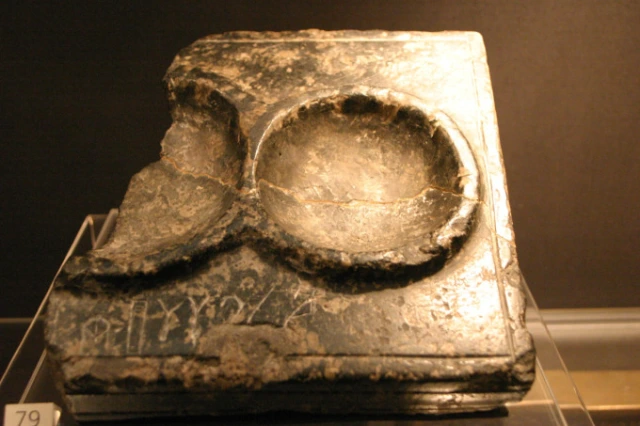
Linear A is a syllabic writing system, meaning that each sign represents a syllable rather than a single sound or a whole word. It was used by the Minoan civilization of Bronze Age Crete from approximately 1800 to 1450 BC, appearing primarily on clay tablets from palace administrative centers but also on libation tables, stone vessels, gold and silver pins, and ceramic vessels at sites across Crete and on several Aegean islands including Thera, Kea, and Melos. The first comprehensive corpus of all known inscriptions, known as GORILA, was assembled by Louis Godart and Jean-Pierre Olivier of the French School at Athens in five volumes published between 1976 and 1985. The total corpus stands at roughly 1,427 specimens containing between 7,362 and 7,396 individual signs.
Linear A is visually related to Linear B, the script that Michael Ventris deciphered in 1952 and that records an early form of Greek. When Ventris applied his grid of phonetic values to Linear B tablets from Knossos, the results produced recognizable Mycenaean Greek words. The connection between the two scripts is structural: Linear B was adapted from Linear A when Mycenaean Greeks took control of Crete in the fifteenth century BC, borrowing many signs and modifying others. Dr. Ester Salgarella of St John’s College, Cambridge, demonstrated in her 2020 monograph Aegean Linear Script(s): Rethinking the Relationship Between Linear A and Linear B (Cambridge University Press) that the relationship between the two scripts is closer than previously assumed, with many graphic variants of Linear A signs surviving into Linear B. But closer script relationship does not mean closer linguistic relationship. The languages they record are entirely different.
The Three Barriers That Have Stopped Every Previous Attempt
Three separate problems compound each other to make Linear A uniquely resistant to decipherment. The first is corpus size. The 1,427 known inscriptions sound like a reasonable number until you consider that most are very short. Libation tables bear the same formulaic sequence of signs, the “libation formula,” repeated with minor variations across dozens of vessels. Administrative tablets record numbers and commodity ideograms with minimal surrounding text. Very few inscriptions exceed a handful of words. For comparison, Linear B survives in approximately 6,000 inscriptions, and that corpus, though sufficient for Ventris’s breakthrough, is itself considered small by the standards of successful decipherment work.
The second problem is the absence of any bilingual text. Ventris succeeded partly because Linear B tablets from Knossos listed place names he could identify through comparison with later Greek geography. There is no equivalent anchor for Linear A. No inscription has been found that records the same content in Linear A and in any known language. The closest analogue to a bilingual situation, the Rosetta Stone that unlocked Egyptian hieroglyphs, does not exist for Minoan. Without it, any proposed phonetic reading of Linear A words cannot be independently confirmed. As Salgarella told journalists when her SigLA database launched, applying Linear B values to Linear A “allows us to ‘read’ the inscriptions but we still cannot understand them.”
The third problem, and in some ways the most fundamental, is that Minoan is a language isolate. Yves Duhoux, emeritus professor of linguistics at the University of Louvain, demonstrated through structural analysis of Linear A that the Minoan language makes heavy use of prefixes and suffixes attached to word stems, a morphological pattern that makes an Indo-European affiliation unlikely since Indo-European languages do not rely on affixation to this extent. Scholars have proposed connections to Luwian, Semitic, Etruscan, and Uralic language families over the decades, but none has produced results that withstand scrutiny. As of early 2026, the weight of scholarly opinion treats Minoan as an isolate with no known relatives, living or dead, which means there is no comparative linguistic framework from which to derive probable word meanings.
The Mathematical Problem Barber Identified in 1974
In 1974, the scholar Elizabeth Wayland Barber published Archaeological Decipherment, in which she formalized a mathematical threshold for provable translation. The argument runs as follows: any proposed decipherment of an unknown script can only be confirmed if the corpus contains enough text for a statistical analysis to distinguish a genuine linguistic solution from a lucky-fitting coincidence. Below a certain quantity of text, it is mathematically impossible to prove that any given decipherment is correct rather than simply a pattern imposed on insufficient data. Barber calculated that Linear A, even given the number of inscriptions then available, falls below this threshold if the underlying language has no known relatives from which to borrow phonetic constraints. Her conclusion, reached half a century ago, has not been overturned by subsequent scholarship or by any amount of additional inscription discovery. More than 120 years of excavation on Crete have not moved the corpus across that line.
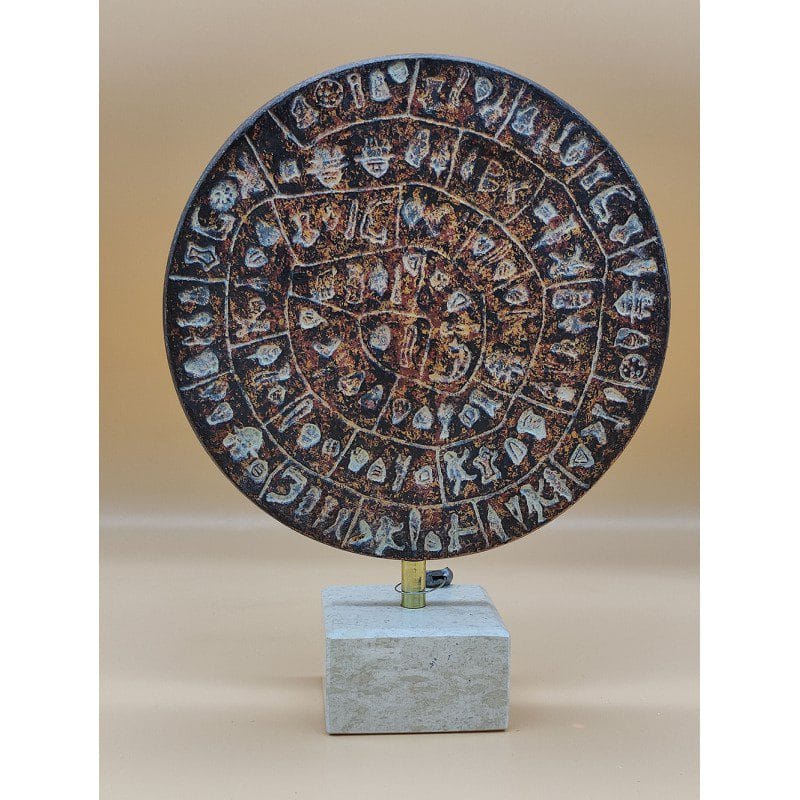
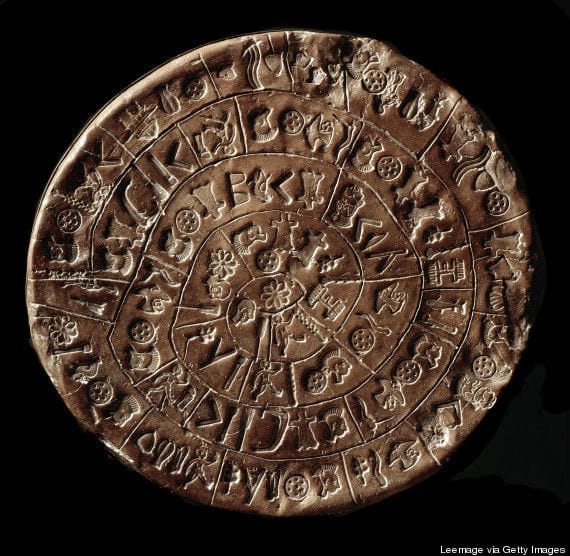
The Phaistos Disc illustrates what happens in the absence of this threshold. This circular clay object from Minoan Crete, inscribed with a unique stamped script that appears nowhere else, has been “translated” hundreds of times since its discovery in 1908. Proposed translations include religious hymns, agricultural almanacs, and navigational charts. None can be verified because the text is too short and the script is unparalleled. Victor Mair of the University of Pennsylvania’s Language Log noted in 2023 that even the arrival of ChatGPT has not changed this situation: pattern-matching algorithms can generate plausible-sounding translations indefinitely, but plausibility is not proof. Linear A is not as extreme a case as the Phaistos Disc, since it offers multiple inscriptions for comparison, but the verification problem is structurally the same.
Built out of a love for history, kept free from distractions.
Spoken Past is an independent project shaped by curiosity, care, and long hours of research. Reader support helps keep it maintained, carefully researched, and open to everyone.
What AI and Computational Methods Can Actually Do
The computational turn in Linear A research began gathering serious momentum around 2019, when a team led by Jiaming Luo and Regina Barzilay of MIT, with Yuan Cao of Google, published a machine-learning system capable of automatically deciphering lost languages. They demonstrated it on Linear B and on Ugaritic, both of which had known linguistic relatives supplying the constraints the algorithm needed. The system performed well precisely because it could anchor its proposals in comparative data. For Linear A, those anchors do not exist, and Luo’s team did not claim their approach would work without them.
More directly applicable to Linear A is the work being done in computational structural analysis. Brent Davis, a linguist and archaeologist at the University of Melbourne, has used statistical and phonotactic methods to examine the internal structure of the Linear A corpus and proposed that the basic word order of the Minoan language is verb-subject-object, a hypothesis based on the patterning of a common formulaic sequence that appears across many inscriptions. This kind of internal structural analysis does not translate the script but it narrows the space of possible linguistic connections and generates testable hypotheses about Minoan grammar that future inscriptions could confirm or refute.
The foundational digital resource for all this computational work is SigLA, the Signs of Linear A, a paleographic database created by Dr. Salgarella in collaboration with computer scientist Dr. Simon Castellan of INRIA at the University of Rennes, France. The open-access database, launched in 2020, provides standardized transcriptions and paleographic data for over 3,000 individual signs drawn from 400 inscriptions, covering all known Linear A sites. Before SigLA, computational researchers working on Linear A had to work from the printed GORILA volumes, which made systematic corpus-wide analysis extremely slow. The database does not solve any linguistic problems itself, but it gives AI systems the clean, structured input they need to run meaningful pattern detection across the full corpus at once rather than on isolated tablet groups.
A 2024 paper published in the journal Information reviewed two computational approaches to Linear A: a minimum cost-flow model that treats decipherment as a graph optimization problem, and a generative framework that compares phonetic values across related scripts. Both approaches showed that they could produce internally consistent phonetic proposals for Linear A signs when tested against languages already known to be related to each other. Applied to Linear A without a known related language, the proposals multiply in number without being reducible to a single verifiable answer. The paper’s conclusion is characteristically measured: these tools are useful for generating and evaluating hypotheses, not for producing translations.
What Partial Progress Looks Like and Why It Matters
Researchers who study Linear A have largely shifted their public expectations from full decipherment toward a model of partial, contextual understanding. The logic is this: even without knowing the Minoan language, it is possible to identify categories of meaning from archaeological context. A sign sequence that appears exclusively on administrative tablets, immediately before or after a number, probably denotes a commodity or a measurement unit. A sequence that recurs only on libation tables and ritual vessels, consistently in the same position, is almost certainly religious in function, possibly a divine name or a formulaic invocation. John Younger of the University of Kansas carried out exactly this kind of contextual analysis and identified several “transaction words,” functional terms that appear to mean something like “and,” “total,” or “received from,” based purely on their positional patterns in accounting documents.
Ilse Schoep of KU Leuven published a detailed classification of Linear A documents by their apparent content, using the presence of commodity ideograms to group tablets into semantic categories before any phonetic reading is attempted. This contextual framework gives AI pattern-recognition tools something to work with beyond raw sign frequency. When an algorithm knows that a given tablet belongs to the wool-processing category because it shows the wool ideogram, it can be trained to look specifically for patterns in the surrounding text that differ from patterns on grain-storage tablets. Differences between categories carry meaning even when individual signs do not.
Methods developed for Linear A also have direct applications elsewhere. The Indus Valley script of South Asia survives in roughly 4,000 inscriptions, most of them very short, encoding an unknown language with no proven relatives. Proto-Elamite tablets from Iran present similar obstacles. The combination of SigLA-style digital databases, contextual archaeological classification, and AI structural analysis is rapidly becoming the standard toolkit for attacking any undeciphered script. Progress in Linear A, even when it falls short of full translation, generates methodology that other fields can use.
The One Thing That Would Actually Change Everything
Every specialist working on Linear A agrees on a single point: the breakthrough, if it comes, will not come primarily from better algorithms. It will come from the ground. Specifically, it will come from a bilingual inscription, a text that records the same content in Linear A and in a known language, or from a large archive of new tablets that pushes the corpus decisively over Barber’s mathematical threshold. Excavations on Crete have continued since Evans’s time, and the pace has accelerated in recent decades. Ground-penetrating radar surveys at Knossos, Phaistos, and Malia have identified unexcavated structures that may include administrative quarters with clay tablet deposits. Several major Minoan palace sites still have unexcavated archives, and each field season carries genuine possibility.
It is worth remembering how the field of Linear B looked before 1952. John Chadwick, who collaborated with Ventris in confirming the Greek hypothesis, described in The Decipherment of Linear B (Cambridge University Press, 1958) how few people seriously believed the script would ever be read. The assumption that the underlying language was non-Greek, and therefore that nothing comparable to Greek could provide a foothold, seemed compelling right up until Ventris found his first place name and everything changed within weeks. The history of decipherment is a history of long stagnation followed by rapid breakthroughs triggered by a single decisive piece of evidence. For Linear A, that evidence has not arrived. But Cretan soil still holds what Evans never reached.
Why Linear A Still Matters
The Minoans built the largest palatial complexes of the Bronze Age Aegean. They maintained trade networks that reached Egypt, the Levant, and Anatolia. Their art, with its dolphins and bull-leapers and architectural polychromy, influenced Greek artistic traditions for centuries. Yet every reconstruction of Minoan history rests on archaeological inference and Greek myth rather than on documents written by Minoans themselves. Each of those 1,427 Linear A inscriptions is a Minoan voice that cannot be heard. Administrative tablets that might specify trading relationships, the names of officials, the organization of palace hierarchies, and the volumes of goods moving in and out of Knossos and Phaistos remain numbers attached to unknowable words.
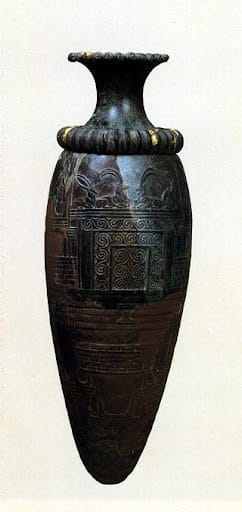
Ritual vessels bearing the libation formula, a repeated sequence of signs found on stone offering tables from sites including Palaikastro and Zakros, might preserve a hymn, a divine name, or a dedicatory formula. If so, they would be the oldest religious text from the Aegean world by several centuries, predating Linear B by at least two generations. The stone libation table from Palaikastro now in the Heraklion Archaeological Museum, inscribed with exactly this formula, has been read aloud in phonetic approximation many times. No one knows what it says.
AI has not cracked Linear A. Probably no tool, artificial or human, will do so without either a bilingual text or a substantial new archive. What computational methods have done is organize the evidence more systematically, generate structural hypotheses about Minoan grammar with greater precision, and build the digital infrastructure that any future decipherer will need. When the bilingual inscription or the large new archive eventually surfaces, the researcher who finds it will be working with a fully digitized, paleographically classified, algorithmically analyzed corpus. They will not be starting from scratch. That is not a solved puzzle. But it is a different research situation than Evans faced in 1900, and the difference matters.
Sources: Ester Salgarella, Aegean Linear Script(s): Rethinking the Relationship Between Linear A and Linear B (Cambridge University Press, 2020); Ester Salgarella and Simon Castellan, SigLA: The Signs of Linear A: a paleographical database, Grapholinguistics in the 21st Century (2020); F. Perono Cacciafoco et al., “MINOAN AND THE MACHINES: Computational Approaches to the Decipherment of Linear A,” Annals of the University of Craiova, Philology: Linguistics (2024); Tobias Schölly and co-authors, “Minoan Cryptanalysis: Computational Approaches to Deciphering Linear A,” Information 15.2 (2024): 73; Elizabeth Wayland Barber, Archaeological Decipherment (Princeton University Press, 1974); John Chadwick, The Decipherment of Linear B, 2nd ed. (Cambridge University Press, 1990); Ester Salgarella, Aeon Essays: “Without a Rosetta Stone, can linguists decipher Minoan script?” (2022); Brent Davis, “Syntax in Linear A: The Word-Order of the ‘Libation Formula’,” Kadmos 52 (2014).