Around 270 BCE, an astronomer working in Alexandria looked at the Moon during a lunar eclipse, measured the angle of the Earth’s shadow against the Moon’s diameter, and used the resulting ratio to estimate the relative sizes of the Sun and Moon. What he calculated pointed to a Sun enormously larger than the Earth. Aristarchus of Samos then asked the logical question that no astronomer before him had been willing to ask: if the Sun is vastly larger than the Earth, why should the smaller body sit at the centre of everything? His answer, developed in a work now entirely lost, was that it should not. The Earth moves around the Sun. The daily rotation of the sky is caused by the Earth spinning on its own axis. The stars appear fixed because they are inconceivably distant, far enough away that the Earth’s entire orbit is, as Aristarchus reportedly put it, no more than a point relative to the sphere of the fixed stars. That argument, the first rigorously geometrical case for a heliocentric universe in recorded history, is known to us only because Archimedes of Syracuse summarised it in a surviving treatise, and would have vanished entirely otherwise. It is one of the most significant accidents of textual survival in the history of science.
Who Aristarchus of Samos was and how he came to Alexandria
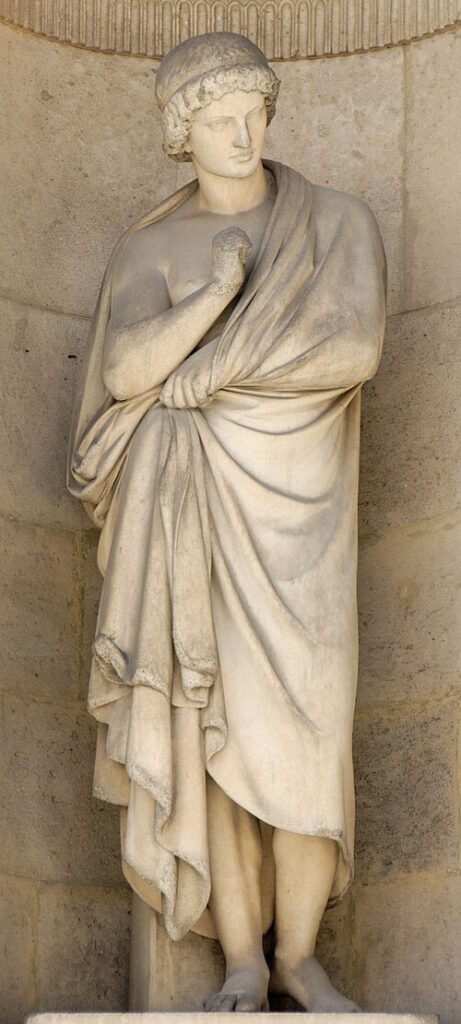
Aristarchus was born on the island of Samos, off the western coast of Asia Minor, around 310 BCE. His early biographical record is thin, as it is for almost every pre-Hellenistic scientist, but Ptolemy’s Syntaxis records that Aristarchus observed the summer solstice of 280 BCE, which gives us a firm anchor point for his active career. The scholarly consensus, established through the analysis of what Aristarchus calls his own teachers, is that he studied under Strato of Lampsacus, who led the Lyceum in Athens from around 287 BCE. Most historians of ancient science, including the MacTutor History of Mathematics team at the University of St Andrews, believe Aristarchus likely encountered Strato in Alexandria rather than Athens, since Strato spent years at the Ptolemaic court before taking over the Lyceum. This places Aristarchus at the heart of the most intellectually concentrated institution of the ancient Mediterranean world: the Mouseion of Alexandria, with its associated Library and its programme of funded scholarly research.
The Alexandria in which Aristarchus worked was the product of roughly forty years of deliberate intellectual investment by the Ptolemaic dynasty. Ptolemy I Soter had founded the Mouseion in the late fourth century BCE as a community of scholars supported by royal stipends, modelled loosely on Aristotle’s Lyceum but operating at a scale no previous institution had attempted. By the time Aristarchus was active, the Library had accumulated hundreds of thousands of papyrus rolls from across the Greek-speaking world. Geometers, physicians, geographers, and astronomers worked side by side in a context that actively encouraged the comparison of different disciplinary methods. It was precisely that culture of comparative measurement, in which the relative sizes of things were treated as resolvable mathematical problems rather than philosophical givens, that made the heliocentric hypothesis imaginable. Aristarchus did not arrive at heliocentrism through mysticism or pure speculation. He arrived at it through trigonometry.
The geometry that pointed to a Sun-centred universe
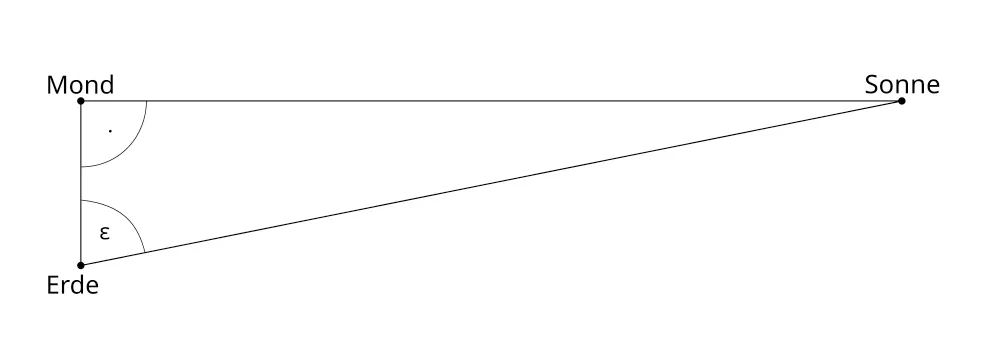
The one surviving work of Aristarchus, the treatise On the Sizes and Distances of the Sun and Moon, does not mention heliocentrism. It works within a geocentric frame throughout, treating the Earth as central and calculating the ratios of solar and lunar distance by geometric argument. This apparent contradiction has puzzled readers for two millennia, but the scholarly consensus since Thomas Heath’s 1913 Oxford edition is that the treatise was an earlier work, predating the heliocentric hypothesis. In it, Aristarchus established that the Sun is at least eighteen times farther from the Earth than the Moon (the true ratio is about 390 times, but the geometric method was sound even if the initial measurement of the lunar dichotomy angle introduced error). He also established that the Sun’s diameter is at least six times the Earth’s diameter. Those figures, even with their systematic underestimation, were enough to raise a physically troubling question: what mechanism keeps an enormous body orbiting a much smaller one?
The answer Aristarchus developed in his lost heliocentric treatise is preserved by Archimedes in The Sand-Reckoner, composed around 216 BCE. Archimedes was attempting to calculate how many grains of sand would fill the universe and needed to establish how large the universe was. He explains that Aristarchus had hypothesised “that the fixed stars and the sun are stationary, that the earth is borne in a circular orbit about the sun which lies in the middle of its orbit, and that the sphere of the fixed stars is so great in extent” that the Earth’s entire orbital circle bears to the sphere of fixed stars the same ratio that the centre of a sphere bears to its surface. The parallax objection, the obvious counter-argument that a moving Earth should produce a measurable shift in the apparent positions of nearby stars over the course of a year, is answered in the same breath: Aristarchus proposed that the stars are so distant that the parallax is simply too small to observe. Copernicus made precisely the same argument seventeen centuries later, almost word for word.
Why the heliocentric idea was rejected and then forgotten
Heliocentrism attracted immediate opposition. The Stoic philosopher Cleanthes, a prominent figure in Athenian intellectual life in the third century BCE, reportedly argued that Aristarchus of Samos should be charged with impiety for displacing the Earth from the centre of the cosmos and setting the gods’ sacred hearth-fire in motion. Plutarch records the exchange in a tone that suggests the accusation was not entirely serious, but it signals the depth of the philosophical resistance the model encountered. More damaging than accusations of impiety was the sheer weight of Aristotelian physics. Aristotle had provided an internally consistent account of why heavy bodies move toward the centre of the universe and why the heavens rotate around a stationary Earth in perfect circles. That account was embedded in natural philosophy, in medical theory, in theological reasoning, and in the mathematical astronomy taught in every Greek-speaking school. Displacing it required not just a heliocentric hypothesis but a complete alternative physics, and neither Aristarchus nor anyone else in antiquity supplied one.
The mathematical astronomers of the following two centuries, particularly Hipparchus of Nicaea in the second century BCE, developed the geocentric model with epicycles (small circles on which planets moved while the centres of those circles orbited the Earth) and eccentrics (offset orbital centres) into a system of genuine predictive power. Hipparchus’s refinements were absorbed and expanded by Claudius Ptolemy of Alexandria in the second century CE, whose Almagest provided the mathematical apparatus for predicting planetary positions with enough accuracy for calendar-making, navigation, and astrological calculation. The geocentric model, in its Ptolemaic form, worked. It produced numbers that matched observation. From the standpoint of practical astronomy, there was no obvious reason to prefer a heliocentric alternative that lacked both a physical mechanism and a computational advantage. The idea that Aristarchus was simply ahead of his time obscures the more precise truth: he was right about the geometry, but the tools needed to prove him right did not exist yet.
Built out of a love for history, kept free from distractions.
Spoken Past is an independent project shaped by curiosity, care, and long hours of research. Reader support helps keep it maintained, carefully researched, and open to everyone.
What cartonnage actually is and what papyri were actually found there
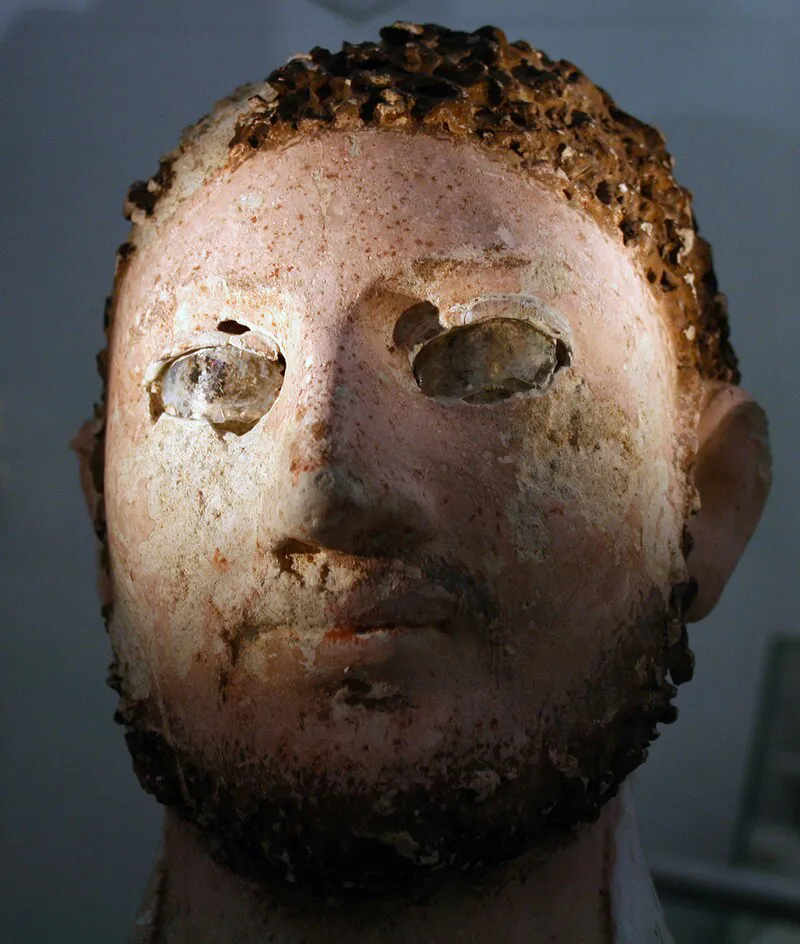
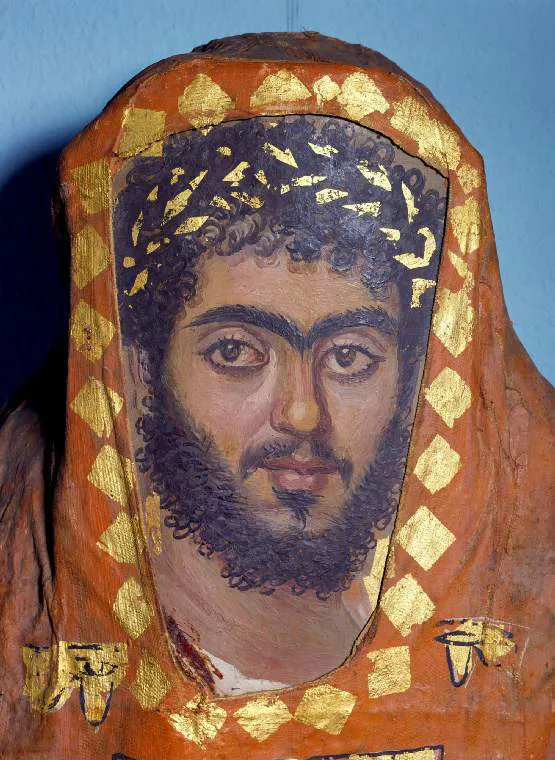
A viral claim that circulates in various forms online asserts that a papyrus scroll containing the heliocentric hypothesis was discovered inside the skull of an Egyptian mummy. The claim is false in its physical premise, its archival premise, and its historical premise simultaneously. Understanding why requires knowing what cartonnage actually is and how embalming actually worked. Cartonnage, in the Ptolemaic and early Roman periods (roughly 322 BCE to 100 CE), was a stiff, laminated material used to make mummy masks, pectorals, aprons, and foot casings. It was manufactured in a process closely analogous to papier-mache: discarded written papyri, primarily waste documents from government and official archives, were laminated together with gesso (a plaster-like compound of chalk and animal glue), moulded to shape, allowed to harden, and then painted or gilded. The source material for the laminate was old paperwork, not literary texts, and it was applied in sheets, not rolled into scrolls. A. Mohamed and colleagues, in a 2023 study in the Journal of Cultural Heritage, confirmed this pattern using X-ray fluorescence spectrometry on papyri from cartonnages found at Umm al-Baragat (ancient Tebtunis), Al-Hiba, and Abu Sir al-Malaq: the material was predominantly routine administrative documentation recycled into funerary equipment.
The skull itself is the second problem. Ancient Egyptian embalmers removed the brain by inserting a long hook through the left nostril, breaking the ethmoid bone, and withdrawing the cerebral material in portions. The resulting cranial cavity was then packed with natron salts or resin-soaked linen to prevent collapse during the drying process. The cavity was tight, chemical, and deliberately filled. It was not a storage space. When the British Egyptologist Sir William Matthew Flinders Petrie excavated at Gurob in the winter of 1889 to 1890 and made the first systematic recovery of Ptolemaic cartonnage papyri in modern archaeology, every fragment he found was in the laminated layers of the mummy casings, not inside skull cavities. The fragments he peeled from the gesso are now known as the Flinders Petrie Papyri and contain administrative documents: land leases, tax registers, and official correspondence. Not a single papyrological find from any excavation anywhere in Egypt has produced a philosophical treatise from inside a human skull cavity.
What genuinely comes out of cartonnage and why it matters
What does come out of Ptolemaic cartonnage is genuinely remarkable, even if it bears no resemblance to a concealed heliocentric treatise. The most important large-scale recovery project in modern scholarship was the excavation at Umm al-Baragat (ancient Tebtunis) in the Fayum region, where cartonnage fragments recovered from animal mummy cases in the late nineteenth and early twentieth centuries yielded hundreds of Greek administrative documents. The University of Helsinki and the University of Michigan undertook a joint project after Helsinki received fourteen cartonnage fragments from the Agyptisches Museum Berlin in 1993, extracting and publishing Greek texts derived from Ptolemaic-era government records. In February 2024, a team of conservators and papyrologists met at Graz University Library in Austria to examine a fragment catalogued as UBG Ms I 1946, known informally as the Graz Mummy Book, which had been recycled as cartonnage in the Ptolemaic period and may represent the earliest surviving evidence of a codex, predating other known examples by roughly four hundred years. That claim remains debated, but the episode illustrates the genuine scholarly excitement that cartonnage can generate when properly excavated and published.
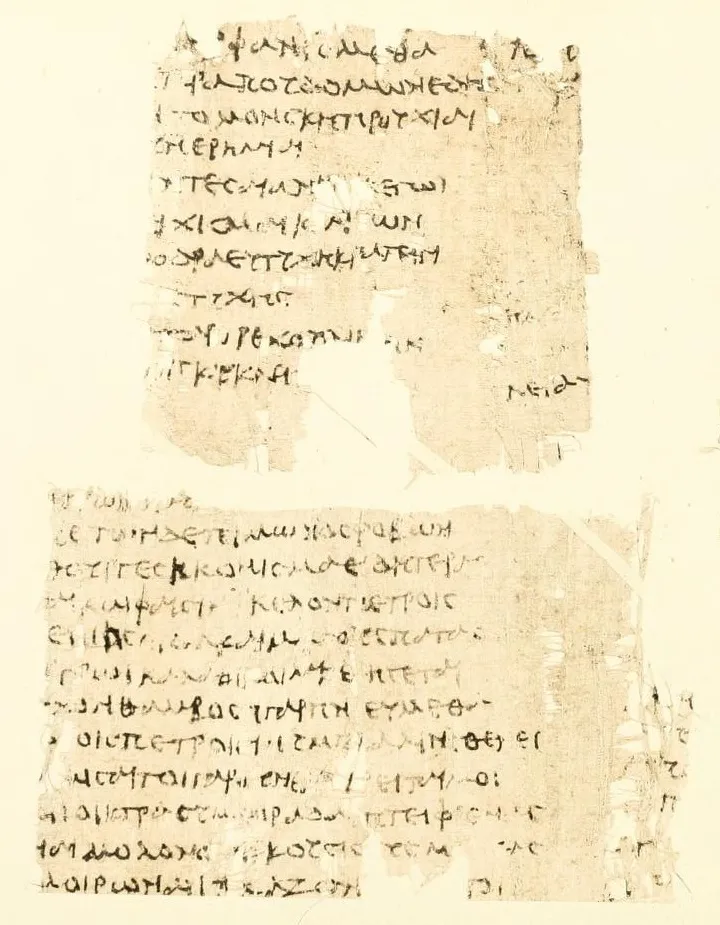
The material that actually survives in cartonnage layers consists overwhelmingly of what ancient scribes considered disposable: expired contracts, superseded tax registers, outdated administrative letters, and recycled packaging. Occasionally a literary fragment appears. A scrap of Euripides, a few lines of Menander, a partial astronomical table. These finds are genuinely valuable and their recovery through non-destructive imaging, using techniques including X-ray fluorescence and multispectral photography, is an active area of current conservation research. What does not appear, and what there is no physical or archival mechanism for appearing, is a sealed heliocentric treatise preserved in a skull. Cosmological treatises were the products of scholarly institutions, not funerary workshops. They were copied, circulated, and eventually lost through the collapse of the institutions that had maintained them, not through deliberate concealment in mummy anatomy.
How the idea survived to reach Copernicus and why that matters
The heliocentric hypothesis did not vanish after Aristarchus. It was noted by Seleucus of Seleucia in the second century BCE, who apparently argued for it on dynamical grounds related to tidal phenomena. It appeared in Plutarch’s dialogue On the Apparent Face in the Orb of the Moon, written around 100 CE, in a passage that describes Aristarchus proposing that the Earth revolves around the Sun. It persisted as a minority position recorded in doxographical literature throughout late antiquity and was available to any medieval scholar with access to the right Latin summaries. The route by which Copernicus encountered it is historically instructive. Copernicus cited Aristarchus of Samos by name in the autograph manuscript of De revolutionibus orbium coelestium (1543) as a precedent for his own heliocentric model. He then deleted the reference before the book went to press, apparently preferring to present his model as a novel mathematical solution rather than a revival of ancient opinion. The deletion was discovered when the autograph manuscript in Krakow was compared with the published text. Copernicus almost certainly encountered the Aristarchus reference through Archimedes’ Sand-Reckoner, which had been in circulation among humanist scholars since the late fifteenth century.
The gap between the third century BCE and 1543 CE is not a gap of forgetting. It is a gap of inadequate instrumentation and insufficient physical theory. Without a telescope, stellar parallax was unobservable, which meant that the most decisive observational proof of heliocentrism was unavailable. Without a theory of inertia, there was no physical account of why objects on a rapidly spinning, orbiting Earth would not be flung into space. Aristarchus of Samos had identified the geometry correctly and had provided a mathematically coherent answer to the parallax objection, but the rest of the required conceptual apparatus did not exist. When it was eventually assembled, through the observations of Tycho Brahe, the laws of Johannes Kepler, and the dynamics of Isaac Newton, what emerged was the validation of a geometrical insight that Aristarchus had reached from a few eclipse measurements and a calculation about shadow angles in the third century BCE. No mummy skull required.