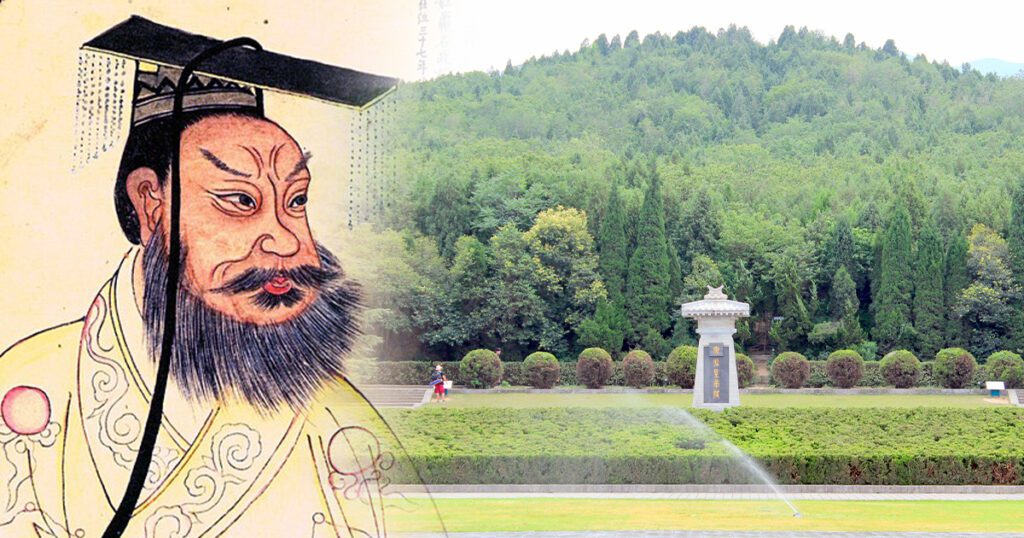
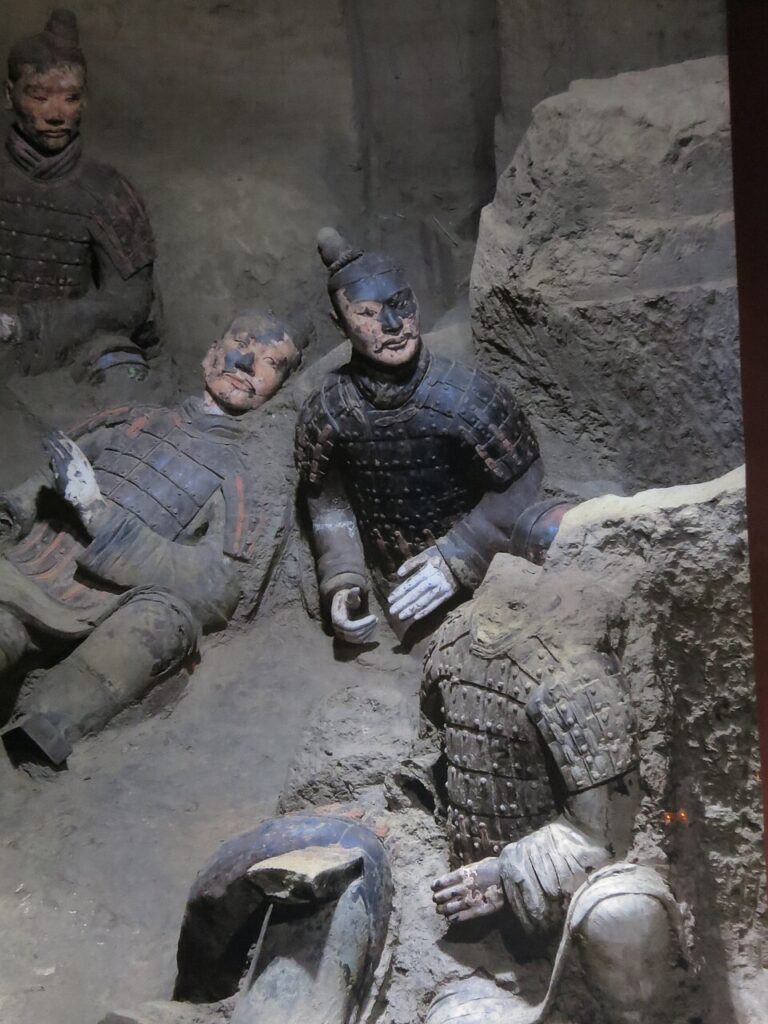
In 1974, farmers digging a well near Xi’an broke through the roof of a buried pit and found a life-sized clay soldier staring back at them. Subsequent excavation revealed three more pits containing over eight thousand individual terracotta figures, bronze weapons, horses, and chariots, all positioned as if on permanent watch facing east. The pit complex lay roughly a kilometer from a large earthen mound that had been visible in the landscape for two thousand years without anyone understanding what it covered. That mound is the burial chamber of Qin Shi Huang, the ruler who unified China in 221 BCE and died in 210 BCE. The mausoleum of the First Qin Emperor is one of the most significant archaeological sites in the world, and its central chamber has never been opened. This is not an oversight or a failure of ambition. It is a deliberate decision grounded in conservation science, Chinese heritage law, and hard lessons learned from watching the terracotta soldiers lose their color within minutes of exposure to open air. This article explains why the tomb remains sealed, what science has found without opening it, and what would actually need to be true before a responsible excavation could begin.
A Planned City for the Dead
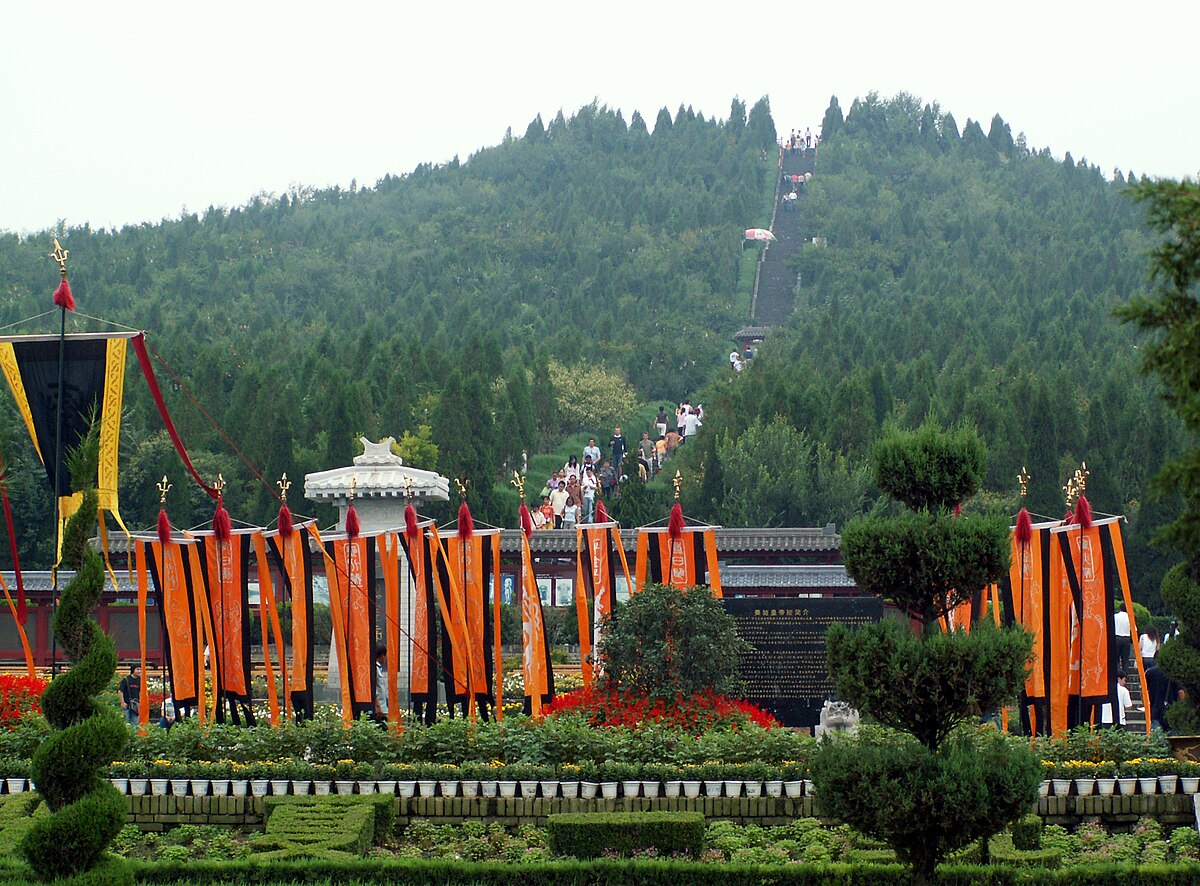
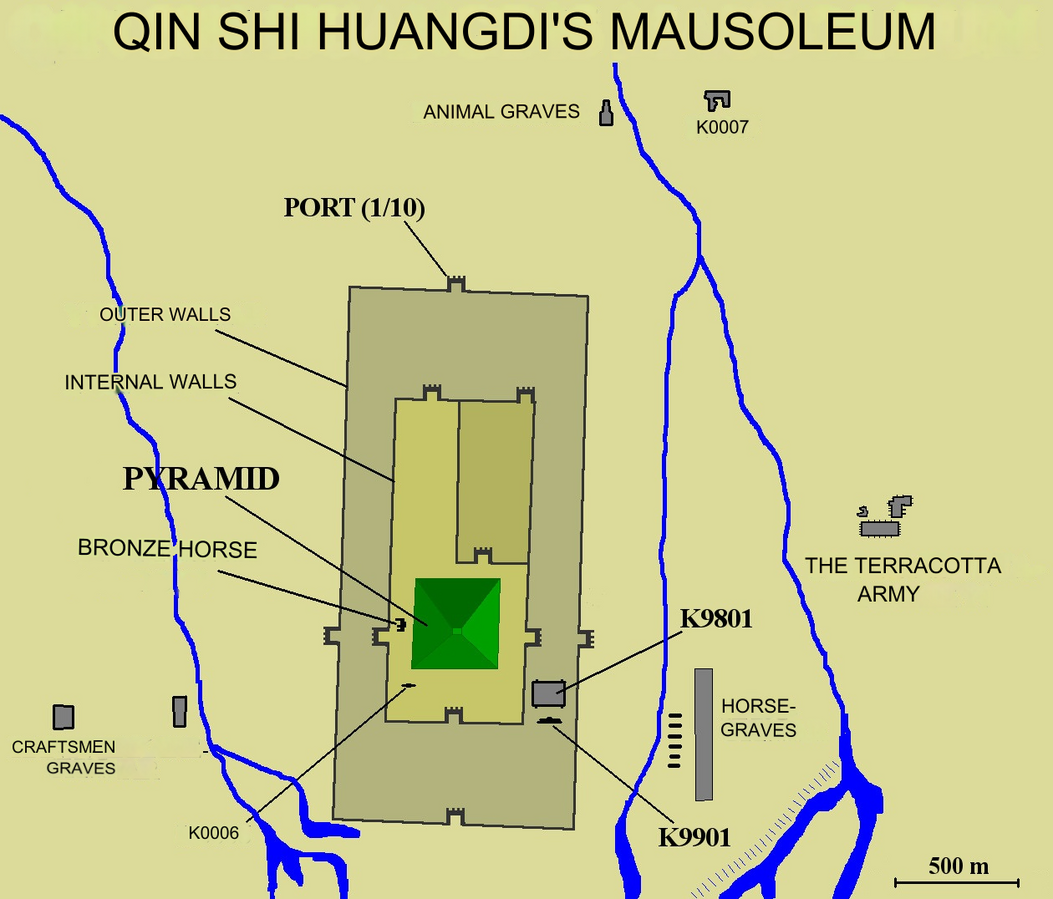
The mausoleum is not a tomb in the ordinary sense. It is a designed landscape built to mirror an imperial capital. The complex covers roughly 56 square kilometers in total, with inner and outer walled precincts, gates, processional ways, and functional zones housing stables, armor pits, bronze waterfowl in a model pond, entertainers, officials, and the terracotta army. The central burial mound sits within the inner precinct and survives today at roughly 51 meters in height, reduced by millennia of erosion from an estimated original height of around 115 meters. Everything about the necropolis points to coordination at a scale that required standardized production, precise engineering, and a workforce that ancient historians estimated in the hundreds of thousands.
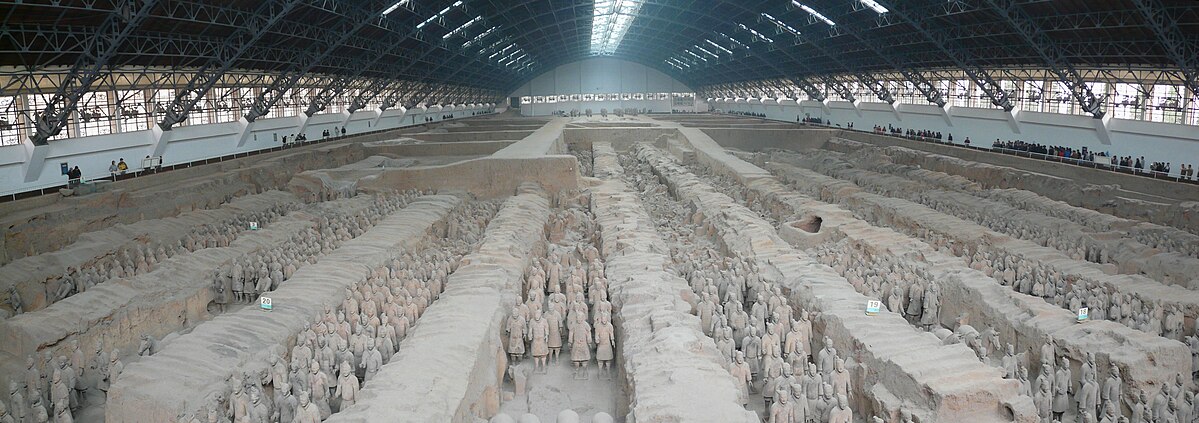
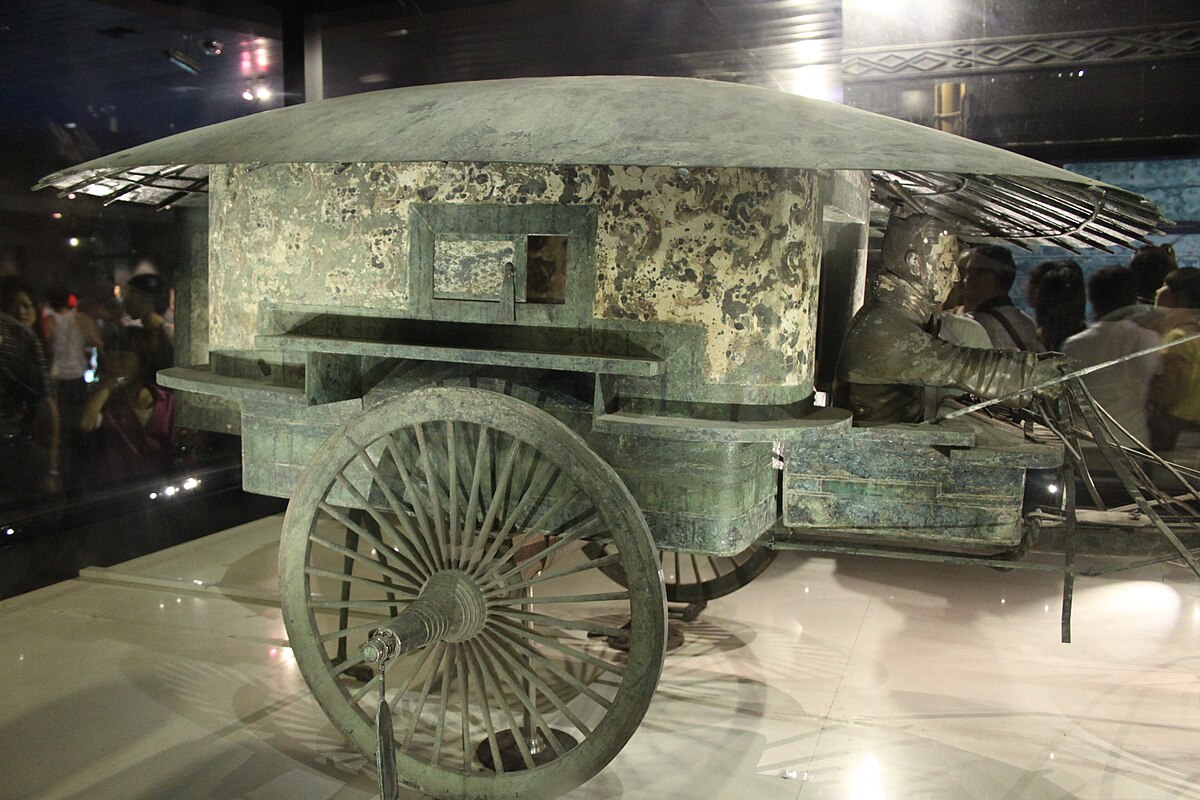
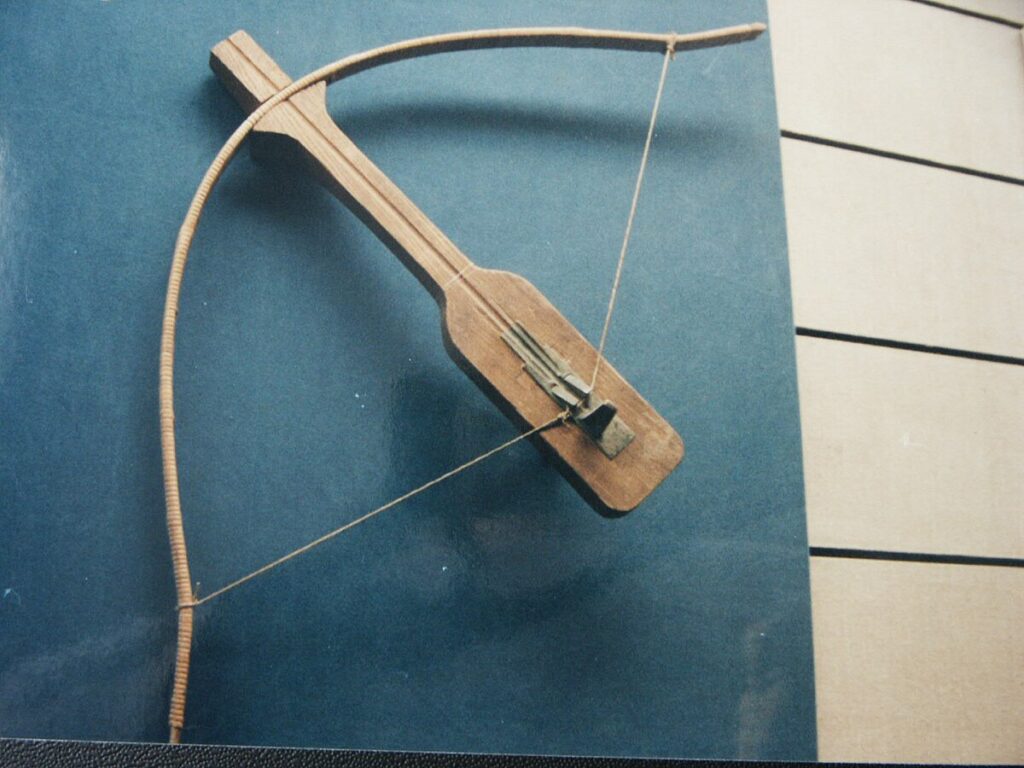
The Terracotta Army pits to the east represent only one part of this landscape. Pit 1 alone contains around six thousand figures arranged in battle formation. Pit 2 holds a mixed force of cavalry, infantry, and war chariots. Pit 3 appears to be a command center with senior officers. Each figure was individually crafted with a standardized body type and then given a unique face, hairstyle, and finishing details. The weapons they carry were functional, not ceremonial: real crossbow triggers, real swords, real spearheads, stored in a pit for the afterlife as if the emperor genuinely expected to need a real army there. The burial mound at the center of all this holds the emperor himself, and according to the historian Sima Qian writing roughly a century after Qin Shi Huang’s death, it contains something far more elaborate than an army.
What Sima Qian Described Inside the Mausoleum of the First Qin Emperor
Sima Qian’s account in the Shiji describes a burial palace with halls and towers, a ceiling inlaid to represent the night sky with pearls for stars, and rivers of liquid mercury flowing through a miniature map of the empire, their current maintained by mechanical means. He mentions crossbow mechanisms set to fire automatically at intruders, lamps burning with whale-oil designed to stay lit indefinitely, and sealed passages intended to keep the burial’s secrets permanently contained. Whether every detail is accurate or partly rhetorical, the account captures a coherent idea: a self-sufficient, sealed microcosm in which the emperor could continue to rule a miniature version of his empire after death.
Modern science has been testing Sima Qian’s account without opening the chamber for several decades. The mercury detail is the most strikingly confirmed. Soil samples taken from and around the burial mound consistently show mercury concentrations significantly above local background levels, with the highest concentrations in areas corresponding to the locations Sima Qian described for the miniature rivers. Remote sensing of the air column above the mound has detected mercury anomalies. This does not prove literal rivers of liquid mercury, but it provides strong independent confirmation that significant quantities of mercury were deposited inside the chamber more than two thousand years ago and remain there. Ground-penetrating radar and other geophysical methods have outlined the walls, gates, and internal structure of the burial complex and confirmed that the central chamber is intact and unexcavated.
Why the Color of the Terracotta Warriors Changed Everything
When excavators first exposed the terracotta figures in the 1970s, they were not grey. They were painted in vivid pinks, purples, blues, and greens applied over a thin layer of lacquer. The lacquer had kept the pigments stable for over two thousand years in the sealed, oxygen-limited environment of the buried pit. When air reached the figures, the lacquer began to dehydrate immediately. Within minutes it started to curl and detach from the clay surface, carrying the paint with it in flakes. Conservators watching the process in real time could not stop it. By the time adequate stabilization techniques were developed, the color on the first exposed figures was largely gone.
This experience defined Chinese conservation policy for the site from that point forward. Decades of subsequent research by Chinese and international teams have produced consolidants and micro-environment protocols that significantly slow the dehydration process, allowing some color to be preserved on figures excavated since the 1990s. But the fundamental problem has not been solved at burial-palace scale. A sealed burial chamber could hold painted walls and ceilings, lacquered coffins and furniture, silk textiles, wooden objects, and organic materials of many kinds, each requiring specific immediate treatment the instant it is exposed. In a large chamber, dozens of conservators cannot treat every surface simultaneously. The paint problem is not solved. Not opening the chamber is protection.
Enjoying Spoken Past?
I created Spoken Past to share my love of history. I research, write and develop everything myself, and I want my articles and basic guides to remain free for everyone.
If you enjoy my work, please consider supporting Spoken Past with a small donation.
The Mercury Problem in Plain Terms
Mercury is toxic. Any excavation plan for the central chamber must account for worker safety and environmental protection during and after opening, because opening a chamber containing significant quantities of mercury means potentially releasing vapors and contaminated dust into a new microclimate. That requires sealed enclosures, filtration systems, negative pressure environments, and long-term remediation plans, all of which must be fully operational before any cut is made into the burial chamber.
Beyond the safety issue, mercury signals a complex conservation problem. If liquid mercury or mercury-rich compounds exist in situ, they sit in chemical equilibrium with the chamber’s current humidity, temperature, and pressure. Disturbing that equilibrium by opening the chamber accelerates corrosion of metals, alters pigments, and creates condensation at precisely the moments and locations where condensation causes the most damage. Finally, the mercury deposits are themselves evidence. Their distribution pattern, container design, and chemical state carry information about the ritual intent and engineering of the burial. That record can only be read once, and only cleanly if the conditions under which it is read are fully controlled.
Chinese Law, Conservation Ethics, and Why Waiting Is the Right Decision
The decision not to open the chamber is not bureaucratic inertia. It is mandated by the national framework for cultural heritage protection in China, which explicitly prioritizes protection first, minimal intervention, in situ preservation, and reversibility wherever possible. The Principles for the Conservation of Heritage Sites in China, a document comparable in authority to international charters like the Venice Charter, codifies these requirements. An excavation of a sealed royal burial chamber cannot meet them under current conditions. Excavation is destructive by definition: if you cannot guarantee conservation at the standard the objects require the instant they are exposed, you do not proceed.
There is also a structural uncertainty that geophysical methods cannot yet fully resolve. Remote sensing and core sampling can identify the presence of voids, walls, and floor levels, but they cannot guarantee that rammed-earth vaults, timber structures, or stone linings will survive the new stresses that opening creates. Ancient sources describe fires and looting in the early Han period following Qin’s collapse. Even if exaggerated, those accounts mean the chamber’s interior condition cannot be assumed to be pristine. Cutting into a potentially compromised structure without knowing exactly what needs to be supported is an engineering problem that requires room-scale mapping at sub-centimeter resolution before any physical intervention begins.
Meanwhile the mausoleum continues to generate enormous scientific and cultural value exactly as it is. The staged excavation of the Terracotta Army pits has produced one of the most significant long-term conservation research programs in Chinese archaeology. The site educates millions of visitors annually. Every year of patience is also a year of better imaging technology, better consolidants, better understanding of Qin materials, and better engineering capability for the enclosed microclimate systems that a responsible opening would require. When the chamber is eventually opened, and it will be, China will be in a position to say it was opened because the conditions for doing it properly had been met. That is the only justification that the site deserves.
What a Responsible Excavation Would Actually Require
No excavation team has set a date, and no serious researcher claims to know when the conditions will be ready. But the requirements for a responsible excavation are clear enough to describe. A complete non-invasive map of the chamber at sub-centimeter resolution, using muon radiography, multi-frequency ground-penetrating radar, and multiple independent methods, must exist before any physical cut is made. The goal is to know exactly what needs to be supported structurally and what lies at every point inside the chamber before the first tool touches the burial mound.
An engineered enclosure around the mound must deliver stable temperature and humidity, negative air pressure to contain mercury vapors and contaminated dust, and chemical scrubbing systems for as long as work continues, measured in years rather than months. The scale of this is roughly an aircraft-hangar-sized cleanroom wrapped around a hill with dedicated power and maintenance infrastructure. A microclimate entry protocol must allow access to the chamber without pressure shocks, with redundant containment systems ready to activate if mercury release exceeds projections. Every object and surface would need to pass through stabilization stages before it could be handled or moved.
Conservation teams trained specifically in Qin materials, including lacquer, silk, mercury-bearing residues, complex bronze alloys, and organic adhesives, must be scaled to the size of the excavation front and equipped with mobile laboratories that move with the work. A public interpretation plan that favors responsible access over spectacle, with transparent reporting, digital surrogates, phased displays, and long-term funding for care of what is recovered, must be in place before excavation begins rather than assembled afterward. Until all of this exists, the chamber stays sealed. That is not failure. It is the only position that takes the site seriously.
Sources: Lothar von Falkenhausen, Chinese Society in the Age of Confucius (Cotsen Institute of Archaeology, UCLA, 2006); Ladislav Kesner, “The Taotie Reconsidered: Meanings and Functions of the Shang Theriomorphic Imagery,” Artibus Asiae 51.1/2 (1991); Nigel Wood and Rose Kerr, “The Conservation of the Polychrome Decoration on the Terracotta Army Figures,” in Antiquity 74 (2000); Lukas Nickel, “The First Emperor and Sculpture in China,” Bulletin of the School of Oriental and African Studies 76.3 (2013), pp. 413–447; Marcos Martinón-Torres et al., “Metals, microstructure and meaning,” Journal of Archaeological Science (2014); Sima Qian, Shiji, trans. Burton Watson, Records of the Grand Historian (Columbia University Press, 1993).