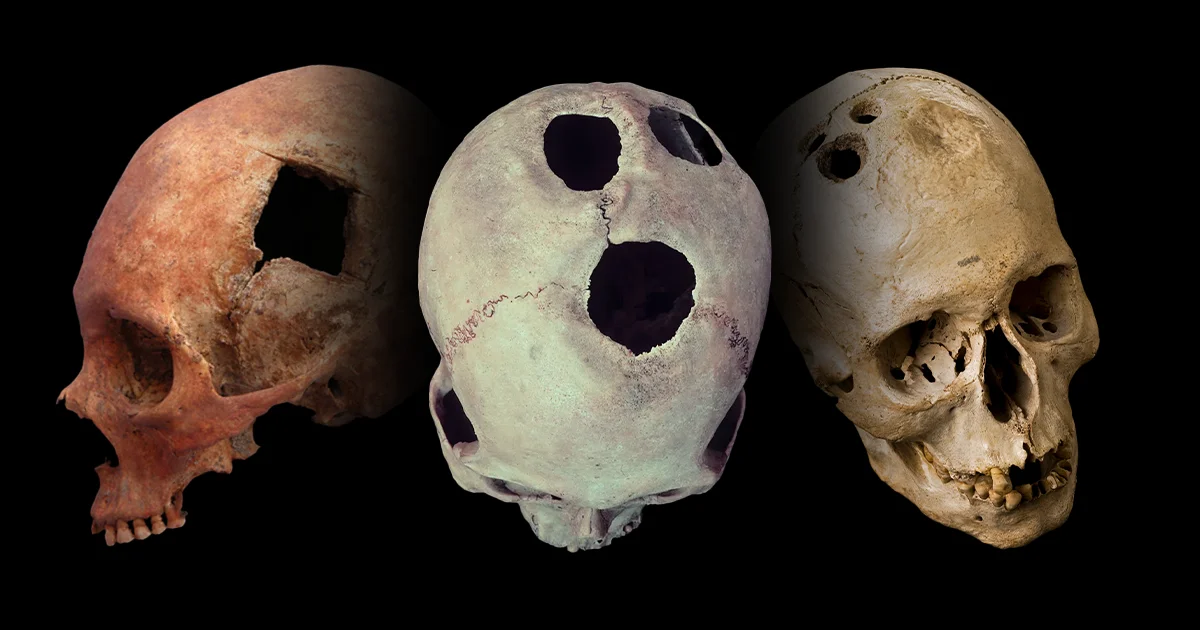
Imagine a surgeon drilling into your skull with stone tools and no anesthesia. Now imagine surviving that procedure with an 80% success rate. Ancient Peruvian surgeons achieved exactly this feat between 400 BCE and 1500 CE, performing trepanation (skull surgery) with survival rates that would shame American Civil War doctors working 400 years later with metal instruments and formal medical training. The archaeological evidence reveals one of history’s most astonishing medical achievements: prehistoric doctors who mastered neurosurgery through centuries of refinement, leaving behind over 800 trepanned skulls that tell stories of remarkable surgical skill and human resilience.
What Ancient Skull Surgery Survival Rates Reveal
Ancient skull surgery survival rates increased dramatically over two millennia of medical practice in Peru. Between 400 BCE and 200 BCE, only about 40% of patients survived the procedure, as evidenced by bone analysis on 59 skulls from this period. By 1000 CE to 1400 CE, the survival rate had jumped to 53% based on examination of 421 skulls. The most impressive results came during the Inca period (1400-1500 CE), when 75% to 83% of 160 examined skulls showed clear signs of survival and healing. One exceptional group of 9 skulls from the northern highlands achieved an astounding 91% survival rate during the middle period.
To put these ancient skull surgery survival rates in perspective, American Civil War surgeons working between 1861 and 1865 faced mortality rates of 46% to 56% for similar procedures. These military doctors had access to metal surgical instruments, formal medical training, published anatomical texts, and rudimentary understanding of infection. Yet Inca surgeons working with obsidian blades, copper knives, and empirical knowledge passed through generations achieved superior outcomes. The comparison isn’t just interesting, it fundamentally challenges assumptions about technological progress and medical capability.
How Trepanation Techniques Evolved Over Time
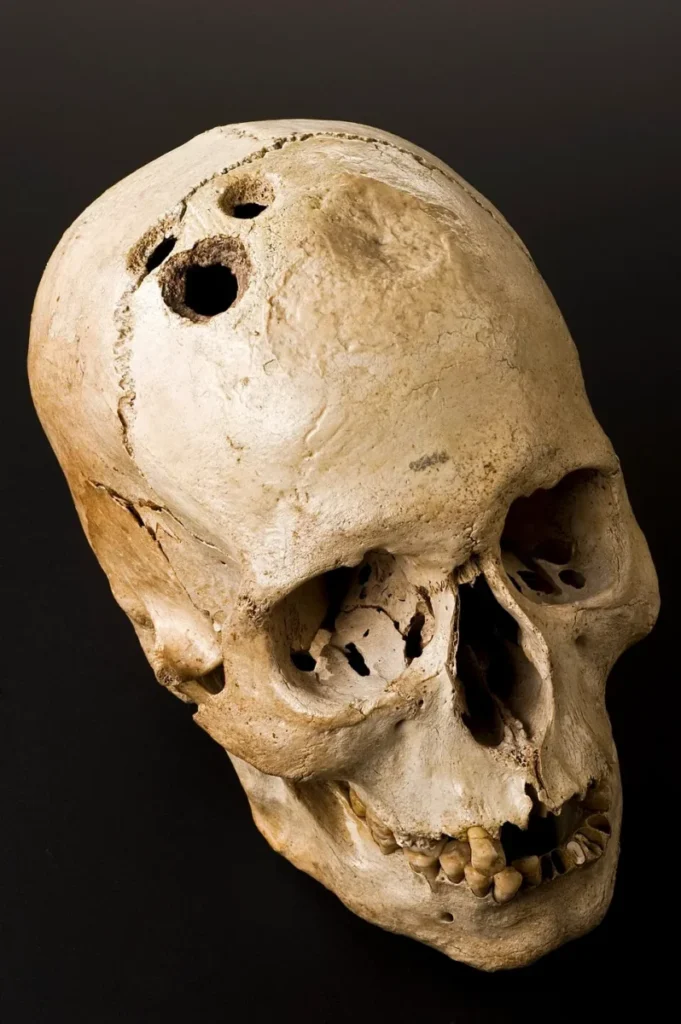
The physical evidence on ancient skulls reveals how surgical techniques improved across generations. Early trepanation attempts used crude scraping methods that created large, irregular openings in the skull. These procedures frequently perforated the dura mater (the tough membrane protecting the brain), causing infections and death. Surgeons who practiced during this period essentially experimented on living patients, learning which approaches worked through trial and tragic error.
By the middle period, techniques became more refined. Surgeons developed the circular grooving method, which involved carefully carving a circular furrow into the skull bone until a disc could be lifted out. This approach reduced the depth of penetration and minimized damage to underlying tissues. The holes themselves became smaller and more precisely shaped, demonstrating increasing anatomical understanding and manual dexterity.
The Inca period marked the peak of ancient neurosurgical skill. Surgeons almost exclusively used the circular grooving technique by this time, creating neat, round openings that barely touched the dura mater. The bone edges around these holes show extensive healing in most cases, with new bone growth filling in portions of the opening. Some skulls display multiple trepanation sites that all healed successfully, indicating patients survived repeated procedures over their lifetimes.
Why Ancient Surgeons Performed Skull Surgery
Trepanation served multiple medical purposes in ancient societies. The primary indication was head trauma from warfare or accidents. When warriors suffered skull fractures during combat with clubs, slings, or other blunt weapons, bone fragments could press into brain tissue causing pain, seizures, and death. Surgeons removed these fragments and relieved pressure by opening the skull, giving the brain room to swell without fatal compression.
Chronic headaches, epilepsy, and mental illness also prompted trepanation. While we cannot know if these procedures actually cured such conditions, the survival rates prove patients lived through the surgery itself. Archaeological analysis of Peruvian burial sites shows many trepanned individuals survived for years after their procedures, dying from unrelated causes in old age. The healed bone around their trepanation sites demonstrates complete recovery from what should have been catastrophic injuries.
Some scholars propose spiritual or religious motivations for trepanation, suggesting ancient peoples believed it released evil spirits or demons. However, the anatomical precision and evolving techniques argue strongly for practical medical intent. Surgeons carefully avoided vital structures, chose specific locations based on injury patterns, and refined their methods to improve outcomes. This behavior matches empirical medicine, not ritual practice.
Surgical Tools and Methods Used
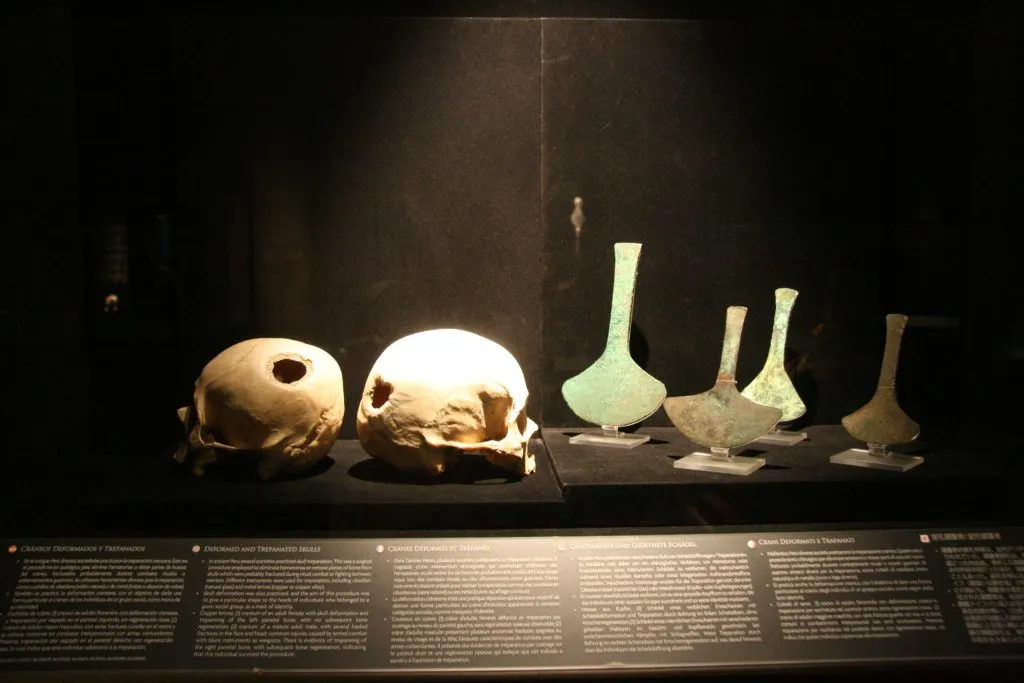
Ancient surgeons wielded surprisingly sophisticated tools crafted from locally available materials. Obsidian (volcanic glass) provided the sharpest cutting edges known in the pre-metal age, capable of making incisions finer than modern steel scalpels. Peruvian surgeons used obsidian blades for initial skin incisions and precise bone work. The natural sharpness of obsidian reduced tissue damage and bleeding compared to duller stone implements.
Copper and bronze knives supplemented obsidian tools as metallurgy developed. The semi-circular tumi knife became characteristic of Peruvian surgery, its distinctive curved blade ideal for the controlled scraping motion required in circular grooving. These metal tools could be resharpened repeatedly and withstood the pressure of cutting through bone without shattering like obsidian.
The surgical procedure began with shaving and cleaning the scalp around the injury site. Surgeons made a careful incision through the skin and pulled it back to expose the skull bone. Using their chosen tool, they scraped or drilled in a circular pattern, gradually deepening the groove while constantly checking the depth to avoid penetrating the dura mater. Once the bone disc loosened, they lifted it out, cleaned the wound, and allowed the scalp to heal over the opening. The bone itself was not replaced, leaving a permanent gap that often partially filled with new bone growth over time.
Archaeological Evidence From Multiple Sites
The concentration of trepanned skulls in Peru exceeds all other regions combined. Over 800 examples have been recovered from burial caves and archaeological excavations in coastal areas and Andean highlands. This extraordinary number provides statistically significant data for analyzing survival rates across different time periods and geographic regions. Each skull represents a real person who underwent this terrifying procedure, and their bones preserve evidence of the outcome.
The Ensisheim burial in France’s Alsace region yielded Europe’s earliest confirmed trepanation case, dating to 5100-4900 BCE. The 50-year-old man’s skull shows two separate procedures: a 2.6 by 2.4 inch opening that healed completely, and an enormous 3.7 by 3.6 inch opening that partially healed before his death. Both operations used intersecting incisions to remove rectangular sections of bone. The long-term healing visible in the bone structure confirms this individual survived both procedures for a considerable time.
Jericho in Palestine produced a Bronze Age skull (2200-2000 BCE) displaying four separate trepanation holes, all showing clear signs of healing. The patient survived all four procedures, demonstrating that even early surgeons could achieve successful outcomes. Multiple trepanations on single skulls appear throughout the archaeological record, suggesting some individuals suffered repeated head injuries requiring surgical intervention, or perhaps underwent procedures for chronic conditions that necessitated multiple treatments.
Built out of a love for history, kept free from distractions.
Spoken Past is an independent project shaped by curiosity, care, and long hours of research. Reader support helps keep it maintained, carefully researched, and open to everyone.
Comparing Ancient and Modern Survival Rates
The direct comparison between ancient Peruvian and 19th-century American surgical outcomes shocks modern sensibilities. We expect technological advancement to produce superior results, yet the data contradicts this assumption. Inca surgeons working with stone and copper tools in outdoor settings achieved 75-83% survival rates while Civil War surgeons working in field hospitals with metal instruments saw 46-56% mortality rates. How did ancient doctors outperform their modern counterparts?
Several factors explain this apparent paradox. Inca surgeons accumulated knowledge across many generations, with successful techniques passing from master to apprentice over centuries. Each surgeon learned from the deaths and successes of predecessors, gradually refining the procedure. Civil War surgeons, by contrast, rarely performed trepanation and lacked extensive experience with the operation. Most were general practitioners thrust into military medicine with minimal surgical training.
Infection control paradoxically favored ancient surgeons. Peruvian procedures likely occurred in open-air settings with freshly made obsidian tools that were essentially sterile. Civil War field hospitals were breeding grounds for bacteria, with surgeons operating on multiple patients without washing instruments or hands. The germ theory of disease remained controversial during the 1860s, so surgeons unknowingly introduced deadly infections. Ancient surgeons, working outdoors with new tools, accidentally practiced better infection control than their 19th-century counterparts who worked indoors with reused instruments.
The Medical Knowledge Behind Success
Ancient skull surgery survival rates depended on empirical knowledge accumulated through careful observation. Peruvian surgeons learned which skull regions could be safely opened and which areas posed excessive risk. The parietal bones (sides of the skull) became preferred surgical sites because they offered adequate access while avoiding major blood vessels and crucial brain regions. Evidence shows surgeons deliberately chose these locations rather than operating randomly.
Understanding of healing processes also influenced outcomes. Surgeons recognized that bone could regenerate around trepanation sites and that patients needed time to recover before attempting additional procedures on multiply-injured individuals. Skulls showing multiple trepanations typically display complete healing of earlier operations before subsequent ones were attempted, suggesting surgeons waited for full recovery between procedures.
Pain management likely utilized local plant-based substances. The Inca had access to coca leaves (source of cocaine), which provided topical anesthesia when chewed into a paste. Other plants in the Peruvian pharmacopeia possessed analgesic and sedative properties. While we cannot confirm exact methods, the existence of these resources combined with successful surgeries suggests ancient doctors developed effective pain control strategies.
What Bone Analysis Tells Us
Modern scientific analysis of ancient trepanned skulls reveals details invisible to earlier researchers. Microscopic examination of bone edges distinguishes between perimortem damage (occurring at time of death) and antemortem healing (during life). Bone that was healing when the patient died shows distinctive patterns of remodeling with new bone formation along the cut edges. Completely healed trepanations display smooth, rounded edges where bone grew back partially or completely.
The presence or absence of infection markers in bone tissue indicates whether patients succumbed to sepsis or recovered cleanly. Porous bone texture around trepanation sites suggests chronic infection, while smooth, dense bone indicates successful healing without major complications. The majority of Inca-period skulls show clean healing patterns, confirming that infection rates were relatively low despite the absence of antibiotics or antiseptics.
Some skulls display evidence of multiple health issues beyond the trepanation itself. Healed fractures in other parts of the skull, dental problems, and signs of nutritional deficiency appear alongside successful trepanation procedures. These individuals survived not just the surgery but also the challenging conditions of ancient life, demonstrating remarkable resilience. Their survival speaks to both surgical skill and robust post-operative care provided by their communities.
Cultural Context of Skull Surgery
Trepanation wasn’t merely a medical procedure but carried significant cultural meaning in ancient societies. The act of opening the skull (the body’s most protected structure) required immense trust between surgeon and patient. Communities that developed sophisticated trepanation techniques must have possessed corresponding social structures supporting medical specialists, patient recovery, and knowledge transmission across generations.
Warriors who survived trepanation likely gained elevated status. A healed trepanation scar visible through the scalp marked an individual as someone who endured serious combat injury and subsequent surgery. These physical markers of experience and resilience may have conferred respect and authority within warrior societies where martial prowess determined social standing.
The preservation of trepanned skulls in burial contexts suggests reverence for individuals who underwent the procedure. Rather than disposing of remains carelessly, communities interred these individuals in caves and formal burial grounds where archaeologists later discovered them. This careful burial practice enabled the skulls’ preservation and our modern understanding of ancient surgical capabilities.
FAQ
What was the survival rate for ancient skull surgery?
Ancient skull surgery survival rates varied significantly by time period and location. Early Peruvian attempts (400-200 BCE) achieved approximately 40% survival, increasing to 53% during the middle period (1000-1400 CE), and reaching 75-83% during the Inca period (1400-1500 CE). These rates exceeded Civil War surgical outcomes by substantial margins.
How did ancient surgeons perform trepanation without killing patients?
Ancient surgeons refined their techniques over centuries through careful observation and incremental improvements. They developed the circular grooving method that minimized penetration depth, avoided perforating the protective dura mater, and chose safe surgical sites away from major blood vessels. Working in relatively clean outdoor environments with freshly made obsidian tools also reduced infection rates compared to later hospital settings.
Why was trepanation performed in ancient times?
Ancient skull surgery primarily treated head trauma from warfare and accidents, removing bone fragments and relieving pressure on the brain. Surgeons also performed trepanation for chronic headaches, epilepsy, and possibly mental illness, though the effectiveness for these conditions remains uncertain. The anatomical precision and evolving techniques indicate practical medical intent rather than purely ritualistic purposes.
Where have the most trepanned skulls been found?
Peru contains the highest concentration of trepanned skulls globally, with over 800 examples recovered from archaeological sites. This exceeds the combined total from all other regions worldwide. Significant finds also come from France, Palestine, and other areas where ancient peoples practiced skull surgery, but none approach Peru’s extraordinary numbers.
Did ancient brain surgery actually work?
Ancient skull surgery successfully treated traumatic head injuries by removing bone fragments and relieving intracranial pressure. The high survival rates and evidence of complete bone healing in many cases confirm the procedures achieved their immediate medical goals. Whether trepanation effectively treated conditions like epilepsy or headaches remains uncertain, but patients clearly survived the surgery itself at impressive rates.
How do we know ancient skull surgery survival rates?
Archaeologists and biological anthropologists analyze trepanned skulls for signs of bone healing. New bone growth around surgical openings, smooth rounded edges, and remodeling patterns indicate the patient survived long enough for healing to occur. Bones showing no healing suggest the patient died during or shortly after surgery. Statistical analysis of hundreds of skulls from different time periods reveals survival rates for each era.