
In the summer of 2012, Karen Hardy of the Catalan Institution for Research and Advanced Studies published a study in the journal Naturwissenschaften that changed the terms of a debate that had been simmering since the 1960s. Hardy and her colleagues, including Stephen Buckley of the BioArCh research facility at the University of York and Matthew Collins, then heading the BioArCh centre, applied pyrolysis gas-chromatography-mass spectrometry and morphological microfossil analysis to dental calculus samples from five Neanderthals excavated at El Sidrón Cave in the Asturias region of northern Spain. The individuals date to between 47,300 and 50,600 years ago. One of the five, designated Adult 4, carried in their mineralised plaque two classes of compounds, azulenes and coumarins, that are produced by yarrow (Achillea) and chamomile (Matricaria) respectively. Both plants have documented anti-inflammatory properties. Neither offers meaningful nutritional value. The same individual showed signs of a dental abscess. Hardy’s argument was that Neanderthals, far from being plant-blind opportunistic carnivores, could identify specific plants for their therapeutic effects and seek them out deliberately despite their strongly bitter taste.
What Dental Calculus Actually Preserves
Dental calculus, the mineralised form of plaque that builds up along the gumline, forms in layers during life and can preserve a remarkable range of biological material. Unlike stomach contents, which require exceptional preservation conditions, or sediment pollen, which can migrate widely through water and animal activity, calculus forms directly from material in the mouth and seals its inclusions in calcium phosphate during mineralisation. What survives inside can include starch granules identifiable to plant family, phytoliths from grass leaves and seeds, pollen from plants chewed or consumed in infusions, and the chemical breakdown products of plant metabolites. Crucially, contamination in calculus is harder to achieve than in sediment because the mineralisation process closes off the interior from subsequent biological exchange. Material that appears inside calculus samples was overwhelmingly in the mouth of the individual during their lifetime.
The 2012 Hardy et al. study used thermal desorption followed by pyrolysis to drive off and then break down bound organic compounds in the calculus matrix, feeding the results into a gas chromatograph coupled to a mass spectrometer. This technique, TD/Py-GC-MS, identifies compounds through the mass-to-charge ratio of their molecular fragments after ionisation, allowing even trace-level identification of plant metabolites that have survived fifty millennia of diagenetic alteration. The starch granules in the same samples confirmed the consumption of cooked carbohydrate-rich foods, including species from the tribe Triticeae that includes wild relatives of barley. The combination of cooked starchy foods and bitter medicinal plants in the calculus of a single individual with an abscess is unlikely to be accidental dietary overlap.
A pre-existing genetic finding strengthened the case considerably. Earlier research by members of the same El Sidrón project team had shown that the Neanderthals at this site carried the TAS2R38 allele, a functional version of the gene responsible for detecting bitter taste compounds in the PTC class. Neanderthals at El Sidrón would have found yarrow and chamomile strongly bitter. They consumed them anyway, specifically in association with an abscess, and specifically without the nutritional justification that would make accidental or habitual ingestion plausible. That is what a deliberate medicinal choice looks like in the archaeological record.
Ancient DNA Adds a New Layer at El Sidrón
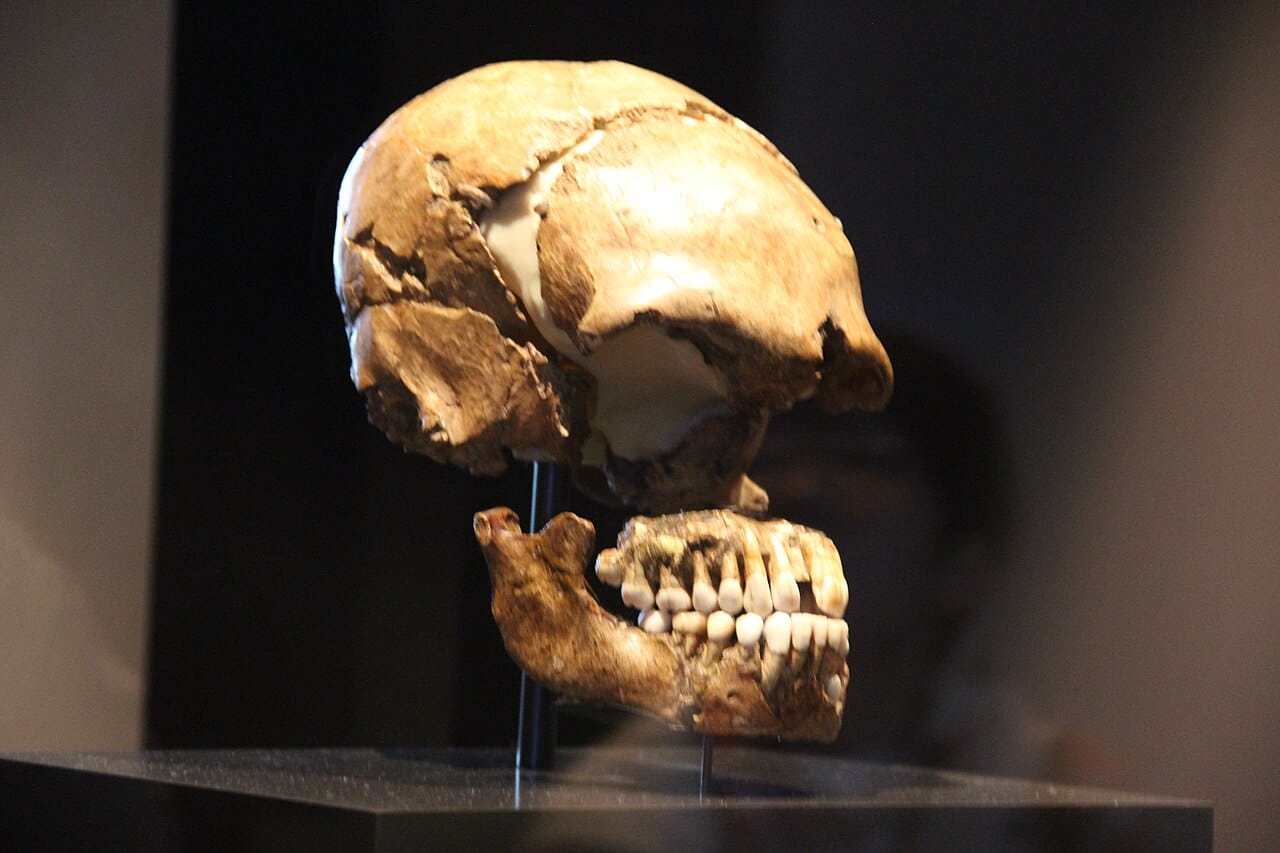
In 2017, Laura Weyrich of the Australian Centre for Ancient DNA at the University of Adelaide led a team that applied shotgun-sequencing of ancient DNA extracted from Neanderthal dental calculus, including specimens from El Sidrón and from Spy Cave in Belgium, publishing their results in Nature. The aDNA approach samples everything in the calculus matrix simultaneously: bacterial genomes from the oral microbiome, dietary plant and animal DNA, and fungal and pathogen sequences. At Spy Cave, the diet was heavily meat-based, with sequences matching woolly rhinoceros and wild sheep. The El Sidrón calculus told a different story: no meat, but pine nuts, moss, mushrooms, and poplar (Populus trichocarpa).
Poplar bark contains salicin, the glycoside precursor from which salicylic acid is derived. Salicylic acid is the active compound in aspirin and acts as both an analgesic and an anti-inflammatory agent. The El Sidrón individual whose calculus contained poplar DNA also showed evidence of a dental abscess, confirmed by physical examination of the tooth, and of infection with the intestinal parasite Enterocytozoon bieneusi. Both conditions would cause significant pain and inflammation. Poplar consumption in this context is consistent with self-medication targeting precisely the symptoms this individual was experiencing. The calculus of the same individual additionally contained DNA sequences from Penicillium rubens, the natural producer of penicillin, though Weyrich and colleagues were careful to note that the presence of a Penicillium species does not in itself indicate that the Neanderthal was aware of its antibiotic action or had deliberately selected moulded plant material for that purpose.
The two studies, Hardy et al.’s chemical analysis and Weyrich et al.’s aDNA approach, independently converge on the same individual at El Sidrón as carrying evidence of therapeutic plant use in association with documented pathology. That convergence across different methodologies applied to overlapping samples is meaningful. It is exactly the kind of multi-line evidence that archaeologists working in this field consider stronger than any single method could provide. It also illustrates the complementary strengths of chemistry and ancient genomics: TD-GC-MS identifies metabolite compounds precisely but cannot distinguish plant species closely; aDNA identifies species but preserves only fragments of the chemical story.
Shanidar Cave and the Limits of Pollen Evidence
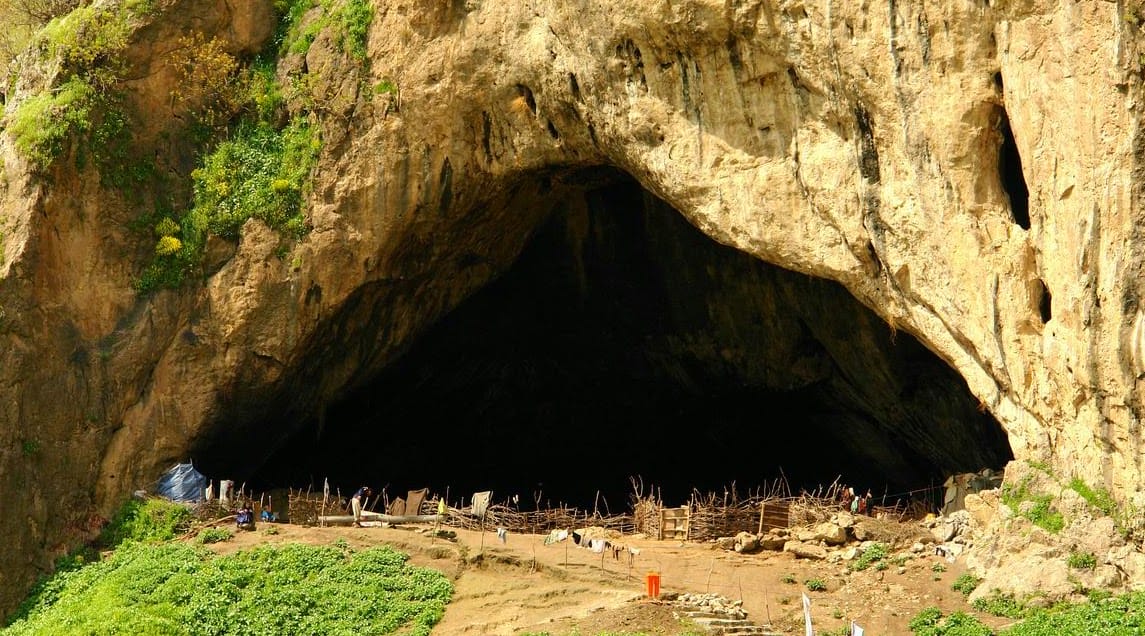
The debate about Neanderthal plant use has always been entangled with Shanidar Cave in the Zagros Mountains of what is now northern Iraq, where excavations led by Ralph Solecki of Columbia University in the late 1950s uncovered a Neanderthal burial with unusually high pollen concentrations. Arlette Leroi-Gourhan’s analysis of the pollen identified multiple plant genera with documented medicinal properties, including Achillea (yarrow), Centaurea (cornflower), Althaea (mallow), and Ephedra (joint pine, source of ephedrine), and proposed that flowers had been deliberately placed in the grave. The interpretation attracted enormous popular interest and considerable scholarly scepticism in equal measure.
Jeffrey Sommer of the University of Michigan published a critique in 1999 arguing that pollen concentration data from Shanidar could not distinguish intentional flower deposition from the normal burrowing activity of the Persian jird, a rodent documented in Shanidar’s sediments that habitually stores seeds and plant material in its tunnels. This critique has never been fully answered, and most specialists currently treat the Shanidar pollen evidence as suggestive at best. What it cannot be is decisive in isolation. Pollen in cave sediments is mobile in multiple ways, from animals to water to air, and the assemblages are complex enough that any single pattern can accommodate multiple explanations.
Amanda Henry of Leiden University’s Faculty of Archaeology has taken a more productive approach to Shanidar, analysing dental calculus and stone tool residues from the cave for starch granules and phytoliths. Her work, published in 2011 in the Proceedings of the National Academy of Sciences, found evidence at Shanidar for consumption of Triticeae grass seeds, date palms, and starchy geophytes, filling in the plant-use picture without relying on the contested pollen assemblage. Some starch granules from the calculus samples showed evidence of gelatinisation, indicating cooking. At Shanidar, as at El Sidrón, the question is not whether Neanderthals used plants, which is no longer seriously in doubt, but how selectively and purposefully they did so.
Built out of a love for history, kept free from distractions.
Spoken Past is an independent project shaped by curiosity, care, and long hours of research. Reader support helps keep it maintained, carefully researched, and open to everyone.
Neanderthals and the Tool Evidence for Plant Processing
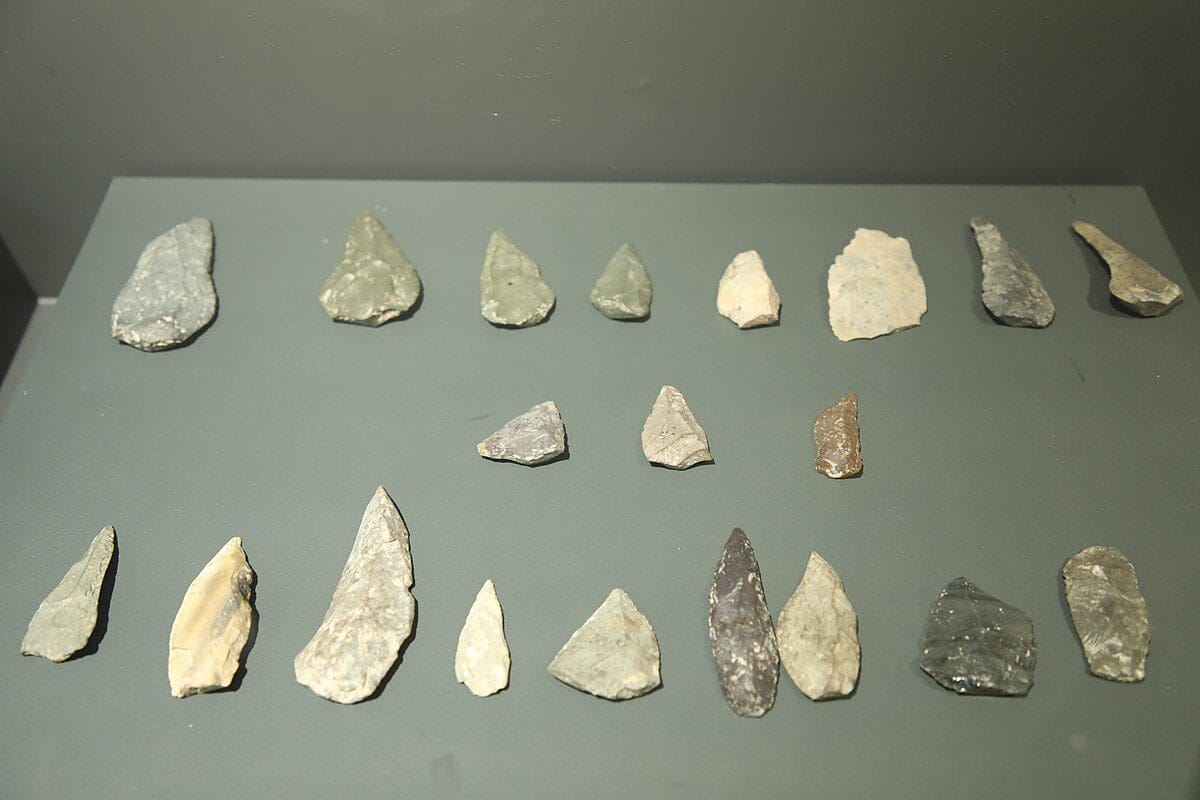
Dental calculus is not the only place where Neanderthal plant use leaves a physical record. Mousterian stone tools, the scrapers, points, and flakes characteristic of Middle Palaeolithic assemblages across Europe and western Asia, sometimes preserve organic residues and diagnostic wear patterns on their working edges. Functional analysts studying edge polish and micro-striation orientations distinguish between the wear produced by working hide, bone, wood, and plant material: each substrate leaves a characteristic surface texture under the scanning electron microscope. Plant-processing wear, identified by a bright, silica-caused polish affecting both faces of an edge in a directional pattern, appears on a significant proportion of Mousterian scrapers at multiple sites.
Birch bark tar found adhering to Mousterian tools from at least three European sites, the Campitello quarry in Italy, Königsaue in Germany, and a submerged site in the Dutch North Sea, provides an additional material chemistry argument. The tar is produced by heating birch bark in conditions that restrict oxygen supply, a process requiring knowledge of materials and fire management well beyond opportunistic tool use. Chemical analysis of the Königsaue tar, published in Archaeological and Anthropological Sciences in 2023 by Patrick Schmidt of the University of Tübingen and colleagues, demonstrated that the tar was produced by a technically demanding underground method rather than the simpler surface condensation process that Schmidt’s own 2019 PNAS paper had shown was possible. Neanderthals at Königsaue chose a harder method that produced a higher-quality, more consistent adhesive. The phenolic compounds that give birch tar its adhesive properties also carry antiseptic activity that would have been observable in wound treatment contexts, whether or not Neanderthals understood the mechanism.
These tool-based findings do not directly prove medicinal plant processing. A scraper with plant-processing wear was more likely used to work fibrous stems for food or cordage than to prepare a poultice. But they do establish that deliberate, sustained, and skilled interaction with plant materials was a routine part of Neanderthal daily life, which is the necessary background condition for any more targeted medicinal selection. Groups that regularly work a wide range of plants, testing their properties through repeated use, are groups capable of noticing and remembering which ones produce useful effects when something is wrong with the body.
What These Plants Actually Do
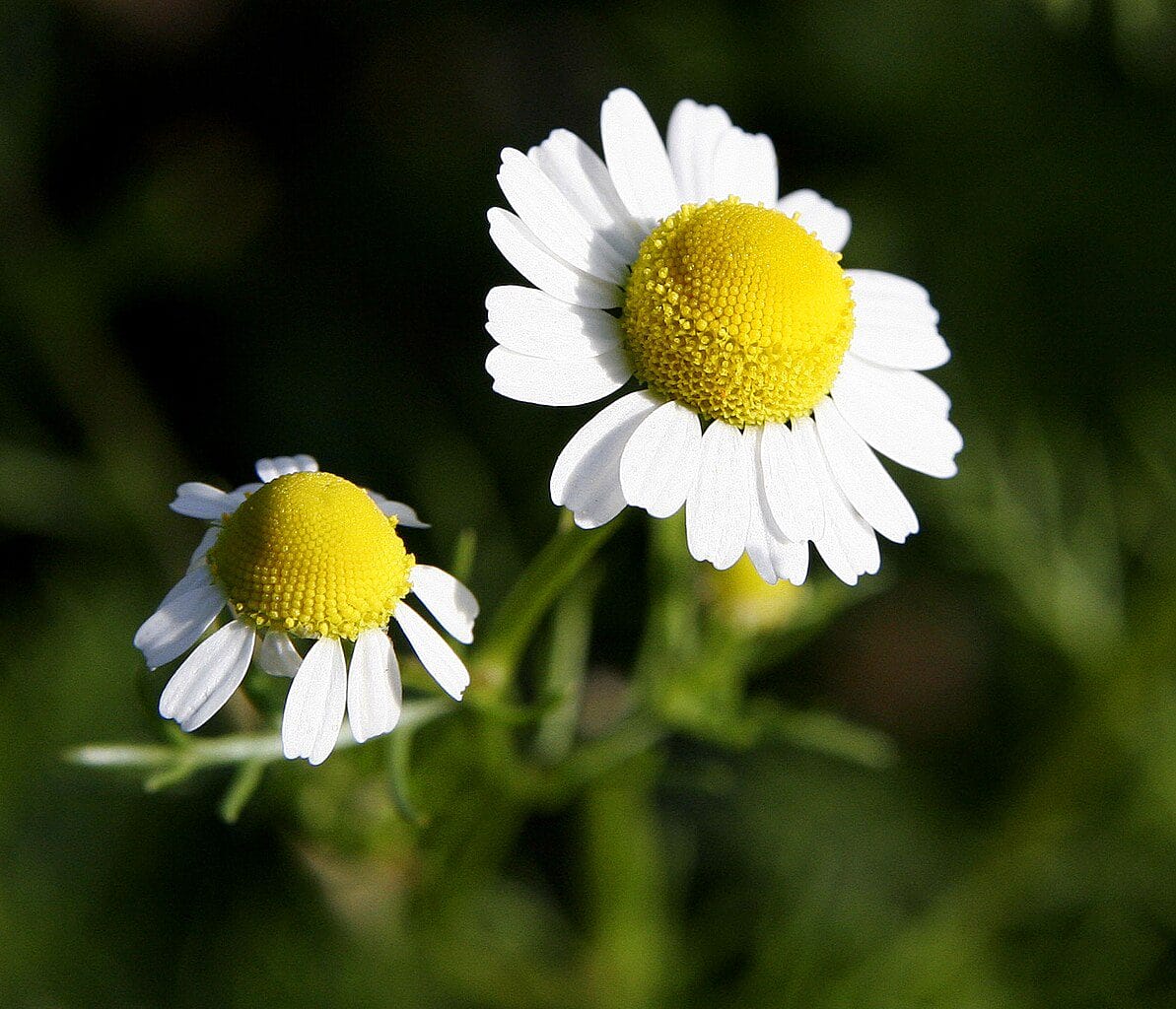
Yarrow (Achillea millefolium) contains sesquiterpene lactones, flavonoids, and the alkaloid achilleine, compounds that contribute to documented anti-inflammatory, haemostatic, and mild analgesic effects. Traditional medicine systems from Europe to East Asia have used yarrow consistently for wound treatment and fever management, and controlled studies have confirmed measurable activity against several bacterial strains in laboratory conditions. Chamomile (Matricaria chamomilla) contains the terpenoid bisabolol and flavonoids including apigenin, compounds with anti-inflammatory and antispasmodic properties verified in cell culture and animal model studies. Both plants operate against multiple biological targets simultaneously rather than through a single mechanism, which makes them more broadly useful in subsistence medicine contexts where the precise diagnosis of a condition is impossible.
Poplar’s salicin-to-salicylic-acid pathway is pharmacologically well understood. Salicylic acid was the compound isolated and then chemically modified to produce acetylsalicylic acid, aspirin, in the late nineteenth century. The bark of various willow and poplar species served as a pain and fever treatment across multiple ancient civilisations independently, which is not coincidental: the analgesic effect is real, measurable, and would have been noticeable within hours of consumption at doses obtainable by chewing bark or brewing a decoction. A Neanderthal with a dental abscess and a gut parasite who consumed poplar was using a substance that genuinely reduced their pain level. The question of whether they understood the mechanism in any abstract sense is irrelevant to whether the treatment worked.
Researchers working on the interface of archaeobotany and pharmacognosy are currently building comparative datasets that match the plant species appearing in prehistoric calculus, sediment assemblages, and ethnobotanical records against tested bioactivity profiles. Liquid chromatography coupled to mass spectrometry identifies active fractions in plant extracts; microbial minimum inhibitory concentration assays test those fractions against relevant bacterial strains; inflammatory cytokine assays in cell culture test for anti-inflammatory activity. Where prehistoric plant choices align with measurable biological effects, the alignment is not proof that prehistoric people understood the chemistry. It is evidence that observation and outcome learning, the accumulation of practical knowledge over generations, was sufficient to identify effective treatments without theoretical frameworks.
What Neanderthal Medicine Implies About Neanderthal Minds
Medicinal plant use requires at minimum three cognitive and social capacities that are sometimes treated as modern human specialities. It requires observation precise enough to link a plant’s consumption to a subsequent change in bodily state. It requires memory capable of retaining and retrieving that association across time and individual experience. And it requires transmission, the ability to communicate that knowledge to others in a form they can understand and act on. Wulf Schiefenhövel of the Max Planck Institute for Evolutionary Anthropology has argued that all three capacities are visible in the great apes under naturalistic conditions, and that the distance from chimpanzee self-medication to Neanderthal plant selection involves degree rather than kind.
The care of injured individuals documented in the Neanderthal fossil record gives this argument a necessary material grounding. The individual known as Shanidar 1, described by Erik Trinkaus of Washington University in St Louis in detail, survived for years with a withered right arm from which one forearm had been amputated or lost in youth, partial blindness in at least one eye, and multiple healed fractures across the skeleton. This individual could not have sustained independent foraging at the level needed to survive a northern Iraqi winter. Someone fed them, watched for them, and kept them alive across what may have been decades of significant disability. A community that makes those investments in its least physically capable members is already a community where knowledge of what helps and what harms the body would be extremely valuable.
The fossil record of healed injuries in Neanderthals is extensive and has been systematically reviewed by Trinkaus and others. Fractures of the radius, tibia, and skull that healed cleanly; dental abscesses that were survived long enough to leave secondary bone remodelling; evidence of infection management through tooth extractions. These are the signatures of a population that did not simply leave its sick and injured to die. The molecular evidence of plant use fits within that broader picture of what we might cautiously call a healthcare tradition, not one with professionals or prescriptions, but one in which practical knowledge of what alleviates suffering was accumulated, valued, and shared.
Method, Caution, and Where the Evidence Currently Stands
Three legitimate methodological objections to the medicinal plant hypothesis deserve attention. First, calculus contamination from researchers or the depositional environment could introduce plant material that was never in the Neanderthal’s mouth. Hardy et al. addressed this through strict clean-room extraction protocols, comparison with blank samples, and the use of coupled methods that would not all be expected to produce the same false signals simultaneously. Second, bitter plants could have been consumed accidentally as part of a mixed food package rather than selected deliberately. This is harder to exclude definitively for any single find, but the repeated appearance of non-nutritive medicinal species across different sites, different methods, and individuals with documented pathologies makes accumulating explanation by coincidence increasingly implausible. Third, the Shanidar flower burial, which launched much of the popular discussion, probably cannot bear the interpretive weight it has been assigned, and treating it as a secure starting point distorts the evidentiary picture.
What the evidence currently supports, when read conservatively, is this: Neanderthals at El Sidrón consumed chemically identifiable plants with documented anti-inflammatory and analgesic properties in the context of documented pathological conditions. They had the bitter taste receptor gene that would have made those plants unpleasant. They consumed plants with no nutritional value at those times. The aDNA evidence identifies at least one additional analgesic plant species, poplar, in the same site and the same disease context. Tool wear evidence confirms widespread and skilled plant processing across multiple sites. The biological activity of the candidate plants has been confirmed in controlled laboratory settings. None of these observations individually is irrefutable. Together they represent the strongest available case that practical knowledge of therapeutic plants predates our own species by at least 50,000 years, and perhaps much more.
Key studies consulted: Karen Hardy, Stephen Buckley, Matthew Collins, et al., “Neanderthal medics? Evidence for food, cooking, and medicinal plants entrapped in dental calculus”, Naturwissenschaften 99 (2012), 617–626; Laura Weyrich, Sebastian Duchene, Alan Cooper, et al., “Neanderthal behaviour, diet, and disease inferred from ancient DNA in dental calculus”, Nature 544 (2017), 357–361; Amanda Henry, Alison Brooks, and Dolores Piperno, “Microfossils in calculus demonstrate consumption of plants and cooked foods in Neanderthal diets (Shanidar III, Iraq; Spy I and II, Belgium)”, PNAS 108 (2011), 486–491; Patrick Schmidt et al., “Production method of the Königsaue birch tar documents cumulative culture in Neanderthals”, Archaeological and Anthropological Sciences 15 (2023); Kyla Kaplan, Tina Lasisi, et al., “Evidence for the Paleoethnobotany of the Neanderthal: A Review of the Literature”, Economic Botany 70 (2016), available via PubMed Central; Erik Trinkaus and Pat Shipman, The Neanderthals: Changing the Image of Mankind (Knopf, 1993), for the skeletal injury and survival evidence.