
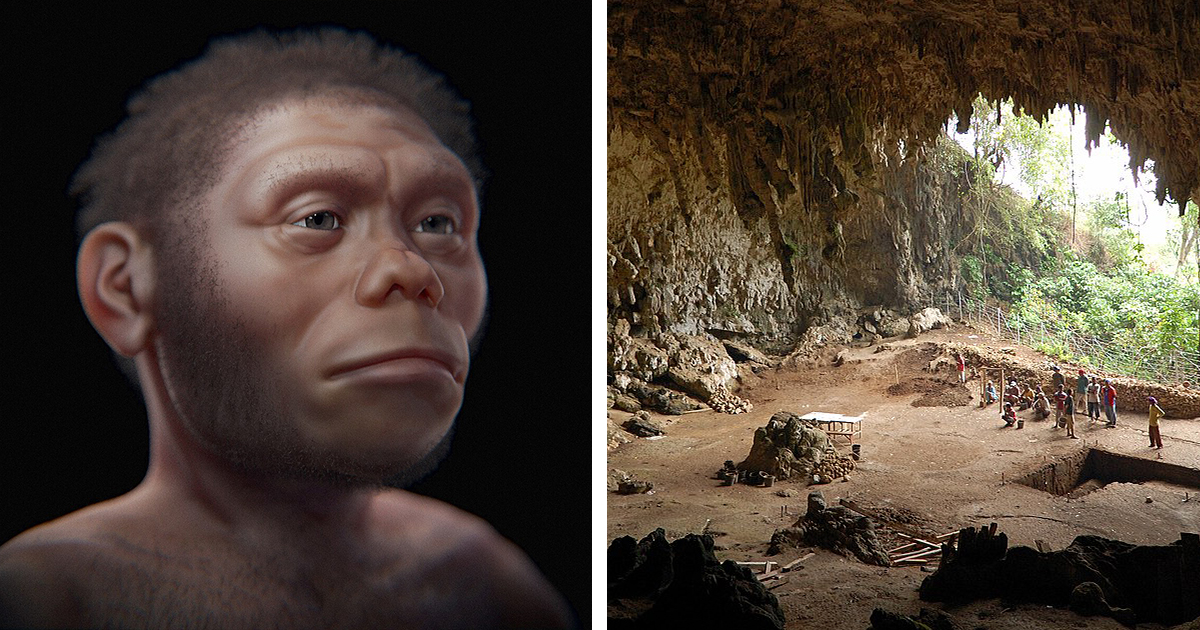
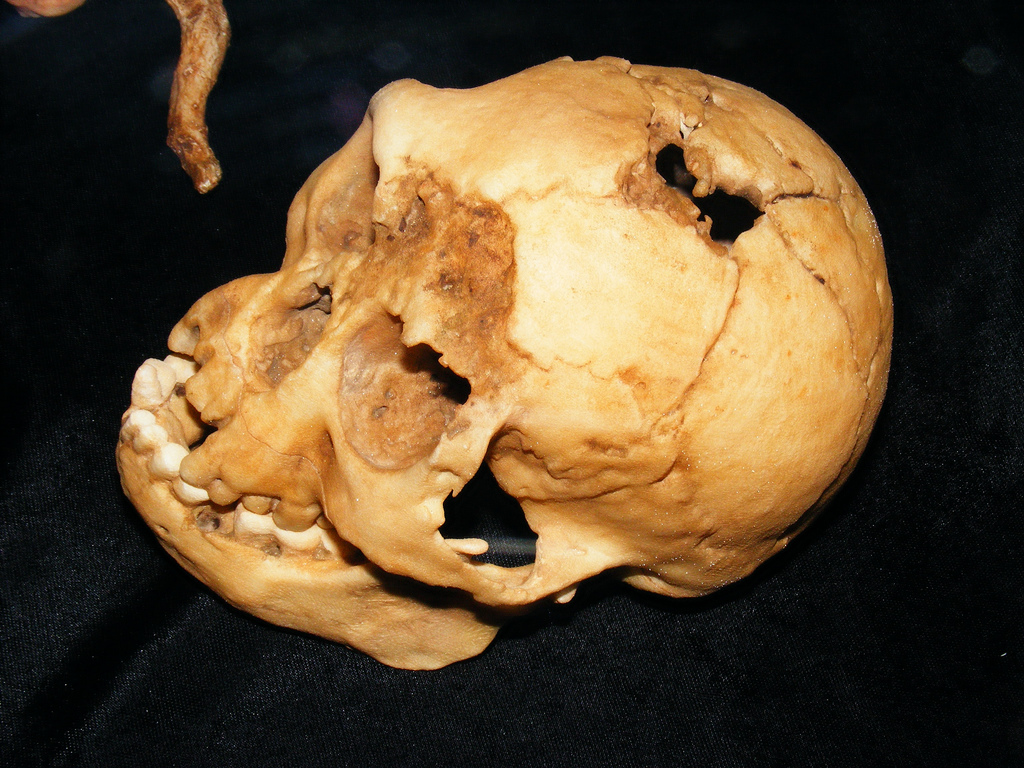
On 2 September 2003, a joint Australian-Indonesian excavation team led by archaeologist Michael Morwood recovered a nearly complete skeleton from sediments deep inside Liang Bua, a limestone cave on the Indonesian island of Flores. The individual was an adult female, roughly thirty years old, standing about 1.06 metres tall. Her brain measured only 380 cubic centimetres, comparable to a chimpanzee, yet the layers surrounding her bones held finely made stone flakes and the remains of butchered prey. She was formally named Homo floresiensis and swiftly nicknamed the “Hobbit” by a press still fresh from Peter Jackson’s films. That nickname stuck, but it obscures how scientifically significant this find actually is. This article examines what the fossil and archaeological record of Homo floresiensis actually tells us about body size, brain organisation, island ecology, origins, behaviour, and disappearance, drawing on excavations at Liang Bua and the Mata Menge site in the So’a Basin, and on the revised dating work published since 2016.
Why Flores Produces Such Unusual Creatures
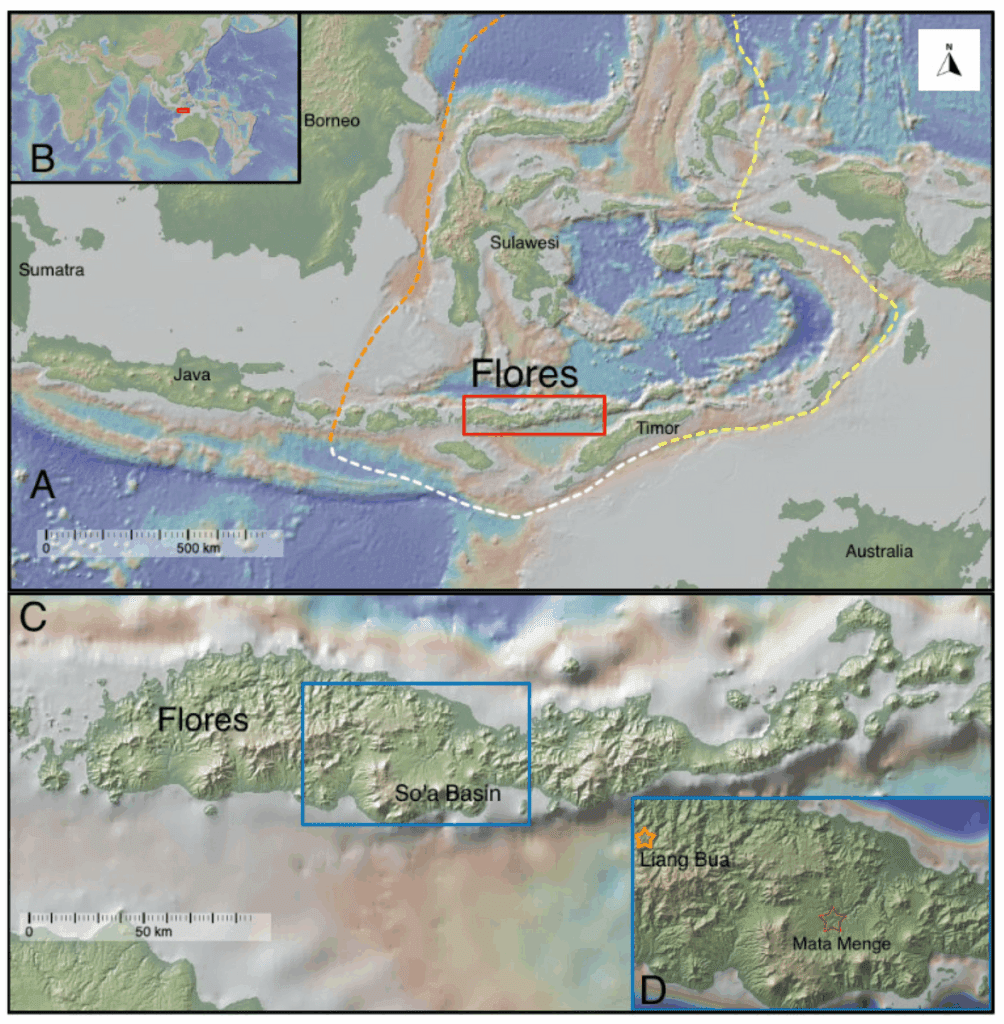
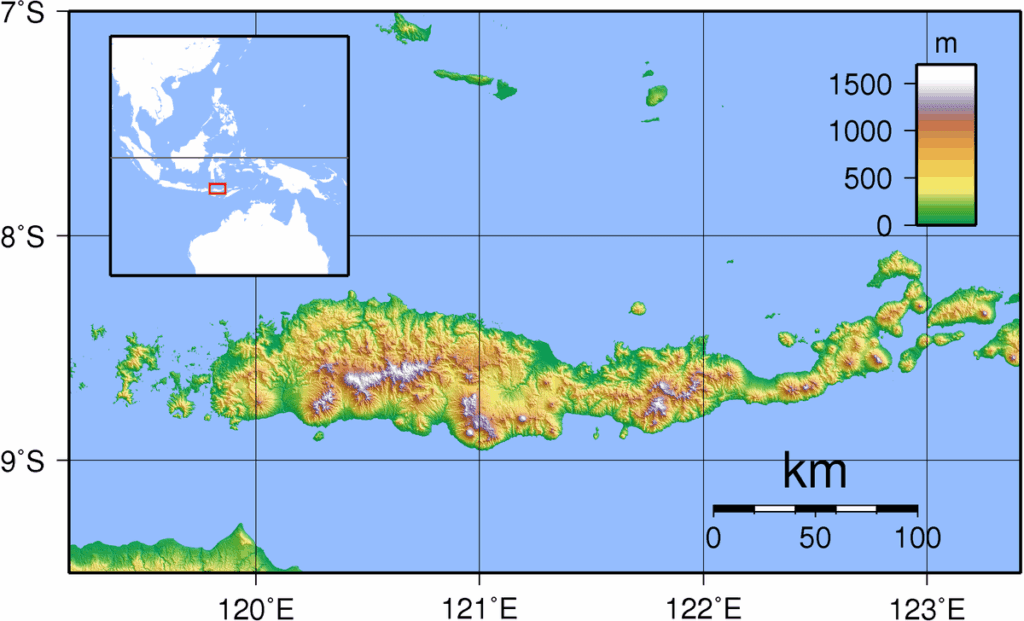
Flores has never been connected to the Asian mainland. Even at glacial maxima, when sea levels dropped by more than 120 metres, the Lombok Strait to the west and the Sape Strait to the east remained deep open-water barriers. Any organism that reached Flores crossed real ocean. That is the foundation of everything unusual about the island’s biology, including the hominins.
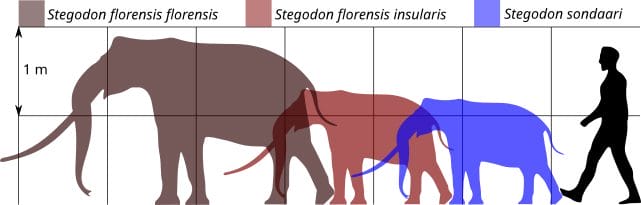
This biogeographic isolation produces what ecologists call insular dwarfism: the tendency for large-bodied mammals marooned on islands to shrink over generations, while small rodents sometimes grow larger. The mechanism is straightforward. Large herbivores with no large predators and finite food supplies reproduce successfully at smaller body sizes, which require fewer daily calories. Reduced stature becomes genetically fixed through selection pressure over many generations. Flores demonstrates the principle dramatically. When hominins arrived, they entered a landscape already home to dwarf Stegodon (a proboscidean related to elephants, reduced to roughly a quarter of mainland size), giant rats, the enormous marabou-like stork Leptoptilos robustus, and Komodo dragons (Varanus komodoensis). This was not an easy world, but it was not one that required a large-brained, tall-bodied generalist to navigate it. A smaller, more energy-efficient hominin had real advantages: lighter foraging costs, easier shelter in narrow karst chambers, and lower daily metabolic requirements.
The island’s limestone interior is riddled with caves, which served as reliable cool, dry refugia. Flores sits within Wallacea, the transitional zone between the Sunda shelf to the west and the Sahul shelf to the east. Wallacean islands receive colonists from both directions, but deep channels ensure that no single wave of migration is easy or frequent. That isolation made sustained, directed evolutionary change possible over enormous spans of time.
The Anatomy of LB1 and What the Bones Actually Show
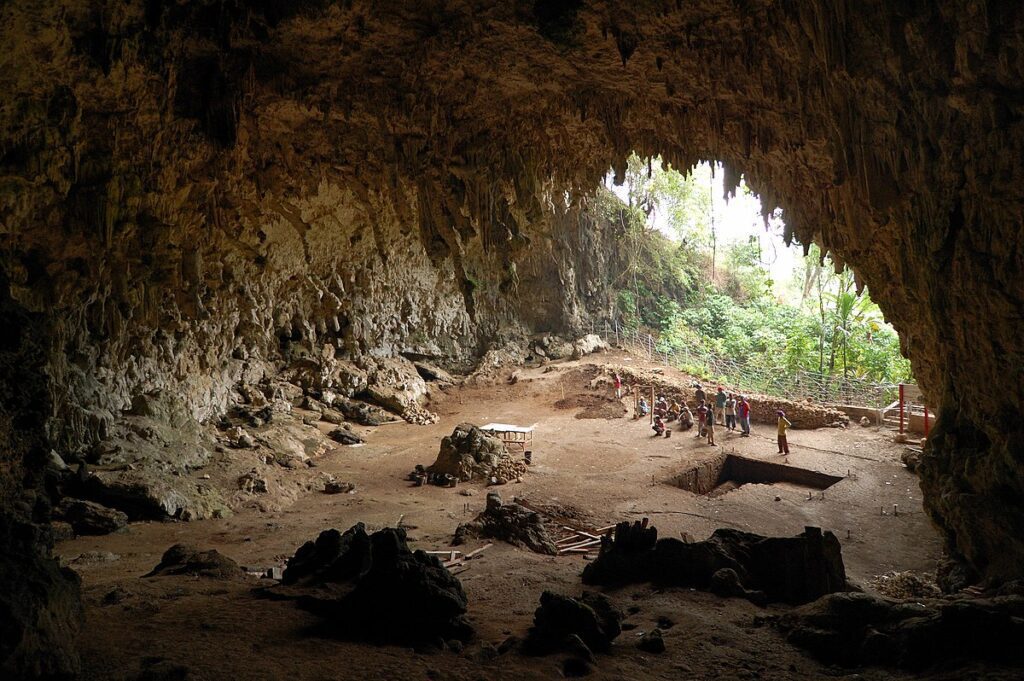
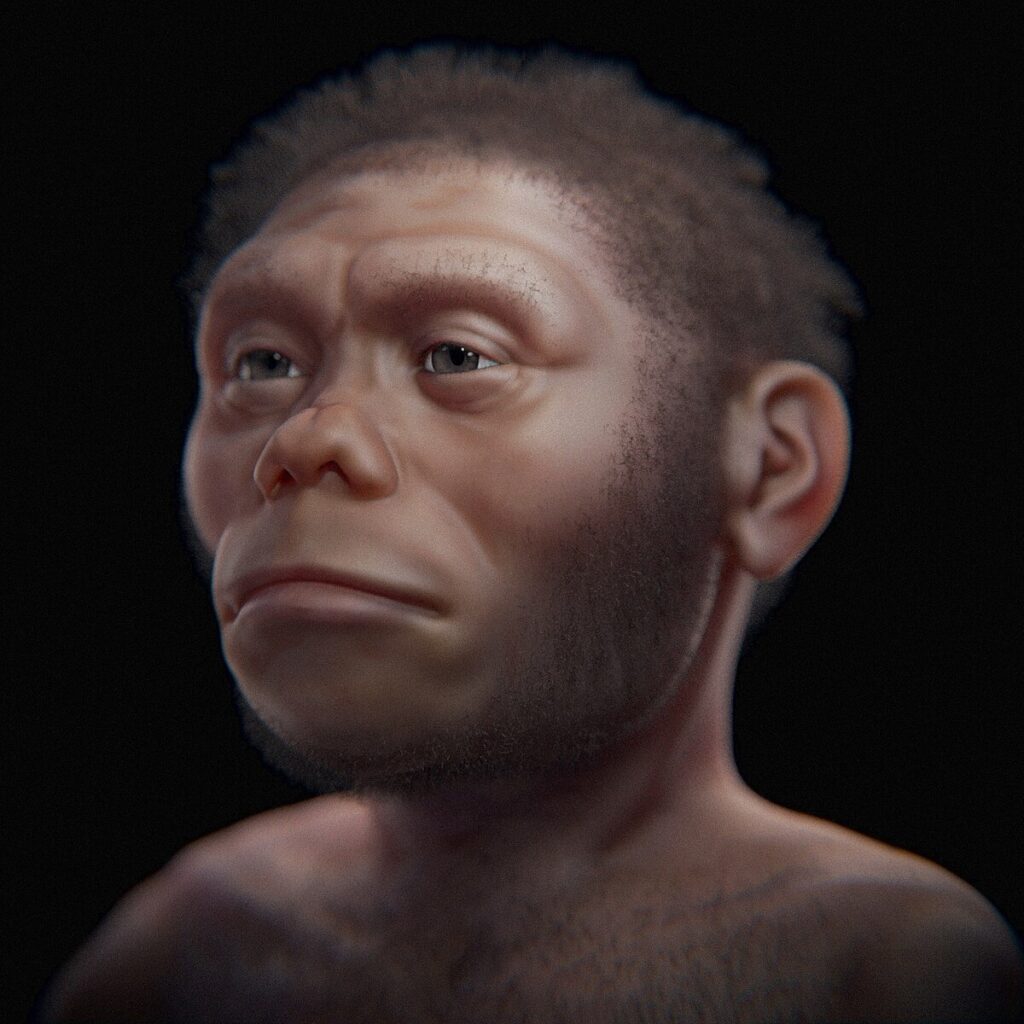
The type specimen, LB1, nicknamed “Little Lady of Flores” by the excavation team, preserves a nearly complete skull, a partial pelvis, both femora, and bones of the hands and feet. This gives researchers far more to work with than a single element, and it is the combination of traits that makes the anatomy so striking and so difficult to explain away as pathology.
The skull has a low, flat vault, no chin, and a cranial capacity of 380 cc. The widest point sits near the ears rather than across the parietals, as in modern humans. The face is short and forward-projecting in ways that align more closely with Homo erectus than with Homo sapiens. The teeth present an unusual mixture: some dimensions fall within modern human ranges, others do not, and the molar morphology described by physical anthropologist Yousuke Kaifu at the National Museum of Nature and Science, Tokyo, shows features unique enough to support species-level distinction.
The postcranial skeleton reinforces this distinctiveness. The shoulder blades sit further forward than in modern humans, and the clavicles are short, giving the upper body a more ape-like stance. The wrist bones, studied in detail by Matthew Tocheri of the Department of Anthropology at Lakehead University, retain a primitive, trapezoid-like morphology absent in H. sapiens and H. neanderthalensis but present in great apes and early hominins like Australopithecus. The femora are short and robust. The feet are notably long relative to leg length, with a low arch, prompting William Jungers of Stony Brook University to note that the foot proportions resemble those of early hominins far more than those of any modern human population. Taken together, this skeletal mosaic does not fit any known modern human pathology, a point reinforced by the recovery of at least fourteen additional individuals showing comparable morphology.
One finding that reshaped the debate on cognition was the study of endocranial casts. The internal surface of LB1’s skull reveals a relatively expanded frontal lobe and temporal lobes organised differently from both modern humans and known specimens of H. erectus. A small brain is not the same as a simply structured one. This reorganisation, combined with evidence for skilled toolmaking in the same stratigraphic layers, suggests that cognitive capacity cannot be read directly from total brain volume.
Revised Dating and the Corrected Timeline
When the fossils were first announced in 2004, early radiocarbon measurements placed LB1 at around 18,000 years old, and some specimens appeared even younger. This produced the extraordinary claim that a small-brained, pre-modern hominin had survived on Flores until just 12,000 years ago, long after the rest of Homo outside of Africa had been replaced by modern humans. That chronology generated enormous popular excitement and serious scientific scepticism in equal measure.
The problem was stratigraphic. Thomas Sutikna of the Centre for Archaeological Science at the University of Wollongong, working with a team that included Tocheri and geochronologist Richard Roberts, returned to Liang Bua and recognised that the cave sediments are deeply unconformable. A series of erosion events had removed older deposits in some areas and redeposited material out of sequence. The radiocarbon samples that produced those young dates came from a different, overlying sedimentary unit than the hominin bones themselves. The revised stratigraphy, published in Nature in 2016, placed all skeletal remains of H. floresiensis in layers dated to between approximately 100,000 and 60,000 years ago, with associated stone tools extending to around 50,000 years before present. This shift matters enormously. The “Hobbits” no longer overlap with the Neolithic, the spread of agriculture, or even the early Holocene. Their window now sits within the Late Pleistocene, overlapping with the period when modern humans first began entering insular Southeast Asia.
A subsequent study by Sutikna and colleagues, published in the Journal of Human Evolution in 2018, mapped the entire ~190,000-year depositional sequence at Liang Bua and identified a statistically significant shift in raw material preference toward chert at around 46,000 years ago. The researchers suggested this shift marks the earliest cultural evidence of H. sapiens at the site, arriving after H. floresiensis had already disappeared.
The Debate Over Origins and the Mata Menge Evidence
Two main hypotheses have dominated the debate about who the Flores hominins descended from, and neither has been definitively closed. The first and currently better-supported position holds that H. floresiensis descended from a Javanese population of Homo erectus that crossed to Flores at some point before one million years ago and then shrank under prolonged insular conditions. The second, more contentious view argues for an earlier ancestor, one with skeletal features closer to Homo habilis or even Australopithecus, implying an unknown migration of a very archaic hominin out of Africa before any currently documented dispersal event.
The debate sharpened considerably with excavations at Mata Menge, a site in the So’a Basin roughly 70 kilometres east of Liang Bua. Gerrit van den Bergh of the University of Wollongong and colleagues, publishing in Nature in 2016, described a mandible fragment and isolated teeth from sediments dated to approximately 700,000 years ago. These remains are as small as, or smaller than, those from Liang Bua, which means the lineage had already achieved diminutive body size more than half a million years before LB1 died. The Mata Menge mandible also shows morphological features consistent with Asian H. erectus, lending weight to the dwarfed-erectus hypothesis.
A 2024 study in Nature Communications strengthened this further. Researchers reported an adult humerus from Mata Menge estimated to be 9 to 16 per cent shorter and thinner than the LB1 humerus, making it the smallest adult hominin limb bone yet found anywhere in the Plio-Pleistocene record. This implies that extreme size reduction was not a late adaptation but a feature established early in the lineage’s history on Flores and maintained across hundreds of thousands of years. The study, led by van den Bergh and Reiko Kono of Kyoto University, concluded that the H. floresiensis lineage most plausibly evolved from early Asian H. erectus and was a long-lasting, consistently diminutive population from at least 700,000 years ago onwards.
Built out of a love for history, kept free from distractions.
Spoken Past is an independent project shaped by curiosity, care, and long hours of research. Reader support helps keep it maintained, carefully researched, and open to everyone.
Stone Tools and the Evidence for Behaviour
The stone tools associated with H. floresiensis at Liang Bua are classified as Oldowan-like: simple flakes, choppers, and retouched pieces struck from locally available volcanic stone and chert. There are no prepared-core techniques, no blades, and no standardised tool forms of the kind associated with later hominin traditions in Africa and Europe. This conservatism in technology has sometimes been read as a sign of cognitive limitation, but that reading confuses technological simplicity with behavioural poverty.
A reliable flake is actually well suited to the conditions on Flores. Raw material on a geologically active volcanic island is abundant but often of variable quality. Carrying large pre-prepared cores across broken karst terrain is energetically costly for a small-bodied hominin. A system built around local stone procurement, opportunistic flaking, and transport of finished flakes to task sites is not primitive but practical. The striking platforms and flake angles at Liang Bua are consistent and regular, which signals learned technique transmitted between individuals across generations. Adam Brumm of Griffith University and colleagues, working on the older So’a Basin sites, have shown that stone technology on Flores remained broadly stable for close to a million years, reflecting persistent, locally adapted traditions rather than stagnation.
Faunal remains from Liang Bua reveal a diet built around small and medium prey. Giant rats are the most common mammal in the deposits, and some bones show cut marks consistent with defleshing. Butchery marks on dwarf Stegodon bones are reported but remain debated in terms of frequency and intent. Some researchers argue these reflect opportunistic scavenging of naturally dead animals rather than active hunting, while others point to the repeated association of stone tools and Stegodon remains as evidence for systematic exploitation. The consensus leans toward a generalist strategy: active hunting of small fauna, possible scavenging of large carcasses, and collection of plant foods and shellfish when available.
Fire use at Liang Bua is similarly contested. Some layers contain burned bones and charred plant material, but the evidence is not continuous, and no definitive hearth structures have been identified. This does not rule out fire management. On a seasonally dry island with limited fuel, hearths may have been small and tightly controlled, leaving a sparse archaeological signature.
Predators and the Logic of Small-Bodied Life
The predator community on Pleistocene Flores was formidable for a hominin standing just over a metre tall. Komodo dragons, which can reach lengths of three metres and ambush prey several times their own weight, were present across the island. Leptoptilos robustus, the giant marabou stork identified from Liang Bua deposits by Hanneke Meijer of the Natural History Museum of Denmark and colleagues, stood over 1.8 metres tall and was capable of killing small vertebrates. Large raptors and crocodiles controlled aerial and riverine approaches. Moving through this landscape required spatial knowledge, group coordination, and careful timing.
Caves like Liang Bua offered a strategic answer to several of these threats simultaneously. The broad entrance provides light and ventilation, while the deep interior stays cool and dry year-round. A narrow cave mouth is also physically defensible against ambush predators that rely on open-ground approach. The long, flat feet of H. floresiensis, with their low arch and elongated toes, are well designed for careful movement over rough limestone and for climbing scrambles in karst, giving the species good access to elevated ledges within caves and on cliff faces that larger-bodied predators cannot easily follow.
Small body size itself is a survival strategy in this context. A smaller hominin has a lower daily caloric requirement, can exploit narrow shelters, and produces less noise when moving through dense forest understorey. The energetics model proposed by researchers examining hominin persistence on Flores suggests that a larger-bodied hominin population would have needed more food per individual, making it more vulnerable to the resource fluctuations driven by volcanic eruptions and monsoon variability. The smaller body plan is not a handicap but a finely tuned solution to the island’s constraints.
Crossing Water and the Cognitive Implications
The fact that any hominin reached Flores at all has implications for how we think about early cognitive capacities. The island was never connected to the Asian mainland or to Java by a land bridge, even at glacial low stands. The ancestors of H. floresiensis crossed the Lombok or Sape Straits, likely by rafting on storm-driven flotsam or on accumulated vegetation mats, although intentional crossing on rudimentary craft cannot be ruled out. Biogeographic modelling of the prevailing currents around Flores suggests that accidental rafting from Sulawesi, following the Sape Strait current system, is the most plausible mechanism, as argued by researchers examining origins and persistence of the Flores lineage.
This crossing, by hominins with brains considerably smaller than modern human average, complicates the older assumption that water travel required fully modern cognition. It does not require navigation by stars or planned voyage preparation. It does require survival in a small group on an unstable vegetation raft, orientation toward land once visible, and the behavioural flexibility to exploit whatever resources the new island offered. If the Mata Menge evidence is correct and hominins were present on Flores by at least 1.27 million years ago, these crossings may have been made by a hominin closer in grade to early H. erectus than to any later, larger-brained lineage.
The 2024 Nature Communications study from Mata Menge emphasised that the hominins who arrived on Flores carried the capacity for long-term persistence and technological continuity despite an extremely small body and brain. This is a finding that should reshape expectations about what archaic hominins outside the African record were capable of achieving in isolated environments.
Disappearance and What Replaced Them
The last skeletal evidence for H. floresiensis in the Liang Bua sequence is now placed at around 60,000 years ago. Stone tools attributed to the species continue until approximately 50,000 years ago, at which point the raw material shift toward chert signals a change in the hominin occupants of the cave. The cause of their disappearance is not established with certainty, and multiple factors may have combined.
Modern humans entered island Southeast Asia broadly between 65,000 and 50,000 years ago. Genetic and archaeological evidence places them in Australia by at least 50,000 years ago, which means they were passing through the Wallacean chain during precisely the window when H. floresiensis was still present on Flores. Whether the two species ever occupied the same cave, the same valley, or the same shoreline is unknown. The Liang Bua sequence does not preserve direct evidence of encounter, only sequential replacement. Two teeth from younger deposits at Liang Bua are attributed to H. sapiens, but they come from layers clearly above and separated from those containing H. floresiensis remains.
Volcanic activity provides another candidate. Flores sits on an active arc, and at least one significant tephra event is recorded in the upper Liang Bua sequence. Environmental disruption caused by eruptions, combined with the ecological fragility of small island populations, could have driven the lineage below replacement threshold. It is also worth noting that dwarf Stegodon and the giant stork Leptoptilos robustus also disappear from the faunal record at roughly the same time, suggesting a broader ecological collapse rather than targeted persecution of a single species.
Genetic studies of living pygmy populations on Flores, who are short-statured through a different mechanism related to diet and thyroid function, show no trace of H. floresiensis ancestry. Their small stature evolved independently. This confirms that body size convergence between a modern population and an archaic one tells us nothing about genealogical relationship, and it closes off any hypothesis that H. floresiensis somehow merged into the local H. sapiens gene pool.
What Homo floresiensis Means for Human Evolution
The Flores lineage is a demonstration that human evolution was not a single directed march toward larger bodies and bigger brains. It was a branching, local, contingent process shaped by geography, ecology, and time. An isolated island, a conservative stone toolkit, a small but reorganised brain, and a body plan tuned to karst and rainforest produced a hominin that was fully capable of surviving for more than a million years in one of the world’s most unpredictable volcanic environments.
The pathology hypotheses, which at various points attributed LB1 to microcephaly, Laron syndrome, cretinism, or Down syndrome, have been systematically tested and rejected. As paleoanthropologist Chris Stringer of the Natural History Museum noted in 2011, researchers who continued to push pathological explanations after the discovery of multiple morphologically consistent individuals had damaged their own reputations as much as the field’s. The species status of H. floresiensis is not seriously in dispute among specialists today.
What remains genuinely open is the precise ancestral lineage and the evolutionary speed of dwarfism. Did the initial colonists arrive already small, or did they arrive at H. erectus-grade body size and shrink rapidly after isolation? The Mata Menge humerus, smaller than LB1’s own, suggests that extreme reduction happened early and persisted consistently. Ongoing work at So’a Basin sites, where stone artefacts pre-date 1 million years ago, will eventually close that gap. When it does, the picture that emerges is likely to show that evolution on islands can be both faster and more radical than anything that happened in the open landscapes of Africa and Eurasia, and that cognitive flexibility is possible in packages far smaller than our own.
Sources: T. Sutikna et al., “Revised stratigraphy and chronology for Homo floresiensis at Liang Bua in Indonesia,” Nature 532 (2016); T. Sutikna et al., “The spatio-temporal distribution of archaeological and faunal finds at Liang Bua,” Journal of Human Evolution 124 (2018); G. D. van den Bergh et al., “Homo floresiensis-like fossils from the early Middle Pleistocene of Flores,” Nature 534 (2016); G. D. van den Bergh, R. T. Kono et al., “Early evolution of small body size in Homo floresiensis,” Nature Communications 15 (2024); A. Brumm et al., “Early stone technology on Flores and its implications for Homo floresiensis,” Nature 441 (2006); K. L. Baab, “Homo floresiensis: Making Sense of the Small-Bodied Hominin Fossils from Flores,” Nature Education Knowledge 3 (2012); R. W. Dennell, J. Louys, H. J. O’Regan, and D. M. Wilkinson, “The origins and persistence of Homo floresiensis on Flores: biogeographical and ecological perspectives,” Quaternary Science Reviews 96 (2014).