Before sunrise in Rome, thousands of citizens shuffled toward the same public spaces, clutching small tokens that meant the difference between hunger and a full table. The tokens were tesserae, little proofs of entitlement. The places were porticoes and courtyards tied to the state’s food supply, most famously the Porticus Minucia Frumentaria in the Campus Martius. The system that moved the grain and kept the city upright was the annona, both the practical supply chain and the political promise that the city would be fed.
Feeding Rome took more than strong walls or legions. It required predictable flows of wheat, predictable price signals, and unglamorous institutions that knew how to count, measure, weigh, and move bulk food through a city that could approach one million inhabitants in the second century. Romans also imagined the system in human form. On coins the personification Annona stood between a grain measure and a ship’s prow, ears of wheat in one hand and a cornucopia in the other. The message was blunt. The emperor commands the sea lanes and the storehouses, and the people eat.
This article follows the grain: where it came from, how often it sailed, where it was stored, who got it, and why emperors risked everything to keep it moving.
What Was the Annona?
Annona can mean two overlapping things. First, annona is the grain supply of the city, the provisioning system that kept prices stable and bellies filled. Second, cura annonae is the administration that managed that supply. By the first century, this meant a senior official at Rome called the praefectus annonae, usually of equestrian rank, backed by a deep bench of clerks, measurers, inspectors, and warehouse keepers. The office tends to appear in our sources under Augustus. Whether the job was brand new or a formalization of earlier Republican practice, the change was real. Food for Rome became an imperial responsibility and a standing promise.
The annona focused on wheat, although barley, oil, and later bread and pork entered the package. In the late Republic the state had long practiced frumentationes, distributions of grain to citizens either at a subsidized price or free. Julius Caesar dramatically cut the list of eligible recipients to about 150,000 adult male citizens in 46 BCE. Augustus later stabilized the figure around 200,000. The numbers floated with politics and population changes, yet the point stood. The dole was substantial, predictable, and restricted to citizens. It was the most significant regular redistribution in the ancient Mediterranean.
Where Did Rome’s Grain Come From?
Rome began as a river city fed by the surrounding Lazio and the Italian heartland. By the second century BCE Sicily was already a storied breadbasket. As Rome’s population ballooned, Sicily could not carry the burden alone. Africa Proconsularis, especially the rich fields of modern Tunisia, and later Egypt under Roman control after 30 BCE, became the core suppliers. Josephus, writing in the first century, offered a neat rule of thumb. Africa could feed Rome for eight months in an average year, Egypt for four. The proportions varied year to year and are not exact, yet the pairing captures the structure of the system. Africa supplied the bulk. Egypt evened out risk.
Moving grain from field to city followed predictable paths. In Africa, wheat moved from estates to local ports, then in bulk across the warm season to the Tyrrhenian coast. In Egypt, wheat from the Nile Valley traveled downstream to Alexandria, then hopped the sea to Puteoli or, later, Portus. Ships kept as close to shore as they could. The sailing season, safer between late spring and early autumn, narrowed risk. Winter seas were treacherous, and shipwrecks and delays could quickly starve a city that burned through thousands of tons a week.
The Scale
How much grain did Rome need? Scholars debate the exact tonnages, since population counts, caloric needs, and household structures are all under discussion. A reasonable midrange estimate sets the daily need for wheat for the city at roughly 500 to 1,000 tons in the early Empire, which translates to hundreds of thousands of tons a year. If the dole covered about 200,000 eligible citizens, each receiving something like five modii of wheat a month, that alone consumed around 10 million modii annually for the dole recipients. The Roman modius measured roughly 8.5 to 8.7 liters. The density of wheat shifts with moisture and variety, but one modius can be treated as about 6 to 7 kilograms of wheat. Five modii per month sat near 30 to 35 kilograms per recipient, a ration that could sustain an adult or, in practice, a household when stretched by careful baking and supplemented foods.
These numbers mattered for political reasons. A sudden interruption, a late convoy, or a spike in prices could crush confidence in the emperor and the city’s governing promises. Grain was not only food. It was a measure of legitimacy.
Ships, Seasons, and the Risk of the Sea
The Mediterranean was the engine. The best-known description of a large grain ship comes from Lucian, who saw a vessel called Isis, a giant Alexandrian grain carrier. He described a ship more like a moving barn, with a hold deep enough to swallow thousands of modii, a beam wide enough to stabilize a heavy cargo, and a single tall mast. Lucian was a satirist, not a surveyor, and we should not treat his figures as measurements, yet they convey the fact that some Alexandrian carriers were the largest ships of their time.
Typical freighters, called naves onerariae, varied widely in capacity. A medium ship might carry 3,000 to 5,000 modii. Large ships could move an order of magnitude more. Sailing times, of course, depended on wind and route. The passage from Alexandria to Puteoli or Portus could take a couple of weeks in fair conditions, much longer in poor ones. From African ports to Ostia or Portus, shorter runs were routine, sometimes a handful of days with good luck.
Claudius, keenly aware of risk, tried to keep ships sailing into the shoulder of winter by offering incentives and imposing duties. When Rome faced shortages in 51 CE he went down to the river, risked the weather, and tried to be seen. Emperors personally embodied the food promise. They offered shipowners citizenship, tax privileges, and protection from some lawsuits. They also paid in kind. If you carried grain to Rome, the state would carry some of your risk.
Ports, Harbors, and the Turn From Ostia to Portus
At first glance Ostia seems the perfect Roman harbor, and for centuries it was the city’s maritime face. Yet a river port on the Tiber could not always handle the growing volume, nor the unpredictability of the bar at the river mouth. Claudius began a bold solution north of Ostia: a new outer harbor with curving moles and a lighthouse perched on a ship sunk as an artificial island. Silt and storms made the Claudian basin hard to keep. Trajan finished the job with a hexagon, a deepwater harbor shaped in six neat sides with strong quays and internal canals that connected the new basin to the Tiber. Portus, not Ostia, became the steady hinge of Rome’s food imports.
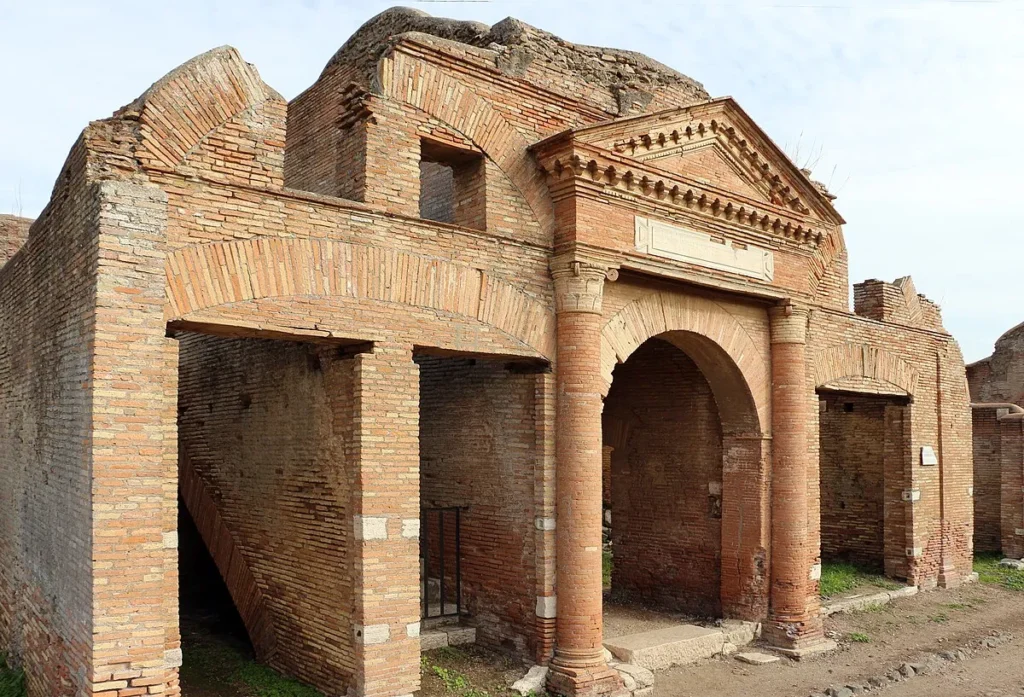
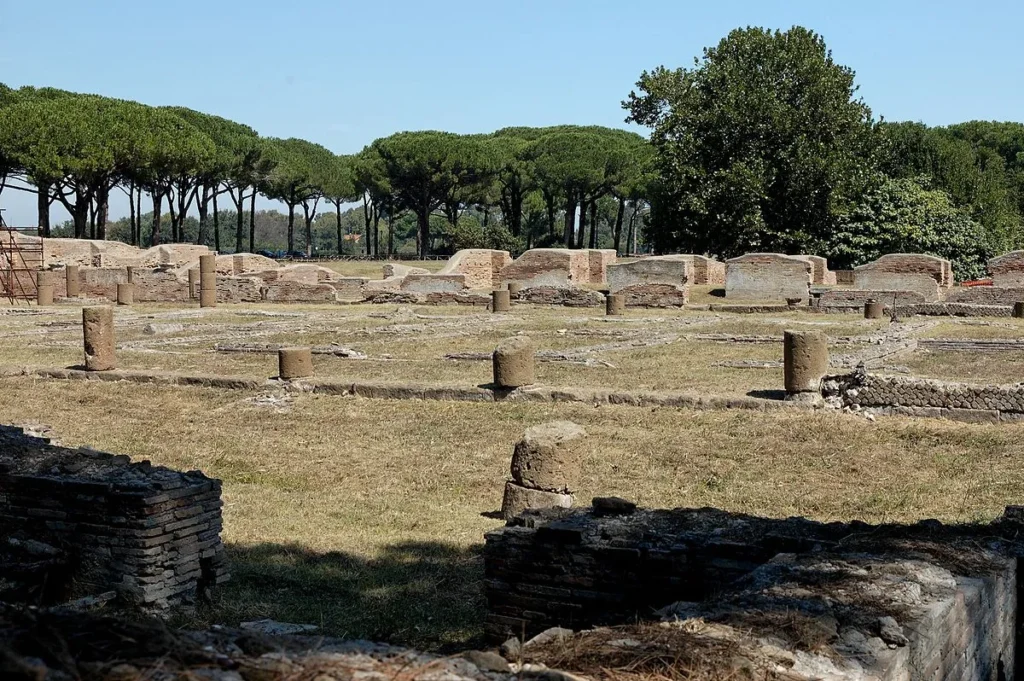
Ships unloaded at Portus. Some cargoes stayed in the port’s cavernous storehouses. Others moved into river barges and pushed upstream to Rome’s riverfront horrea. The state maintained its own facilities. Private shippers did too. The Horrea Galbae on the Aventine, the Horrea Lolliana near the river, and purpose-built storage hubs across the Tiber quarter handled mountains of grain and amphorae. Even when we know the name of a warehouse, the inner routines are mostly silent. We glimpse counting rooms, built-in measuring basins, integrated furnaces for drying damp grain, and features meant to fight vermin, fire, and theft.
How Grain Was Measured, Milled, and Baked
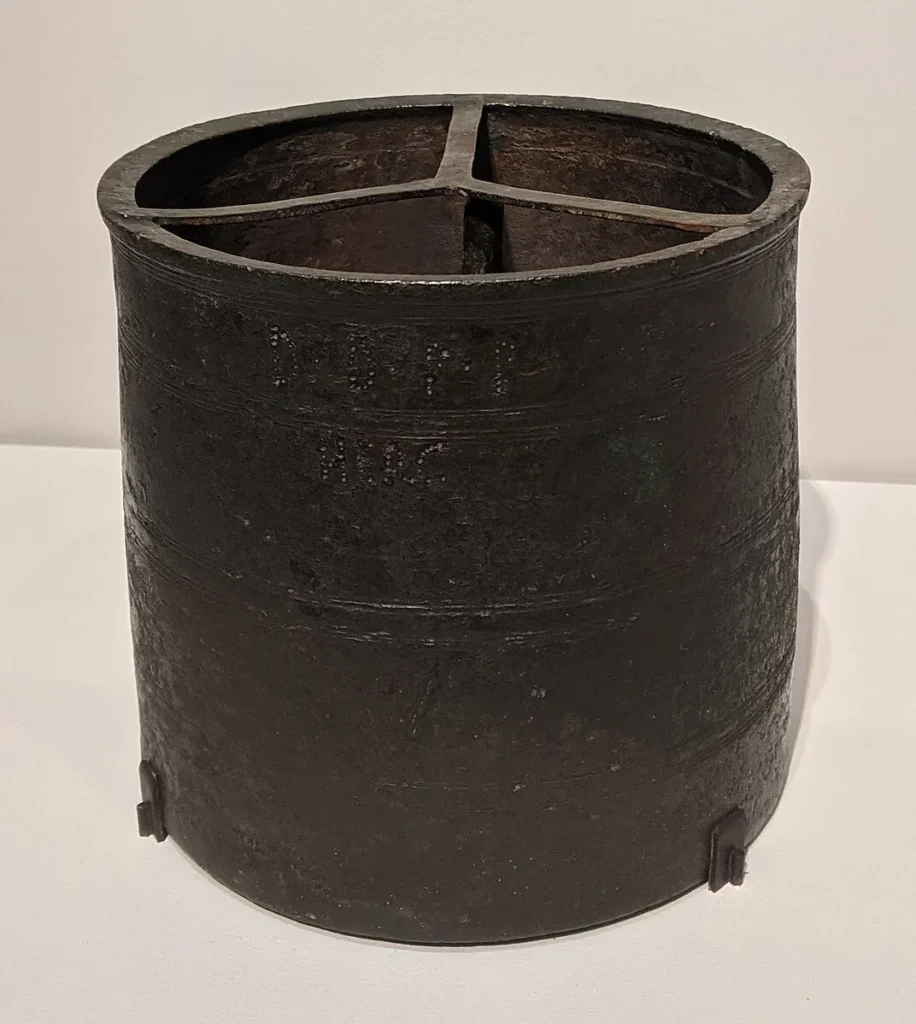
Measurement came first. A modius was a dry volume measure, typically a bronze or wooden container of a fixed size. Inspectors checked measures, stamped them, and tried to keep people honest. Some modii survive, inscribed with names of officials who guaranteed their capacity. The visual mattered. A stamped measure told the recipient that what they were getting had the state’s weight behind it.
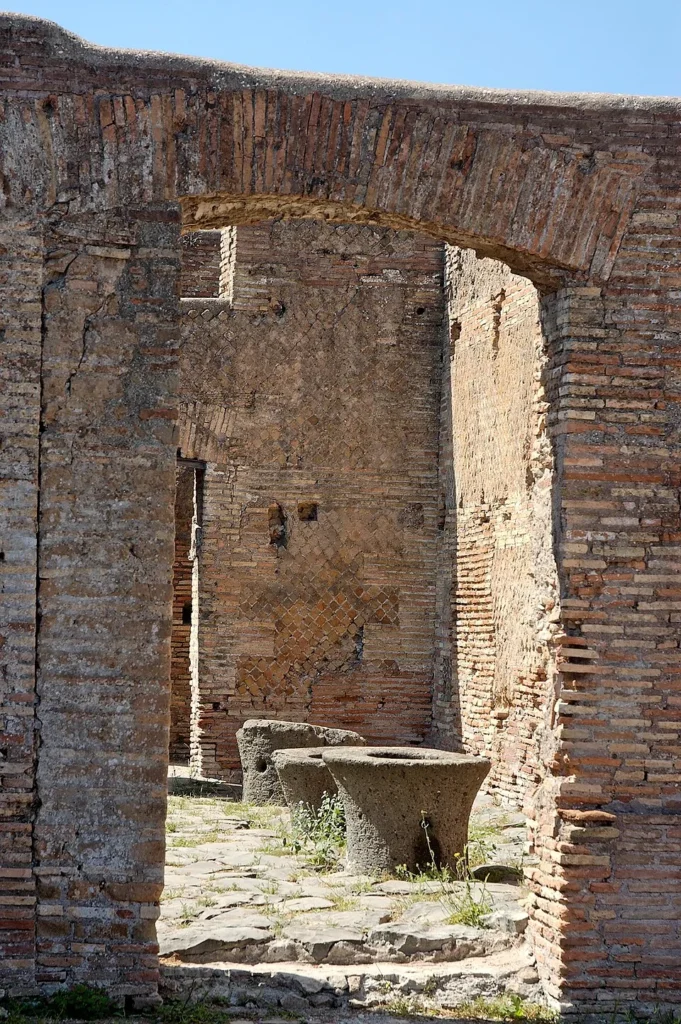
Milling took place in several ways. Households used hand querns. Bakers and millers worked with animal-driven rotary mills and, later, water power. Ostia preserves an entire block called the Caseggiato dei Molini, the House of the Millstones, with heavy conical millstones and kneading basins set into the floors. Evidence in Rome itself points to large clusters of mills and bakeries. By late antiquity, mills on the Janiculum harnessed aqueduct water to turn grindstones, easing the heavy labor of flour production. The state did not run every bakery, yet the state could requisition labor and materials in crisis and could regulate prices.
As the third century bit down, the emperor Aurelian shifted the benefit from raw wheat to finished bread for urban recipients. The change was not only humanitarian. Bread was harder to resell and hoard. A loaf had less arbitrage value than a sack of wheat. Aurelian also expanded distributions to include oil and pork in some contexts, tying the promise of the annona more tightly to the daily diet of the plebs.
Who Qualified, and How It Was Distributed
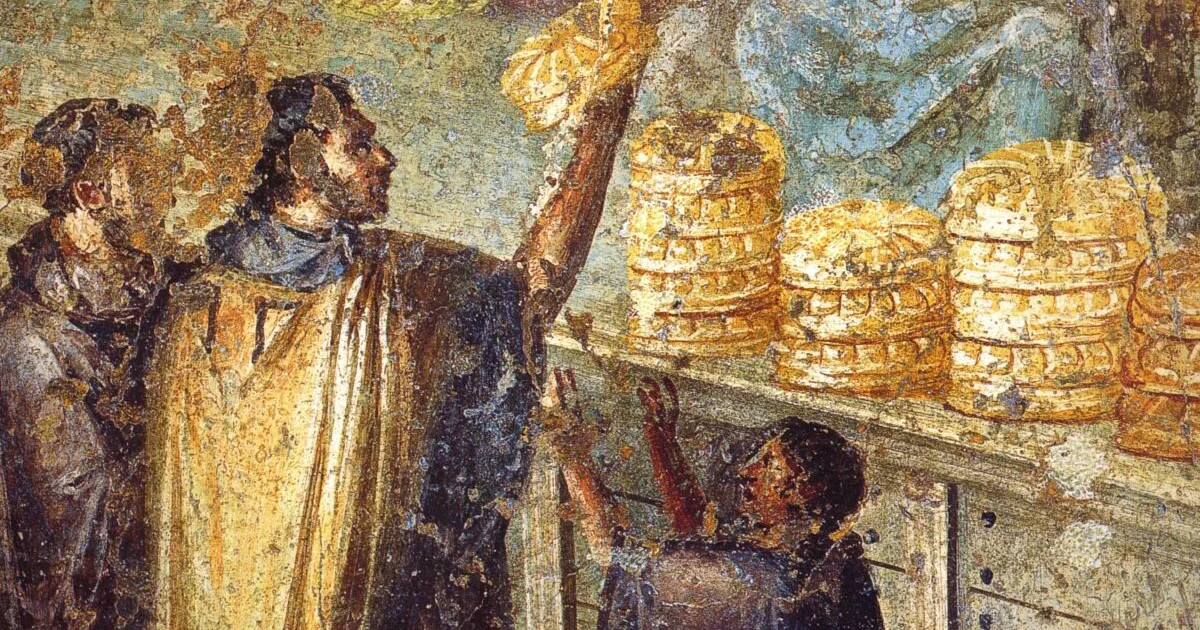
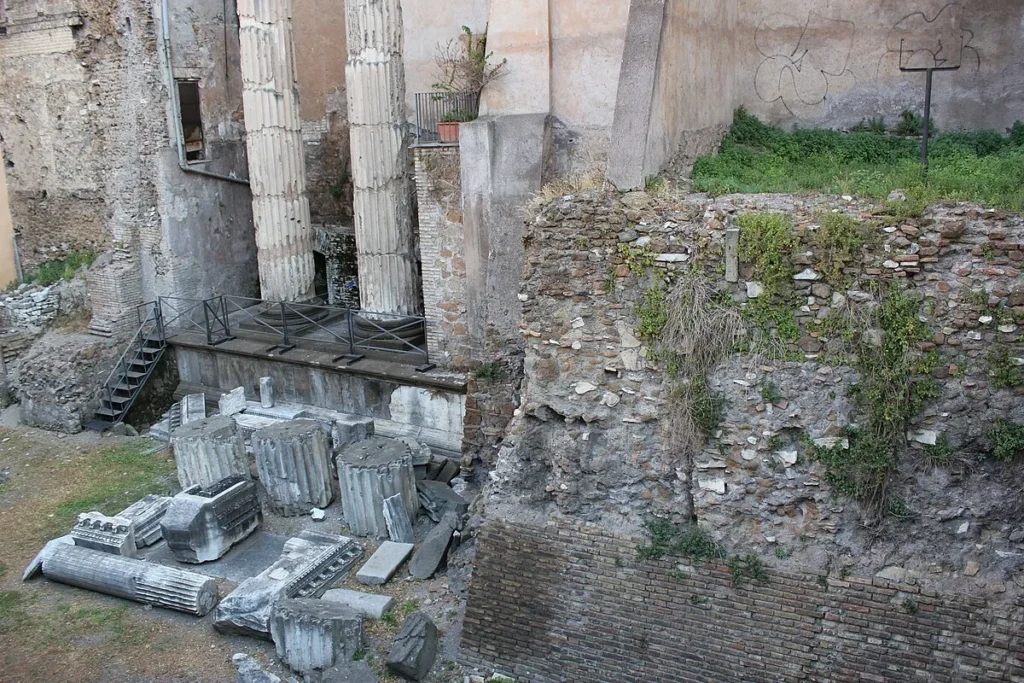
The dole targeted urban citizens. The list was not a simple census, and it changed over time. Julius Caesar made the list shorter. Augustus regularized it. Later emperors tinkered. Enrollment required proof of citizenship and residence. We hear of an album, a roll of names, and of periodic purges that removed those who had left town or no longer met the criteria. The head of household collected the ration at designated places in the city. The Porticus Minucia Frumentaria, likely rebuilt in the imperial period, stood on the Campus Martius and seems to have been a major distribution hub. Tokens were handed out that mapped to a scheduled pickup day and quantity. Officials supervised the lines. Guards prevented disorder. Bakers and millers watched prices and supplies. The whole machine depended on predictability.
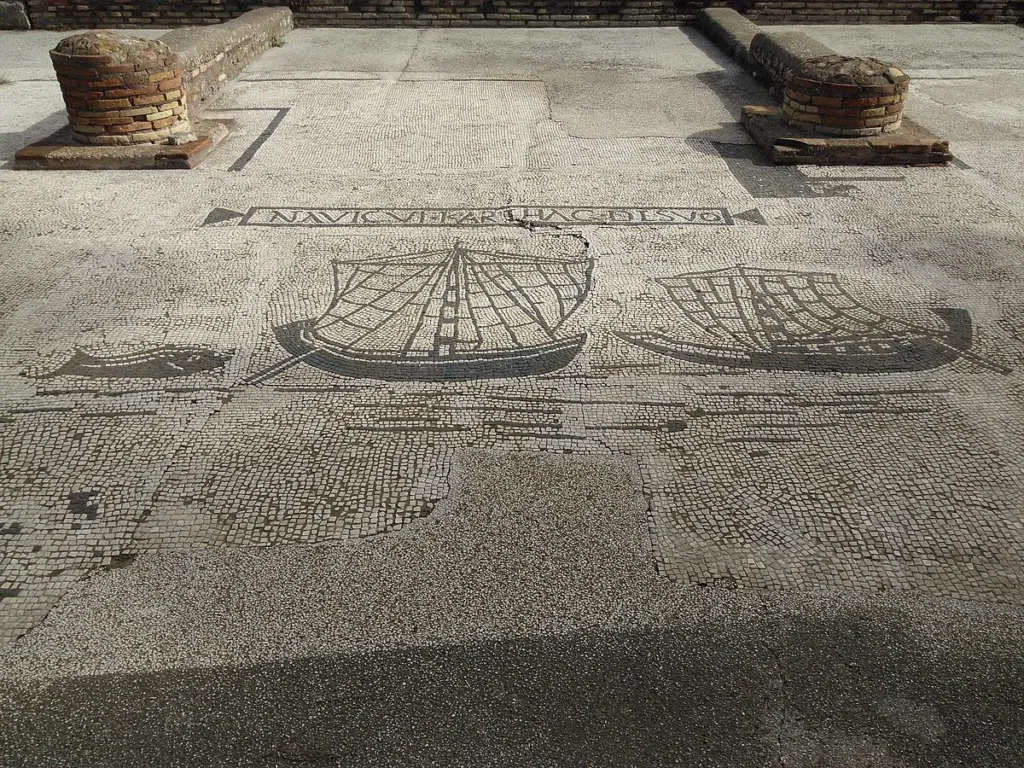
The city also hosted collegia, guild-like associations of shippers, millers, bakers, and transport workers. At Ostia’s Piazzale delle Corporazioni, mosaic panels label offices or stationes of professional groups. Several mosaics explicitly name navicularii, shipowners and shippers, often with provincial identities. The floor patterns remind visitors that the food city rested on corporate shoulders as much as imperial arms.
Tokens, Tickets, and the Texture of the Queue
The state did not only measure grain, it counted people. Tesserae frumentariae, the little lead or bronze tokens that secured a place in line, survive in small numbers. Some carry the name of a distribution point or an abbreviated month. Others show a modius or an ear of wheat. We should be cautious. Tokens can be hard to date precisely and may relate to other forms of distribution. Yet the principle is clear. The administration reduced chaos by spreading demand across days and by tying entitlements to physical tokens that were difficult to counterfeit at scale.
The day’s experience, for the recipient, included the weight of the sack, the wait in the portico’s shade, the dusty smell of bulk grain, and the dignity or indignity of being seen by neighbors carrying food home. Critics of the dole, then as now, worried that free food eroded virtue. Defenders argued that citizenship had content beyond military service and taxes, especially in a city whose public life depended on a resident population not directly producing its own food.
Why Emperors Could Not Afford Failure
Food crises destroyed emperors because hunger radicalized the street. Claudius almost died in a riot when supplies ran short. Nero bought political oxygen by flooding the city with cheap grain after the fire. Trajan and Hadrian invested in storage and harbors as well as roads. Antoninus Pius and Marcus Aurelius projected themselves as calm guarantors of continuity in part by keeping the grain flowing through war and plague.
The coin iconography is not a mere decoration. Annona standing between a modius and a prow formalized the imperial claim that the city’s stomach and the sea lanes obeyed the princeps. In the high empire emperors rarely showed themselves as soldiers on bronze coinage. They often showed themselves as providers.
Built out of a love for history, kept free from distractions.
Spoken Past is an independent project shaped by curiosity, care, and long hours of research. Reader support helps keep it maintained, carefully researched, and open to everyone.
The Workforce: Shippers, Porters, Meterers, and Clerks
City feeding depended on people whose names we only see on broken inscriptions. Shippers organized fleets. Porters hauled sacks. Meterers tipped grain into standard measures. Guardians of the horrea locked and sealed doors. Surveyors checked for rot and mold. Scribes recorded incoming and outgoing shipments on wax tablets and papyrus. Their work sounds dull. In a city without refrigerators, it was survival.
Mosaic captions at Ostia name specific shipping companies tied to provinces: navicularii of Africa, navicularii of Carthage, navicularii of Alexandria. Inscriptions remember corpora of shipowners who received fiscal privileges in exchange for hauling state cargoes. The job could be lucrative. It was also risky. A bad year could bankrupt a man with a hull full of spoiled grain. The state offered tax breaks and status perks. The promise worked because the shippers believed they would be paid.
Storage: What Horrea Did and How They Fought Time
Grain stores degrade. Warmth breeds insects and fungi. Moisture rots entire rooms. The architecture of horrea fought back. Thick walls buffered heat. Raised floors and deliberate airflow reduced dampness. Double doors and locking bars cut theft. Many horrea show interior suites of small rooms off corridors, so a problem in one cell did not ruin the entire stock. Some include built-in basins for washing and drying. Others doubled as counting houses, with a room set aside for tallying sacks and stamping receipts.
The Grandi Horrea at Ostia offers the best scale image: rooms marching down long sides around one or more courtyards, designed for serious turnover. The Horrea Epagathiana and Epaphroditiana, a more secure brick complex with a monumental doorway and inscriptions naming freedmen owners, remind us that wealthy private players built and operated state-critical infrastructure.
Oil, Amphorae, and the Mountain of Jars
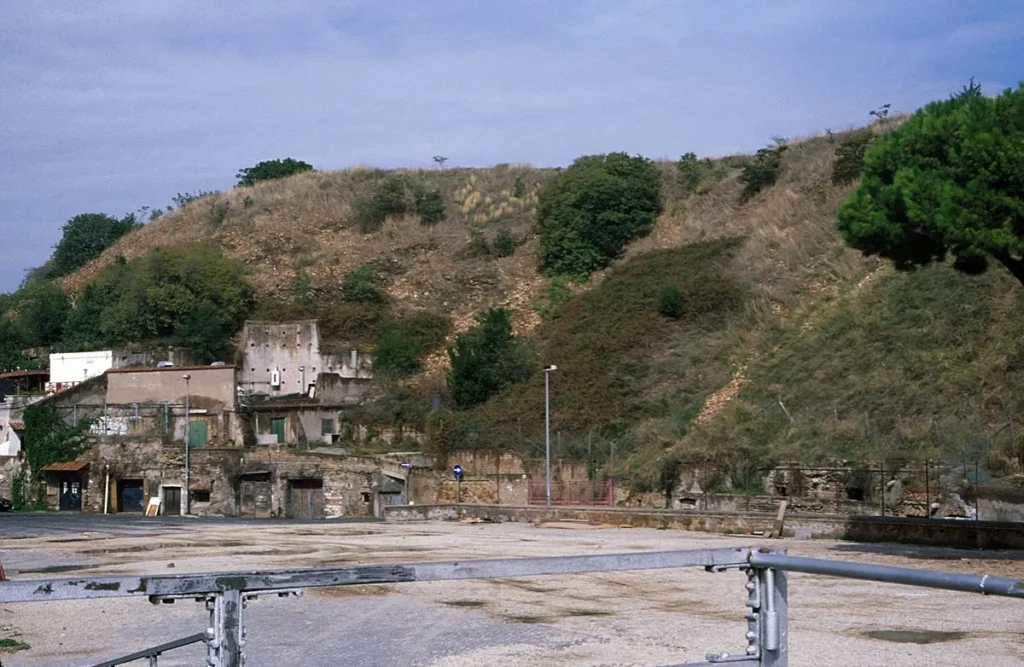
Grain rarely traveled in amphorae. The container of choice was the sack. Yet oil, fish sauce, and wine came in jars, and the city imported extraordinary volumes of olive oil from Baetica in southern Spain as part of the broader provisioning program. The broken remains at Monte Testaccio, a man-made hill of millions of amphora sherds in the Testaccio district, keep this scale visible. Each amphora was stamped with the owner’s mark and often a titulus pictus with painted notes about weight, contents, and origin. The hill’s next layer went on when the earlier layer dried out, and so on, a terraced landfill with policy behind it. Monte Testaccio is the purest archaeological graph of state-scale food movement in the Roman world.
From Wheat to Bread: Aurelian’s Shift
Sometime in the 270s, in the turmoil of the third century, Aurelian converted the grain dole to bread loaves, the panis. Sources are brief and partisan. Even allowing for the bias of imperial propaganda, the practical shift is plausible. Bread standardized calories per person. It also undercut speculation. A recipient who could not store sacks could at least eat today and the next day, then come back for more. Aurelian also added oil allowances. Pork distributions were episodic, often tied to festivals or imperial celebration. The annona had never been purely grain. Aurelian made the hybrid system feel like a full diet.
Counting Calories, Counting People
A simple calculation helps imagine the street-level impact. Start with a 35-kilogram monthly ration of wheat. A kilogram of wheat contains roughly 3,400 calories. Thirty five kilograms yield about 119,000 calories. That is roughly 4,000 calories per day for one person for a month, or 2,000 calories for two. Real households were not math problems. They stretched rations with pulses, olives, greens, and, when possible, meat and fish. They traded with neighbors, sold a share for cash, or combined rations with relatives. The dole was not meant to make families comfortable. It kept the line between subsistence and hunger from snapping. In good years, small savings appeared. In bad years, the dole prevented riots.
The Politics of Feeding
Elites argued about the morality of the grain dole. Critics said it bred urban idleness. Supporters countered that the civic economy of Rome, heavy in services, craft production, and administration, required a resident class not bound to the land. The free distributions could be read as payment for public ritual life, crowds at games and spectacles, and military service in the recent past. The annona was also a political trap. Once citizens expected it, any emperor who failed to deliver paid with prestige, sometimes with his life.
Beyond Rome: The Annona and the Empire
Rome was the mother city. Yet emperors created similar provisioning promises elsewhere. The establishment of Constantinople in the fourth century came with a full annona system that siphoned Black Sea grain south by river and sea. Alexandria had always lived on a food river. Antioch and Carthage knew the politics of price and provision in their own ways. The imperial state learned to move food as a sovereign power. Roads mattered, but sea lanes mattered more.
How Much Did It Cost?
We do not have a neat budget line. We can triangulate through prices, shipowner privileges, and estimates of salaries and infrastructure. The cost lay as much in maintenance as in crisis response. Dredging harbors, repairing moles, building and staffing horrea, and paying guards bit into imperial revenues every year. Bronze coinage, low in intrinsic value, circulated heavily around bakeries and markets. The politics of the annona kept bronze relevant long after silver standards mattered most for elite transactions.
A System of Systems
The annona worked because it was not one thing. It was fields in Africa and Egypt, carts on dirt roads, barges on the Nile, hurled anchors and wet ropes in Portus, teams of porters under the eyes of foremen, locked doors in Ostia at sundown, and cheap loaves set out at dawn. It was also ideology. When Annona and Ceres appeared on coins, the point was explicit. The emperor’s legitimacy rode as much on the dull miracle of predictable food as on victories carved on arches.
A note on metaphor and memory. Roman soldiers pushed the empire’s boundaries with their feet, which meant leather, iron, and the hobnails of their caligae. Rome kept those feet moving through hills and dust with grain baked into bread. The city’s safety did not only rest on hobnailed soles. It rested on the state’s ability to deliver calories every day, at scale, through storms and politics, until the habit felt like nature.
FAQ
What exactly did a recipient receive on the grain dole?
A monthly allotment of raw wheat measured in modii, often reckoned at about five modii per adult male citizen on the rolls. In the 270s, Aurelian shifted the benefit to finished bread, which meant recipients collected loaves rather than sacks of grain.
Who qualified for the annona distributions?
Urban citizens whose names appeared on the rolls, the album. Enrollment required citizenship and residence. Emperors periodically purged the lists to remove ineligible names and added new ones, often in response to political pressures.
Where did distributions take place in the city?
Several sites handled handouts, with the Porticus Minucia Frumentaria in the Campus Martius the best attested in the sources. Bakeries and storehouses near the Tiber also played roles, depending on period and the form of the benefit.
How much did Rome import each year?
Estimates vary widely. Midrange figures for the early Empire suggest hundreds of thousands of tons of wheat per year to cover both the dole and market demand. The exact tonnage depends on population counts, annual yields, and how we treat storage losses.
Did Rome import only grain?
No. Grain was central, but the provisioning system brought in oil, wine, fish sauce, and other staples. Olive oil from Baetica left a visible mountain of broken amphorae at Monte Testaccio. Under Aurelian, bread and oil became explicit parts of urban distributions.
Why were Africa and Egypt so important?
Climate and river logistics. Tunisia’s rich soils yielded heavy harvests, and African ports offered short, relatively safe runs to Portus. Egypt’s Nile made internal movement efficient, and Alexandria could load very large ships for the Tyrrhenian run. Josephus’s eight-month Africa and four-month Egypt rule of thumb captures the perceived balance.
What was a modius in modern terms?
A dry volume measure of about 8.5 to 8.7 liters. For wheat, that often translates to roughly 6 to 7 kilograms per modius, depending on moisture and cultivar. Five modii per month yielded about 30 to 35 kilograms of raw grain.
How did the state keep the system honest?
Stamped measures, supervised storage, and scheduled pickup days enforced through tokens or lists. The praefectus annonae’s staff inspected scales and measures, managed rosters, and policed the storehouses. Emperors offered privileges to shippers to keep cargo flowing even in risky seasons.
Did the annona exist outside Rome?
Yes, but with local differences. The late Roman state built an annona system for Constantinople. Provincial cities had their own provisioning institutions and market regulations, though few matched Rome’s scale or the imperial attention it attracted.
How long did shipments pause in winter?
There was no official universal closure, yet the practical sailing season ran from late spring through early autumn. Shipowners avoided the worst winter months. Emperors sometimes incentivized late-season runs, but storms and short days made winter hauling dangerous and unpredictable.