

Art
Latest from this category.

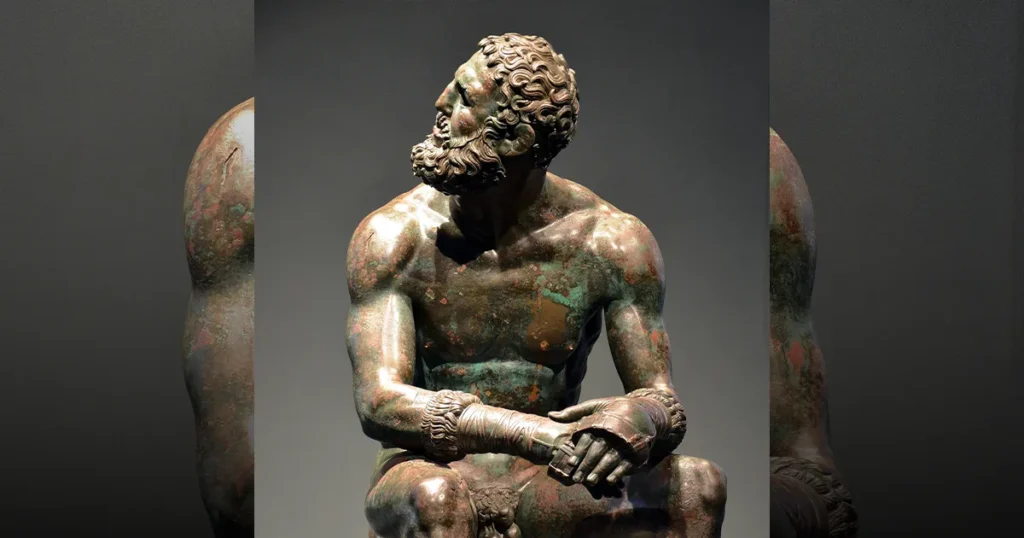
Boxer at Rest: What Greek Sport Did to the Body
The Boxer at Rest is a Hellenistic bronze unearthed on Rome’s Quirinal Hill in 1885. Its copper-inlaid wounds and cauliflower ears record a real…

Animals in Greek Vase Painting: What They Meant
Lions, owls, dolphins, hares, and serpents on Greek vases were not decoration. Each animal carried coded meaning tied to gods, status, and the symposium.

Greek Statues Were Not White: The Lost Colors of Marble
Greek statues were not born white. Scientific work reveals pigments, gilding and patterns that once animated marble. This guide explains how colour and form…

Chinese Magic Mirrors: Hidden Images in Han Bronze
Han dynasty bronze mirrors can project patterns onto a wall in reflected light. Ancient craftsmen achieved this through differential polishing of the face.

The Parthenon Was Not White: Ancient Athens in Color
The Parthenon was not plain white marble in antiquity. Traces of pigment reveal a brightly colored temple at the center of ancient Athens.

Erotic Art in Pompeii: What Romans Really Saw
Erotic imagery was everywhere in Pompeii, from doorways and bakeries to the House of the Vettii and the Lupanar, and it served purposes far…

Fayum Mummy Portraits: Faces That Still Look Alive
The Fayum mummy portraits are panel paintings from Roman Egypt, made in encaustic and tempera between the first and third centuries CE and placed…
The Parthenon Was Not White: Ancient Athens in Color
The Parthenon was not plain white marble in antiquity. Traces of pigment reveal a brightly colored temple at the center of ancient…
Erotic Art in Pompeii: What Romans Really Saw
Erotic imagery was everywhere in Pompeii, from doorways and bakeries to the House of the Vettii and the Lupanar, and it served…
Fayum Mummy Portraits: Faces That Still Look Alive
The Fayum mummy portraits are panel paintings from Roman Egypt, made in encaustic and tempera between the first and third centuries CE…