

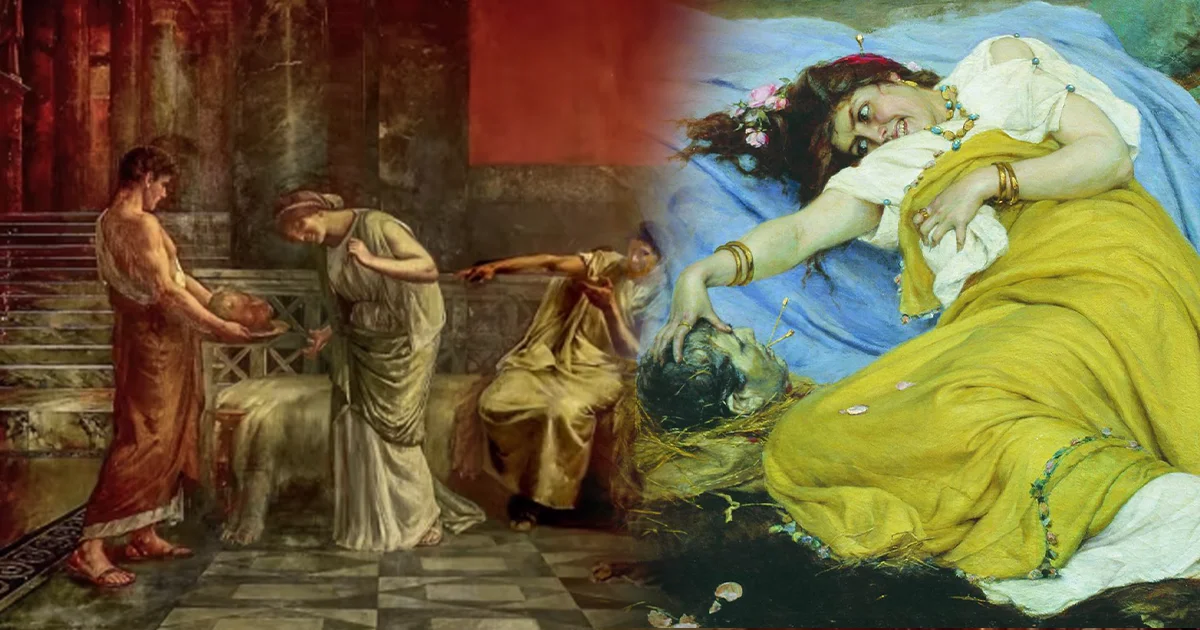
When Fulvia received her enemy Cicero’s severed head in December 43 BC, she didn’t just celebrate his death. She pulled out his tongue, the very organ that had destroyed her first husband’s reputation and publicly humiliated her for years, and stabbed it repeatedly with her golden hairpins. This is the story of why Fulvia stabbed Cicero’s tongue, an act of revenge so personal and so visceral that it shocked even war-hardened Romans. This wasn’t battlefield violence or political necessity. This was a woman silencing the voice that had weaponized words against her family for decades, using the most intimate tool she possessed (her hairpins) to destroy the weapon he had used against her.
How Cicero’s Words Destroyed Fulvia’s First Marriage
To understand why Fulvia stabbed Cicero’s tongue, you need to know their history. Fulvia’s first husband was Publius Clodius Pulcher, a radical populist politician who controlled Rome’s streets through organized gangs in the 50s BC. Clodius and Cicero were bitter enemies. Clodius had humiliated Cicero by forcing him into exile in 58 BC, and Cicero never forgave him. When Clodius was murdered by rival gang leader Milo in 52 BC, Cicero defended the killer in court. His speech, the Pro Milone, portrayed Clodius as a dangerous criminal whose death benefited Rome. Cicero didn’t just attack Clodius’s politics—he attacked his character, his morals, and his family. Fulvia, then a young widow displaying her husband’s bloody corpse in the Forum to incite riots, became one of Cicero’s targets. He mocked her grief, questioned her virtue, and painted her as a manipulative woman who controlled her husband. These weren’t private insults. These were public speeches, copied and circulated throughout Rome, destroying reputations permanently. Fulvia remembered every word.
The Proscriptions That Gave Fulvia Her Chance
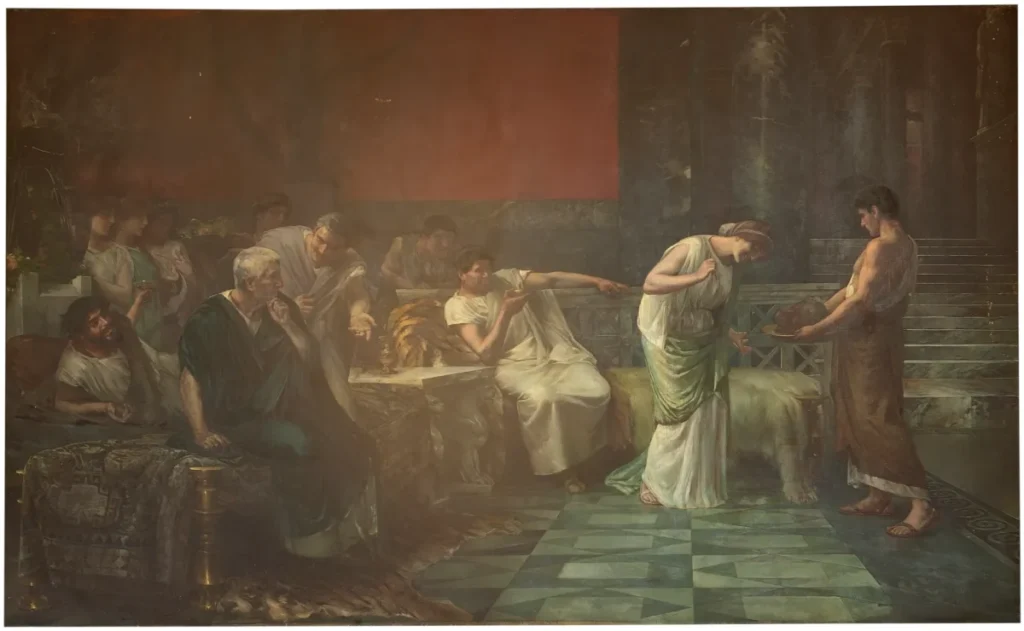
After Julius Caesar’s assassination in March 44 BC, Rome collapsed into civil war. Mark Antony (Fulvia’s third husband by this time), Octavian, and Lepidus formed the Second Triumvirate in November 43 BC. Their first official act was creating proscription lists—death warrants naming political enemies to be hunted down and killed. These weren’t military targets. These were senators, equites, and intellectuals whose only crime was opposing the Triumvirs politically. The assassins would receive bounties: 25,000 denarii for a free man’s head, 10,000 for a slave’s. Properties would be confiscated to fund the civil war. Approximately 300 senators and 2,000 equestrians were marked for death. But one name mattered most to Fulvia: Marcus Tullius Cicero. Antony insisted on it. For months, Cicero had delivered speeches called the Philippics, attacking Antony’s character, intelligence, and fitness to rule. Cicero compared Antony to a drunk, a fool, and a tyrant. He mocked Antony’s relationship with Fulvia, suggesting she dominated him unnaturally. According to Plutarch’s account, Octavian argued for two days to save Cicero, but Antony refused. Cicero’s name stayed on the list.
Why Fulvia Stabbed Cicero’s Tongue: The Mutilation Scene
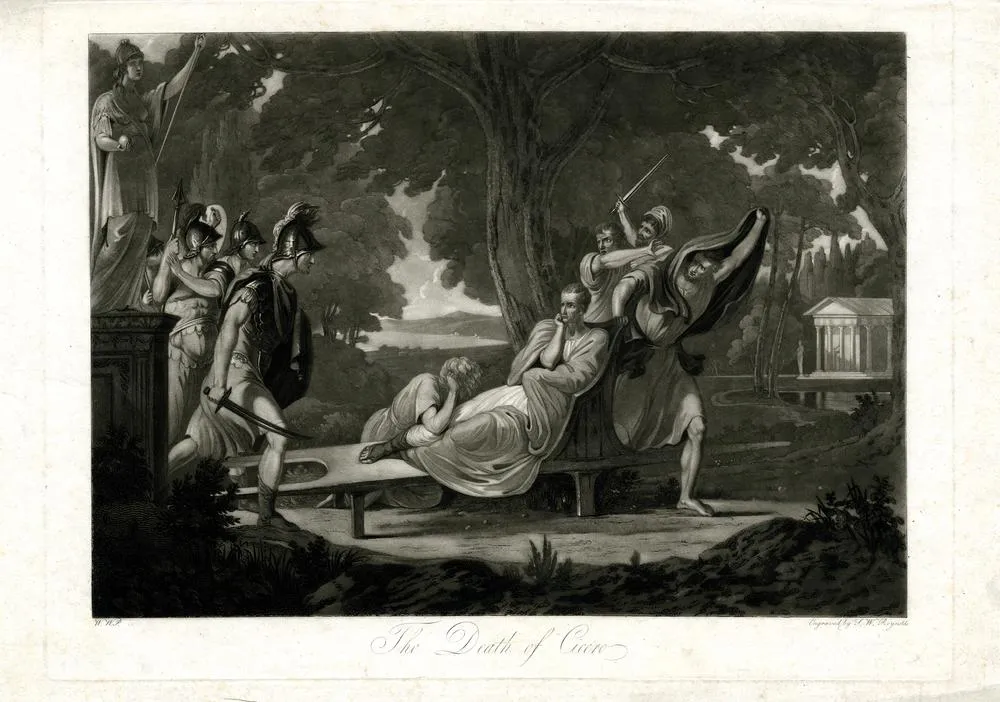
On December 7, 43 BC, soldiers caught Cicero fleeing toward Macedonia. The centurion Herennius beheaded him with a single stroke, then cut off his right hand—the hand that wrote those devastating speeches. But here’s what most people don’t know: before the head and hand were displayed in the Forum, they were brought to Fulvia first. Cassius Dio, writing in his Roman History Book 47, describes exactly what happened. Fulvia took Cicero’s severed head and placed it on her lap. She opened his mouth, pulled out his tongue, and stabbed it repeatedly with the golden hairpins she used to fasten her elaborate hairstyle. She spat on the head, cursing the tongue that had spoken against her husbands for decades. This is why Fulvia stabbed Cicero’s tongue—not random cruelty, but calculated symbolism. Cicero’s tongue was his weapon, his tool of power, his claim to political influence. He had no military legions, no family connections to match Fulvia’s patrician bloodline. He had only words. By piercing that tongue with a woman’s hairpin—a purely domestic, feminine implement—Fulvia inverted everything Cicero represented. She silenced the voice that had called her unnatural and unwomanly by using the most womanly tool imaginable.

What Cicero’s Tongue Represented in Roman Culture
Understanding why Fulvia stabbed Cicero’s tongue requires understanding what that tongue meant. In Roman culture, oratory wasn’t just political skill—it was masculine power itself. The ability to speak persuasively in the Senate, in courts, and in public forums defined a man’s virtus (masculine excellence). Cicero had risen from relative obscurity to become Rome’s greatest orator through his tongue alone. He had no illustrious military career like Caesar or Pompey. He wasn’t born into old patrician nobility like Sulla. His familia wasn’t ancient. What he had was his voice. His speeches destroyed political careers, won court cases against impossible odds, and shaped public opinion. The Philippics against Antony were considered his masterpiece—fourteen speeches delivered between September 44 BC and April 43 BC that systematically dismantled Antony’s reputation. Cicero called Antony a drunkard, a tyrant, a threat to the Republic, and worst of all, a man controlled by his wife. In Roman gender ideology, a man who let his wife influence political decisions wasn’t a real man at all. These accusations hit Antony where it hurt most: his masculine honor. But they also hit Fulvia, portraying her as a monstrous, domineering woman who violated every norm of feminine modesty and domestic retirement.
Fulvia’s Political Power and Public Voice
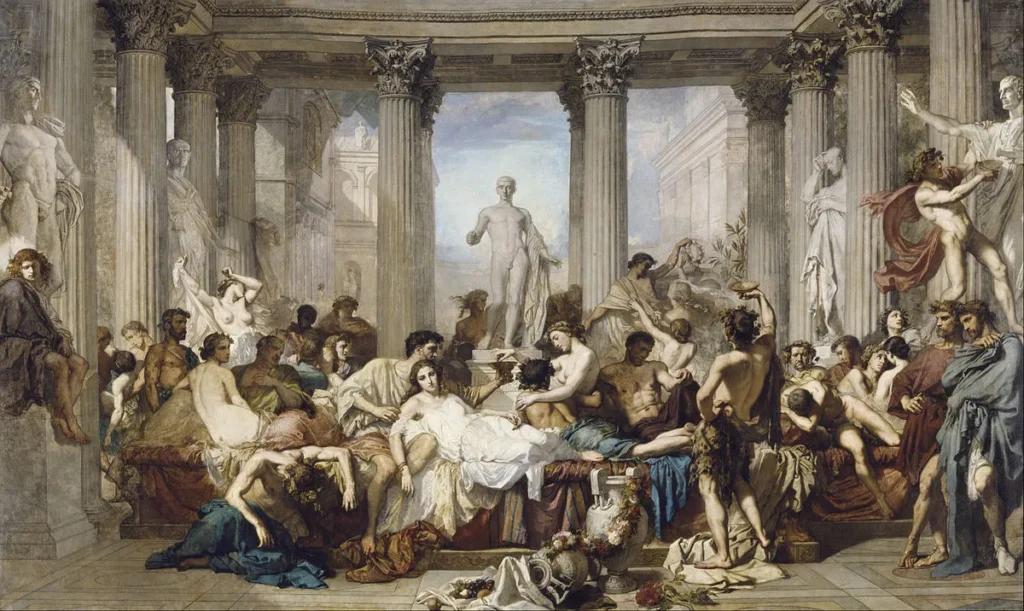
Why did Cicero fear Fulvia enough to attack her so viciously? Because she wielded unprecedented political power for a Roman woman. After Clodius’s death, Fulvia married Gaius Scribonius Curio, another populist tribune who died fighting for Caesar in 49 BC. Then she married Mark Antony, Caesar’s top general and heir. Fulvia didn’t stay quietly in the domestic sphere like elite Roman women were supposed to. Ancient sources record that she attended military councils, met with generals, managed finances, and even commanded troops during the Perusine War in 41-40 BC. She was the first non-mythological Roman woman to have her portrait on coins—an extraordinary break with tradition. According to scholarly research on Fulvia’s career, she actively managed her husbands’ political operations, organized street gangs, and wielded financial influence through her control of their estates. This terrified men like Cicero who believed women should have no public voice whatsoever. By attacking Fulvia in his speeches, Cicero was trying to undermine Antony by suggesting he couldn’t control his own household. But he was also expressing genuine alarm at a woman who refused to be silent. The irony? Cicero gave Fulvia even more reason to hate him, ensuring that when she finally got the chance for revenge, she would take it brutally.

Built out of a love for history, kept free from distractions.
Spoken Past is an independent project shaped by curiosity, care, and long hours of research. Reader support helps keep it maintained, carefully researched, and open to everyone.
The Symbolism of Hairpins as Weapons
The detail about the hairpins is crucial to understanding why Fulvia stabbed Cicero’s tongue this specific way. Roman women used acus crinalis—long metal pins—to create elaborate hairstyles that signaled their social status and respectability. Elite women like Fulvia would have used gold or silver hairpins, sometimes jeweled, to construct complex updos that required multiple pins. But these hairpins had a dark double meaning in Roman culture. They were known weapons. Roman law specifically recognized hairpins as potential murder weapons because women had used them in domestic violence cases. There are legal texts discussing women who killed husbands or lovers with hairpins, stabbing them through the eye or throat. So when Fulvia chose her hairpins to mutilate Cicero’s tongue, she was making a deliberate statement. She wasn’t using a military weapon like a sword or dagger. She wasn’t using a man’s tool. She was using the most feminine implement possible, transforming a symbol of domestic propriety into an instrument of political revenge. The message was clear: Cicero had accused her of being unfeminine and transgressive, so she would use her femininity itself as a weapon against him. She would silence his masculine voice with a woman’s hairpin.
How Romans Reacted to Fulvia’s Revenge
When Cicero’s mutilated head and severed right hand were displayed on the rostra in the Roman Forum—the same platform from which he’d delivered his greatest speeches—Romans were horrified. Plutarch writes that many people wept openly, viewing the display as evidence that the Republic had truly died. The proscriptions had already killed hundreds, but seeing Cicero’s head with his mouth violated by Fulvia’s hairpins struck differently. He represented traditional Republican values: law, oratory, philosophical wisdom, constitutional government. His gruesome end symbolized how personal vendettas and political violence had replaced civic virtue. But reactions were complicated. Some Romans sympathized with Fulvia. Cicero had indeed publicly humiliated her repeatedly. His attacks weren’t just political criticism—they were personal, gendered insults designed to destroy her reputation. In Roman culture, which valued revenge and personal honor intensely, Fulvia’s actions made sense within that value system. She had avenged insults to her family honor using the tools available to her. Other Romans were disgusted, seeing her actions as proof that she was exactly the monstrous, bloodthirsty woman Cicero had described. Pro-Octavian sources especially emphasized this interpretation, as Octavian would later fight a civil war against Antony and Fulvia. The propaganda shaped how later historians remembered her.
Historical Sources and Reliability
The primary detailed source for why Fulvia stabbed Cicero’s tongue is Cassius Dio’s Roman History, written around AD 230—nearly 270 years after the events. Dio claims Fulvia took the head, opened the mouth, pulled out the tongue, and pierced it with her hairpins while making brutal jests. But how reliable is this account? Plutarch, writing around AD 100, mentions Fulvia abusing and spitting on the head but doesn’t specifically describe the hairpin mutilation. Appian, another near-contemporary source, confirms Fulvia received the head but provides fewer details. Modern scholarship on Roman proscriptions debates whether Dio embellished an existing tradition or whether earlier sources included details that later writers chose to omit. Political propaganda definitely played a role. Octavian, who became Augustus and wrote the official history as victor, had reasons to vilify both Fulvia and Antony. He wrote vulgar poetry mocking Fulvia and ensured pro-Octavian historians portrayed her as cruel and unnatural. Yet the consistency across multiple sources suggests something dramatic occurred when Fulvia encountered Cicero’s severed head. Even if specific details were exaggerated or symbolic rather than literal, the story captured a real truth about their relationship: decades of mutual hatred that ended in Fulvia’s revenge.
Why Fulvia’s Revenge Still Matters
The story of why Fulvia stabbed Cicero’s tongue resonates because it captures something universal about power, gender, and revenge. Cicero had weaponized speech against Fulvia, using his oratorical genius to portray her as everything Roman culture feared in a woman: powerful, public, politically active, and uncontrolled by men. He tried to silence her by making her name synonymous with feminine transgression. But when the power dynamics shifted and Fulvia literally held Cicero’s tongue in her hands, she enacted a revenge that was perfectly calibrated to their conflict. She didn’t just kill him—soldiers did that. She destroyed the specific organ he had weaponized against her, using a specifically feminine tool to do it. The symbolism was complete: the voice that had condemned her for being an unfeminine woman was silenced by feminine implements. The tongue that had mocked her political power was pierced by the hairpins of a woman who outlived him and watched his head rot on the Forum rostra. For nineteeth-century academic painters, this scene represented both the fascinating brutality of Roman decadence and anxieties about female political power in their own time. That’s why painters kept returning to this image—it crystallized fears and fascinations about what happens when women claim political voices and exact revenge against men who try to silence them.
FAQ
Did Fulvia really stab Cicero’s tongue with hairpins?
The story appears in multiple ancient sources, with Cassius Dio providing the most detailed account around AD 230. While Plutarch and Appian confirm Fulvia abused Cicero’s severed head, they provide fewer details about the hairpins specifically. Most historians believe something dramatic occurred, though specific details may have been embellished through political propaganda against Fulvia.
Why did Mark Antony want Cicero killed?
Mark Antony insisted on Cicero’s inclusion in the proscription lists because Cicero had delivered fourteen speeches called the Philippics attacking Antony’s character, intelligence, and political legitimacy between 44-43 BC. These speeches portrayed Antony as a tyrant and threat to the Republic, damaging his reputation severely.
What were the Roman proscriptions of 43 BC?
The proscriptions were death warrants issued by the Second Triumvirate (Antony, Octavian, and Lepidus) listing approximately 300 senators and 2,000 equestrians to be killed. The condemned had their property confiscated, and bounties were offered for their heads. This raised funds for the civil war against Caesar’s assassins.
How did Romans view Fulvia’s political power?
Elite Roman women were expected to remain in the domestic sphere without public political roles. Fulvia violated these norms by attending military councils, commanding troops, managing finances, and appearing on coins—unprecedented for a non-mythological Roman woman. This both fascinated and horrified Roman men.
What happened to Fulvia after Cicero’s death?
Fulvia continued wielding political power until 41-40 BC when she led the Perusine War against Octavian. After Antony negotiated peace with Octavian, Fulvia fled to Greece where she died in 40 BC, possibly from illness. Antony then married Octavian’s sister Octavia to cement their alliance.