The Earliest Settlements (1000 to 753 BC)
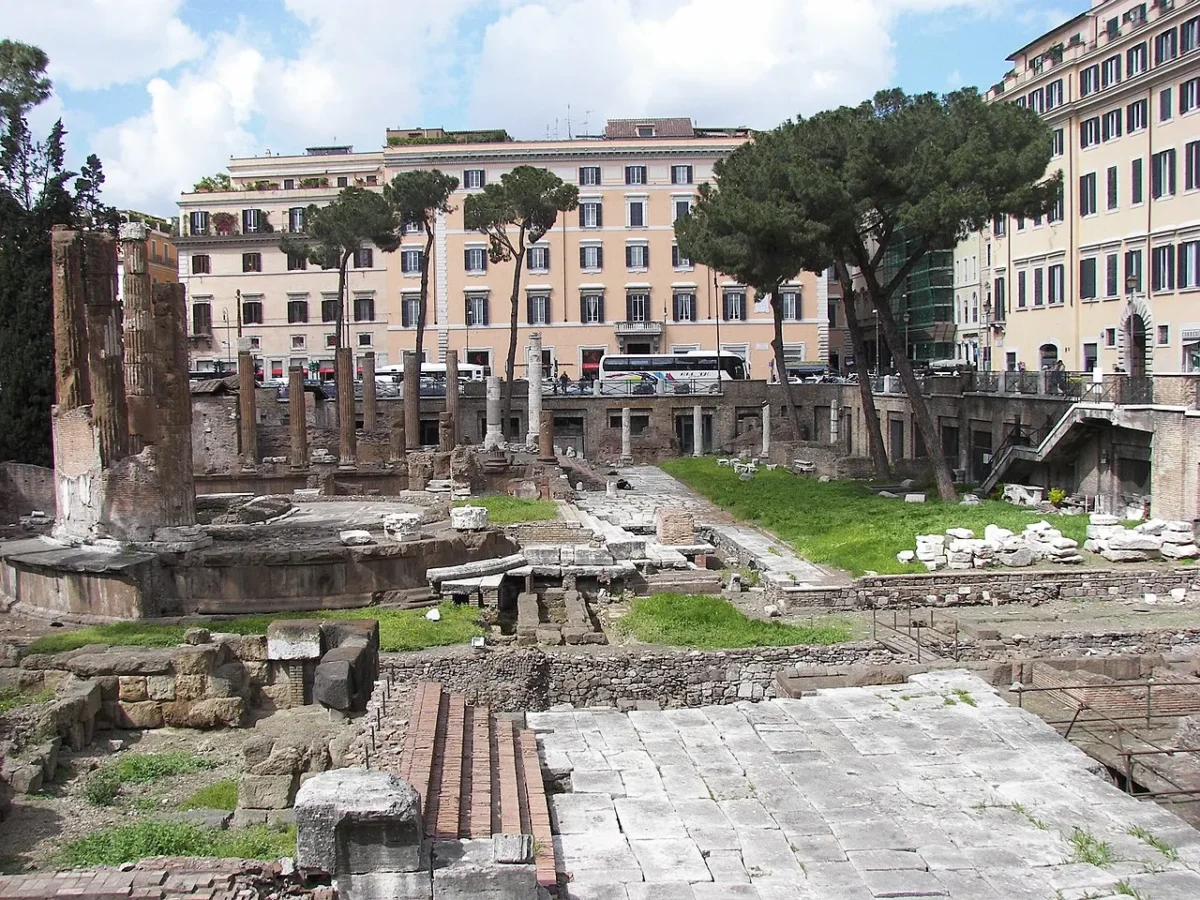
The land that would become Rome was inhabited long before the city was founded. Archaeological evidence from the Palatine Hill shows permanent settlements dating to around 1000 BC, with traces of hut foundations, pottery, and burial sites from the Iron Age Latial culture. The area was inhabited by Latin and Sabine peoples who built small villages on the seven hills above the Tiber. The hills offered natural defence, the river provided fresh water and a crossing point, and the nearby salt flats at the river mouth made the location commercially valuable from the start.
The traditional founding date of 753 BC comes from the Roman historian Varro, who calculated it from ancient records and astronomical data. Modern archaeology broadly supports a date in this range for when the scattered hilltop villages began to consolidate into something resembling a single settlement. The legendary account of Romulus and Remus, twin sons of Mars raised by a she-wolf who later fought and Romulus killed Remus to become the first king, was not intended as literal history even by the Romans themselves. It was an origin myth that explained the city’s name and its martial character.
The Roman Kingdom (753 to 509 BC)
Roman tradition records seven kings ruling from the city’s founding until the establishment of the Republic. Whether all seven were historical figures is debated, but the period broadly reflects a real phase of monarchical rule under strong Etruscan cultural influence.
The first four kings, Romulus, Numa Pompilius, Tullus Hostilius, and Ancus Marcius, are associated with the earliest Roman religious and social institutions. Numa Pompilius is credited with establishing the Roman calendar, the priestly colleges, and many of the religious rites that defined Roman public life for centuries. Tullus Hostilius destroyed the nearby Latin city of Alba Longa and absorbed its population into Rome, an early example of the Roman policy of incorporating conquered peoples rather than enslaving or expelling them.
The last three kings, Tarquinius Priscus, Servius Tullius, and Tarquinius Superbus, were Etruscan in origin or character. Under their rule Rome transformed from a collection of hilltop villages into a genuine city. The Forum was drained and paved, the Circus Maximus was laid out, and the first temples of lasting significance were built on the Capitoline Hill. The Etruscans were the dominant civilization of central Italy at this time, and their influence on Roman religion, architecture, engineering, and political organization was enormous.
The last king, Tarquinius Superbus, meaning Tarquin the Proud, was expelled in 509 BC following the rape of a noblewoman named Lucretia by the king’s son. Lucretia’s suicide after the assault triggered a aristocratic revolt led by Lucius Junius Brutus. The monarchy was abolished and replaced with a republic governed by two annually elected consuls.
The Roman Republic (509 to 27 BC)
The Republic was built around a deliberate system of checks on individual power, designed specifically to prevent any one person from becoming king again. Two consuls held executive power jointly for one year only. The Senate, composed of former magistrates, held enormous practical authority over foreign policy, finance, and the appointment of commanders. Below the consuls a series of magistracies, the praetors, censors, quaestors, and aediles, handled law, public works, taxation, and the courts. The tribunes of the plebs held the unique power of veto over any magistrate’s action, a safeguard for the common citizen against aristocratic abuse.
The early Republic was dominated by conflict between the patrician aristocracy and the plebeian majority, a struggle called the Conflict of the Orders. Over roughly two centuries the plebs won the right to hold the consulship, the right to their laws being written down and publicly displayed (the Twelve Tables, 449 BC), and eventually the right to hold virtually every major office in the state. This internal reform process gave the Roman Republic a degree of social flexibility that was unusual in the ancient world.
Militarily, the early Republic was engaged in almost constant warfare with neighboring peoples: the Etruscans to the north, the Samnites in the central Apennines, the Latin cities, and Greek colonies in southern Italy. Rome’s military success rested on the legion system, a flexible formation of heavily armed infantry fighting in cohesive units, and on the policy of granting Latin rights or full citizenship to defeated peoples willing to accept Roman rule. This meant that every conquest added soldiers and taxpayers to Rome rather than simply subjects.
The three Samnite Wars between 343 and 290 BC gave Rome control of central Italy. The Pyrrhic War of 280 to 275 BC, fought against the Greek king Pyrrhus of Epirus who came to defend the Greek cities of southern Italy, ended with Roman control of the entire peninsula. Pyrrhus defeated Rome in several battles but at such cost in casualties that he reportedly said another such victory would ruin him, giving the language the phrase Pyrrhic victory.
The three Punic Wars against Carthage defined the middle Republic. The First Punic War (264 to 241 BC) was fought largely at sea over control of Sicily. Rome, with no naval tradition, built a fleet from scratch, invented a boarding device called the corvus that turned sea battles into the infantry engagements Romans excelled at, and eventually won. Sicily became Rome’s first overseas province. The Second Punic War (218 to 201 BC) nearly destroyed Rome. The Carthaginian general Hannibal Barca crossed the Alps with an army and elephants and spent fifteen years fighting in Italy, winning crushing victories at the Trebia, Lake Trasimene, and above all at Cannae in 216 BC, where he surrounded and destroyed a Roman army of around 70,000 men in a single afternoon. Rome refused to negotiate. It raised new armies, fought Hannibal to a standstill in Italy, and sent Scipio Africanus to attack Carthage directly. Hannibal was recalled to defend his home city and defeated at Zama in 202 BC. The Third Punic War (149 to 146 BC) ended with the complete destruction of Carthage, its population sold into slavery and its site ploughed with salt.
The same year Carthage fell, Rome also destroyed Corinth, the greatest city in Greece, as a demonstration of power. By 146 BC Rome controlled Spain, North Africa, Greece, and was the dominant power in the Mediterranean world.
The late Republic was characterized by increasing political violence and the collapse of the institutions that had held the system together. The reforms of the Gracchi brothers in the 130s and 120s BC, which attempted to redistribute public land to landless veterans, ended in their murders. The Social War of 91 to 87 BC, in which Rome’s Italian allies revolted demanding full citizenship, was won militarily but forced Rome to grant the citizenship it had refused. The rivalries of Marius and Sulla produced the first Roman civil war and Sulla’s unprecedented march on Rome with his own army in 88 BC. Sulla’s dictatorship, the proscriptions that killed thousands of political enemies, and his eventual voluntary retirement from power established a template that later strongmen would follow without the voluntary retirement.
The First Triumvirate of Julius Caesar, Pompey, and Crassus formed in 60 BC as an informal power-sharing arrangement among the three most powerful men in Rome. Caesar used his position to obtain command in Gaul, where between 58 and 50 BC he conquered the whole of modern France, Belgium, and parts of Germany and Britain, killed or enslaved an estimated one million people, and built an army personally loyal to him. When the Senate ordered him to disband his army and return to Rome, he crossed the Rubicon river, the legal boundary of his command, in January 49 BC, triggering civil war. Pompey fled to Greece and was defeated at Pharsalus in 48 BC. He was murdered in Egypt when he sought refuge there. Caesar became the undisputed master of the Roman world.
Caesar’s reforms were extensive and practical: he reformed the calendar (the Julian calendar, 365 days with a leap year, remained in use until 1582), extended citizenship broadly, settled veterans, and restructured provincial administration. He was appointed dictator perpetuo, dictator in perpetuity, which destroyed any pretence of republican restoration. On the Ides of March, 44 BC, he was stabbed 23 times in the Senate by a group of senators calling themselves the Liberators, led by Brutus and Cassius. The assassination solved nothing. Another round of civil wars followed, ending in the victory of Caesar’s adopted son Octavian over Mark Antony and Cleopatra at the Battle of Actium in 31 BC.
The Roman Empire (27 BC to 284 AD)
Octavian returned to Rome in 29 BC the undisputed master of the Roman world. Unlike Caesar, he was careful not to appear to be a king. In 27 BC the Senate granted him the title Augustus, meaning the revered one, and he styled himself princeps, first citizen, rather than rex or dictator. The Republic’s institutions were preserved in form: consuls were still elected, the Senate still met, laws were still passed. In practice, Augustus held permanent command of all major armies, controlled all important provinces, and his personal authority, called auctoritas, was such that opposition was impossible. This system, the Principate, was the Roman Empire in all but name.
Augustus ruled for 44 years, until 14 AD, and transformed Rome physically and administratively. He divided the empire into senatorial provinces governed by the Senate and imperial provinces governed by his own appointees. He created the Praetorian Guard, a permanent garrison in Rome loyal to the emperor. He established a permanent professional army with fixed terms, fixed pay, and land grants on discharge. He rebuilt Rome in marble. His own boast was that he found Rome a city of brick and left it a city of marble.
The Julio-Claudian dynasty that followed him, Tiberius, Caligula, Claudius, and Nero, ranged from the competent (Claudius, who added Britain to the empire in 43 AD) to the catastrophic. Caligula’s brief reign of four years was marked by erratic behavior and extravagant cruelty before his assassination by the Praetorian Guard in 41 AD. Nero, who ruled from 54 to 68 AD, was responsible for the first systematic persecution of Christians in Rome, blamed them for the Great Fire of 64 AD, and was eventually declared a public enemy by the Senate and committed suicide.
The Year of the Four Emperors in 69 AD saw four successive claimants to power within a single year, demonstrating that the principate depended entirely on military loyalty rather than any constitutional principle. Vespasian emerged victorious, founding the Flavian dynasty. His son Titus completed the destruction of Jerusalem in 70 AD, an event that funded the Colosseum. His other son Domitian was an effective administrator who was nevertheless murdered by a conspiracy of senators in 96 AD.
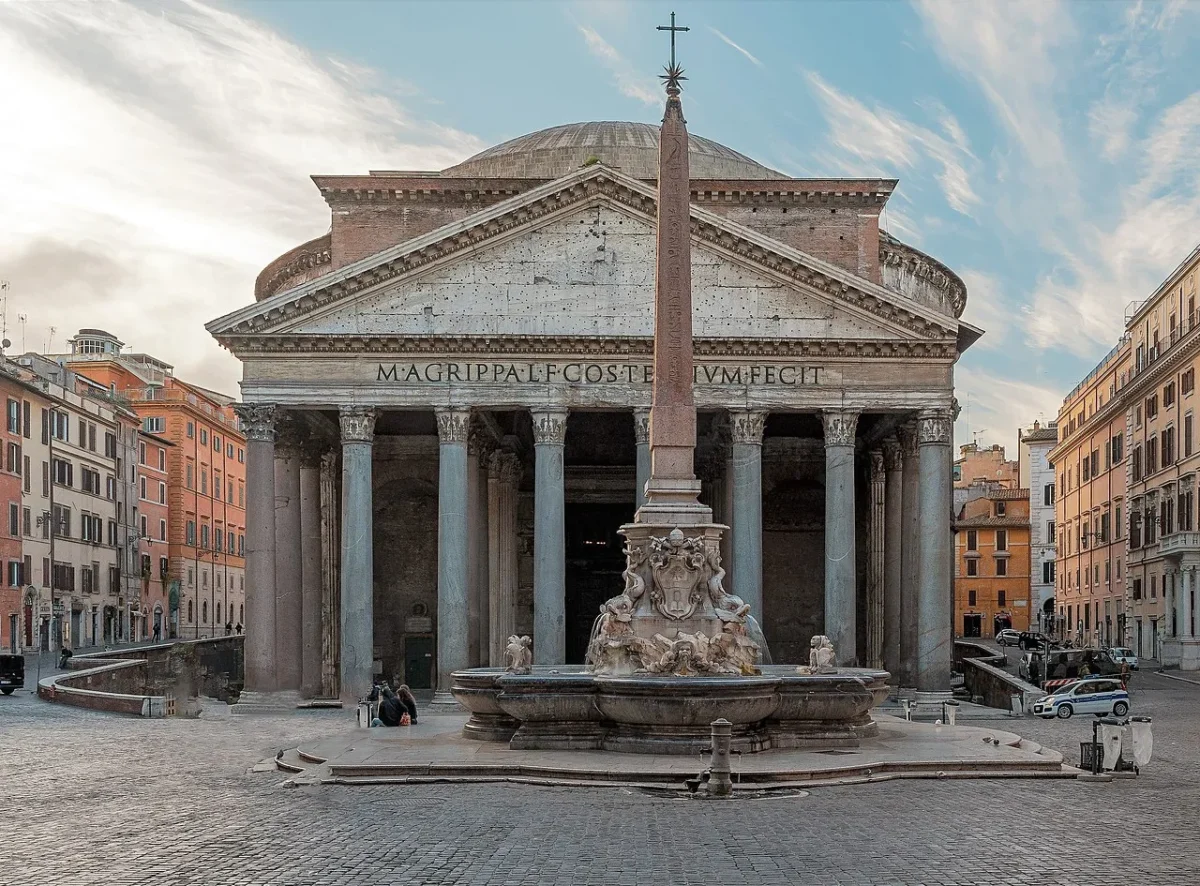
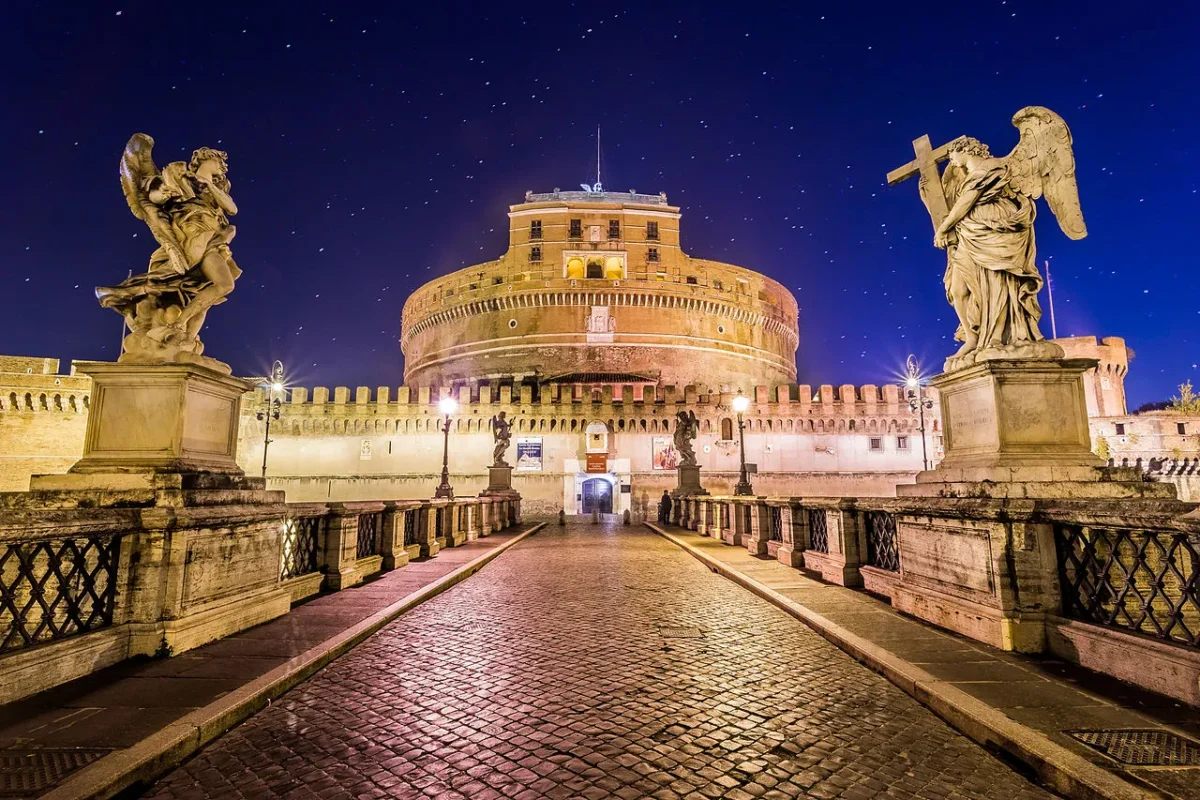
The following period, often called the era of the Five Good Emperors, from Nerva through Trajan, Hadrian, Antoninus Pius, and Marcus Aurelius, is generally considered the height of Roman imperial power and the period of greatest internal stability. Under Trajan, who ruled from 98 to 117 AD, the empire reached its maximum territorial extent, stretching from Scotland to Mesopotamia and from the Rhine to the Sahara. Rome’s population under Trajan was approximately one million, making it the largest city in the world. Hadrian, who built the Pantheon in its current form and constructed his mausoleum on the Tiber, spent much of his reign consolidating rather than expanding, building permanent frontier defences including Hadrian’s Wall in Britain. Marcus Aurelius, the philosopher emperor who wrote his Meditations in Greek while on military campaign, spent most of his reign fighting Germanic tribes pressing on the Danube frontier, a sign of pressures that would eventually break the empire.
The third century, from 235 to 284 AD, is known as the Crisis of the Third Century. In fifty years, Rome had more than fifty emperors, most killed by their own soldiers. The empire simultaneously faced barbarian invasions on multiple frontiers, economic collapse, plague, and the breakaway of several provinces. The silver content of the denarius, the standard coin, fell from around 50% to under 5% as emperors debased the currency to pay their armies. The city of Rome ceased to be the operational center of the empire as emperors moved to be closer to their armies on the frontiers.
The Late Empire and the Fall of Rome (284 to 476 AD)
Diocletian, who took power in 284 AD, stabilized the empire through radical restructuring. He divided it administratively into four parts under a system called the Tetrarchy, with two senior emperors called Augusti and two junior emperors called Caesars governing different regions. He doubled the size of the army, reformed the tax system, fixed prices by edict (the Edict on Maximum Prices of 301 AD, which largely failed), and launched the last and most severe persecution of Christians, from 303 AD onward.
Constantine, who emerged from the civil wars following Diocletian’s abdication as sole emperor by 324 AD, reversed Diocletian’s religious policy entirely. The Edict of Milan in 313 AD granted religious tolerance throughout the empire. Constantine himself converted to Christianity, funded the building of major churches including the first St. Peter’s Basilica in Rome, and moved the imperial capital to a new city he named Constantinople on the site of the Greek city of Byzantium in 330 AD. Rome remained symbolic but was no longer the operational center of the empire.
Theodosius I, who died in 395 AD, was the last emperor to rule a united empire. On his death it was divided permanently between his two sons: the Western Empire centered on Milan and later Ravenna, the Eastern Empire centered on Constantinople. The Western Empire’s decline accelerated through the fifth century. The Visigoths under Alaric sacked Rome in 410 AD, the first time the city had been taken by a foreign enemy in 800 years. The shock to the Roman world was enormous. Augustine of Hippo began writing The City of God in direct response, arguing that the fall of earthly Rome was irrelevant to the eternal city of God.
The Western Empire continued fragmenting as Germanic tribes, the Vandals, Visigoths, Ostrogoths, Burgundians, and Franks, established kingdoms on Roman territory. In 455 AD the Vandals sacked Rome again, more thoroughly than Alaric had. The last Western emperor, the sixteen-year-old Romulus Augustulus, was deposed by the Germanic chieftain Odoacer in 476 AD. Odoacer did not declare a new emperor but sent the imperial regalia to Constantinople. This date, 476 AD, is conventionally used as the end of the Western Roman Empire, though contemporaries barely noticed it as a decisive moment.
Rome in the Early Medieval Period (476 to 1000 AD)
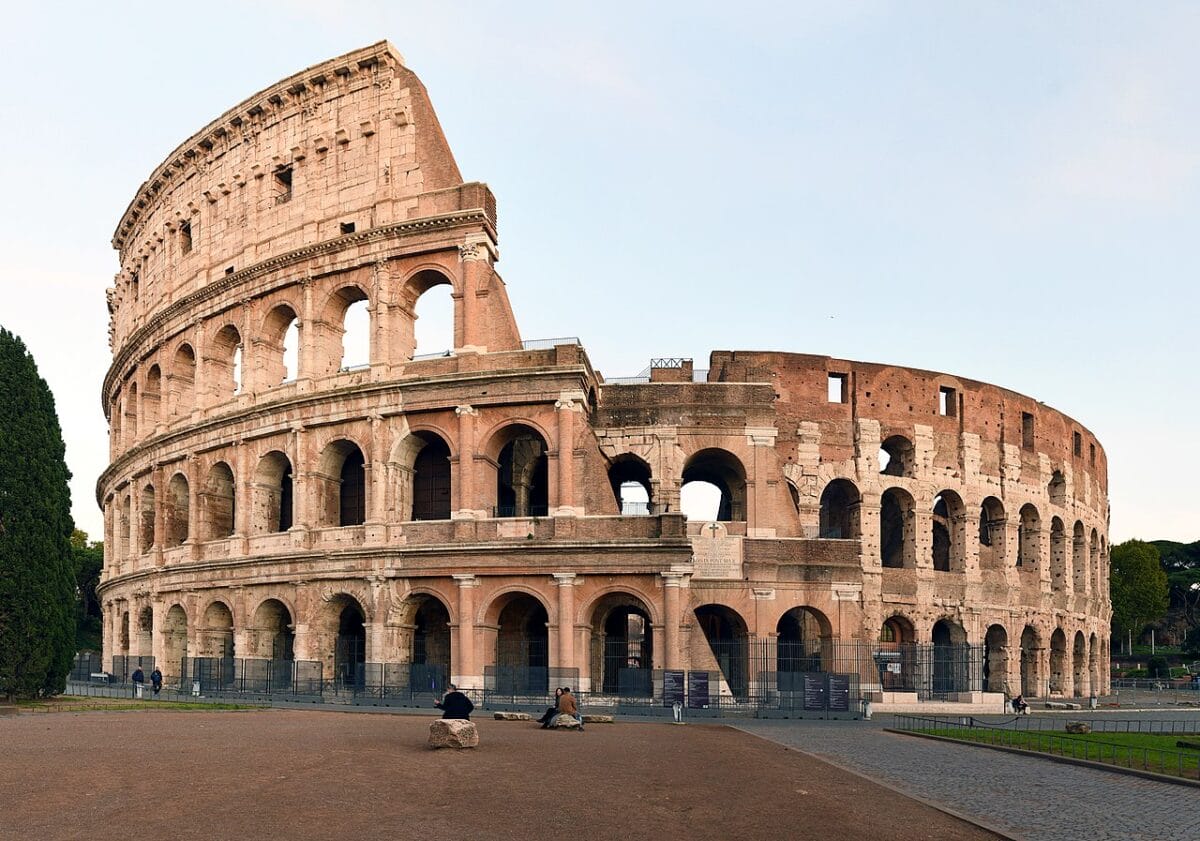
After 476 Rome’s population collapsed catastrophically. From a peak of around one million under Trajan, the city shrank to perhaps 20,000 to 30,000 people by the sixth century. The aqueducts were cut during the Gothic Wars of 535 to 554 AD, when the Eastern Emperor Justinian attempted to reconquer Italy from the Ostrogoths. Without water the remaining population retreated to low-lying areas near the Tiber. The great buildings of the imperial city were abandoned, quarried for stone, or converted to other uses. The Colosseum became housing. The Pantheon became a church. The Circus Maximus became fields.
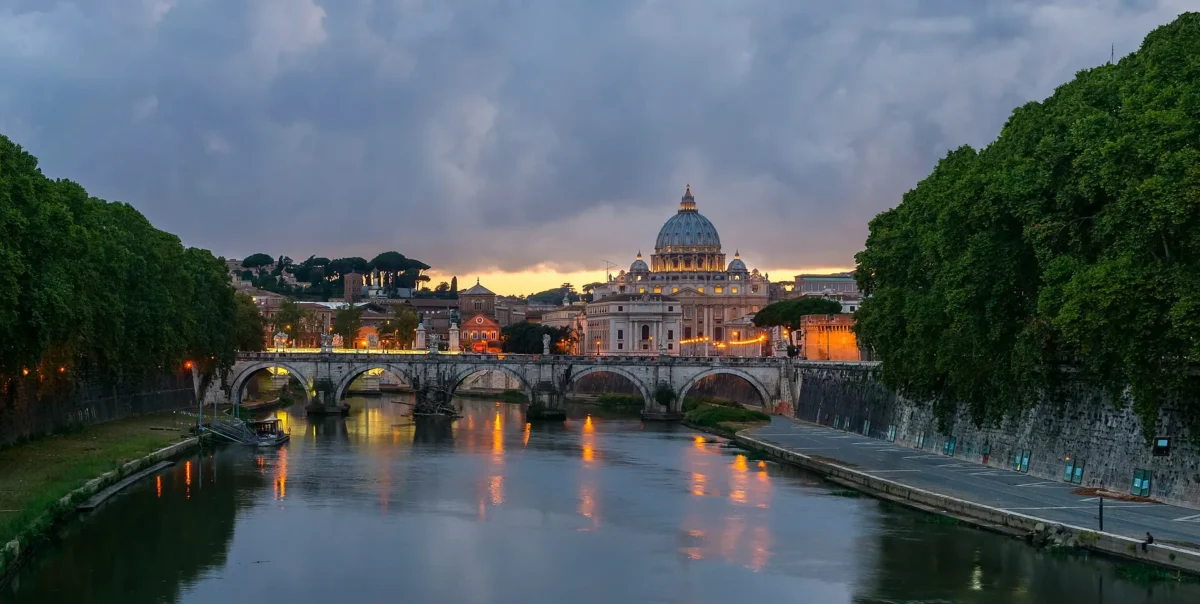
The papacy filled the power vacuum left by the collapse of imperial administration. Pope Gregory the Great, who reigned from 590 to 604 AD, organized food distribution, negotiated with the Lombards who threatened the city, sent missionaries to Britain, and laid the foundations of medieval papal authority. It was Gregory who reportedly saw the vision of the Archangel Michael above Hadrian’s mausoleum that gave Castel Sant’Angelo its name.
The Lombard invasion of 568 AD had left Italy fragmented. The papacy looked for protection and in 754 and 756 AD formed an alliance with the Frankish king Pepin, who defeated the Lombards and gave the papacy temporal control over central Italy, creating the Papal States. In 800 AD Pope Leo III crowned Charlemagne, king of the Franks, as Emperor of the Romans in St. Peter’s Basilica on Christmas Day, an act that created the ideological template for the Holy Roman Empire and established the principle that the pope had the authority to legitimize secular power, a claim that would cause conflict for the next 700 years.
After Charlemagne’s death in 814 AD his empire fragmented and Rome entered its darkest period. Control of the city and the papacy was contested between local aristocratic families, the Lombard duchies, and the successors of the Carolingian empire. The period from roughly 880 to 1050 AD is sometimes called the pornocracy or the rule of the harlots, a polemical term from later reformers describing the domination of the papacy by powerful Roman noblewomen and their families. Whatever its excesses, it reflects the reality that the papacy had become a prize in local power struggles rather than a universal spiritual authority.
The Medieval City and the Papal Capital (1000 to 1420 AD)
The reform papacy of the eleventh and twelfth centuries, launched by Leo IX and driven forward by Gregory VII, attempted to free the church from secular control. The Investiture Controversy, the conflict over whether kings or popes had the right to appoint bishops, consumed European politics for fifty years and was resolved only by the Concordat of Worms in 1122, which drew a distinction between the spiritual and temporal aspects of episcopal appointment.
Rome in the twelfth and thirteenth centuries was a city of towers. Noble families built tall fortified towers across the city to dominate their neighborhoods, incorporating ancient monuments as foundations and raw material. The Colosseum served as a fortress for the Frangipane family. The Theatre of Marcellus was the stronghold of the Savelli. Medieval Rome was a city of ruins converted into fortresses, with a population of around 20,000 to 35,000 living amid the bones of a city that had once held a million.
The papacy’s authority reached its theoretical peak under Innocent III, who reigned from 1198 to 1216 AD and claimed supremacy over all secular rulers. In practice the thirteenth century papacy was increasingly entangled in Italian politics, particularly in its struggle against the Hohenstaufen emperors Frederick II and his successors. The alliance with the French Angevin dynasty against the Hohenstaufen ultimately brought French influence to dominate the church.
In 1309, under French pressure, Pope Clement V moved the papal seat from Rome to Avignon in southern France, where it remained for 68 years, a period called the Avignon Papacy or, by its critics, the Babylonian Captivity of the Church. Rome without the papacy was impoverished and violent. Without the income and prestige of the papal court the city shrank further and deteriorated. Cola di Rienzo, a notary’s son inspired by ancient Roman history, led a popular revolution in 1347, briefly establishing a government he called the Roman Republic modeled on antiquity. He was killed in a popular uprising in 1354. The episode was significant mainly for its demonstration of how powerfully the memory of ancient Rome could still inspire political imagination.
The Great Schism of 1378 to 1417, when competing claimants to the papacy produced at one point three simultaneous popes, ended with the Council of Constance restoring unified papal authority. The new pope, Martin V, returned to Rome in 1420 and found a city of perhaps 20,000 people living in the ruins of antiquity, with cattle grazing in the Forum.
The Renaissance and the Rebuilding of Rome (1420 to 1527 AD)
The return of the papacy transformed Rome over the following century. The popes of the fifteenth century, Nicholas V, Sixtus IV, Alexander VI, Julius II, and Leo X, competed to rebuild Rome as the greatest city in Christendom and to make it an appropriate setting for their authority. Nicholas V drew up plans for the complete rebuilding of St. Peter’s Basilica and the Vatican. Sixtus IV built the Sistine Chapel, restored the city’s bridges, paved streets, and founded the Vatican Library. Alexander VI, the Borgia pope, extended the Castel Sant’Angelo and built the Passetto di Borgo connecting it to the Vatican.
Julius II, who reigned from 1503 to 1513, was the most ambitious builder of them all. He commissioned Bramante to demolish the old St. Peter’s Basilica, more than a thousand years old, and begin a new one on a scale that would dwarf anything built since antiquity. He commissioned Michelangelo to paint the Sistine Chapel ceiling and Raphael to paint the Vatican apartments. He personally led military campaigns to recover lost papal territories. He was called the Warrior Pope and the Pope Terrible, and under him Rome genuinely began to resemble the city of artistic and intellectual ambition the popes aspired to build.
By the early sixteenth century Rome was a city of around 50,000 people, a major center of Renaissance art and humanist scholarship, full of ancient ruins being systematically studied for the first time since antiquity. It was also a city of extreme corruption, wealth, and political intrigue. The sale of indulgences to fund the new St. Peter’s contributed directly to Martin Luther’s publication of his 95 Theses in 1517 and the beginning of the Protestant Reformation.
The Sack of Rome in May 1527 ended the Renaissance city overnight. The army of Holy Roman Emperor Charles V, composed of Spanish tercios, German Landsknechts, and Italian mercenaries who had gone unpaid for months, broke through the city walls and looted Rome for nine months. An estimated 20,000 people were killed. Churches were desecrated, libraries destroyed, artworks stolen. Pope Clement VII fled through the Passetto di Borgo to Castel Sant’Angelo while the Swiss Guard was massacred covering his retreat. The sack shocked Europe. The humanist city of the Renaissance was understood to have ended on that day.
Counter-Reformation Rome (1527 to 1700 AD)
The trauma of the sack, followed by the challenge of the Protestant Reformation, pushed the papacy toward the self-examination and reform of the Counter-Reformation. The Council of Trent, which met intermittently from 1545 to 1563, reformed church doctrine, clarified the theology that Protestantism had attacked, and established the Index of Forbidden Books and the Inquisition as instruments of doctrinal enforcement. It was at Trent that the nude figures in Michelangelo’s Sistine Chapel Last Judgment were ordered to be clothed, a commission carried out by Daniele da Volterra.
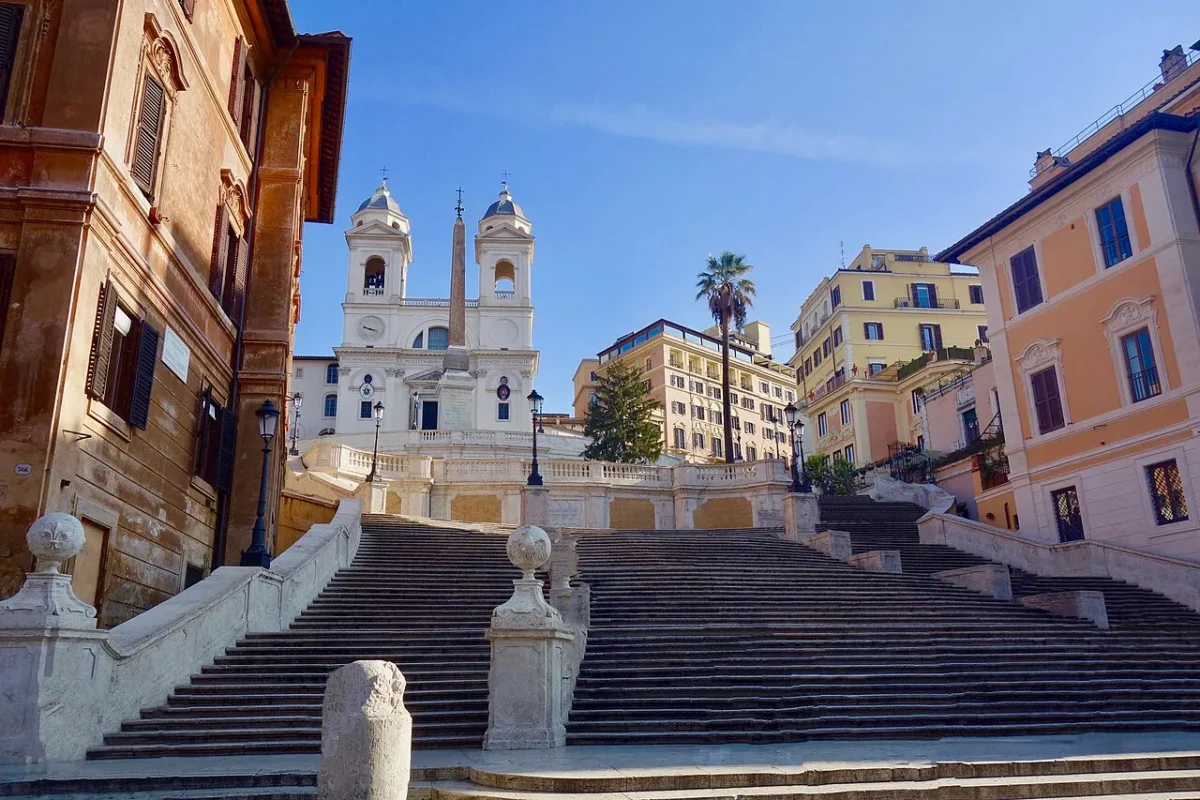
Rome was rebuilt again in the sixteenth and seventeenth centuries, this time in the Baroque style, as a deliberate instrument of Counter-Reformation propaganda. The intention was to overwhelm the senses and demonstrate the power and glory of the Catholic Church in opposition to the austerity of Protestantism. Sixtus V, who reigned from 1585 to 1590, remapped Rome in five years, cutting new straight roads through the medieval city, erecting the obelisks now standing at major piazzas and churches, and restoring the Acqua Felice aqueduct, the first new water supply to the city since antiquity.
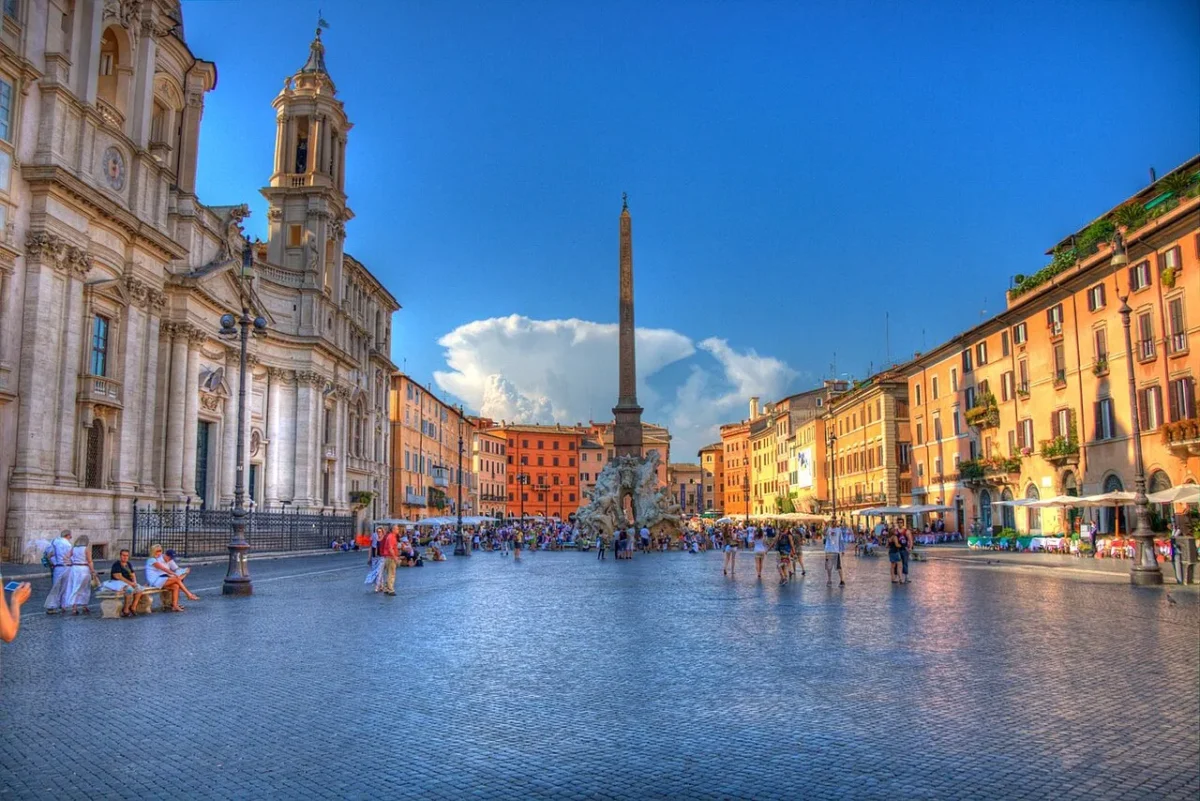
Gian Lorenzo Bernini dominated Roman art and architecture from the 1620s to the 1680s. Under the patronage of Pope Urban VIII Barberini and later Innocent X and Alexander VII, Bernini designed St. Peter’s Square and its colonnades, the baldachin over the high altar of St. Peter’s, the Fountain of the Four Rivers in Piazza Navona, the Ponte Sant’Angelo angels, the Cathedra Petri in St. Peter’s, and dozens of portrait busts, tombs, and church decorations. He also stripped the bronze ceiling of the Pantheon’s portico on Urban VIII’s orders, an act so destructive that Romans coined the phrase What the barbarians did not do, the Barberinis did. Urban VIII also used bronze from the Pantheon portico to make cannons for the Castel Sant’Angelo.
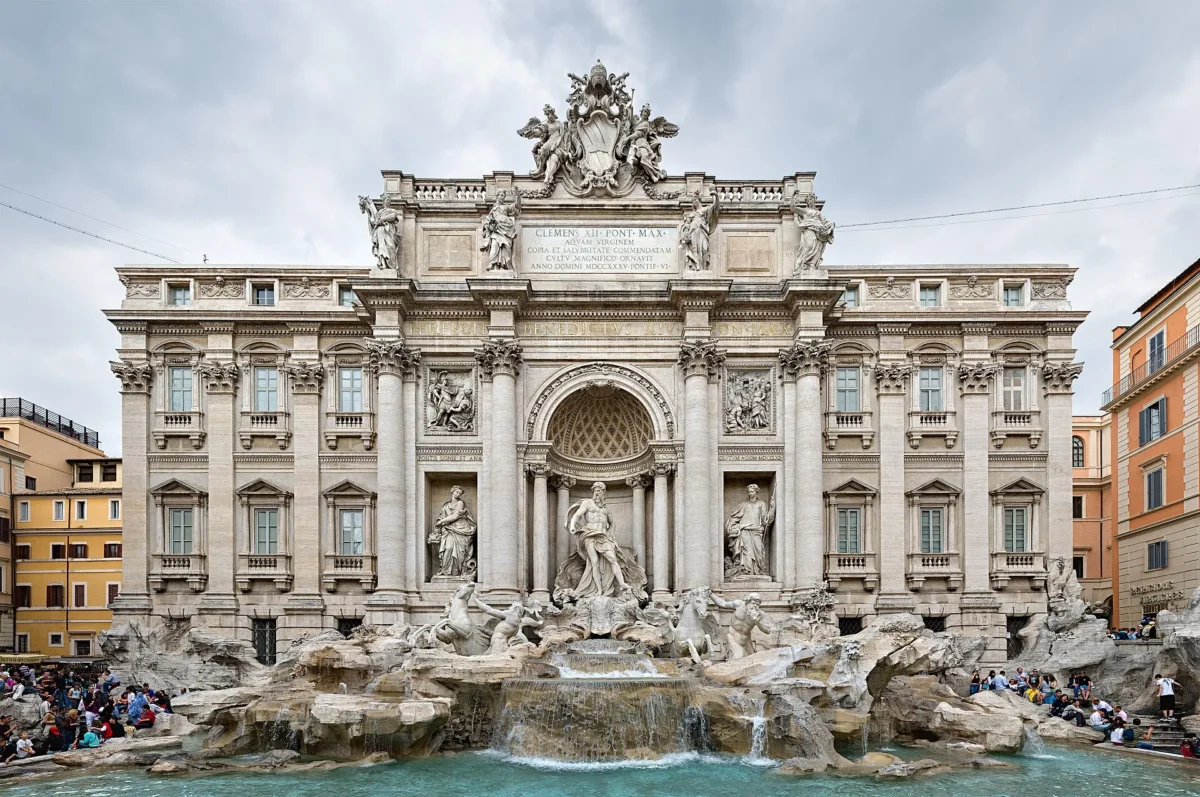
The seventeenth century also saw the completion of the Trevi Fountain’s water system and the creation of many of the street-level piazzas and fountains that define the experience of central Rome today. The population of the city reached around 100,000 by 1600 and was stable through the seventeenth century, limited by periodic plague, malaria from the surrounding marshes, and the lack of major industry.
Rome Under Papal Rule (1700 to 1870 AD)
The eighteenth century brought the Grand Tour to Rome. Wealthy northern Europeans, particularly the British, made Rome a required destination for cultural education. The city’s ancient ruins, now extensively excavated and catalogued, attracted artists, antiquarians, and architects from across Europe. Giovanni Battista Piranesi published his monumental etchings of Roman ruins from the 1740s onward, creating the visual template through which the entire Western world imagined ancient Rome. Johann Wolfgang von Goethe visited in 1786 and wrote Italian Journey, one of the most influential travel accounts ever published. The remains of Pompeii and Herculaneum, rediscovered in the 1740s, intensified European fascination with Roman antiquity.
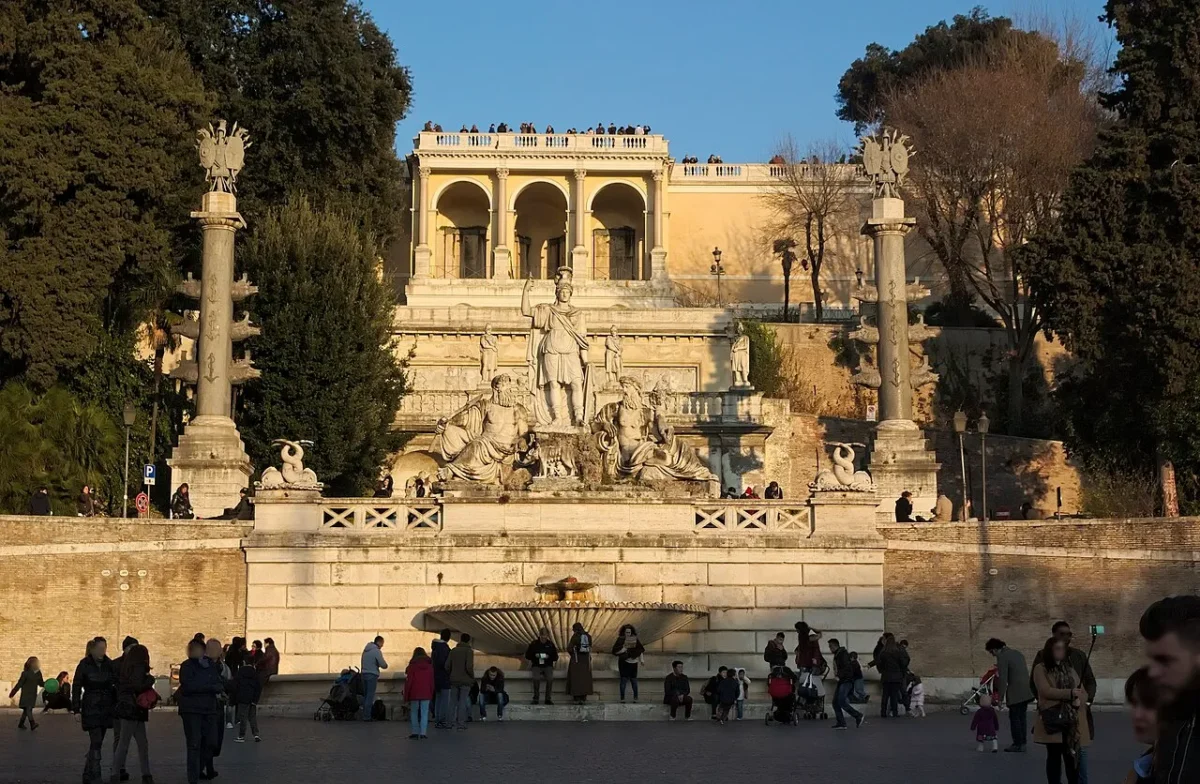
Napoleon’s invasion of Italy in 1796 transformed the political situation. The Papal States were overrun, Pope Pius VI was taken prisoner to France and died there in 1799. Napoleon created the short-lived Roman Republic in 1798. After Napoleon became emperor, his brother-in-law Joachim Murat briefly ruled and Napoleon himself annexed the Papal States to France in 1809, taking Pope Pius VII prisoner. Under French rule Rome was administered as a French city: new roads were cut, the Forum was excavated, and Giuseppe Valadier redesigned Piazza del Popolo and began the landscaping of the Pincian Hill.
After Napoleon’s defeat in 1814 the papacy was restored and the Papal States reconstituted. The period from 1815 to 1848 was one of conservative restoration across Europe, and the papal government was among its most reactionary expressions. The revolutions of 1848 drove Pope Pius IX from Rome and briefly established the Roman Republic of 1849, defended by Giuseppe Garibaldi on the Janiculum Hill against French military intervention. The Republic fell after two months of fighting and Pius IX was restored by French troops who remained garrisoned in Rome as his protectors.
### The Capture of Rome and Italian Unification (1870 AD)
Italian unification, the Risorgimento, had been the central political project of the Italian peninsula through the 1850s and 1860s. Under the political leadership of Count Cavour and the military leadership of Garibaldi, the Kingdom of Sardinia had absorbed most of the Italian peninsula by 1861, when Victor Emmanuel II was proclaimed the first king of united Italy. Rome, still protected by French troops, remained outside the new kingdom.
The Franco-Prussian War of 1870 forced Napoleon III to withdraw his troops from Rome to defend France. On September 20, 1870, Italian forces breached the Aurelian Wall at the Porta Pia and entered Rome after minimal resistance. The pope retreated to the Vatican and declared himself a prisoner. Rome became the capital of unified Italy. The popes refused to recognize the Italian state or leave the Vatican for the next 59 years, a standoff called the Roman Question that was resolved only by the Lateran Treaty of 1929, which created Vatican City as a sovereign state and settled the papacy’s territorial and financial claims against the Italian government.
Modern Rome (1870 to Present)
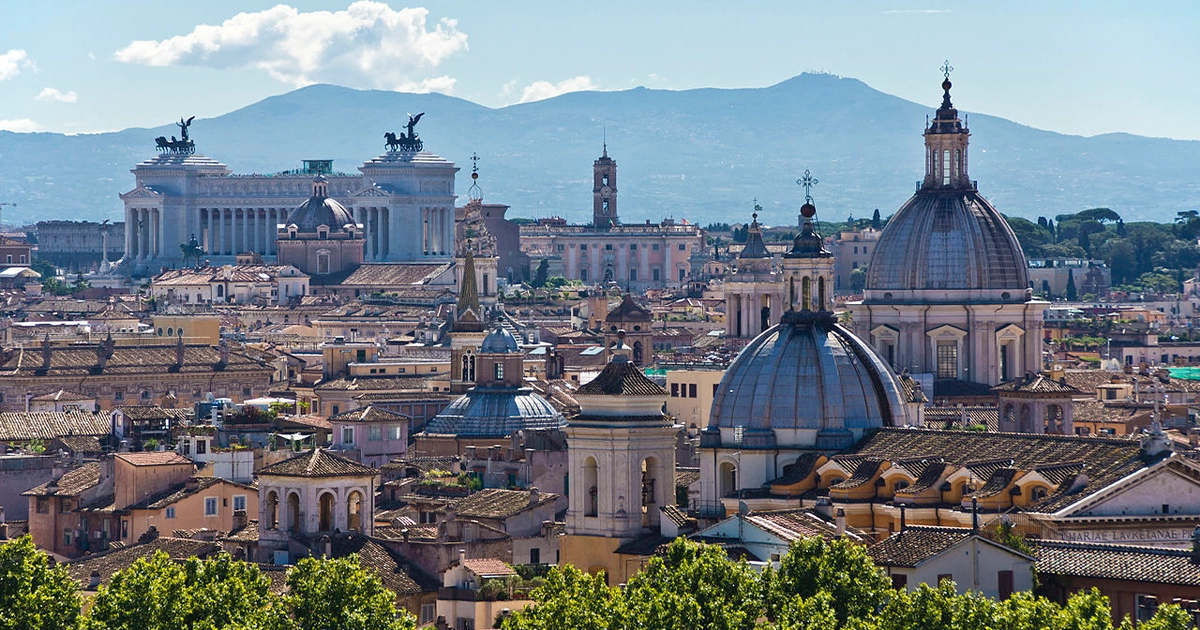
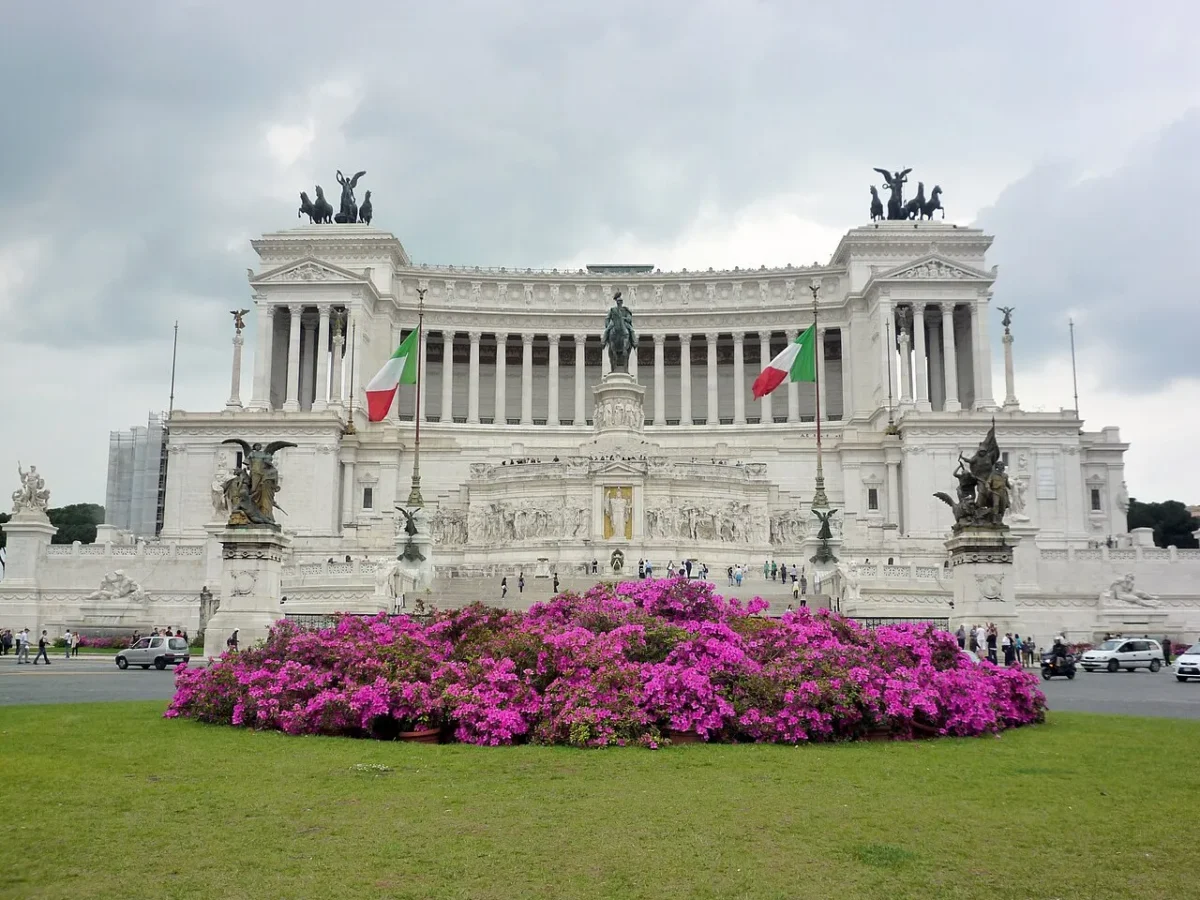
The new Italian capital expanded rapidly in the late nineteenth century. The medieval neighborhoods of the Aventine, Esquiline, and Prati were developed with new apartment blocks and government buildings. The Tiber embankment was built in the 1870s and 1880s to prevent the annual flooding that had plagued the city, raising the river level and burying the lower floors of riverside buildings. The Vittoriano, the enormous white marble monument to Victor Emmanuel II, was built between 1885 and 1935 on the northern slope of the Capitoline Hill, requiring the demolition of an entire medieval neighborhood.
Mussolini came to power in 1922 and had enormous ambitions for Rome as the capital of a new Roman Empire. He cut the Via dei Fori Imperiali through the ancient forum complex in 1932, demolishing significant medieval and Renaissance buildings, to create a processional boulevard from the Vittoriano to the Colosseum. He drained the Pontine Marshes south of Rome, eliminating the malaria that had been endemic to the region since antiquity. He built the EUR district to the south for a world exposition planned for 1942 that was never held due to the war. His Pact of Steel with Hitler brought Italy into World War II in June 1940.
Rome was declared an open city in 1943 to spare it from bombing, but the German occupation from September 1943 to June 1944 was brutal. The Ardeatine Massacre of March 1944, in which 335 Italian civilians and partisans were shot by German SS troops in the catacombs of the Via Ardeatina in reprisal for a partisan attack, remains the most significant atrocity of the occupation. The Allies entered Rome on June 4, 1944, two days before the D-Day landings in Normandy.
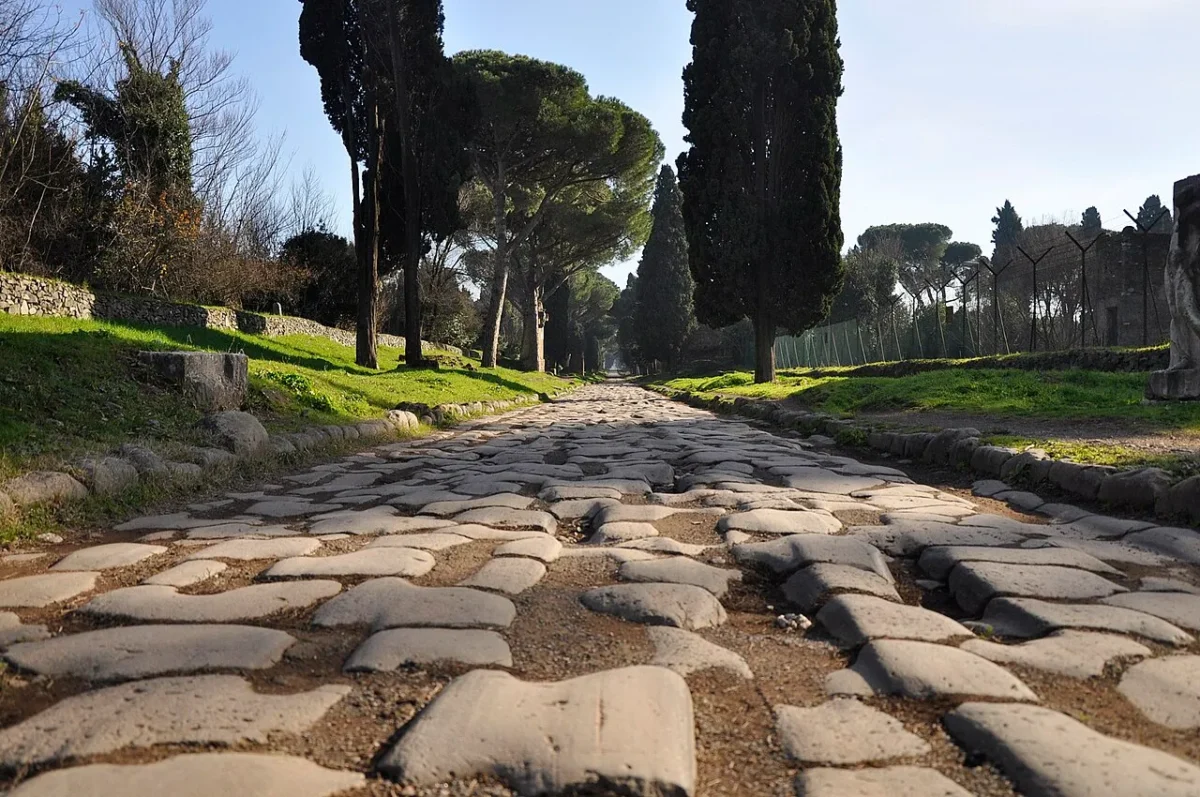
Postwar Rome recovered quickly. The Italian economic miracle of the 1950s and 1960s transformed the city. Federico Fellini’s La Dolce Vita, filmed in Rome in 1959 and released in 1960, created the global image of Rome as a city of glamour, celebrity, and antiquity that persists today. The 1960 Olympics were held in Rome, with the marathon run on the Appian Way and wrestling held inside the Basilica of Maxentius in the Forum. The city’s population reached its peak of around 2.8 million in the 1980s before suburban growth shifted population to the surrounding municipalities.
Today Rome is the capital of Italy, the seat of the Catholic Church, and a city where the layers of its 2,700-year history are visible simultaneously in almost every street. A Roman aqueduct still carries water to the Trevi Fountain. The outline of a 2,000-year-old stadium defines the shape of Piazza Navona. A church built on a pagan temple sits beside a medieval fortress built on an ancient tomb. The density and continuity of Rome’s history is not a museum exhibit. It is the fabric of a living city.