
Among all the Greek city-states that dotted the ancient Mediterranean, Sparta alone made a choice that baffled its neighbors and confuses students today: it put two kings on the throne at the same time. Not co-rulers who split territories. Not a regent waiting in the wings. Two fully empowered monarchs from two different families, ruling side by side for over five hundred years. Sparta’s dual kingship stands as one of the most unusual political experiments in ancient history, a system so strange that the Spartans themselves eventually forgot why they started it.
The Romans remembered that Romulus killed his brother Remus over who would rule their new city. The Spartans chose differently. They kept both brothers, so to speak, and built an empire on that foundation. Understanding how and why this worked tells us something important about the nature of power, the value of constitutional checks, and the unexpected stability that comes from institutionalized rivalry.
Origins of Sparta’s Dual Kingship: The Twin Myth
Every political system needs a founding story, and Sparta’s was literally double.
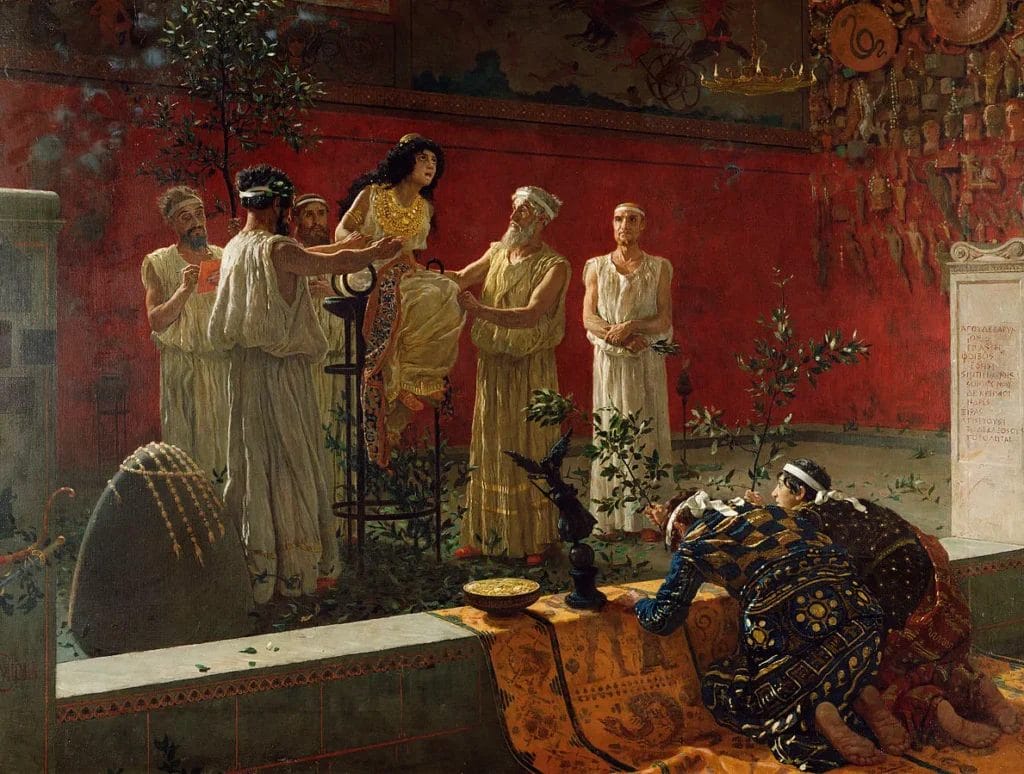
According to Herodotus, the most important ancient source on this question, Sparta’s dual kingship traced back to Aristodemus, a descendant of Heracles. Aristodemus had twin sons, and when he died, the Spartans faced an impossible decision. Which twin should rule? Their mother refused to say which was born first. The Spartans consulted the oracle at Delphi, and the god’s answer was characteristically unhelpful: make them both kings.
This origin myth established something crucial. The two royal houses, known as the Agiads and the Eurypontids, both traced their lineage to Heracles through different sons of Aristodemus. Neither family could claim seniority over the other. Neither could claim purer blood. They were equals by divine decree.
The Agiads took their name from Agis, son of Eurysthenes, while the Eurypontids descended from Eurypon, grandson of Procles. From approximately 930 BCE until the Roman period, these two families provided Sparta with its kings. Generation after generation, father to son or brother to brother, the succession continued within each house independently.
The anthropologist Marshall Sahlins, in his analysis of Spartan kingship, argues that this wasn’t just a clever political arrangement. The Spartans conceived of their kings as “twinned beings,” ritually and symbolically paired in ways that went far beyond constitutional convenience. At feasts, both kings received double portions. In sacrifice, both shared the priestly role. In war, originally both marched out together, until this proved impractical and later reforms mandated that one stay home.
How Sparta’s Dual Kingship Actually Worked
The practical mechanics of two simultaneous monarchs require careful examination, because the system was far more sophisticated than simply dividing responsibilities.
Both kings held equal religious authority. They served as the chief priests of Zeus Lacedaemonius and Zeus Ouranios. They conducted sacrifices on behalf of the state. They maintained sacred objects, including the Pythian oracles delivered to Sparta. This religious role was not ceremonial window dressing. In a society where warfare began and ended with sacrifice, where omens determined strategy, priestly authority meant real power.
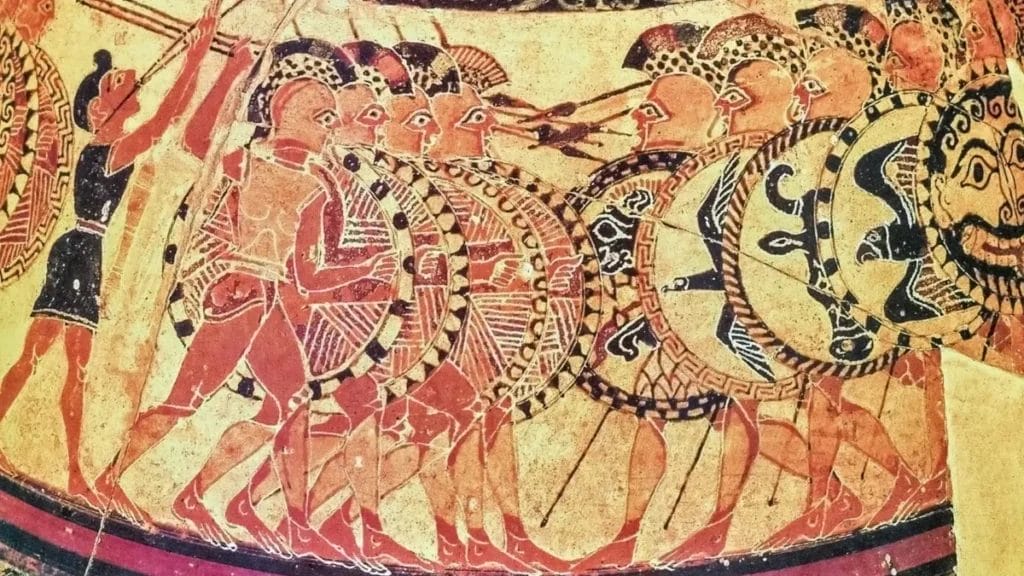
Both kings held command authority over the Spartan army. In the early period, both marched to war together. After a disastrous campaign where the two kings quarreled and one withdrew his forces, the Spartans passed a law: henceforth, only one king would lead any given expedition, while the other remained in Sparta. This reform, rather than diminishing royal power, actually enhanced it. One king could pursue military glory abroad while the other protected the home front against helot rebellion and political intrigue.
Herodotus records the specific privileges enjoyed by Spartan kings: front seats at festivals, double portions at public meals, the right to appoint officials, control over certain legal matters involving heiresses and public roads, and the performance of all public sacrifices. These were not empty honors. Control over heiresses meant control over property transfer. Authority over roads meant influence over commerce and communication.
Yet the kings were far from absolute monarchs. Sparta’s famous constitutional checks and balances hemmed them in on all sides.
The Gerousia, Ephors, and Royal Constraint
The gerousia, Sparta’s council of elders, consisted of twenty-eight men over sixty years old, elected for life, plus the two kings. This body prepared legislation for the assembly, conducted trials for serious crimes, and could veto proposals even after the assembly had voted. The kings presided but could be outvoted. Their royal blood gave them a seat at the table, not control of the table.
More striking were the ephors. These five annually elected magistrates held extraordinary power over the kings themselves. They could bring kings to trial. They assessed fines against kings. They accompanied kings on campaign and could countermand royal orders. Two ephors dined with each king every day, watching, advising, limiting.
The historian E.I. McQueen, analyzing the Eurypontid house during the Hellenistic period, describes how completely one royal family could fade into irrelevance when overshadowed by an ambitious member of the other house. During the reign of Areus I in the third century BCE, the Agiad king dominated Sparta so thoroughly that Athenian decrees referred to “the Lacedaemonians and Areus” while barely acknowledging his Eurypontid colleague existed. The system allowed for such imbalances, but it also corrected them over time.
Military Function and the Division of Command
The military dimension of Sparta’s dual kingship deserves special attention because Sparta was, above all else, a military society.
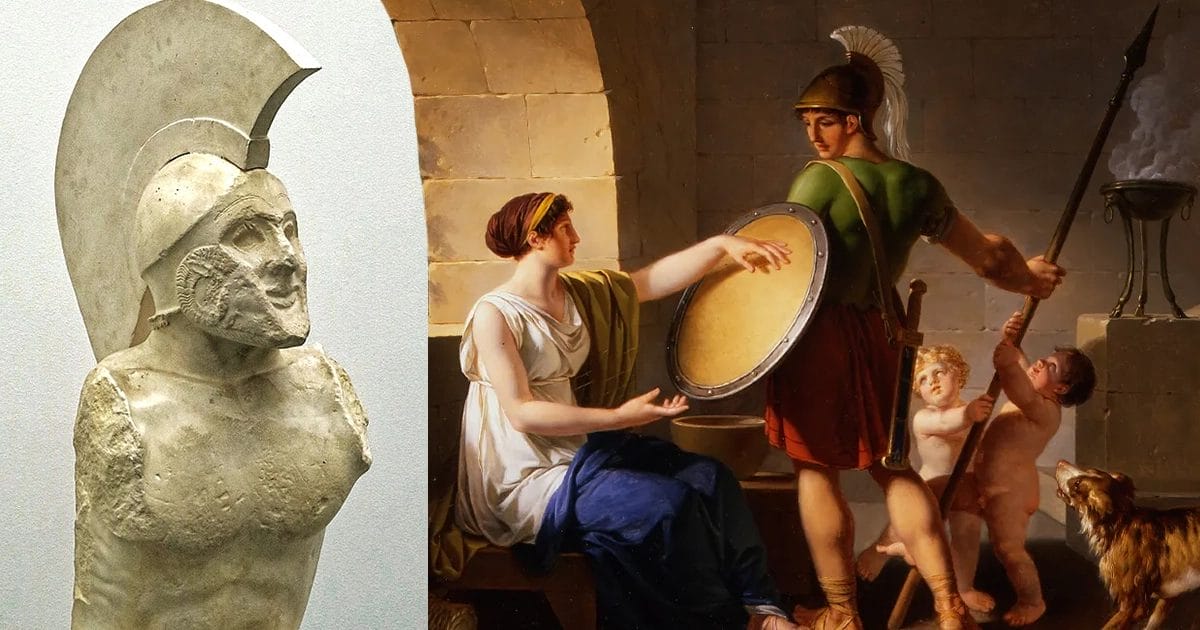
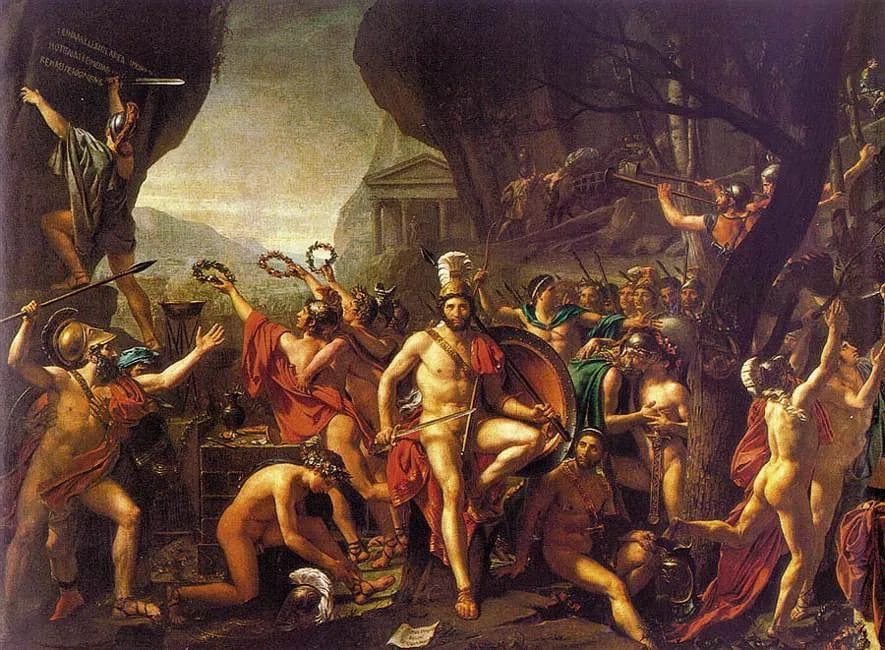
During the Persian Wars, Sparta fielded some of the most formidable infantry in the Greek world. The kings led this army personally. Leonidas, an Agiad king, commanded at the Battle of Thermopylae. His Eurypontid colleague at the time, Leotychidas, led Spartan forces at the naval battle of Mycale the following year. The dual kingship meant that Sparta always had a trained military commander available, even if one king fell in battle.
This proved crucial during the Peloponnesian War. When Archidamus II of the Eurypontid house led the invasion of Attica, his Agiad colleague Pausanias (or his successors) remained available for other operations. The Spartans could wage simultaneous campaigns, respond to emergencies, and avoid the catastrophic succession crises that plagued other Greek states when their single king died.
The law requiring one king to stay home served another vital function. Sparta controlled a vast population of helots, essentially serfs who worked Spartan land and vastly outnumbered their masters. Helot rebellion was a constant fear. Thucydides records that the Spartans’ greatest concern was always their own subject population. A king at home provided military leadership against internal threats while his colleague pursued external wars.
The Two Houses: Agiad and Eurypontid Character
Over centuries, the two royal houses developed somewhat distinct characters, though generalizations must be made cautiously given the fragmentary evidence.
The Agiads, claiming descent from the elder twin, held certain ceremonial precedences. Their house produced some of Sparta’s most famous kings: Leonidas who died at Thermopylae, Cleomenes I who intrigued across Greece, Agesilaus II who campaigned in Asia. The Agiads seemed more frequently involved in foreign adventures and grand strategic visions.
The Eurypontids contributed their own notable figures: Archidamus II who gave his name to the first phase of the Peloponnesian War, Agis II who won the great battle of Mantinea in 418 BCE. But McQueen’s research reveals that by the Hellenistic period, the Eurypontid line had fallen into remarkable obscurity. King Eudamidas II appears in no ancient anecdotes. He left behind no recorded aphorisms in Plutarch’s collections of Spartan sayings. His reign was so forgettable that we cannot even date it precisely.
This asymmetry reveals something important about dual kingship. The system did not guarantee equality of outcomes. One house might produce generations of forceful personalities while the other languished. But the system survived these imbalances because neither house could eliminate the other. The Eurypontids might fade, but their throne remained. A capable successor could always emerge.
Why Did the System Last So Long?
Five centuries is an extraordinary run for any political arrangement. What made Sparta’s dual kingship so durable?
First, the mythological foundation proved remarkably stable. Both houses claimed Heraclid descent. Both traced their origin to the same divine command from Delphi. Challenging one house meant challenging the other, because their legitimacy was intertwined. An ambitious Agiad who eliminated the Eurypontids would be eliminating the very story that justified his own throne.
Second, the constitutional framework distributed power so thoroughly that no single actor could accumulate enough to overthrow the system. The kings checked each other. The gerousia checked the kings. The ephors checked everyone. The assembly provided final ratification. Attempts to concentrate power, like those of Cleomenes III in the third century BCE, required destroying the constitutional framework entirely.
Third, the practical benefits were genuine. Sparta needed military commanders, and it got two. It needed priests, and it got two. It needed representatives for diplomatic missions, and it could send kings to different courts simultaneously. The redundancy that seemed strange to other Greeks provided real advantages.
Fourth, the rivalry between houses, though real, remained largely manageable. Marriages between houses were rare. Disputes over policy were frequent. But outright violence between royal families was not a defining feature of Spartan history. The competition channeled itself into winning glory, not eliminating rivals.
Religious Dimensions of Dual Kingship
The kings of Sparta were not merely military and political figures. They embodied a religious role that gave the dual system cosmic significance.
As priests of Zeus, the kings performed sacrifices that maintained Sparta’s relationship with the divine. Before any military campaign, the king in command sacrificed and examined the omens. Unfavorable signs could halt an entire army. This was not superstition in the modern pejorative sense; it was a fundamental aspect of how Spartans understood the world.
The duplication of this priestly role in two men from two houses created a kind of religious redundancy. If one king was ritually impure, the other could perform necessary sacrifices. If one king’s relationship with the gods seemed compromised by defeat or scandal, the other maintained the sacred connection. Sparta’s standing with Zeus did not depend on any single individual.
The twin origin myth reinforced this religious dimension. Twins held special significance in Greek religion. The Dioscuri, Castor and Pollux, were divine twins especially honored at Sparta. The mortal kings, descended from divine twins, participated in this symbolic universe. Their doubling was not an accident of history but a reflection of cosmic order.
The Fall of the Dual Kingship
No political system lasts forever. Sparta’s dual kingship, for all its durability, eventually collapsed.
The Hellenistic period proved fatal. By the third century BCE, Sparta had declined from a dominant power to a second-rate state struggling to maintain relevance. Economic crisis concentrated land in fewer hands. The citizen body shrank catastrophically. The social foundations that had supported Spartan institutions crumbled.
In this context, reformer kings emerged who saw the traditional constitution as an obstacle rather than an asset. Agis IV attempted radical land redistribution and debt cancellation in 243 BCE. He was arrested by the ephors and executed, an unprecedented act against a reigning king. His Eurypontid colleague Leonidas II had opposed his reforms and cooperated in his destruction.
Cleomenes III, succeeding to the Agiad throne, learned from Agis’s failure. In 227 BCE he launched a coup, killed the ephors, abolished the traditional constitution, and seized sole power. To give his monarchy a veneer of legitimacy, he appointed his brother Eucleidas to the Eurypontid throne. This was a transparent fiction. The dual kingship that had maintained itself through genuine competition between independent houses became a family arrangement designed to concentrate power.
After Cleomenes’ defeat by the Macedonians and Achaeans at the battle of Sellasia in 222 BCE, the dual kingship limped along in various forms, but the spirit had departed. The houses no longer balanced each other. The constitutional checks had been dismantled. What remained was the form without the function.
Kings of the Agiad and Eurypontid Houses
The complete list of Spartan kings runs for centuries, but certain figures deserve mention to illustrate the system’s workings.
Leonidas I (Agiad, died 480 BCE) commands the most fame, thanks to his death at Thermopylae with his three hundred Spartan warriors. His sacrifice became the defining image of Spartan kingship: the monarch who dies at the head of his men.
Agesilaus II (Agiad, reigned c. 400-360 BCE) represents the king as strategic mastermind. He campaigned in Asia Minor against the Persians, nearly conquered much of Anatolia, and dominated Spartan politics for decades. His Eurypontid colleagues during this long reign were distinctly secondary figures.
Archidamus III (Eurypontid, died 338 BCE) shows a different model of royal service. He died fighting as a mercenary in Italy, far from Sparta, lending his military expertise and royal prestige to a foreign cause.
Agis IV (Eurypontid, executed 241 BCE) exemplifies the tragic reformer. He attempted to restore what he believed was the original Spartan system, with redistributed land and a revived citizen body. The conservative forces he challenged proved too strong. His execution marked a point of no return for the traditional constitution.
These kings and their many colleagues, named and forgotten, maintained the dual system through war, plague, economic transformation, and political crisis. That they did so for half a millennium suggests the system met real needs that simpler arrangements could not satisfy.
Sparta’s Dual Kingship in Comparative Perspective

Other ancient societies experimented with shared rule. Rome’s two consuls held power for single years. Carthage had two suffetes. Various Greek states occasionally appointed boards of generals or pairs of commanders.
None of these arrangements matched Sparta’s permanence or peculiarity. The consuls rotated annually; Spartan kings held their thrones for life. The suffetes were elected officials; Spartan kings were hereditary monarchs from specific families. Greek boards of generals were administrative conveniences; Spartan dual kingship was a fundamental constitutional principle with religious foundations.
The closest parallel might be the dual kingship of early Rome, if we credit the legends of Romulus and the Sabine Titus Tatius ruling jointly. But that arrangement lasted, by tradition, only a few years before Tatius died and Romulus ruled alone. The Romans, like most peoples, found shared monarchy unstable.
What made Sparta different? Perhaps the answer lies in Spartan exceptionalism generally. This was a society that subjected its children to brutal training from age seven, that forbade its citizens from engaging in trade, that ate at common messes rather than private homes, that subordinated individual and family to the collective in ways that shocked other Greeks. A people willing to accept those constraints could also accept the apparent inefficiency of two kings where one might suffice.
Or perhaps the Spartans were simply more practical than their reputation suggests. They observed that single monarchs become tyrants. They noticed that royal families die out. They calculated that two commanders provide backup and two priests provide redundancy. They institutionalized what other states left to chance and paid for their foresight with five centuries of stability.
The Ryszard Kulesza’s comprehensive modern study of Sparta emphasizes that we must be careful about taking ancient sources at face value. The Spartans cultivated mystery about their institutions. They told outsiders what they wanted them to believe. The origin myth of the twin kings may be an invented tradition, created centuries after the fact to explain an institution whose real origins had been forgotten.
But whether the myth was ancient or invented, whether the dual kingship emerged from genuine twin heirs or pragmatic political compromise, the system worked. Two families shared power. Two thrones stood in Sparta. Two lines of Heraclids ruled until the constitutional order that sustained them finally collapsed under pressures it was never designed to handle.